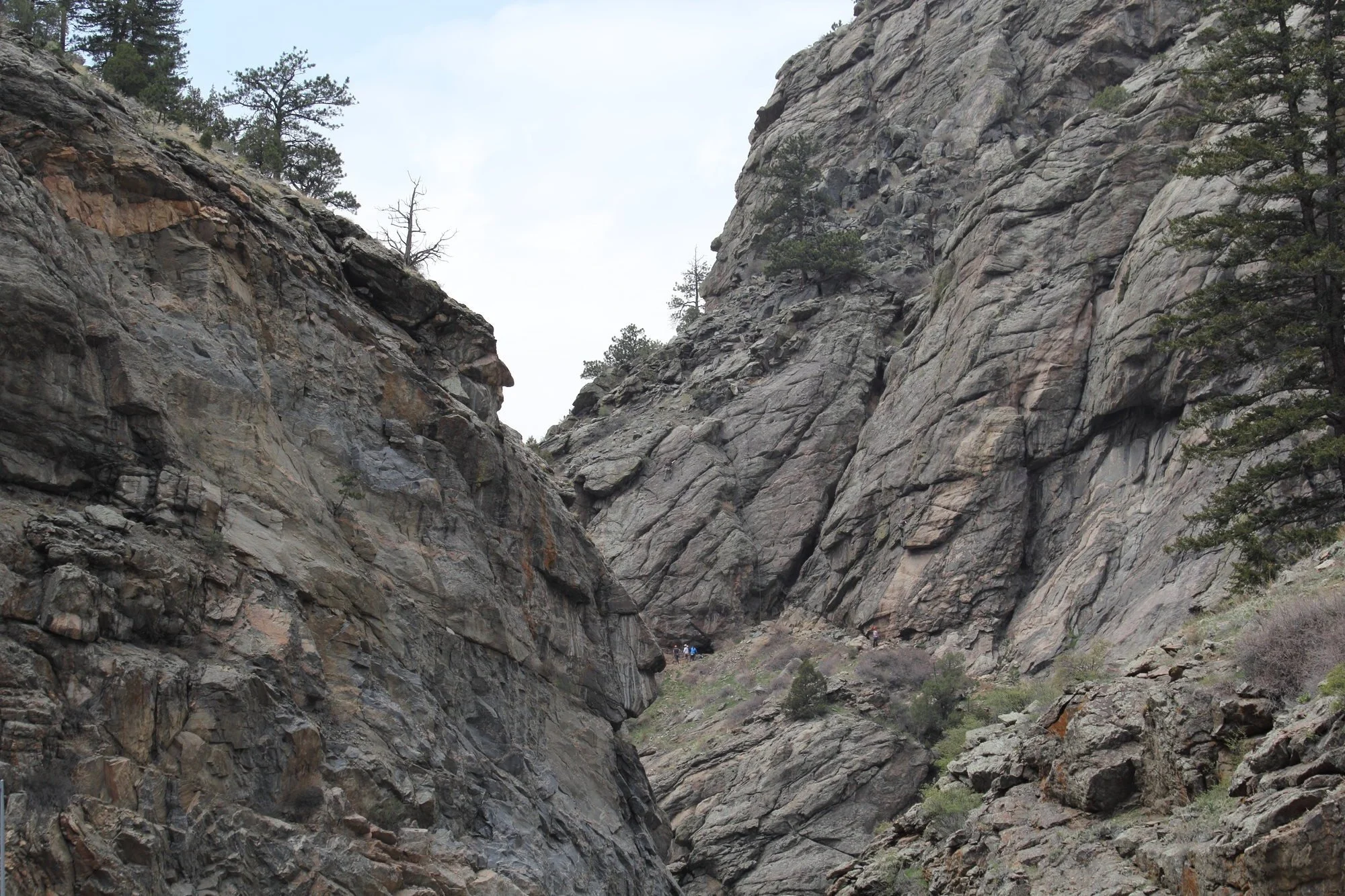
It’s April, and the outdoor climbing season is in full swing. A lot of us will be rusty after the long winter, so now is a good time to get current on basic skills—like lowering. Lowering errors are a leading cause of climbing accidents: Each year we see multiple instances of lowers gone wrong, an unfortunate number of which result in fatalities.
Lowering is a frequent transition from ascent to descent. With lowering accidents, there are usually two main culprits: Either the rope is too short and/or there’s poor communication.
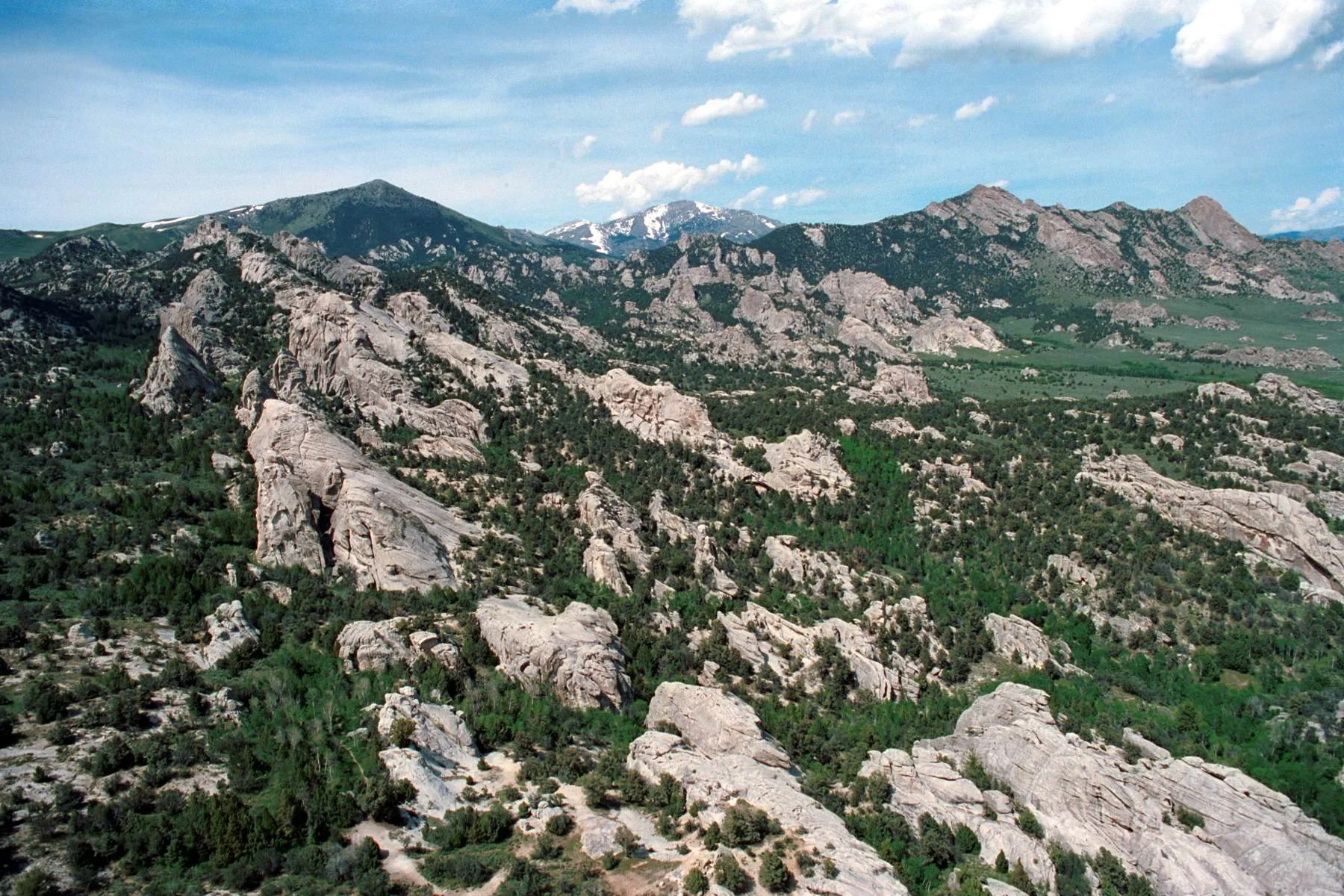
The City of Rocks National Reserve, Idaho, is home to hundreds of routes on beautiful, varnished granite. Some routes require a 70-meter rope to safely toprope or lower from the anchors. In May 2023, a climber was lowered off the end of the rope. He flipped upside down and suffered a fatal head injury. Photo by NPS.
Lowering Error | Rope Too Short, No Stopper Knot
City of Rocks National Reserve, Idaho, Super Hits Wall
On May 26, 2023, Brock Anderson and his family witnessed a tragic accident on the Super Hits Wall at the City of Rocks. They were sharing laps on two climbs with another married couple when a group of four young men joined their group. Anderson wrote to ANAC:
The climbers had general knowledge of the area, but very little beta and no guidebook. We helped them identify the routes. One of the young climbers, Kyle Melby (22), led Twist and Crawl (5.8). My son was reading a book directly under the route as we began wrapping things up. I had a premonition, just an inkling that [my son] wasn't in a safe place. I asked him to move 50 feet over to a shaded boulder. I thought nothing of it, just did a Dad-instinct thing.
Kyle was finishing Twist and Crawl, and the two others were preparing to climb Mystery Achievement (5.7), as our group packed up and headed to the car. We were about 60 seconds down the trail when we heard Kyle fall and impact the rock. He had been lowered off the end of his rope. While we didn't see the fall, we understand that he fell feet-first onto a flake near the bottom. He landed, tilted backward, and impacted the back left side of his head, crushing his helmet and sustaining a horrible head injury. The total fall was about 35 feet.
I ran to my truck and grabbed my trauma kit, along with a Garmin inReach. We were able to stop the bleeding fairly quickly, conduct a visual inspection, do a C-spine assessment, and get an SOS out.
It was miraculous that Kyle’s only injury appeared to be his head wound. He was belligerent and disoriented (often the case with head injuries). With the help of several other trained first responders, we were able to calm him somewhat, but we couldn't keep him still. Within the hour, a helicopter was on the ground at Bread Loaves and several local agencies were on the scene. They helped transport Kyle via backboard to my truck and up the road to the helicopter. Kyle was flown to Pocatello. We believed he would be fine, but two days later he died from his injuries.
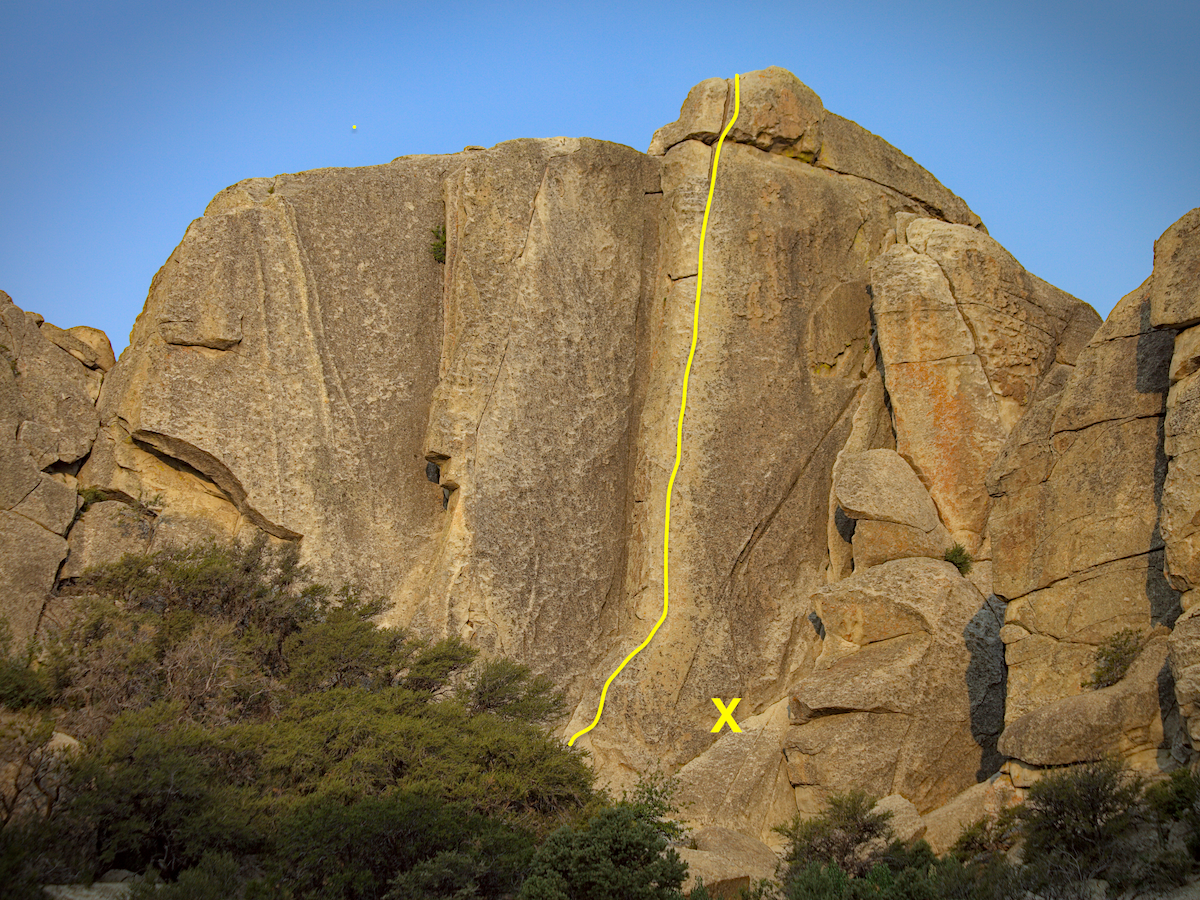
The Super Hits Wall at City of Rocks. The climber was lowering from Twist and Crawl (yellow line) and fell after the end of his rope slipped through his partner’s belay device. His feet struck a large flake near the route’s base (yellow X). That impact flipped him upside down, resulting in a head injury that would ultimately prove fatal. Photo by Camdon Kay.
Analysis
Lowering accidents are all too frequent. Twist and Crawl is 33 meters long and thus requires a 70-meter rope to allow an uninterrupted lower while retaining a reasonable margin of safety. A rough calculation, factoring in the length of route, length of fall, and rope stretch, indicates that Melby was most likely being lowered on a rope between 50 and 60 meters in length.
Anderson, a licensed raft guide, provided these recommendations after the accident:
Keep a closed system. Use a stopper knot at the end of your rope.
Speak out if you see an error. I wish I had said something. Some climbers may take offense or feel like you’re imposing on their experience, but it is worth going the extra mile. My premonition to move my son from the fall area could have included a friendly question about whether Kyle’s party knew the route was long and that a 60-meter rope might not be enough.
Learn about where you are climbing. Nuances like long ropes being standard at the City are important details.
(Source: Brock Anderson.)
Video Analysis
Learn how to avoid this lowering error.
Jason Antin and Pete Takeda are back to explain how to avoid lowering off the end of your rope.
The biggest takeaway? When you’re out climbing, close your system, and try to keep your eye on the length of the lower.
Credits: Pete Takeda, Editor of Accidents in North American Climbing; IFMGA/AMGA Guide Jason Antin; Producers: Shane Johnson and Sierra McGivney; Videographer: Foster Denney; Editor: Sierra McGivney; Location: Accessibility Crag, Clear Creek Canyon, Golden, CO
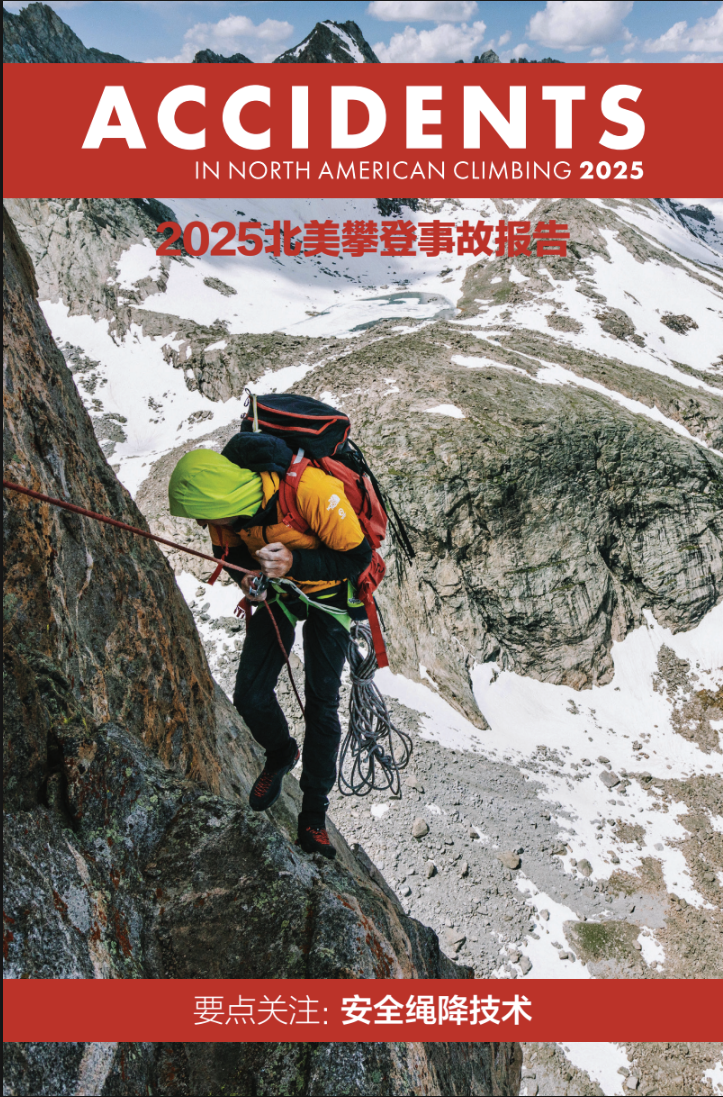
2025 Accidents in North American Climbing Chinese Translation
The 2025 ANAC has been translated into Chinese by a group of climbers who have produced a limited print version. Youqing Huang, part of a volunteer team in Beijing, met with ANAC Editor Pete Takeda in Salt Lake City. Said Huang, “It is with genuine enthusiasm and a shared commitment to climbing safety that we have brought this project to fruition. We look forward to continuing our work with the American Alpine Club in the years to come.”
This is a private volunteer initiative; you will be able to access a copy through the AAC Library.