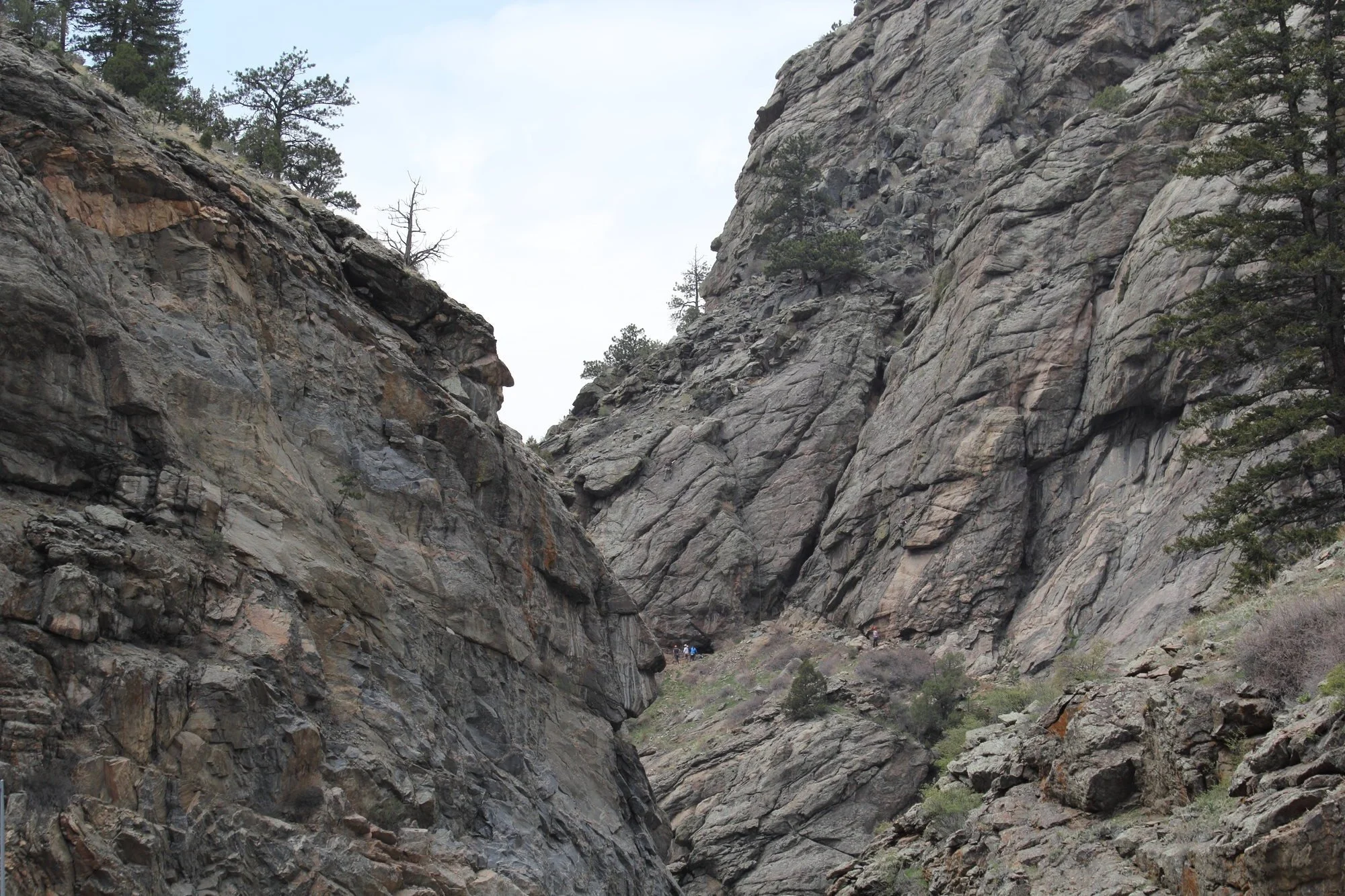
View of Mt. Diablo, Walnut Creek, CA. Photo provided by Wikimedia Commons.
It’s August, and in a few weeks our goals will probably shift out of the alpine as cooler temps bring relief to what has felt like a global heatwave. For many of us, milder conditions mean sport climbing. Whether revisiting a project or getting some pitches in, safety should always be at the forefront.
Fall from Anchor | Rope Detached from Open Anchor
Bay Area, Mount Diablo State Park
Safe as it seems, sport climbing demands lowering—a technique that has replaced rappelling as the leading cause of roped climbing accidents. Lowering is almost always entirely equipment dependent. It also involves critical technical steps high above the ground, and almost every fall from the anchor is a ground fall. This month, we look at an accident featured in the 2025 ANAC in which a climber fell while cleaning a toprope anchor at Mt. Diablo, California. She reported the following:
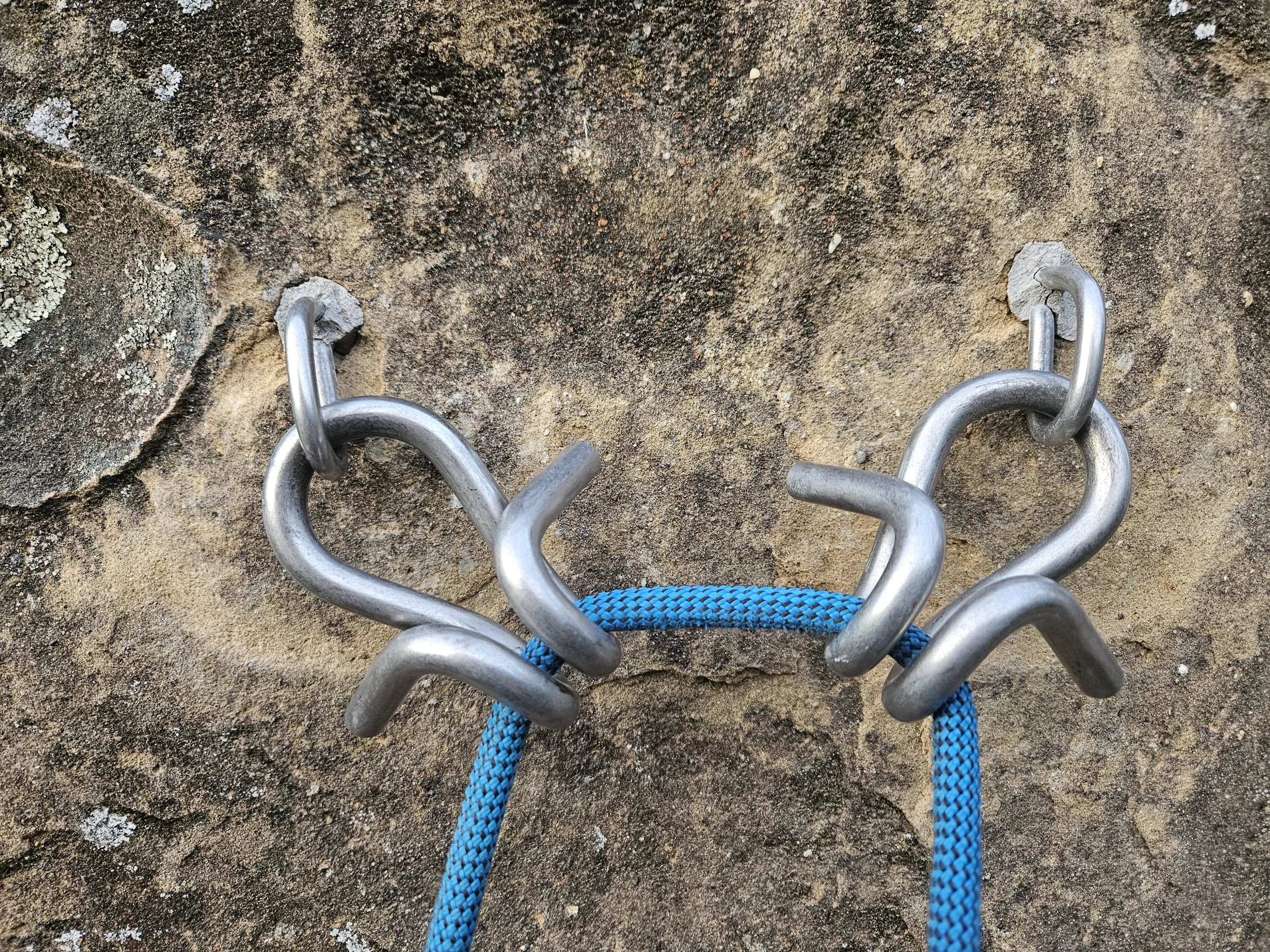
This ram’s horn anchor on a 30-foot 5.10 called Two for One in Mount Diablo State Park, California, was involved in a near-fatal accident on October 26, 2024. Photo provided by Sean Burke/Kim Harris.
“I was toproping a 5.10a called Two for One (left variation). I reached the anchor to clean the quickdraws. I secured myself with a PAS. I hadn’t seen this type of hardware before, and it was a type that wasn’t fully enclosed—as in the case of a mussy hook. The adjoining link wasn't big enough for me to thread the rope through, so I put my rope across the hardware, stood up to unclip my PAS, sat on the rope, and fell. I have no memory of the fall. I blacked out and woke up in a hospital operating room.
”I broke my left ulna, two ribs on my right ribcage, part of a vertebra, my sacrum, and the ball joint on top of the femur. My helmet broke, and there was a small gash on the left side of my head. I also hit my left butt cheek, because the nerve endings have no feeling in that area. I had one surgery to cut off part of the fractured vertebra and to drain a hematoma. I was hospitalized for four days.”
Analysis
My climbing friends and I determined that it was a ram’s horn that I encountered at the anchor. I hadn’t wiggled the rope underneath the (curled) part of the horns that would’ve prevented the rope from slipping out. Either that or, when I unclipped my PAS, the rope came out. I fell 30 feet and rolled a further 10+ feet downhill, along with the rope. It happened quickly, and K (my friend) didn’t see what happened because when I was at the anchor, my body blocked her view. K ran to get cell reception and called 911. Apparently, I was able to answer questions, but today I have no recollection of what I said. (Source: Jenna Chan, Bay Area Climbers Coalition, and the Editors.)
Editor’s note: The ram’s horn is ultimately an open system fixture. While there’s an advantage in having fewer necessary steps to lowering (including untying and retying), ram’s horns suffer from the possibility of unthreading. Two fatalities occurred in Austria—Peilstein (2022) and Martinswand (ca. 2020)—in which the climber’s rope became detached from ram’s horns while rappelling. Confusion can exist on how to use any unfamiliar fixed hardware. This accident illustrates the peril when the anchor hardware’s design attempts to balance convenience and safety. That said, no anchor is foolproof, and no design can negate human error.
Video—Ram’s Horn Accident Analysis
Here’s what we THINK happened in this 2024 accident in Mount Diablo State Park:
A climber was cleaning an anchor that incorporated a set of ram’s horns, something she’d never seen before. Carabiners might have been blocking the fixture because, in her recollection, the links weren’t big enough to thread her rope through. She put the rope ACROSS the hardware, stood up, unclipped her PAS, sat on the rope, and fell.
Lowering hardware is either closed (rings, quicklinks, chains) or open (ram’s horns, mussy hooks, and—if they haven’t been updated—unwelded cold shuts from the 1990s). Ram’s horns are cheap, easy to install, and fast to use—thread the rope through, no need to untie and retie, and then lower. But as enclosed as they look, ram’s horns are open anchors. In rare cases—standing above the anchor or threading the rope incorrectly—the rope can come out of the ram’s horns.
Video—Using a Ram’s Horn
Most climbing involves lowering, so much so that lowering has replaced rappelling as the probable leading cause of roped climbing accidents.
This month, we cover an accident in which a climber was cleaning a ram’s horn anchor and threaded the rope incorrectly, which unfortunately led to a ground fall. Fortunately, the climber survived the fall.
It may seem simple, but when using a ram’s horn anchor, thread the rope through EVERY available horn. Always weight your system before lowering, and when using open anchors, be a pro and keep it low.
Video Credits: Pete Takeda @pete_takeda, Editor of Accidents in North American Climbing; IFMGA/AMGA Guide Jason Antin @jasonantin; Producers: Shane Johnson and Sierra McGivney @sierra_mcgivney; Videographer: Foster Denney @fosterdoodle_; Editor: Sierra McGivney @sierra_mcgivney
Get Outside Safely—Rescue Coverage
Whether you’re questing off on the twentieth pitch, or checking a landing zone for a boulder, having the AAC’s rescue benefit is a critical step for safety in climbing–ensuring you can find your flow a little more easily knowing we have your back in the case of a medical emergency.
Join the AAC today at the Partner level or higher, and back up your protection with up to $7,500 in rescue benefit and $5,000 in medical-expense coverage.
The Prescription is Supported By: