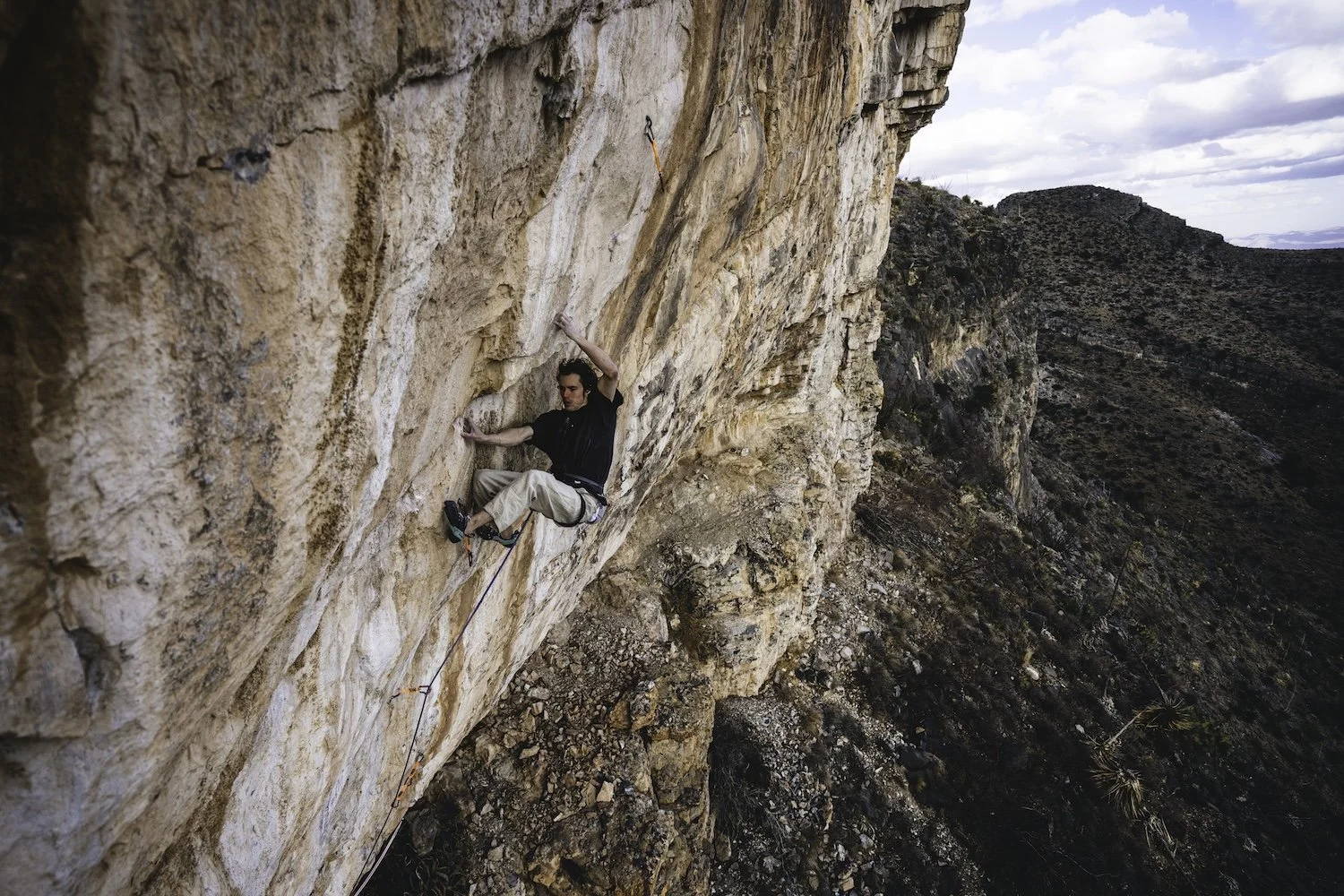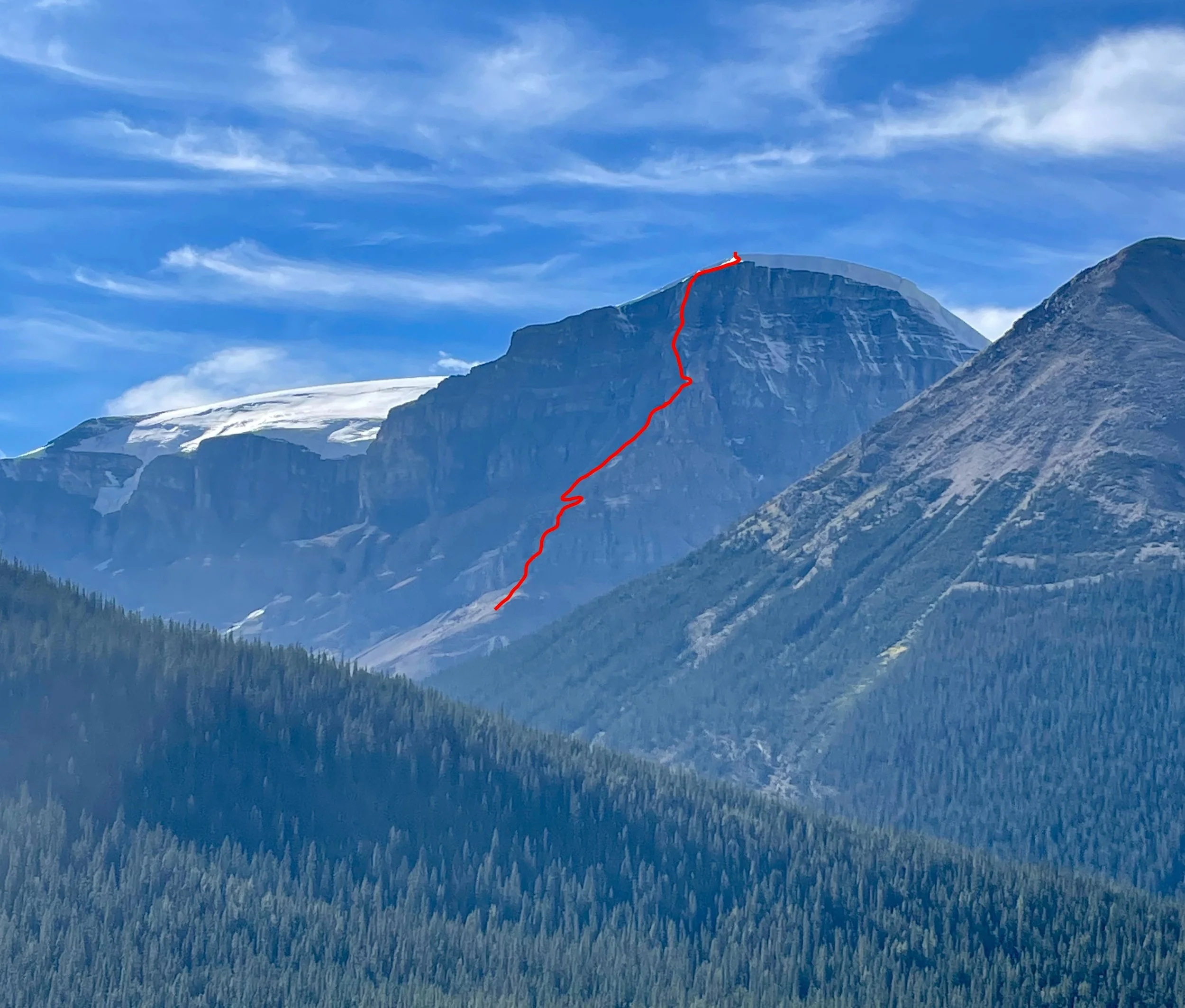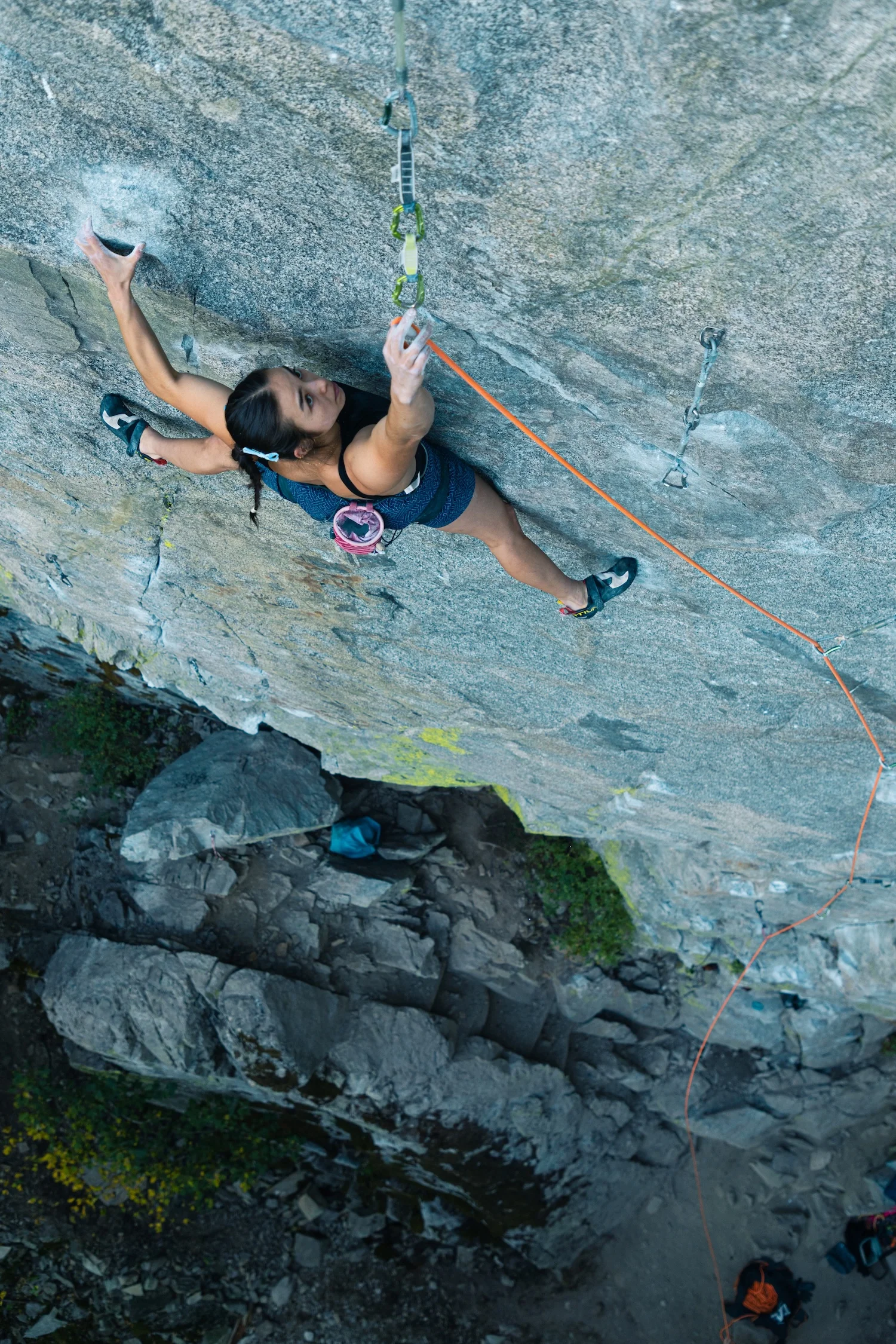
“Mount Kenya: The Heart and Soul of African Alpine Climbing,” this year’s “Recon” article in the American Alpine Journal, offers an in-depth look at Africa’s second-highest mountain and its extraordinary cultural and climbing history. Ian Thorpe, chairperson and librarian of the Mountain Club of Kenya, wrote this superb story, which describes more than 175 years of recorded history, plus delves into legends on the mountain going much farther back. One tale that arrived too late for Ian’s article describes a difficult new route on a Mt. Kenya satellite cliff called the Temple. We’re sharing that report here, along with some reflections on the mountain by Katie Ives, who edited Ian’s piece.
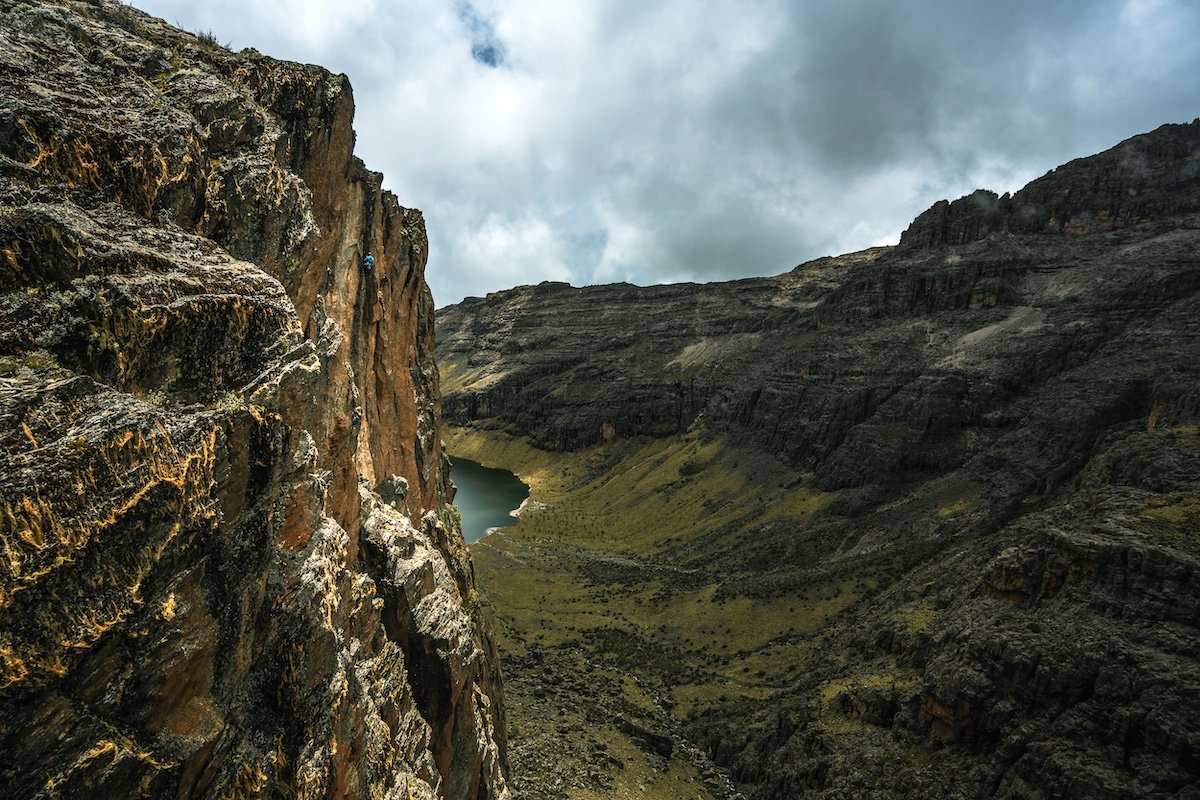
Photo by Danny Skilton.
Rainmaker: A New Free Route at the Temple
Mt. Kenya has long drawn climbers to its two highest peaks, Batian (5,199m) and Nelion (5,188m). Beyond the famous summits, there is an extraordinary amount of unclimbed rock on the nearby cliffs. On the dramatic Temple cliffs, rising above Lake Michaelson and topping out at Mintos Camp (4,300m), several hours’ walk from the road, there were only four recorded climbs, dating from 1971 and 2004. Our new line, Rainmaker, and the other four routes share some of the most impressive steep walls in Kenya, with stellar exposure and striking crack systems.
In August 2025, my Colombian friend Marcos Gonzalez and I were on Batian to support the Mountain Club of Kenya in its effort to equip the standard north face route with safe rappel anchors. With a few days to spare, we headed to Mintos Camp and worked on cleaning an obvious line on the cliffs below, culminating in an overhanging corner crack that would be the crux of the climb. Rain and loose rock left us short of time, and we headed home so Marcos could fly back to his day job of driving trains around Switzerland.
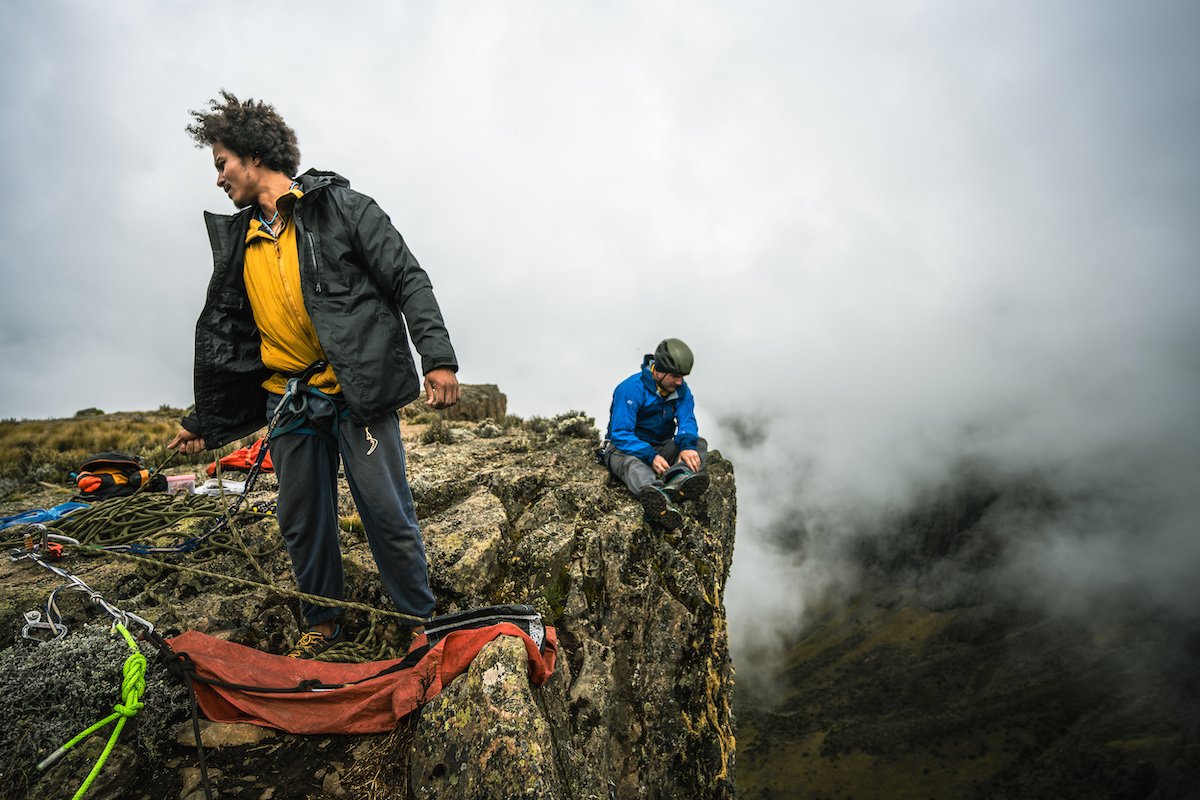
Photo by Danny Skilton.
A weekend trip from Nairobi in February 2026 to send the route with Harmen den Braber was washed out. Rain and snow descended from the peaks and chased us back down to Embu, where we shared a tasty meal of barbecued goat meat called nyama choma.
In March, I returned with Peter Muambi Naituli, Kenya’s strongest climber, alongside local guide Stanley Macharia and photographer Danny Skilton . The rain came along, too. On Mt. Kenya, local tradition holds that sacrifice can summon rain; our offering was repeated soaked approaches, torn skin, dropped gear, and relentless enthusiasm. By this point, Rainmaker was the only possible name for our new route.
After several more days of cleaning, working the harder pitches, and adding occasional bolts in sections of dubious rock, we completed the first ascent of Rainmaker (140m, 6c+/5.11c), a six-pitch trad line with breathtaking views. Easily reached from Mintos Camp, it hints at the vast undeveloped potential of Mt. Kenya’s surrounding walls.
—Giovanni Trambaiolo, Australia/Kenya
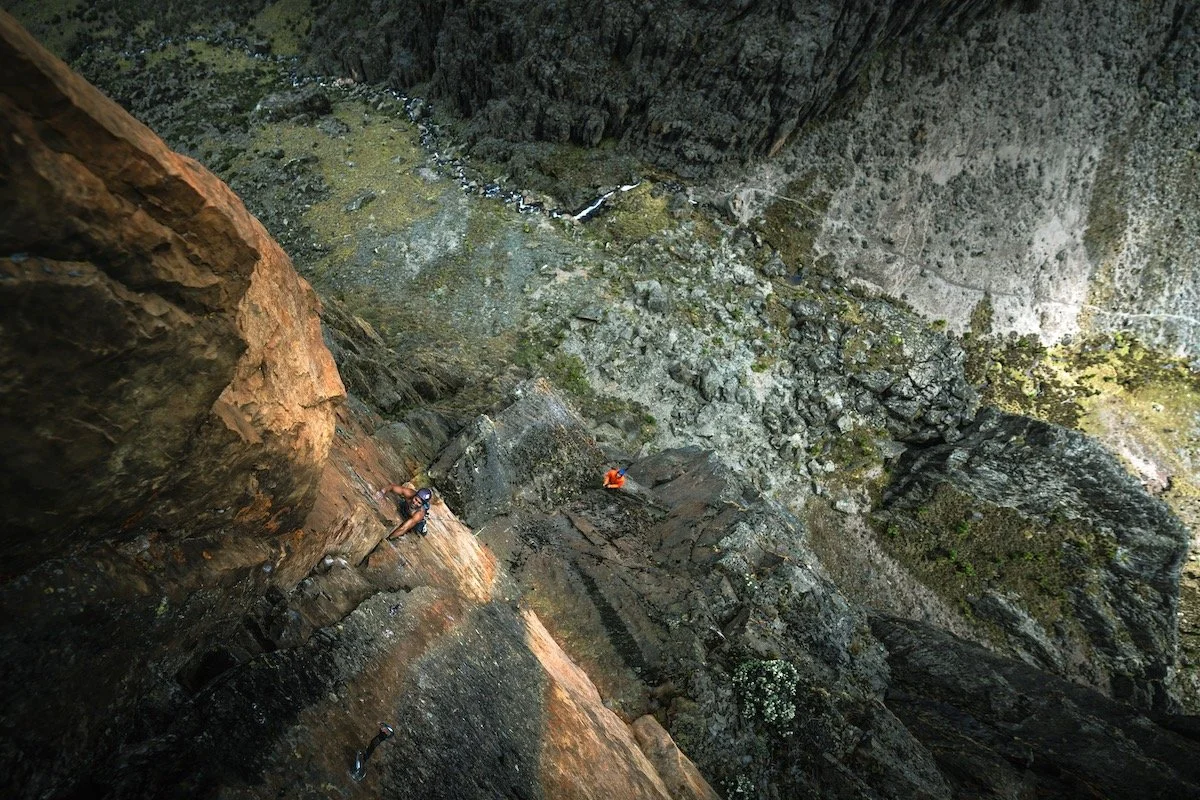
Photo by Danny Skilton.
Mt. Kenya: Beyond the Guidebooks
We asked Katie Ives, who spent several months collaborating with Ian Thorpe on his Recon feature for the new AAJ, to share some of what she took away from their work. Ives is the former editor of Alpinist, author of Imaginary Peaks: The Riesenstein Hoax and Other Dreams, and an editorial director of Desire Lines Collective.
In your work on this story, what did you learn about Mt. Kenya that intrigued you the most?
When many Western readers of mountain literature think of Mt. Kenya, they might picture the famous British duo of Eric Shipton and Bill Tilman and the classic 1930 adventure on the pinnacled west ridge of Batian, the mountain’s highest summit. Or, readers might recall the wild tale of the Italian prisoners of war who became so obsessed with Mt. Kenya in 1943 that they improvised climbing gear (using scrap metal and mosquito-net cord, among other scavenged materials), broke out of a British camp in Nanyuki, trekked for miles to summit Lenana, the massif’s third-highest point, and then, having nowhere else to go until the war ended, snuck back into their prison.
But there are also stories of local and indigenous Kenyan climbers that deserve to be widely known. As Ian Thorpe writes, Mt. Kenya is sacred to nearby residents—including Gĩkũyũ, Embu, Meru, and Maasai people—and known to them as Kĩrĩnyaga, Kîrîmaara, and Ol Donyo Keri. Gĩkũyũ stories depict a legendary ascent by the ancestor of their people who was taken to the summit by the deity Ngai. Other Kenyans have long made pilgrimages to the massif, such as the Meru preacher Ephraim M’Ikiara, who soloed Nelion (Mt. Kenya’s second-highest summit) barefoot in 1979.
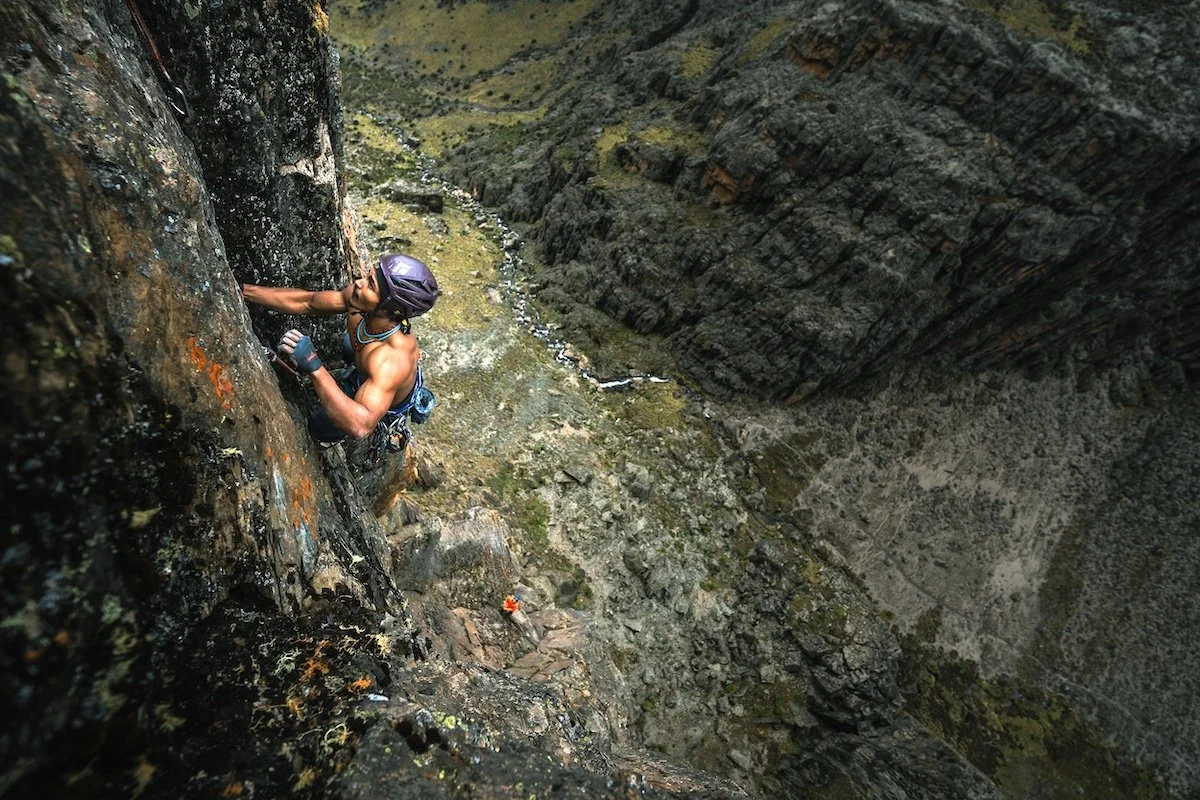
Photo by Danny Skilton.
When you look at the progression of technical routes, speed climbing, and other records, Kenyans appear again and again as protagonists: Gĩkũyũ mountain guide Ali Mucemi, who used dry-tooling techniques while guiding Nelion in 1941; Gĩkũyũ mountain rescuer Thumbi Mathenge, who was one of the first ascensionists of the iconic Diamond Couloir in 1973; Kenyan ultrarunner Cheruiyot Kirui, who completed three round trips from park-entrance gates to the summit of Lenana, by three different routes, in less than 24 hours in 2021; and Peter Muambi Naituli, a young climber of Meru descent who has accomplished impressive ascents around the massif and elsewhere in Kenya—among many others.
To work toward an accurate and inclusive understanding of world mountaineering, history writers and editors need to recognize the significant roles of Kenyans and other African climbers.
Did one story of Kenyan climbers particularly move you?
I remain profoundly moved by the story of Peter Muambi Naituli’s barefoot free solo of the Southeast Gully (350m, UIAA III) of Point John, which he completed in 2020, seeking a more intimate connection with the massif: how he sought his Meru grandmother’s blessing before the climb, and how her protective song echoed in his mind as he made his way over cold, sharp rock and through windblown clouds. The tale combines both technical mountaineering and ancestral tradition. More than just another recorded first, it reflects deeper understandings of what climbing feats and philosophies can be.
How did learning more about the mountaineering history of Mt. Kenya influence your understanding of history in other ranges?
The climbing stories of Mt. Kenya remind us that there is so much complexity, nuance, diversity, and possibility to encounter beneath the surface of mountaineering records. There’s a tendency among many Westerners to think of mountaineering history as primarily the evolution of a particular form of the pursuit that arose in Europe, documented by journal articles, alpine clubs, and various other institutions. Yet when you look more closely at archives and speak with local mountain communities, you encounter many other cultural traditions of climbing to high places—at times preserved in oral histories, archaeological traces, artifacts, and pilgrimage routes.
As Malawi climber and researcher Ed Nhlane once told me, we can learn to appreciate the multitudes of local practices that have emerged in different ranges in Africa and other continents—including centuries-old customs that continue today. By expanding our definitions of mountaineering, we can strive to see more of the immense variety of protagonists, styles, philosophies, motivations, and cultures of ascent. These stories can inspire more expansive, creative, and ecologically sustainable visions of alpinism.