
Since 2010, climbers have been exploring the mountains, cliffs, and boulders above the village of Rakchham in northern India’s Baspa Valley, drawn by varied, high-quality climbing and relatively modest elevations in this quiet corner of the Himalaya. Last fall, two Montana-based climbers—Ryan Griffiths and Seth Timpano—spent several weeks in the area. Here’s their story.
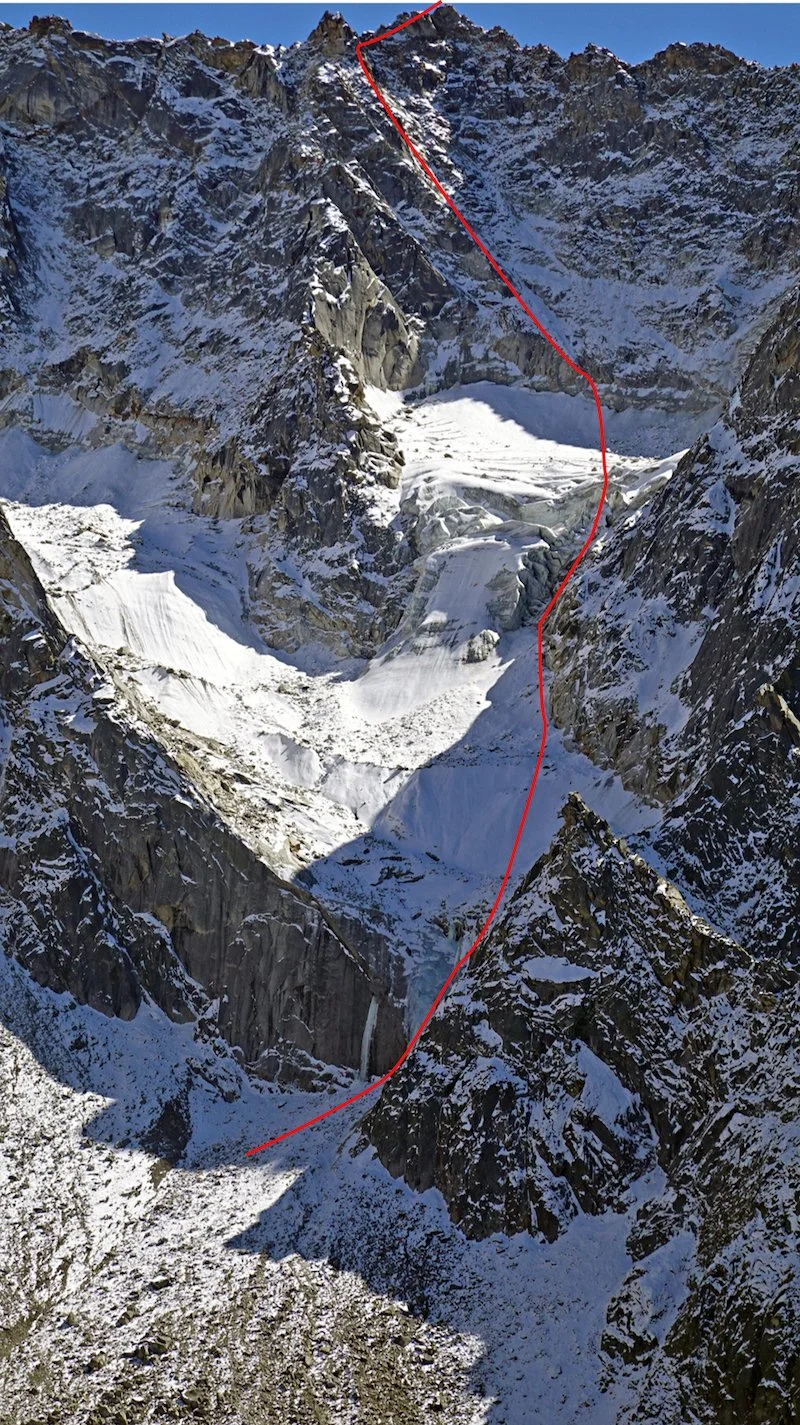
The 800-meter northwest face of Peak 5,400m above the Rakchham Plateau. Photo by Ryan Griffiths.
Rocking the Rakchham
In late October and early November 2025, Ryan Griffiths and I climbed new routes on two unclimbed peaks above the Baspa Valley. We were based out of the village of Rakchham at around 3,150 meters, with a small advanced camp on the Rakchham “plateau” at 4,100 meters.
After a week of acclimatizing, we spent October 21 and 22 climbing the northwest face of Peak 5,400m. This gave quality moderate ice and mixed climbing, but was not particularly sustained, as the route was split by a small pocket glacier, which we used for a bivouac. The 800-meter ascent had difficulties up to WI4 M5.
We next tried the east ridge of unclimbed Daboling (ca 6,050m) at the head of the valley. Starting from a high camp at around 5,400 meters, we climbed 13 pitches on mostly good granite, although at times the climbing was tedious and the terrain felt like stacked Jenga blocks. The line was classically alpine in nature, and it is difficult to assign a rock or mixed grade.
Our high point was around 5,850 meters. Four or five more pitches would have taken us to the summit slopes, but without bivouac gear, and knowing the descent would be complex, we made a conservative call to retreat. Our descent involved a dozen rappels (exclusively on rock anchors), first down the ridge then onto the steeper south face.
After a short rest in town, we ended the trip by climbing a 200-meter granite tower that tops out at about 5,100 meters. This is the Fourth Pillar of Ray Peak, as defined by the Austrian team that visited the area in 2019 (AAJ 2020). Ryan and I climbed the south face of this tower in five pitches, four of which were 5.9 or 5.10 and composed of perfect granite. We rappelled our route.
Overall, we found this to be a beautiful area with impressive boulders and excellent alpine rock potential. However, the alpine ice will require very specific—perhaps rare—conditions, as the mountains are losing their perennial snow.
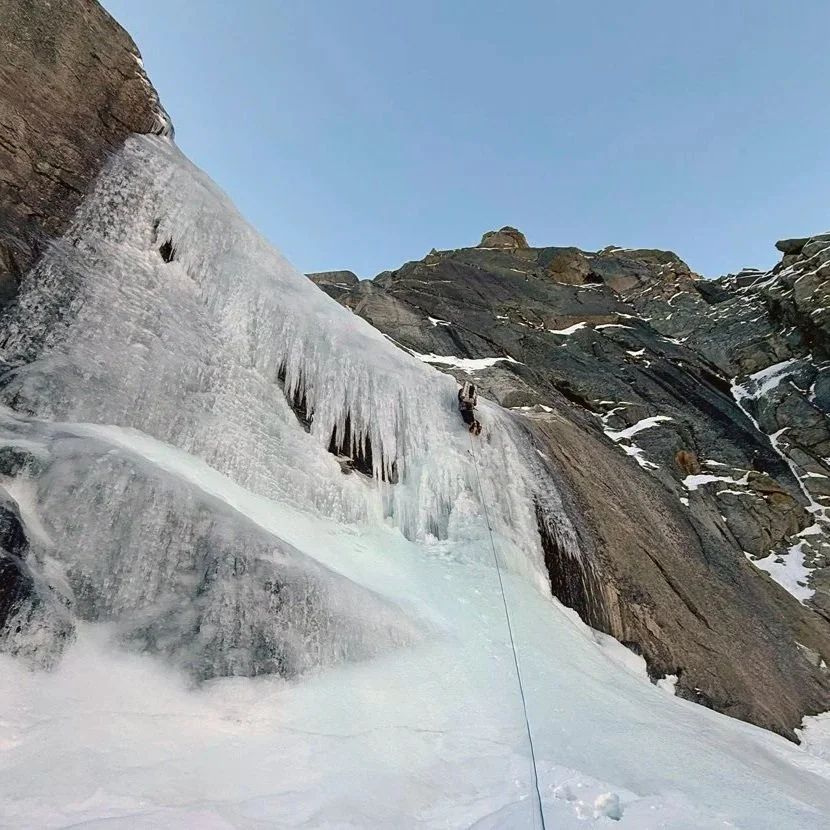
Seth Timpano on the first pitch of the northwest face of Peak 5,400m. Photo by Ryan Griffiths.
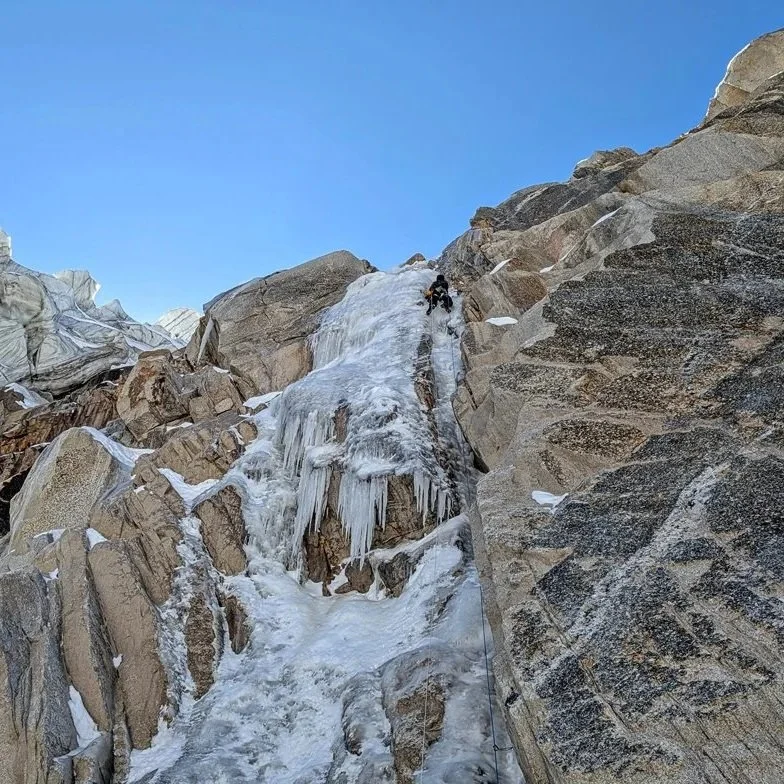
Ryan Griffiths climbs a nice ice pitch to circumvent the icefall on the northwest face of Peak 5,400m. Photo by Seth Timpano.
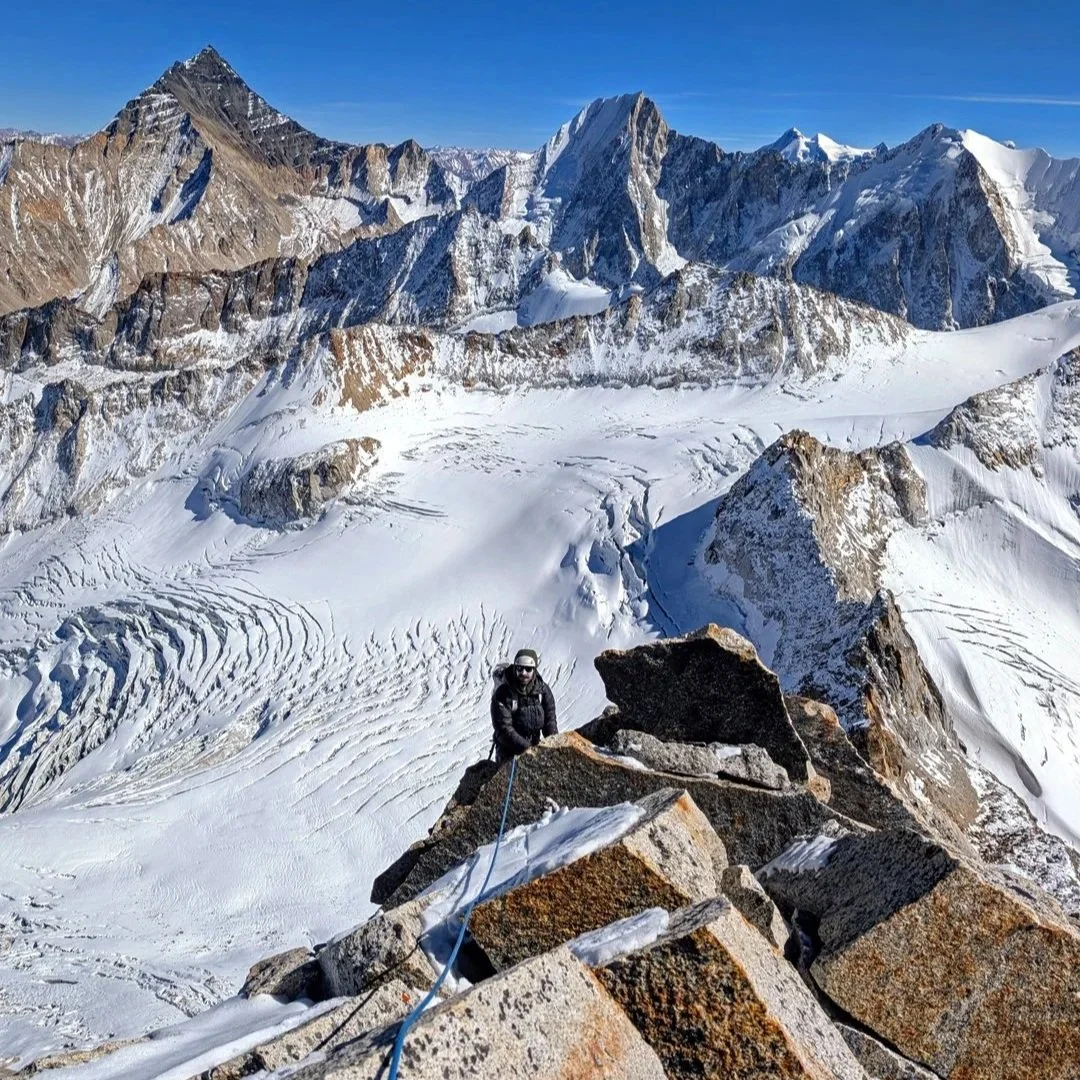
Ryan Griffiths high on the east ridge of Daboling. The rocky pyramid on the left is Phawararang (6,349m), climbed several times via the south ridge. Photo by Seth Timpano.
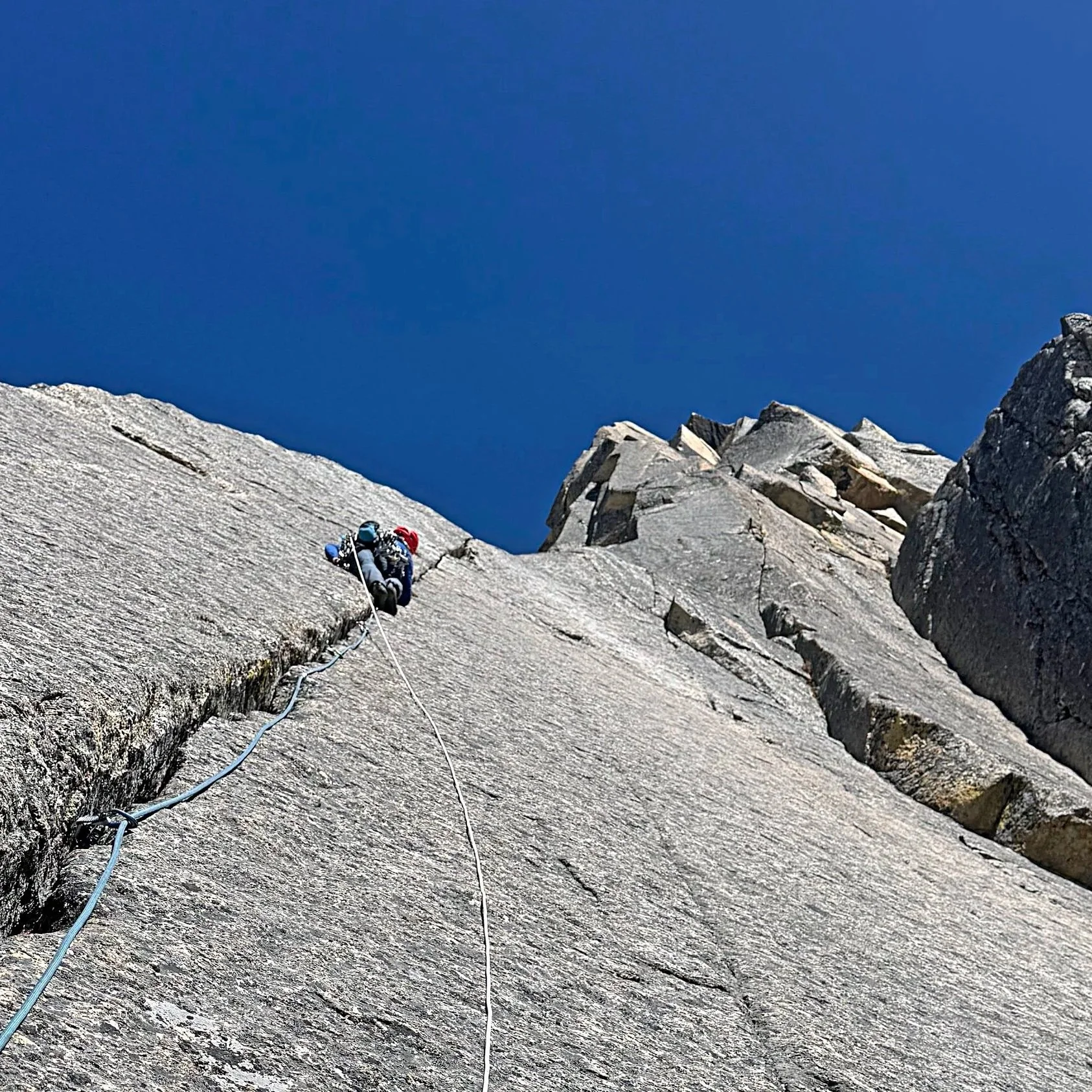
Seth Timpano on the excellent second pitch on the south face of the Fourth Pillar of Ray Peak. Photo by Ryan Griffiths.
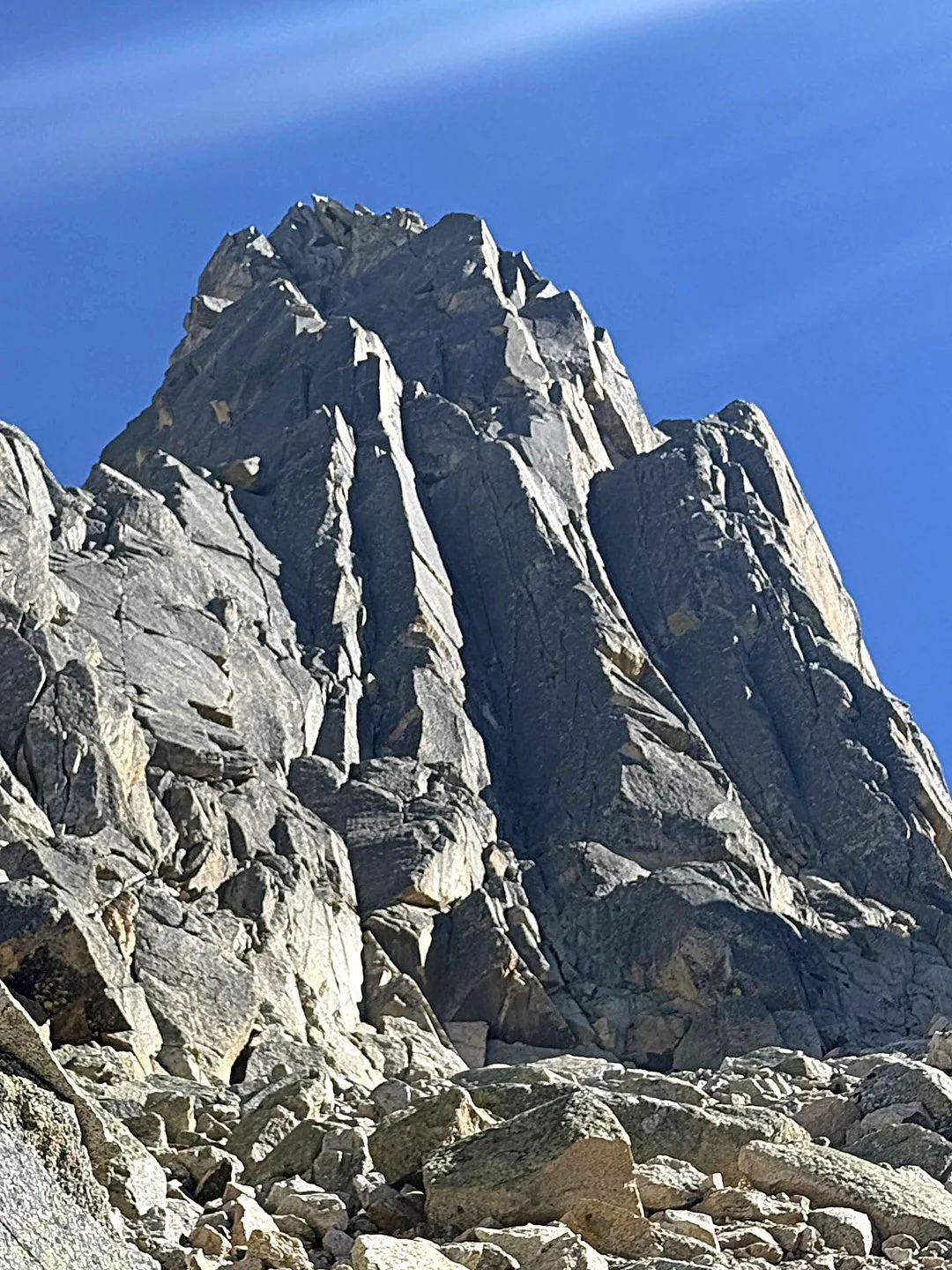
The south face of the Fourth Pillar of Ray Peak. There are three prominent dihedrals with their right walls in shadow. The 2025 route climbed splitter cracks up the sunny left wall of the rightmost corner, finishing with a long pitch up the southwest face directly to the summit. Photo by Ryan Griffiths.
Bouldering and Beyond
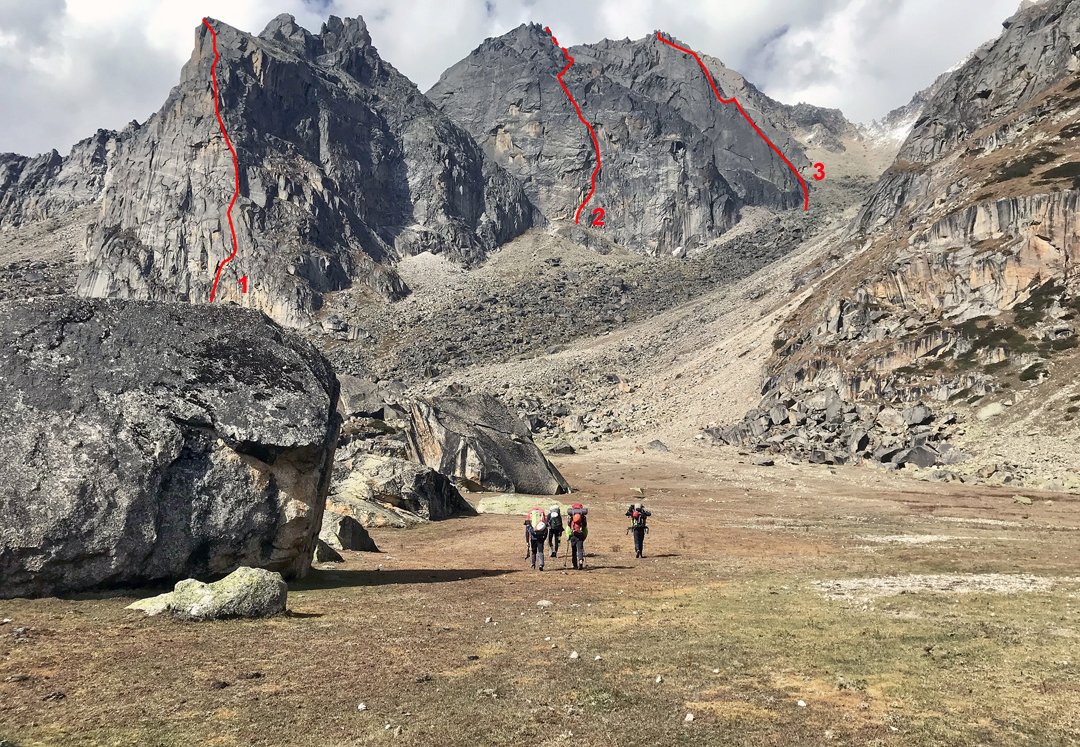
Three routes climbed in 2019, each with about 600 meters of climbing, seen from the boulder-strewn Rakchham Plateau. The reports are in AAJ 2020. Photo by Gebhard Bendler.
Modern climbing in Rakchham and the Baspa Valley has a somewhat unlikely origin story for an alpine zone: It began with bouldering. In 2010, well-known European climbers Elie Chevieux, Frederic Nicole, and Bernd Zangerl explored the Kinnaur district of Himachal Pradesh and discovered the Baspa Valley, “a veritable Shangri-La for the rock climbers,” as Chevieux wrote in AAJ 2012. Their stories about the climbing near Rakchham prompted a steady stream of visitors over the next decade. (Spanish climber Silvia Vidal was another early visitor—she soloed a 1,000-meter wall in the area in 2010.)
No one was more infatuated with the area than Zangerl: He has traveled from his home in Austria to Rakchham more than ten times. Zangerl also is one of the driving forces behind community efforts aimed at making climbing a sustainable activity that benefits and is welcomed by local residents. He recently published the first guidebook to bouldering in the area and helped spearhead a bouldering festival this past October, along with the locally led Rakchham Mountaineering & Adventure Club. A community website, rakchham.com, is a great resource for climbers considering a visit, providing beta, information on permits that support the local community, and an offer to help alpinists avoid peaks that the local people consider sacred.
In 2022, Five Ten produced a beautiful 20-minute video, directed by Ray Demski, showcasing Rakchham and the efforts to preserve its beauty and culture while the Baspa Valley develops as a climbing destination.

Last summer, the Women's Young Alpinist Team of the Swiss Alpine Club journeyed to East Greenland—without ever boarding a plane—and climbed six long rock routes, four of them in a fjord that had never been visited by climbers. Team leader Caro North is the main guest this episode, describing the difficulties of organizing such a complex exploratory trip. Just getting there and back involved trains, ferries, cars, and a voyage by sailboat. Even though she was the most experienced climber in this group, Caro deliberately stepped back from the decision-making, letting the younger team members plan and lead their routes—a rewarding tactic for Caro, but also one with some emotional challenges.
Rounding out this episode, host Jim Aikman interviewed American Mike Libecki, who has done more exploratory rock climbing in southeast Greenland than anyone alive.

The Line is the monthly newsletter of the American Alpine Journal.