It’s Rocktober and across the continent climbers are sending their projects. This month we remind you that mishaps in “safe” genres like sport climbing can have serious consequences. This accident occurred in 2019 and was only reported this year. However, in the newly published 2025 ANAC, we feature several similar groundfall accidents.
As you’ll also see below, we’re also featuring a human factors post-accident analysis that reveals some recurrent themes and behavior patterns. These are introduced in an article written by Dr. Valerie Karr.

Red Rock Canyon National Conservation Area is one of the best rock climbing areas in North America. This area features hundreds of boulder problems, sport routes, and traditional climbs. As such, it also hosts a wide range of climbing accidents. Photo by BLM.
Groundfall | Foot Slipped While Clipping
Nevada, Red Rock Conservation Area
On June 22, 2019, B, a male climber, was leading Where Egos Dare (5.12a) as a cool-down after a long session. The four-bolt route was easy enough for this climber that he could run a quick lap and as a result B “didn't take it seriously and was climbing very arrogantly… without careful consideration of the consequences.” Besides being short and punchy, the route also has several hard clips that put the leader within groundfall range.
B was, “…cooling down after a hard day of projecting. At the third bolt I pulled a bunch of slack to clip and my foot popped.” He had placed his foot carelessly on a bad part of the hold when it slipped. He had an arm full of slack and, “…decked straight on my butt.” He suffered lumbar compression fractures and fractured sacrum. “I was mere inches away from a shelf that, that had I impacted with my lumbar spine, I would've undoubtedly been paralyzed.” Though in serious pain, he, “walked out under my own steam. Likely due to adrenaline.”

Where Egos Dare (5.12a). The four lead bolts are each marked with a yellow “x”. In June 2019, a climber fell while clipping the third bolt and he landed on the ground. Besides highlighting the inherent dangers of sport climbing, this accident is an example of “risk normalization.” Photo by Anthony Lijewski.
ANALYSIS
B fell approximately 15 feet. A pit/trough below Where Egos Dare created a ledge that one could hit in a fall. He had stick clipped the first bolt but, “Had I stick clipped the third, this accident wouldn't have happened. Back then I considered it ‘cheating’ to clip more than the first, which in retrospect is silly.”
He adds, “Sport climbing is flippin’ dangerous! For all the sketchy gear routes I've done in my life it was a 35' tall 12a sport climb that nearly cost me the ability to walk. Unfortunately, I don't think most sport climbers have a clue about this.”
Finally, the fallen climber said, “I’d add that one should climb more carefully. Because this route was well below my redpoint level I didn't take it seriously. Ultimately, I put my foot to the right of the actual foothold and that is what did me in. Luckily, I'm physically 100% now, but it was such a close call that I definitely have residual psychological effects. My wife still has trouble belaying me despite it not being her fault. I think the psychological impacts of such accidents cannot be overstated.”
(Source: Anonymous Climber.)
HUMAN FACTORS ANALYSIS
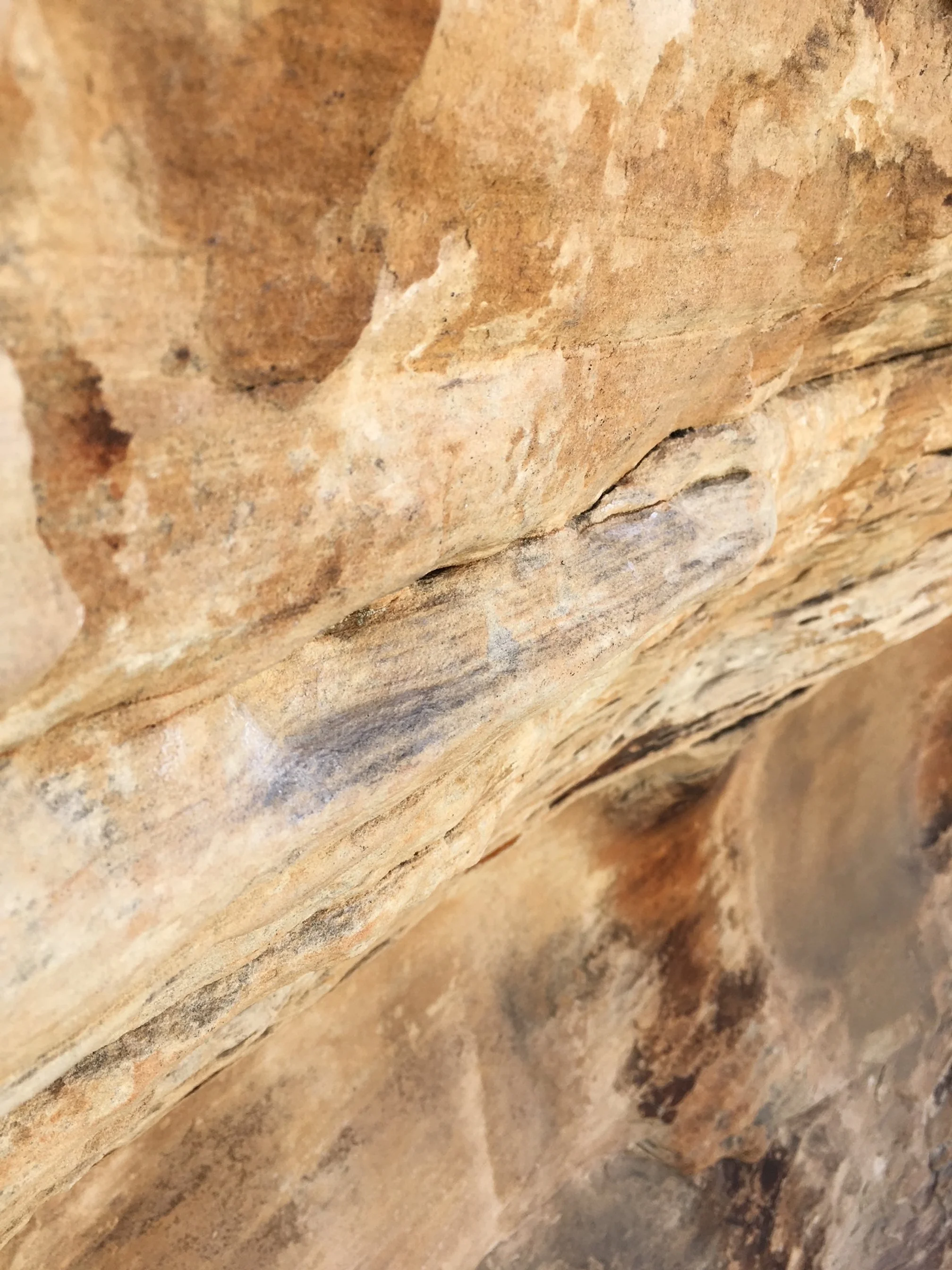
This is the actual sloping and insecure foothold from which B’s foot slipped, sending him to the ground. Photo by B.
This groundfall is a classic case of risk normalization in which repeated exposure to hazards without consequence, lowers the perception of danger. Over time, shortcuts—clipping from poor stances, eschewing procedures like a higher stick clip, and a casual approach to moderate climbing—diminish the perceived hazards of consequential terrain. On the day of his accident, B admitted he was climbing “carelessly,” on a warm-down route that was well within his ability. Other distracting factors contributed to an atmosphere of informality and distractions at the base of the crag that compounded a sense of invulnerability.
B’s narrative also reveals how cultural values within climbing can magnify risk through what he called the “purity ethics.”Beyond simple overconfidence, B acknowledged an internalized idea that stick clipping beyond the first bolt was “cheating.” This belief overrode pragmatic risk assessment. Only after his accident did he reframe those values, prioritizing safety over style with an understanding that it’s “all contrived anyway.”
(Source: Dr. Valerie Karr.)
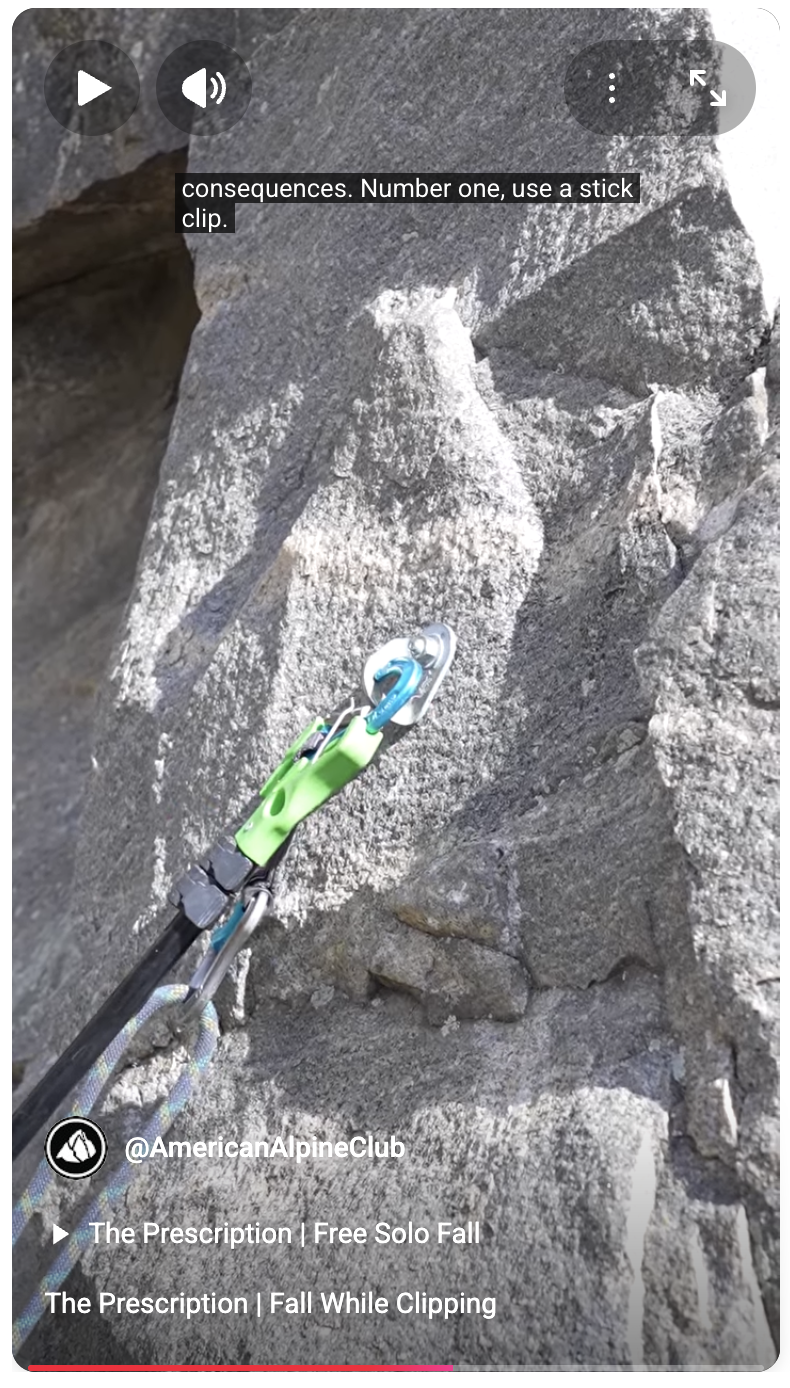
VIDEO ANALYSIS
Pete Takeda, editor of Accidents in North American Climbing, and IFMGA Guide Jason Antin discuss how to reduce the likelihood of an accident a couple bolts off the ground.
Pete Takeda, Editor of Accidents in North American Climbing; IFMGA/AMGA Guide Jason Antin; Producers: Shane Johnson and Sierra McGivney; Videographer: Foster Denney; Editor: Sierra McGivney; Location: Accessibility Crag and East Colfax, Clear Creek, CO.