Guidebook XV

Guidebook XV—Rewind the Climb

A World of Appalling Grandeur

The First Ascent of Mt. Logan

By Hannah Provost with support from the AAC Library

Photos from the Allen Carpé Collection in the AAC Library

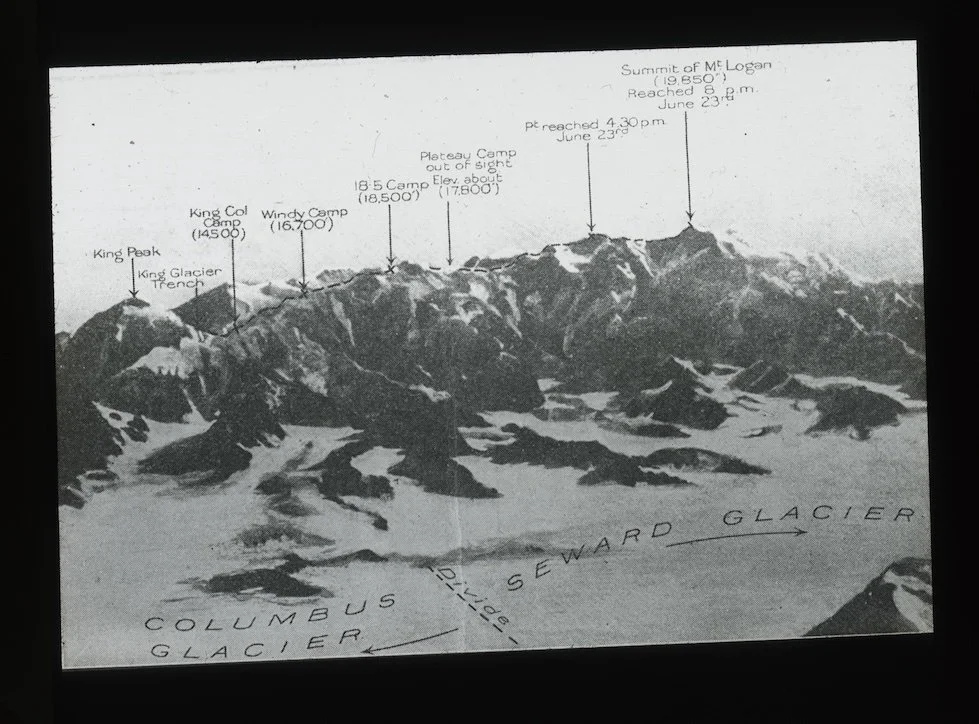
The snowy fortress of Mt. Logan massif had opened its door after weeks of siege. It was June 23, 1925, when Allen Carpé and five others stood atop the highest peak in Canada for the first time, the sheer pinnacle of the summit plunging down sharply to the Seward Glacier below.

To Carpé, in the thin air, it felt like every moment was twice lived.

And in the media storm and flurry of drama that followed, he would be called upon to set the record straight—and relive those moments yet another time.


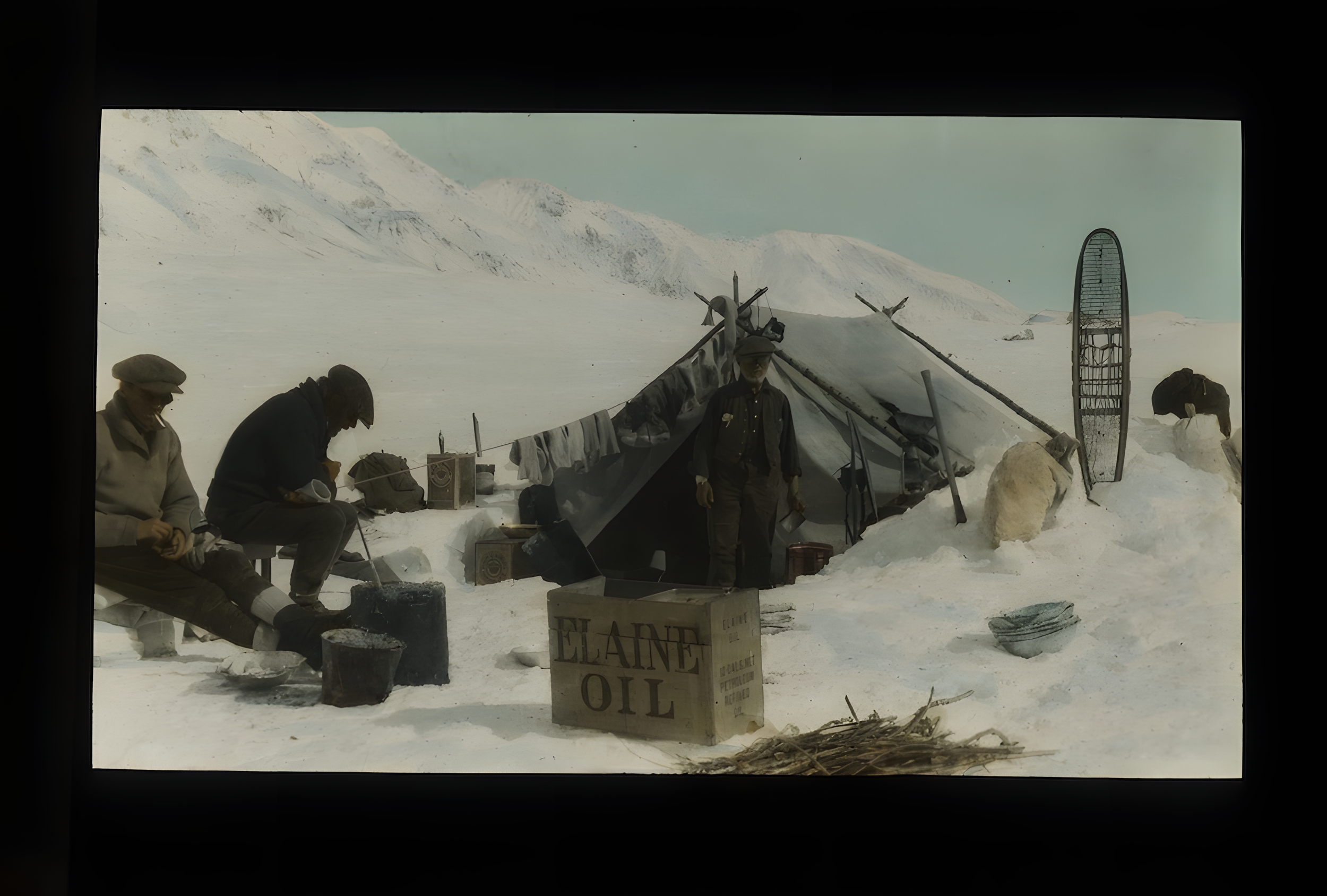
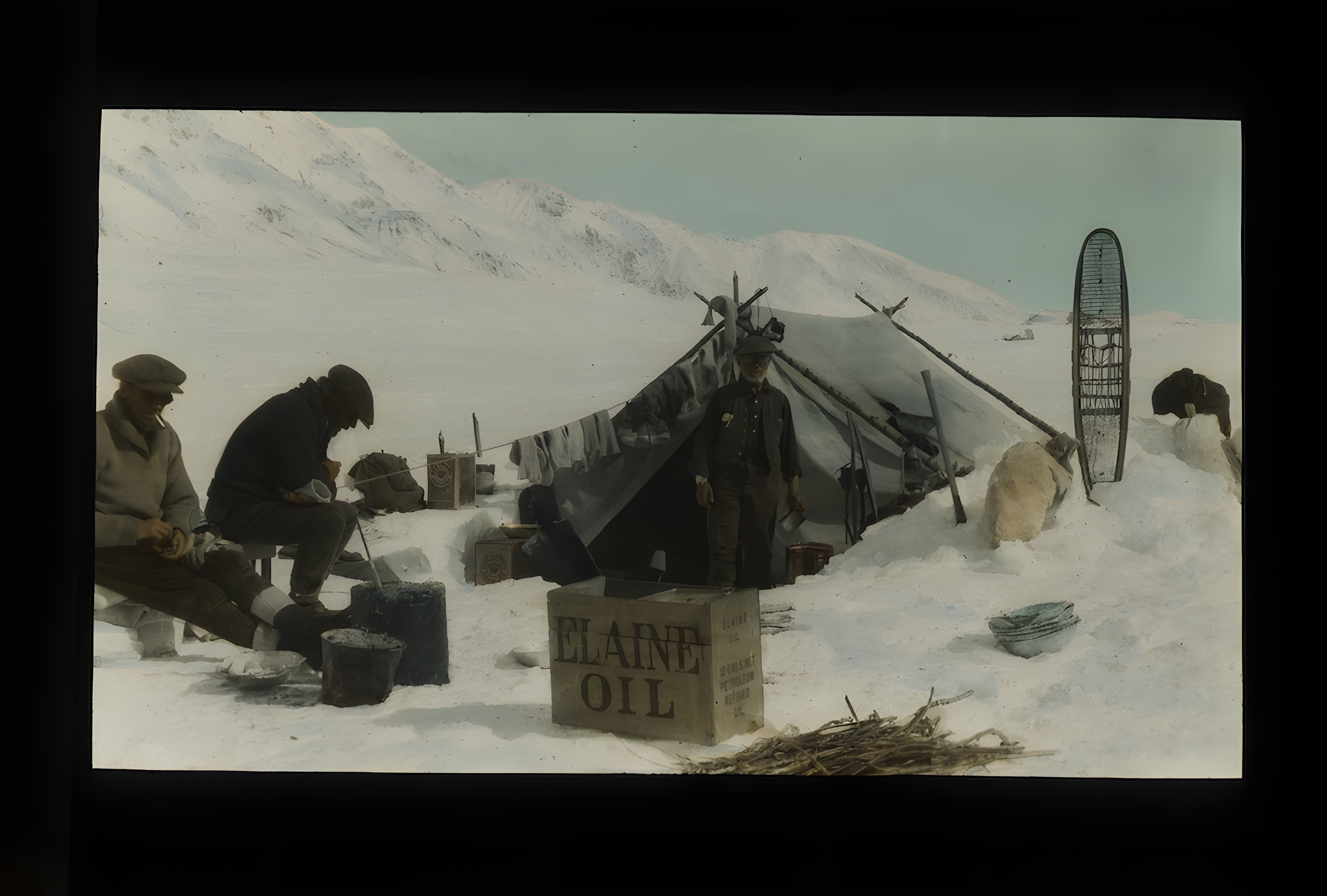
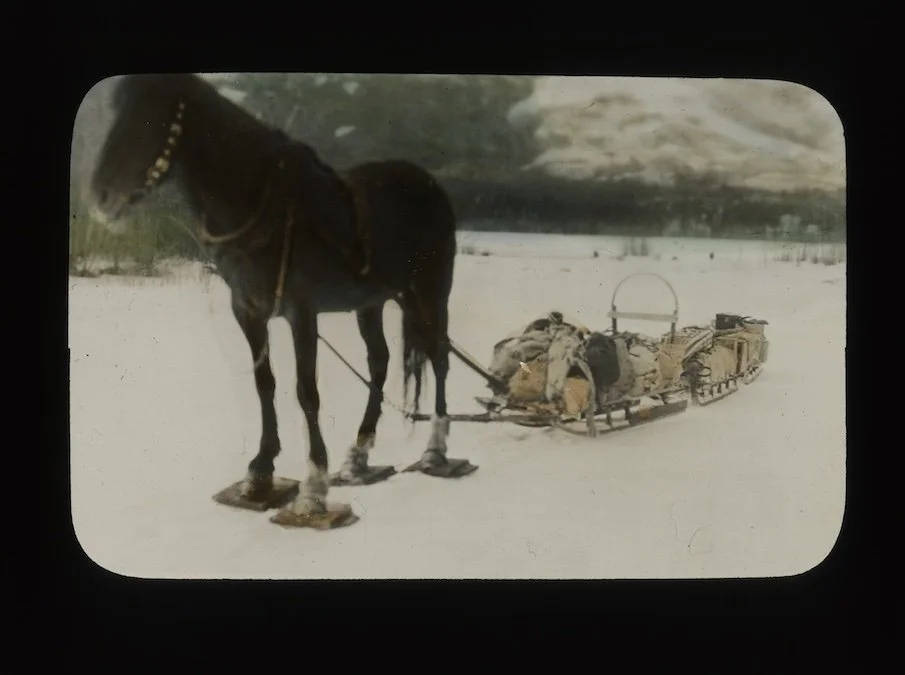
At first glance, the 100-year-old story of the first ascent of Mt. Logan might have a familiar outline—a band of men push up and up to ascend to the great heights, facing great hardship along the way. In the classic telling, we follow the expedition leader Albert MacCarthy as he spends weeks caching supplies in the dead of winter, utilizing sleds pulled by snowshoe-clad horses, and higher up on the mountain, cunning dog teams that fight whenever left alone.

In the classic telling, we follow MacCarthy, American Alpine Club representative Allen Carpé, American Norman Read, Colonel Foster, and the others on the expedition as they ferry their own gear back and forth between each subsequent camp, the measure of days the number of heavy loads these men have carried to the next advanced base camp, or their proximity to frostbite. With teeth on edge, we’d read of 11 journeys through a precarious icefall as they consolidated their camp above 10,000 feet, transporting nearly a ton of equipment and food.

Once high on the massif, we’d delight in the cunning trick, attributed to MacCarthy, of planting 600 bare willow branches in the blowing snow every hundred feet, to prevent against getting lost in the whiteout. Such trail maintenance would ultimately save lives and precious time, but still couldn’t prevent one rope team from losing their way during a storm that chased them down from the summit. Those men spent 42 hours without shelter in the freezing, grainy snowbanks, only realizing their mistake when they found themselves walking in circles, back on the summit plateau, the slopes ominously appearing at unexpected angles.

The theme of that story is loneliness, drudgery, and the sheer force of will needed against the worst conditions that such an icy world could offer.

Reflecting on these themes, Carpé writes in his own telling of the ascent, published in 1933 in the American Alpine Journal: “I think it was during these days that the awful loneliness of these great ranges was first borne in upon me with something of the force of a personal experience. Until we turned the corner into the Ogilvie glacier, we could look back down the valley and sense the presence of the lower hills and of living things. Now as we worked in toward the savage cliffs of Logan we entered a new world of appalling grandeur, and our little band seemed insignificant and very much alone. We had no support behind us, no organization of supply, no linkage at all with the outer world. We were on our own.”
That telling is perhaps best left to those who experienced it. But a 100-year distance can sharpen the focus of our lens on something else—the mundane letters and newspaper stories that came afterward, that can so easily be forgotten as part of the story, and that might tell us a little something different about the legacy our climbing ancestors have left us.

There are, of course, the historical accounts—a hundred pages dedicated to the planning of the ascent, scientific studies accomplished during the expedition, and the story of the climb itself, all included in the Canadian Alpine Journal. Because the AAC was not yet publishing the American Alpine Journal (it would do so for the first time in 1929), the American account of the ascent was published in the Appalachian Mountain Club’s journal. The American public, too, was in awe, with repeated articles appearing in the New York Times, the Boston Transcript, and others.

But a flurry of letters from September 1925, dashed off in angry haste with cross-outs and misspellings, reveal a gap in the telling. The writer, expedition member Norman Read, repeatedly argues to his friend and reader, Allen Carpé, that the representations of the expedition in the media are “positively disgusting in its sensationalism and its falsity.” He asks Carpé to write the story the right way—to tell it in a manner ‘worthy of the fraternity of mountaineering.’ The letters are a source of 100-year-old gossip—they tell of personal disgruntlement and vendetta, but also raise a question that a century later still holds: If there is no cheating in climbing, only lying, then what do you do about a little storytelling flair—a little hyperbole? What are the ethics of telling a mountaineering story right?

Flip over one of The New York Times clippings that features the story of the Logan ascent, and you’ll see pictures of the season’s debutantes printed in sepia—flaunting flapper dresses and long strings of pearls. It was the 1920s: a period of extravagance, economic growth, and patriotism after the horrors of the First World War. Only a decade before, in 1913, did the first people stand atop Denali (Mt. McKinley). In 1924, a highly public attempt on Mt. Everest ended in the disappearance of George Mallory and Andrew Irvine, generating considerable speculation about whether they had made the first ascent before going missing. The American Alpine Club was founded in 1902; the Alpine Club of Canada had started in 1906. Amid this milieu, as they watched the U.K.’s Alpine Club take their shot at Everest, the Canadians and Americans had started to look around for their own slice of history. There was a lot at stake— this ascent needed to make a splash.

From the get-go, the Logan expedition was known to be a massive undertaking in logistics, and MacCarthy took on the labor of caching the supplies needed for a siege-style ascent, so deep in the Canadian interior that it was a slog of over 100 miles from the nearest town to Logan’s surrounding glaciers. As Carpé would write, MacCarthy “was not a man to hold back when there was work to do.” MacCarthy, as leader, dominated the expedition, and this really rubbed Read the wrong way.

Read alludes to “unpleasantness of the trip” and “personal grievances” in his letters. And it seems that such unpleasantness wasn’t all in Read’s head. MacCarthy, in his own account of the trip for the CAJ, closes with an acknowledgment of his behavior, and quite the excuse: “Thus, at midnight on June 28th, we again were down to the level where men think and breathe and work in a rational way and so may be held accountable for their actions. If sometimes while above that level, I was harsh and disagreeable, I ask that my companions please forgive me.”

Many accusations pile up in Read’s letters.

Read had heard whispers that the Canadians hadn’t even wanted the Americans to come along, and in Read’s opinion, Foster and MacCarthy were colluding to take all the attention from everyone else.

In the newspaper stories citing MacCarthy and Foster as sources, aspersions were cast that Read had deserted his companions in an hour of need, that another expedition member was weak and ineffectual, that Carpé was a coward and had wanted to turn back during the final summit push, and that “[MacCarthy] forced [Carpé] on since he felt that the official representative of the American Alpine Club should reach the top.”

And then there was the hyperbole—yes, they had rafted back down the river as the final leg back to town, but they were not “plunging through the swift waters of canyons” by any stretch. Similarly, there was plenty of heroism in the expedition, but the newspapers likewise stretched the danger they faced in the final snowy pitches. Read writes: ”Nobody was in a precarious position and there was no danger of loss of life that I could see. Such accounts as these hardly seem to fit in with the ethics of true mountaineering.”

In each of his letters, Read nudges Carpé to set the record straight. Always, it is some version of the note in his last letter: “Someone ought to really write the true story and blow up their attempt to distort the facts.” It was the 1920s version of double-texting: Read, experiencing intense emotion after reading each newspaper story, wrote Carpé multiple letters before ever receiving a response.

Allen Carpé did set the record straight—in fact it was one of his last acts. Carpé’s accounting of the Logan expedition, included in the 1933 AA J, was published posthumously, after he went missing on Denali in 1932. It is suspected that he fell into a crevasse while attempting to help a fellow expedition member. He had brought a draft of what would become the 1933 AAJ article, intending to work on edits for a magazine, before he vanished on the mountain. It is one of his last known writings.

Seven years after the original ascent, Carpé’s story is reflective of the man himself. In his AAJ obituary, W.S. Ladd describes Carpé as a “quiet, shy man” with a “clear, calculating mind...precise in his methods” and with “little patience with inefficiency.” Indeed, “all his efforts I shall always think of as being governed by one motive—precision.”

Allen Carpé (right) with Howard Palmer.

How did Carpé, given this characterization, receive Norman Read’s undifferentiated vitriol for the leaders of their expedition, and the (supposedly inaccurate) tales told in the media? Carpé’s own letters back to Read have yet to be found, if they even survive at all, and yet penciled-in commentary in the margins points to a potential understanding of his mind.

The marginalia could be Carpé’s reactions to Read’s letters—or maybe Howard Palmer’s, whose papers they were found with, or an unknown other—but regardless the marks are enough to question the full veracity of Read’s grumbling. “Not strictly true” is noted in the margins where Read shares his version of events to prove he didn’t desert his fellows. Yet Carpé does address some of Read’s concerns in his own account—he clearly wasn’t discounting Read outright. Whether we should consider Carpé’s account as universally true, it’s hard to say—but at least he seems a more measured and dispassionate observer of the tale than either Read or MacCarthy and Foster.

Carpé’s telling captures great trials with understated grace. Describing the summit, he writes:

What did we see, how did we feel, what were our thoughts in that precarious half-hour of victory? The first question is the easiest: we saw fog about us, and rare glimpses of a world far below of which we seemed not at all a part, and for a time we saw in the fog gigantic shadow mind...precise in his methods” and with “little patience with inefficiency.” Indeed, “all his efforts I shall always think of as being governed by one motive—precision.”

How did Carpé, given this characterization, receive Norman Read’s undifferentiated vitriol for the leaders of their expedition, and the (supposedly inaccurate) tales told in the media? Carpé’s own letters back to Read have yet to be found, if they even survive at all, and yet penciled-in commentary in the margins points to a potential understanding of his mind.

The marginalia could be Carpé’s reactions to Read’s letters—or maybe Howard Palmer’s, whose papers they were found with, or an unknown other—but regardless the marks are enough to question the full veracity of Read’s grumbling. “Not strictly true” is noted in the margins where Read shares his version of events to prove he didn’t desert his fellows. Yet Carpé does address some of Read’s concerns in his own account—he clearly wasn’t discounting Read outright. Whether we should consider Carpé’s account as universally true, it’s hard to say—but at least he seems a more measured and dispassionate observer of the tale than either Read or MacCarthy and Foster.

Carpé’s telling captures great trials with understated grace. Describing the summit, he writes:

What did we see, how did we feel, what were our thoughts in that precarious half-hour of victory? The first question is the easiest: we saw fog about us, and rare glimpses of a world far below of which we seemed not at all a part, and for a time we saw in the fog gigantic shadow

images of ourselves...As to the rest, I fear we were too spent to make the answer very exciting. Almost automatically we went through the appointed routine: hand-clasps and congratulations, a round of motion pictures, the empty gesture of a record of names and date thrust into the snow. Then we turned and began the descent in the gathering storm.

Whether truly Foster and MacCarthy’s fault, or the heavy hand of overexuberant newspaper editors, the sensationalism of the media recounting of the Logan ascent feels a little familiar to our modern gaze. In Carpé’s hands, the moments of low morale at the false summit, or the small moments of heroism, like when in their haste to descend they were all going the wrong way before Read saw the error and corrected course, feel truer.

In Carpé’s more stoic account, there is danger and bravery, heroism and moments of a greater spiritual connection. The drama is already there, in the act of climbing itself. Even if some of Read’s fighting words come from a place of hurt ego, perhaps his larger point isn’t so off the mark. We don’t need to add anything in for effect—climbing already has a built-in plot. Logan was already a world of appalling grandeur.

Sign Up for AAC Emails

Guidebook XV—Policy Spotlight

A Little Rust is All It Takes

By Stephen Gladieux, AAC delegate to the UIAA Safety Commision

Consider the following true story:

It’s the mid-2000s and two friends are on a long, multi-pitch sport climb. They’re excited—it is the climbing vacation to paradise they’ve dreamt about. They’ve been on clean, hard limestone all week. They’re prepared and plenty experienced for this climb.

The leader has reached a belay stance and is getting ready to bring up their partner. They are building an anchor on two shiny new bolts. As the leader flakes the rope, they see the first bolt on the next pitch is close, and they decide to clip the rope into it—giving their partner a little more of a top-rope in the last moves and setting them up for swinging into the next pitch. The follower gets to the anchor and clips in. What a climb! They both lean back to laugh.

Both anchor bolts break. They fall.

Only that extra bolt on the next pitch holds, keeping them from dying, but all three bolts were shiny and brand new.


Corrosion isn’t always visible, and there are a few different kinds of severe corrosion that result in scary failures like the one described above. These have been known for a long time in industries like construction and nuclear power, but it has only been in the last 20 years or so that we’ve recognized them in climbing anchors. These failures don’t require a lot of corrosion, just a very small amount. The two main types are Stress Corrosion Cracking (SCC) and Sulfur Stress Cracking (SSC), but there are others as well. For a number of reasons, these are really terrifying problems in climbing safety: they can happen very quickly without any easy-to- spot outward signs; they are difficult to predict; and they happen on stainless steels that climbers and route developers commonly think of as bomber. Like in any other part of climbing, assumptions can kill.

Starting in the late 1990s, climbers started talking about this issue. The problem seemed particularly obvious in coastal climbing areas, but it began to crop up elsewhere as well. Companies were quietly adjusting the alloying content of their wedge bolts, scientific papers were being written, and developers were beginning to use glue-ins and titanium. And ultimately, the Union Internationale des Associations d’Alpinisme (UIAA) Safety Commission (SafeComm) started looking into the issue in a rigorous way.

The UIAA is where the buck stops with global climbing safety. It is a union of climbing federations from 73 countries that works on things like mountain medicine, protecting climbing areas globally, organizing Ice Climbing World Cups, and standardizing training curricula and safe practices. It is where gear failure from all countries gets analyzed. It is where climbers, manufacturers, and labs come together to make climbing safer. As the national organization for climbers in America, the American Alpine Club is the U.S. representative to the UIAA.

To address the SCC issue, the SafeComm worked for almost 15 years to develop a new Rock Anchor Standard that tests the complete anchor—UIAA123. In the summer of 2025, we updated it at our 50th anniversary meeting with guidance on welding.


How Stress Corrosion Cracking (SCC) Works

SCC starts with a pit on the surface of the material. This could be a small defect in the steel, damage caused by placing the bolt, or something left over from manufacturing. Pitting corrosion can also start the process. Pitting corrosion causes deepening pits to form in the surface and is typically fueled by the presence of chlorine. In all these types of corrosion, chlorine isn’t consumed, it is just something that facilitates the corrosion’s progress. That means it doesn’t take very much to make this happen—a high concentration, but not a large amount.

Once there is a deep enough pit, the process changes—in some cases it will stop here, but in others, the corrosion will develop into SCC and a crack will begin to extend from the bottom of the pit. This crack drives forward through the shaft of the bolt via a complex mechanism that doesn’t cause the outside of the bolt to corrode. In a short time, the bolt could break with body weight but show little sign of this danger.

Sulfur Stress Cracking (SSC) is similar in effect, but not in process. For now, we’ll focus on SCC.

Stress Corrosion Cracking requires three things: a susceptible material, a suitable environment, and sufficient stress in the material. None of these things are quite as straight-forward as they seem and the rate of cracking can vary from a few months to several years. However, solutions exist to keep our community safe.

Rethinking Susceptible Materials

Photo by AAC member Caleb Timmerman.

There are hundreds of alloys of stainless steel. Climbers have historically only used a few. These historically-used alloys tend to be more susceptible to SCC than zinc plated low carbon steel. There is a spectrum of resistance to SCC. The resistance of a material comes from more than just its chemical composition: It is influenced by its microstructure, and this is controlled by how it was manufactured.

The thermal history of a bolt—how it was heated and cooled—can have a particularly large effect on its resistance. In fact, a relatively resistant material can be made extremely susceptible to SCC through its manufacturing process. This is one reason why any welding in bolts or anchor rings and chains can be dangerous if not well controlled. It is not just about the type of steel alone.

Acknowledging the Environments That Facilitate SCC

The environments that cause SCC aren’t all that exotic. We’ve seen it in some places more than others, but the ingredients can be found at many crags. Only a small amount of chlorine is required. The presence of sulfur helps. Calcium can make both worse. Concentration right at the bolt is what matters, not how much there is in general.

These elements are not rare. Calcium is in many of the rocks we climb, not only limestone and dolomite. Sulfur can come from many sources: In the Pacific we see underwater volcanoes vent into the water; in swathes of the U.S., coal power plants create plumes of sulfur that drift eastward. Sulfur-reducing bacteria in the soils above our climbs convert it to a form that is more dangerous. Chlorine can come from seawater and spray hundreds of kilometers inland. It can come from road salt. It is in our sweat and in rocks and lakes.

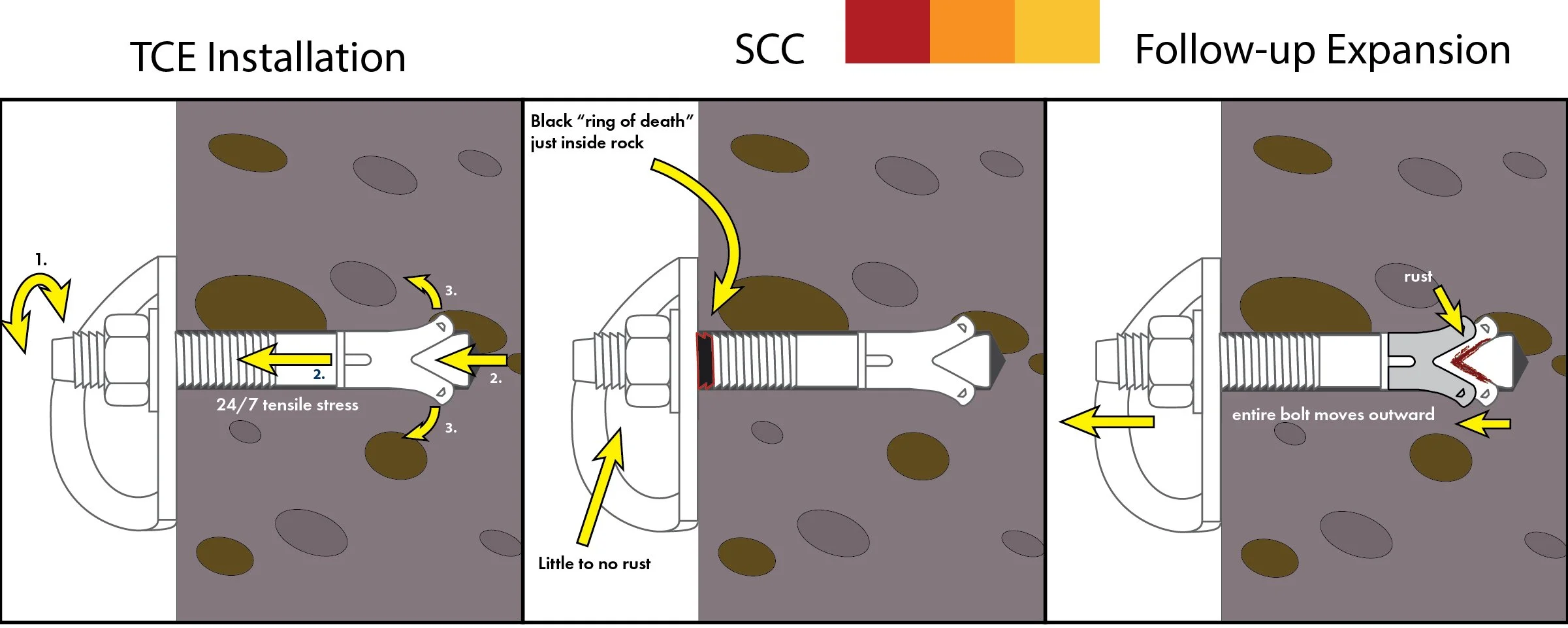
TCE Installation steps: 1) the nut or bolt is turned to a specified maximum torque based on the shear strength of the bolt; 2) the shaft is pulled out of the hole; 3) friction between the rock and the collar keeps it in place, which causes expansion as the wedge on the shaft moves through it. As the wedge meets more and more resistance to pulling out, tensile stress is generated in the shaft which will be there from now on. Tension in the bolt shaft can be a factor that contributes to Stress Corrosion Cracking (SCC), as described on page 20. The second illustration above illustrates how hard it is to detect SCC. The third illustration shows how a small amount of corrosion in the expansion components of a TCE can lead to the bolt slowly moving out of the bolt hole instead of expanding more, even without SCC developing. Illustration by AAC member Stephen Gladiuex.

Understanding Stress Created by Bolt Type

Most of the fixed anchors we use are torque controlled expansion anchors (TCEs). This includes wedge bolts and sleeve bolts like the five-piece as well. Think of them as small machines that are part of the safety system. When the nut or bolt in these machines is turned, it creates tension in the shaft—when the shaft is pulled out by this tension, and the collar/sleeve stays put, it results in expansion at the back of the hole. There is no way to avoid this stress—it is inherent to the design of the bolt. This stress is there day and night. In this kind of bolt, that inherent stress allows SCC to form cracks across the shaft.

And even without SCC, and instead with the littlest bit of rust, these bolts can become ticking time bombs.

When the bolt was brand new, there was less friction between the wedge and the collar than there was between the collar and the rock. When it was initially tightened, this friction caused the collar to stay put—and instead the wedge moved and the bolt expanded. But with only six months and a winter, and the environment found at any crag in the U.S., now there is a little corrosion between the wedge and the collar.

When that first big fall happens, the wedge could expand just a little more, the machine would work, and the bolt could be stronger. The climber would see a spinning hanger, but after tightening it, the bolt wouldn’t move again until a bigger fall happened, which might never happen. It was able to have follow-up expansion because the machine in the back of the hole still worked.

In a different scenario, both the wedge and the collar could move out together, because they are stuck together due to just a little rust. The climber still sees a spinning hanger and still tightens it—but the bolt doesn’t expand more, it just moves out of the hole. It will keep pulling out, little by little, and keep getting weaker. Depending on the type of bolt, you may never know.

Different bolt types are also made differently. Any time metal is bent or reduced in size by a process called rolling, there are residual stresses in the material. Hangers and glue-ins exhibit these kinds of residual stresses, but they tend to be lower in magnitude, and that’s good. It is one of the reasons glue-in anchors are a better choice for corrosion. It would be possible to almost eliminate these residual stresses with an annealing heat treatment, but this would add cost.

If a good resin is used for a glue-in anchor, the bolts also get the added benefit of having the metal shaft insulated from contact with compounds in the rock or its surface.

All of this combines to make SCC difficult to predict, and especially difficult to estimate how long it will take to render a bolt unsafe. Often, the only sign that’s visible is a slight black ring around the shaft just at or inside the rock. It is tough to predict, it is tough to inspect, and it can kill.


UIAA123—Not as Simple as 1, 2, 3

In order to have confidence in our fixed anchors, we need to evaluate the entire bolt/ hanger/chain assembly, and its installation process as well. We need to pair these anchors with a crag environment that they can handle. The UIAA 2020 Rock Anchor Standard Update included testing the complete anchors and classifying them.

A lot of work went into figuring out the line between different environments, and how to test them in a repeatable way. You can now find bolts, hangers, and complete top anchors on the market that are certified to the UIAA Standard from a number of major brands such as Lappas, Fixe, AustriAlpin, Team Tough, and Climbing Bolt Supplies. Lappas and Fixe have anchors that have been certified at the SCC level as well.

In the spring of 2025 we met with bolt and anchor manufacturers and introduced a requirement to improve welding quality. This most commonly affects welded top anchor rings and chains, but also glue-ins where the ring is welded. Manufacturers are now required to follow welding industry standard quality controls. These standards ensure that welds are executed with the precision and quality needed to maintain the safety, reliability, and durability of the anchors. Most importantly, this will prevent any welds from being a sort of Achilles heel that cracks quickly in an otherwise safe anchor.

So now, with a classification of anchors and with tests, we’ll be safe, right? Not yet—there is more to do. We need to understand our crag environment in order to select the right bolt. It can vary pretty dramatically from route to route, and even bolt to bolt on a route. The classification must be sufficient for the whole route, and preferably the whole crag. One of the next projects we are working on at the UIAA is to improve the maps of corrosion risk and pin them with specific knowledge of crags and crag chemistry so that there can be better guidance for land managers and those placing bolts.


Next Steps

Recently at the UIAA SafeComm, we received a request from the town of Kalymnos, an iconic climbing area in Greece. They have many routes that are suffering from corroded anchors. Climbers have become an important part of the local economy, and Kalymnos has gotten a large grant to rebolt routes—but they don’t know whom to trust with this important task, or how it should be done. Not every climbing area is fortunate enough to have a great local climbing organization that is skilled in route maintenance.

At the UIAA we’re pivoting again to help solve this challenge. We’re beginning work on the idea of a rebolting certification course that will include feedback from all over the world to gather the best techniques. Pooling knowledge and techniques globally will pay off in making climbers and routes safer everywhere. It will also mean that land managers will have something to look toward when they are not sure whom to trust with the lives of people climbing, or with the conservation of crags.

The UIAA has been around since the early 1930s. We just hit the 75th anniversary of our first rope safety standard, and the 50th anniversary of the Safety Commission. In those years we’ve moved from climbers not knowing which ropes they could trust with their lives, which carabiners and helmets to use, to having gear so clearly marked and reliable that most climbers don’t think about it. With the new welding update to our Rock Anchor Standard, we are working toward the day that each fall on a bolt—no matter where you are in the world—can be infused with just as much trust.


About the Author

Stephen Gladieux has been the AAC delegate to the UIAA Safety Commission since 2020, and was a corresponding member and consulting expert since 2012. He’s been climbing for 31 years, and he holds a degree in materials science and engineering, as well as one in French literature from the University of Michigan. He does about half of his climbing underground and sees bolt failure all over (and under) the world. Stephen lives outside Portland, Oregon.


Sign Up for AAC Emails

Guidebook XV—AAC Updates

A Message from AAC Leadership

Dear AAC Community,

It’s easy to think that, as climbers, all of our success stories are individual. After all, when it comes down to executing that final crux on your project, it’s you alone that reaches the top. But one of the things I love about the AAC, and the stories in this edition of The Guidebook, is how individual success is supported by community. The summit is not a vacuum; when we reach the top, our accomplishments are because of ourselves and also those whom we’ve leaned on and learned from.

In these pages, you’ll see that support unfold. In our Member Spotlight, “The Quiet Stories the Land Can Tell,” Rob Mahedy, normally a solo adventurer, learns through a battle with cancer what it means to accept support from his community in order to pursue the summit of Mt. Hayes in Alaska. In our Rewind the Climb story, “A World of Appalling Grandeur,” we celebrate the 100th anniversary of the first ascent of Mt. Logan—a joint expedition between the Alpine Club of Canada and the American Alpine Club that made a huge splash in the newspaper headlines of 1925, in a world that was just imagining that humanity could stand atop Everest. In a splendid deep-dive into corrosion in bolts, called “A Little Rust is All it Takes,” Stephen Gladieux illuminates the importance and impact of the UIAA Safety Commission, for which he is a representative for the AAC. Through SafeComm, the AAC is able to join forces with representatives from nations across the world and work together to formalize standards for climbing equipment and safety practices.

Our final story, “Balance,” is a feature about Brooke Raboutou, who will receive the Robert Hicks Bates Award this year for exceptional accomplishments by a young climber. It’s in her story that I see this interweaving of community so clearly. Brooke’s accomplishments do stand by themselves—silver medalist in the 2024 Olympics for bouldering & lead, an ascent of Box Therapy (V15) in addition to multiple V14’s, and now the first woman to climb 5.15c with her recent send of Excalibur. I have seen Brooke grow from a bright, curious team kid into the warm, determined athlete she is now. The seed of Brooke’s success grew and flourished under the sunshine of overwhelming support from her family, coaches, fellow athletes, and friends, who push and encourage her. She has developed her incredible strength and talent in part because of her environment. As a result, Brooke’s spirit is so vivid that she inspires her community— myself included—to cultivate that same spirit in themselves.

An interesting note: Brooke was nominated for the Bates Award before she sent Excalibur (5.15c) and became the first woman to climb the grade. Excalibur, then, is simply another example of her momentum. There are still frontiers for women to face and break in climbing, but as a community, we are no longer asking whether a woman can climb a given grade. We are just asking—when?

I bouldered with Brooke recently in Bishop, and we made a day of touring the classics. No need to prove anything; we weren’t chasing the most difficult climbs. Instead, we focused on climbing for sheer beauty and joy. What I see in these stories of perseverance and adversity, of pouring one’s life into climbing safety and education, and in Brooke’s story, is that beautiful impulse of climbing for the soul. I see that same impulse bring so many AAC members together.

I hope you enjoy these stories of your fellow members and that they inspire you to shine brightly, connect with others, and pursue your climbing aspirations this summer.

Nina Williams

AAC Board President


AAC Updates

Advocacy

  • The U.S. House of Representatives removed the public lands sell-off bill from the reconciliation package. The Senate subsequently proposed legislation that considered public lands sales in11western states, which was ultimately removed from the package following strong public opposition. The AAC continues to work with our partners, such as Outdoor Alliance, to coordinate responses to these efforts to introduce legislation that impacts our public lands.

  • The AAC Advocacy department will travel to Washington, D.C., in October to engage with lawmakers on a variety of issues and support Outdoor Alliance’s Grasstops Collective.

  • The AAC’s Advocacy Director was recently appointed to the UIAA’s Mountain Protection Commission. The commission, founded in 1969, is one of the foremost authorities regarding the question of sustainability in mountain regions.

Member Services

  • As of June, expenses up to $15,000 in mortal remains transport are now included in the rescue benefit at the Partner, Leader, Advocate, and Great Ranges Fellowship membership levels. Learn more at americanalpineclub.org/rescue.

  • The 2025 American Alpine Journal and Accidents in North American Climbing books were sent to the printer in June. If you’ve opted in to print copies, you can expect to receive your books in late summer.

Operations and Governance

  • The AAC Board of Directors met in Boulder, Colorado from June 6 to 8 for a Board retreat and meeting. The Board discussed strategic priorities for the upcoming fiscal year and future plans for the AAC, and enjoyed some Front Range climbing and dining!


Sign Up for AAC Emails

Guidebook XV—Member Spotlight: Rob Mahedy

The Quiet Stories That Land Can Tell

By Joe Tedino

Photo by Eric Larson.

Rob Mahedy, a 59-year-old cancer survivor from Crested Butte, Colorado, arrived in Alaska this spring with a purpose: to summit Mt. Hayes via the Washburn route. No stranger to high-altitude climbs—he’s soloed Mt. Earnslaw in New Zealand, Island Peak in Nepal, and Denali (Mt. McKinley)—Mahedy encountered a different kind of challenge this time. In Fairbanks, he heard reports of a milder winter and below-average snowpack, signs of a shifting climate he could not ignore. He adjusted course, choosing not to summit this year but to climb as far as the famed knife ridge, saving the final push for another expedition. As with his own survival, the lesson was clear: adaptation is not a sign of weakness—it’s wisdom.

“I didn’t get to the top,” Mahedy said in an interview shortly after his eight days on Mt. Hayes, “but I do consider it a successful reconnaissance climb.”

First climbed in 1941 with low-tech gear and legendary grit, the Washburn route to the Mt. Hayes summit is still considered one of Alaska’s great mountaineering achievements. Known formally as the North Ridge, the route’s reputation rests not only on its technical difficulty, but on the boldness of those who first dared to climb it. Towering 13,832 feet and rising more than 8,000 feet from the valley floor in just over two miles, Hayes is the tallest peak in the eastern Alaska Range—and one of the steepest in the country. So formidable is its Northeast Face that it wasn’t summited again until 1975, when climbers Charles R. Wilson and Steve Hackett led a four-person team across the ridge. In the American Alpine Journal that year, Wilson recalled sections so narrow and soft that “you could not put your feet side by side”—a place where progress toggled between precision and peril.

Mahedy remembers a previous climb that took him to the top of Denali—the classic West Buttress, a route that was also pioneered by Bradford Washburn. Climbing with a small group at first, he broke off and made his way up during a 21-day adventure. “I stood atop the summit alone,” he recalled. “I had a clear summit day and could see down the Susitna River to Cook Inlet and west to the Bering Sea.” He descended for six days on skis. With Hayes, he was searching for a similar moment of stillness.

To begin his Mt. Hayes climb along the Washburn route, Mahedy flew to Anchorage and then boarded the Alaska Railroad for the 12-hour trip to Fairbanks, where his local fact-finding began. A number of questions ran through Mahedy’s mind as he met up with experienced climbers in Fairbanks. “What am I up for, what am I getting myself into?” he wondered. “These people have local knowledge, so what went through my mind was, ‘What can I learn?’ ”

Mahedy was confident about withstanding the bitter cold temperatures, which can drop below −4°F with windchill factors below −22°F. Even with his experience in Alaska and Nepal, he knew to be wary of the glacier travel and potential crevasse navigation ahead of him. Weighing heavier on Mahedy was how cancer would affect his strength and stamina.

Mahedy, a muscular six-foot-four alpinist, left New Jersey for Crested Butte as a young man and quickly took to the mountains like a local. He hiked, skied, cycled, and climbed with the quiet intensity of someone who doesn’t just visit wild places but needs them and absorbs the solitude. A carpenter by trade, he’s helped restore many of the historical commercial buildings in Crested Butte’s bucolic downtown, shaping the town with the same hands that have gripped ice tools on Himalayan ridges.

But his passion lies beyond the summits—deep in the hidden recesses of the backcountry. “I seek out remote mountain ranges that are not heavily visited,” he said. “I follow bighorn, mountain goats, elk, caribou—sometimes bear and wolverine—looking for freshwater springs, and often I’ll stumble on evidence of the people who were here before us.” For Mahedy, wilderness exploration isn’t just about elevation—it’s about connection, and the quiet stories the land can tell. Whether it’s a summit or a century ride, Mahedy tends to meet the landscape on its own terms—and rarely turns back.

But his battle with aggressive bladder cancer and lung cancer since the middle of 2024 has taken its toll on his health and fitness. Last November, a tumor was removed from his abdomen along with his bladder. Doctors fashioned a replacement neobladder using material from his small intestine. Then his cancer—urothelial cell carcinoma—was found to have metastasized in his lungs, requiring weeks of chemotherapy.

Mahedy had an abnormal winter as he underwent treatment—only a few outdoor adventures close to home, including a weekend camping trip in March that enabled him to experiment with how to empty his neobladder in cold temperatures. Climbing Mt. Hayes along the Washburn route was a goal he set for himself last year, as long as his body would survive.

On May 8, after receiving good news from his doctor that immunotherapy treatments had shrunk the tumors on his lungs, Mahedy set out for Fairbanks. There, he met local Mike Hopper, who told Mahedy that he had attempted Hayes five times himself. During a 90-minute meeting over coffee with Hopper, Mahedy spread out his maps on the table and described his plan. Hopper pointed out the best routes to take and the ones to stay away from. Later, at an equipment store, Mahedy met Grant Wilson, a local climber who has explored around Mt. Hayes many times as well. He and Mahedy discussed climbing together next April when the temperatures are likely to be colder and the snow conditions more favorable for a summit attempt. Wilson explained that the lack of snow, warmer May temperatures, and the fact that Mahedy was going it alone made reaching the summit this time unpredictable.


Rob Mahedy documents his solo spring expedition to Alaska’s Mt. Hayes—a journey of resilience, reconnection, and reconnaissance. From trains and bush planes to whiteouts and ridgelines, each snapshot marks a step in his ongoing quest to meet the wilderness, and his own limits, on their own terms.


Mahedy assembled supplies for a 14-day mountain exploration, then met pilot Jesse Cummings at Golden Eagle Outfitters. They planned a 45-minute flight into the wilderness, but trouble arose immediately. Due to a winter with low snowfall, their aircraft’s skis couldn’t land at the intended drop-off point. They had to return to Delta Junction, transfer Mahedy’s gear to another plane equipped with low-pressure tundra tires, and then fly back to the Stonehouse drop-off.

With little snow, Mahedy had to haul his 60-pound supply sled over bare ground, which required offloading some equipment and making multiple trips to a camping spot. “Every mile turned out to be three miles—up and back and up again,” he said. Eventually, he made his way up to “this beautiful lateral moraine on this massive Hayes glacier. I finally got to the snow.”

Carrying 50 pounds on his back and pulling the sled, Mahedy spent three days getting to an elevation of 6,000 feet, which revealed a stark truth: His strength had deteriorated significantly. His decline was a direct result of inactivity over the previous six months following surgeries and chemotherapy. Despite his attempts at prior conditioning—limited backcountry skiing and mountain climbing in March and April before his Alaskan venture—he had lost ten pounds and considerable muscle mass.

“My fitness was not as good as it could have been,” he said. “But I could feel myself getting stronger as I went up—my legs, my thighs, my back. So that was encouraging. I was certainly physically weaker than I’ve been in over a decade, but I felt I was mentally stronger than ever to climb and climb safely.”

But cancer had not only taken a toll on his muscles and fitness. There were now new logistical challenges to contend with as he learned to navigate utilizing his replacement neobladder. On Mt. Hayes, Mahedy carried a lightweight cot that enabled him to recline above the ground and, when necessary, to use gravity to help the flow of urine into a urostomy bag. “I had to catheterize myself, and I figured all that out; nothing froze,” he said with a laugh. In this way, Mahedy locked down some survival beta that most alpinists never think twice about.

Over the course of his days on the mountain, two whiteout snowstorms dumped a foot of snow on the glacier, adding more uncertainty to his quest. During those hours, he read and enjoyed the sounds and sights of the wilderness. It also gave him a chance to reflect on why he does these climbs. “It’s a quest for me to find happiness,” he said. “I find joy in deep wilderness, where there is solitude, and it’s just me, the elements, and the animals in nature. I really do enjoy being high up in the mountains by myself.”

Once the snow let up, he was able to continue to an elevation of about 9,000 feet where he got a full view of the route that goes up the knife ridge to the summit. “It was very valuable to have two days of clear weather to get up on the ridge high above the glacier and see the original Washburn route,” Mahedy said. “I give them a lot of credit for doing what they did back in the 1940s.”

Mahedy feels good about his Mt. Hayes trial run and has made plans to climb with Wilson, the Fairbanks climber, next April to finish the job. “He and I will get together, perhaps with another guide or two—we’ll try to keep it a small group—and go for the full summit push,” Mahedy said.

The plan fits Mahedy’s new mindset since his cancer diagnosis. “I know I need to rely more on others and to not go it alone,” he said. As a cancer patient, Mahedy experienced an outpouring of support from family and friends, as well as from two local cancer support organizations—Gunnison Tough and Living Journeys. Both have been at his side since his diagnosis in May 2024.

“When I tell my doctors about the help that I’m getting, they are pretty amazed,” he said. “Our small community is really helping me financially, mentally, and nutritionally. I think the love is as important as the medicine.”


Sign Up for AAC Emails