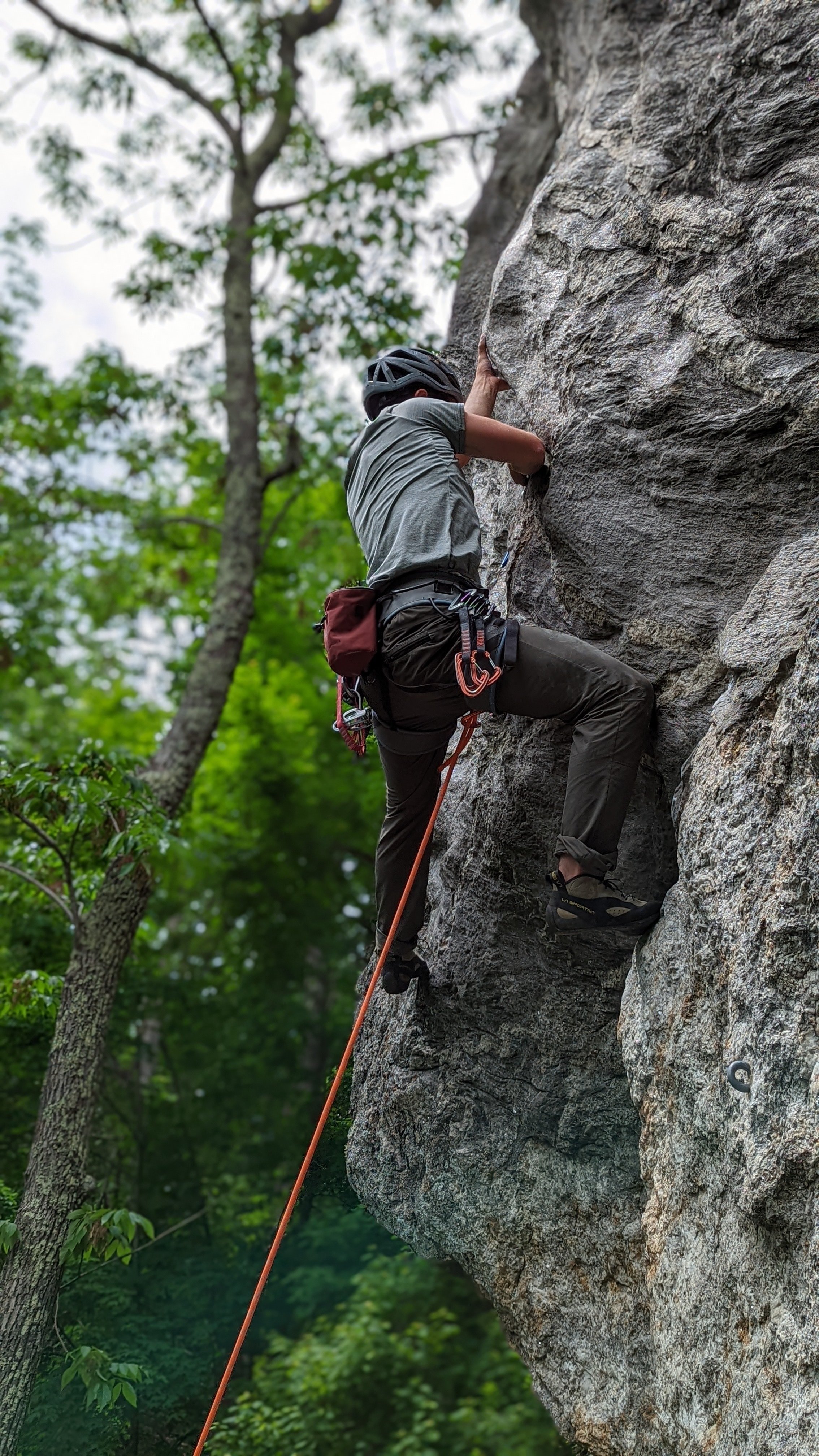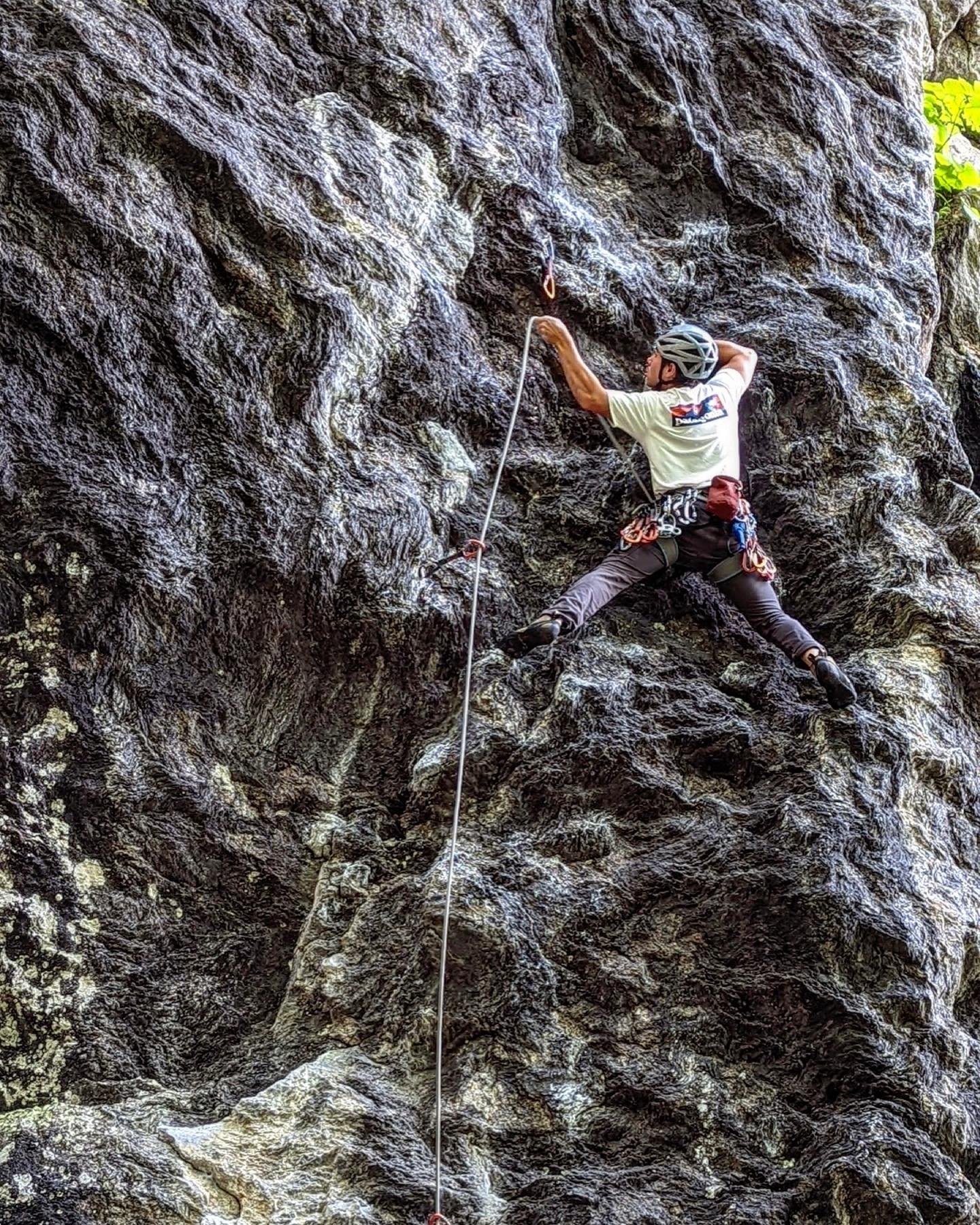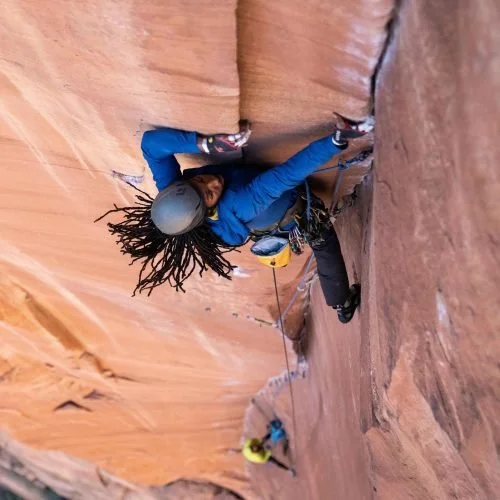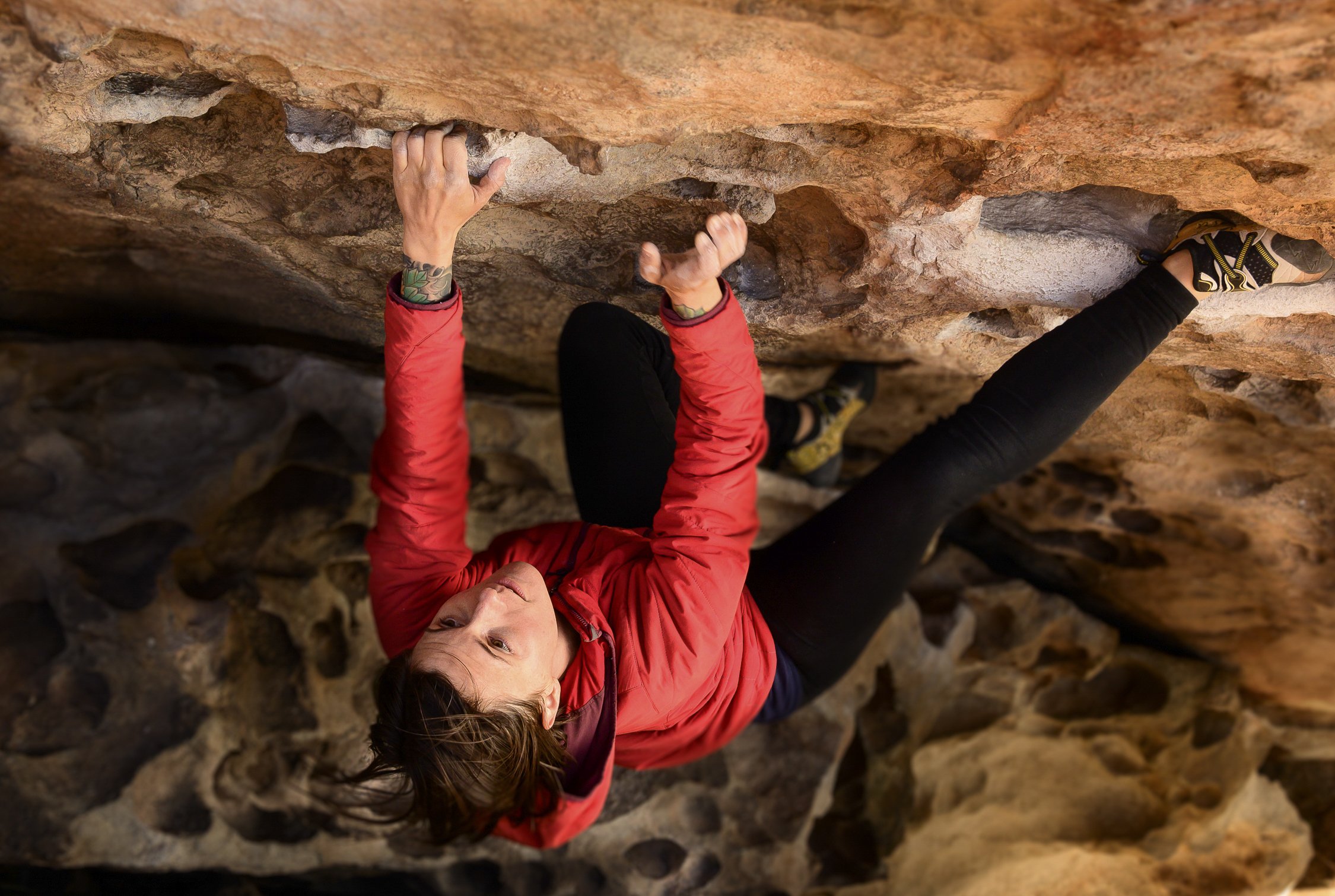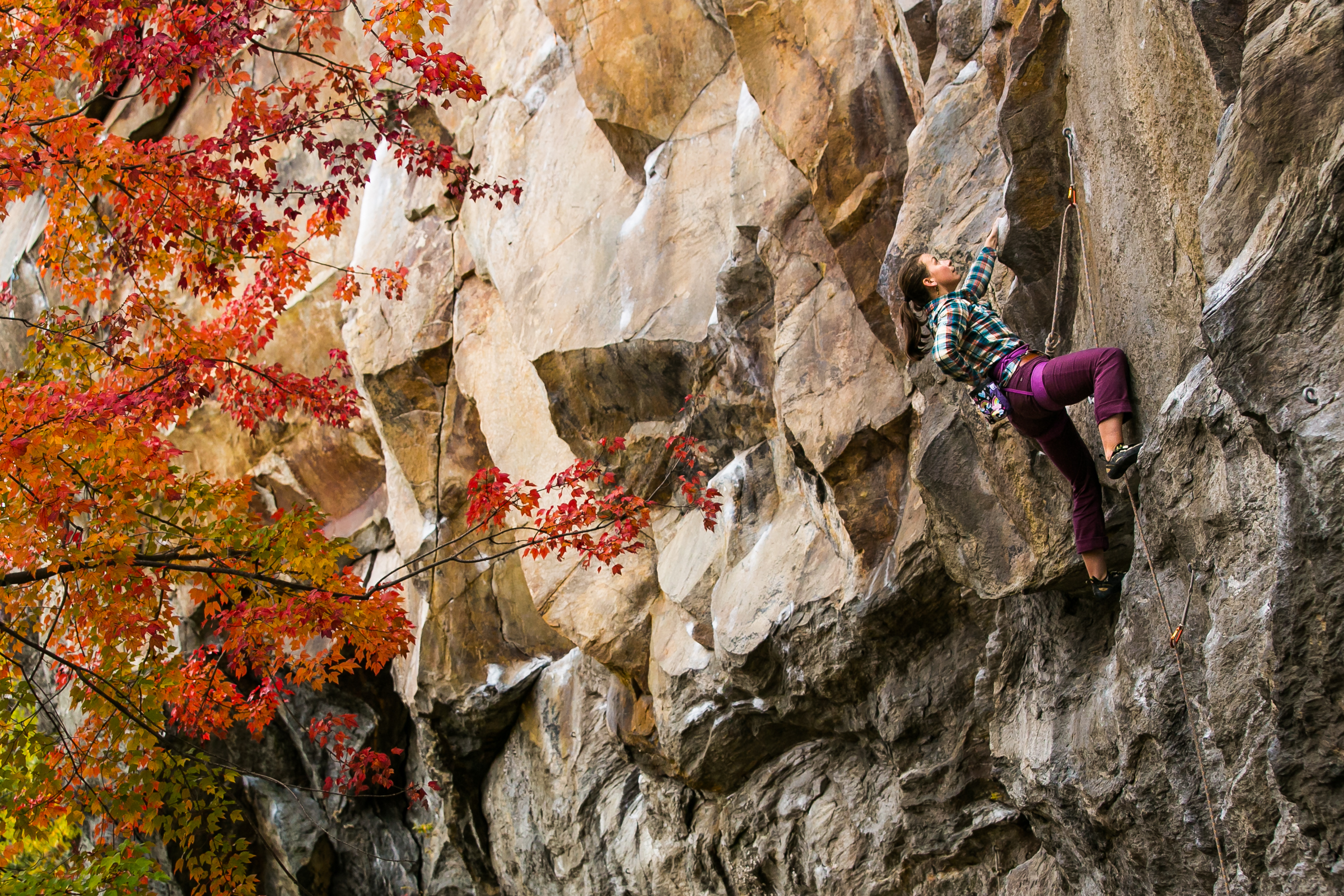
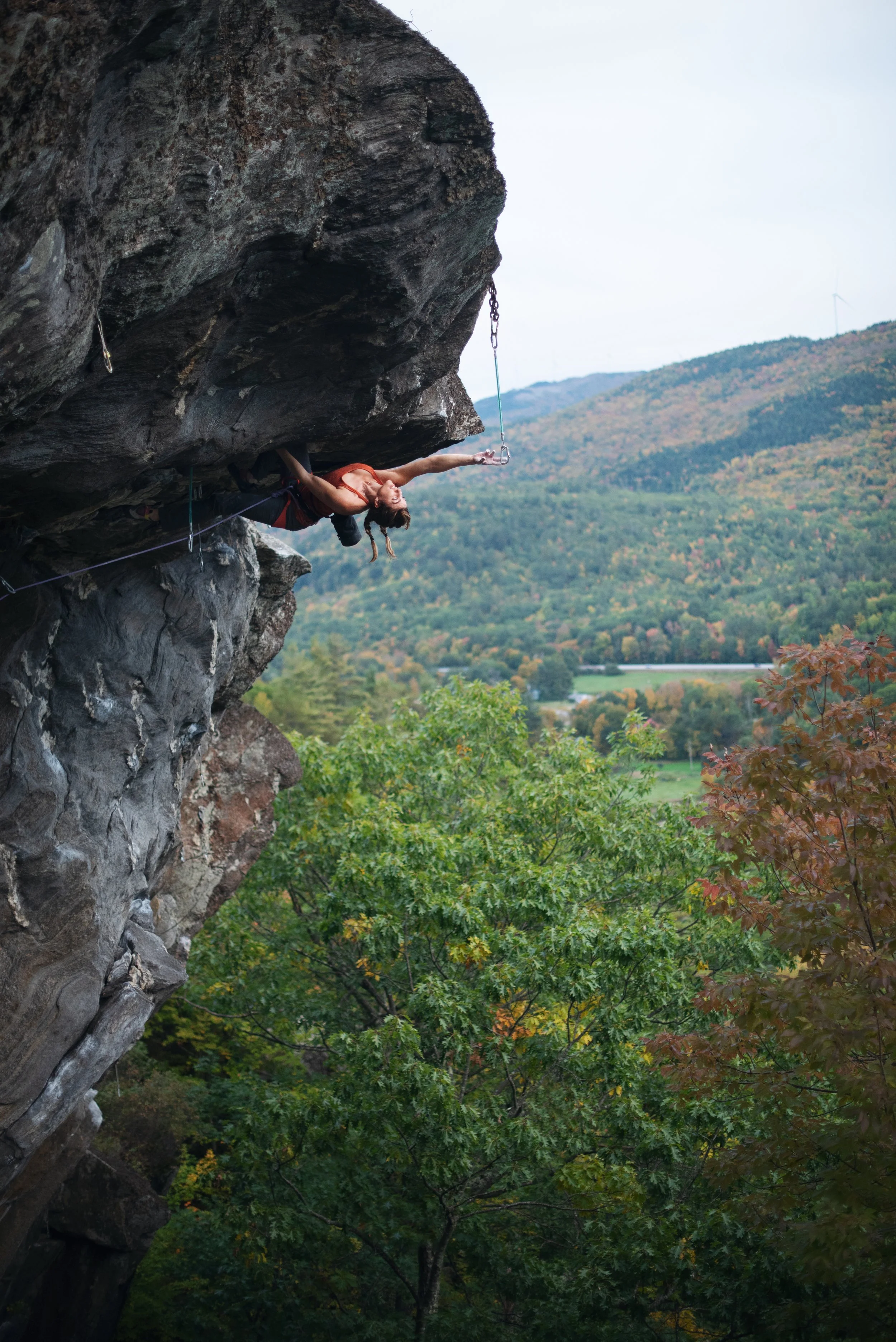
AAC Board President Nina Williams on China Beach (5.14b). Photo by AAC member Jordi Llauradó i Vilà.
A Look at Rumney’s Aura Climbs
By Hannah Provost
Originally Published in Guidebook XVIII.
For many of us, each climb we undertake is a private sparring session. Because such battles can be painful, frustrating, or even sometimes break us, you’d think we’d engage only reluctantly. But it seems that we climbers, more than anything, are easily disposed to spiritual possession.
Each haunting (a.k.a. “project”) is temporary, lasting a few weeks or months, maybe even years. Once we do send—the most occult of rituals—the hungry ghost, now fed, simply vanishes.
But some climbs collectively haunt. They manifest a certain presence, even in the minds of those who have no interest in pulling on the first holds: La Rambla, Burden of Dreams, Pure Imagination, Free Rider, iconic routes we see and hear so much about that they spark the collective imagination.
One zone that’s remarkably stacked with such routes is the featured schist of Rattlesnake Mountain in Rumney, New Hampshire. The short cliffs of Rumney lend themselves to distinct features and stout boulders, creating climbs with unmistakable character. This is, therefore, one of those crags where it’s only natural to ask: Which ghosts haunt the rocks?
Jaws II 5.15a
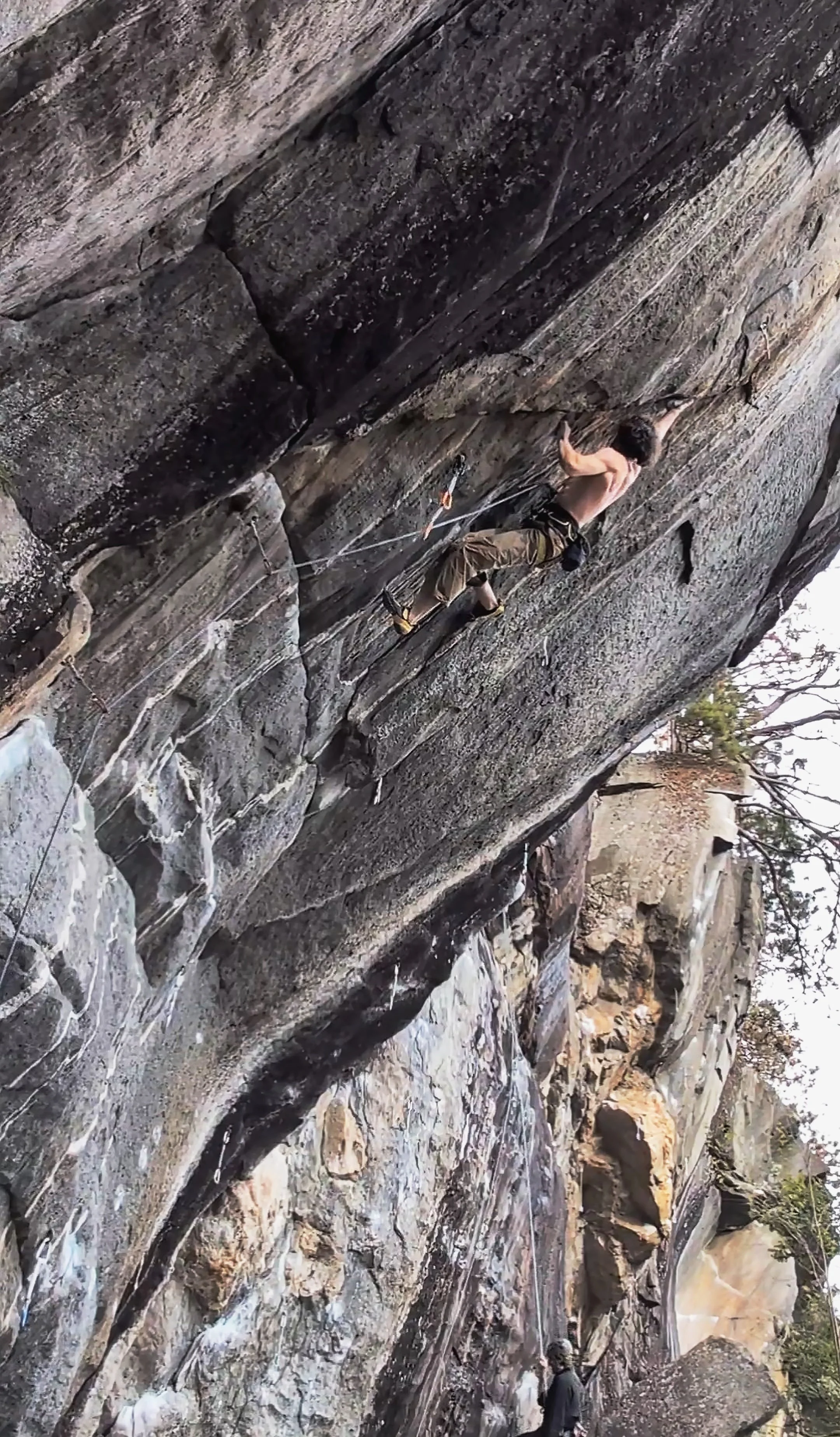
Jaws II lures its victims with one important ingredient: the temptation of the impossible. After Dave Graham climbed Jaws at 5.14b in 1998, several holds broke, and the line eluded repeats for nearly a decade. In 2007, the New Hampshire–based crusher Vasya Vorotnikov and his friend Zeb Engberg found that they had been cruising through the harder established climbs at Rumney, and were looking for new levels of challenge, some way to get pumped that mirrored the roped climbing they were allowed to do on the junior-competition circuit. Back then, it was thought that bouldering was still too dangerous for developing youngsters—ironic, because Jaws II would turn out to be roped bouldering, with a V12/13 to a V10 packed into its 50 feet of height.
After the usual process, Vorotnikov sent the rig in 2007, renaming it Jaws II (“Broken Jaws” was a contender as well) and proposing 5.15a—making it the second 5.15 in the United States, after Flex Luthor. The next 10 years saw a flurry of ascents, as boulderers flocked to the short, steep walls of Waimea. During those years, the climbing media kept a careful log of Jaws II repeats.
Paul Robinson, who snagged the fifth ascent in 2013, remembers the unique crux on the initial boulder, which he considered V13: “You had to grab this really high right hand and then get your feet in this weird drop-knee position and stab back over your head into an undercling.” But, Robinson continues, “The move was super learnable. I remember trying it in the beginning and just being like, Whoa, this move feels impossible.” After the undercling, there was also a jump-kick move, or a pogo, that you often don’t find outdoors.
For Robinson, the route’s difficulty and aesthetics—the sea-foam lines in the schist, the cresting wave of Waimea Wall—help explain why it looms so large at Rumney. But above all is the fact that Jaws II and its Waimea neighbors, like China Beach, are perfectly separated by blankness. Unlike many crags where you can grid-bolt or move a few feet off the bolt line to climb a variant sequence, these lines have a firmness to them. With Jaws, “it’s like the rock chose the bolt line,” Robinson says.
Nineteen years later, Vorotnikov thinks that Jaws II still haunts because it’s a testpiece and has history—not because it’s a classic or a king line. In contrast to Robinson, he thinks it’s actually not that pretty. “I don’t think of anything hard as ultraclassic, to be honest. Because [they’re] too weird,” he says, going on to describe some of the tweakier, unpleasant holds on Jaws II’s bottom boulder.
Still, says Vorotnikov, “You can definitely have a five -star experience on something that’s not five stars at all. You can have your own mini-adventure at your local crags.” Yet to some extent, why Jaws II retains so much aura is a mystery to Vorotnikov. But that’s the power of sheer difficulty—it tends to create its own gravitational field.
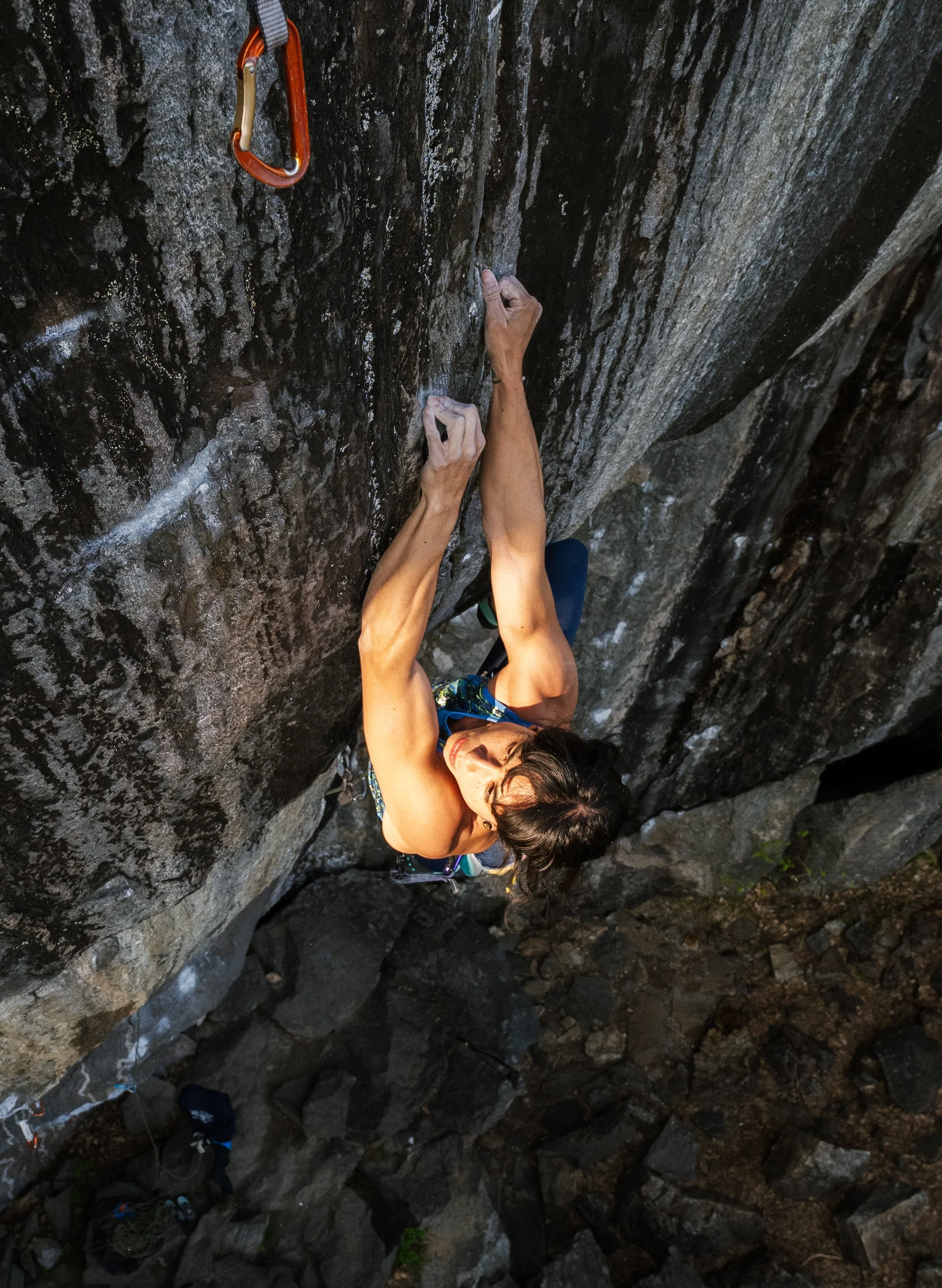
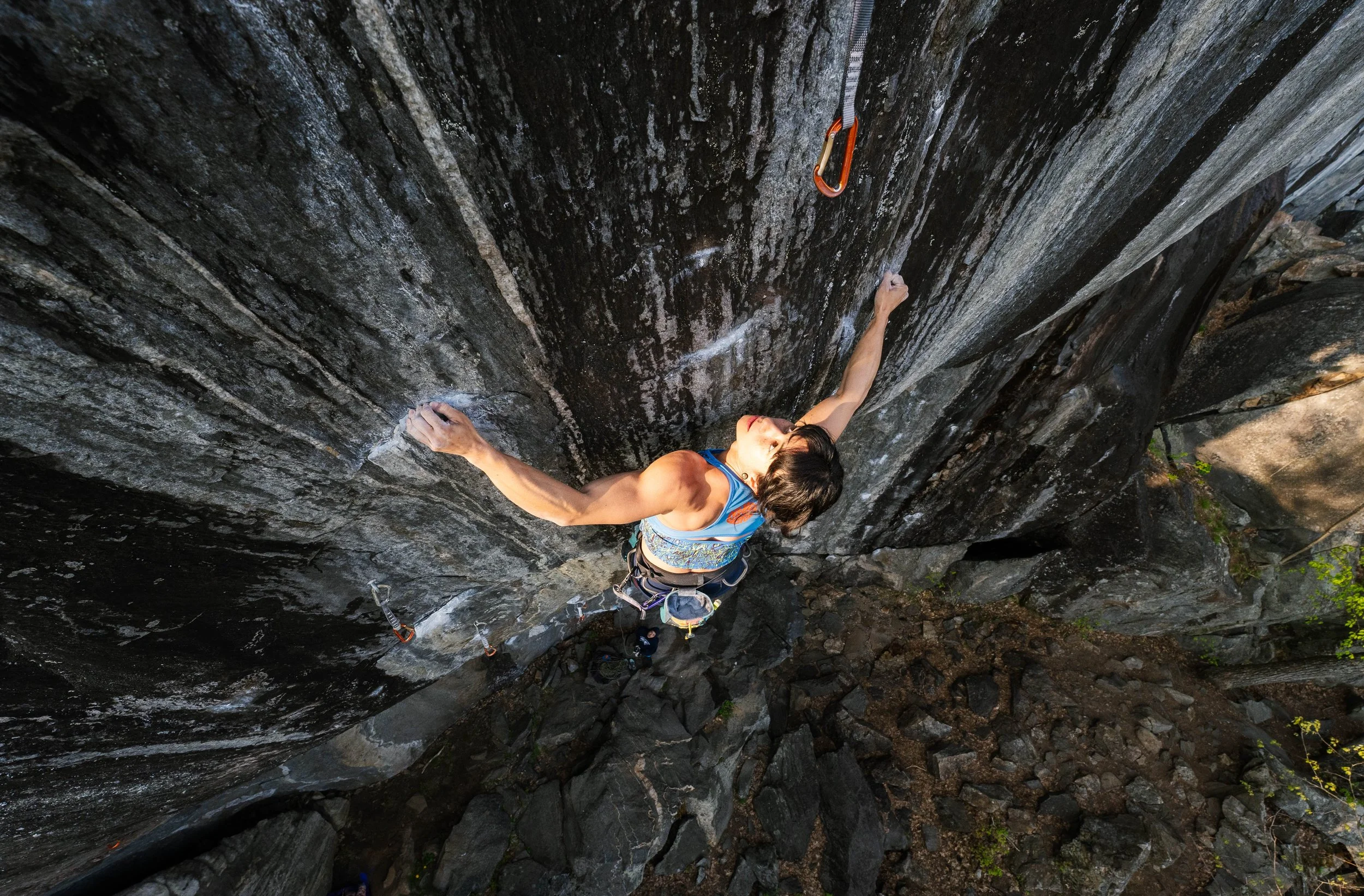
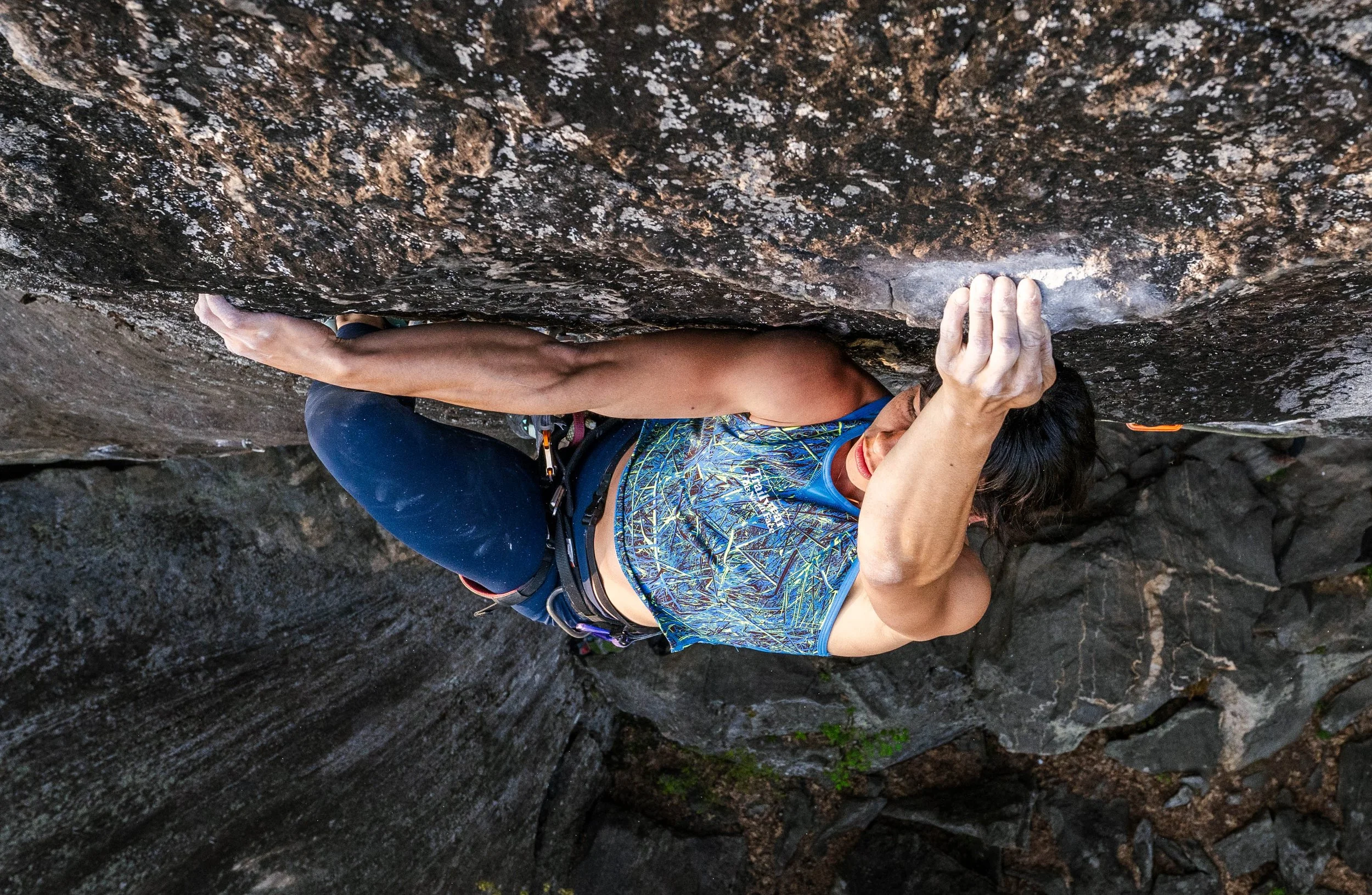
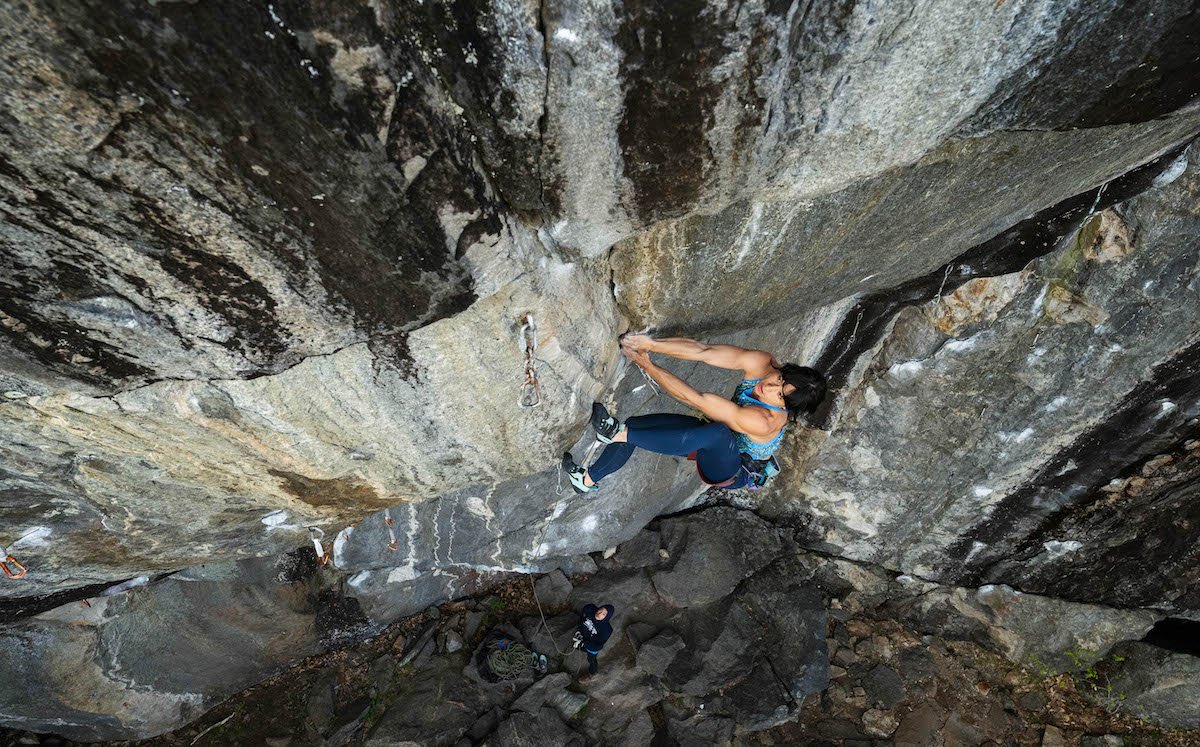
AAC Board President Nina Williams breaks the beta on the top crux of China Beach, to suit her short frame. Photos by AAC member Jordi Llauradó i Vilà.
China Beach 5.14b
“I have not sent this route; however, I have spent a disproportionate amount of time falling off this route...” opens Jay Knower, describing the 5.14b China Beach on Mountain Project, before opining, “China Beach is the ultimate sport climb and is the standard against which all other sport climbs should be judged.”
Just one route over from Jaws II, China Beach might have even more name recognition. Heck, there’s even an entire podcast dedicated to understanding why so many people are haunted—in the best way—by this climb.
Rajiv Ayyangar, a co-host of Climbing China Beach: A Podcast Series About One Route with Michael Penn, says China Beach has come to represent many things to different climbers—it has been a gateway to harder climbing, a capstone to a climbing career, and a conduit for personal transformation.
After interviewing so many people about their obsession, Ayyangar is starting to formulate an idea of the origin of the route’s aura, starting with the breakdown of the climbing, and with a nod to the impeccable rock quality and friction: “The fact that it’s continuous, the fact that every move is interesting and iconic, the fact that it’s two different styles. You’ve got this bottom section that’s almost trad-like and insecure, and then this top section that’s big moves on hero crimps. And it punishes tall climbers at the bottom and short climbers up top. There’s an equivalence to it.”
The projecting process for China Beach almost always becomes a discrete epoch—due, in part, to how unexpectedly long it often takes. Ayyangar is convinced this is because of the continuity of the climb, the intricacy of the different styles. China Beach asks climbers to go deep into microbeta and tactics. It’s a climb that asks you to linger.
Nina Williams, the AAC’s Board President, did the first female ascent of China Beach in 2023—doing a wild rose move in the upper crux from a non-hold that other climbers had never even tried to use. For Williams, the route has standout attributes that compound with each burn. She says, “Visually, [it’s] an obvious line with a striking position in the center of the wall. White zigzag streaks and cracks naturally draw the eye. Physically, it has a little bit of everything: crimps, sidepulls, underclings, slopers, smeary feet. Intricate sequences that require both strength and endurance (versus the typical ‘boulderer’s route’ style of Rumney).” But other factors, like New England’s wet, cold, fickle weather and the list of climbing legends associated with the route—New Englanders Dave Graham (FA), Joe Kinder, and Vasya Vorotnikov, as well as prominent visiting climbers like Jonathan Siegrist and Alex Megos—have also shaped cultural opinion, enhancing its aura.
Another thing that Williams and Ayyangar kept coming back to was their personal experiences on China Beach—their own dance with the rock. Says Williams, “I ultimately think the climber is what gives a climb ‘aura’; the climber’s journey and process add to the overall narrative of a route and inspire other people to add to the lore.”
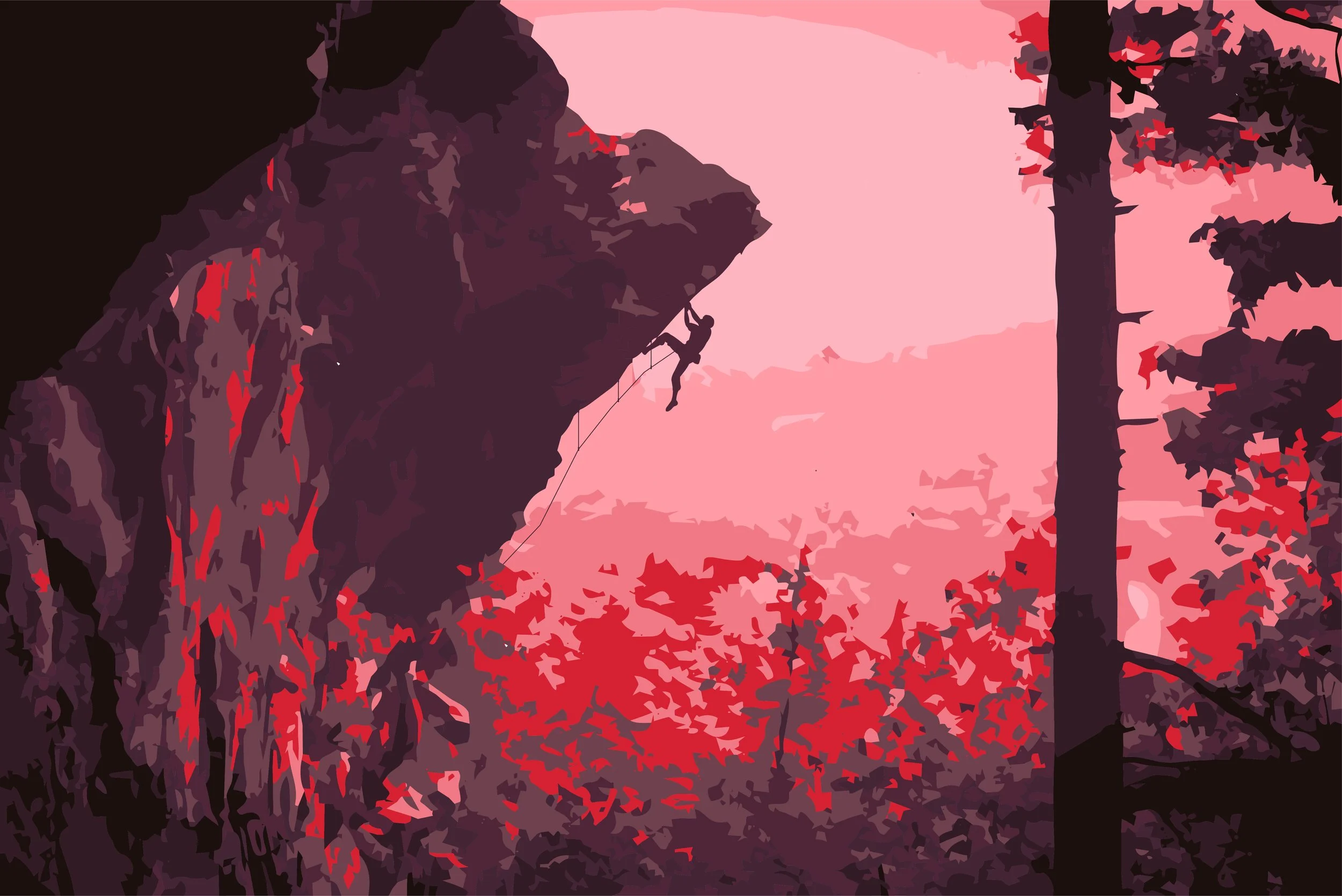
Design by Foster Denney.
Predator 5.13b
The cover of the Rumney guidebook. The logo for the Rumney Climbers’ Association. A glimpse through the trees when you stand next to the dumpsters at the AAC Rumney Campground. Predator is everywhere— stalking you, ready to possess your body and swallow your soul.
Predator is a 5.13b at Orange Crush—and the most iconic climb at Rumney. This 45° over-hanging prow is impossible to ignore. The hill and trail that follow the rising cliff at Orange Crush mean that climbers on the approach have an eye-level view of anyone on the route, with the stunning valley dropping away to create an epic horizon. Climbing Predator, whether you’re sending or falling, is a performance. Emma Kowal, who sent in 2023, says the position, the hero moves, and the continuity of the difficulty “allow you to access a pretty magical state of self.”
Predator is, beyond its obvious aesthetics, also a climb you earn—as Kowal says, climbing it requires “at least one shenanigan.” You have to climb a pitch to get to the Predator belay ledge—either climbing one of two 5.11s or aiding on bolts. If you want to give multiple attempts, there is a friendly tree you must land on, so that your belayer can throw you a loop of rope and pull you back in. And if you’re planning to top out, either on the send go or while projecting, it might just be easiest to unclip the anchors and jump—or do a victory-whip backflip. Regardless, it’s advised that you back-clean or skip the final bolt too, so that you can make it to the tree.
Fortunately, the movement itself is very approachable. A power-endurance test-piece, the line doesn’t have a sequence harder than V5, according to Kowal. Off the belay ledge, you begin with awkward 5.11 face climbing, with holds facing the wrong direction and weird, sometimes-wet stemming. This quickly turns into jug-bashing until you’re at a ledge. On the ledge, as Claire Stolz, who sent Predator in 2025, describes, “You’re sitting there, you’re listening to everyone else on their project [around you], you’re listening to people gossip at the top of Orange Crush, hearing about somebody’s date...you can see the big arc of the Baker River. And then the wind turbines are turning.” Meanwhile, the permadraws sway in the breeze above you, building anticipation—you’re about to go to war with Predator.
The next 20-odd moves begin with big swings and flowy jugs. There’s the matchbox crimp you use for the hardest move, and then a strenuous, scummy knee-bar that some use to cop a rest before Predator’s most iconic move—a dyno or large deadpoint. But it doesn’t end there, because then you’re squeezing the “pinch of despair,” quickly followed by the “pinch of hope,” as Kowal has dubbed them. The mantel that guards the chains isn’t so bad if you have the reach—and can find the hidden crimp.
For Stolz, Predator has “five-star climbing in a five-star position.” The climb is approach- able because there are no terribly hard, stopper moves, and the permas are bolted closely, so it is easy to pull on draws to work the climb. Kowal reflects that Predator is also compelling because it’s so public as to almost be performance art: “There’s something extremely exhibitionistic about climbing Predator. You’re creating this unbelievable silhouette for everybody who’s up there; you’re doing these big dramatic moves and taking these big dramatic falls and screaming a lot.” And the fact that Predator is a 5.13 “makes it a climb that people find aspirational and see as a goal,” perhaps for their first of the grade, says Stolz.
It helps, Kowal says, that “Rumney has a very rich beta-sharing culture. Climbs are quite cryptic and beta-intensive. So beta gets passed down through the generations.” When you get on Predator, you are enmeshed in that culture, in an oral tradition that helps you go deep into Rumney’s history.
Kowal and Stolz both consider Predator to be an ultraclassic—if you can climb the grade, it’s not to be missed. Kowal argues it might even be a king line—there is a majesty to it. Kowal put in 30 attempts before sending it as her first 5.13. She took notes after every attempt and reread them before each go. She built a replica of the final moves on the Kilter Board. On the send, she wore her friend Max Lenail’s La Sportiva Otakis—his last pair of climbing shoes before he died in an accident a few years prior. They were stiff enough to make the knee-bar comfier, reconnecting her to him via the rock and the fact that he, too, had once sent Predator.
AAC member François Lebeau
A Personal Haunting
For Vorotnikov, it’s entertaining to discuss the finer points of what makes something a testpiece vs. an ultraclassic vs. a king line—all of the different nuances of what gives a climb aura. His take is that Waimea, a 5.10d down the wall from Jaws II, is far more an ultraclassic than Jaws II—simply because nearly everyone who climbs at Waimea will climb it. It’s a little spooky, it’s the crag warm-up, and it’s the wall’s namesake, as well as simply Type 1 fun. But we won’t commit to anything—the endless debating over routes is too fun.
Even as the climbs discussed above prevail in Rumney lore, there are plenty of other Rumney climbs with their own history and charisma. There is a special power in being able to step into the legacy, shared beta and inspiration, and communal knowledge of Jaws, China Beach, Predator, Technosurfing, Flesh for Lulu, Black Mamba, Millenium Falcon, and Lonesome Dove. But there is also something exciting about striking out on your own and getting inspired by something a little unusual, ugly, tweaky, or underappreciated.
As Williams shares about finding the joy in— or even being haunted by—anti-classics, “There’s less of a chance to bond over shared knowledge. That being said, going back to the climber giving a climb aura, I started telling people to climb on Bishop’s best V9 lowball, America’s Fit Homeless. Is it actually Bishop’s best lowball? Probably (definitely) not, but it’s fun building hype and getting people to try obscurities.”