Lodging

Support the Places That Support Climbers

The American Alpine Club is proud to announce its participation in the 2026 Old Bill’s Fun Run, where they are raising funds to support the famous Grand Teton Climbers’ Ranch with a generous match from the Community Foundation of Jackson Hole. 

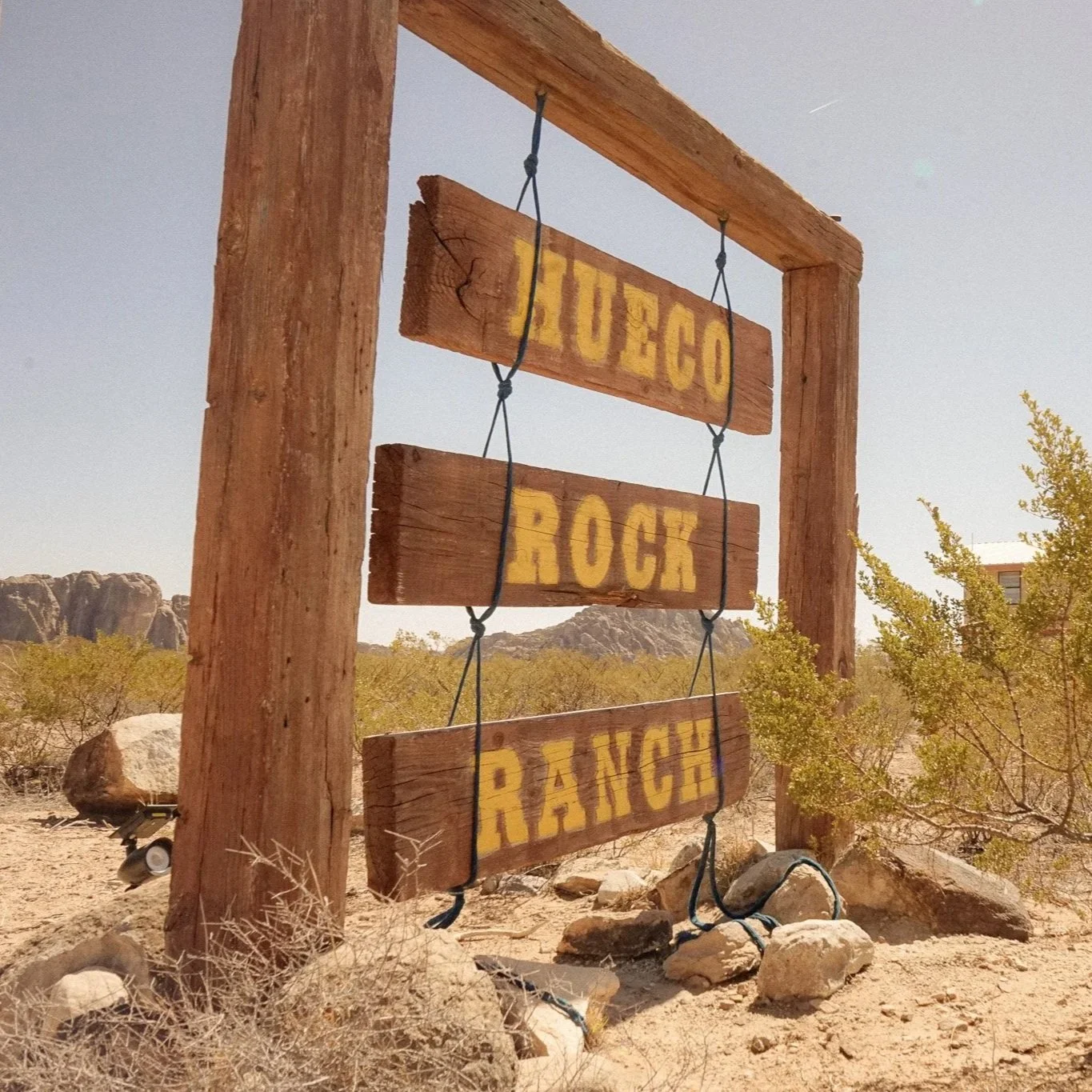
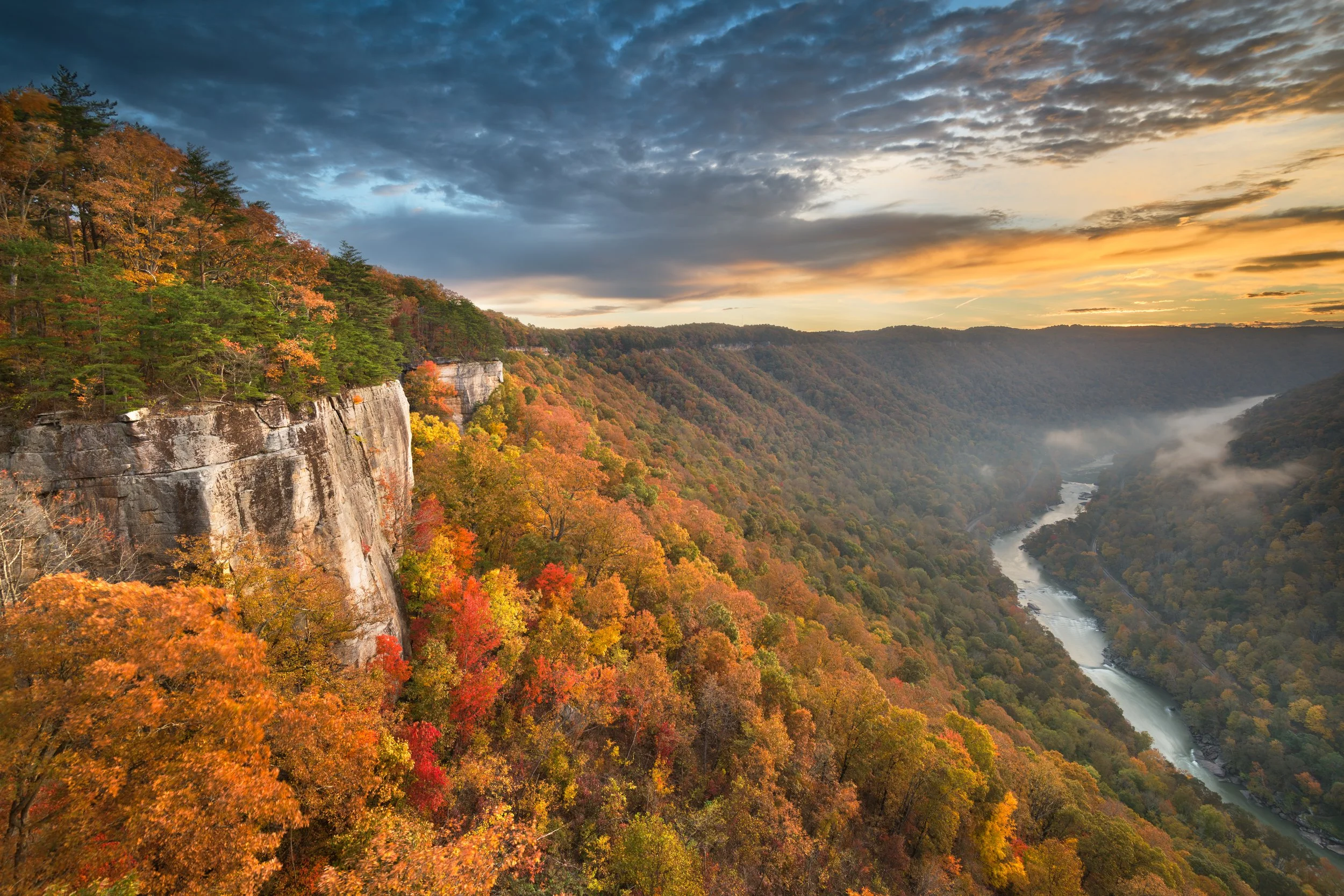
The Club is also inviting climbers to support its other four facilities, including New River Gorge Campground, Samuel F. Pryor III Shawangunk Campground, Rumney Rattlesnake Campground, and Hueco Rock Ranch, to prepare for an offseason of improvements across all sites.

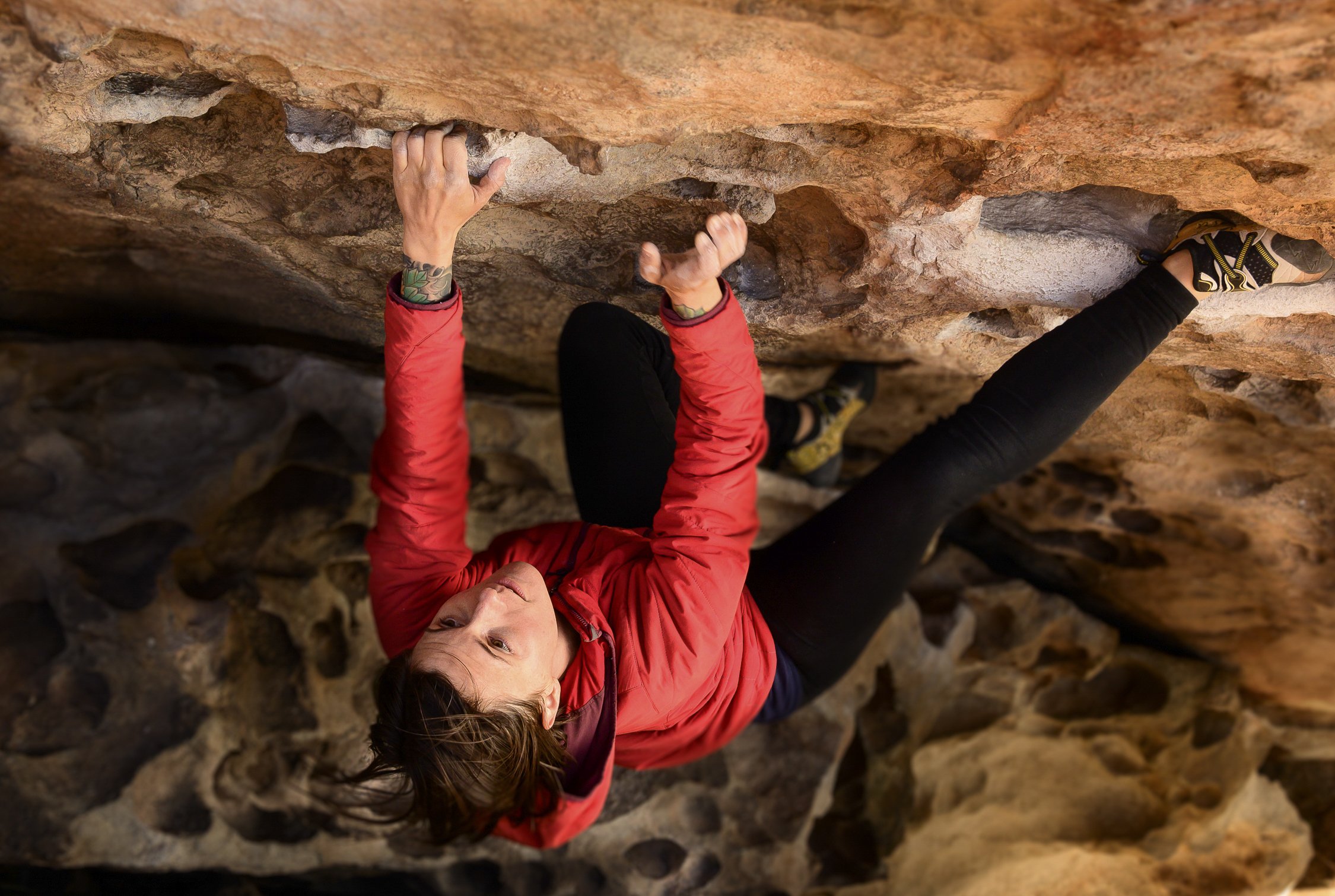
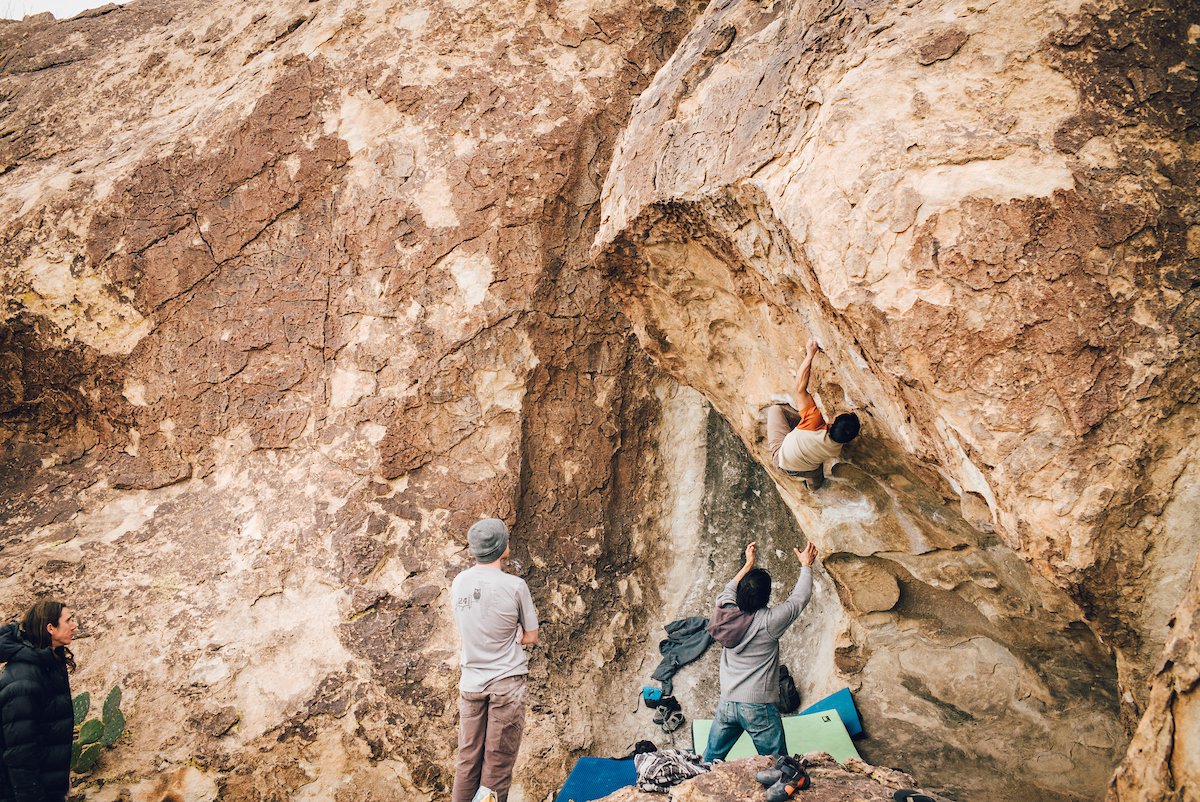
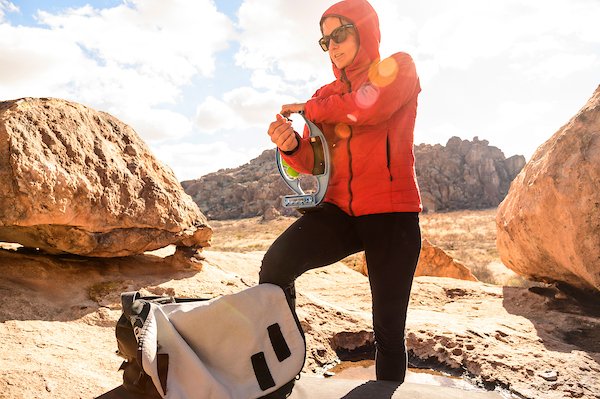
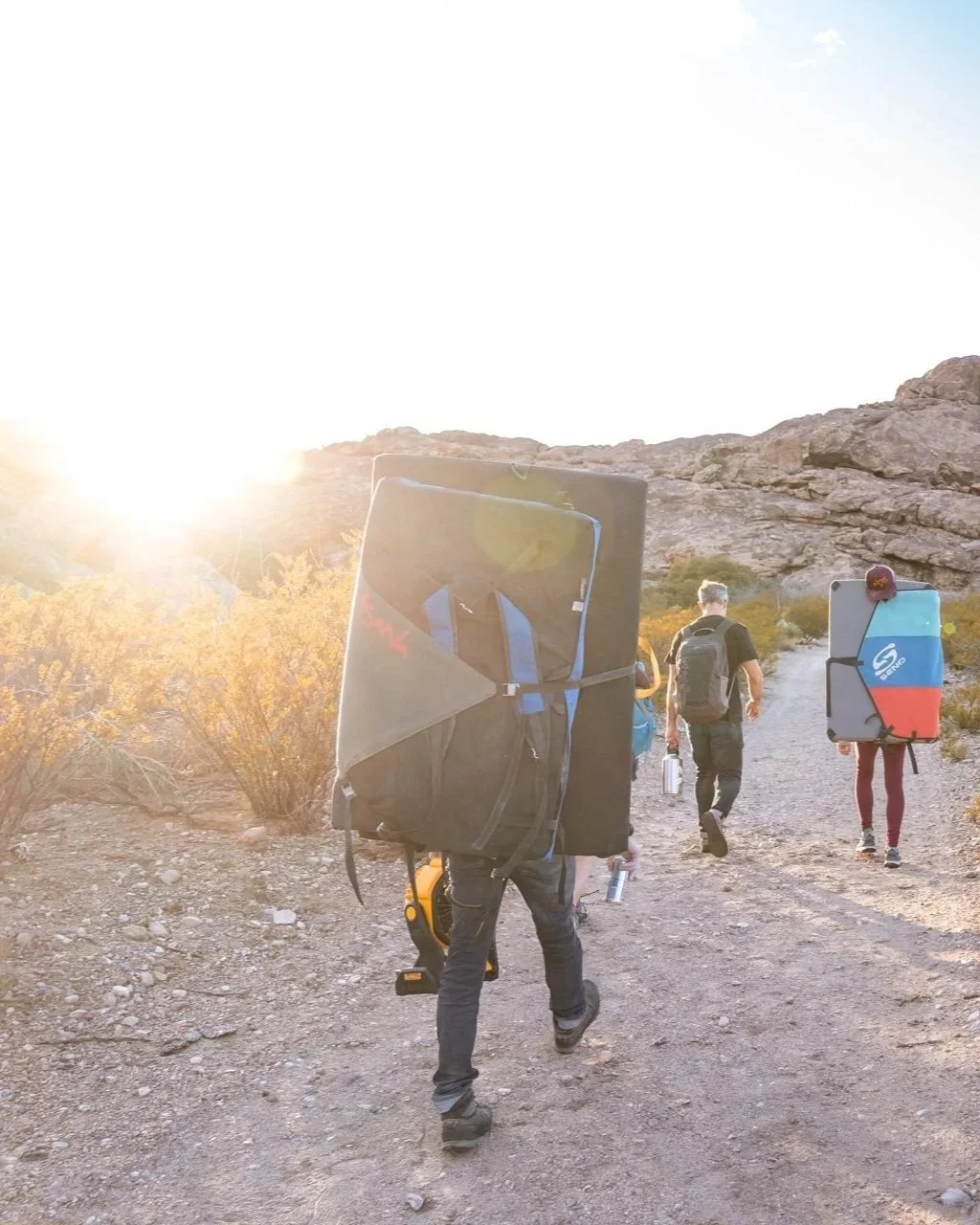
The AAC's five lodging facilities provide affordable places to stay, build community, and create lifelong memories next to some of the country’s best crags. Each facility is open to the public, and accommodations range from communal tent campgrounds, to bunked cabins, to private rooms in air-conditioned homes. These spaces are designed for climbers, by climbers, and give guests a camping experience rooted in shared interests, steps away from projects worth returning to day after day, and year after year.


“A great place to rest your head and your body before and after any adventure inside Grand Teton National Park. Awesome atmosphere and amazing way to meet other super adventurous people.”

–Westley S., Grand Teton Climbers’ Ranch Guest


Stories like these are common across the Club’s lodging facilities, with each space building its own legacy through the memories made—from sending a project, to winding down by the campfire at the end of the day. The continuation of these special moments and stories relies on generous support. Gifts to AAC campgrounds fund essential repairs and improvements so that each site can continue to provide a welcoming, affordable home base—and awesome atmosphere—for climbers now and for generations to come.


Small Hauntings

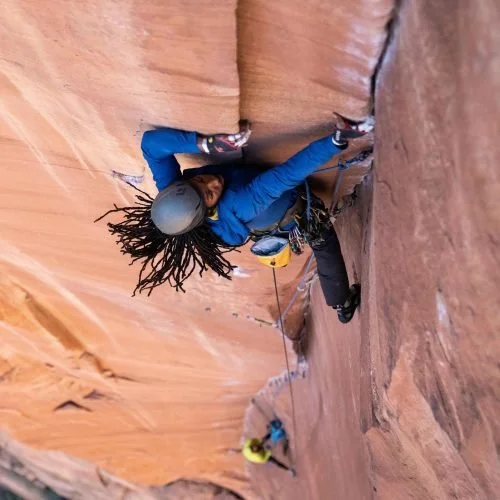
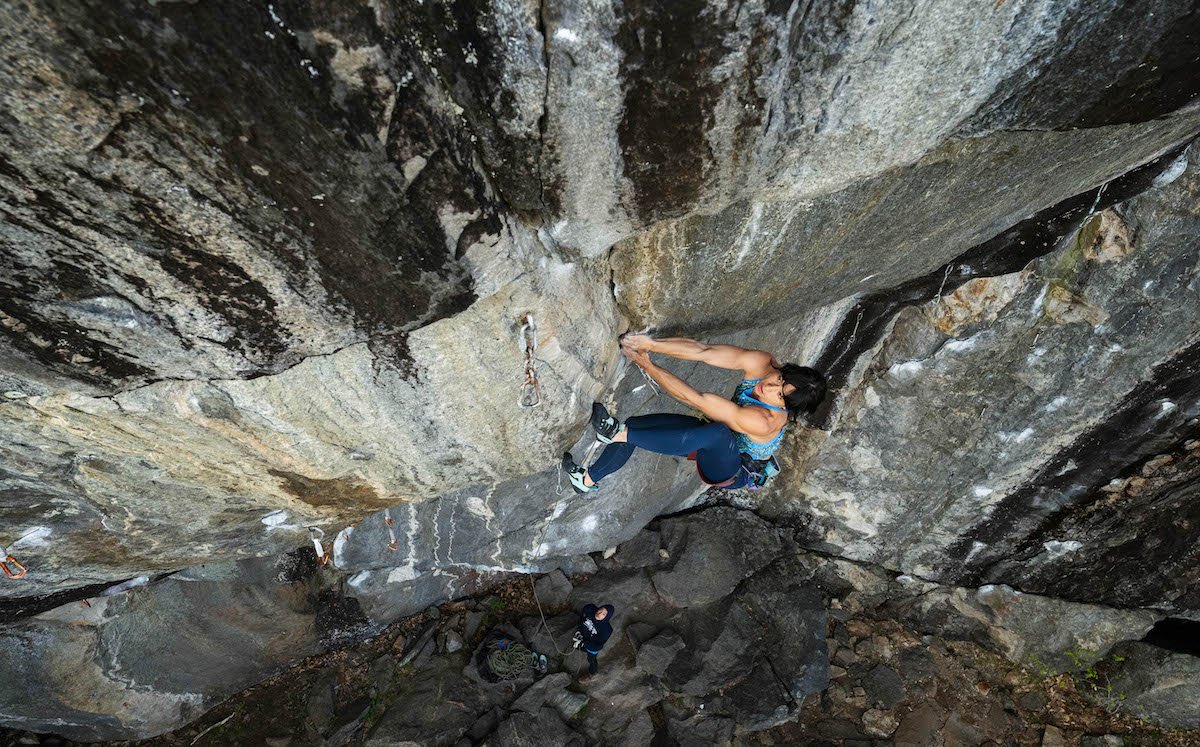
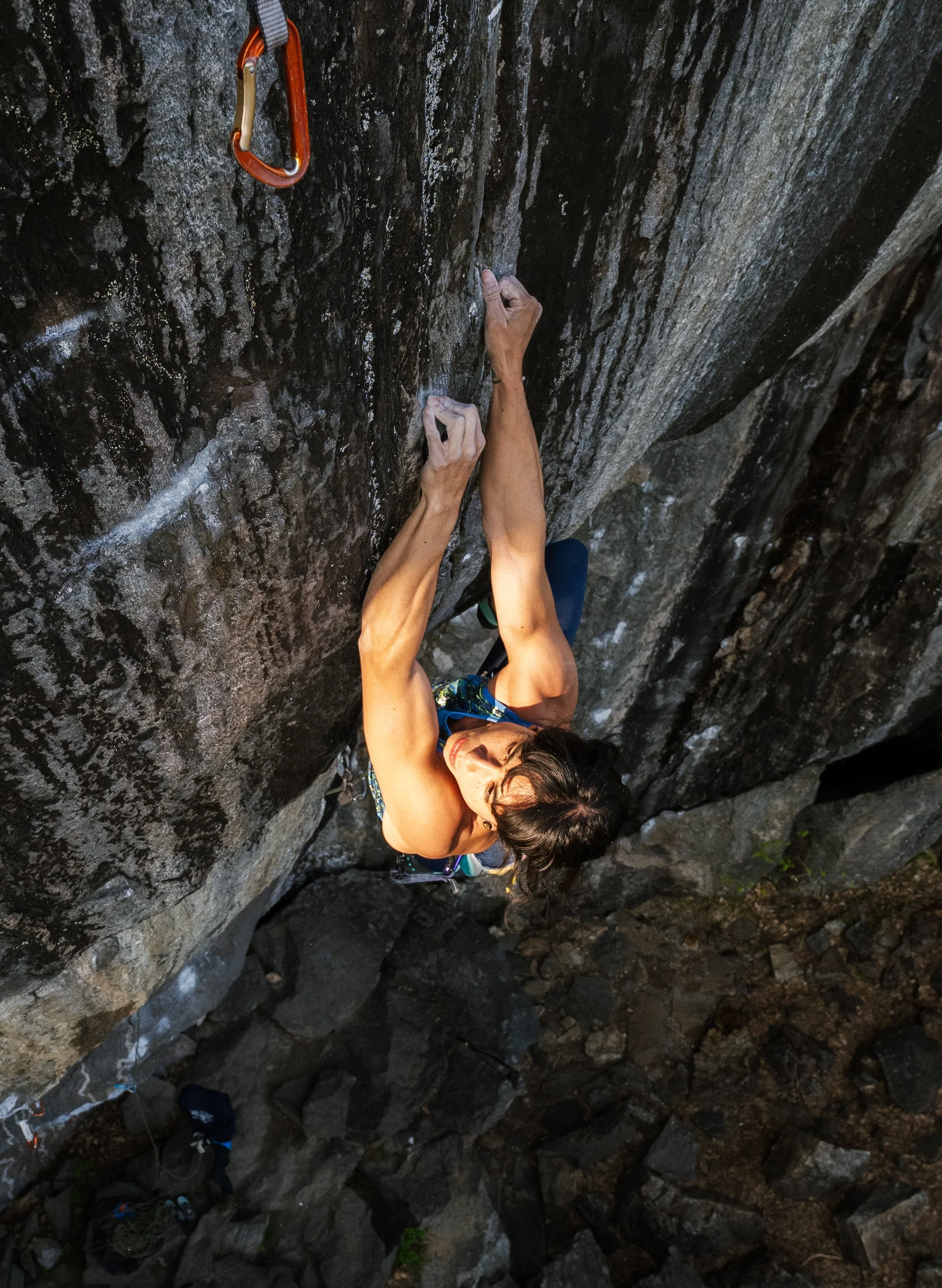
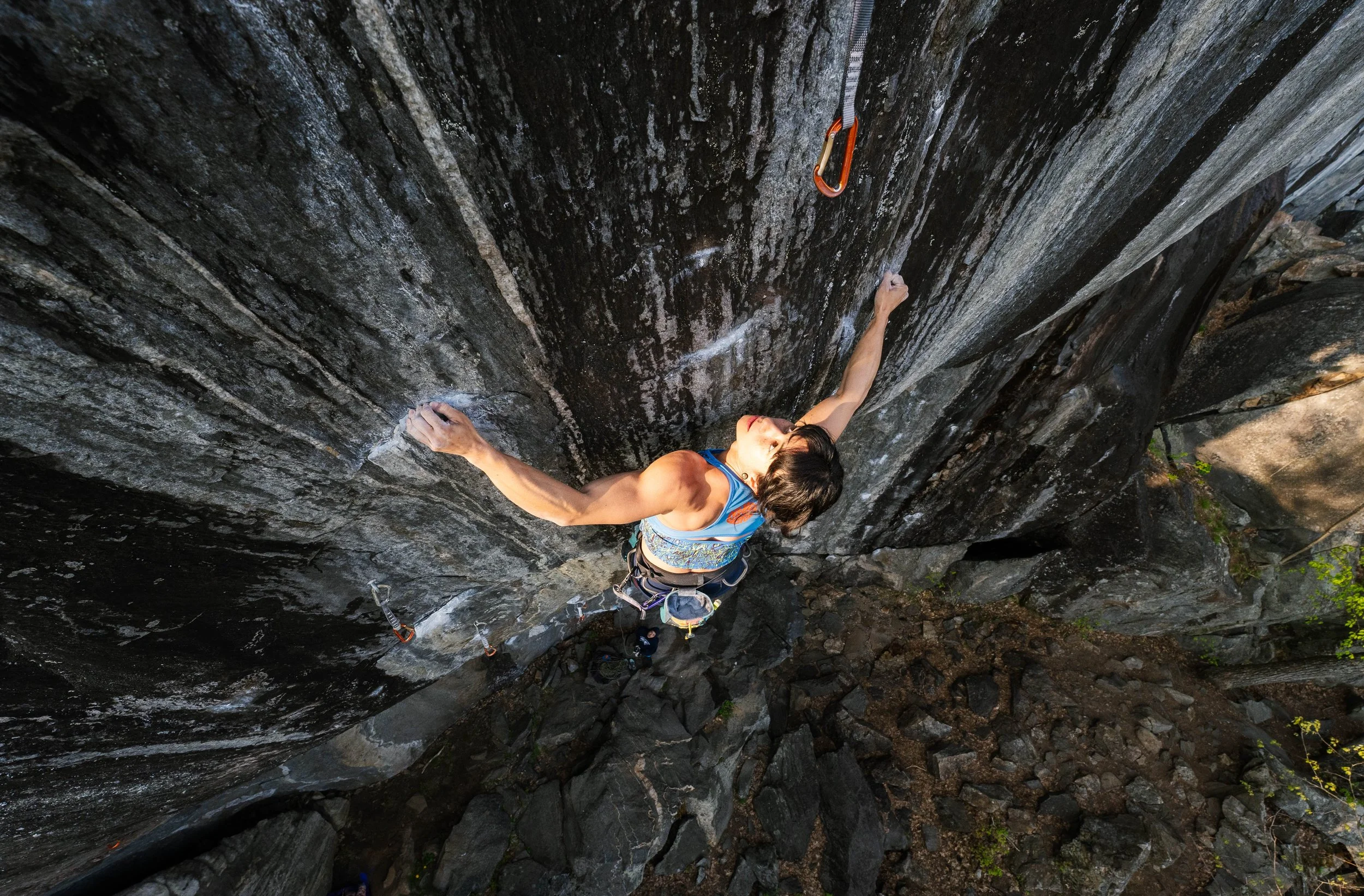
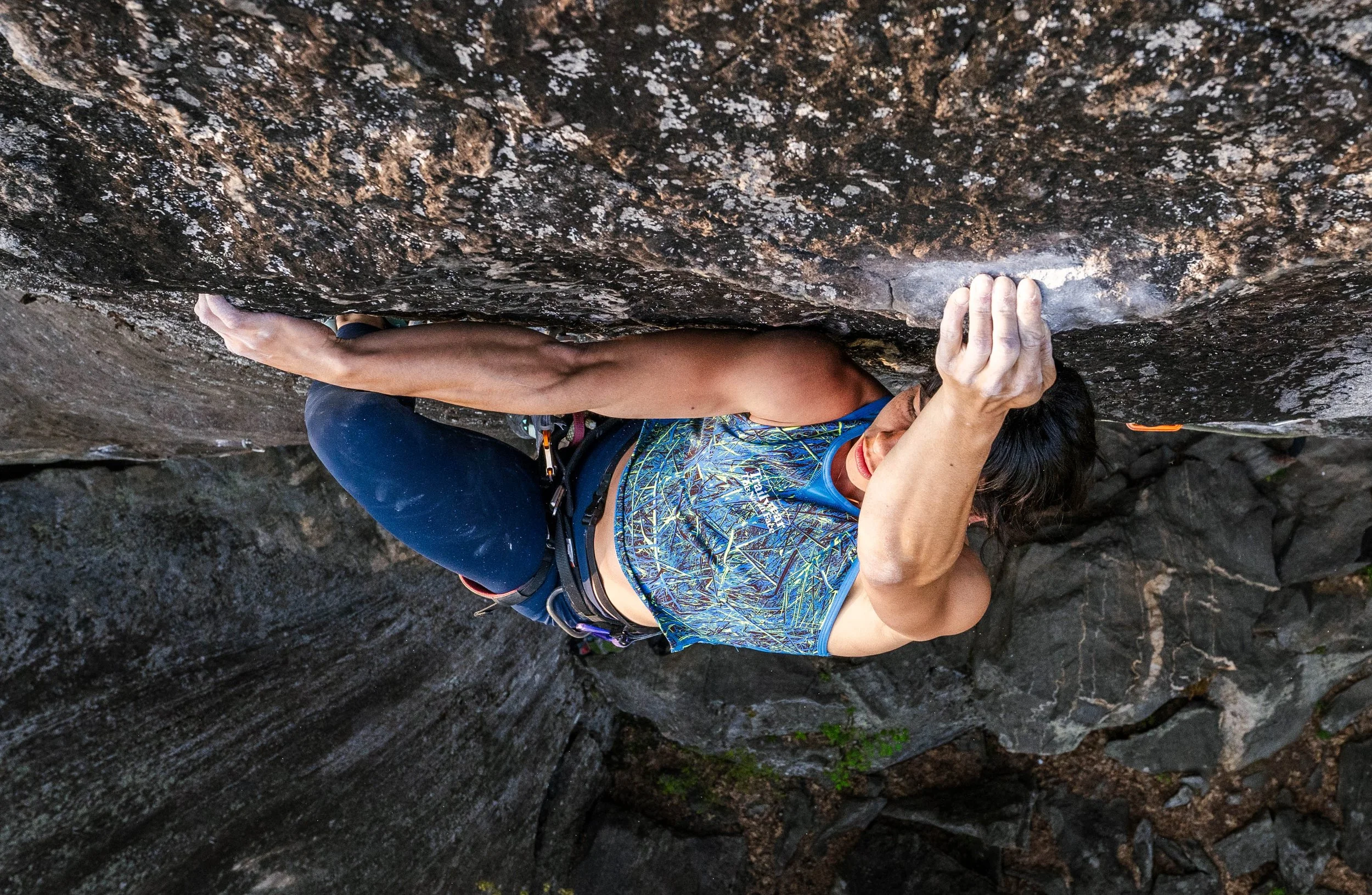
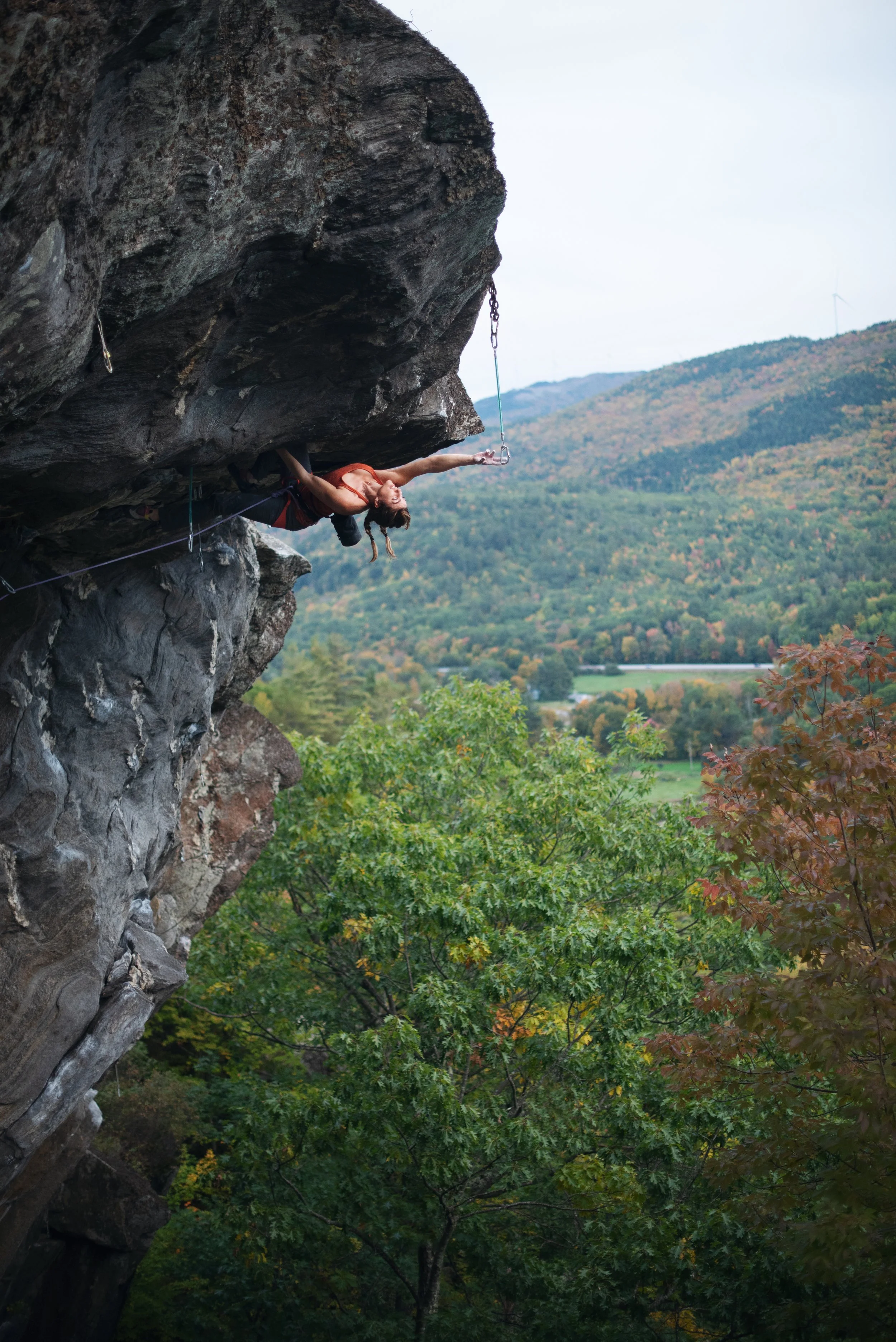
AAC Board President Nina Williams on China Beach (5.14b). Photo by AAC member Jordi Llauradó i Vilà.

A Look at Rumney’s Aura Climbs

By Hannah Provost

Originally Published in Guidebook XVIII.

For many of us, each climb we undertake is a private sparring session. Because such battles can be painful, frustrating, or even sometimes break us, you’d think we’d engage only reluctantly. But it seems that we climbers, more than anything, are easily disposed to spiritual possession.

Each haunting (a.k.a. “project”) is temporary, lasting a few weeks or months, maybe even years. Once we do send—the most occult of rituals—the hungry ghost, now fed, simply vanishes.

But some climbs collectively haunt. They manifest a certain presence, even in the minds of those who have no interest in pulling on the first holds: La Rambla, Burden of Dreams, Pure Imagination, Free Rider, iconic routes we see and hear so much about that they spark the collective imagination.

One zone that’s remarkably stacked with such routes is the featured schist of Rattlesnake Mountain in Rumney, New Hampshire. The short cliffs of Rumney lend themselves to distinct features and stout boulders, creating climbs with unmistakable character. This is, therefore, one of those crags where it’s only natural to ask: Which ghosts haunt the rocks?


Jaws II 5.15a

Jaws II lures its victims with one important ingredient: the temptation of the impossible. After Dave Graham climbed Jaws at 5.14b in 1998, several holds broke, and the line eluded repeats for nearly a decade. In 2007, the New Hampshire–based crusher Vasya Vorotnikov and his friend Zeb Engberg found that they had been cruising through the harder established climbs at Rumney, and were looking for new levels of challenge, some way to get pumped that mirrored the roped climbing they were allowed to do on the junior-competition circuit. Back then, it was thought that bouldering was still too dangerous for developing youngsters—ironic, because Jaws II would turn out to be roped bouldering, with a V12/13 to a V10 packed into its 50 feet of height.

After the usual process, Vorotnikov sent the rig in 2007, renaming it Jaws II (“Broken Jaws” was a contender as well) and proposing 5.15a—making it the second 5.15 in the United States, after Flex Luthor. The next 10 years saw a flurry of ascents, as boulderers flocked to the short, steep walls of Waimea. During those years, the climbing media kept a careful log of Jaws II repeats.

Paul Robinson, who snagged the fifth ascent in 2013, remembers the unique crux on the initial boulder, which he considered V13: “You had to grab this really high right hand and then get your feet in this weird drop-knee position and stab back over your head into an undercling.” But, Robinson continues, “The move was super learnable. I remember trying it in the beginning and just being like, Whoa, this move feels impossible.” After the undercling, there was also a jump-kick move, or a pogo, that you often don’t find outdoors.

For Robinson, the route’s difficulty and aesthetics—the sea-foam lines in the schist, the cresting wave of Waimea Wall—help explain why it looms so large at Rumney. But above all is the fact that Jaws II and its Waimea neighbors, like China Beach, are perfectly separated by blankness. Unlike many crags where you can grid-bolt or move a few feet off the bolt line to climb a variant sequence, these lines have a firmness to them. With Jaws, “it’s like the rock chose the bolt line,” Robinson says.

Nineteen years later, Vorotnikov thinks that Jaws II still haunts because it’s a testpiece and has history—not because it’s a classic or a king line. In contrast to Robinson, he thinks it’s actually not that pretty. “I don’t think of anything hard as ultraclassic, to be honest. Because [they’re] too weird,” he says, going on to describe some of the tweakier, unpleasant holds on Jaws II’s bottom boulder.

Still, says Vorotnikov, “You can definitely have a five -star experience on something that’s not five stars at all. You can have your own mini-adventure at your local crags.” Yet to some extent, why Jaws II retains so much aura is a mystery to Vorotnikov. But that’s the power of sheer difficulty—it tends to create its own gravitational field.


AAC Board President Nina Williams breaks the beta on the top crux of China Beach, to suit her short frame. Photos by AAC member Jordi Llauradó i Vilà.

China Beach 5.14b

“I have not sent this route; however, I have spent a disproportionate amount of time falling off this route...” opens Jay Knower, describing the 5.14b China Beach on Mountain Project, before opining, “China Beach is the ultimate sport climb and is the standard against which all other sport climbs should be judged.”

Just one route over from Jaws II, China Beach might have even more name recognition. Heck, there’s even an entire podcast dedicated to understanding why so many people are haunted—in the best way—by this climb.

Rajiv Ayyangar, a co-host of Climbing China Beach: A Podcast Series About One Route with Michael Penn, says China Beach has come to represent many things to different climbers—it has been a gateway to harder climbing, a capstone to a climbing career, and a conduit for personal transformation.

After interviewing so many people about their obsession, Ayyangar is starting to formulate an idea of the origin of the route’s aura, starting with the breakdown of the climbing, and with a nod to the impeccable rock quality and friction: “The fact that it’s continuous, the fact that every move is interesting and iconic, the fact that it’s two different styles. You’ve got this bottom section that’s almost trad-like and insecure, and then this top section that’s big moves on hero crimps. And it punishes tall climbers at the bottom and short climbers up top. There’s an equivalence to it.”

The projecting process for China Beach almost always becomes a discrete epoch—due, in part, to how unexpectedly long it often takes. Ayyangar is convinced this is because of the continuity of the climb, the intricacy of the different styles. China Beach asks climbers to go deep into microbeta and tactics. It’s a climb that asks you to linger.

Nina Williams, the AAC’s Board President, did the first female ascent of China Beach in 2023—doing a wild rose move in the upper crux from a non-hold that other climbers had never even tried to use. For Williams, the route has standout attributes that compound with each burn. She says, “Visually, [it’s] an obvious line with a striking position in the center of the wall. White zigzag streaks and cracks naturally draw the eye. Physically, it has a little bit of everything: crimps, sidepulls, underclings, slopers, smeary feet. Intricate sequences that require both strength and endurance (versus the typical ‘boulderer’s route’ style of Rumney).” But other factors, like New England’s wet, cold, fickle weather and the list of climbing legends associated with the route—New Englanders Dave Graham (FA), Joe Kinder, and Vasya Vorotnikov, as well as prominent visiting climbers like Jonathan Siegrist and Alex Megos—have also shaped cultural opinion, enhancing its aura.

Another thing that Williams and Ayyangar kept coming back to was their personal experiences on China Beach—their own dance with the rock. Says Williams, “I ultimately think the climber is what gives a climb ‘aura’; the climber’s journey and process add to the overall narrative of a route and inspire other people to add to the lore.”


Design by Foster Denney.

Predator 5.13b

The cover of the Rumney guidebook. The logo for the Rumney Climbers’ Association. A glimpse through the trees when you stand next to the dumpsters at the AAC Rumney Campground. Predator is everywhere— stalking you, ready to possess your body and swallow your soul.

Predator is a 5.13b at Orange Crush—and the most iconic climb at Rumney. This 45° over-hanging prow is impossible to ignore. The hill and trail that follow the rising cliff at Orange Crush mean that climbers on the approach have an eye-level view of anyone on the route, with the stunning valley dropping away to create an epic horizon. Climbing Predator, whether you’re sending or falling, is a performance. Emma Kowal, who sent in 2023, says the position, the hero moves, and the continuity of the difficulty “allow you to access a pretty magical state of self.”

Predator is, beyond its obvious aesthetics, also a climb you earn—as Kowal says, climbing it requires “at least one shenanigan.” You have to climb a pitch to get to the Predator belay ledge—either climbing one of two 5.11s or aiding on bolts. If you want to give multiple attempts, there is a friendly tree you must land on, so that your belayer can throw you a loop of rope and pull you back in. And if you’re planning to top out, either on the send go or while projecting, it might just be easiest to unclip the anchors and jump—or do a victory-whip backflip. Regardless, it’s advised that you back-clean or skip the final bolt too, so that you can make it to the tree.

Fortunately, the movement itself is very approachable. A power-endurance test-piece, the line doesn’t have a sequence harder than V5, according to Kowal. Off the belay ledge, you begin with awkward 5.11 face climbing, with holds facing the wrong direction and weird, sometimes-wet stemming. This quickly turns into jug-bashing until you’re at a ledge. On the ledge, as Claire Stolz, who sent Predator in 2025, describes, “You’re sitting there, you’re listening to everyone else on their project [around you], you’re listening to people gossip at the top of Orange Crush, hearing about somebody’s date...you can see the big arc of the Baker River. And then the wind turbines are turning.” Meanwhile, the permadraws sway in the breeze above you, building anticipation—you’re about to go to war with Predator.

The next 20-odd moves begin with big swings and flowy jugs. There’s the matchbox crimp you use for the hardest move, and then a strenuous, scummy knee-bar that some use to cop a rest before Predator’s most iconic move—a dyno or large deadpoint. But it doesn’t end there, because then you’re squeezing the “pinch of despair,” quickly followed by the “pinch of hope,” as Kowal has dubbed them. The mantel that guards the chains isn’t so bad if you have the reach—and can find the hidden crimp.

For Stolz, Predator has “five-star climbing in a five-star position.” The climb is approach- able because there are no terribly hard, stopper moves, and the permas are bolted closely, so it is easy to pull on draws to work the climb. Kowal reflects that Predator is also compelling because it’s so public as to almost be performance art: “There’s something extremely exhibitionistic about climbing Predator. You’re creating this unbelievable silhouette for everybody who’s up there; you’re doing these big dramatic moves and taking these big dramatic falls and screaming a lot.” And the fact that Predator is a 5.13 “makes it a climb that people find aspirational and see as a goal,” perhaps for their first of the grade, says Stolz.

It helps, Kowal says, that “Rumney has a very rich beta-sharing culture. Climbs are quite cryptic and beta-intensive. So beta gets passed down through the generations.” When you get on Predator, you are enmeshed in that culture, in an oral tradition that helps you go deep into Rumney’s history.

Kowal and Stolz both consider Predator to be an ultraclassic—if you can climb the grade, it’s not to be missed. Kowal argues it might even be a king line—there is a majesty to it. Kowal put in 30 attempts before sending it as her first 5.13. She took notes after every attempt and reread them before each go. She built a replica of the final moves on the Kilter Board. On the send, she wore her friend Max Lenail’s La Sportiva Otakis—his last pair of climbing shoes before he died in an accident a few years prior. They were stiff enough to make the knee-bar comfier, reconnecting her to him via the rock and the fact that he, too, had once sent Predator.


AAC member François Lebeau

A Personal Haunting

For Vorotnikov, it’s entertaining to discuss the finer points of what makes something a testpiece vs. an ultraclassic vs. a king line—all of the different nuances of what gives a climb aura. His take is that Waimea, a 5.10d down the wall from Jaws II, is far more an ultraclassic than Jaws II—simply because nearly everyone who climbs at Waimea will climb it. It’s a little spooky, it’s the crag warm-up, and it’s the wall’s namesake, as well as simply Type 1 fun. But we won’t commit to anything—the endless debating over routes is too fun.

Even as the climbs discussed above prevail in Rumney lore, there are plenty of other Rumney climbs with their own history and charisma. There is a special power in being able to step into the legacy, shared beta and inspiration, and communal knowledge of Jaws, China Beach, Predator, Technosurfing, Flesh for Lulu, Black Mamba, Millenium Falcon, and Lonesome Dove. But there is also something exciting about striking out on your own and getting inspired by something a little unusual, ugly, tweaky, or underappreciated.

As Williams shares about finding the joy in— or even being haunted by—anti-classics, “There’s less of a chance to bond over shared knowledge. That being said, going back to the climber giving a climb aura, I started telling people to climb on Bishop’s best V9 lowball, America’s Fit Homeless. Is it actually Bishop’s best lowball? Probably (definitely) not, but it’s fun building hype and getting people to try obscurities.”


Sign Up for AAC Emails

The Lizard Life: A Glimpse at Hueco Climbing Culture in Its Modern Age

Photo by AAC member Michael Lim.

By Hannah Provost

Originally published in Guidebook XVI

Luis Contreras is breathing steadily, forcefully, with intention.

He is 15 feet off the deck, and has 20 more feet of textured edges, sidepulls, and huecos to top out Wyoming Cowgirls, a 35-foot V5 on Hueco Tanks’ North Mountain that has recently been reopened.

A few pads sit lonely in the rocks below. Each of his precise foot placements and composed breaths are indicators of the stakes, and they reflect the time this climber put into top-rope rehearsing such a consequential highball. His movements are linked in chains of powerful bursts punctuated by rests. A certain barely observable shaking reverberates from his core into his limbs, but his breaths and the wind are the song he is dancing to—the shaking and the fear squashed down.

For Contreras, “the best climbs are the ones that even if you’re not a climber you walk by and you say, 'Wow that’s a sick climb...' I [am] drawn to these striking tall faces.” Wyoming Cowgirls had always been one of those climbs.

Contreras tops out quietly, his focus unwavering until he is fully over the rounded slab of this immense boulder, where he sits. No whoops, no cheers. Just a private adrenaline high coursing through his veins.

Instead of celebration, he gazes out to the brush-filled desert beyond.


How do you understand the essence of a place? There are of course the facts and figures, the ecology and topography of the terrain, but there are also the traditions and rituals and history of the people who move across it. Such entanglements are why some might say that “the climbing community” (singular) is a misnomer. Our landscapes too-specifically shape us.

For example, Rifle is the land of lifers. That tight canyon, with its near-instant access to climbing seconds from the car, allows for kids splashing in the stream, craggers at Project Wall rubbernecking as you drive by, and the daily parking shuffle as you move from crag to crag. Ten Sleep is Adult Summer Camp: Given the long journey required to get there and its minimal infrastructure, the place welcomes tech bros and remote workers to set up shop for a month or the whole summer, with scheduled camp activities limited to river time, brewery time, or climbing time. As a final example, the Red River Gorge is never never land, where a dirtbag might never grow up.

Climbing cultures, like any culture, are a mixture of language, beliefs, rituals, norms, legends, and ethics that are largely shared by a community and emerge from the interaction of that community with their landscape. Hueco’s iconic roofs, abundant kneebars, airy highballs, deep bouldering history, importance to Indigenous cultures like the Tigua Indians of Ysleta del Sur, and fragile and rare ecosystem shape its climbers too, on an individual level and at scale.


Bouldering in Hueco is an intimate affair. With guides required to access most of the climbing, and groups capped at ten people, “most people know most people, and if you don’t know them it’s only a matter of time,” says Luis Contreras, who is a Hueco guide of a decade and El Paso born and raised.

Most climbers at Hueco fall into one of four groups: the El Paso “city” climbers, the lifers who own property right outside Hueco Tanks State Park, the seasonal dirtbags who migrate every winter, and the out-of-town visitors who pilgrimage there (often yearly) when they can scrabble together some PTO. Even the visitors become known entities—once you have a guide you trust, why not come back to climb with them again and again? You’ll likely find who you’re looking for at one of three community hubs: the Iron Gnome, the AAC’s Hueco Rock Ranch, or the Mountain Hut.

Photo by AAC member Dawn Kish.

Within such a small community, a run-in with an old head or unique character is considered commonplace. You might chat with Lynn Hill over beers at the Iron Gnome, or spot Jason Kehl out in the distance developing a new line. You’ll likely wave at Sid Roberts as he leaves the park from his early-morning session, or even share a laugh with the colorful John Sherman—the originator of the V-Scale.

But no matter what kind of Hueco climber you are, climbing at Hueco feels deeply entangled—it requires a self-consciousness of landscape, access, and ethics that doesn’t just fall away when you throw down your pads and pull onto rock. But that’s not a downside for locals like Luis Contreras and Joey McDaniel. That’s the richness of it.


Among the javelinas and ringtails, among the scooped huecos and textured patina crimps, it’s common to hear the idea that “climbing in Hueco is a privilege.”

Again and again, locals point to a shared ethic when asked about the culture of Hueco. There is a protectiveness over the ecological uniqueness of the place. The Chihuahuan Desert holds 25 percent of the world’s cacti diversity after all—including prickly friends like the Texas rainbow cactus, scarlet hedgehog cactus, and horse crippler cactus. Hueco guide Joey McDaniel always likes to say, when it comes to Hueco, “the more you look, the more you see.” And indeed, for the ancient water systems in the huecos for which the park gets its name—where the famous fairy shrimp eggs lie in wait, for years at a time, anticipating the water that will enable them to hatch— this is most certainly the case.

Some Hueco climbers express pride in the sandbagged nature of the grading. Others hold tight to the humbling challenge posed by the proliferation of highballs in the area.

Others note the awe of walking past ancient rock art on your way to the proj, or learning from a tribal elder during the park’s Community Fair (also known as the Interpreter Fair) about the way local tribes continue to celebrate Hueco as a sacred space.

For some, there is something special about how knowledge and local ethics are passed down orally—from guide to climber as they laze about in the shade between burns. Whether it’s the story behind the FA of Scarface and The Flame, or how Verm started it all.

Plus, climbing at Hueco doesn’t come easy. It’s serious business that you follow established trails, and climbing is an absolute no-go until at least 24 hours after it rains. Water scarcity in this desert area can be a pain for van-lifers, and group dynamics among tours can be a challenge when climbers don’t agree on an itinerary, or are restricted by the number of groups that can be in one area at a time. Evidently, going with the flow is essential.

Photo by AAC member Michael Lim.


Photo by AAC staff Foster Denney.

Book Your Stay at the Hueco Rock Ranch

The AAC’s lodging facilities are a launch pad for adventure and a hub for community and the Hueco bouldering season is upon us! Experience this place for yourself by booking your stay at the Huceo Rock Ranch today.

AAC members enjoy discounts at lodging facilities across the country. Not a member? Join today.


But these are the rules of the Hueco game.

Some of Hueco’s traditions flirt with a classic climbing motivator: competition.

Photo by AAC member Foster Denney.

Challenges are what you get when locals get bored—or when climbers want to break from the bleariness of project-send-repeat. They range from famous and lauded, like the Big Five in Fontainebleau—a circuit of five classic problems from 7c to 8a (V9 to V11) in the Cuvier Rempart sector, which pro climbers now complete in a day—to locally legendary, like the Dungeon Master challenge at Staunton Rocks, which involves sending all the 5.13s at the crag in a day (still unclaimed).

At Hueco, there’s the Wanker 101.

The Wanker 101 is a list of one-hundred-and-one boulders on North Mountain, ranging up to V2 but most in the V0 range, that essentially functions as a tour-de-North Mountain and an iconic test piece of volume, skin strength, and planning. These days, a number of the original lines are closed due to proximity to rock art or fragile environmental surroundings, so alternative problems have been chosen to ensure the challenge lives on.

Carrie Cooper, reflecting on her experience completing the challenge in an article for Climbing, highlights how unexpectedly challenging the Wanker is, even if by the numbers it looks trivial. But with that volume of climbing, and romping on beautifully sculpted holds, can come a climber’s high: “It felt like falling in love. Problems 96 to 99 were fantastic, every move a joy. We would rest at interesting holds, 15-plus feet up, no pad, almost singing to one another the beauty of the climb.”

During the 2024-2025 winter season, AAC Hueco Rock Ranch camper Jackson Jewett on-sighted the challenge in a very impressive time of 5 hours 38 minutes.

In recent years, a new challenge has emerged that’s a little more bite-sized, though one climber reflects that “so far, all who've completed it have tasted blood.” The car-to-car format of the No One Runs Out of Here Alive Challenge is familiar, but with a bouldering twist. Competitors bust up the infamous chain trail on North Mountain, top out Nobody Gets Out of Here Alive (one of the most iconic and classic V2s at Hueco) and return to the starting position. The fastest time is currently held by Jake Croft at 6 minutes, 24 seconds.

Of course, other traditions have popped up, shaped by Hueco’s unique environment. One that stands out is the newer tradition of Aoudad Feast.

Aoudads are barbary sheep that roam in and out of Hueco Tanks State Park and the surrounding area. These brown mountain-goat-looking creatures are actually invasive, and have posed a growing problem in the park, due to overgrazing, kicking up soil, displacing native animals, and competing for the same resources. For Aoudad Feast, local climber Billy Heart hunts a few aoudad (outside the park boundaries of course) and provides a meal for local climbers—an excuse to gather and bring attention to the ecological impact of the aoudad, which is often incorrectly attributed to climbers. Appropriately for the desert, the party can get a little weird.

While not necessarily making a dent in this environmental issue, the event is symbolic at the least—these local climbers are tuned in to what matters to Hueco climbing, and how access is complexly intertwined with the landscape’s environmental health.


Hueco, importantly, has a critical role in bouldering history and the cutting edge of the sport. It has become known as a proving ground for climbers of all levels. And it certainly has been the site of many a sending rampage. Though no doubt it requires “paying your dues” to learn the movement and style, the rock also largely rewards strength and power—something plenty of pro boulderers have in spades. For example, Nathaniel Coleman showed up to the AAC’s 2024 Hueco Rock Rodeo and flashed Slashface (V13) and sent Li (V13) and Coeur de Leon (V14), among plenty of other double-digit boulders.

Similarly, Michaela Kiersch had her “best bouldering day ever” at the same Rodeo, reclimbing Crown of Aragorn (V13) and standing atop plenty of other double-digit boulders, like Thrilla in Manilla (V12), Rumble in the Jungle (V12), Phantom Limb (V12), Power of Landjager (V11), and Sunshine (V11).

Matt Fultz, a pro climber known for being down-to-earth with an unusually long wingspan, has been at the forefront of recent hard ascents in Hueco in the last year. Last winter he reopened a climb that previously had been done at V12, located on the left side of the famous Martini Cave. A key hold had broken around 2005, and the route was proclaimed impossible. Fultz was able to reopen the problem again as The Hangover, playing into the martini theme of the area. According to Fultz, it was “probably the most morpho problem [he’s] ever done.” He shares: “I thought the original sequence looked so fun, but was disappointed to hear it was broken and impossible. It wasn’t until last year that I realized I could potentially span the move, but only using every inch of my [six-foot-five] wingspan, along with extra strategy on how I would grip the holds and set up for the move. After a few days of dialing in the sequence, I was able to open up the line again.”

Photo by AAC member Keith Allen Peters.

That same season, Fultz also did the second ascent of Desesperación, and has proposed an upgrade to V15 for the climb, since he thought it was at least a grade harder than its twin, Esperanza (V14). Reflecting on his process, Fultz shares that Desesperación “involves some cryptic moves in and out of a kneebar to some very intense shoulder and tension positions, all through a 60-to-70 degree roof. It’s so cool! It was a pleasure to work out the moves from scratch, as all I had for clues on beta were a couple pictures from the first ascensionist, Martin Mobraten. Projecting Desesperación was different from trying The Hangover in that the biggest challenge was solving the puzzle rather than spanning the moves.”

Of course, Jason Kehl has proved ever-prolific in his ongoing development of boulders in the park, but first ascents on the cutting edge of the sport have slowed down. Fultz thinks that will change in the future: “To my knowledge there is currently nothing harder than V15 that has been climbed at Hueco, but I believe that there is so much potential for harder problems! And with how incredibly talented the upcoming generation of boulderers are, I have no doubt V16 and beyond will come to Hueco in the near future. I think generally people can find Hueco difficult for projecting or having extended trips due to the regulations, but what I’ve found is that they're really not as bad as their reputation.”


Photo by AAC member Michael Lim.

But Hueco’s star status for the pros is just one piece of the puzzle. The close-knit “keep it small” culture at Hueco is why the mijos and mijas will rally around a friend to support a big highball attempt, lugging out pads on a rest day. It’s reinforced by how far Hueco and El Paso are from other major cities, requiring a force of will to get there. And it’s fueled by waiting in the hot desert sun in your car, living the “lizard life” as one climber called it, alongside friends and strangers, waiting in line to be one of the 70 climbers allowed into North Mountain to climb for the day—knowing that climbing access isn’t a guarantee.

Rather than begrudging the regulations and inconvenience, many climbers of Hueco seem to recognize that the lizard life represents something necessary about an incredible world-class climbing area that climbers share with the world. This holistic take on climbing access even pervades the art coming out of the Hueco climbing scene. The Hut Smut Review is a zine that many locals and travelers have contributed to in its first few years. The driving force behind Hut Smut is to get into the complexities of who we are as climbers and how that fits into our other identities. Joe Knapp, one of the creators of the zine, says the idea originated during the dead space and boredom of hot lizard days. What else will emerge from this landscape?

Like every crag, Hueco is a unique experience. Traditions and competitions have emerged around Hueco’s boulders, ecology, and culture. Climbers aren’t afraid to hold each other to the ethics of the area. And at the center of it all are the crimps that taste like glory, that pulled us in in the first place.

Forget stone monkeys—meet us in the dusty Hueco Tanks parking lot so we can be rock lizards.

Psyched to visit Hueco? It’s imperative that you be in the know on all Hueco Tanks State Park regulations and the ins and outs of getting a guide: tpwd.texas.gov/state-parks/ hueco-tanks/activities


Sign Up for AAC Emails

Guidebook XIV—Rewind the Climb

David Hauthon on Directissima (5.9), The Trapps, Shawangunks, New York. Land of the Mohican and Munsee Lenape people. Photo by AAC member Francois Lebeau.

Setting the Standard

By the Editors

Before there were 8a.nu leaderboards and Mountain Project ticklists, before there were beta videos and newspaper articles for every cutting-edge ascent, there was a word-of-mouth understanding of who was setting the standard of the day.

Pushing the standard of climbing at the Gunks has proven to be key in the history of climbing in the United States, and any connoisseur of climbing history will know the names of Fritz Wiessner, Hans Kraus, Jim McCarthy, John Stannard, Steve Wunsch, and John Bragg—all AAC members by the way. But what often gets overlooked in the whispers of rowdy Vulgarian parties, naked climbing antics, and strict leader qualifications that swirl around Gunks history are the distinct contributions of women to Gunks climbing. A central figure in this story is the unique character Bonnie Prudden.

First, we must set the scene. Prudden was most active climbing in the Gunks in the late 1940s and early 1950s, when climbing on rock was done in sneakers with a hemp rope. Rather than boldness, a strict no-falls attitude pre-vailed, and good judgment was prized over achieving the next cutting-edge grade. Pitons and aid climbing were status quo, and without a priority on pushing the limits of the sport, the time period was considered non-competitive. While Wiessner, Kraus, Prudden, and others were climbing 5.7s (even occasionally 5.8), most climbers stuck to routes rated 5.2–5.4.

Climbing in the Gunks started with Fritz Wiessner, who went on a developing tear starting in 1935. He and Hans Kraus would be the leading developers of the area until the late 1950s, collectively establishing 56 of the 58 multi-pitch climbs put up in that period. In 30 of those first ascents, Prudden played a role, and she wasn’t just tagging along.

With competition on the back burner, the significance of leading was murky. Some of the climbers at the time proclaimed that there wasn’t a big difference between leading and following. However, the great tension and division that would characterize the Gunks’ history— between the Appalachian Mountain Club climbers (Appies) and the rebel Vulgarians that opposed their rules—came down to the question of regulating leading. The Appies, the dominant climbing force in the Gunks until the Vulgarians and other rabble-rousers splintered the scene in the 1960s, created a lead qualification system, determining who could lead at any given level. Alternatively, some climbers were designated as “unlimited leaders,” who didn’t need approval to lead specific routes.

Although they were painted as control freaks by the Vulgarians, the truth behind why the Appie crowd was so invested in regulating leading (and minimizing the risk inherent in climbing) was because they were keenly aware of the generosity of the Smileys, the landowners who looked the other way as climbers galavanted around on the excellent stone of the Trapps and Sky Top.

Bonnie Prudden was lucky enough to rise above all of the drama. As a close friend and frequent climbing partner of Hans Kraus’s (who was obviously an “unlimited leader,” being one of the first, and much-exalted, developers of the area), Prudden had frequent access to new, difficult climbs. In interviews with researcher Laura Waterman, Prudden relayed that in the early years, while climbing with her then husband, Dick Hirschland, she always led because of their significant weight difference. Later she took the lead simply because of her skill, tutored by Kraus and Wiessner.

Shelma Jun on Harvest Moon (5.11a). Photo by AAC member Chris Vultaggio.

Prudden took her first leader fall on the 5.6 Madame G (Madame Grunnebaum’s Wulst) and recalls catching a fall from Kraus only four times. At the time, 5.7 and 5.8 was the very top of the scale, and Prudden was keeping up—and sometimes showing off.

The story of the first ascent of Bonnie’s Roof, now free climbed at 5.9, is often held up as proof of Prudden’s talent, and rightfully so. But the gaps in the story and the fuzziness of Prudden’s memory of it might reveal more than the accomplishment itself.

On that day in 1952, Prudden thought the intimidating roof “looked like the bottom of a boat jutting out from the cliff,” as she wrote in an article about the climb in Alpinist 14, published in 2005.

Overhanging climbing was still a frontier to explore, but Kraus was a man on the hunt for exposure, rather than difficulty. It just so happened that the massive overlapping tiers of Bonnie’s Roof would provide both.

Prudden wrote about the first ascent: “I don’t remember who took what pitch since by then we were swinging leads. But I do remember quite well reaching the Roof’s nose. This airy feature was the reason for the climb. Getting to it had been one thing; getting over it would be something else.” The very fact that she couldn’t remember the precise order of leads indicates how commonplace this was for her—how comfortable she felt on the sharp end.

Kraus struggled for a long time to find a place for a piton over the roof, and ultimately backed down in a huff, ceding the lead to Prudden. As she started up on the sharp end to see if she could locate the next hold that Kraus could not, she quickly found a hole over the lip that would take gear, a massive positive jug that was hard to see from below. She nailed in the piton without weighting it, pulled over the lip with ease, and ultimately climbed the pitch with only one point of aid. It seems that she “floated it,” as we might say today. Rather than the giddy breathlessness one might imagine upon pulling a strenuous lip encounter and succeeding where Kraus could not, Prudden’s first ascent seemed to get a shrug of the shoulders. This was just the usual business, and her telling of it reveals just how blasé climbing at the top of the standard was for Prudden.

Carmen Magee on Tulip, (5.10a). Photo by AAC member Chris Vultaggio.

Prudden’s involvement in 30 first ascents, including several at the highest difficulty of the day, had her setting the standard of the time. But researcher and historian Laura Waterman has uncovered a weird quirk to Gunks climbing history that should be noted. Women were involved in over half of the FAs during the 1940s, but decreasingly so in later decades. For example, between 1960 and 1970, only 5% of first ascents involved women.

Indeed, many female climbers of the later decades note a cultural sentiment about the frailty of women regarding sports, as an AAC Legacy Series interview with Elaine Matthews, iconic Vulgarian during the 1960s and 1970s, reveals. According to Matthews and others, there was a perception that women and girls “might hurt their reproductive organs” if they ran or did other forms of athletics. Women would not be climbing at the top of the standard in the Gunks again until the late 1970s.

Funnily enough, though she had an outsized effect on early first ascents of multi-pitch Gunks classics, none of these climbs were included in her climbing résumé when Prudden (then going by her married name, Hirschland) applied for AAC membership. Though she was accepted as the 652nd member of the AAC in 1951 on the merit of the mountains she’d climbed, today her legacy is much more tied to first ascents like Bonnie’s Roof, Something Interesting, Oblique Twique, Hans Puss, and Dry Martini.

For the women who came after her, perhaps the shrug at the Bonnie’s Roof belay is more important than the first ascent.


The Gunks: A Climbing Timeline

The Time of the Appalachian Mountain Club or “Appies”

  • 1935
    European Fritz Wiessner discovers the Gunks’ climbing potential and begins opening up new routes in the 5.2–5.5 range.

  • 1940
    Hans Kraus, another European climber, arrives in the Gunks. By 1950, Kraus and Wiessner would be responsible for putting up 56 of the 58 multi-pitch climbs in the Gunks. Twenty-three of the FAs went to Wiessner, 26 to Kraus, and seven to them both.

  • 1941
    AAC members Kraus and Wiessner put up High Exposure (5.6), a Gunks classic.

  • 1945
    The “Appies,” or members of the Appalachian Mountain Club, are regularly climbing at the Gunks on weekends. Due to safety concerns and fears of stepping on the toes of the private landowners, the Smileys, the Appies soon adopt a strict set of regulations, including requiring registration to come on climbing trips, designating rope teams and climbs, and creating restrictions on who is qualified to lead and at what level.

Bootleggers

  • Early 1950s
    The Bootleggers, largely consisting of Kraus’s climbing circle of friends, sidestep the restrictions of the Appies and often climb the hardest routes of the time.

  • 1952
    AAC member Bonnie Prudden leads the intimidating roof of what would become Bonnie’s Roof, with one point of aid, when her climbing partner, Kraus, can’t figure out the roof move (now climbed at 5.8+ or 5.9).

  • 1957
    AAC member Jim McCarthy puts up the hardest rock climb in the Northeast with Yellow Belly (5.8 or 5.9), through a steep roof, ushering in a culture of pushing the standard.

The Vulgarians

  • 1957
    Art Gran splits with the Appies. The Vulgarians are born when he joins and mentors some college party kids who begin resisting the leader regulations upheld by the Appies.

  • Late 1950s
    Rich Goldstone and AAC member Dick Williams establish boulders now graded up to V6 and V7 in the Trapps, though bouldering is mostly considered a training tool at this time.

  • 1960
    Jim McCarthy introduces the first solid 5.9 at the Gunks with his ascent of MF.

  • 1967
    AAC member John Stannard climbs the iconic Foops, ushering in 5.11 using repeated falls and rehearsal tactics.

  • 1970
    The first Vulgarian Digest is published; “blame” goes to Joe Kelsey.

The Clean Climbing Era Begins

  • 1972
    The clean climbing movement, largely spearheaded by John Stannard in the region, overhauls the old ways.

  • 1973
    Standard and AAC members Steve Wunsch and John Bragg usher in 5.12 while trying to free old aid lines. Of particular note are Kansas City (5.12-) and Open Cockpit (5.11+ PG13).

  • 1974
    Wunsch frees Supercrack, probably the hardest climb in North America, possibly even the world, at the time.

  • 1977
    Barbara Devine reestablishes the women’s standard (after an extensive lull), climbing Kansas City and desperate 5.11s like Open Cockpit, To Have or Have Not, and Wasp Stop, among others. In 1983 she does the first female ascent of Supercrack.

The Great Debate on Ethics and Style

  • 1983
    AAC member Lynn Hill makes a splash as one of four Gunks climbers to master Vandals, the Gunks’ first 5.13.

  • 1986
    “The Great Debate” is held at an AAC member meeting, attended by many Gunks legends, fleshing out questions about rap-bolting, hangdogging, and other modern climbing tactics versus the traditional style of ground-up development and ascent.

  • Late 1980s
    AAC member Scott Franklin pushes Gunks standards with his ascent of Planet Claire, sometimes considered the world’s first traditional 5.14, but which later settled at the grade 13d. Franklin also establishes modern testpieces like Survival of the Fittest (5.13a), which he later solos, and Cybernetic Wall (5.13d).

Resurgence of Bouldering

  • 2006
    The Mohonk Preserve and the American Alpine Club (alongside the New York State Office of Parks, Recreation, and Historic Preservation and the Palisades Interstate Park Commission) partner to create a campground within walking distance from some of the Gunks’ greatest crags.

  • 2023
    William Moss establishes a 5.14d R at the Gunks with his first free ascent of Best Things in Life Are Free (BT).

  • 2024
    Austin Hoyt puts up The Big Bad Wolf, the first V15 in the northeastern United States.

A huge thanks to Laura and Guy Waterman and Michael Wejchert, whose research and book Yankee Rock and Ice is the basis for much of this timeline.


Book Your Stay at the Gunks—AAC Lodging

The AAC’s lodging facilities are a launch pad for adventure and a hub for community. Experience this magical place for yourself by booking your stay at the Samuel F. Pryor III Gateway Campground today.

AAC members enjoy discounts at lodging facilities across the country. Not a member? Join today.


Sign Up for AAC Email

“This Must Be The Place…”: A Story from the Gunks

May Perez Climbing Arrow (5.8). Photo by Eric Ratkowski. 

By Marian (May) Perez

A place I look forward to getting to, another place I call home. I sometimes drive through local roads outside of New Paltz, most of the time I drive up the thruway from New Jersey to go upstate. Jamming to my favorite tunes on repeat with joy or crying my heartache away from emotional pains. Once I see the stretch of windy road on Rt 299, passing by the farms and artwork, the interesting sculpture at the four way stop that not only indicates I’m getting closer, but also prompts the first appearance of the massive being known as the Shawangunks. I pass through the AAC campground to reminisce and surprise my close friends, a safe place for me to exist. A place where I’ve lived in my car and woke up next to the being called the West Trapps. A place where you look into the distance and see tiny dots of color climbing up the wall like ants making their way with their daily discoveries. A place where if you listen deep enough, you can hear the echoes of folks letting their partners know “Off belay!”

At the sight of apple trees and the random billboard, my body wakes up. I know what I’m about to see and I know where I’m about to go. This must be the place, exit 18 to New Paltz, NY, home of the Shawangunk Mountains and home to me, where I want to be.

I drive through town with my windows down, taking in all the quirky things that make this place special. Making stops at my favorite gear shop, Rock and Snow, and grabbing the best coffee and tea in town at The Ridge Tea and Spice. I say hi to all my friends, grounding myself after a long drive and filling my heart cup knowing people care about me.

Vanessa and Hannah on Cascading Crystal Kaleidoscope (CCK) (5.8 PG13). Photo by May Perez.

I look up to spot the Dangler Roof. Close my eyes and daydream about sitting on the GT Ledge on Three Pines or Something Interesting, looking out in the valley trying to find the campground and all the land surrounding it, thinking about how small we humans actually are. We might not have the biggest mountains, but the feeling is the same I’ve had looking out into Yosemite Valley. The beauty of being surrounded by so much, and still so much to see. Or the privilege to be on a 9,000 ft long cliff in the middle of the day.

I open my eyes to find myself on the GT Ledge, realizing I’ve been present the whole time. It’s sunset and there’s still so much light on the cliff, except the darkness that hides in the trees below me. It might seem like we’ve been benighted, but the quartz conglomerate glows for us a bit longer to finish up Crystal Cascading Kaleidoscope (CCK) 5.7+, one of the wildest traverses of the grade. I follow my leader after they send and get ready to tip toe my way over to the big flake, trusting the polished feet and jamming my way up the #1 hand crack, up further to the crimpy ledge, back over to my partner, stoked to see me pull the last moves over the top of the cliff. We enjoy the last bit of light and share gratitude to the day and how we overcame what was presented to us, wild adventure no more than 400 ft below us. 

This must be the place, the place I like to call home, where I want to be. 


It’s not too late! Experience epic fall climbing at the Gunks and book your stay at the Gunks Campground in Gardiner, New York until November 10.

Learning The Power of Low Expectations On A Rumney Classic

Route Profile: Stoned Temple Pilot, 5.12a, Rumney

By: Ryan DeLena

Stoned Temple Pilot (5.12a) at Prudential, Rumney, NH. Photo by AAC Lodging Director Allyssa Burnley.

It’s hard to find a route quite like Stoned Temple Pilot: a steep, beta intensive masterpiece hidden in Rumney’s Northwest Crags. And appropriately, it's hard to get people to want to walk to The Prudential crag. Most climbers flock to more classic crags, such as Main Cliff, Waimea, and Bonsai. However, if you can talk someone into trekking out there, you’ll most certainly secure a projecting buddy once they experience the epic kneebars, throws, and intricate boulder problems. 

I’ve always described the Rumney scene as a culture of beta. Often regarded as one of the most cryptic major sport climbing destinations, Rumney routes are rarely sent on raw power alone. Most climbs can feel a full grade harder until you know the trick to climbing them. The result is a really supportive projecting culture. Once you send, you become part of the crew that can now pass the beta down to the next inquiring aspirant. 

Before Stoned Temple Pilot, I was more of a trad climber. I was accustomed to the practice of climbing lots of different routes, and very slowly pushing my limit. Conversely, most people I met hanging out at Rumney had longer term projects they came back to every session. 

I first climbed Stoned Temple Pilot while project shopping for my first 5.12a. I was getting to that phase many of us enter in climbing, when the 5.11s start going faster than before and your friends encourage you to get on 12s. I’ve never considered myself much of a grade chaser, but 12a always represented a blockade for me. For years the idea that my body would be capable of that level of climbing seemed outlandish. Finally in spring of 2022, I decided it was time to find a route that inspired me and throw myself at it like never before. I tried a few different classic 12as, but Stoned was the one that captured my imagination.

Oh My Finish (5.11b/c) at Orange Crush, Rumney, NH. Photo by AAC Lodging Director Allyssa Burnley.

The route begins with a jug haul through spongy rock, culminating with a double knee bar rest at a monumental hueco. Next comes a bulge, nothing too bouldery, but it saps your energy before the crux. A bad crimp allows you to set your feet and throw. If not for a common tick mark, you might assume you need to make a desperate upward stab into the fat undercling, which is certainly big enough to distract you from the key crimp right above the lip. One more committing move gets you to a sneaky corner rest. If not for meeting a local who showed me this rest, I might’ve abandoned this project a long time ago. As you exit the corner, all the holds seem to face weird directions, but some knee bar wizardry lets you cross to a jug otherwise just out of reach. Made it this far? It’s in the bag. 

As I started projecting Stoned Temple Pilot, I didn’t feel like things were going swimmingly whatsoever. On my first burn I did all the moves, then proceeded to never be able to do the top sequence again. I expected to climb the route better with each attempt, but each burn slowly whittled away my faith.

Optimism is something I struggled with a lot my whole life, and climbing forced that reality closer and closer to the surface. Finally I had to acknowledge that somewhere deep down, no matter what I accomplished, I still didn’t believe in myself. Coming back to this route multiple times, somehow getting worse with each burn, was easy evidence to justify the pessimism in my brain. 

Two things haunted me. The first: every time I tried to clip from the undercling, I struggled to reach it and pumped out. The second: ever since my project shopping burn, I had not been to the top of the route. Each time I reached the top crux, even after resting in the corner, I failed to recollect how I had climbed it on my first attempt. I would try different sequences that left me hanging on the permadraw over and over, until finally opting to lower. Good links aside, how was I supposed to bring optimism to this route, if I couldn’t clip the crux draw, or even top it out?

One day in June 2022, I discovered the complex relationship between embracing optimism, and letting go of expectations. My friend Mike, and Allyssa, who I had met that morning, walked up to Prudential Wall with me. I had very low expectations. I already had aided my way through a bouldery 11c and my forearms felt fried. The previous day I tried Stoned multiple times and got shut down at the clip in the big undercling. I’d been trying to reach above my head to fear-clip it, ultimately pumping out. 

Swedish Girls (5.10d) at Prudential Rumney, NH. Photo by AAC Lodging Director Allyssa Burnley.

As I pulled onto the wall this time, I already planned on falling. I looked down at Mike after the first clip and said, “Man, I wish I was climbing something that used different muscles than yesterday.” Despite the bad attitude, I continued climbing. I entered the double kneebar, this time getting my right hip into the pod and settling into the fetal position, then closing my eyes. This brought a deep sense of calm. I launched into the boulder problem, and stood up into the undercling. Knowing this was where I always fall, I thought to myself, “If I’m going to fall anyway, I should just go for the jug and take the mega whip.” To my surprise, I not only stuck the throw, but had a lot of energy left in my forearms to continue. By simply committing and waist clipping, rather than trying hopelessly to clip above my head from a power-sapping undercling, I completely changed the nature of the route.

I pulled up into the corner rest and stayed there for a long while. I still had not been to the top of the route since the first time I got on it. 

I tried to relax every muscle in my body other than my left leg, which held me firmly in the corner. Now with some skin in the game, and determined to send, I launched into the top crux. Completely tunneling into the unknown, I tried something I had not done before. I switched my right knee bar on a sharp horn with a left knee bar, getting my right foot on a seemingly unlikely chip, which gave me just enough height to cross to the big hold. 

My heart beating fast now, I clipped the last bolt, and pulled through the final moves audibly in disbelief.. I screamed with joy. Through the sneaky art of low expectations, I had proved my potential to myself. Climbing some elusive grade wasn’t about having Herculean strength, it was about mastering the sequence. 

I’ve since sent a number of 5.12s, and all of them started like Stoned Temple Pilot. They felt so unbelievably impossible, until one day they didn’t. I’d come back fresh, with refined beta, and flow through the sequence like butter, because knowing the way is far more efficient than trying to muscle through.

Black Mamba (5.11c) at Orange Crush, Rumney, NH. Photo by AAC Lodging Director Allyssa Burnley. 

Though my brain is awfully resistant to change, going through this projecting process a number of times now has helped me embrace optimism more in my life. It reminds me that the whole idea of optimism is believing what’s coming will be better, despite not having the evidence to prove it. If you have proof, you don’t actually need to believe in anything. The projecting process reminds me that things can still go my way, even if it feels like that’s impossible, and the act of believing is often the first step in changing impossible to possible.


Inspired to project a Rumney classic? Book your stay at the Rumney Rattlesnake campground today!

Under The Spell of the Grand

A story from the Grand Teton Climbers’ Ranch

June in the Tetons is the perfect practice ground for the Alps or Canada. Mixed terrain and conditions prepare climbers for any outcome in the mountains. Snow rests in shadowed pockets on high mountain passes. And down in the glacially carved valley sits the Climbers' Ranch. Yellow summer flowers bloom all around the rustic coed bunkhouse. For $30 a night (for non-AAC members), guests get to wake up in their off-the-grid cabins, walk outside, breathe the fresh air, and watch the sun illuminate the Tetons.

Below dive deep into work week at the Grand Teton Climbers Ranch. If you would like to deepen your support for the American Alpine Club and the Grand Tetons Climbers’ Ranch consider donating below.

Under the Spell of the Grand

Gunks Campground & Climbing History

Photo by AAC Member Chris Vultaggio

Since 2006, the Mohonk Preserve, New York State Office of Parks, Recreation, and Historic Preservation, the Palisades Interstate Park Commission, and the American Alpine Club partnered together to create a campground near the popular Shawangunks climbing area. Construction was completed in 2014 by The Palisades Interstate Park Commission, and now The American Alpine Club and The Mohonk Preserve operate and manage 50 brand-new campsites, all within a stone's throw of miles of world-class rock. This is a watershed moment for one of the most popular rock-climbing areas in the country.  For the first time since climbing in the “Gunks” began over 80 years ago, hot showers and running water are available for climbers who want to camp within view of the cliffs.

Just 90 miles north of New York City, the Gunks offers about 1,200 routes up to 5.14 on immaculate quartzite, with spectacular views of the Hudson Valley below. As you walk the historic carriage roads that access the cliffs, you feel part of the climbing history that dates back to 1935. The Gunks climbing history starts with Fritz Wiessner, a European immigrant with extensive mountaineering experience. He noticed the cliff from across the Hudson River and returned the next week to document the first technical climb, “Old Route” (5.5) on Millbrook. Hans Kraus was the second immigrant with mountaineering experience to arrive on the scene.  Together the duo would lay the groundwork for traditional climbing in the Gunks, cementing their legendary status by pairing up for FA’s of world class routes such as “Horseman” (5.5) and “High Exposure” (5.6). Women played a steady hand in climbing and exploring, most notable from this time period was Bonnie Prudden with over 30 FA’s to her credit, including the mouth-watering “Bonnie’s Roof” (5.9). 

During the late 40s and early 50s climbers continued exploring the wealth of potential in the Gunks. William Shockley, a Nobel Prize-winning physicist (for his invention of the transistor), added the ever-popular “Shockley’s Ceiling” (5.6). Jim McCarthy, future president of the AAC, became the leading force for this era, contributing undisputed classics like “MF” (5.9) and “Birdland” (5.8). 

Up to this point, most climbers at the Gunks were associated with the Appalachian Mountain Club (AMC). The AMC were considered stodgy and uptight, and they wanted control over the cliff as regulators of who would and would not climb. This gave rise to a resistant group of climbers, who referred to themselves as the Vulgarians and were often fueled by drugs, alcohol and loud music. They refused to follow the rules or recognize the AMC’s authority.  After several spats and disagreements, the Smiley Family (who owned the majority of the cliffs, granted the Vulgarians permission to climb and the presumed AMC dominance ended. 

Standards continued to rise with the onset of the ‘60s. Phil Jacobus climbed “Jacob’s Ladder” in 1961 to produce the Gunks’ first 5.10. Even to this day, it sees very few ascents due to the bold “X” rating. Yvon Chouinard and several other West Coast climbers arrived with several new hand-forged chromoly pitons, which turned out to be a game changer. Chouinard freed the first pitch of “Matinee” (5.10d) and aided through the second. The only person who could follow the pitch at this time was Dick Williams. William’s gymnastic background and dynamic style fit well with the sometimes-blank nature of the rock. He climbed the first, albeit short, 5.11called “Tweedle Dum”. In 1967, John Stannard sent the 8 foot aid ceiling known as “Foops” (5.11c) in a marathon 5-day siege. This style represented a shift; climbers began realizing that persistence and conditioning were needed to push standards forward. As such, many weekend warriors began training mid-week in order to be in top shape.

With the ‘70s came the Clean Climbing Era. Over the next several years, pitons fell out of fashion as it was becoming clear that they were leaving severe scars in the rock. John Stannard was a huge proponent of the idea of “clean climbing”, and in addition to only using clean gear, worked hard to make “clean and free” ascents of aid routes. Though Stannard was the biggest pusher of this new style, he wasn’t alone as climbers such as Marc Robinson, Kevin Bein, Steve Wunsch and John Bragg (like McCarthy, another future AAC employee) joined in the growing fray. Classics like “Gravity’s Rainbow”, “Kansas City” and “Happiness is a 110 Degree Wall” (all 5.12c) represent some of the best and hardest lines from this era. Another influential climber to come out of this time period, and one who adhered to a strict code of preservationist ethics, was the indefatigable Rich Romano. Over the next several decades, Romano would establish hundreds of climbs, and develop 90% of the entire cliff of Millbrook.

The ‘80s brought a continuation of Stannard’s ideas of free-climbing, as aid climbing had become obsolete. More and more climbers joined the scene, the most prolific being Russ Raffa, Russ Clune, Jack Mileski, Jeff Gruenberg, Hugh Herr, Mike Freeman, Jim Damon, and Felix Modugno. This collective, though not always acting cooperatively, added enough classic and scary routes to keep any climber busy for years. Lynn Hill, widely considered to be one of the best climbers of the time (male or female) moved to the Gunks in 1983. She joined the guys on many new routes such as “Vandals” (the Gunks’ first 5.13), and onsighted the FA of “Yellow Crack Direct” (5.12c R/X). Later on, another world class talent would storm the scene in the form of powerhouse Scott Franklin. He pushed Gunks standards to 5.14 with his ascent of “Planet Clair”, though he is better known for establishing the modern testpieces “Survival of the Fittest” (5.13a) and “Cybernetic Wall” (5.13d).  To this day, the magnitude of bold and hard climbing that was done during this time is yet to be fully appreciated. 

The inevitable decline in fast-paced development began in the ‘90s. Many key players from the days of yore had moved on or quit climbing, and much of the quality available lines had already been seized. However, some locals quested on, like Jordan Mills. He added many hard topropes like “Bladerunner” (5.13d) to the area, and these testpieces became the groundwork for what would become the bouldering revival of the late ‘90s. His climbs involved around nails-hard moves on barely-there holds, bridging the gap between bouldering and routes. As more and more climbers realized new route potential had mostly been covered in the ‘80s, enterprising locals turned to the next logical place for new climbs: the wealth of boulders at the base of the cliffs. With the invention of the crash pad, once-dangerous boulder problems were easily protected, and bouldering development exploded. Bouldering in the Gunks, long considered a sideshow to the main attraction of routes, firmly established itself as a legit pursuit. 

While it was long thought that the Gunks was all but climbed out, the last few years have shown otherwise. Thanks in part to modern gear, and stylistic choices like rappel inspection and toprope rehearsal, a new resurgence in the Gunks is taking place. In 2010, Cody Sims got the ball rolling when he completed his multi-year project to create “Ozone” (5.14a). This world-class route takes an incredible line up gorgeous rock, and is arguably the best route in the entire Gunks. Brian Kim applied modern bouldering skills to a steep prow to create “Monumantle” (5.13d R). Other climbers such as Whitney Boland, Andy Salo, Ken Murphy, Dustin Portzline and Christian Fracchia unearthed some modern gems and resurrected old forgotten classics. Lately, it’s not unusual to see a strong group of climbers brushing cobwebs off old testpieces, or swinging around inspecting for new lines. 

And now, thanks to the American Alpine Club and Mohonk Preserve, all this climbing and history can be just a short walk from your campsite. Each site has nicely padded camping beds, big enough for two small tents. We offer showers and sinks for cleaning your dishes, flushable toilets and handicap-friendly facilities. The well-constructed buildings are modern and the entire campground blends into the surroundings, keeping a quiet low-profile. Come for the weekend but don’t be surprised if you stay for the season. The Gunks’ magic permeates anyone fortunate enough to spend a perfect afternoon high above the trees, cutting feet as they pull over another classic overhang.


New River Gorge Campground History

Photo by AAC Member Bryan Miller

By Paul Nelson

Legend has it that the idea for an AAC campground at the New River Gorge originated at the New River Climbers’ Rendezvous around 2006. Former AAC president Jim Donini and members of the New River Alliance of Climbers (NRAC) began seriously discussing the idea of a climbers’ campground on or near National Park Service land within the New River Gorge National Scenic River. With the close cooperation of chief ranger Gary Hartley and park superintendent Don Striker, the AAC and NRAC began scouting out potential properties that were wooded, accessible, and near the beautiful sandstone climbing of the NRG that we all love.

By 2010, a property had been located—40 acres on the rim of the gorge near the community of Ames Heights—full of boulders, small cliff lines, old growth forest, and several streams. Due largely to the efforts of former AAC board member Cody Smith and support from the Access Fund, the Club purchased this beautiful parcel of land. 

This purchase could not have come at a more critical and opportune time for New River climbing. In 2011, the much-loved Roger’s Rocky Top Retreat—the major climbers’ campground in the area—closed down. There were plenty of campgrounds in the area, but none that could served as a sort of cultural hub for climbers to convene.

In 2011, work on sustainably developing the property began in earnest. Former AAC board member Jamie Logan designed buildings and landscaping, geographer Levi Rose mapped out the property, and NRAC president Gene Kistler began coordinating workers. The next year, 2012, Ben Harris and a team of horse-powered loggers cleared a major loop road through the campground, sawing and stacking all trees that they cut for future use.

In 2013, Jean Kistler, Zac Roper, and Micah Klinger continued to put in thousands of hours of work, carving out the campground’s forty individual campsites among the moss-covered boulders. They installed nearly eighty 10’x10’ elevated wooden tent platforms—a great benefit during West Virginia’s torrential summer downpours.
Stonemason B.J. Johnson built two large fire rings, and NRG climbing legend/arborist Eddie Begoon did extensive work on the property’s old growth forest. At this time, Paul Nelson also signed on as the campground’s manager/host. Under the supervision of Gene Kistler, a storage shed and massive septic system and leach field on-sight was built. Electricity and water were brought in, and installed, and a small one-room manager’s cabin was added. Most significant, in October of 2015 the shower house was finished. A beautiful structure with a large covered porch, dishwashing sink and radiant floor heating—all made from the wood that was grown and harvested right on our own property. During the final “push” of the improvement project, countless volunteers, workers, and campground residents chipped in to help.

Today, you can set up camp in a wooded site, wander over to a roaring fire to exchange beta with fellow climbers, take a walk to our on-site bouldering at the Tuggin’ Shack, Souvenir Roof, or run over to Junkyard crag. End the day with a hot shower or cocktails on our massive front porch. None of this would be possible without the help of the AAC, NRAC, AF, and most importantly thousands of volunteer hours by hundreds of climbers. This campground is truly the cultural hub of the New River climbing community—enjoy!

Hueco Origins: Remembering Todd Skinner

Todd Skinner and Scott Milton. John and Carol Gogas Collection

By Brad Werntz

As climbers, we play on a timeless playground. The mountains are eternal. When we grab a hold, we touch ancient magma, or the bed of a sea that dried up eons ago. Things—as they are—seem to be exactly as they were handed to us, unchanging and with un-questioned origin. Even when we know this is false, the illusion of the eternal in climbing is so deep we rarely think about it. Though we almost always stand in the long shadows of those who came before, often enough, we fail to recognize them. The bolts we clip seem to have always been there; the trails we walk forever treaded upon. The question of who put them there is not one we often ask ourselves, or even think to ask.

I read a few years back, with some amusement, an article in a major magazine about a trip to the Getu Valley of China, where in 2011 Petzl hosted their annual RocTrip. The author wrote with enthusiasm about the many fantastic routes they found on the Great Arch, marveling at how well equipped they were with modern, Western hardware, and a bit of whimsy, too. One route had a Chinese mask bolted into a hidden location, another, a red flag waving from it. The article asked: Who could have put these there? 

Indeed, who?

In the same vein, there’s been a lot of excitement about the American Alpine Club acquiring the Hueco Rock Ranch, which is the premier wayside for climbers from all over the world when they visit Hueco Tanks. It was at Hueco Tanks Historical Park that the modern sport of bouldering was born. The V-scale that is used worldwide to rate boulder problems was born there as well. Hueco is to bouldering what Yosemite is to traditional climbing, and every climber should make at least one pilgrimage to Hueco. Many over the years have stayed at the famous Hueco Rock Ranch.

Todd, Amy, Carol, and John. John and Carol Gogas Collection

As the Hueco Rock Ranch transitions from its most recent incarnation to the next, it seems appropriate to remember that it did not just simply rise from the desert any more than the bolts on the Great Arch of Getu placed themselves. As it turns out, the Hueco Rock Ranch and the Great Arch share something—or rather, someone—in common: Todd Skinner. Todd placed the bolts, the mask, and the flag in the Getu Valley, and he built the house that became the Hueco Rock Ranch as well.

The house itself was the final establishment in a series of ever-improving versions of the “Hueco Camp,” as Todd called it. Starting in the early 1980’s, Todd spent a major portion of the winter season at Hueco Tanks, at first in the campground, and sometimes as a guest of Pete Quonset’s hut. Later, he rented apartments or houses in El Paso that he shared with a rag-tag band of itinerant climbers. Paul Piana lived in one of these, boarded up like Harry Potter in a closet beneath the staircase. He closed his door on the rest of us as we spread out nightly over every square-inch of available carpet, covering the floor with semi-washed bodies and our greasy fart-sacks.

Amy Skinner, Carol Gogas, Sandra Studer. John and Carol Gogas Collection

By 1991, Todd had another vision of what would be. He and Amy Whisler joined Carol and John Gogas in purchasing a plot of land adjacent to Hueco Tanks. They were going to build a “palace,” he said. It would comfortably sleep 16 or more without a single body on the floor. It would have several full bathrooms so nobody would wait in line, or—for that matter—have an excuse to remain unwashed. The kitchen and the common area would be a gathering space around which the whole house was based. Most importantly, he added, the house would have no right angles. “We’d build it round if we could make it work,” Todd said.

For months, he carried around 4×6” stills of the work in progress. Todd pulled out the stack of photos for anyone who would lend an ear. Leaning in close to point out the details, he would say, “This is the foundation being poured…And here the walls are going up,” and, always, he shared a picture of Hueco Tanks at sunset, “This will be the view from the porch!”

Every aspect of the house was thought through for communal living. For instance, they put no doors on the cupboards, so that guests could tell at a glance if they had left something behind as they were packing to leave. The floors were bare concrete so that they would be easy to clean, and also to discourage people from sleeping on them. The house was built around the kitchen, because there was always a hired cook there to keep order. The tree in the kitchen came from the Gogas’ yard; when they installed it during the middle of winter, hundreds of hibernating ants suddenly awoke and invaded the new space.

Rooms were private, semi-private, and bunkhouse style. The original investors—Todd, Amy, John, and Carol—had their own rooms. Scott Milton and Sandra Studer earned a permanent, private space with their labor on behalf of the house, which long after it was “completed,” remained an ongoing construction project. On rest-days, just about every guest there found themselves dry-walling, painting, sawing or hammering something, or running errands on behalf of the community in the house. Frankly, it was expected that visitors contribute not just dollars or food to the place, but also time as well. Todd knew that the natural order of things was attrition, so to fight this he sought to instill a culture of constant improvement. 

Fred Nicole, Scott Milton, and Todd Skinner. John and Carol Gogas Collection

There is absolutely no end to the stories of climbing history, household hilarity, and chaos that happened in that house:

Late one evening, Fred Nicole showed up after traveling directly from Europe. The next day, both jet-lagged and hung-over, he onsighted almost every project that the crew had been working on, saying casually and quietly in his heavy accent, “Yes, that is V11; this is V12…” 

Scott Milton could —and probably still can—fold his body up to fit into an average-sized Rubbermaid container. He did this one day as Bobbi Bensman arrived; our crew acted distracted and busy. Todd incidentally turned to Bobbi, “Hey Bobbi, can you hand us a hammer from out of that box?” As she reached into the box she discovered Milton with her fingertips. Legend has it that Bobbi’s latte did three full flips in the air before hitting the floor, but long before that the dust from her car had disappeared down the road.

In the house, there was almost always an unfortunate cat named Stumpy, but it was hardly ever the same cat. The original Stumpy lost her tail to a car, and likely lost her life to coyotes. Stumpy Mark II, Stumpy Mark III, and Stumpy Mark IV almost invariably suffered similar fates, but not always. One morning, we were in the kitchen as two well-fed coyotes came walking out of the desert near the back porch. Amy instinctively asked, “Where’s Stumpy?” And at that moment, we watched the cat—Mark III or Mark IV, I’m not sure which—walk out the front door. “Oh Lord!” Amy exclaimed as she chased after the cat into the desert, trying to scoop her up before the coyotes did. The rest of us fanned out of every door to chase the coyotes off, tossing rocks at them as they snarled back at us. 

All the while, climber’s relationships with the Hueco Tanks State Historical Park grew increasingly strained. Ranger Bob imposed arbitrary restrictions, making access to the park ever more difficult and absurd. When the Access Fund and others commissioned a study to catalog the Native American rock-art in the park and discovered that there were thousands more petroglyphs than originally believed—many of which had faded to the point of being almost invisible over time. But the writing was literally on the wall and things would change at Hueco forever. It was time to close the Hueco Camp.

Todd, Amy, Carol, and John sold the house to the crew that would turn it into the “Hueco Rock Ranch”. It operated as this for about ten years. Most of us never went back to Hueco after that, although recently this has changed. While the experience may be a bit different, the rock is just the same.

In the last few years of his life, Todd worked on projects the world over, many of which he never reported. He wanted to be the Fred Beckey of his generation, grabbing all of the world’s plum lines from current and future climbing generations. He wanted to pound pitons and place anchors where nobody had ever been and where they likely would never go for some time. If only, as an old man, he could then giggle at reported “first ascents” that were slightly marred by the discovery of gear left behind by “unknown others.”

Though he left Hueco behind, he did leave something for all of us: The Hueco Rock Ranch—now a part of the American Alpine Club holdings—will contribute to the sport of climbing for generations. And Todd would have liked this. In the end, he probably said this best in his own words:

“My own Hueco era comes to an end. That climbers are now arriving in search of something different is to be expected, and that my version of paradise is lost does not make their own less glorious.”


About the Author: Brad Werntz has been climbing on rocks and mountains worldwide for thirty-six years. He is the president of PEMBAserves Inc, a sales agency that represents Petzl along with other brands to the outdoor industry, and along with Todd Skinner and several others he is also the founder of Boulders Climbing Gym in Madison, WI. He lives and climbs with his wife and three kids in Madison.

History of the Hueco Rock Ranch

Photo by AAC Member Merrick Ales

The Hueco Rock Ranch has a long history—it was originally built as a personal residence by Todd Skinner in the mid-nineties with friends John and Carol Gogas and climbing stars such as Scott Milton and Fred Nicole. Rob Rice took ownership of the Ranch in 2000 and became the first commercial guide under the new set of climbing requirements, beckoning in a new generation of climbers to enjoy this historic climbing mecca. “The place was built by climbers—for climbers—and has been a hub for the climbing community since day one,” says Rob Rice.

Rice, now living in Arkansas, reached out to Access Fund for assistance in finding a climber-friendly buyer who could manage the Ranch onsite. Working with Rice and fellow landowner Scott Rohde, Access Fund reached out to the AAC whose vision of supporting the climbing way of life by providing lodging facilities and logistical support seemed a perfect fit for the Rock Ranch.

“Not only is the Hueco Rock Ranch important historically, it has played an important role in climbing access to Hueco Tanks,” says Access Fund Executive Director Brady Robinson. “Through the Ranch, climbers have fostered and maintained a positive relationship with Texas State Parks. Maintaining strong climber management of the Ranch is important for all climbers, even those who choose to stay elsewhere during their visit.”

Access Fund went under contract to purchase the Ranch in May 2012, and at closing, assigned the properties to the AAC for long-term ownership and management.

“Lodging options within walking distance from great climbing supports the climbing lifestyle we all enjoy—and this purchase of the Hueco Rock Ranch can only expand the types of climbing that we’re able to support,” says AAC CEO Phil Powers. “We hope to create a facility that meets climbers’ needs and adds opportunities for climbers to gather and share their stories.” 

The AAC made improvements to the Ranch—committing over $15,000 to completely clean and renovate the structures and tent camping facilities. An AAC staff member will be onsite overseeing these improvements.

History of the Grand Teton Climbers Ranch

The Grand Teton Climbers’ Ranch opened in 1970 under a Special Use Permit granted by the National Park Service to the American Alpine Club for the establishment of a "Mountain Climbing Center" in Grand Teton National Park. That original Special Use Permit specifically recognized that "mountain climbing is one of the principal visitor recreational uses in Grand Teton." The Climbers’ Ranch thus became the successor to the famous Jenny Lake climbers’ camp, which had been used by Tetons climbers from the 1950s until its closure in 1966.

The Climbers’ Ranch is located four miles inside the entrance to Grand Teton National Park at Moose, Wyoming, about 20 miles north of the town of Jackson. The ranch occupies a sanctuary at the end of a winding lane off Teton Park Road, across a bridge spanning Cottonwood Creek, and nestled against the high glacial moraine impounding Taggart and Bradley Lakes. Base altitude at the ranch is nearly 6,700 feet. Three miles north is Jenny Lake, the epicenter of the Park for both climbers and tourists, and the location of the Jenny Lake Ranger Station, at which expert information about technical climbing routes throughout the Park can be secured. The central peaks of the Teton Range, including the Grand, Middle, and South Tetons, Cloudveil Dome, Nez Perce, Mt. Owen, Teewinot, and other high alpine peaks can be approached on trails directly from the ranch. There are 10 peaks and multiple pinnacles in the Teton Range over 12,000 feet high.

In it’s original life, the Climbers’ Ranch was known as the Double Diamond Dude Ranch, which opened in 1924 and remained in operation either as a dude ranch or tourist camp through 1964, when Grand Teton National Park acquired the property. In 1985 the Taggart Lake/Beaver Creek Fire destroyed half of the original structures on the property. The ranch was resurrected through the cooperation of the Park Service and the American Alpine Club. The Ortenburger Cabin is so-­named since it is the first cabin brought to the property after the fire, through the efforts of Leigh Ortenburger, a prominent member of the AAC and author of A Climber’s Guide to the Teton Range. The Historic Lodge, constructed in the late 1920s and enlarged in 1945, originally served as the Double Diamond dining hall, and was placed on the National Register of Historic Places in 1998.

History of AAC Snowbird Hut

The AAC acquired the land use permit for the Snowbird Hut in 2006. After reviewing the state of the original ‘space dome’ structure originally constructed in (approx.) 1985 it was determined to be at the end of its useful life. Alaska Section members Harry Hunt, James Brady, Cindi Squire, Cory Hinds, and Charlie Sassara led the charge to fund and construct the building of a replacement hut. Chronological postings and pictures of the volunteer work parties that have been ongoing since July 2010.

Access to the Snowbird Hut does not afford easy access if you are unfamiliar with the approach. 

Please note that winter travel to and from the Snowbird Hut requires that you be self sufficient, and able to make your way in the backcountry (very little, if any, cell phone service). Good route finding and good weather are major considerations for this trip. If you have not been to the hut previously, please know that you could have a very difficult time finding it the first time. It is best to partner with someone who has knowledge of the area to assist in locating and accessing the hut. In the summer time, there are cairns along the way to assist with route finding.

GPS Coordinates: 61 51.506” North by 149 12.113” West

The best way to approach is from Archangel Road, starting at the Reed Lakes trailhead. Note, that in the winter, Archangel Road is closed and this adds to your approach time. Begin at the trailhead and hike up the valley to the old cabin on the main valley floor (approximately 1.25 miles). From here, head north up into the Glacier Creek valley, passing the Snowbird Mine. The pass at the head of Glacier Creek drops you on to the Snowbird Glacier.

Be advised that it is a difficult wilderness trek and the hut is hard to locate (although the new hut is more prominent on the ridge line). There have been many competent wilderness trekkers who have been benighted searching for the hut. So if you haven’t been there before it would be smart to not rely on the hut for your overnight survival. In the summer, the hike can take from 2 ½ hours to 4 hours and in winter, five to eight hours. Pollux Aviation is available for helicopter charters into the hut and can be contacted through their website, www.polluxaviation.net or by phone at (907) 746-0673