Imprints Left on Summits

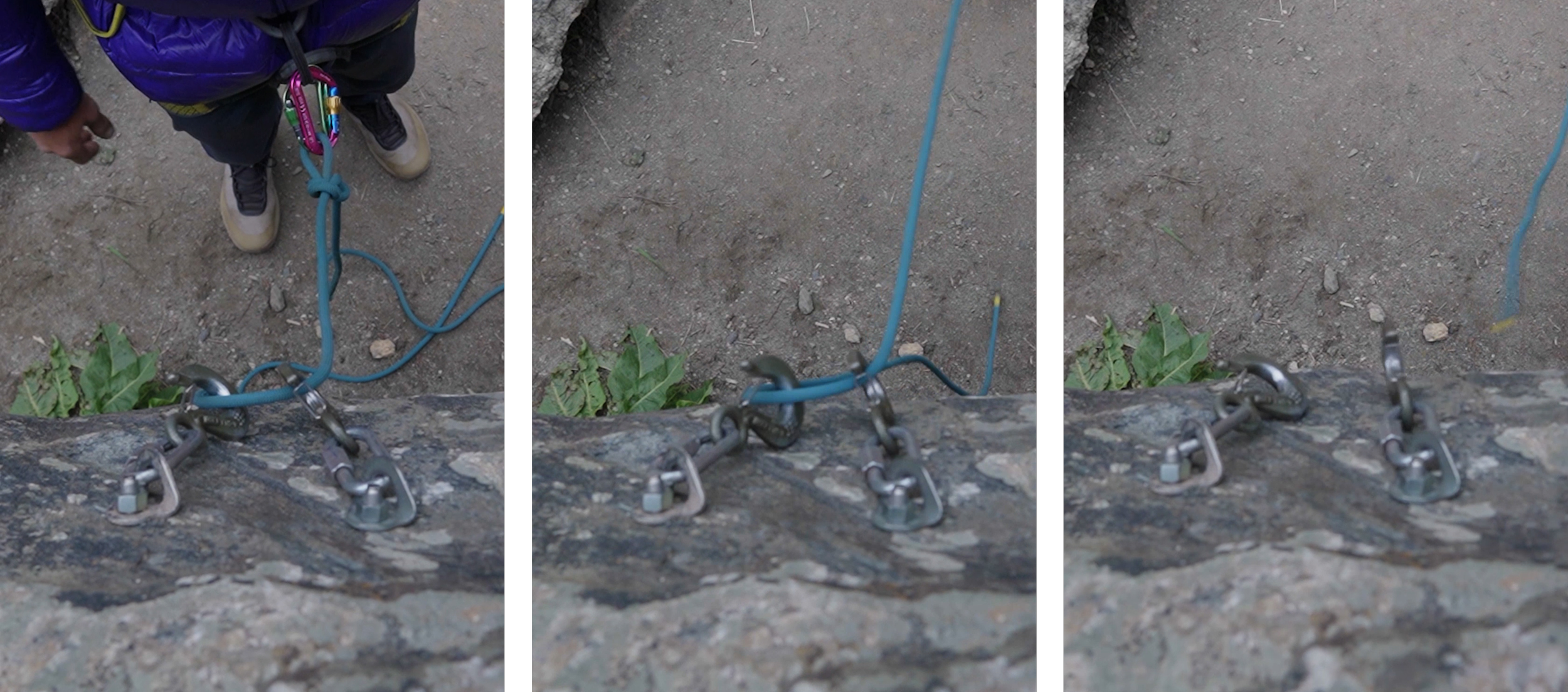
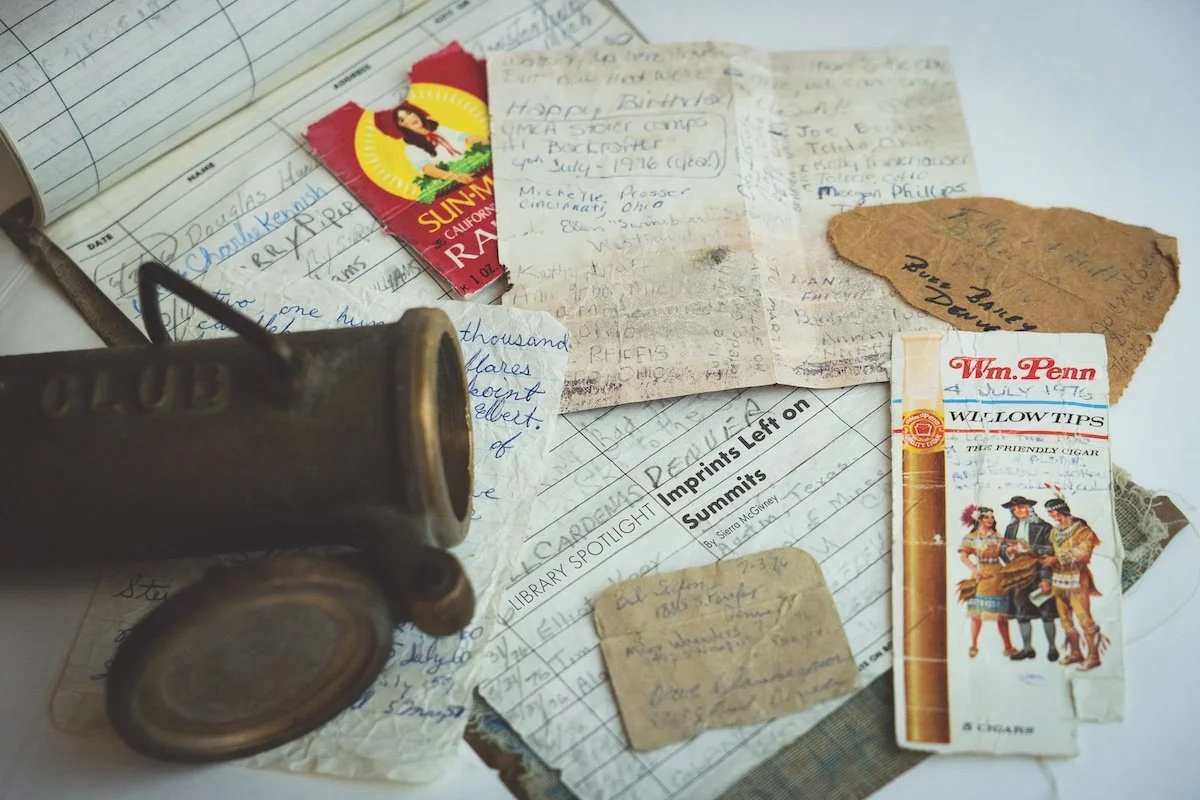
All images and scans were created with help from the AAC Library. Image by AAC member Foster Denney.

Library Spotlight written by Sierra McGivney

Originally published in Guidebook XVIII.

The need to leave our mark on the world is very human. It’s no surprise that when climbing mountains became popular, people started leaving fingerprints here and there in the form of summit registers. After 100 years of the practice, with untold pages of names, addresses, jokes, environmental activism, and weather and wildlife updates, summit registers have become a vibrant record of how humans interact with the mountains.

One historical register from Johnny Bull Mountain (12,026’) in the San Juans of Colorado is a small notebook. Flipping through, you’ll find two self-described “disgruntled employees” warning of the United States Forest Service plan to build a road and drill in the area. You’ll also see a kid named Will grow up, first signing his name at age three in 1988, and then again at ages six and seven. When the paper summit registers were full or nonexistent, hikers would take to writing on anything they had around. According to a Trail and Timberline article from 1989, people have used student IDs, driver’s licenses, a birth certificate, and a Monopoly “Get Out of Jail Free” card. In the James Peak (13,272’) summit register, you can find a Massachusetts car registration and a tuition receipt from Colorado State University, both from 1959.

It is believed that Mt. Powell (13,586’) had the first summit register in Colorado. This 13er is the highest peak in the Gore Range, known for steep terrain with class 2 climbing. On September 26, 1868, John Wesley Powell and Ned E. Farrell summited the mountain and placed a note inside a tin can at the summit. In 1913, during the third ascent of Mt. Powell, Percy Hagerman found the can with two previous ascents recorded, one from the Powell party. His party recorded their ascent on a chocolate bar wrapper and placed it in the tin can. In August 1935, a Colorado Mountain Club (CMC) outing group climbed Mt. Powell, recovered the tin summit register, and gave it to History Colorado, where it currently resides.

The CMC began placing summit registers on Colorado peaks during the 1910s and 1920s. These registers were later used to track usage and determine which mountains needed designated trails, especially after the formation of the Colorado Fourteeners Initiative in 1994. They would archive the registers and then allow people to conduct research or locate their signatures.

Today, the American Alpine Club Library collects, archives, and houses the CMC summit registers, the majority from Colorado—13ers and 14ers, of course, but also from mountains below 13,000’ that are rarely climbed. In addition, the AAC collects a handful of registers from mountains in Wyoming, and has the old Shiprock or “Tsé Bit’a’í” (Rock with Wings) register, from before climbing was banned there—the rock formation is sacred to the Navajo Nation. Once the AAC receives the registers from the CMC or others, they flatten them and sort them into the correct folder for the mountain. If you climbed a peak in Colorado and signed a summit register before 2015, there is a good chance the AAC Library has it.
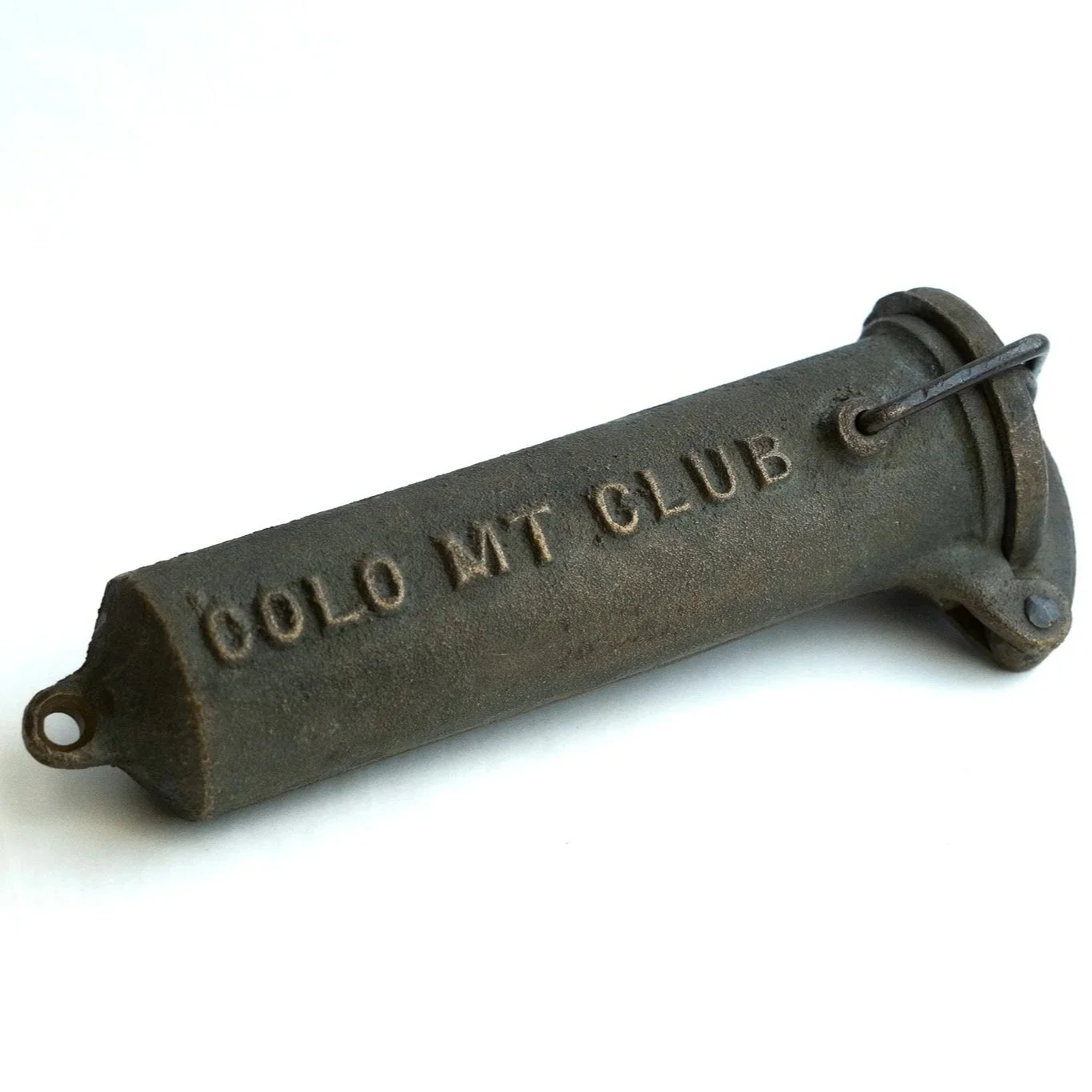
Photo by AAC member Foster Denney.

Originally the summit register canisters were made of brass. Today, most register canisters are PVC pipes, but a few are glass jars, food cans or tins, or plastic bags. Spencer Swanger, the first person to climb all 100 of the highest peaks in Colorado, used a pneumatic bank tube. If the canister is closed correctly and undamaged, the register holds up well. Unfortunately, water damage and mold are common, making some registers hard to read.

Most summit registers have not been replaced since the 2010s. With stricter Leave No Trace protocols, it fell out of favor to keep registers on the tops of mountains, but legend has it that on lesser-climbed peaks in Colorado, there are still summit registers. You’ll have to climb them to find out.

Sometimes the summit registers go missing or turn up in unexpected places. The elements sometimes take the registers, and occasionally, curious hikers trying to make a little money do, too. A brass summit register was put up for sale in Grand Junction for $400 in 2020. Katie Sauter, the American Alpine Club Library Director, was notified by a volunteer that it was on eBay. She reached out to the seller, asking if he would donate it to the Library since it was technically CMC property and was needed for archival purposes. The brass summit registers were worth $20 to $25 in the 1920s, and, with inflation, they are worth about $400 in today’s money. Whether the seller knew that or not, he was aiming to get his money’s worth from the register. The seller donated the brass tube containing the register to the Library, and it turned out to be from Culebra Peak, which now has restricted access, making the summit register even more sought-after.
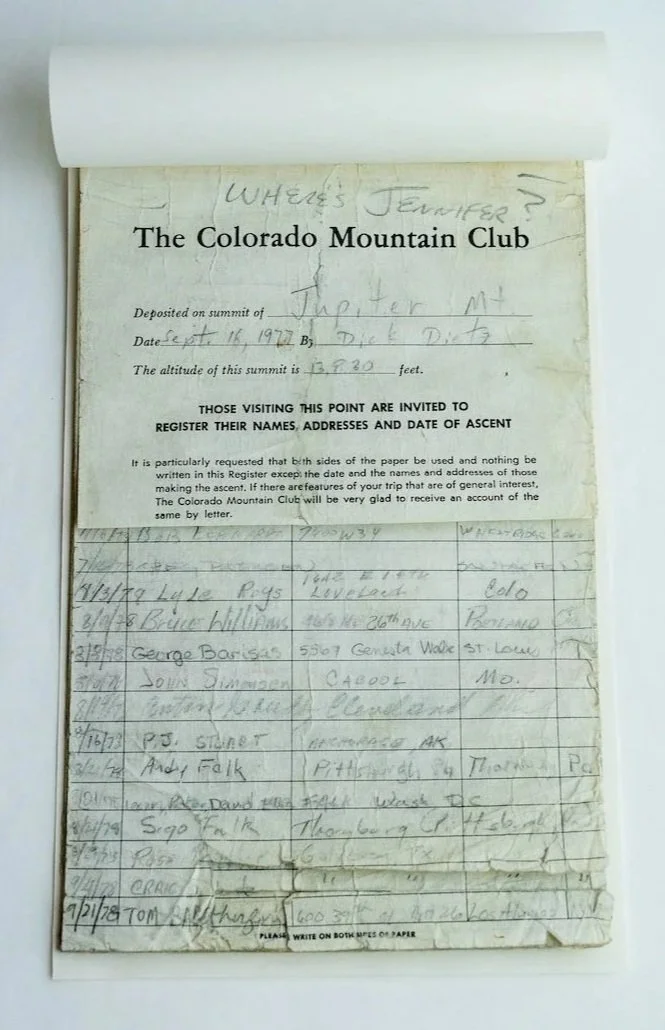
Photo by AAC staff Foster Denney.

That isn’t the strangest retrieval of a summit register Sauter has seen. Jim Detterline, also known as “Mr. Longs Peak,” logged 428 ascents of Longs Peak (14,259’) and was often the person who retrieved the summit registers. Detterline was a Rocky Mountain National Park (RMNP) climbing ranger who started out his National Park Service career at Dinosaur National Monument in 1982. In 1984, he transferred to RMNP and was very determined to climb Longs Peak. By 1985, at 29, he had five failed attempts under his belt. Weather, specifically lightning, had been a problem for Detterline.

In the foreword for Longs Peak: The Story of Colorado’s Favorite Fourteener by Dougald MacDonald (also the editor of the AAJ), Detterline describes his first attempt of the Diamond in July 1979: “As the clouds darkened and increased in mass, I started to feel like one very small microorganism clinging to one very large piece of the universe. Eventually the clouds split open, and 30 million-volt bolts of lightning poured down on us with the cold rain. We retreated.... Standing soaking wet, tired, and cold at the base of Longs Peak, however, I realized I had fallen in love with the rocky mistress.”
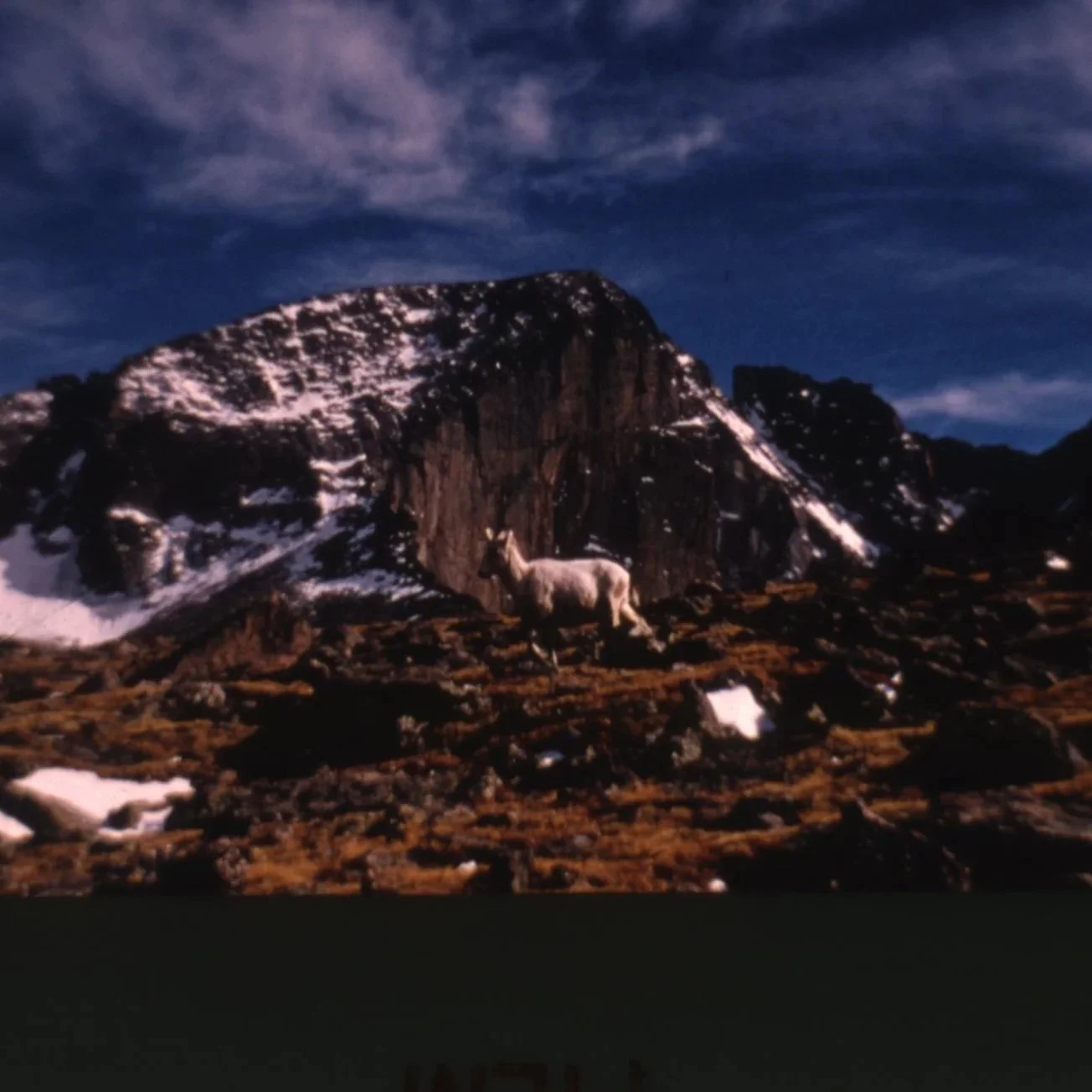
Longs Peak circa 2003. Photo from the Detterline Collection courtesy of the AAC Library.
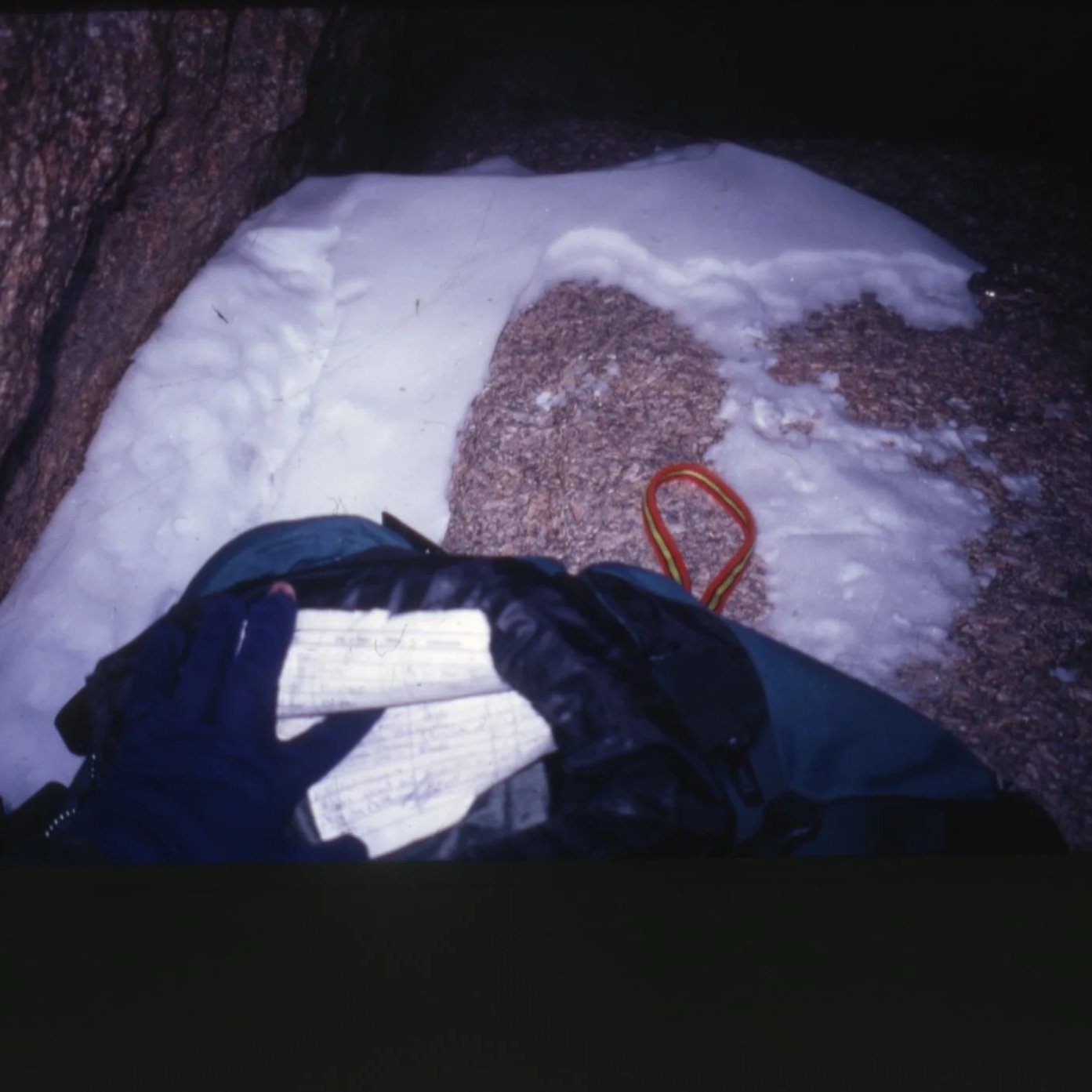
POV of Jim Detterline atop Longs Peak with a summit register. Photo from the Detterline Collection courtesy of the AAC Library.

Each name logged in a summit register is a hint at a personal adventure. Ultimately, Detterline was right to be cautious of the lightning around Longs Peak. In 1985, he and Duane Kitzis set out to climb the Casual Route (5.10a) on the Diamond. Detterline was leading pitch six, 40 feet up, and was still unable to find his first piece of protection. Suddenly, thunder rang out, and a sheet of rain showered down. A basketball-sized ball of St. Elmo’s fire at the top of the crack system began sizzling toward him. According to his unpublished memoir, “The ball came quickly to my position, hovered in front of my face, and exploded with a loud ‘boom’ and a flash of bright light.”

Detterline held strong; however, he had been totally blinded by the lightning strike. Kitzis helped guide Detterline down to the ledge, talking him through each foot and hand move as he downclimbed. They waited about an hour until Detterline’s sight returned; by then it was late, and the rock was wet. With no choice but to bivy, they began climbing at first light the next morning. This was just the beginning of Detterline’s time on Longs Peak, and just one story folded into the pages of the summit registers archived in the AAC Library.

Sauter remembers one Saturday morning at the American Alpine Club Library in the dead of winter. When the door flung open and snow swirled in, Detterline appeared, clad in a snowsuit. He handed her the Longs Peak summit register and walked back out, taking the snow with him. At least, that’s what Sauter says it felt like. The AAC Library is located in the building’s basement, with the door usually propped open, but when Sauter looks back on that day, it feels like Detterline had stepped off Longs Peak’s blustery summit and into the Library.

Longs Peak isn’t the only mountain with intense weather. Mt. Bierstadt (14,066’) is one of the more forgiving 14ers and one of the most popular, given its location near Denver. The weather, especially the snow, is still just as intense. In a summit register entry from February 15, 1976, a hiker describes the weather as “snowing, windy, vis[iblility] 500 feet.” The next entry with an illegible date has the opposite problem: “Too F@%*ing bad there wasn’t snow to ski to the summit.”

The weather turns fast in the mountains, and the summer months don’t always bring warm weather. An August 10, 1976, entry for Bierstadt reads, “...despite the snow. F@%* Colorado weather!” Another entry from August 18, 1976: “Holy sh*t it’s cold.”

Mt. Blue Sky (14,268’), formerly Mt. Evans, is another 14er near Denver that is popular. The summit registers of Mt. Blue Sky don’t have many entries about the weather; instead, they focus on mountain goats. This doesn’t come as a surprise; the mountain is known for these troublesome, salt-licking creatures. Notes from the register from 2011 show considerable goat activity, with entries like: “Hi goats,” “Baby goats,” “Gorgeous Goats!” and “Goats = Awesome Views = wow.” Unfortunately, the abundant presence of mountain goats reflected in these historical summit registers is now precarious—in a 2025 population estimate by Colorado Parks and Wildlife, the goat population on Mt. Blue Sky was around 70, a far cry from the 2024 estimate of 125. An unknown disease has struck the goats, causing large fluctuations in population. It is suspected that human waste is the source. Hopefully the health of the mountain goat population can be addressed, or else these summit register logs will be strictly history, rather than a vibrant reference to a shared experience across time.

Digging through summit registers and archives in the American Alpine Club Library can transport you into the past, onto windblown summits, or next to shaggy-furred mountain goats. In the AAC Archives, history steps out of the books and into the room with you. The names scribbled onto worn paper on mountaintops miles away hold untold stories waiting to be discovered.
Sign Up for AAC Emails

An Interview with American Climbing Journal Editor

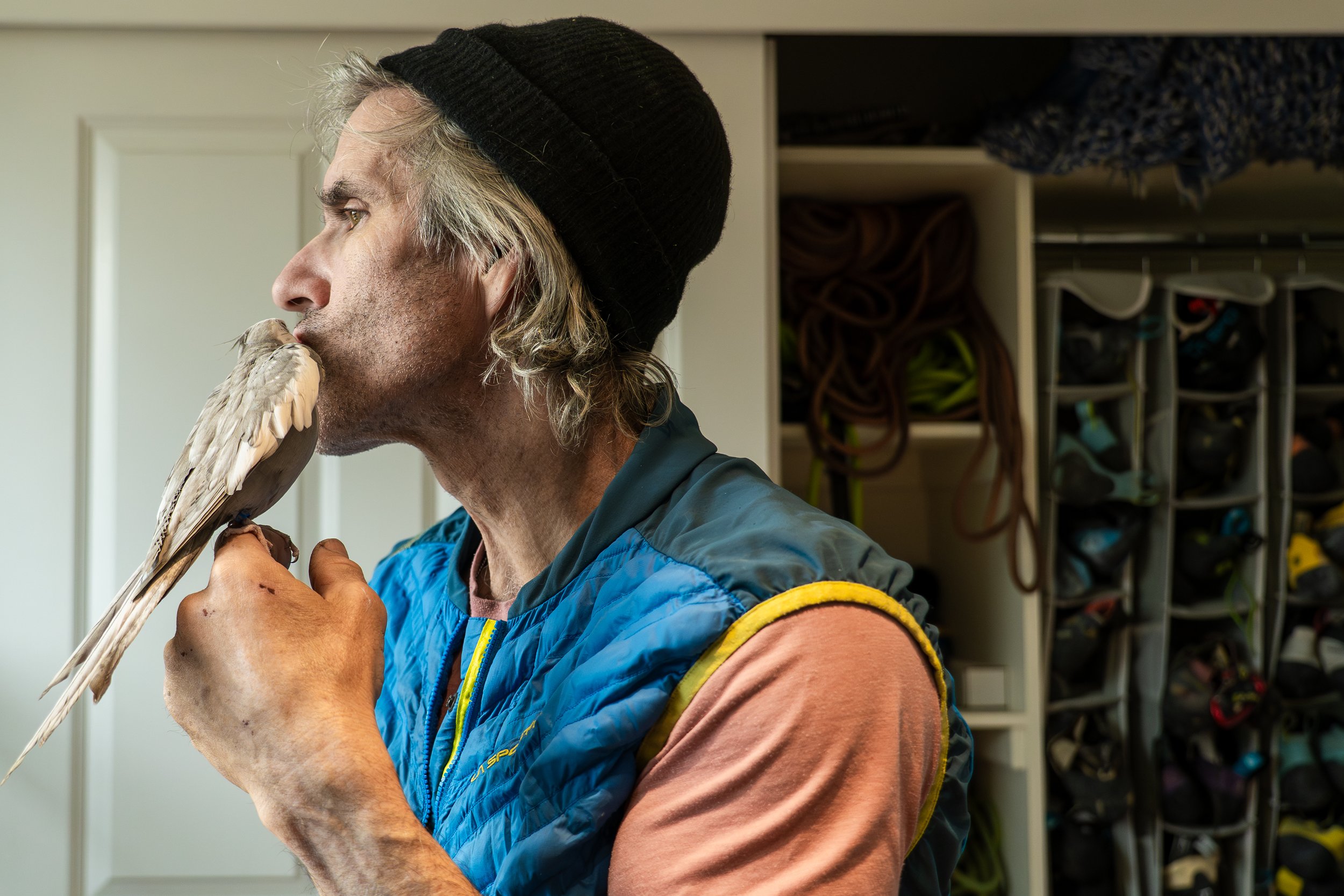
American Climbing Journal editor Matt Samet showing love to his cockatiel, Gandalf. Photo by AAC staff Foster Denney

By Hannah Provost

Originally published in Guidebook XVIII.

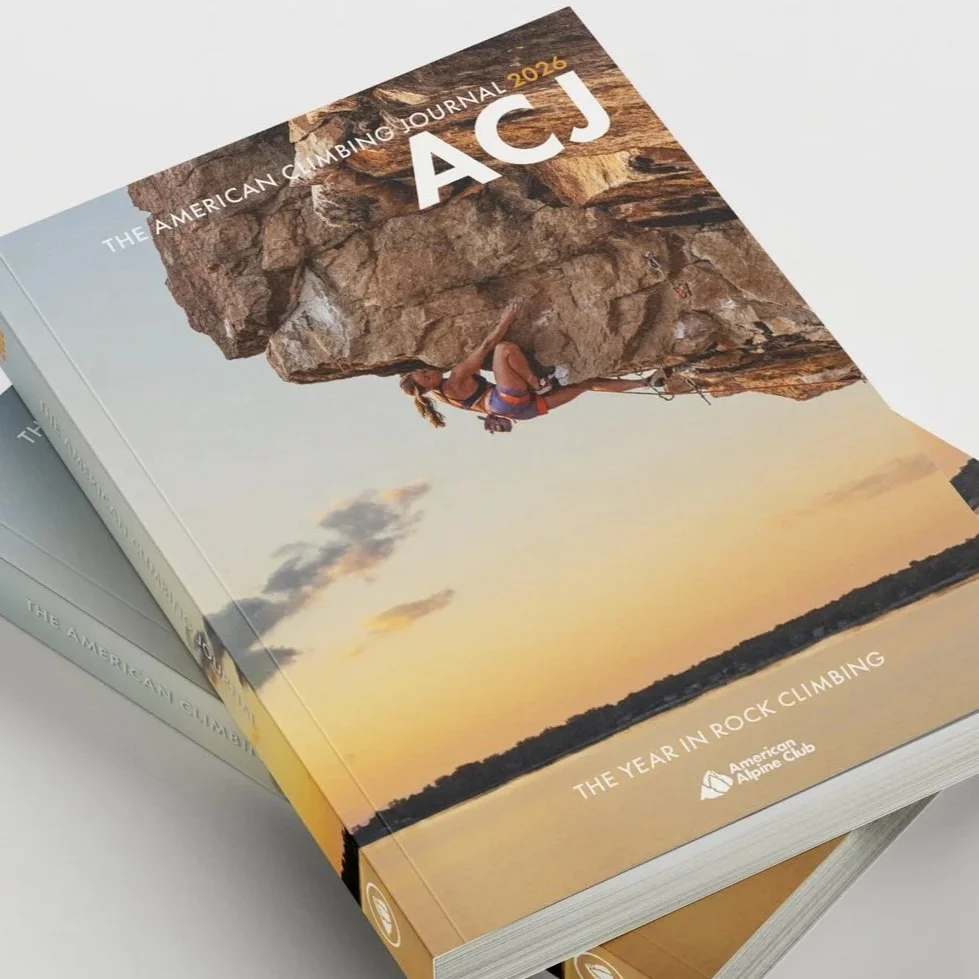
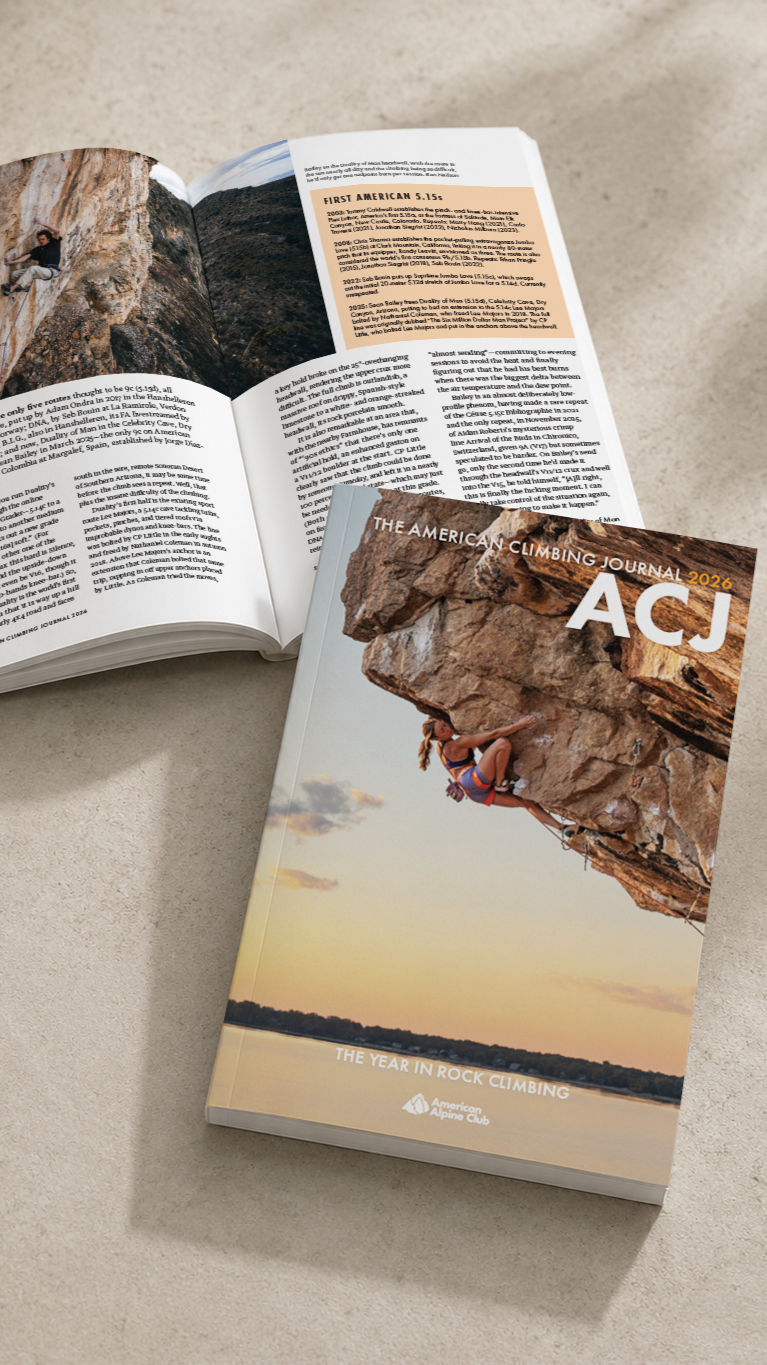
The American Climbing Journal (ACJ) is a new publication of the AAC. Building on the 97-year history of The American Alpine Journal, the ACJ will be the journal of record for the most significant rock climbs each year, covering sport climbing, single-pitch trad, bouldering, and shorter multipitch climbs in sport style, as well as performance-oriented achievements such as outdoor speed climbing and link-ups. AAC members can expect to receive the very first edition of the ACJ in the fall of 2026.

Editor’s Note: The following discussion includes a lot of sidebars, as Matt Samet managed his cockatiel, Gandalf, who was flying around Samet’s home office and making a ruckus as we chatted. Sidebars to Gandalf are noted in parentheses.

Matt Samet: [Referencing the cockatiel on his hand] He’s been flinging fruit pellets at me all day. He’s such a f#@ker. Gandalf?

Hannah Provost: Is that just a plea for attention?

MS: Well, he likes to sort through and get the seeds he wants, but some of it’s just, yeah, being a bird—being a brat. Look at that: Are you a brat? Yes, you are.

HP: Haha. Well, let’s get started. Why is there a need for something like The American Climbing Journal [ACJ]—why should it exist if we have the internet? I.e., what’s the argument for your relevance, Matt?

MS: I think it’s important to have a journal of record for rock climbing, just as it’s been important to have a journal of record for alpinism, like we’ve had with The American Alpine Journal [AAJ] for 97 years now. Rock climbing in the last 40 years has become just as relevant as alpinism, I think. For years, the magazines functioned in that capacity with news departments, features, articles about areas, and profiles on climbs. The magazines were the keepers of that record. Before the internet, they were the only way you could find out what had been done.

(Hi, Gandalf. You are a pretty birdie. You’re a very pretty birdie. He’s ridiculous, isn’t he?)

So, with Drifter’s Escape, the 5.15a traditional climb that Connor Herson freed in Squamish, Connor did something that’s very trendy these days, where he waited to post about it online—some kind of punk-rock marketing, I suppose. But how deep can any Instagram post ever go?

My goal with the ACJ would be to get Connor to write a first-person story and to help fill in the details, which he and a Squamish local and climbing historian, Nat Bailey, did an incredible job of. That way, it’s preserved forever in journal form. And then we have a searchable archive like we have with [the] AAJ, and you can be like, Hey, when was Drifter’s Escape done? and get detailed answers about the facts, but also a first-person description of the experience. It’s also important to have these facts, not because names, grades, and dates matter so much, but because there is a continuum and a living history that’s still evolving, and in very unique and unpredictable ways.

It’s important to have as much documentation as you can for old, geeky history nerds like me, but also for people new to the sport.

(Gandalf, are you a pretty birdie or are you just a pain in the ass? You are a pretty birdie.)

HP: Definitely pretty birdie. Haha. Okay, well, how is the ACJ structured, and in what ways is it similar to or different from the AAJ?

MS: We have our primary features, which aren’t necessarily just the most important things that happened in 2025—they’re also the ones that lend themselves to the best storytelling.

So, for example, there’ll be [Adam] Ondra’s flash of Lexicon, the world’s first flash of an E11—basically a 5.14 death route. Seb Berthe doing the fourth ascent of the Dawn Wall— he took a boat over here twice to get it done, because he’s committed to green travel. Sasha DiGiulian and her first female ascent of the Platinum Wall, a 39-pitch 5.13d on El Cap.

Hamish McArthur, with his astonishing V17 repeats. Connor Herson, as I mentioned, doing Drifter’s Escape, perhaps the first-ever 5.15a trad pitch. Katie Lamb talking about being the first woman to do a V16 “twice,” and what that meant.

Then we get into the gallery section, with photos of [climbs] that are stunning and/or difficult across the world and country, with longer captions that offer deeper storytelling from the people who did the climbs. We’ll also have images of new areas (and newly protected old areas) that have opened (or reopened) up because of successful pushes by local climbing organizations and the Access Fund—places like The Venue at the Red, Farley Ledges in Massachusetts, and Howard Knob in North Carolina.

And then we have a section that’s new in the sense that you wouldn’t necessarily see it in the AAJ: Crag Profiles, which are basically what they sound like. This edition, we have the Ships Prow in Rocky Mountain National Park, and then Cheat Canyon, West Virginia, which is this crazy bouldering, soloing, highballing, off-the-radar gritstone area.

Then we have our American Rock section, which features regional reports on climbs significant to their area. And then World Rock, which is the international version. One idea with some of these American Rock and World Rock reports is that we also want to clue people into areas they might not have heard about—kind of like the Climbs & Expeditions section in the AAJ.

(Stop eating a $10 bill, you f#@ker.)

HP: One of my favorite things about working with Dougald [MacDonald, editor of the AAJ] and Pete [Takeda, editor of Accidents in North American Climbing] is that they’re both big personalities. You are also a big personality, and of course, so is your bird Gandalf...

MS: He’s a bigger personality than me—look at this. Now he wants scritches, or he’s going to bite me.

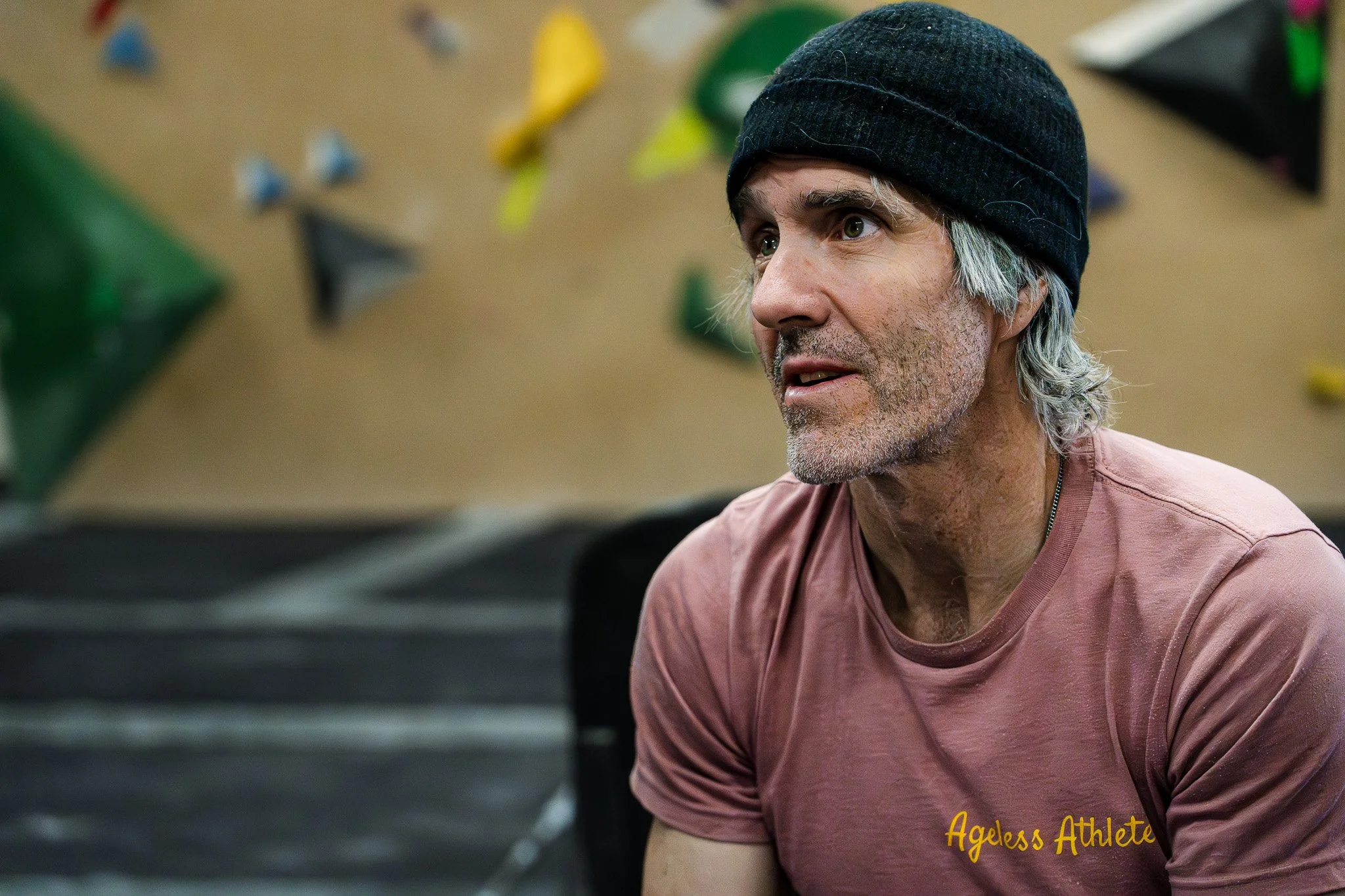
Matt Samet examining a boulder at his local gym. Photo by AAC staff Foster Denney.

HP: So what’s your background in editing, and what parts of your professional and climbing background are you bringing to the ACJ?

MS: I’ve been climbing since age 15. I’m 54 now, so we’re coming up on four decades of climbing. Primarily rock climbing, a little bit of alpine rock here and there. I’ve always been into performance rock climbing; at one point, like, in my teenage years and into my 20s, I was a sponsored climber.

In 2002, I started working at Climbing Magazine after getting my BA in journalism and then a master’s in English/creative writing. I’ve been involved nonstop in editing or writing about climbing since then. So, 24 years of editorial experience, working as a desk editor at Climbing, at Rock & Ice, at Alpinist. I have twice been the editor-in-chief at Climbing, though it wasn’t quite as, umm, glorious as it sounds, because at times I had no staff other than myself. Like 100-hour weeks—I wouldn’t care to do that again.

And I’ve been involved with the AAJ as a freelancer since 2022. I’ve edited a lot of outdoor books and memoirs, too—through Mountaineers Books, Di Angelo Publications, Patagonia, things like that.

HP: Do you ever get bored with climbing stories?

MS: I don’t. I did get bored of climbing stories when I was at the magazines, and the frequency was 10 to 12 issues a year, and my workload was insane. Now, with the longer timeline to put a journal together, I get to spend more time with the stories.

For me, the coolest part is helping climbers/ writers find their voice and their story. When someone’s done a cool climb, but they haven’t quite figured out how to translate that to the page so that other people can experience it with them, it’s a really cool thing to be that conduit or bridge.

When you get into the details of climbing, it becomes this really fascinating thing, because it’s an experiential sport. Being at your limit is a universal experience, right? No matter what the grade or the climb is, we all have to dig deep in the same way in order to succeed at our physical or mental limit. When you’re able to take a climb that’s also at the very cutting edge and translate that climber’s experience into something rooted in details, and that feels universal, it makes for really cool storytelling.

Have you seen the video of Adam Ondra doing Lexicon? It’s insane. He talks [in his article for the ACJ] about the two minutes before he got on the wall, being scared. Here’s the world’s best climber admitting he was scared. That’s such a beautiful thing, because we all get scared. It’s this profound and very real and very human moment we can translate into our own experience. As a dedicated and passionate climber myself, I can see myself and my love of the sport in all these stories.

HP: In the course of sharing your answers to the previous questions, you gave us some sneak peeks of some stories. But can you tell us in detail about a story that really surprised you?

MS: There’s this Korean boulderer, Sungsu Lee, who’s extremely strong. In May 2025, he repeated Burden of Dreams, the world’s first V17, in Finland. But on the successful ascent from the ground, he pulled on, cocked, and maybe bounced off the pads, but maybe not. It’s hard to tell, because he had a baggy T-shirt on. Then he got to the top, and everyone’s like, “Yay!” And he has his celebratory beer.

But you could see something in his eyes where he’s like, Eh, I don’t know if I did it or not. So he went back and repeated it. We have an interview with him that a friend of his, Brian Kim, helped translate, getting into the mindset of why Sungsu went back to do it again. The second time, he did it with his shirt off, which I thought was funny.

To me, this all showed the sense of absurdity but also the seriousness with which we interpret climbing. I mean, someone who’s not a climber, if you tried to explain to them why this guy’s T-shirt and maybe butt bouncing off these foam landing mats below this tiny rock mattered, they’d be like, “Wait, what?”

But to a climber, to the diehards who are our Club members and readers, it’s everything.

Style is everything.

HP: You’ve been an obsessed climber for decades. Is there a climb that still haunts you?

MS: Okay, there’s one I haven’t done that I bolted that I’ve been trying now for three years. It’s up in Skunk Canyon in the Flatirons here above Boulder, Colorado, where I live. It’s 21 bolts long, and my friend Brandon and I bolted it in the fall of 2022. I did the first half of it that season. And I didn’t expect the second half to be that much harder, so I thought, I’ll come back next season and finish it off.

I’ve probably been up there 100 days since then, just trying to do the second half by itself.

Last fall, I almost did it—the second pitch. It’s essentially like V10 into a difficult clip, straight into a V9, on a 35° overhanging panel on small, awkward holds. I had my hand on the jug at the end of the hardest part. And all I needed to do was bring my feet up and bring my other hand in. And I just couldn’t—my elbows were in the sky.

I was very excited to train for it this winter, but then my right pinky finger got infected, as did the tendon. I haven’t been able to train, but I hope to be able to train in the summer and go back in the fall. I mean, at age 54, I don’t know if I can, but I know that it’s now or never. I’d like to do this route because I think it would mark the culmination of everything I’ve worked toward in four decades of climbing. And also to show that as you age, you can still push yourself.

The first half is called The Alpha. The second half is called The Omega. Together, they are The Alpha and The Omega.

HP: What’s an example of a unique challenge that you had to deal with when compiling the ACJ?

MS: The biggest challenge was coming in, and there was no ACJ, no template. We’ve had to develop it from scratch, which initially was very intimidating. We didn’t even quite know what this was—and we needed to get it done by spring 2026. But obviously, you, me, Dougald, and Shane [Johnson, the Vice President of Media at the AAC] put our heads together on it. I’m very grateful for all the help that you guys have given me. And I think the ACJ is going to keep evolving, too. I’m excited to see how people respond once the Journal is out in the world.


Sign Up for AAC Emails

Small Hauntings

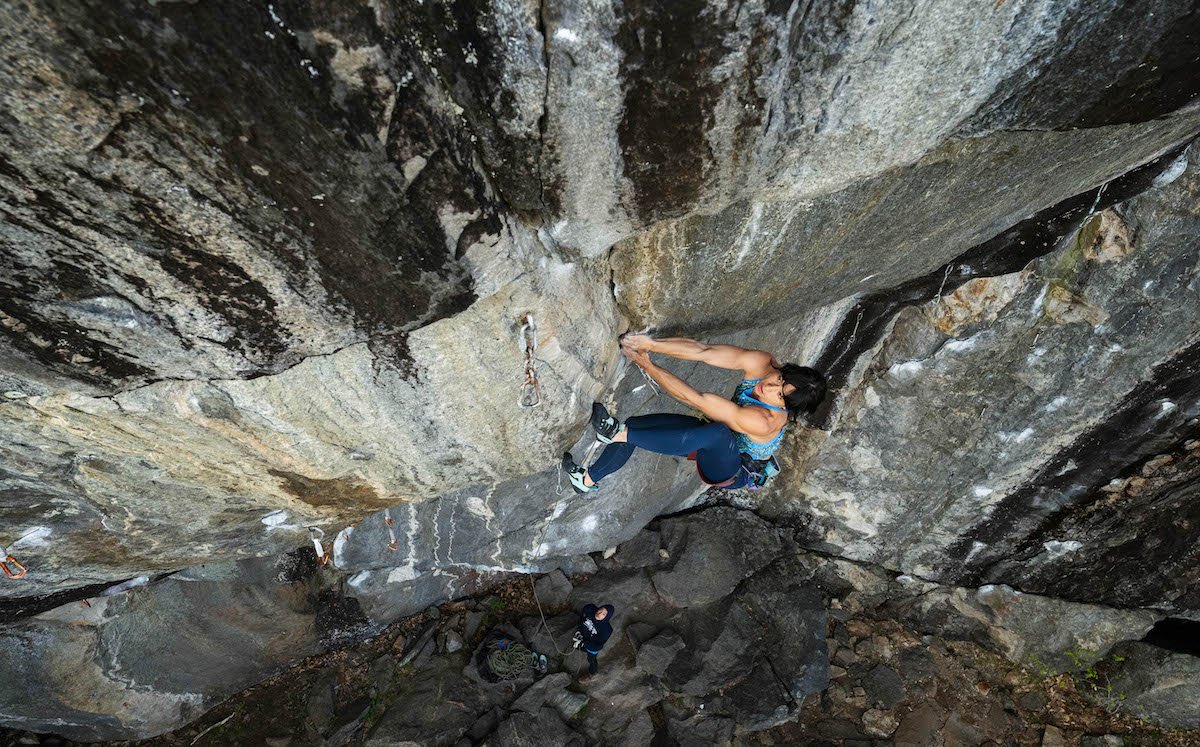
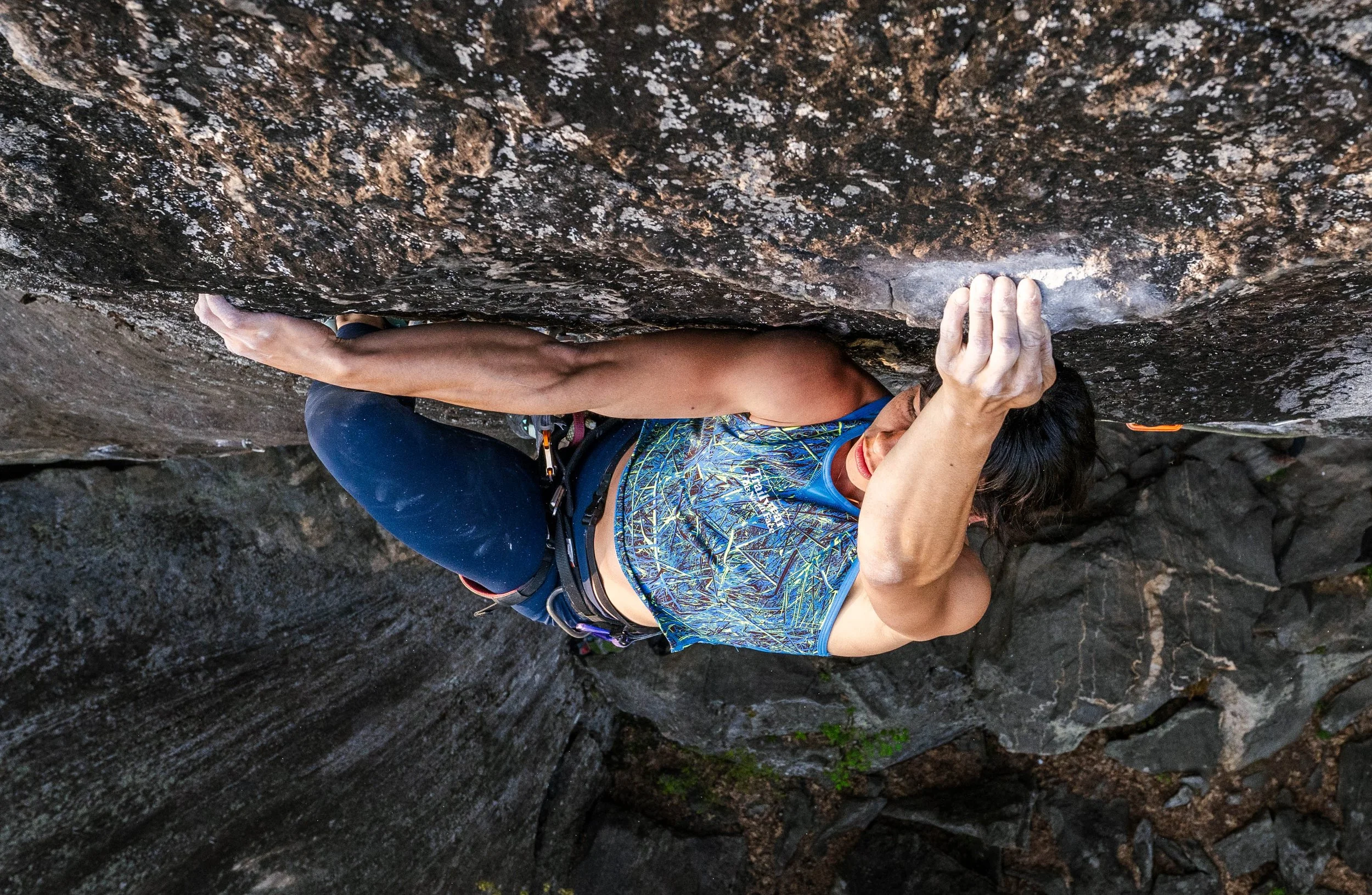
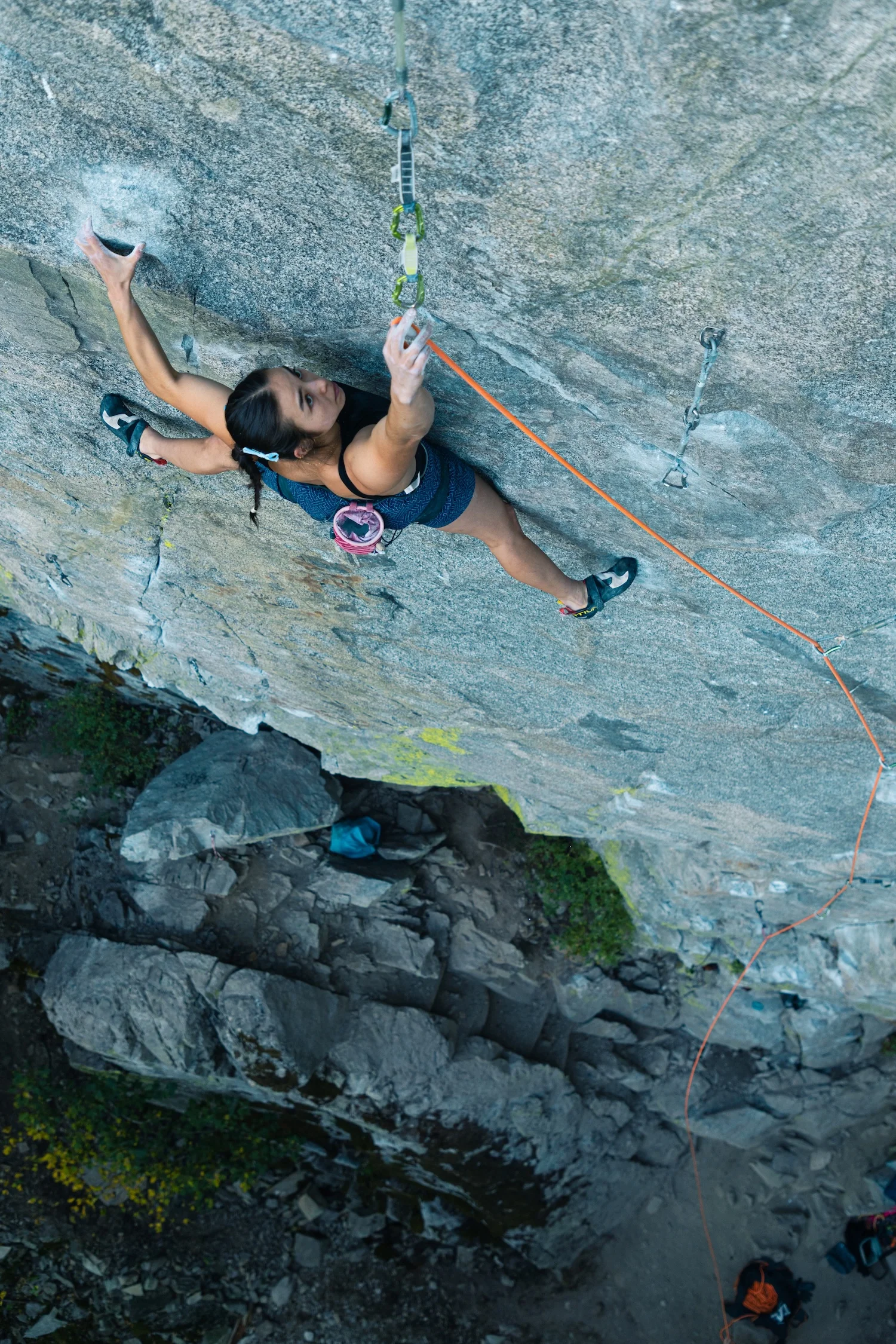
AAC Board President Nina Williams on China Beach (5.14b). Photo by AAC member Jordi Llauradó i Vilà.

A Look at Rumney’s Aura Climbs

By Hannah Provost

Originally Published in Guidebook XVIII.

For many of us, each climb we undertake is a private sparring session. Because such battles can be painful, frustrating, or even sometimes break us, you’d think we’d engage only reluctantly. But it seems that we climbers, more than anything, are easily disposed to spiritual possession.

Each haunting (a.k.a. “project”) is temporary, lasting a few weeks or months, maybe even years. Once we do send—the most occult of rituals—the hungry ghost, now fed, simply vanishes.

But some climbs collectively haunt. They manifest a certain presence, even in the minds of those who have no interest in pulling on the first holds: La Rambla, Burden of Dreams, Pure Imagination, Free Rider, iconic routes we see and hear so much about that they spark the collective imagination.

One zone that’s remarkably stacked with such routes is the featured schist of Rattlesnake Mountain in Rumney, New Hampshire. The short cliffs of Rumney lend themselves to distinct features and stout boulders, creating climbs with unmistakable character. This is, therefore, one of those crags where it’s only natural to ask: Which ghosts haunt the rocks?


Jaws II 5.15a

Jaws II lures its victims with one important ingredient: the temptation of the impossible. After Dave Graham climbed Jaws at 5.14b in 1998, several holds broke, and the line eluded repeats for nearly a decade. In 2007, the New Hampshire–based crusher Vasya Vorotnikov and his friend Zeb Engberg found that they had been cruising through the harder established climbs at Rumney, and were looking for new levels of challenge, some way to get pumped that mirrored the roped climbing they were allowed to do on the junior-competition circuit. Back then, it was thought that bouldering was still too dangerous for developing youngsters—ironic, because Jaws II would turn out to be roped bouldering, with a V12/13 to a V10 packed into its 50 feet of height.

After the usual process, Vorotnikov sent the rig in 2007, renaming it Jaws II (“Broken Jaws” was a contender as well) and proposing 5.15a—making it the second 5.15 in the United States, after Flex Luthor. The next 10 years saw a flurry of ascents, as boulderers flocked to the short, steep walls of Waimea. During those years, the climbing media kept a careful log of Jaws II repeats.

Paul Robinson, who snagged the fifth ascent in 2013, remembers the unique crux on the initial boulder, which he considered V13: “You had to grab this really high right hand and then get your feet in this weird drop-knee position and stab back over your head into an undercling.” But, Robinson continues, “The move was super learnable. I remember trying it in the beginning and just being like, Whoa, this move feels impossible.” After the undercling, there was also a jump-kick move, or a pogo, that you often don’t find outdoors.

For Robinson, the route’s difficulty and aesthetics—the sea-foam lines in the schist, the cresting wave of Waimea Wall—help explain why it looms so large at Rumney. But above all is the fact that Jaws II and its Waimea neighbors, like China Beach, are perfectly separated by blankness. Unlike many crags where you can grid-bolt or move a few feet off the bolt line to climb a variant sequence, these lines have a firmness to them. With Jaws, “it’s like the rock chose the bolt line,” Robinson says.

Nineteen years later, Vorotnikov thinks that Jaws II still haunts because it’s a testpiece and has history—not because it’s a classic or a king line. In contrast to Robinson, he thinks it’s actually not that pretty. “I don’t think of anything hard as ultraclassic, to be honest. Because [they’re] too weird,” he says, going on to describe some of the tweakier, unpleasant holds on Jaws II’s bottom boulder.

Still, says Vorotnikov, “You can definitely have a five -star experience on something that’s not five stars at all. You can have your own mini-adventure at your local crags.” Yet to some extent, why Jaws II retains so much aura is a mystery to Vorotnikov. But that’s the power of sheer difficulty—it tends to create its own gravitational field.


AAC Board President Nina Williams breaks the beta on the top crux of China Beach, to suit her short frame. Photos by AAC member Jordi Llauradó i Vilà.

China Beach 5.14b

“I have not sent this route; however, I have spent a disproportionate amount of time falling off this route...” opens Jay Knower, describing the 5.14b China Beach on Mountain Project, before opining, “China Beach is the ultimate sport climb and is the standard against which all other sport climbs should be judged.”

Just one route over from Jaws II, China Beach might have even more name recognition. Heck, there’s even an entire podcast dedicated to understanding why so many people are haunted—in the best way—by this climb.

Rajiv Ayyangar, a co-host of Climbing China Beach: A Podcast Series About One Route with Michael Penn, says China Beach has come to represent many things to different climbers—it has been a gateway to harder climbing, a capstone to a climbing career, and a conduit for personal transformation.

After interviewing so many people about their obsession, Ayyangar is starting to formulate an idea of the origin of the route’s aura, starting with the breakdown of the climbing, and with a nod to the impeccable rock quality and friction: “The fact that it’s continuous, the fact that every move is interesting and iconic, the fact that it’s two different styles. You’ve got this bottom section that’s almost trad-like and insecure, and then this top section that’s big moves on hero crimps. And it punishes tall climbers at the bottom and short climbers up top. There’s an equivalence to it.”

The projecting process for China Beach almost always becomes a discrete epoch—due, in part, to how unexpectedly long it often takes. Ayyangar is convinced this is because of the continuity of the climb, the intricacy of the different styles. China Beach asks climbers to go deep into microbeta and tactics. It’s a climb that asks you to linger.

Nina Williams, the AAC’s Board President, did the first female ascent of China Beach in 2023—doing a wild rose move in the upper crux from a non-hold that other climbers had never even tried to use. For Williams, the route has standout attributes that compound with each burn. She says, “Visually, [it’s] an obvious line with a striking position in the center of the wall. White zigzag streaks and cracks naturally draw the eye. Physically, it has a little bit of everything: crimps, sidepulls, underclings, slopers, smeary feet. Intricate sequences that require both strength and endurance (versus the typical ‘boulderer’s route’ style of Rumney).” But other factors, like New England’s wet, cold, fickle weather and the list of climbing legends associated with the route—New Englanders Dave Graham (FA), Joe Kinder, and Vasya Vorotnikov, as well as prominent visiting climbers like Jonathan Siegrist and Alex Megos—have also shaped cultural opinion, enhancing its aura.

Another thing that Williams and Ayyangar kept coming back to was their personal experiences on China Beach—their own dance with the rock. Says Williams, “I ultimately think the climber is what gives a climb ‘aura’; the climber’s journey and process add to the overall narrative of a route and inspire other people to add to the lore.”


Design by Foster Denney.

Predator 5.13b

The cover of the Rumney guidebook. The logo for the Rumney Climbers’ Association. A glimpse through the trees when you stand next to the dumpsters at the AAC Rumney Campground. Predator is everywhere— stalking you, ready to possess your body and swallow your soul.

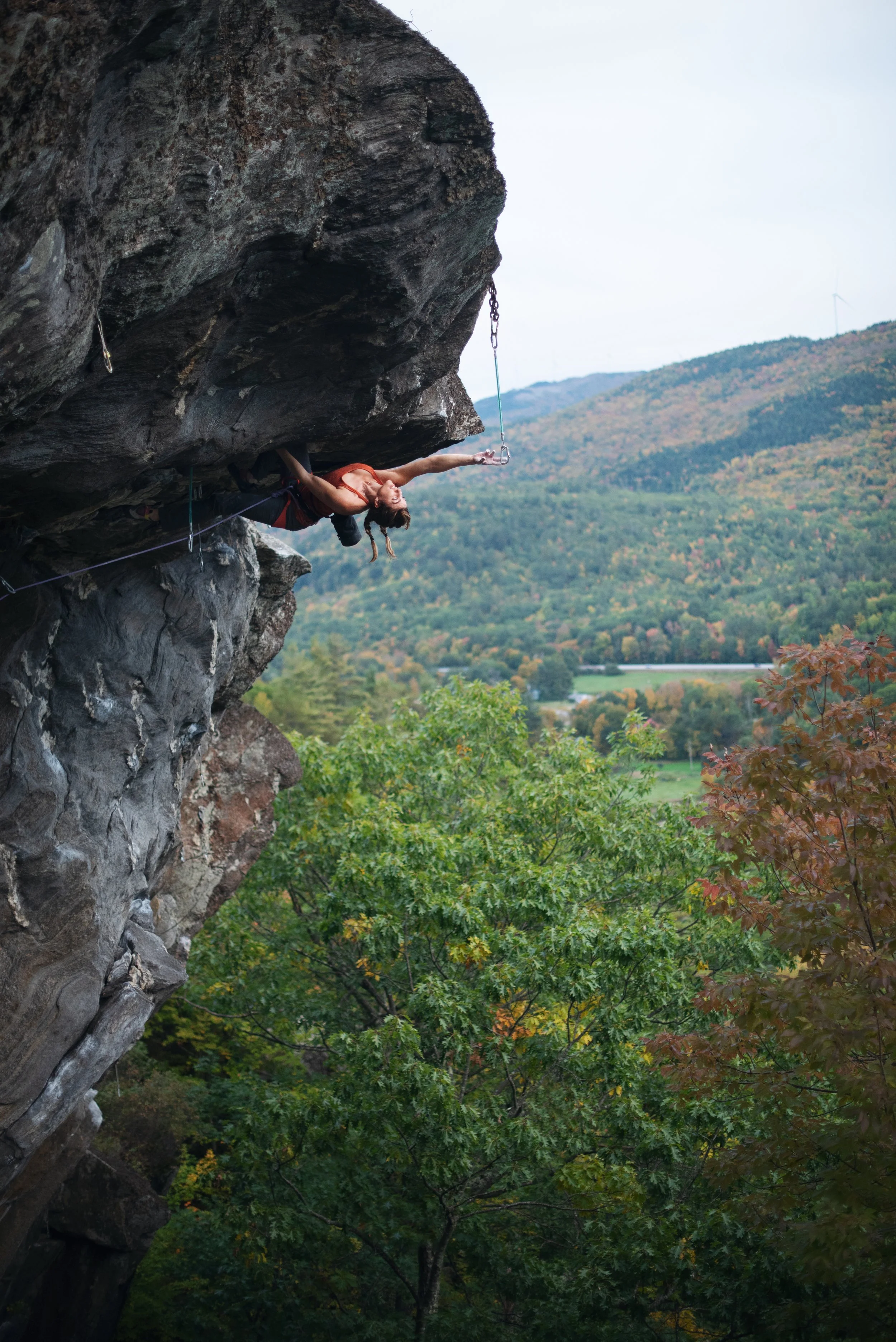
Predator is a 5.13b at Orange Crush—and the most iconic climb at Rumney. This 45° over-hanging prow is impossible to ignore. The hill and trail that follow the rising cliff at Orange Crush mean that climbers on the approach have an eye-level view of anyone on the route, with the stunning valley dropping away to create an epic horizon. Climbing Predator, whether you’re sending or falling, is a performance. Emma Kowal, who sent in 2023, says the position, the hero moves, and the continuity of the difficulty “allow you to access a pretty magical state of self.”

Predator is, beyond its obvious aesthetics, also a climb you earn—as Kowal says, climbing it requires “at least one shenanigan.” You have to climb a pitch to get to the Predator belay ledge—either climbing one of two 5.11s or aiding on bolts. If you want to give multiple attempts, there is a friendly tree you must land on, so that your belayer can throw you a loop of rope and pull you back in. And if you’re planning to top out, either on the send go or while projecting, it might just be easiest to unclip the anchors and jump—or do a victory-whip backflip. Regardless, it’s advised that you back-clean or skip the final bolt too, so that you can make it to the tree.

Fortunately, the movement itself is very approachable. A power-endurance test-piece, the line doesn’t have a sequence harder than V5, according to Kowal. Off the belay ledge, you begin with awkward 5.11 face climbing, with holds facing the wrong direction and weird, sometimes-wet stemming. This quickly turns into jug-bashing until you’re at a ledge. On the ledge, as Claire Stolz, who sent Predator in 2025, describes, “You’re sitting there, you’re listening to everyone else on their project [around you], you’re listening to people gossip at the top of Orange Crush, hearing about somebody’s date...you can see the big arc of the Baker River. And then the wind turbines are turning.” Meanwhile, the permadraws sway in the breeze above you, building anticipation—you’re about to go to war with Predator.

The next 20-odd moves begin with big swings and flowy jugs. There’s the matchbox crimp you use for the hardest move, and then a strenuous, scummy knee-bar that some use to cop a rest before Predator’s most iconic move—a dyno or large deadpoint. But it doesn’t end there, because then you’re squeezing the “pinch of despair,” quickly followed by the “pinch of hope,” as Kowal has dubbed them. The mantel that guards the chains isn’t so bad if you have the reach—and can find the hidden crimp.

For Stolz, Predator has “five-star climbing in a five-star position.” The climb is approach- able because there are no terribly hard, stopper moves, and the permas are bolted closely, so it is easy to pull on draws to work the climb. Kowal reflects that Predator is also compelling because it’s so public as to almost be performance art: “There’s something extremely exhibitionistic about climbing Predator. You’re creating this unbelievable silhouette for everybody who’s up there; you’re doing these big dramatic moves and taking these big dramatic falls and screaming a lot.” And the fact that Predator is a 5.13 “makes it a climb that people find aspirational and see as a goal,” perhaps for their first of the grade, says Stolz.

It helps, Kowal says, that “Rumney has a very rich beta-sharing culture. Climbs are quite cryptic and beta-intensive. So beta gets passed down through the generations.” When you get on Predator, you are enmeshed in that culture, in an oral tradition that helps you go deep into Rumney’s history.

Kowal and Stolz both consider Predator to be an ultraclassic—if you can climb the grade, it’s not to be missed. Kowal argues it might even be a king line—there is a majesty to it. Kowal put in 30 attempts before sending it as her first 5.13. She took notes after every attempt and reread them before each go. She built a replica of the final moves on the Kilter Board. On the send, she wore her friend Max Lenail’s La Sportiva Otakis—his last pair of climbing shoes before he died in an accident a few years prior. They were stiff enough to make the knee-bar comfier, reconnecting her to him via the rock and the fact that he, too, had once sent Predator.


AAC member François Lebeau

A Personal Haunting

For Vorotnikov, it’s entertaining to discuss the finer points of what makes something a testpiece vs. an ultraclassic vs. a king line—all of the different nuances of what gives a climb aura. His take is that Waimea, a 5.10d down the wall from Jaws II, is far more an ultraclassic than Jaws II—simply because nearly everyone who climbs at Waimea will climb it. It’s a little spooky, it’s the crag warm-up, and it’s the wall’s namesake, as well as simply Type 1 fun. But we won’t commit to anything—the endless debating over routes is too fun.

Even as the climbs discussed above prevail in Rumney lore, there are plenty of other Rumney climbs with their own history and charisma. There is a special power in being able to step into the legacy, shared beta and inspiration, and communal knowledge of Jaws, China Beach, Predator, Technosurfing, Flesh for Lulu, Black Mamba, Millenium Falcon, and Lonesome Dove. But there is also something exciting about striking out on your own and getting inspired by something a little unusual, ugly, tweaky, or underappreciated.

As Williams shares about finding the joy in— or even being haunted by—anti-classics, “There’s less of a chance to bond over shared knowledge. That being said, going back to the climber giving a climb aura, I started telling people to climb on Bishop’s best V9 lowball, America’s Fit Homeless. Is it actually Bishop’s best lowball? Probably (definitely) not, but it’s fun building hype and getting people to try obscurities.”


Sign Up for AAC Emails

Speed Climbing Returns to the 2026 GoPro Mountain Games

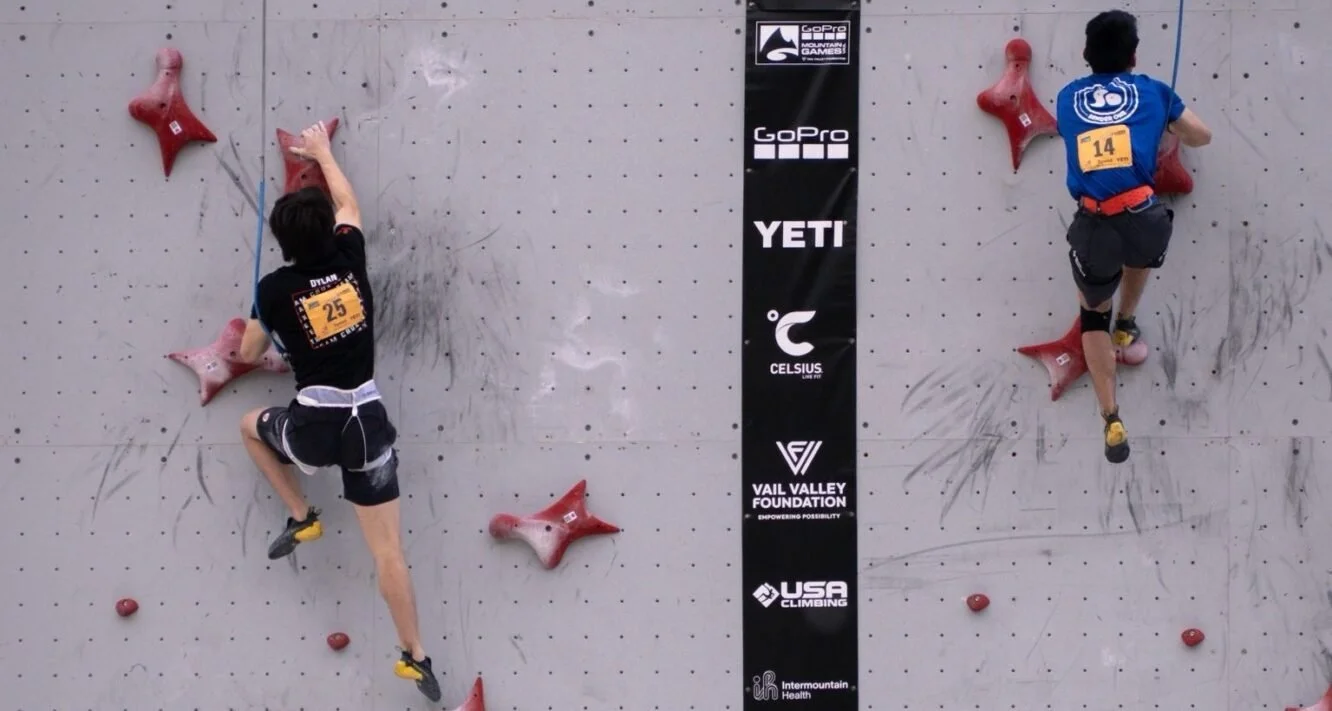
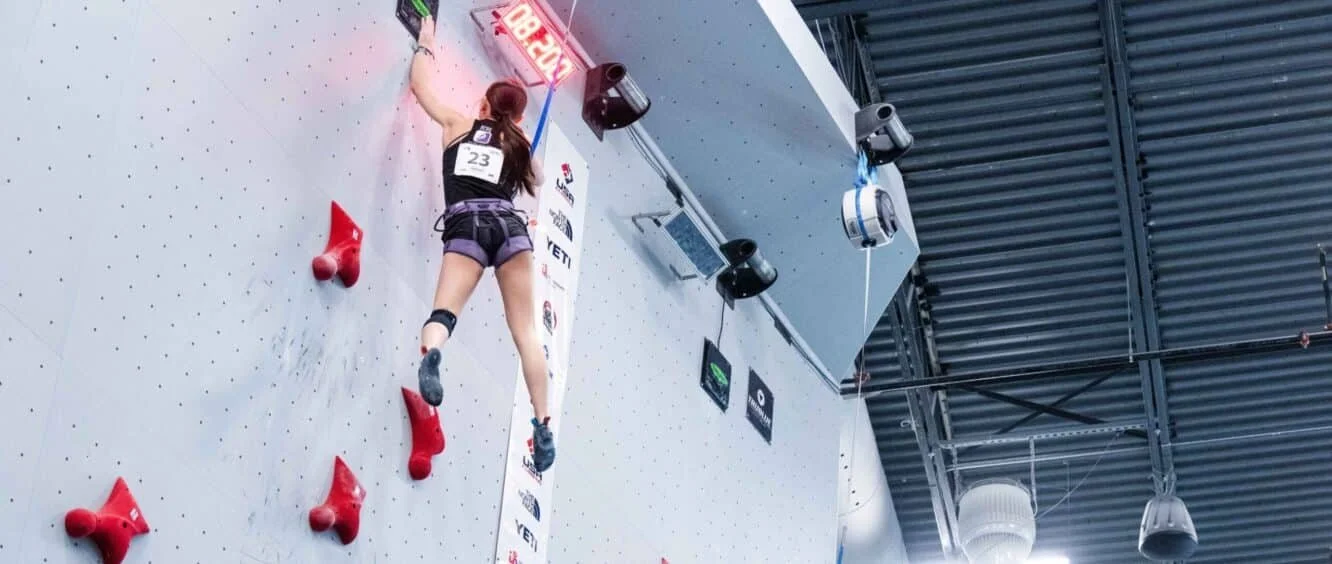
When the world’s fastest speed climbers launched off the starting strip at the 2025 GoPro Mountain Games, flying up the 15-meter wall in mere seconds, the reaction was immediate, electric, and unmistakable: Vail had a new obsession.

This year, speed climbing is back for year two at the 2026 GoPro Mountain Games June 4-7. After last year, the Vail Valley Foundation knew they had to bring this back in full force. The discipline is returning with everything that made it a sensation last summer, plus a deeper, more expansive program, with opportunities for everyone to get involved.

The centerpiece of the speed climbing program is once again the YETI North American Cup Series Vail – Speed. This is not a grassroots local comp. The NACS is a pipeline to the World Cup and the Olympics, and many of the athletes competing in Vail are the same names chasing medals on the world stage. 

Two athletes. Side by side. Racing head-to-head up identical routes. The fastest five seconds in sports — right here in the Colorado mountains. 

With speed climbing confirmed for the Los Angeles 2028 Olympic Games, the athletes competing at the NACS in Vail this June are some of the very athletes with LA28 in their sights. Watching these competitors race isn’t just watching sport — it’s watching the future of the Olympic climbing program unfold in real time. 

“We’re excited to bring the North American Cup back to the GoPro Mountain Games and to once again showcase Boulder and Speed climbing in such an iconic setting,” said Marc Norman, President & CEO of USA Climbing.” After such a successful debut of Speed last year, we look forward to giving athletes and fans another full weekend of intense climbing competition!” 

The GoPro Mountain Games are free to the public to attend, but it’s not too late to register to compete!


Emiko Takeuchi Returns to Vail Fresh Off Big Win

Photo by Dan Gajda/USA Climbing.

This teen climber is literally soaring up the ranks. Growing up in Atlanta, GA, Emiko Takeuchi explored several activities as a child. She tried soccer and ballet. She wasn’t bad, but found them boring. Then she tried climbing at a friend’s climbing gym birthday party. She was hooked.

Now at age 17, Takeuchi is a World Cup-level climber who recently landed her inaugural North American Cup victory. She can’t wait to return to climbing walls in Vail at this year’s GoPro Mountain Games.

Takeuchi has competed in the Youth World Championships and has two World Cup competitions under her belt. She excels at all disciplines but has made her most prominent statement in speed. At the season opening North American Cup speed event this April in Bridgeport, Penn., Takeuchi shot up the wall like Spiderwoman and walked away with the gold medal.

She made quarter finals last year at the Mountain Games’ first-ever North American Cup speed climbing competition, and she will compete once again this June in the YETI North American Cup Series Vail – Speed as well as in the North American Cup Series Vail Boulder competition, presented by CELSIUS.


Sign Up for AAC Emails

The Line—Old School Adventure in the Alaska Range

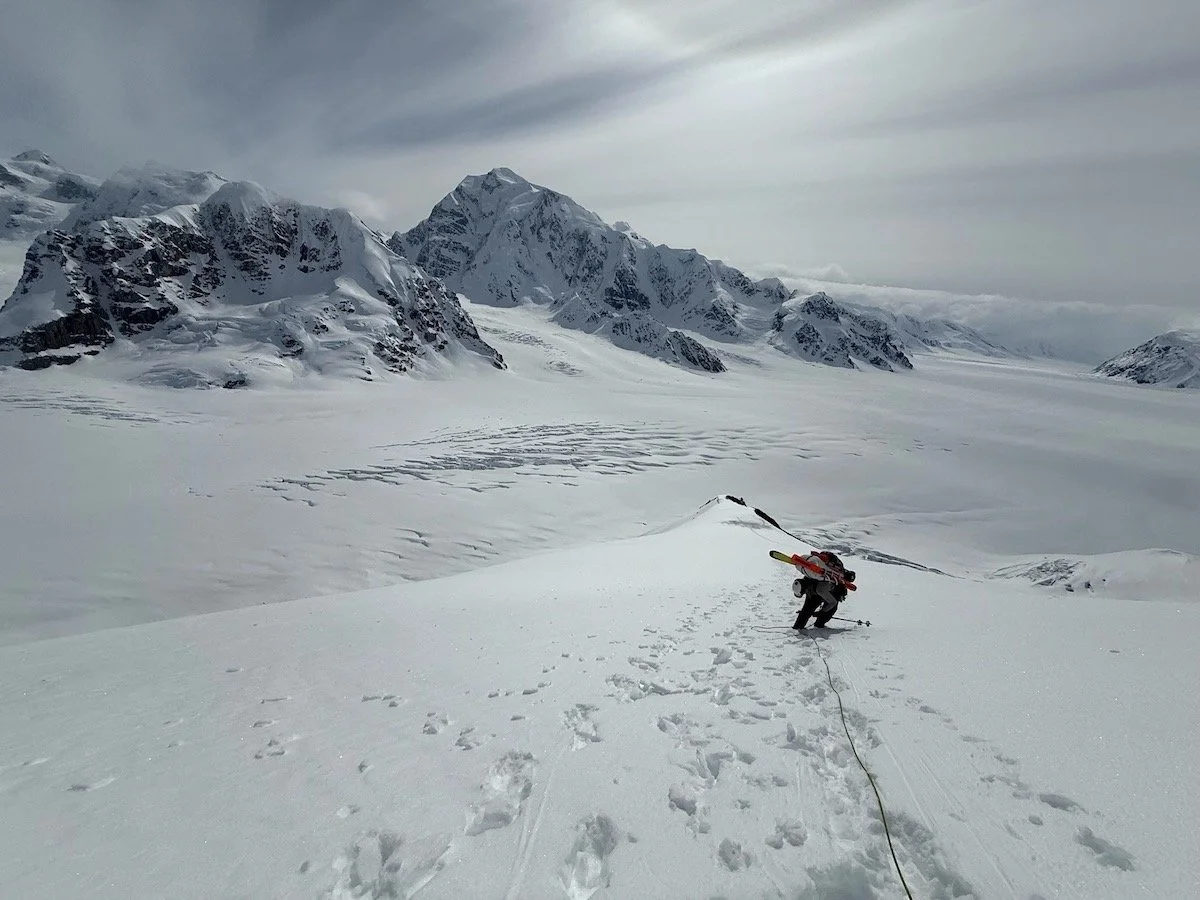
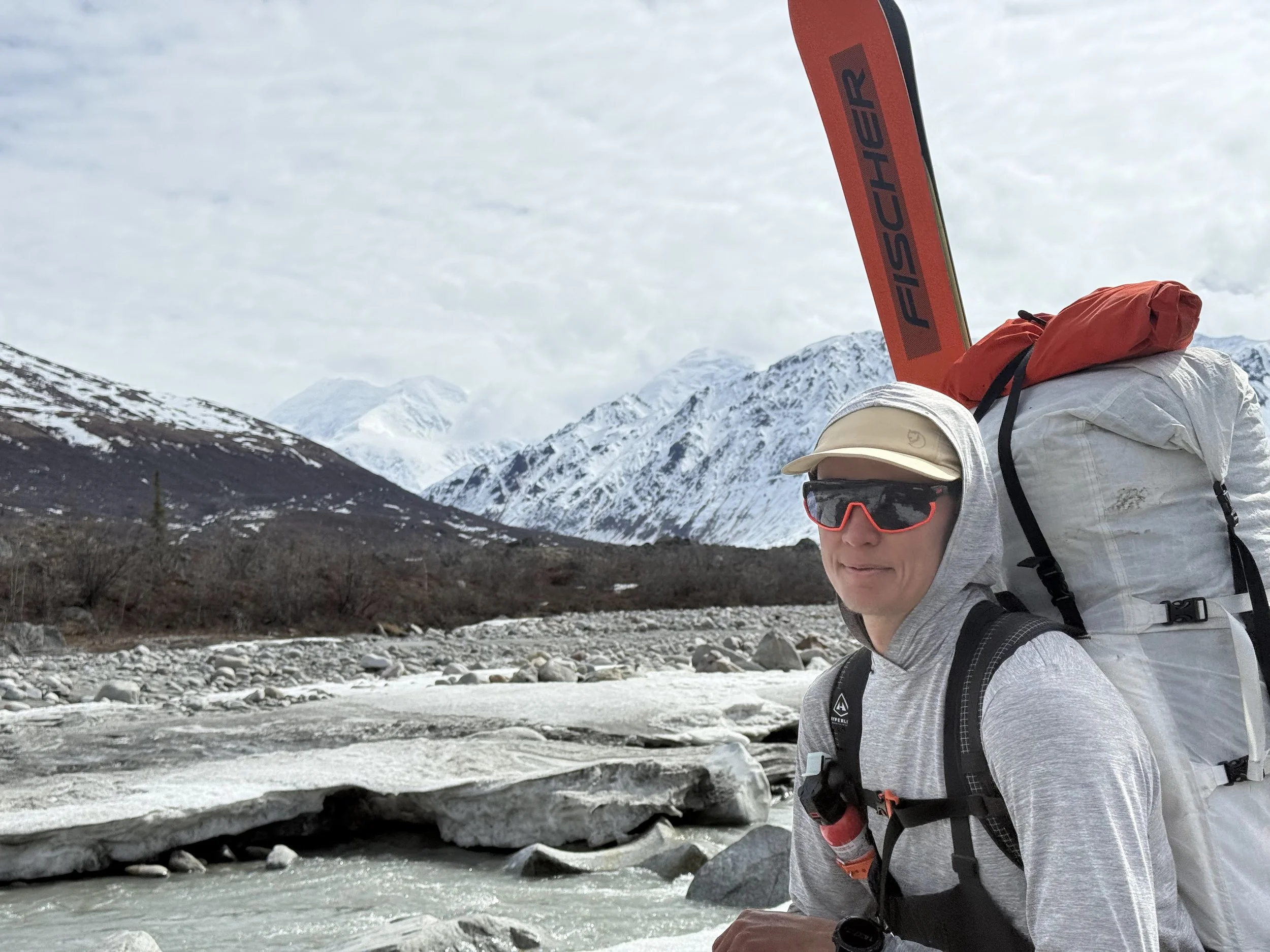
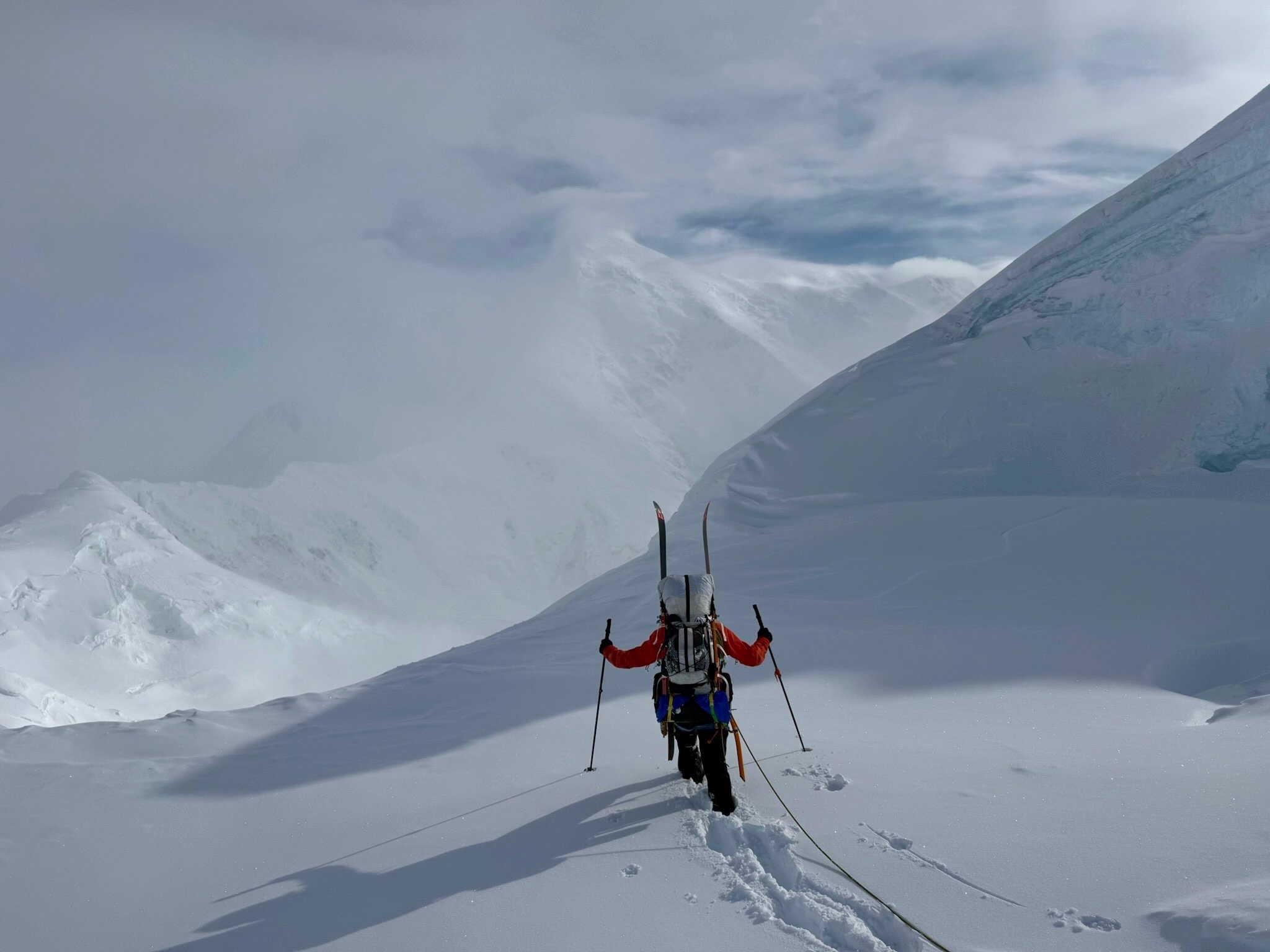
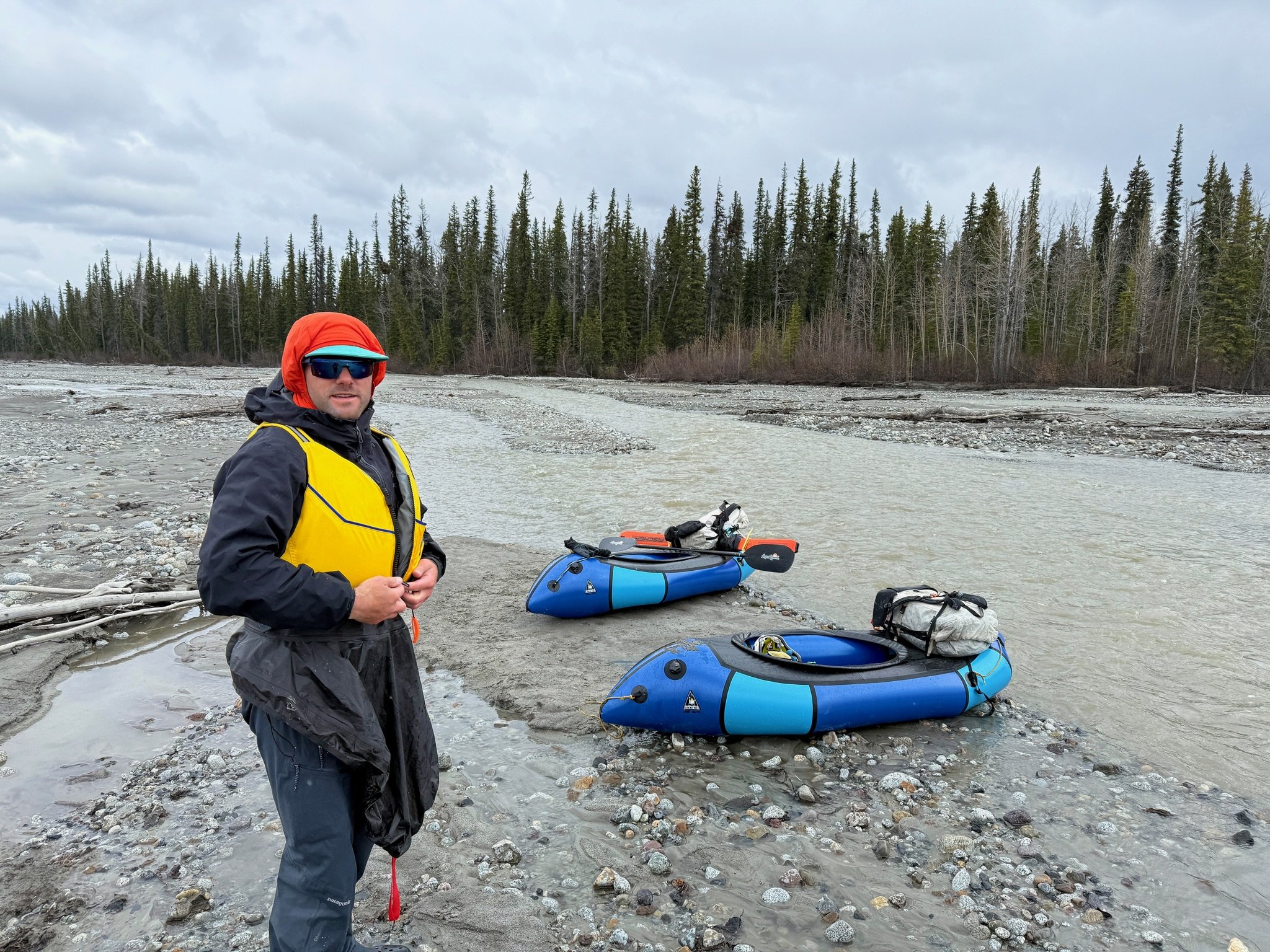
Serious adventures in the Alaska Range aren’t just about high-end alpinism. In May 2025, AAC member Roo Streba and frequent ski partner Shawn Jordan pulled off a nine-day traverse of the range involving skiing, trekking, and packrafting—and likely the first ski descent of a 7,000-foot line. There wasn’t room in the upcoming 2026 American Alpine Journal for more than a brief mention of this adventure, so we’re sharing the full story here. 

Slogging up Mt. Crosson at the start of the nine-day traverse. Begguya (Mt. Hunter) is prominent in the back, above Kahiltna Base Camp. Photo: Roo Streba Collection

Journey Through the Denali Wilderness

Shawn Jordan and I are Tahoe-based skiers who have adventured together throughout the Sierra. The climbing and expedition history of the Alaska Range have interested both of us for much of our lives. During a visit to the north side of the range in 2023, we conceptualized a trip that would marry aspects of old-school expedition-style mountaineering with modern, lightweight gear and skiing techniques, and that we could pull off in the limited time our lives and work allowed. We flew up to Anchorage in May 2025.

After an anxious few days of trip delays in Talkeetna, Shawn and I landed at Kahiltna Base Camp on May 13 and immediately set off across the glacier to start our ascent of the southeast ridge of Mt. Crosson, the 12,800-foot peak’s normal route. The snow conditions were reasonable, but with our heavy packs the going was a slog.

On the second night, we camped below the summit of Crosson in a cold windstorm and discussed our plan. Multiple forecasts seemed to agree—for once—and they showed a poor trend in the weather. With satellite imagery showing our chosen river of egress in the midst of a later-than-normal break-up, we concluded we would not have the time to complete Plan A: traversing to the Sultana Ridge and up Mt. Foraker, with a descent by skiing the north face and packrafting to Lake Minchumina via the Foraker River.

So, we switched to Plan B: climb over the three peaks of the Crosson group, ski down to the northwest to reach the Foraker Glacier, then ski and packraft to the bush village of Lake Minchumina. The full journey would be just under 100 miles.

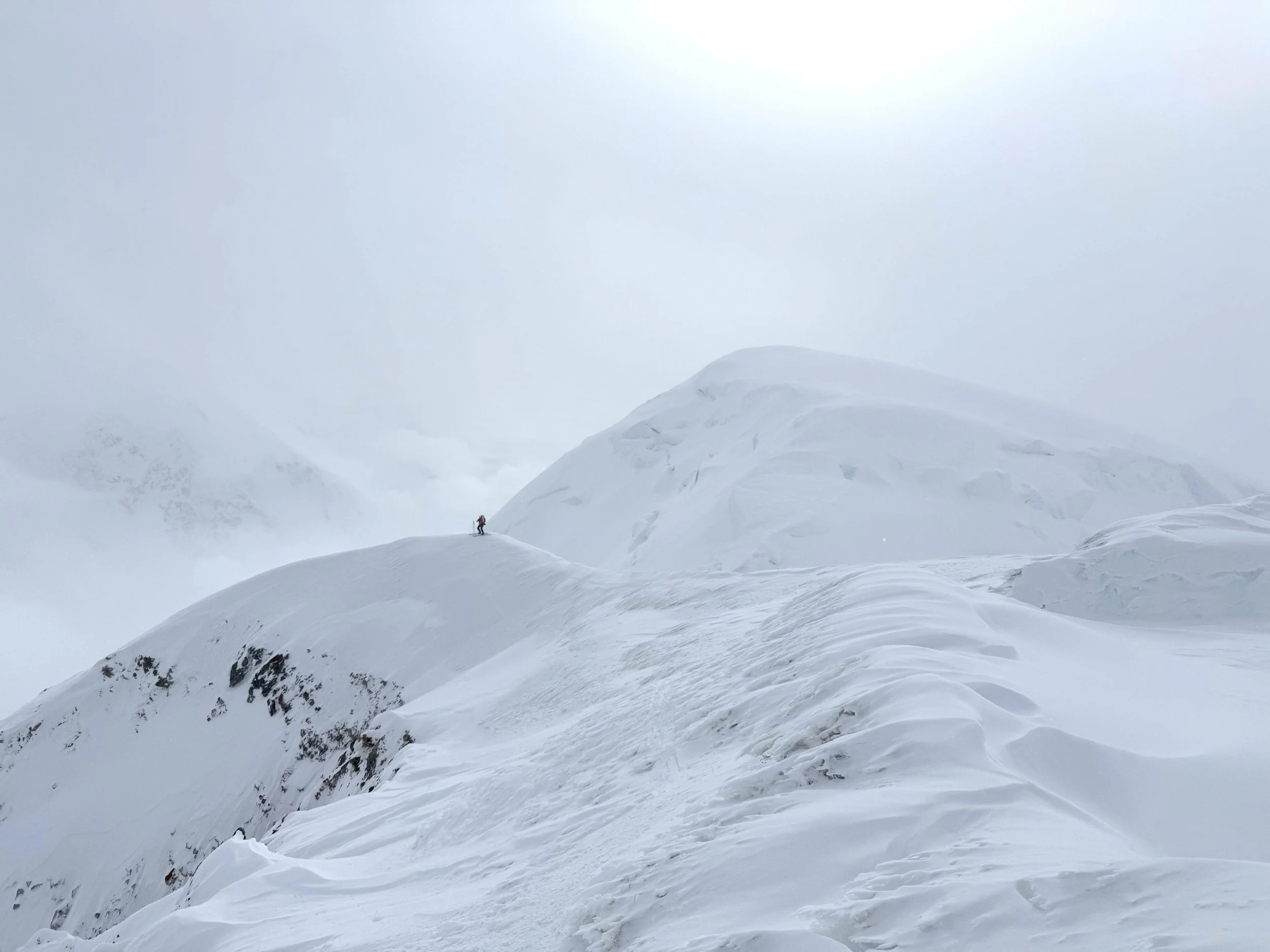
Pausing on the Crosson ridgeline after an icy section of the ski traverse. Photo: Roo Streba Collection

The next day, we woke to excellent weather, summited Crosson, and continued west over Peak 12,472’ (the peak that marks the start of Foraker’s Sultana Ridge) and Point 11,910’. Although summiting a peak is generally very exciting, three summits did not triple our excitement, and by the third we were very much ready for our final transition.

The skiing on the descent varied as much as skiing can. Windswept ice gave way to awkward turns in an upside-down snowpack. The steepness changed dramatically, and at one pinch point in the ridge we rappelled over some suspicious snow.

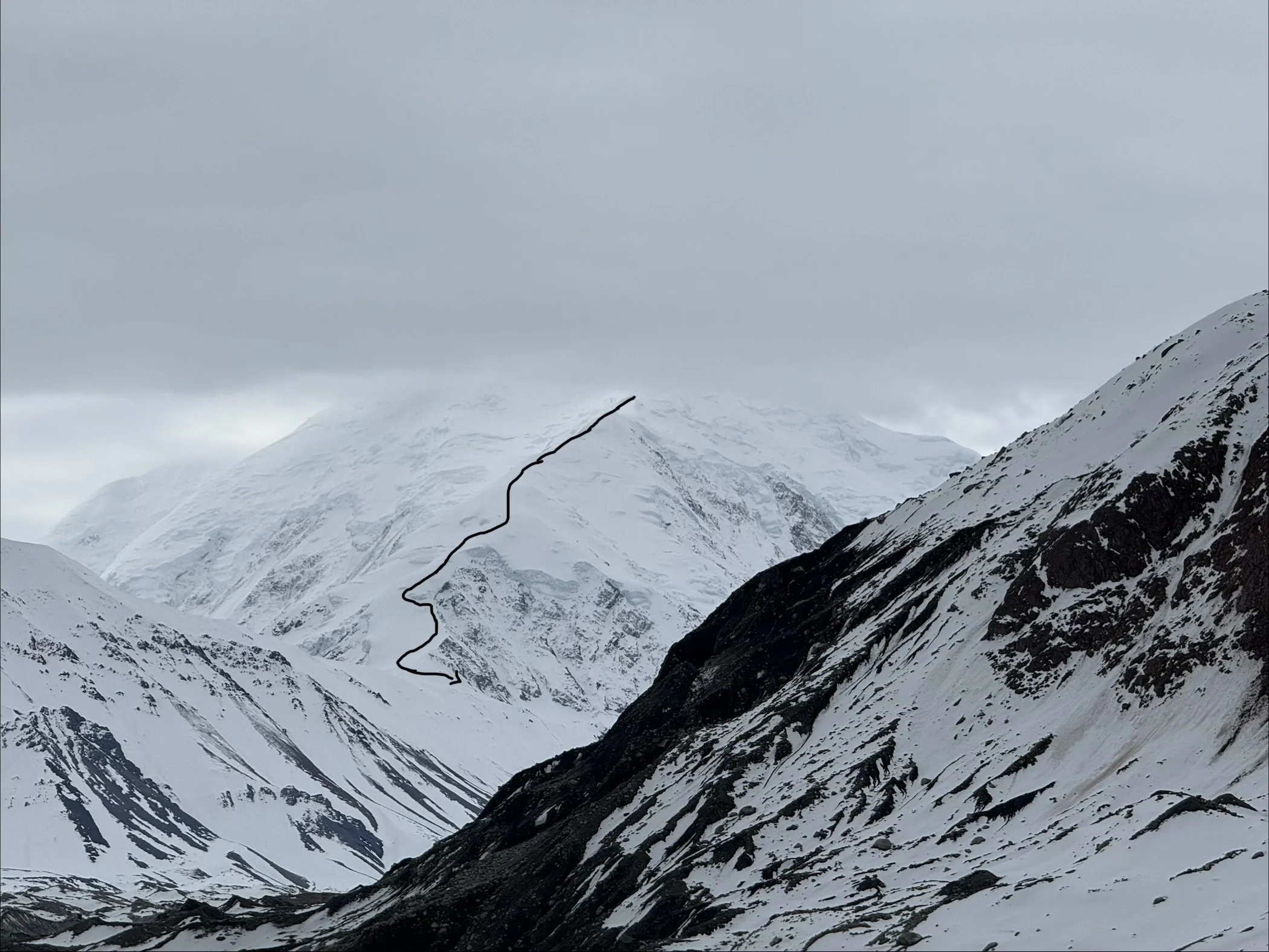
Despite less-than-glamorous skiing, the views couldn’t have been better: Foraker’s great north face to our left, the back side of Kahiltna Dome to our right, and the north side of the Alaska Range giving way to endless tundra before us. Clouds moved in and out, but somehow we managed to keep good visibility. In the gloaming, we navigated the final seracs on the ridge and made it to a pass between the Foraker and Straightaway glaciers, where we spent our third night. Park rangers later told us this was the first ski descent of the northwest ridge of the Crosson group.

Day four was a dream: We skied the remaining 2,000 feet down to the main Foraker Glacier on a spring snowpack capped with a few inches of powder, easily the best skiing of the trip. (The full descent from Point 11,910’ had been nearly 7,000 vertical feet.) For the rest of that day, we skinned and then walked to exit the Foraker Glacier, appreciating the incredible mountains surrounding us. We passed massive skiable lines on unnamed peaks that would be legendary and coveted in the Lower 48. Signs of life—an occasional bear print, a small plant, and, finally, birds—slowly started to appear as we navigated the moraine. 

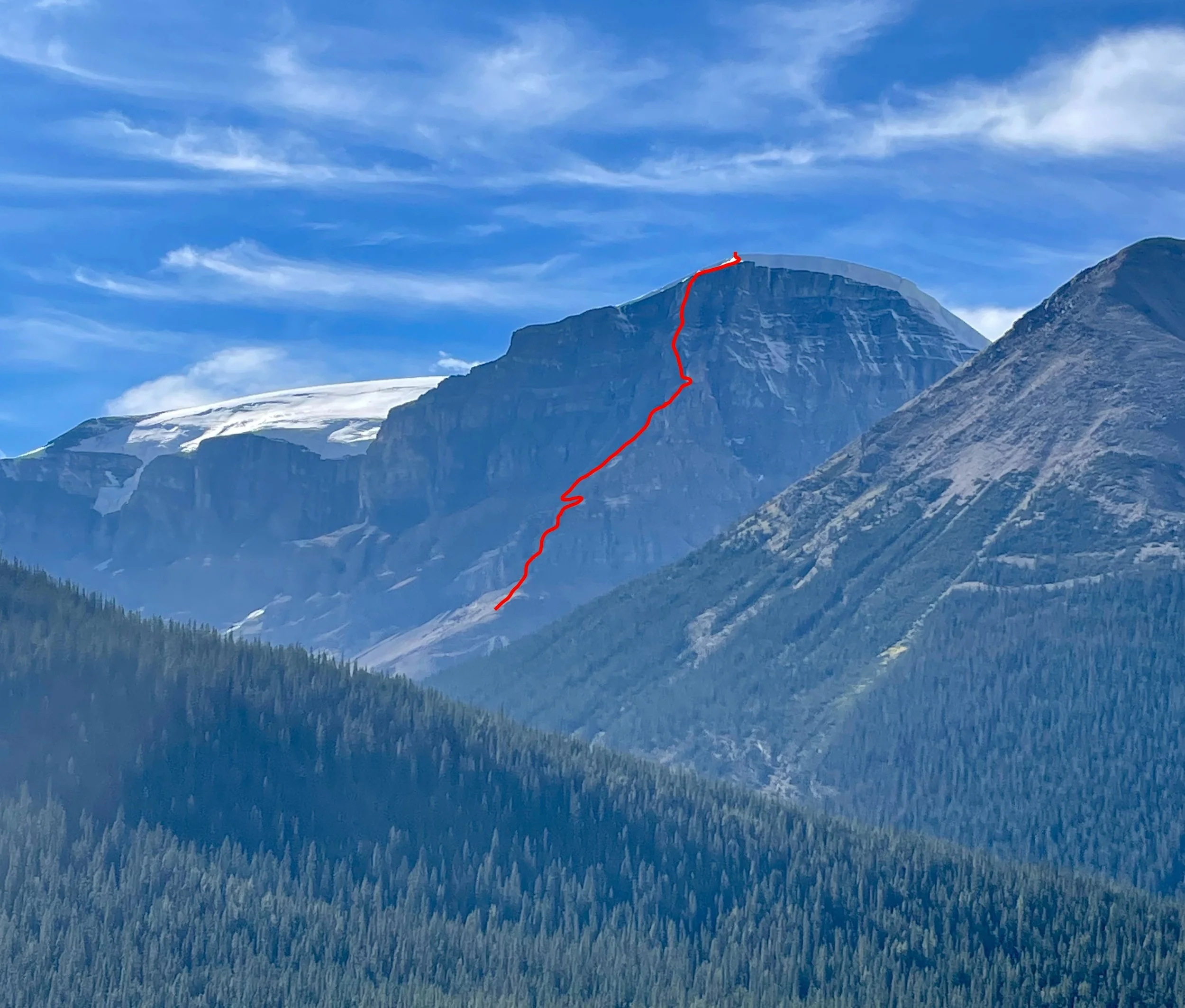
The line of the ski descent off the northwest side of the Mt. Crosson group, seen from the Foraker Glacier. Photo: Roo Streba Collection

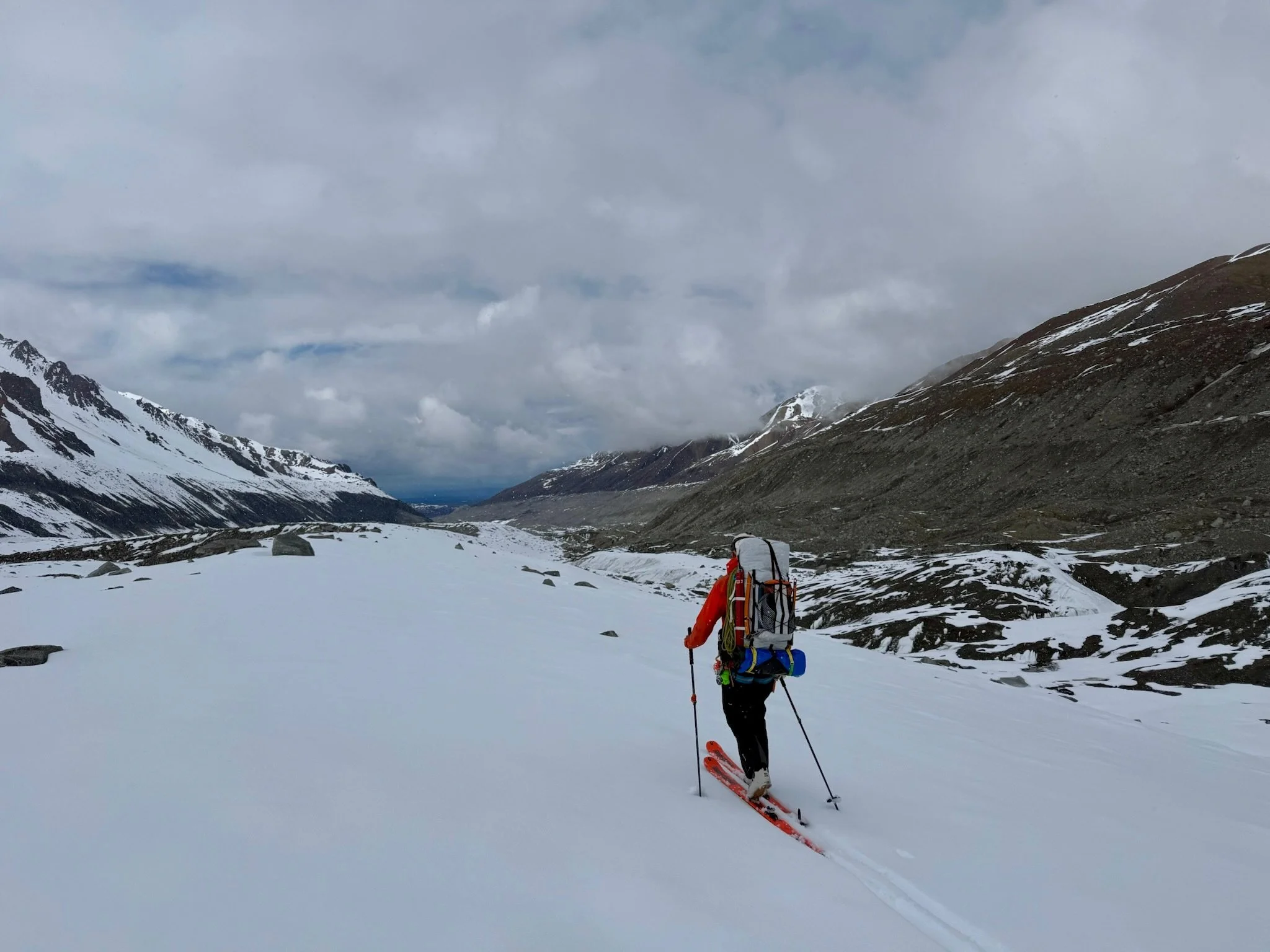
The next few days provided endless opportunities for character building. The pleasant and efficient travel of the glacier and high tundra gave way to thicker and thicker vegetation, until we found ourselves in all-out brawls with alder thickets. The alders won many of these battles, pulling skis off our packs, testing (and breaking) our patience, and severely hampering our progress, yet we persevered, and on the third afternoon of the descent, we finally found a comfortable location to launch our packrafts.

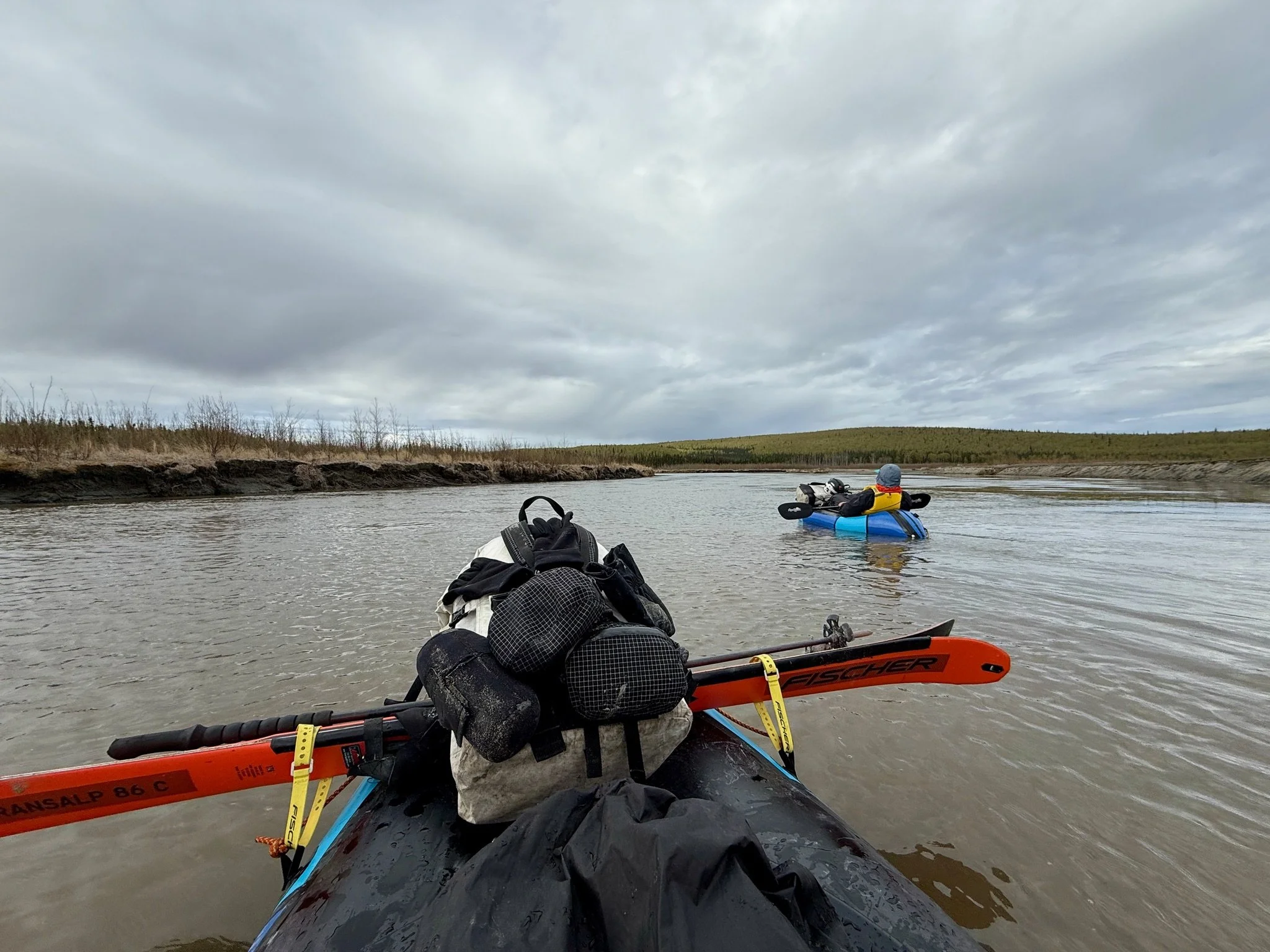
We are skiers a thousand times more than we are packrafters, and, acknowledging this weakness, we had discussed in depth our safety measures, communications, and strategy. We pushed into the fast-moving and turbid glacial river, readying ourselves for epic rafting. Ten yards down the river, my boat scraped bottom and halted. I freed myself, only to notice Shawn stuck ten yards below me. Confused, we continued down, repeatedly getting stuck and unstuck. Finally, with exasperation, we climbed out of rafts and discovered that we were able to walk across the entire river without going more than knee deep.

The following two days were wet. We found ourselves in a cycle of rafting until we hit bottom, walking our boats down the river until it was deep enough to raft again, and repeating. Despite the toil, we made good time and deeply enjoyed our surroundings. Caribou walked past our camp, birds flocked in droves, and planes rarely flew overhead.

Shawn enjoying some easy skiing off the Foraker Glacier near the end of day four of the traverse. Photo: Roo Streba

We finally reached the confluence of the Foraker River with the White River. In normal years, this confluence is of little consequence, as the White River becomes a trickle by summer. This year, due to the late thaw, the river was running at several times the flow of the Foraker, and the next several miles went by in a flash. By dinnertime, we were beyond satisfied with our progress and entirely exhausted. That night, we found enough dry sticks to make a fire and, for the first time in days, went to sleep dry.

The river flowed hard for several more miles, but as the gradient decreased, it sprawled and slowed. Prior to the trip, we had been advised that the Foraker River no longer terminates in Lake Minchumina, and only a branch still reached it. Soon we noticed the river was rising—not the water in the river, but the riverbed itself, which was now notably higher than the surrounding land. In certain sections, parts of the massive river had broken through and were spilling into the muskeg swamp. (We later learned that glacial rivers carry so much silt that, as the river’s gradient and power decrease, the silt builds up until the river eventually breaches its banks.) As we finally neared the branch allegedly heading for Lake Minchumina, the river simply terminated in mud flats. 

Shawn by the upper Foraker River, with Mt. Crosson and its neighbors in the distance. Photo: Roo Streba

We paddled to a sandbar, pulled out our backpacks, and started walking along the dried-up riverbed. In the late-twilight glow, we reminisced on the trip so far—how lucky and grateful we were to see such a wild and remote part of Alaska, to follow the high alpine into the muskeg swamps, to maintain our health and have relatively few hiccups along the way. At one point, a juvenile grizzly false-charged us, and upon realizing we weren’t giving ground, awkwardly sauntered into the brush. At another point that same evening, we both simultaneously fell into quicksand. That night, as we finally went to sleep, we could hear sled dogs howling in the distance.

In the morning, we transitioned for the last time to our packrafts and set off down an inlet of Lake Minchumina (elevation 630 feet). After nine days alone, we were giddy at the prospect of meeting other people. After a few turns, we were greeted by a beautiful house surrounded by well-maintained grass, horses, and a dog team. We had arrived at the home of the Collins twins, Julie and Miki, two women who had spent their entire lives in the bush. They made a living by trapping and had recently started writing books and articles chronicling their adventures. They gave us a tour around their homestead and treated us to a fantastic home-cooked meal.

Roo relaxing on a mellow section of the Foraker River. Photo: Shawn Jordan

The Collins twins live across the lake from the town and airstrip. When we casually mentioned our plans to hitch a ride with the postal plane the following morning, the twins both laughed. The late ice-off meant crossing the lake might be a several-day endeavor, depending on which way the winds blew the remaining lake ice. Alarmed at the prospect of missing our plane, we cut lunch short and hurried off.

We prepared ourselves for a final massive push through the night, but at some point the winds shifted and, somewhat biblically, opened a passage between the ice floes. We thanked our lucky stars and cruised across glassy water to a delicious meal of moose stew and pumpkin pie in Lake Minchumina. We met most of the 12 year-round residents and were told we were the third group to raft the river and the first to come from the mountains. We were also told that many members of the previous groups had decided to make Lake Minchumina their home, and we certainly understood why.

The following day, we hitched a ride on the postal plane from Lake Minchumina to Fairbanks, retracing part of our nine-day, 98-mile traverse. With a bird’s-eye view, we could watch the river meander back toward those incredible mountains. The north side of the Alaska Range is wild, rugged, and alluring. It requires a lot of effort to get there, and even more to get out. For those who persist, an excess of adventure and infinite splendor are guaranteed.

—Roo Streba


Get the First Edition of the American Climbing Journal

Part of the AAC's mission is to provide climbers with resources that enhance climbing knowledge and inspiration. Our world-renowned American Alpine Journal and The Line newsletter are critical pieces of delivering on that mission. For 97 years, we’ve documented the cutting edge of alpine climbing in the AAJ, and it’s been high time the AAC has done the same for bouldering and sport climbing. The ACJ also covers single-pitch trad climbing, performance big-wall ascents, profiles on new areas, and major local ascents from across the world.

If you’re an AAC Partner level or above, you’ll receive the ACJ with your normal publications preferences. Not a member?

Join the Club by July 1 to ensure you get this year’s copy!


The AAC Podcast—Introducing the American Climbing Journal, with Editor Matt Samet

Matt Samet is a climbing lifer, and as a writer and editor in the climbing industry for 25+ years, he’s left his mark on climbing media. The AAC hired him to create our newest publication, the American Climbing Journal, a journal of record for the most significant rock climbs each year.

In the latest episode of the AAC Podcast, we sit down with Matt to chat about the behind-the-scenes secrets of creating this new book, why it matters to have a “yearbook” of climbing when we have the internet, and other nerding out about hard rock climbing. Listen to the episode to learn more about the ACJ! 


Cutting Edge Podcast—Two New Episodes!

Since the last edition of The Line, two new episodes of the Cutting Edge podcast have launched, covering stories from the high peaks of the Himalaya to the boulders of Yosemite Valley. First, French super-alpinist Benjamin Védrines sat still for a minute to share the story of one of last fall’s alpine highlights: the first ascent of the north face of 7,468-meter Jannu East in Nepal. Then, in the first Cutting Edge podcast for the new American Climbing Journal, Cutting Edge host Jim Aikman interviewed Katie Lamb about becoming the first woman to boulder V16.


Climber Behavior and Attitudes: A Look at the Data

What percent of climbers THINK they always observe safety practices….vs. actually do? What are the unique risks for indoor climbers? Are climbers even interested in training, and is the training equipment climbers use reflective of what the climbing media loves to yap about? Has who climbers are—the demographic make-up of climbing—changed much in the last 7 years? Do indoor climbers even want to climb outside? What are the most popular disciplines of the sport, indoors and outdoors?


Some answers will surprise you…


AAC partnered with the Climbing Wall Association to help get their 2026 survey out to as many climbers as possible to collect data about climbers who use climbing gyms—their behaviors and interests. In this episode, we sat down with Garnet Moore, Executive Director of the Climbing Wall Association, and chatted about the survey, the report that came out of it, and some of the biggest takeaways from the data. Each nugget we discuss poses the question: what assumptions do we all make about the climbing community, that we should reconsider?


The Prescription—Leader Fall on Rock

It’s May and we’re fully into the spring season. We have the first installment of a two-part series that demonstrates what to do if the leader falls and is knocked unconscious. It is not an uncommon scenario as we see in an accident we reported in the 2025 ANAC. 

This accident took place in November 2024, when a climber was leading the overhanging second pitch of a route in Red Rock Canyon, Nevada. This climber fell and was knocked unconscious and ended up hanging above and out from the wall. As you’ll read, this story has a happy ending because of well-informed and decisive action by the belayer.

Red Rock Canyon lies just outside the Las Vegas metropolitan area. This proximity belies the remote wilderness setting in which rescues are often complex and hazardous. BLM Nevada.

Leader Fall on Rock | Protection Pulled Out

Red Rock Canyon National Conservation Area, Oak Creek Canyon, Black Orpheus Amphitheater

On November 10, I, Eric Chaudhary and a partner (male, 26) were climbing Marijuana (5 pitches, 11c) in the Black Orpheus Amphitheater. He was leading the second pitch (10b). It exits hard left off a hanging belay with one bolt for protection about six feet above and ten feet to the left of the belay. The route then cuts back right to a roof/bulge move where I believe he placed a BD #0.3 Z4 cam. 

He did the move, mantled up, and was getting his stance when his foot slipped and he fell. The piece in the roof ripped, causing him to fall about six feet directly onto the rope which was clipped to the first bolt. His ankle caught and flipped him aggressively. The first thing that struck the wall was his head. He was wearing a helmet. 

He was unconscious and was hanging upside down approximately ten feet to my left and four feet above me. I lowered him to a small ledge that flipped him upright. He was now level with me. I then tied off the rope and broke the belay. I called 911 (spotty reception) and relayed our location. I then yelled to a party of hiker/climbers at the base of the canyon. I informed them we needed helicopter rescue and that I was not sure if EMS had received my location.

I then attended to my partner and basically lassoed him with a coil of rope and pulled him to me at the belay. Around then he started regaining consciousness. I secured him to the anchor, untied him, and set-up a rappel. I rapped to the base of the first pitch with him attached to me. Luckily, we had twin 60m ropes. 

At the actual base of the climb there is one belay bolt, but unfortunately it was too high to utilize. I built a two-piece gear anchor to descend a 150-foot section of low 5th class slab that comprises the approach to the first pitch. As we were rappelling, a SAR member yelled from the base of the canyon. I told him my partner was in and out of consciousness and we needed helicopter rescue. I finished the rap to a large ledge system. Five minutes later a helicopter arrived. They flew out my partner, then returned for a SAR team member and myself. 


Video Analysis

Here's the scenario: Your climbing partner took a leader fall, they are unconscious, and unresponsive.

What do you do?

In this video, Jason Antin shows you ONE way to rescue an unconscious leader while on a multi-pitch climb. We recommend taking a course with an IFMGA/AMGA guide to learn more about rock rescue.

Credits:
Pete Takeda @pete_takeda, Editor of Accidents in North American Climbing; IFMGA/AMGA Guide Jason Antin; Producers: Shane Johnson and Sierra McGivney; Videographer: Foster Denney; Editor: Sierra McGivney; Location: Boulder Canyon, Boulder, CO

In this month’s featured accident, a climber was knocked unconscious while leading a second pitch. His partner swooped into action, effecting a self-rescue, and getting them both safely off the wall.

Jason and Pete are back to share knowledge about what to do if your leader is knocked unconscious.

Video Credits: Pete Takeda, Editor of Accidents in North American Climbing; IFMGA/AMGA Guide Jason Antin; Producers: Shane Johnson and Sierra McGivney; Videographer: Foster Denney; Editor: Sierra McGivney; Location: Boulder Canyon, Boulder, CO.


Analysis

I inspected the cam that blew, and it had a gouge in two of the lobes. The next party to climb the route retrieved our bail anchor. I was told that the spot where the piece had blown had no fresh scar. I’m still not sure why it didn't hold and hope to climb the route again to inspect it. (Source: Eric Chaudhary.) 

Editor’s Note: It was fortunate that Chaudhary was very competent and effected an efficient self-rescue. Had he not descended to a helicopter accessible area, the rescue might have taken many hours longer—sunset was 4:30 p.m. Though close to Las Vegas, Red Rock is a remote venue and climbers should consider carrying an emergency satellite communication device. 


The Prescription is Supported By:


Sign Up for AAC Emails

Undercover Crushers: Brother-Sister Duo Vasya and Nadya Vorotnikov

In this episode of Undercover Crushers, we talk to AAC members Vasya Vorotnikov and Nadya Vorotnikova about how exactly they crush so hard. While Vas isn’t totally undercover, he isn’t as well-known as he deserves. He’s a quiet phenom, having sent Jaws II in 2007 after the original climb Jaws, going at 14b, broke. The new version, Jaws II, was the second 5.15a in the United States. Nadya is likewise crushing, sending 5.14a a couple times in the last few years, and diving into route development in the South Platte of Colorado—one new climb that she contributed to, with her friend, Tal Wanish, is even featured in this year’s ACJ! In this discussion, the siblings describe learning to climb in Russia when they were little, immigrating to the United States and starting to compete in junior level competitions in the early 2000s, and what has shaped them into the climbers they are now.


We dive into sandbagging, breaththroughs, climbing as coping, coaching yourself, and being the kind of climbing partner that won’t bail—even when you end up climbing in a snow storm. Nadya shares about turning to trad climbing to push her mental limits, after being burnt out from competitions, and what motivates her to give back to the climbing community. Plus, Vasya describes his volume goal from last year, when he set the goal to climb 365 NEW routes 5.12s and harder, 100 new 5.13s and harder, and 10 new 5.14s and harder, all on outdoor rock. Turns out, he far surpassed his goal…


Introducing: The American Climbing Journal, with Editor Matt Samet

You’ve probably heard of Matt Samet—he’s a climbing lifer, and as a writer and editor in the climbing industry for 25+ years, he’s left his mark on climbing media. Recently, the AAC hired him to help create the all-new American Climbing Journal, a journal of record documenting the most significant climbs in rock climbing each year—with stories written almost entirely from the first person POV of the climbers themselves. For 97 years, we’ve documented the cutting-edge of alpine climbing in the AAJ, and it’s been high-time the AAC has done the same for bouldering, sport-climbing, single-pitch trad climbing, and performance big-wall ascents. The ACJ also includes profiles on new areas and major local ascents from all across the US and the world.


In this episode, we sit down with Matt Samet to chat about some of the behind the scenes secrets of creating the book, why it matters to have a collected “yearbook” of climbing when we have the internet, the fickle nature of recording climbing history as it happens, a sneak peek into the big ascents in the book, as well as a fairly long sidebar about AI. Dive in to nerd out about hard rock climbing.


Get your hands on the ACJ!

AAC members at the Partner, Leader, or Advocate level are eligible to get a copy of the ACJ as a member benefit! Keep your eyes peeled for AAC emails, so you can ensure you’re opted-in!

Not a member? Join or renew before July 1 to ensure you get this year’s copy!

Supporter level member? Upgrade by July 1 to get your copy.


The ACJ is Powered By:

The ACJ is Supported By:

A Tribute to Jim Whittaker

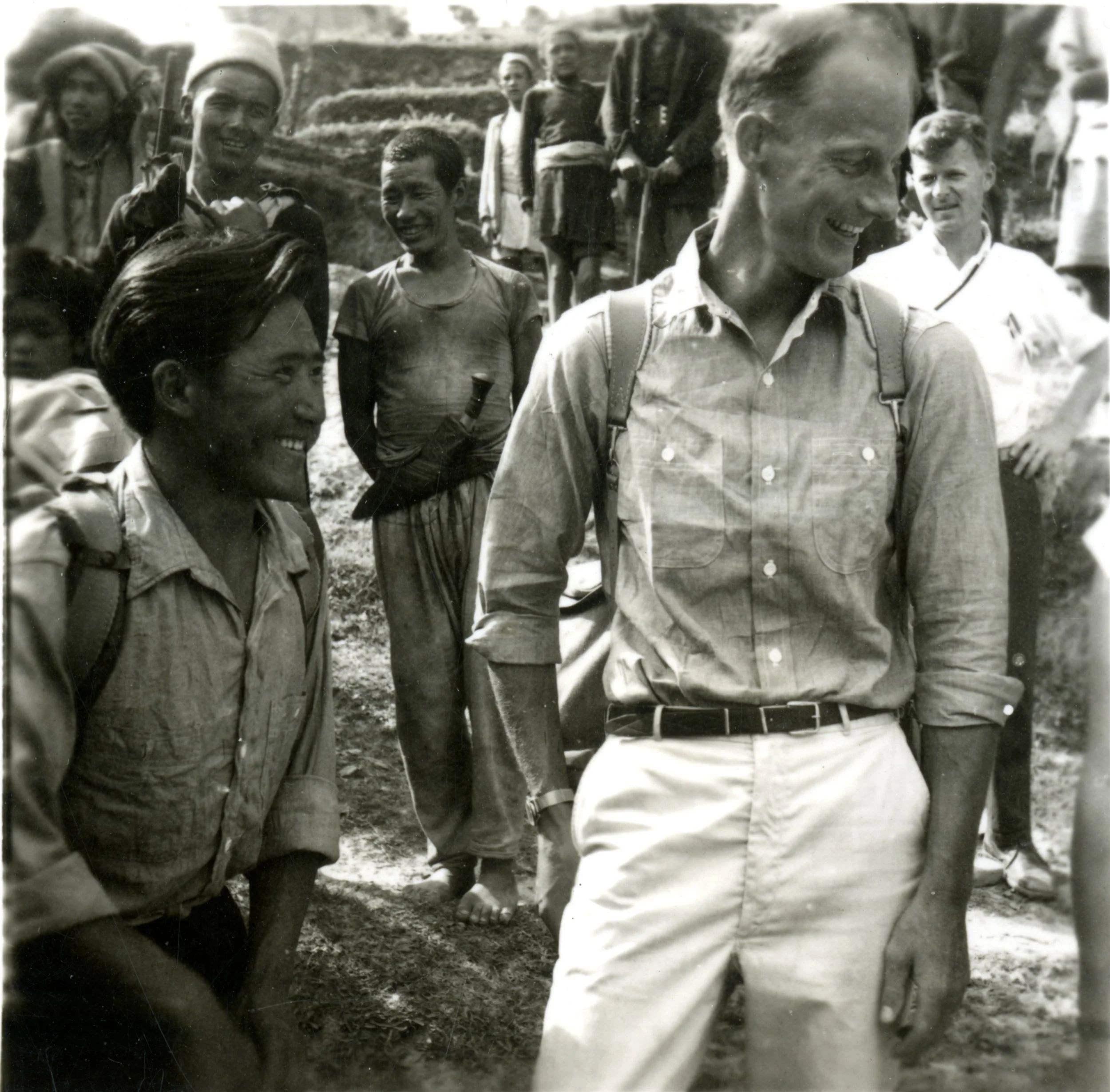
Jim Whittaker and summit partner Nawang Gombu Sherpa. Photo from Elizabeth Hawley Collection, American Alpine Club Library

We are saddened by the passing of mountaineering legend Jim Whittaker—a man who left an indelible mark on climbing history. “Big Jim” passed away on April 7, 2026, surrounded by his family. He was the 1,007th AAC member in the Club’s history (his twin brother Lou was the 1,008th)—and we are honored to have been a small part of Whittaker’s story. 

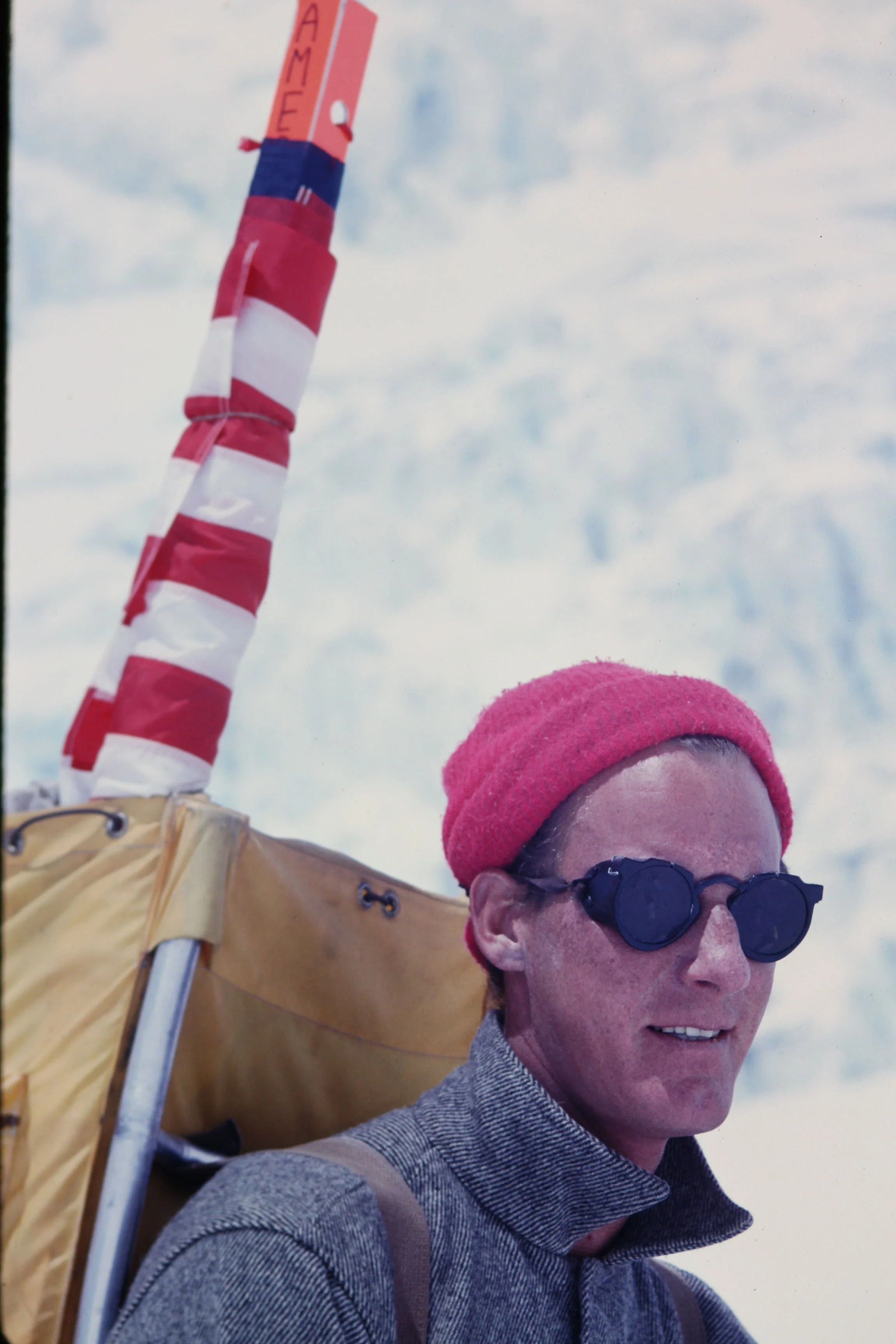
Jim Whittaker during the 1963 American Everest Expedition. Photo by James T. Lester, courtesy of the AAC Library

Jim Whittaker is famous for being the first American to summit Everest in 1963. In the 1964 edition of the American Alpine Journal, Willi Unsoeld wrote an account of the 1963 American Everest expedition, including the moment that Big Jim and Nawang Gombu left Camp VI that historic morning for their summit bid: “On the morning of May 1 there was a gigantic plume of snow directly above us, with Lhotse and Nuptse barely visible. Makalu was completely blotted out. After a quick breakfast—a cup of hot Jello per man—Big Jim and Gombu were on their way by 6:30.” Whittaker’s own personal experience of this epic moment of mountaineering history is told in far more detail elsewhere, but the AAJ account makes it clear that this was no stroll in the park. Whittaker and Gombu were hit by a storm on the south summit, and were initially lost and intimidated by the look of the steep final summit ridge before they eventually decided to continue. With the top in sight, they turned to each other, each offering for the other to go first, then “side by side they walked the last five feet. Beyond, everything fell away. They hugged each other, fighting to maintain their balance on the storm-swept summit of the world.”

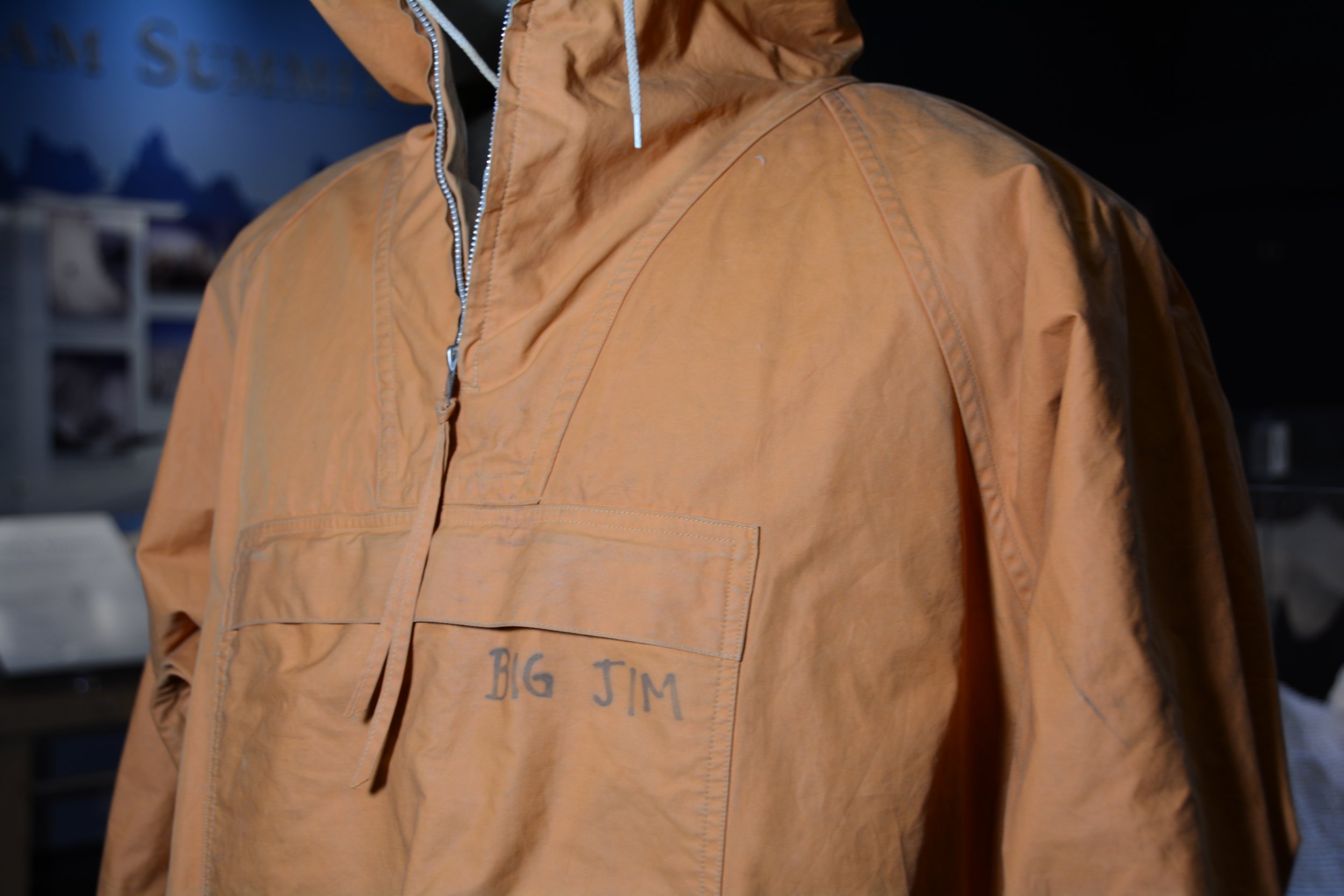
Some of Jim Whittaker’s gear from the 1963 Everest Expedition is housed in the American Alpine Club Library and Archives.

But even with the American flag planted on the summit, their trials weren’t over. Upon starting their descent, they both promptly ran out of oxygen, and not long after, a big cornice dissolved between the two men: “Big Jim found himself staring at Tibet below his feet!” But the descent was dire in other ways as well. As Unsoeld tells it, Whittaker “found it necessary to heed what would appear to be the highest call of nature in mountaineering history”—and right after getting back into his harness to follow Gombu, found himself slipping and hanging from the rope upside down. After a massive struggle to right himself, Whittaker and Gombu continued to suffer an agonizingly slow and painful descent, before they finally found their stashed oxygen, and the rest of the descent went smoother. The 1963 American Everest Expedition would put 4 more men on the summit—with two of those men accomplishing the first ascent of the West Ridge and the first traverse of the peak. 

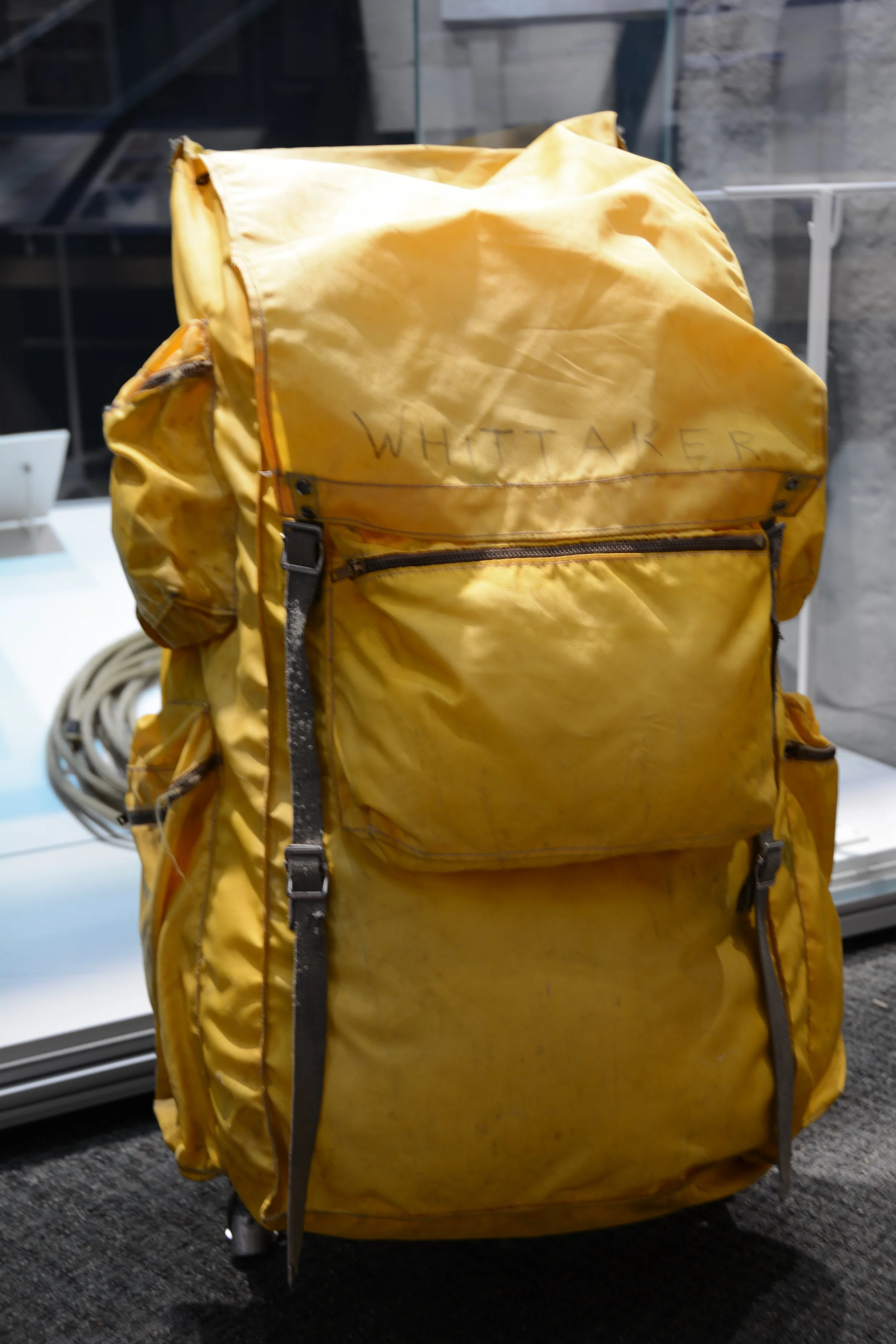
Jim Whittaker’s pack from the 1963 American Everest Expedition. Hosed in the American Alpine Club Library and Archives.

Yet, Whittaker’s life was so much more than Everest. As Lou Reichardt wrote in a review of Whittaker’s memoir, A Life on the Edge: Memoirs of Everest and Beyond: “The book provides a view of a life well led by a mountaineer who has always stretched his own boundaries, has used fame wisely, has always been willing to take risks to advance good causes and has never lost his reverence for nature.”

In the AAC archives, you can find some of the lesser known stories from Whittaker’s life: his accident on Denali (Mt. McKinley) in 1961; his involvement in the first ascent of Canada’s Mt. Kennedy in 1966, which he climbed with his friend Bobby Kennedy (the expedition and ascent was made in honor of the recently assassinated President John F. Kennedy); his leadership on several tumultuous expeditions to K2, that ultimately resulted in the first successful American ascent, and third ever ascent, of K2, in 1978; and the Everest International Peace Climb which he initiated and led in 1991.

Many have noted that despite being devastated first by the assassination of JFK, and later the assassination of Bobby Kennedy, Jim Whittaker never lost his idealism and optimism. The Everest International Peace Climb is perhaps the clearest example of this. As he wrote for the AAJ in 1991: ”Our goal was to place three climbers, one from each country, on the top of the world. They would demonstrate that through friendship and cooperation high goals can be reached. We chose our enemies to climb with—the Soviets and the Chinese. This was before glasnost, before perestroika, before the Reagan-Gorbachev summit, before Gorbachev went to Beijing. We would hold the summit of all summit meetings, enemies becoming friends.”

Despite differences in tactics and strategies, and plenty of translation and communication issues, each team of climbers brought commitment to the effort, and as the leader, Whittaker helped build something extremely special: “a small city of mountaineers from three diverse cultures who would trust their lives to each other on the highest mountain on earth.”

As Whittaker wrote in summary, “We succeeded far beyond our wildest dreams: no deaths; 20 to the summit; first Soviet woman to the summit; second Chinese-Tibetan woman to the summit; five ascents without bottled oxygen; two tons of garbage removed from the mountain. To climb Everest is difficult. To do it with former enemies, through interpreters, and to place at least three of each country on the summit were said by many to be impossible.”

For Whittaker, mountains could be so much more than something to conquer. They are also a moving practice of trust, connection, grit, and hope. 

In Whittaker’s 1962 member application to the AAC, one of his recommenders, John S. Day, wrote: “If I were asked who taught me the most, and who inspired me the most in connection with mountaineering, my answer would be an unqualified ‘Louie and Jim Whittaker.’” Clearly, we are not alone in being moved by Big Jim’s vision of mountaineering. 

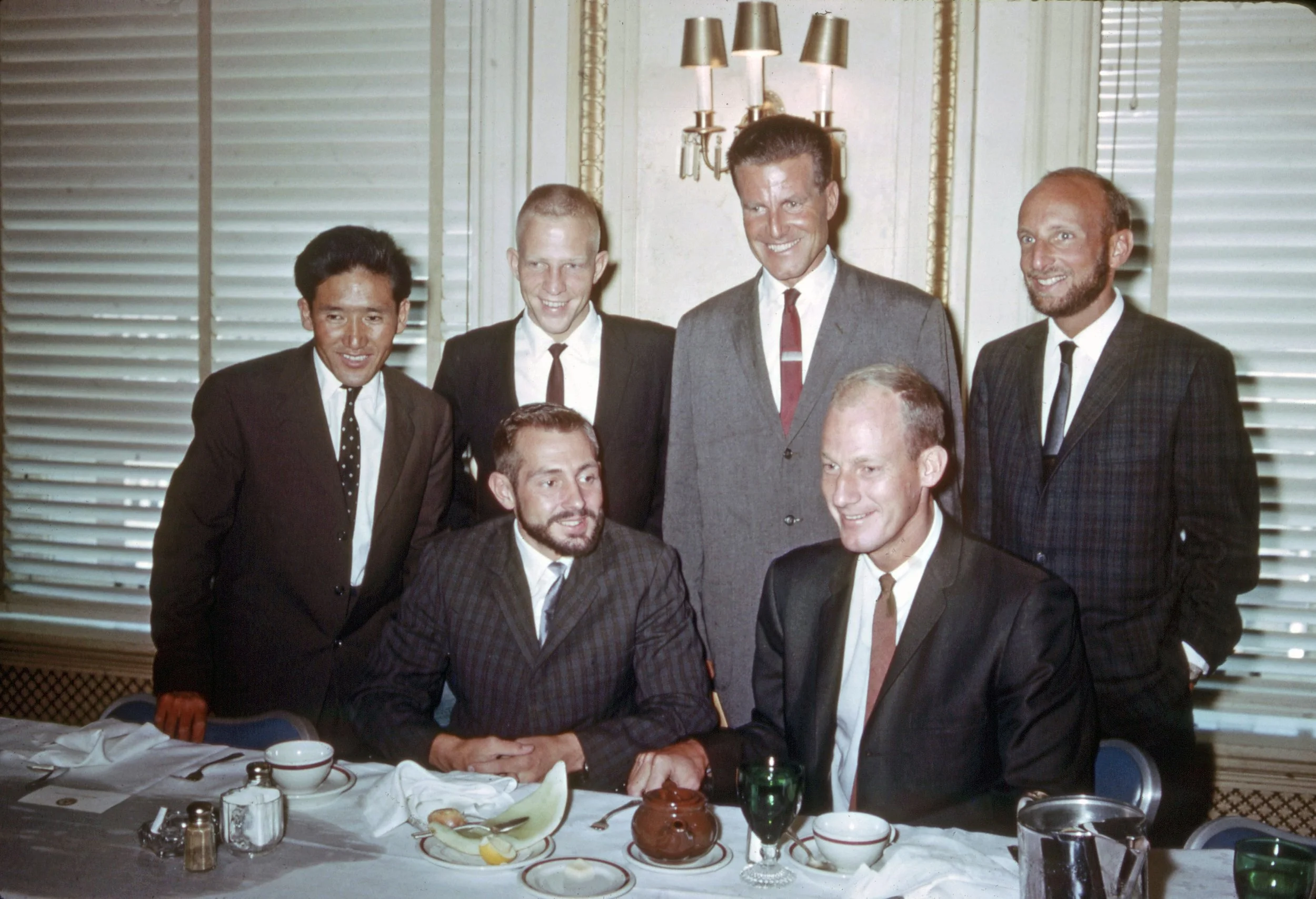
Team members from the 1963 American Everest Expedition who summited Everest, plus expedition leader Norman Dyhrenfurth. Willi Unsoeld, who also summited, is not pictured.
Back row: Nawang Gombu, Lute Jerstad, Norman Dyhrenfurth, Tom Hornbein; Seated: Barry Bishop and Jim Whittaker.

Photo by Barry Corbet, courtesy of the American Alpine Club Library


Want to learn more about Jim Whittaker? The American Alpine Club is proud to share a short Legacy Series film, historic 1964 article from the American Alpine Journal, and Legacy Series podcast to celebrate the spirit of exploration and community that Jim helped define:


Mentorship for the Next Level, with Sam Hennessey and Anne Gilbert Chase

What does it take to level up? The right mentor.


That’s why the AAC has started our Mentorship Program, beginning with the year-long Alpine Track. To kick things off, we had the cutting-edge alpinists coaching this year’s inaugural program, Sam Hennessey and Anne Gilbert Chase, on the podcast to dive into what the Alpine Track is, who it’s for, and why experienced climbers could benefit from such in-depth mentorship and technical field programs. This rigorous program makes the secrets of elite climbing accessible to climbers ready to push themselves. In this episode, Sam and Anne Gilbert dive into stories about their own epic adventures, what drives them to be a mentor, and what they wish they knew about the alpine environment when they were less experienced, as well as the details of the program and how you can apply.

Are you ready to level up? Discover the world of AAC Mentorship when you listen in.
***
You can apply to be a part of this small cohort of mentees from now until May 15, 2026. Learn more about the program schedule, requirements, and FAQs here.


The AAC Mentorship Program is presented by Arc'teryx.


The Prescription—April

It’s April, and the outdoor climbing season is in full swing. A lot of us will be rusty after the long winter, so now is a good time to get current on basic skills—like lowering. Lowering errors are a leading cause of climbing accidents: Each year we see multiple instances of lowers gone wrong, an unfortunate number of which result in fatalities.

Lowering is a frequent transition from ascent to descent. With lowering accidents, there are usually two main culprits: Either the rope is too short and/or there’s poor communication.

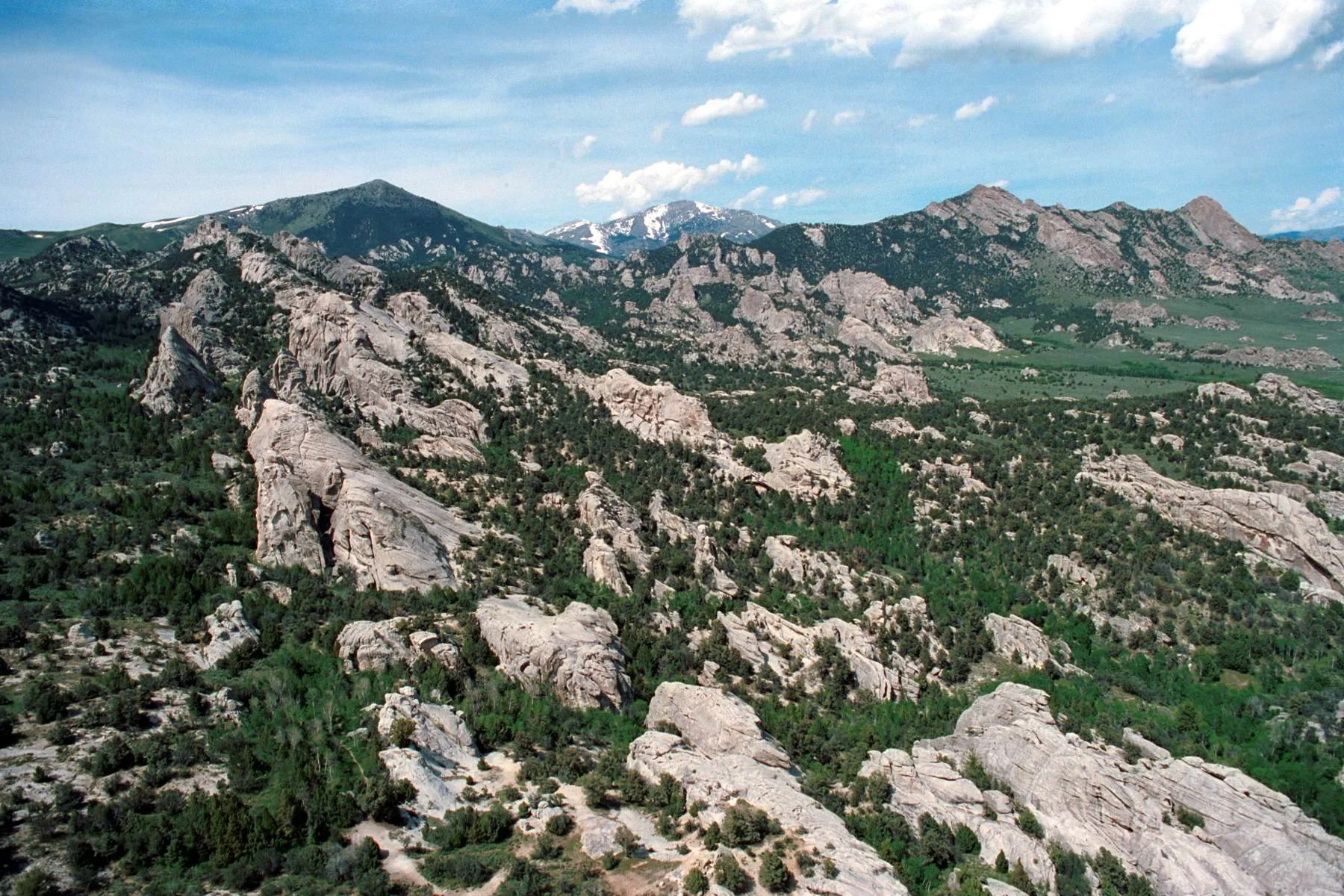
The City of Rocks National Reserve, Idaho, is home to hundreds of routes on beautiful, varnished granite. Some routes require a 70-meter rope to safely toprope or lower from the anchors. In May 2023, a climber was lowered off the end of the rope. He flipped upside down and suffered a fatal head injury. Photo by NPS.

Lowering Error | Rope Too Short, No Stopper Knot

City of Rocks National Reserve, Idaho, Super Hits Wall

On May 26, 2023, Brock Anderson and his family witnessed a tragic accident on the Super Hits Wall at the City of Rocks. They were sharing laps on two climbs with another married couple when a group of four young men joined their group. Anderson wrote to ANAC:

The climbers had general knowledge of the area, but very little beta and no guidebook. We helped them identify the routes. One of the young climbers, Kyle Melby (22), led Twist and Crawl (5.8). My son was reading a book directly under the route as we began wrapping things up. I had a premonition, just an inkling that [my son] wasn't in a safe place. I asked him to move 50 feet over to a shaded boulder. I thought nothing of it, just did a Dad-instinct thing. 

Kyle was finishing Twist and Crawl, and the two others were preparing to climb Mystery Achievement (5.7), as our group packed up and headed to the car. We were about 60 seconds down the trail when we heard Kyle fall and impact the rock. He had been lowered off the end of his rope. While we didn't see the fall, we understand that he fell feet-first onto a flake near the bottom. He landed, tilted backward, and impacted the back left side of his head, crushing his helmet and sustaining a horrible head injury. The total fall was about 35 feet. 

I ran to my truck and grabbed my trauma kit, along with a Garmin inReach. We were able to stop the bleeding fairly quickly, conduct a visual inspection, do a C-spine assessment, and get an SOS out. 

It was miraculous that Kyle’s only injury appeared to be his head wound. He was belligerent and disoriented (often the case with head injuries). With the help of several other trained first responders, we were able to calm him somewhat, but we couldn't keep him still. Within the hour, a helicopter was on the ground at Bread Loaves and several local agencies were on the scene. They helped transport Kyle via backboard to my truck and up the road to the helicopter. Kyle was flown to Pocatello. We believed he would be fine, but two days later he died from his injuries. 

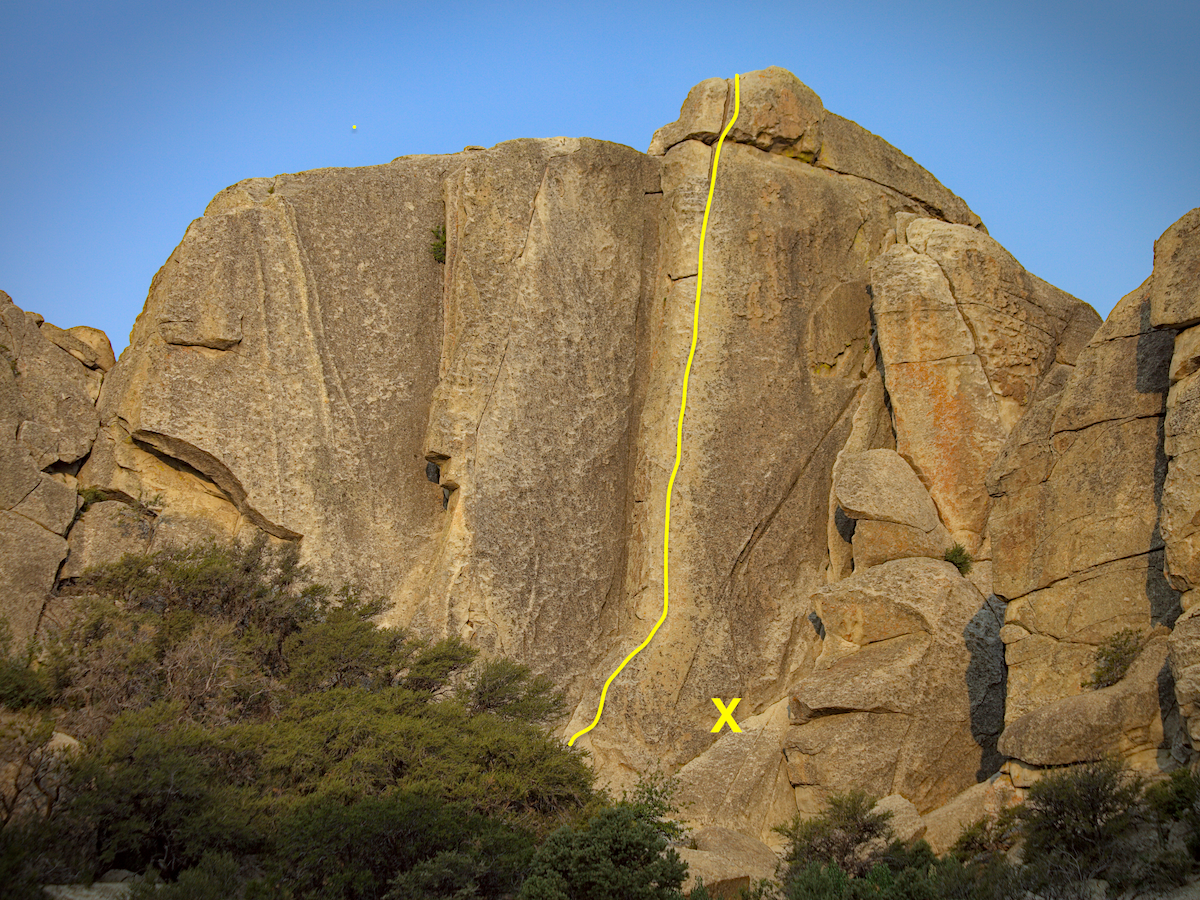
The Super Hits Wall at City of Rocks. The climber was lowering from Twist and Crawl (yellow line) and fell after the end of his rope slipped through his partner’s belay device. His feet struck a large flake near the route’s base (yellow X). That impact flipped him upside down, resulting in a head injury that would ultimately prove fatal. Photo by Camdon Kay.


Analysis

Lowering accidents are all too frequent. Twist and Crawl is 33 meters long and thus requires a 70-meter rope to allow an uninterrupted lower while retaining a reasonable margin of safety. A rough calculation, factoring in the length of route, length of fall, and rope stretch, indicates that Melby was most likely being lowered on a rope between 50 and 60 meters in length.

Anderson, a licensed raft guide, provided these recommendations after the accident:

  • Keep a closed system. Use a stopper knot at the end of your rope.

  • Speak out if you see an error. I wish I had said something. Some climbers may take offense or feel like you’re imposing on their experience, but it is worth going the extra mile. My premonition to move my son from the fall area could have included a friendly question about whether Kyle’s party knew the route was long and that a 60-meter rope might not be enough. 

  • Learn about where you are climbing. Nuances like long ropes being standard at the City are important details.

(Source: Brock Anderson.)


Video Analysis

Learn how to avoid this lowering error.

Jason Antin and Pete Takeda are back to explain how to avoid lowering off the end of your rope.

The biggest takeaway? When you’re out climbing, close your system, and try to keep your eye on the length of the lower.

Credits: Pete Takeda, Editor of Accidents in North American Climbing; IFMGA/AMGA Guide Jason Antin; Producers: Shane Johnson and Sierra McGivney; Videographer: Foster Denney; Editor: Sierra McGivney; Location: Accessibility Crag, Clear Creek Canyon, Golden, CO


2025 Accidents in North American Climbing Chinese Translation

The 2025 ANAC has been translated into Chinese by a group of climbers who have produced a limited print version. Youqing Huang, part of a volunteer team in Beijing, met with ANAC Editor Pete Takeda in Salt Lake City. Said Huang, “It is with genuine enthusiasm and a shared commitment to climbing safety that we have brought this project to fruition. We look forward to continuing our work with the American Alpine Club in the years to come.”

This is a private volunteer initiative; you will be able to access a copy through the AAC Library.


Sign Up for AAC Emails

Tuolomne Adventures with the Rooting Souls Team: A Story From the Catalyst Grant

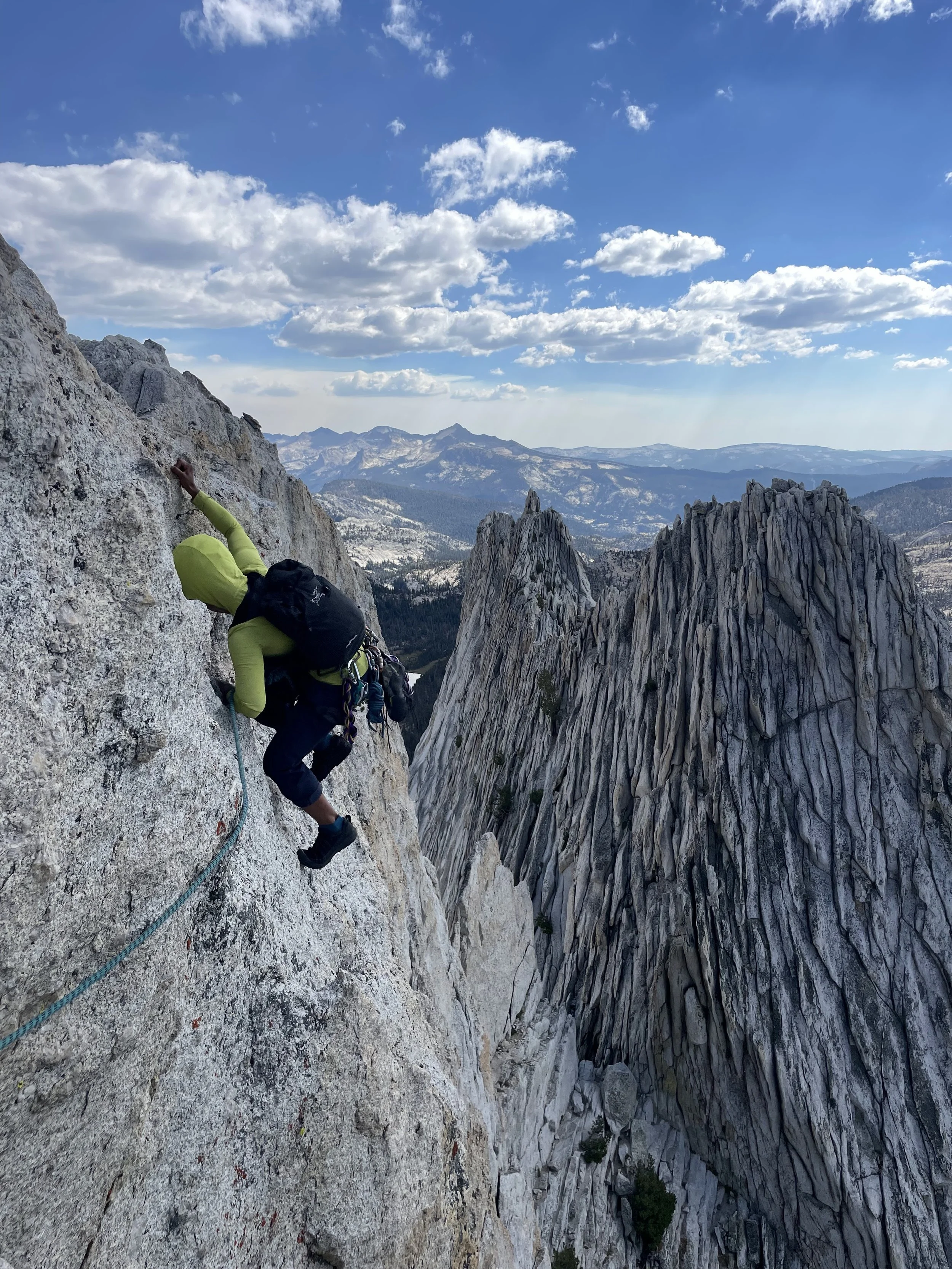
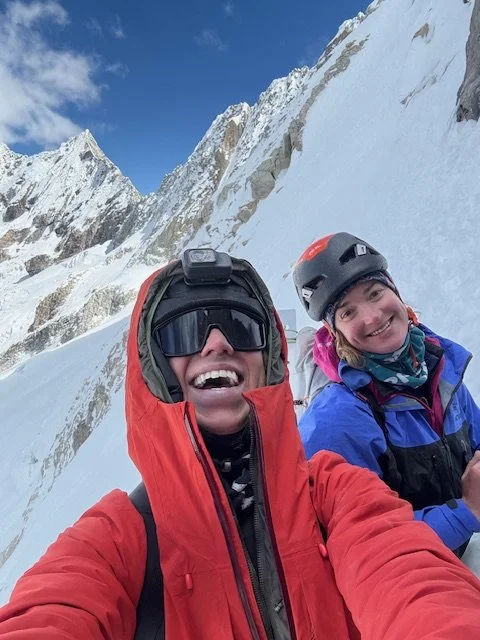
Zivia, Sof, and Rosemary on the Summit of Matthes Crest. PC: Miya Tsudome

By: Zivia Berkowitz

In August of 2021, I did a three-week backpacking trip on the Sierra High Route. Over the course of the expedition, we went up and down countless passes, and I stared in wonder at the sheer granite peaks of the Sierra Nevada. I had never led a trad climb or done any alpine climbing. On the trip, I made a promise to myself that my return to the Sierra High Country would be for a rock climbing trip. 

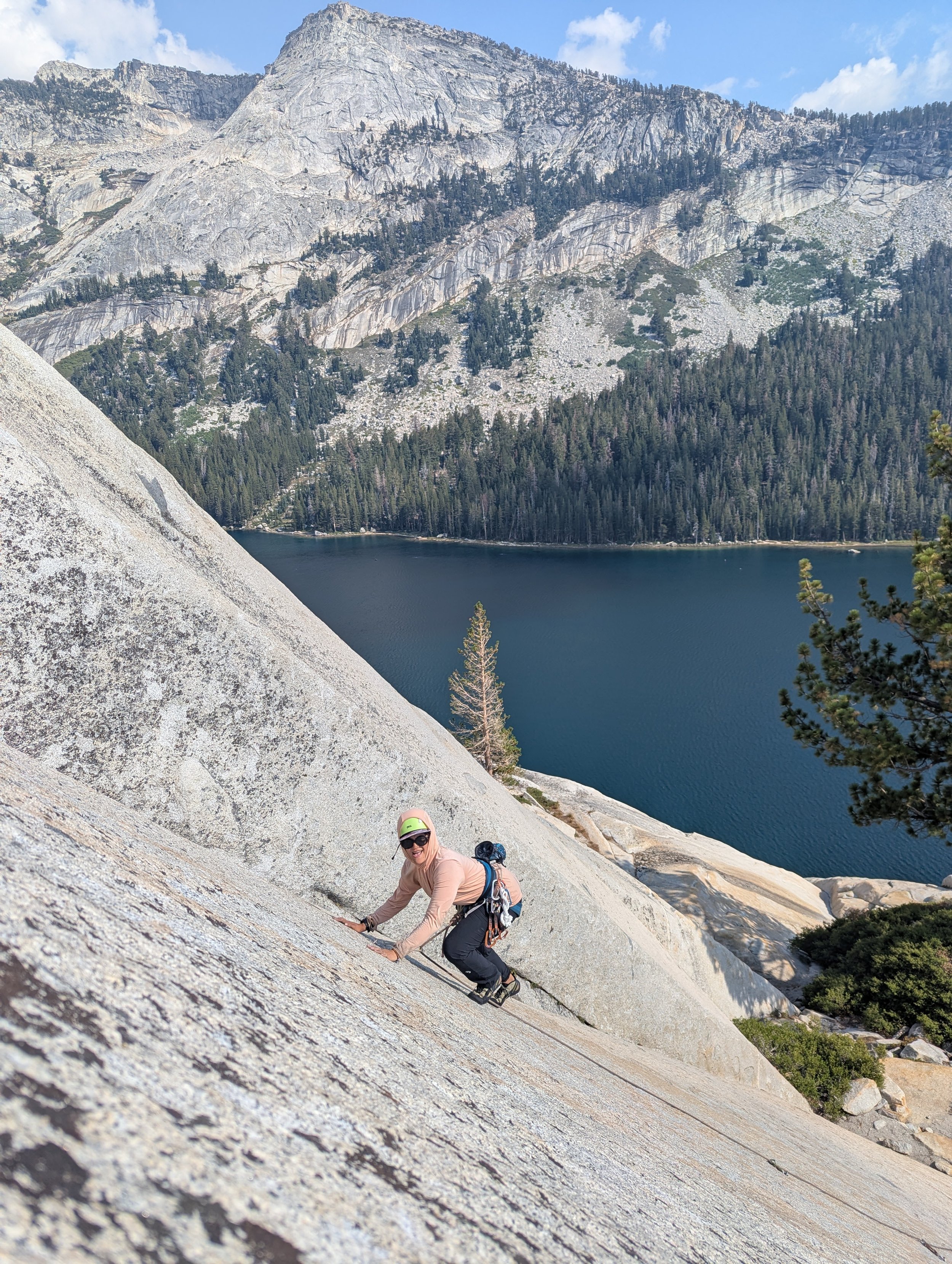
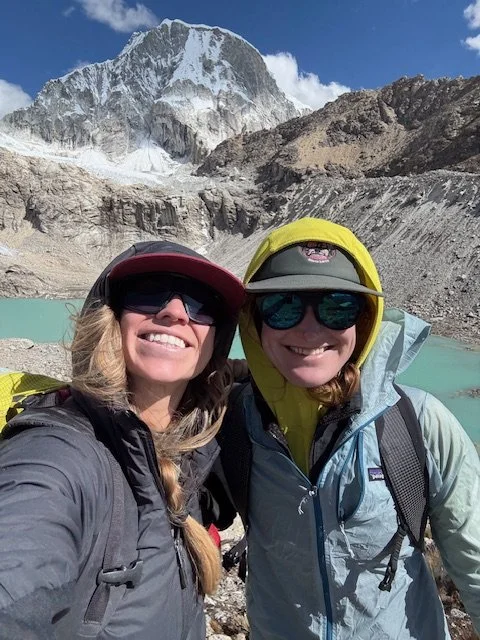
Sof and Zivia on the summit of Cathedral Peak. PC: Emmie Snead

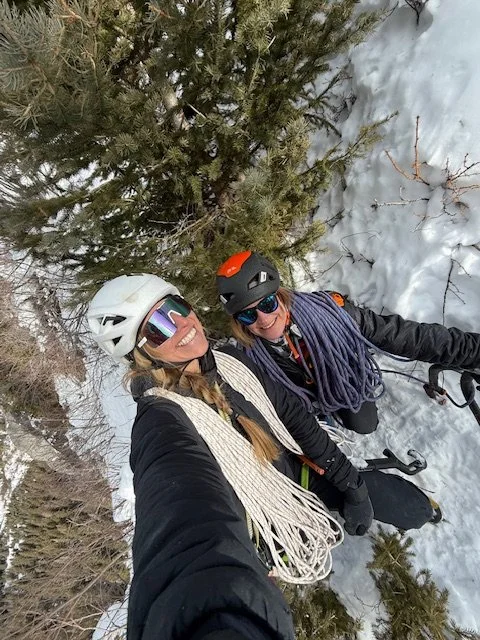
My name is Zivia Berkowitz. I’m a climber and outdoor educator based in central Wyoming, and for the past two years, I’ve been working with a handful of close friends on a passion project—a documentary film called Rooting Souls. Rooting Souls is an expression of my desire, as a Black queer woman climber, to explore themes of community, connection, and sense of place through the trials and tribulations of expedition rock climbing. To achieve this goal, I am leading an expedition with Sof Petros and Rosemary Saal to climb the North Face Standard Route of Batian Peak (17,054 ft) on Mt. Kenya in September 2026, as a self-sufficient team of Black womxn climbers. 

Climbing a 22-pitch, 2,600ft technical rock route at altitude requires us to train individually but also to gain experience climbing together as a team. This August, the Rooting Souls climbing team received a Catalyst Grant from the American Alpine Club to go on a training trip in Tuolumne Meadows to sharpen our trad/alpine multi-pitch skills. I’m excited to share what we did on our training trip in the trip report below.


Day 1 (8/30/25): After 12 hours of driving from my home in Lander, WY, I finally arrived in Bishop, California, buzzing with excitement to see my friends and climbing partners for the week. We all trickled into Bishop from various parts of the country. I drove from Wyoming, Sof flew from Seattle to Sacramento to meet Rosemary, and together they drove down to Bishop. Chey flew from Denver to Vegas and then rented a car and drove the rest of the way to Bishop. 

Between the giggles and gossip that come with friends reuniting after many months, we spent the evening grocery shopping, going over final logistics and plans with Jazz and Miya (who joined to help us document this trip), and making sure we had everything we needed to drive into Tuolumne Meadows the following morning. 

Day 2 (8/31/25): We departed Bishop around 8 a.m. and drove to Tioga Lake just outside of the Yosemite National Park entrance. We set up camp at the Tioga Lake Campground, fortuitously securing a spot in the campground just as the previous campers were packing up to leave. After camp was set up, we took time to recuperate from our extended travels, basking in the sun, jumping in the lake, and filming interviews. Restored by the downtime, we drove to Puppy Dome for the afternoon. At Puppy Dome, we experimented and refined our systems for traveling in low 5th-class terrain as a team (in anticipation of the following day's objectives). We caught a beautiful sunset at Puppy Dome before heading back to camp for dinner. The rest of the evening was spent preparing for our ascent of Matthes Crest the following day.

Sof leading on Matthes Crest. PC: Zivia Berkowitz

Day 3 (9/1/25): By 5:15 a.m, wheels were rolling, and we were on our way to the Cathedral Lakes Trailhead. We met up with Miya Tsudome and Gerry Egbalic, who were going to climb the objective ahead of us and help us document our time on the Crest. By 6:30 a.m., after some minor parking lot chaos, we began the approach to Matthes Crest. Approaching Matthes requires approximately three miles of hiking on trails, followed by another three miles off-trail with 1,700 ft of elevation gain. We reached the southern terminus of Matthes Crest just after 9:30 a.m. and began racking up in anticipation of our climb. There was one party ahead of us, and once they completed the first pitch, we began climbing. We pitched out the steeper terrain until we gained the ridge of Matthes. Once on the ridge, we simul-climbed most of the way. Sof and I took turns leading in blocks. This was my first time simul climbing, it was super valuable for me to practice simul-climbing in real time since it is a technique we are planning to use on Mt. Kenya. We reached our high point of the day on the North summit of Matthes (10,923 ft) around 3 p.m. At approximately 7 p.m, nearly nine hours after we started climbing, we completed our final downclimb of the day–we scrambled down off the ridge of Matthes back to the ground in the last light of the day. The apocalyptically vibrant and smoky sunset offered us a moment of reverence and awe for the beauty and power of the natural world. Once we were all on the ground, we took a beat to eat some food, reset, and begin our long walk back to the trailhead. We reached the trailhead just after 10 p.m., exhausted and elated by such a long and rewarding day in the High Sierra. 

Day 4 (9/2/25): We had a slow morning after our 16+ hour moving day on Matthes. We carved out time to debrief and process our ascent. In our debrief, we discussed what went well, what challenged us, and how we can apply our learnings on Matthes Crest to Mt. Kenya and other future objectives. Rain was forecasted for the afternoon and evening, so we thought it best to use the day as a rest day.  

Rosemary on lead. PC: Russell Woo

Day 5 (9/3/25): The forecast remained poor (significant afternoon precipitation). While we would’ve liked to climb another longer multipitch, the threat of aforementioned rain forced us to be flexible. As our time together is both precious and limited, we decided to see what we could climb. We compromised by choosing to attempt some lower-commitment routes at Stately Pleasure Dome. We went up Jabberwalky (5.5, 2 pitches) and Aoxomoxoa (5.5, 2 pitches), which proved more complex thanks to some chopped bolts. For me, the highlight of the day was when Rosemary came out of a lead climbing hiatus as she glided up Turkey Trot (5.8). Rosemary climbed with confidence and precision on the delicate slab, Tenaya Lake sparkling behind her. We all cheered with joy as Rosemary reached the anchor.

Day 6 (9/4/25): The weather cleared, and we were able to fit in one more day in the alpine. We chose to climb another Eastern Sierra classic, the Southeast Buttress of Cathedral Peak and Eichhorn Pinnacle. We began our approach at the Cathedral Lakes Trailhead around 7:15 a.m and reached the base of Cathedral Peak to begin our ascent around 9 a.m. We were familiar with most of the approach from our day on Matthes (although somehow that didn’t prevent us from walking in the wrong direction for a number of minutes). We simul-climbed most of Cathedral Peak, swapping leads, and summiting around 1 p.m. After descending the summit of Cathedral Peak, we traversed our way to the base of Eichorn Pinnacle for our last pitch and final summit of the trip. From the summit of Eichorn, we rappelled to the base of the pinnacle, then hiked to the Cathedral Peak walk-off. Once we were back at the base of Cathedral Peak, we started hiking back to the parking lot (with no misnavigations!). We were back to our vehicles before sunset, around 6 p.m. 

Day 7(9/5/25): We packed up camp in the morning and departed Tuolumne Meadows. On our drive to Bishop, we savored our final moments of the trip, exchanging music recommendations and reminiscing on our time together. At the Bishop Airport, we said our goodbyes, marking the end of a fruitful and memorable trip. Rosemary and I continued driving back to our respective homes thereafter. 


Rosemary and Sof at an anchor on Stately Pleasure Dome. PC: Zivia Berkowitz.

This grant was quite literally the catalyst for an incredible climbing trip. There are so few Black women climbing traditional alpine style routes, and we come from and live in so many different places! Finding the resources and time to come together is often a challenge. It was a gift to climb historic routes like Matthes Crest and Cathedral Peak as a team. This group of people, the intentions we set to build our skills as alpinists, push ourselves, support each other, and have a blast while doing so, was soul-filling and inspiring.

On a practical level, we practiced new systems on lower 5th-class terrain and gained valuable experience and insights into how we can move as efficiently as possible in exposed, technical terrain. 

Descending Matthes Crest while the sunset glowed red on the horizon, with a team of fellow Black women climber baddies and the friends supporting us, instilled in me a deep sense of gratitude.  

As Black women alpinists, we are often isolated in our experiences. Through the Catalyst Grant, we grew and learned together. On this trip, community and affinity were sources of boundless motivation and inspiration. Our time together in the High Sierra offered opportunities for growth as a climbing team with an abundance of dreams and bigger objectives ahead. 

Learn more about Rooting Souls, support the project, and stay up to date with our antics at rootingsouls.net and @rootingsouls on Instagram. Thanks to the American Alpine Club and The Catalyst Grant for the support! 


The Catalyst Grant is supported by:


The American Alpine Club Announces 2026 McNeill-Nott Winners

March 2026

The American Alpine Club (AAC) and Mountain Hardwear are excited to announce the 2026 McNeill-Nott recipients. The unexpected loss of Sue Nott and her climbing partner, Karen McNeill, on the Infinite Spur (5.9 M5 AI4) on Sultana (Mt. Foraker) in 2006 prompted the AAC to partner with Mountain Hardwear to establish the McNeill-Nott Award in their memory. Nott and McNeill were two accomplished alpinists who pushed the sport. Among many other accomplishments, in 2004, they were the first all-female team to summit Denali's Cassin Ridge (5.8 WI4) despite harsh weather conditions that grounded almost all other teams, an AWOL crampon, running out of food, and being caught in a small wind slab avalanche. We seek to preserve the spirit of these two talented and courageous climbers by giving this grant to amateur female climbers exploring new routes or unclimbed peaks with small teams.


Allie Oaks will receive $3,500 to attempt an unclimbed buttress on a peak in the Damodar Himal subrange of the Himalaya in Nepal. After examination of the available pictures and reading through previous trip reports, their intended route will require remote international travel, multiple days of trekking to a distant valley, engaging glaciers, alpine ice, snow travel at high altitude, technical mixed climbing, navigation of exposed ridgelines, and overnight bivies. Oaks and Suzanna Lourie are grateful for the opportunity to carry forward the curiosity and intrepid spirit of Sue Nott and Karen McNeill. 

Allie Oaks and Suzanna Lourie


Rell Lennox will receive $3,500 to attempt an unclimbed line in the Cochamó Valley, Chile. Lennox previously spent five weeks in the Valley exploring the area to find potential new routes and taking the time to climb the classics. Lennox will be returning to the valley with Flavie Cardinal, their gaze set on a clean and splitter unclimbed line.


Applications for the McNeill-Nott Award are accepted each year from October 1 through December 31.


Contact:

Berkeley Anderson, Director of Grants and Community Support: [email protected]


Powered by:

About Mountain Hardwear

Mountain Hardwear, Inc., was founded in 1993 and is based in Richmond, CA. We exist to encourage and equip people to seek a wilder path in life. For 30 years, we’ve built essential equipment for climbers, mountaineers, and outdoor athletes and have supported expeditions on the world’s highest peaks. Relentless precision continues to inspire everything we do — our designers sweat every stitch and detail to continuously improve function, durability, and comfort. Mountain Hardwear is a wholly-owned subsidiary of Columbia Sportswear Company that distributes its products through specialty outdoor retailers in the United States and 34 countries worldwide. www.mountainhardwear.com


About the American Alpine Club

Founded in 1902, the American Alpine Club (AAC) is committed to providing climbers with resources that advance knowledge, inspiration, and advocacy. Through our rescue benefit and medical expense coverage, climbing and grief grants, campgrounds, and discounts, we are committed to empowering our members. We share knowledge and inspiration through the American Alpine Journal, Accidents in North American Climbing, and preserving climbing history in the AAC Library and Archives. Finally, we advocate for our members and the places we climb by breaking down barriers to climbing and seeking to preserve our climbing landscapes and public lands nationally and locally. At the AAC, we are connected through our passion for climbing. United We Climb.


Austin Mallet's Secrets to Building Momentum

The AAC has launched a new grant, called the Momentum Grant, to fund intermediate to advanced alpine adventures, with a focus on ice, mixed, rock, and ski-alpinist objectives. The Momentum grant is in partnership with the family of Austin Mallet, in honor of Austin. Austin was a Texas native who developed a deep passion for big mountain objectives, but whose time was cut short by a tragic avalanche in 2024.

 Austin approached climbing with incredible discipline and sought to grow his skillset and develop his mountain craft at every opportunity. The Momentum Grant will preserve Austin’s spirit by supporting the projects of passionate climbers seeking to elevate their skills in big mountain environments. 

To get applicants inspired by Austin’s story, and to share about the kinds of projects the grant funds, we had some of Austin’s closest friends on the podcast, to share stories of his adventures and mountain philosophy. In this episode, we hear memories from his partner, Emily McKay, and two of his close climbing friends, Chris Labosky and Aiden Whitelaw. We explore Austin’s never-ending psych for adventure, his dialed planning methods, his generosity, his deep belief in his climbing partners, and much more. Dive in to get inspired by Austin’s legacy, and dream up your application for the Momentum Grant. Applications close April 30, 2026. 

Photos provided by Emily McKay and Chris Labosky.


The Steck-Salathé on Yosemite’s Sentinel Rock

Sentinel Rock circa 1916. Photo provided by Mountain Views Collection.

By Sierra McGivney, with research and imagery support by the AAC Library.

Originally Published in Guidebook XVII.

A lone blacksmith gazed out his window one morning in 1945. He felt awful. After 13 years of working away in his San Mateo, California, forge, located on Highway 101, his health had begun to decline. He watched as a cow and its calf grazed peacefully in a field.

“John, look at those healthy animals. They eat grass, not meat. You eat meat, and you are always feeling sick,” said the voice of an angel.

The angel and the blacksmith conversed a while more. Suddenly, it all clicked for the blacksmith: Vegetarianism was the answer to his problems. Little did John Salathé, the blacksmith, know that his sickness and this moment would propel him toward the tall granite walls of Yosemite, solidifying his spot in climbing history.

Salathé was an immigrant from Switzerland who headed westward, landing first in Montreal, where he met and married Ida Schenk. He then immigrated to the U.S., settling near the Bay Area. There, he opened up Peninsula Wrought Iron Works, his blacksmith shop. He was described as lean and ruddy, and spoke with a thick Swiss accent.

Once Salathé began to fall ill, doctors recommended that he spend time in the Sierra Nevada, where he learned about the Sierra Club. In the fall of 1945, Salathé joined the Sierra Club on a climbing outing at Hunters’ Hill near Vallejo, California. Robin Hansen led a complex and exposed pitch of climbing. He called down to Salathé to “climb freely.” Hansen tugged on the rope but felt no movement or weight. After two or three minutes, Salathé appeared from around the corner unroped because he thought that to climb freely was to free solo. This was the beginning of many instances in which Salathé scared his climbing partner by being extremely bold.

“Height had no meaning to John, and to him fear was a stranger,” wrote Hansen in his tribute to Salathé in the 1994 AAJ.

Salathé started to feel physically better, between his newfound vegetarianism and passion for climbing. Naturally, Salathé was drawn to Yosemite. At 46, he quickly picked up the basics of climbing but was not the most agile; therefore, he leaned into the technical aspects of climbing that were then evolving in the Valley.

Piton technology, when Salathé started climbing, was subpar, so he decided to forge his own. Most pitons at the time were malleable steel pitons, bought at the army surplus store or imported from Europe. They worked great in parallel-sided cracks, but most cracks are irregular along the edges and in the back—the pitons pounded into these fissures tended to get stuck, and if they were removed, they were often too damaged to be reused. Salathé’s high-strength carbon steel pins were far tougher than the European pitons of the day. On each, he added a P inside a diamond, the logo of his blacksmith shop. He could make them big, small, wide, narrow, or long, for the type of cracks he encountered on various climbs.

In 1946, Salathé convinced his friend John Thune to climb the Lost Arrow Tip with him.“I have found a rock in Yosemite that has never been climbed. It is an easy one,” he told Thune. The Lost Arrow Tip is a 250-foot formation, now classified as Grade III, 5.7 C2— not an easy climb, then or now.

Thune, less experienced than Salathé, was the belayer. As Thune stood in the Arrow Notch, belaying, he watched as Salathé’s first piton, of his own making, popped out, and Salathé went for a ride into the void.

“Slowly, John worked his way back to the notch and said with a smile, ‘Well, we start over again.’ He had little fear of high places. I did the shaking for him,” Thune later said.

They got about 30 to 50 feet from the summit, but darkness was approaching, so they retreated. Competition was stiff in the Valley. Unfortunately, another group—the foursome of Robin Hansen, Anton (Ax) Nelson, Fritz Lippmann, and Jack Arnold—just days later got to the summit first by lassoing the Arrow Tip from across the rim. Salathé later told Steve Roper in all seriousness that this competing team had enjoyed “the help of the devil.”

Later that year, Salathé and Ax Nelson climbed the Southwest Face of Half Dome (800’, 7 pitches, Grade IV) in Yosemite. They bivouacked and placed 150 pitons as they ascended, both a first for Yosemite. According to Roper’s Camp 4: Recollections of a Yosemite Rockclimber, for the next year, this stood as the hardest rock climb in the United States, until Salathé and Nelson climbed the Lost Arrow Chimney (1,100’, 10 pitches, IV 5.10a) in 1947. It was the most challenging climb at the time and the first successful big-wall ascent in the United States, done in a single push that took the two men five days and five nights. The sun was rising on the golden age of climbing in Yosemite.

On January 20, 1950, Salathé filed for American Alpine Club membership, backed by Oscar A. Cook and seconded by Richard C. Houston. Allen Steck, a newcomer rising in the Valley after returning home from World War II, had his AAC membership proposal published in the January 10, 1950, list, which Houston also seconded. Both of their climbing résumés were long, but there was something just beyond the horizon waiting for them. It would become one of the greatest climbs in North America: the Steck-Salathé (15 pitches, V 5.10-) on Sentinel Rock.

Sentinel Rock circa the 1950s, photo by Nicholas B. Clinch Collection.


Sentinel Rock circa the 1950s, photo by Nicholas B. Clinch Collection.

In 1950, Allen Steck had become obsessed with climbing Sentinel Rock, and he wasn’t alone in his ambitions. The Valley was a competitive environment. Steck, Phil Bettler, Bill Long, and Jim Wilson made a serious attempt in October 1949, but only managed to reach 400 feet past the previous attempt. More attempts were made in 1950, and with the Fourth of July weekend approaching, Steck was getting antsy; someone would unlock the climb soon. He lay awake at night thinking about the north wall above the buttress.

At the time, Steck was a 24-year-old living in Berkeley, California. He was young and ambitious, just beginning to make a name for himself in Yosemite, and a “carnivore,” as Salathé would say. In contrast, Salathé was 51, had dentures, and was known for his doggedness and patience in climbing. All of Steck’s friends were out of town that weekend, so he asked Salathé to join him.

The angels had earlier told Salathé to look around the Valley, and he would see three superior climbs: Half Dome, the Arrow, and the north face of the Sentinel. The first two were completed, but there was one last climb to go.

Perhaps Salathé and Steck were always moving toward this climb, fated to complete it together—the innovator and the young gun.

When Nelson heard of their plans, he remarked to Salathé, “If you expect to make the top, Al will have to be every bit as stubborn as you!”

On the morning of June 30, the two quested off—Salathé with a handful of dates and Steck with dried fruit, canned tuna, and some nuts. Between the two of them, they had two gallons of water in tin cans, believing it would be enough for their time on the wall.

By midafternoon on the second day, they had reached Steck’s previous high point.

“Even though we were swinging leads, it was clear that Salathé, an aid specialist that he was, should be the one to tackle the steep, almost blank section known as the ‘Headwall,’” wrote Steck in his memoir, A Mountaineer’s Life.

The terrain was complex and unknown, Salathé’s progress slow. They retreated to their bivy at the top of the Flying Buttress. At first light on July 2, Salathé went to work, struggling on the steep headwall for seven hours. They began to feel hot and thirsty. Temperatures reached 105°F on the valley floor—the climbers were like two eggs in a frying pan. Even worse, their water—which should have been enough for a few days under cooler conditions—wasn’t going to last much longer given the dehydrating effects of the heat.

At last, they reached the Great Chimney. They looked up at a steep, flared slot ending in a narrow section. Steck began to wonder how they might escape the wall. Disappointment and thirst were setting in.

The next day, July 3, Steck noticed a cave at the far end of the chimney. He roped up and wriggled up it, popping out a hundred feet above. Salathé ditched an empty water can and his dates, his parched mouth making them unappealing, and prusiked up to Steck. For years to come, climbers would see a rusted tin can as they entered the chimney.

Now, they were at another impasse: A slot about the width of a human head rose above them.

Sentinel Rock circa the 1950s, photo by the Nicholas B. Clinch collection.

Salathé searched for a crack, discovering a rare and thin line leading around the outside of the slot. Salathé placed pitons, climbing the outer face of the chimney until he reached an ample ledge. Salathé had solved the crux of the Narrows, which would become the most notorious feature on the route. Salathé’s route up the Narrows has no known repeats: On the second ascent, in 1954, Royal Robbins discovered an oval-shaped hole in the ceiling above the belay spot, shinnying through this and the chimney above until he found himself in the sunlight again. This has become the standard route.

Steck, before following Salathé, saw water dripping down in a crack. He desperately reached for it, but it was only enough to moisten his lips.

They continued upward in the unrelenting heat, letting their tempers boil over. Whatever their motivations were—anger, water, or the love of climbing—they ended the night two pitches from the summit, albeit sleeping in a painful, seated position hanging from their anchors.

On the morning of July 4, Salathé used their last half cup of water to moisten his false teeth so he could put them back on. By noon, the two stood at the summit.

They “yelled and jumped and almost kissed each other to think we’d made it,” said Salathé in an interview with the San Francisco Chronicle in 1950.

Steck, meanwhile, had become crazed with thirst. He threw his food off the summit and rushed down a gully leading to Sentinel Creek, which they could see from the summit, leaving Salathé. Water was all he could think about. Steck got cliffed out 30 feet above the creek and had to climb back up the gully. He “tripped over bushes, fell over unseen ledges, and finally collapsed fully clothed into a pool at the foot of a small waterfall,” as Steck later wrote in his Sierra Club Bulletin article about the ascent, “Ordeal by Piton.”Salathé, ever patient, had taken his time and traversed over to the water. The men immediately got to slaking their thirst.

Sentinel Rock circa the 1950s, photo by Nicholas B. Clinch Collection.

Finally, after facing a complex descent over steep, water-worn granite slabs down toward the Valley, they piled into Salathé’s Model T Ford for the drive back to Berkeley, stopping at a produce stand on the way. Salathé bought various fruits, and they ate them eagerly.

“And I can say, in retrospect, that it was well worth the effort. The reason, the incentive, the motive for all this? It is an intangible, provocative concept that I shall leave to the reader to explain. Some think they know why; others despair of ever knowing. I’m not too sure myself,” concluded Steck in “Ordeal by Pitons.”

It was clear Steck was a bit fed up with the climb, but like all climbers, as time goes on, the sufferfest memories fade, and going back up doesn’t sound so bad. Steck went on to climb the Steck-Salathé five more times, the fifth time on the 50th anniversary, when Steck was 75 years old.

Unfortunately, Salathé’s mental health deteriorated soon after this ascent. His wife, Ida, took unknown legal action against him in 1952, and shortly after, he believed she was trying to poison him with cobra venom. He soon returned to Switzerland and joined a religious cult led by a medium who claimed to have the “spirit Joseph” speak through her.

In 1963, Salathé returned to the United States, were he wandered the deserts and mountains of California, living off the land and a pension from the Swiss government.

The Steck-Salathé route on Sentinel Rock was a monumental climb in Yosemite history, a five-day big wall that opened up the idea that other walls could be and would be climbed, if only climbers were willing to bivy for multiple nights in a row. Soon after, several other big features were climbed in the valley, including the Regular Northwest Face of Half Dome in 1957 and The Nose of El Capitan (47 days on the wall) in 1958. Salathé and Steck’s route opened up a new playing field for climbers, leading to some of the greatest routes in North American climbing history.


Sign Up for AAC Emails

The Line—A Sensational Spire in Pakistan

One winner of a 2025 Cutting Edge Grant from the AAC was alpinist and photographer Tad McCrea, who, along with fellow American Jon Griffin and German climber Thomas Huber, traveled to the Karakoram for their second expedition to attempt two sensational peaks. The first part of Tad’s trip report is shared below. For the second half, you’ll have to wait for your 2026 American Alpine Journal, coming later this year.

The line of the 2025 first ascent of Eye Ri (Suma Brakk West) by the west ridge. The central and highest peak has been climbed twice. Tad McCrea

Eye Ri, First Ascent, via Northwest Face and West Ridge

Jon Griffin heads toward the astonishing summit tower of Eye Ri, the west summit of Suma Brakk. Tad McCrea

Jon Griffin, Thomas Huber, and I had visited the Choktoi Glacier in 2024, our goals the west summit of Suma Brakk and the southeast pillar of Latok III. Initially, the weather was stunning, but as our preparation was beginning to pay off, we were hit by five weeks of wet and restless weather. Our objectives quickly became out of reach.

On July 14, 2025, the three of us reconvened in Skardu, in northern Pakistan. The approach this time to base camp, at around 4,400 meters on the east side of the glacier, was challenging due to hot weather and raging river crossings. 

Then, five days into our stay at base camp, Thomas and I were called to assist in the attempted rescue of Laura Dahlmeier on Laila Peak. [The German athlete was a two-time Olympic biathlon champion and friend of Huber’s. She was retreating from the peak when she was hit by rockfall, fatally, around 5,700 meters.] Along with Americans Jackson Marvell and Alan Rousseau, who were on another expedition in Pakistan, we were airlifted to the peak, where we located her body from the air and realized any attempt to retrieve her would be futile. We hiked out to Hushe, then were helicoptered back to our Choktoi base camp on August 2. 

Two days later, we made an acclimatization trip to 5,700 meters near Suma Brakk. At 12:30 a.m. on August 9, we set off from base camp for the final climb.

On summit day, Thomas Huber reascends the first pitch on the final tower of Eye Ri. Tad McCrea

Suma Brakk is a triple-summited peak that has been climbed at least a couple of times by different routes. [The first ascent of the central and highest summit (6,166m) was made in 2007 via the southern slopes and southeast ridge, by Americans Doug Chabot, Mark Richey, and Steve Swenson. In 2018, Fabian Buhl and Alexander Huber—Thomas’s brother—completed the south ridge, with more than 56 pitches of climbing]. The west summit, which we dubbed Eye Ri (6,120m), was unclimbed. It appears as a spectacular needle when seen from the Choktoi side; moving around the peak to the west exposes a gash splitting the entire summit tower. There is a giant chockstone wedged 15 to 20 meters from the top that mimics Sauron's Eye.

Jon Griffin (leading) and Thomas Huber near the top of Eye Ri during the first ascent, with the Choktoi Glacier far below. Tad McCrea

We started up loose ribs and even looser rock gullies just left of a 300-meter icefall blocking access to a hanging glacier at the base of Eye Ri’s northwestern aspect. We had been here the year before, so we knew where to find the best path to the notch leading to the upper glacial basin. The climbing ranged from steep walking to scrambling. A hike up the glacier, then steep snow and névé with occasional stretches of ice and mixed (50°–75°), took us to the previous year’s high point at 5,600 meters on the west ridge, between the first and second gendarmes. While I chopped out a site for the tent, Jon and Thomas took our two single ropes and a tag line and fixed three pitches to the top of the second gendarme. 

After making the first ascent of the triple-topped peak on the left side of this photo, Americans Doug Chabot, Mark Richey, and Steve Swenson gave it the name Suma Brakk, meaning “three summits” in Balti. They climbed the central summit in 2007. The 2025 first ascent of the pinnacle on the left, now called Eye Ri, followed the west ridge, descending to the left. The sea of rock fins and summits below and right of Suma Brakk, all below 6,000 meters, belongs to the Choktoi Subgroup, while the high pyramid at far right is Chiring (7,045m). Tad McCrea.

The next day, we continued past three more gendarmes to a bivouac below the final tower. There were a few rock pitches up to 5.10+ on textured golden granite, and ice up to 80°, and we needed the full quiver of alpine tactics and trickery to get our under-acclimatized bodies up to 6,000 meters.

In the morning, we climbed three challenging pitches up the tower, utilizing 12 bolts for protection and anchors. Free climbing up to 5.11, we also employed a variety of aid tactics. At a bus-sized platform four meters below the top of the tower, we fixed lines and rappelled 85 meters to our camp.

On August 12th, we jugged our lines and did a short boulder problem to the summit, for what appears to be its first ascent. We laughed, danced, and cried a little as we soaked in the expansive vista, then descended all the way to our 5,600-meter camp, making at least 15 rappels. With the heat maxing out, we were incredibly thankful to be on a ridge, as the mountain was exploding on all sides. The following day, we retraced our steps to base camp. We named the route HmlaA (1,000m, 5.11 A3 80°).

Left to right: Jon Griffin, Tad McCrea, and Thomas Huber.

—Tad McCrea, USA


New Cutting Edge Episode: Massive Climbs and Wild Adventures in Mozambique

The enormous granite peaks of Mozambique are among Africa’s most impressive rock formations, yet fewer than a dozen climbing teams have ever explored them. In 2025, a Spanish and American trio put up a 17-pitch route in Mozambique, and for this episode we spoke with one of the team members—American Dakota Walz—about what they encountered, including a seemingly inscrutable bureaucracy and a night in detention before they could even start the climb. Following the successful ascent, they suffered debilitating illness thanks to ill-advised celebratory ice cream.

In between were glorious days on a unique African mountain, creating a route worth repeating. Host Jim Aikman also chats with Majka Burhardt, a veteran of two climbing expeditions to Mozambique, about navigating the cultural and logistical challenges in a country struggling with a legacy of conflict. And AAJ editor Dougald MacDonald shares insights on southern Africa’s extraordinary granite climbing.


Sign Up for AAC Emails

Ask Me Anything, Prescription Edition: Stacked Rappels and Old Cams

In this episode, we sit down with THE dynamic duo Pete Takeda and Jason Antin. Pete and Jason recap and expand upon the climbing accidents featured in the January and February Prescription, the AAC’s monthly dose of accident analysis from our annual book, Accidents in North American Climbing. Then, they answer audience questions that stemmed from their original analysis. We explore questions like what are the pros and cons of stacked rappels—and sidebar into some misunderstandings about simulrapping. We also explore what happens when old stiff cams are put in wet and grimy cracks, and the alternative uses for old gear. If you’ve left a comment on our Prescription videos, or written into the accidents email inbox, we may just have answered your questions! Dive in to hear about these topics and more.

Pete Takeda is the editor of Accidents in North American Climbing. Jason Antin is an IFMGA/AMGA guide. Together, they are the experts behind the AAC’s most popular media—our monthly Prescription email and video. Get it straight to your inbox when you sign up for AAC emails below!


The Prescription—Short Fall to Ground

It’s March, and climbers all over North America are getting ready for some spring cragging. It’s time to inspect your rack…and rope. When it comes to the latter, there’s an old adage that says: Ropes don’t break—they cut. This maxim provides some comfort, as how often do sharp objects truly come into contact with your rope? Before you draw any conclusions, however, check out this accident from May 2024, which appeared in the 2025 edition of Accidents in North American Climbing.

Here is the actual cutting edge as photographed after the accident. We can see the orange fuzz left behind by the rope’s sheath. Photo by Tom Neary.

Short Fall to Ground | Rope Severed by Edge of Rock

Western Massachusetts, Farley Ledges, Pot Ledge Buttress

On May 11, 2024, Tom Neary and his younger brother Paul were checking out a new boulder. On top, they tied their 9.5mm dynamic rope to a tree. This created two rope lengths, with both ends reaching the ground. This configuration allowed them to rappel simultaneously, with each of them cleaning moss and dirt from the 20+-foot-high boulder. The first 10 to 12 feet of the rock were overhanging. At the lip, the angle dramatically kicked back. The juncture of the overhang and slab was a straight and horizontal edge whose exterior angle was around 60 degrees.  

While on rappel and cleaning below the lip, Paul slid sideways. The brand-new rope, tensioned under body weight, was pulled across the edge. It was cleanly severed. The younger Neary fell four feet, landing on flat rocks below the boulder. Fortunately, he suffered only minor injuries.
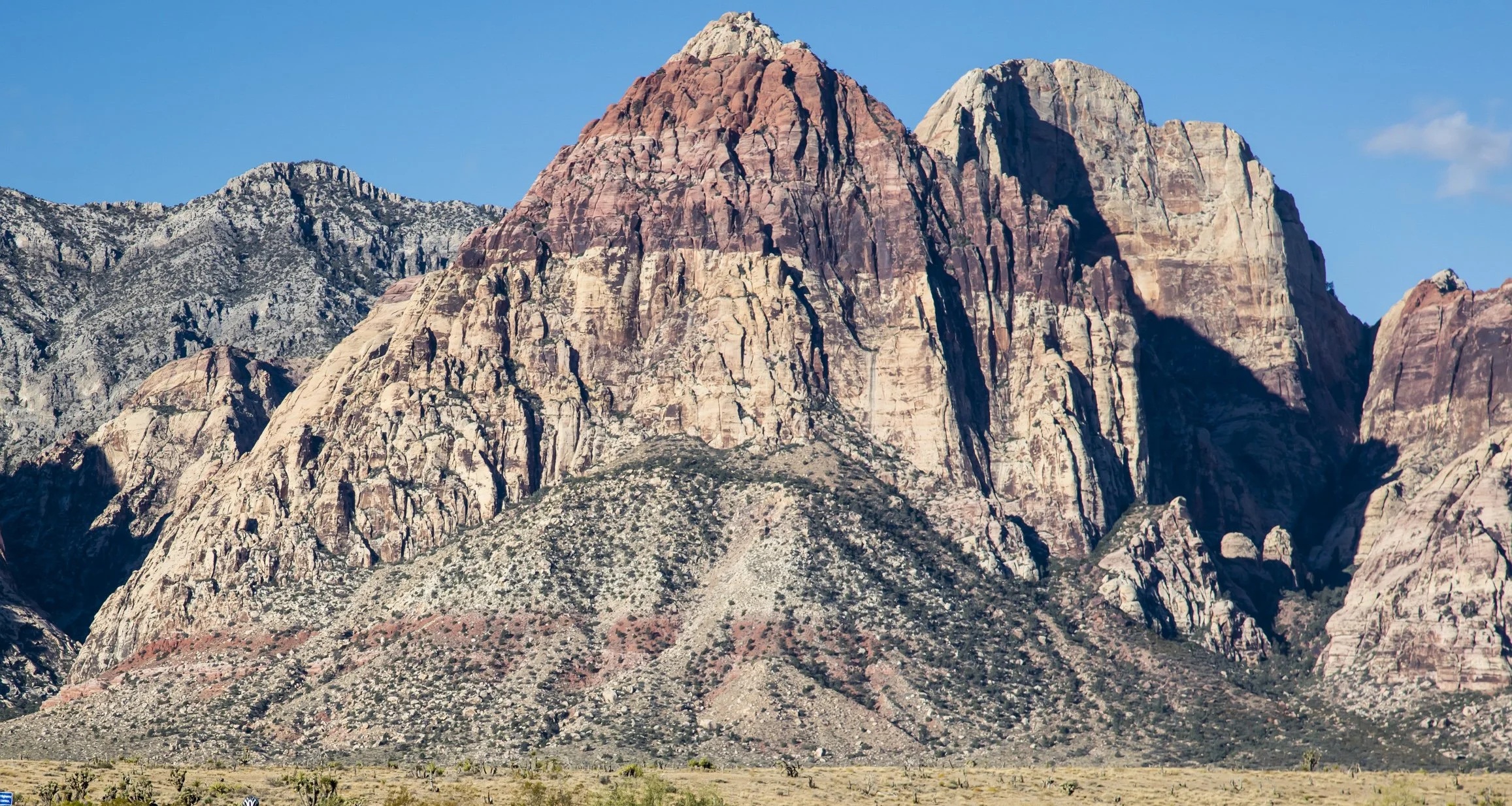
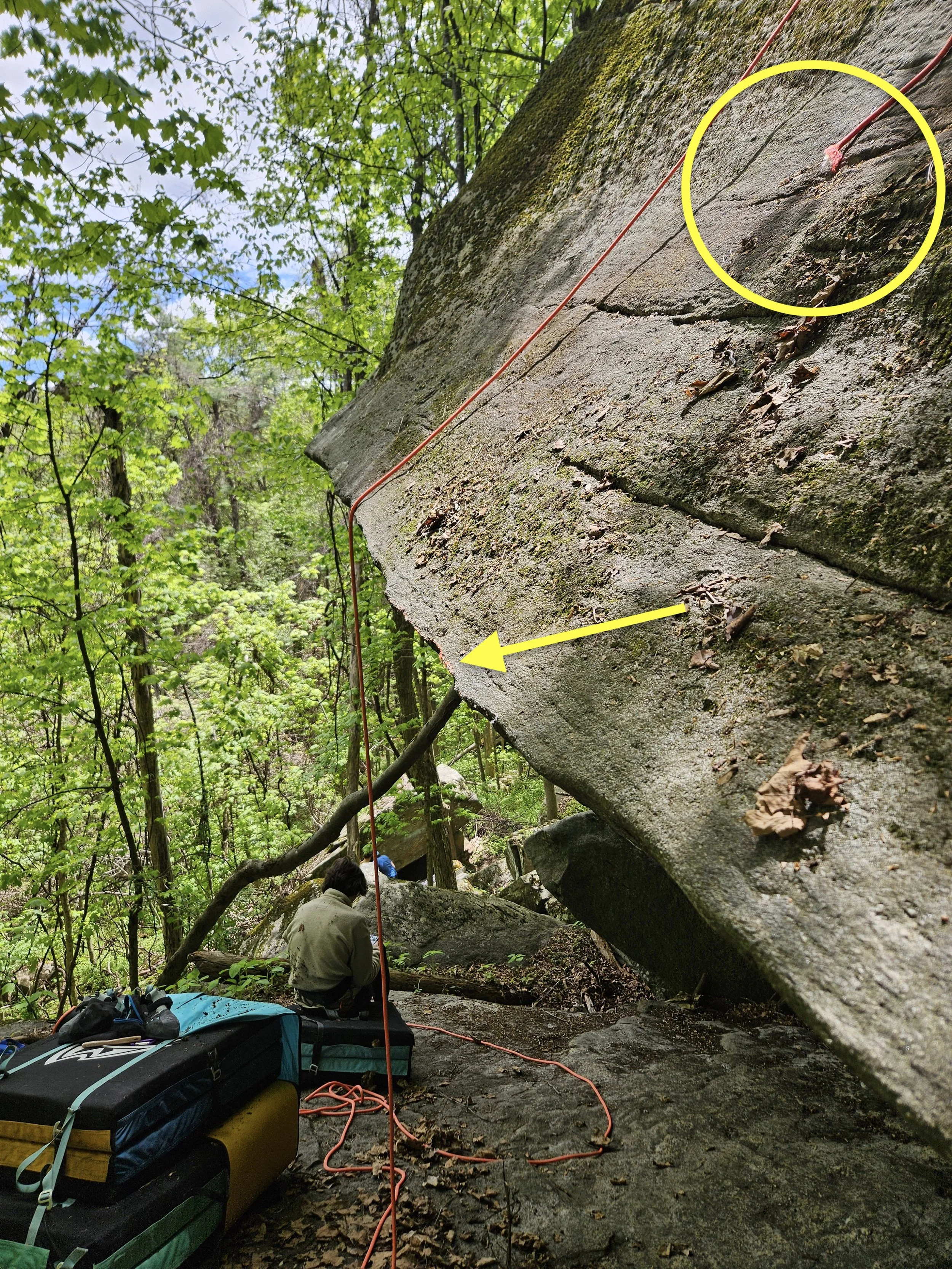
Here we can see the severed rope end circled in yellow. Also visible is the edge that cut the rope and some residual rope fuzz (yellow arrow). Photo by Tom Neary.


ANALYSIS

It’s never a good idea to run a rope, especially a dynamic rope, over an acute edge. While these climbers felt that the lip was not extremely sharp, they did not account for the motion of the sliding rope. On occasion, a climber might fall or lower over a sharp edge, but the force is not often concentrated on the isolated radius of a loaded rope. In this case, the side-to-side motion acted like a saw blade. 

There have been several fatalities when a tensioned rope, often with a climber jumaring on one end, was severed over an edge. By way of experiment, one can saw through a tensioned rope across the edge of a brick (a mere 90-degree angle) in less than a minute. 

Just like runnering, avoiding a cut rope takes a keen eye and the ability to predict where nylon might contact an edge or rough spot. When in doubt, use a rope sheath/rope protector or improvise with a T-shirt, jacket, or pack. Athletic tape can be used, if needed, to hold the edge guard in place.

(Source: Tom Neary and the Editors.)


Video Analysis

Pete and Jason are back to explain the consequences of a rope running unprotected over an edge, and provide some tips on how to avoid injuring your rope and yourself.

*This is a recreation of the accident. No climbers were harmed in the making of this video, only one rope.

Credits:
Pete Takeda, Editor of Accidents in North American Climbing; IFMGA/AMGA Guide Jason Antin; Producers: Shane Johnson and Sierra McGivney; Videographer: Foster Denney; Editor: Sierra McGivney; Location: Tunnel 1 Boulders, Clear Creek Canyon, Golden, CO


Photo by AAC staff Foster Denney.

An Interview with ANAC Editor Pete Takeda

In the recent edition of the AAC’s Guidebook, Pete Takeda sits down to give us the details of the intricate work behind Accidents in North American Climbing. The interview walks us through the process of making the book, the history of the publication, and the challenges facing this impactful publication.

“I’ve been a reader of ANAC since I started climbing. I never imagined I’d become the editor but here I am, five years into the job and working with a great team at the AAC,” says Pete. Read the interview in Guidebook XVII.


The Prescription is Supported By:


Sign Up for AAC Emails

USA Ice Climbing Forms as an Independent Organization

USA Ice Climbing (USAIC) and the American Alpine Club (AAC) proudly announce that USAIC has become an independent organization and is moving toward 501(c)(3) nonprofit status. This milestone establishes USAIC as the official organization representing competitive ice climbing in the United States, supporting athletes at the national level and on the international World Cup circuit, as the sport gains global momentum and is under consideration for inclusion in the French 2030 Winter Olympics.

The formation of USAIC as an independent nonprofit marks a major step in the evolution of competitive ice climbing, creating a dedicated platform to grow the sport, elevate elite athletes, and strengthen pathways from grassroots participation to international competition. Similarly, USA Skimo (Ski Mountaineering), which also shared strong roots with the AAC, debuted as the only new sport at the 2026 Milan Cortina Winter Olympics.

USAIC was recently approved as an Associate Member of the International Climbing and Mountaineering Federation (UIAA), a significant achievement supported by the American Alpine Club, which serves as the United States’ National Federation Member to the UIAA. This recognition further reinforces USAIC’s role on the global stage and its commitment to international collaboration and excellence.

For more information, please contact USAIC at www.usaiceclimbing.org.

Founded in 1902, the American Alpine Club is a 501(c)(3) nonprofit organization dedicated to advancing knowledge, inspiration, and advocacy for climbers. Guided by a shared passion for climbing, the AAC delivers world-renowned resources that support and inspire the climbing community.


Stories from USA Ice Climbing


Sign Up for AAC Emails