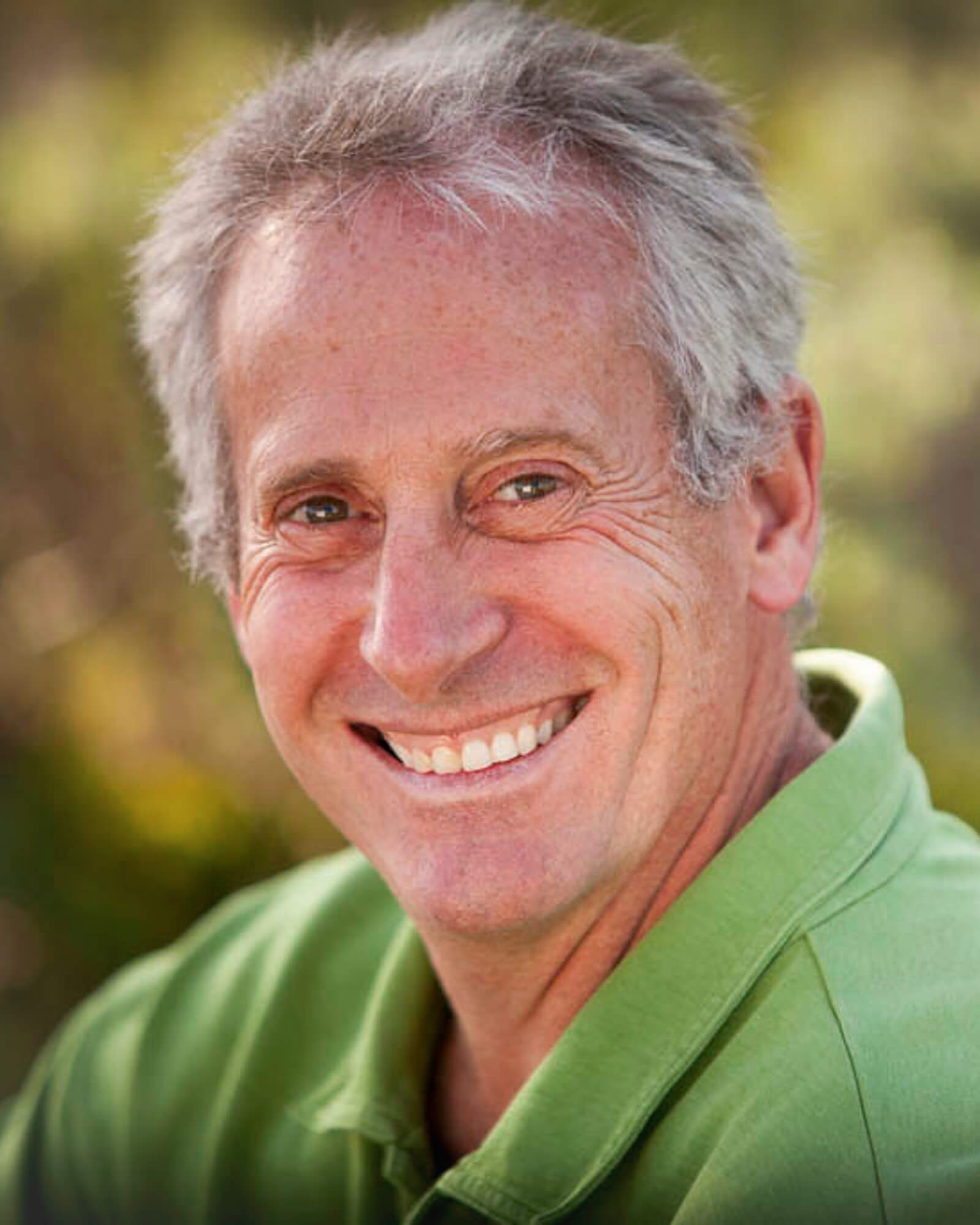
An Interview with ANAC Editor Pete Takeda

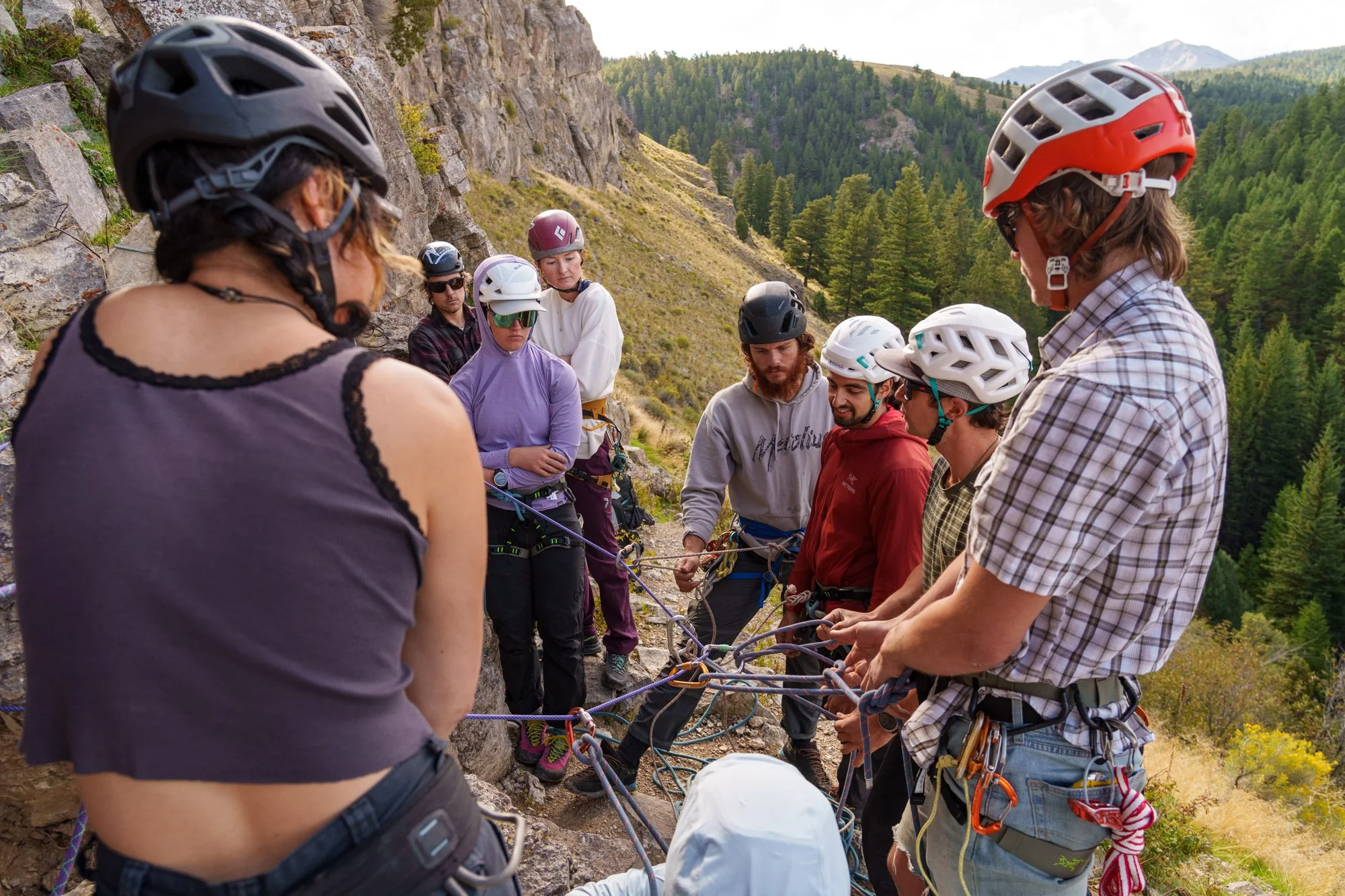
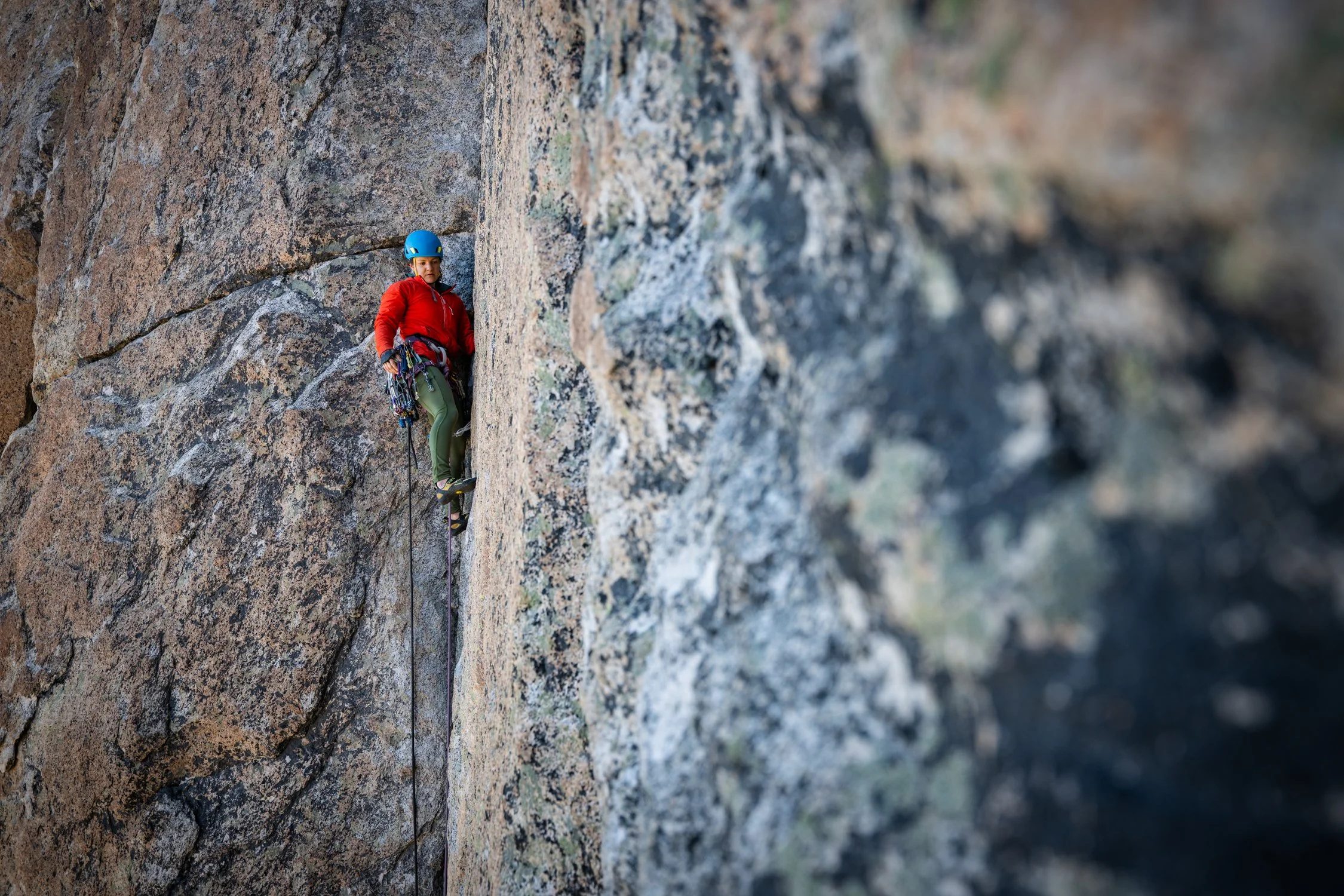
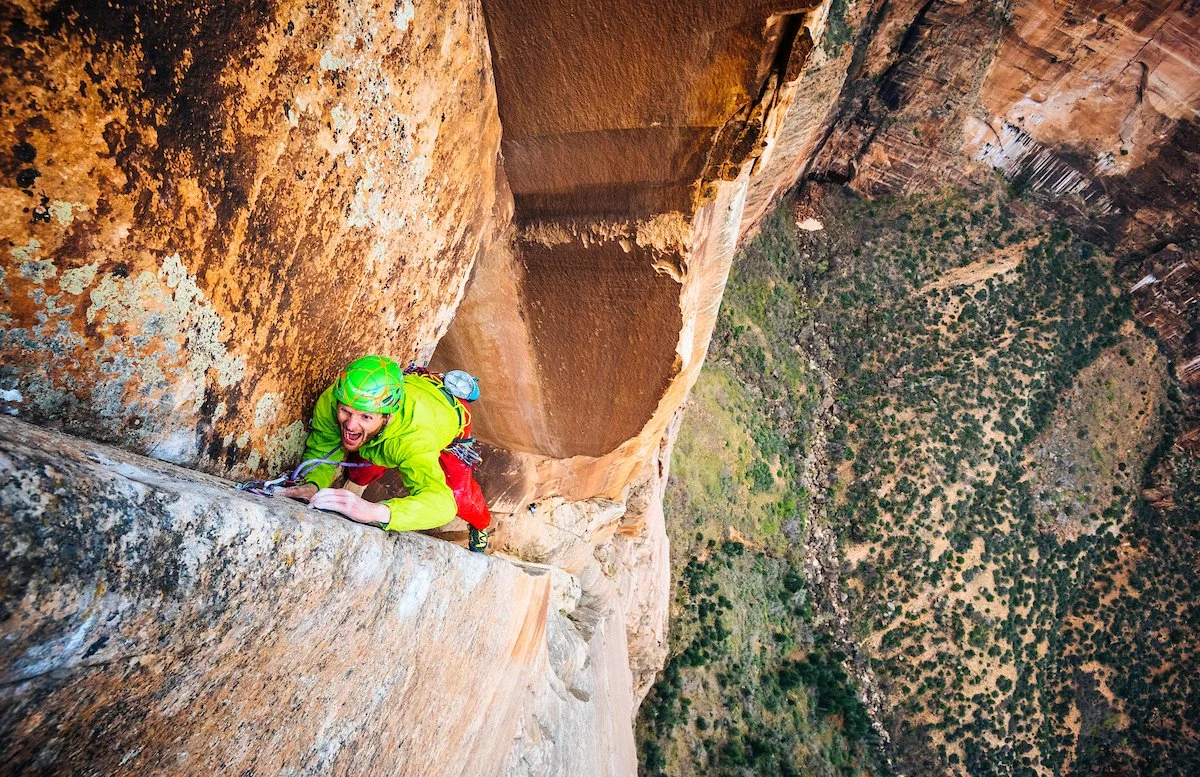
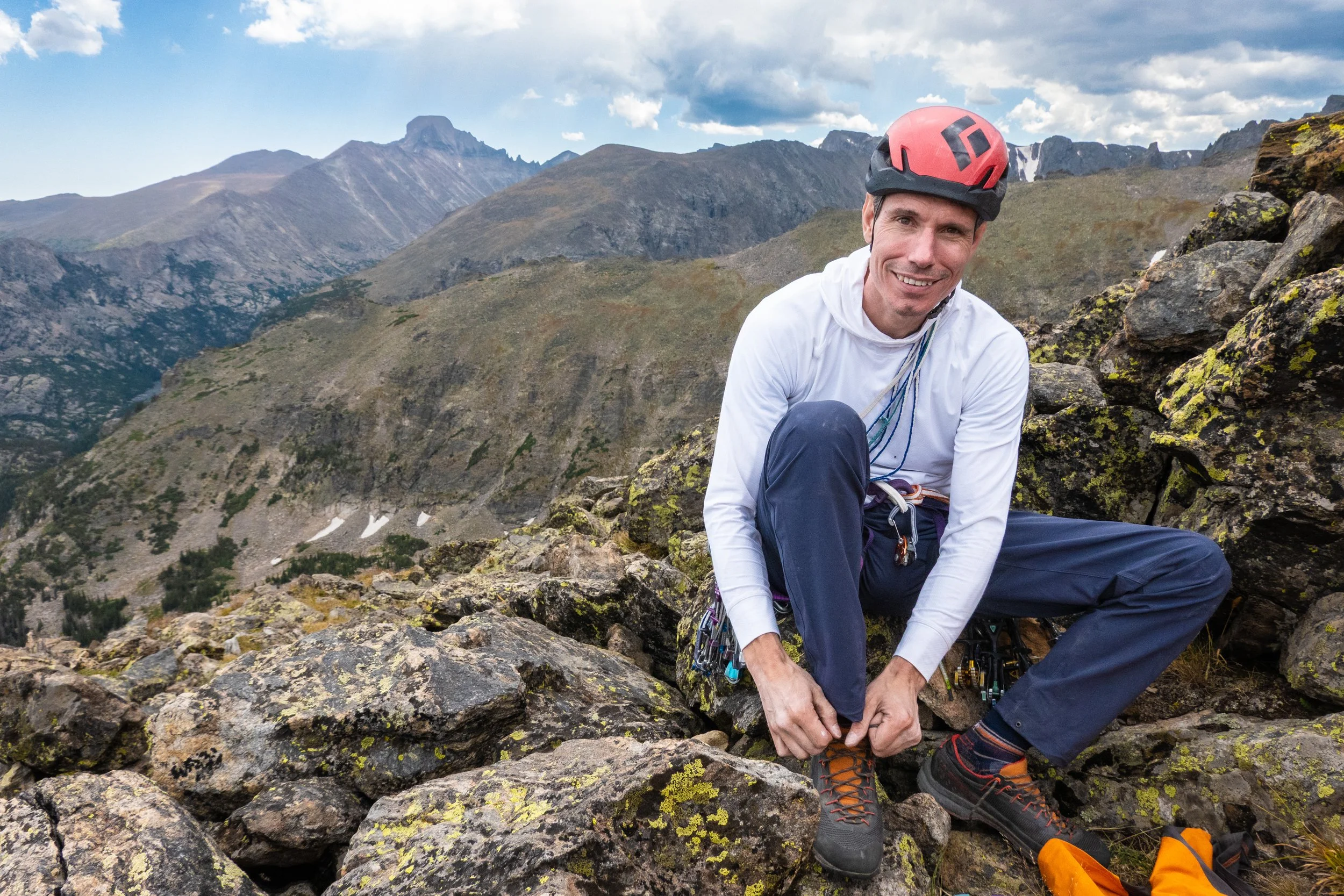
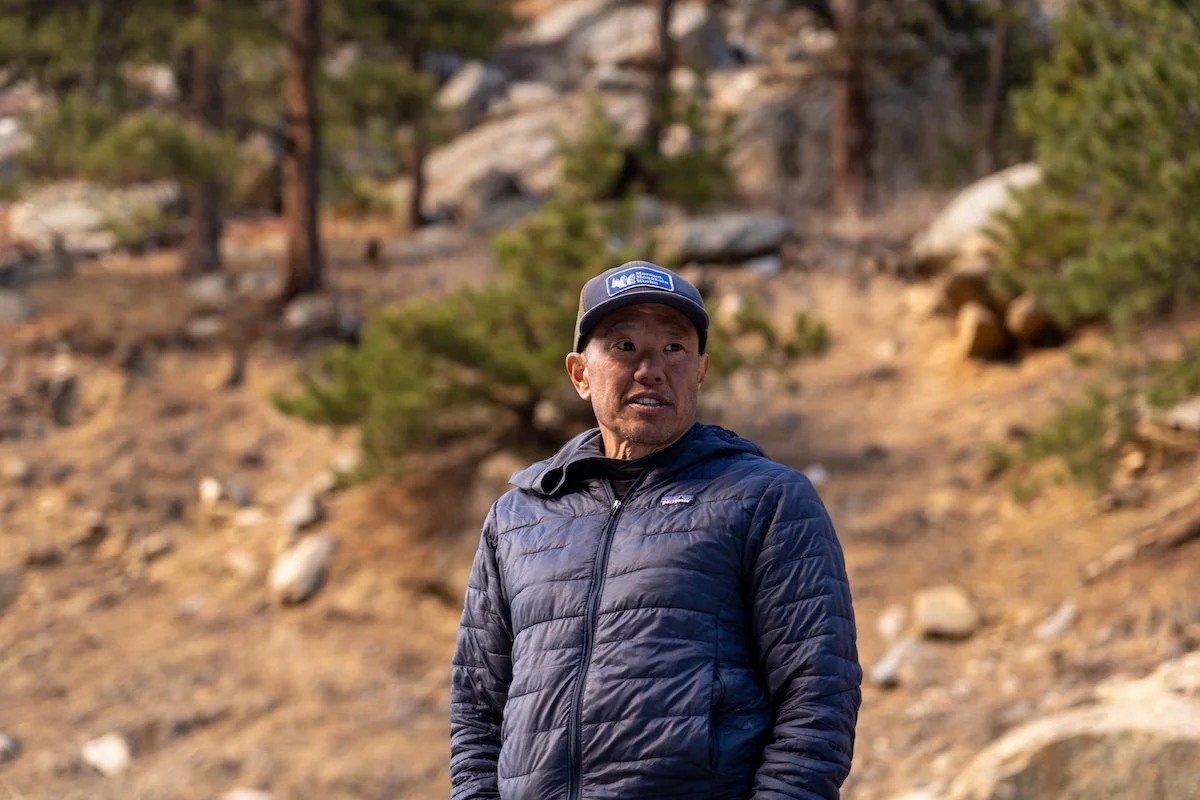
ANAC Editor Pete Takeda on set for a Prescription shoot in Boulder Canyon, Colorado. Photo by AAC member Foster Denney.

Originally published in Guidebook XVII.
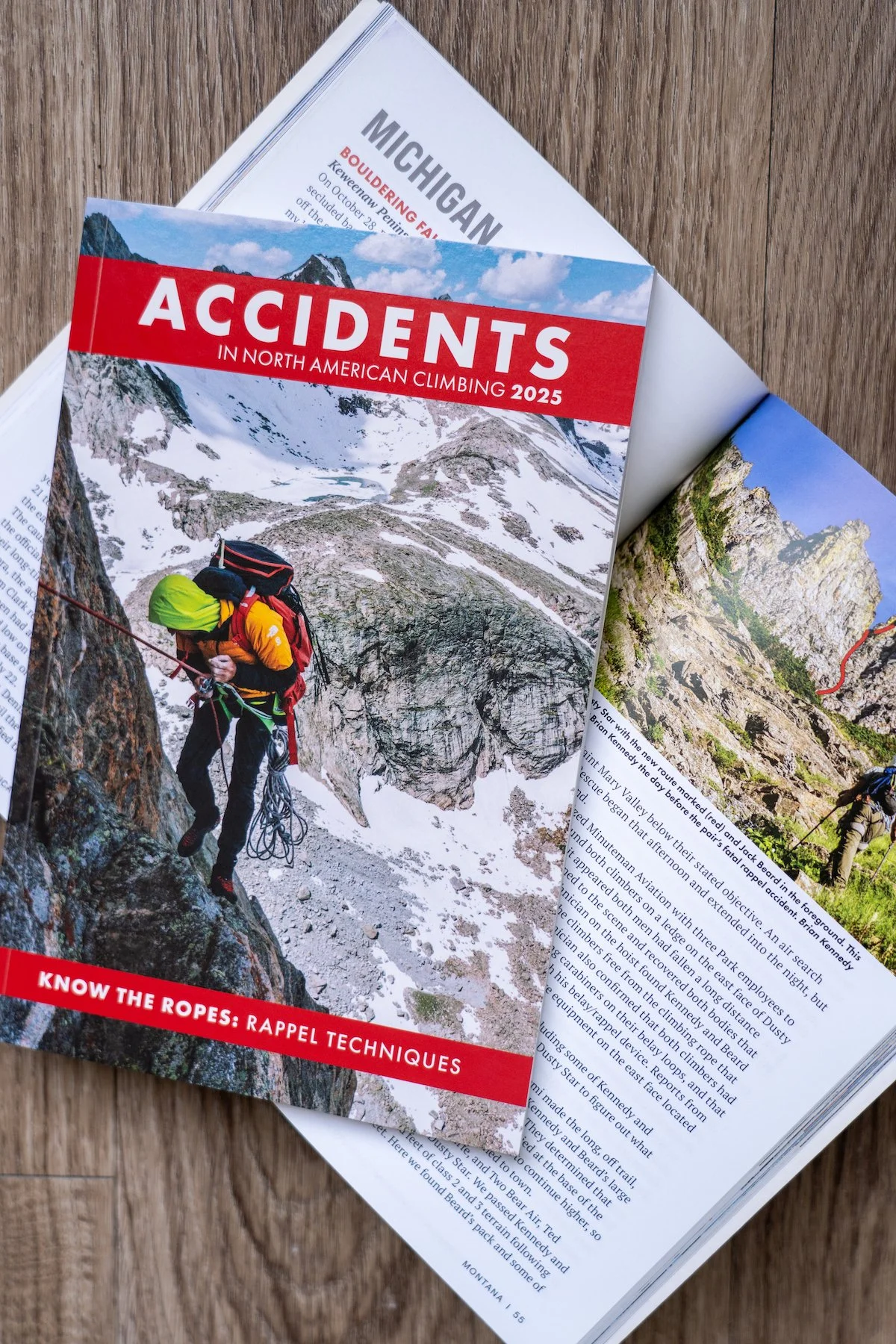
Photo by AAC member Foster Denney.

AAC: Describe the scope of the work that goes into making Accidents in North American Climbing [ANAC].

Pete Takeda: The scope and the type of coverage we do have expanded over the years. It’s not just a print publication anymore, where we analyze accidents from across the continent. It’s also the monthly email, called The Prescription, that delves into one of the accidents from that year’s book, repackages it, and adds related resources. Now we’ve also brought in the video component, with me as the on-camera personality, plus IFMGA/ AMGA guide Jason Antin and how he recommends folks avoid the accident we’re analyzing.

So as an editor, I have to change hats a bit. I kind of hate being the on-camera personality. But I see it has an impact, and so whatever I feel about it is irrelevant because it serves the community.

Another new exciting thing is working with Dr. Valerie Karr, a professor who studies human behavior across many complex environments, who came out of the blue and scanned and made searchable every physical copy of ANAC dating back to 1948. We can now respond to legitimate, official queries for data.

Dr. Karr has also brought forward a framework for examining human factors in accidents. In other words, how you feel, what you’re thinking, your background, what you’re doing and experiencing in the moment, and how those all can lead to accidents and also influence the outcome. For example: I was distracted, or I was thinking about my dog, or someone asked me a question. It’s just basic things like that every climber can relate to. You can read about some of her initial findings in this year’s book.

So, we’re no longer just addressing the mechanics of the accident: My carabiner came undone, or the rope was running over the edge, or I placed a cam and it blew. It goes beyond just these technical aspects.

AAC: What’s the history of ANAC?

Pete: First, it was simply a report from the AAC Safety Committee, starting in 1948. In 1952 they settled on calling the annual book Accidents in North American Mountaineering. The person who really evolved it into what it is today is Jed Williamson, a past president of the AAC and the editor emeritus on the masthead of ANAC. He steered the direction of ANAC, as a volunteer, for 30 or 40 years. He’s the one who established this current format and managed to source information from all these different reporting sources, like federal rangers, SAR teams, and individuals.

In 2016 the name changed to Accidents in North American Climbing, [to reflect the fact that] we as climbers really would not self-apply the term “mountaineer” to what we do 99 percent of the time.
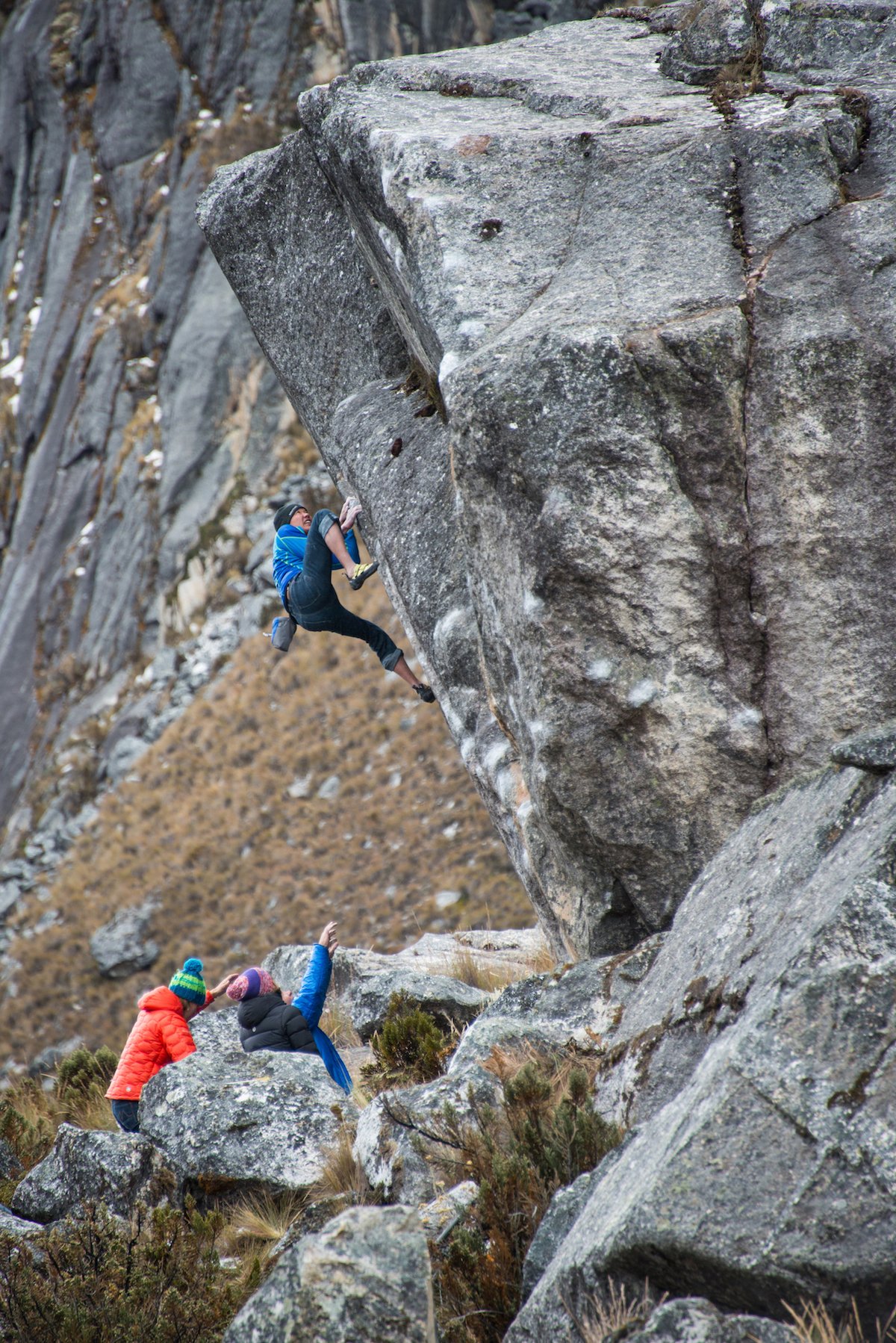
Pete Takeda highball bouldering in the Peruvian Andes. Photo provided by Pete Takeda Collection.

AAC: What’s a unique challenge you’ve faced while compiling and editing ANAC?

Pete: Figuring out how to accurately portray such technical concepts is always a challenge. You really have to partition your mindset, just like you do in the disciplines in climbing. Some things work in the print realm. Some things work in the digital realm. Some things work in video.

With a print publication, you’re combining imagery with graphics and words. Between those three things, you should be able to allow people to view the material, read the material, and come away with as comprehensive and as fact-checked a report as they can. And that’s something that really sets us apart: We actually check facts.

Of course, it is challenging to create a graphic that matches the nuances of how a knot came undone or how a carabiner unclipped, but we have excellent designers on our team. [Another] major hurdle I have is acquiring photos for every accident, either of the accident scene or showing the mechanics of the accident, the routes, the area, etc. People on Mountain Project have been very generous in donating their photos.

The purpose of all this material is to evoke questions. You can usually tell how successful you’ve been by the questions that people write on social platforms or via email. That’s [certainly] the case with the Prescription videos—and, if someone wants to dig more, they can always look in the book or get on the AAC website and look up the accident.

The ultimate thing is for people, regardless of experience level, to think about what they do in the light of understanding the mechanics and mindset that create any accident situation. I hope the analyses always get people thinking: What can I do that might encourage an accident? What do I do that might encourage me to be safer and more accountable to all those people around me? That’s definitely the culture in backcountry skiing, but I don’t see that same culture universally in climbing.

Once you bring humility to reading these reports, and self-analyze, you can start being accountable to safety for yourself and, more importantly, safety for others.

I guess that’s the challenge of the human race: Have some humility, get out of your f@#$ing head, and start f*&%ing thinking about the impact and effect you’re having on yourself and others. If everyone did that, you know, now that would be a utopian society—but that’s another story.

AAC: Is there an example accident report that was especially standout for you from the 2025 ANAC?

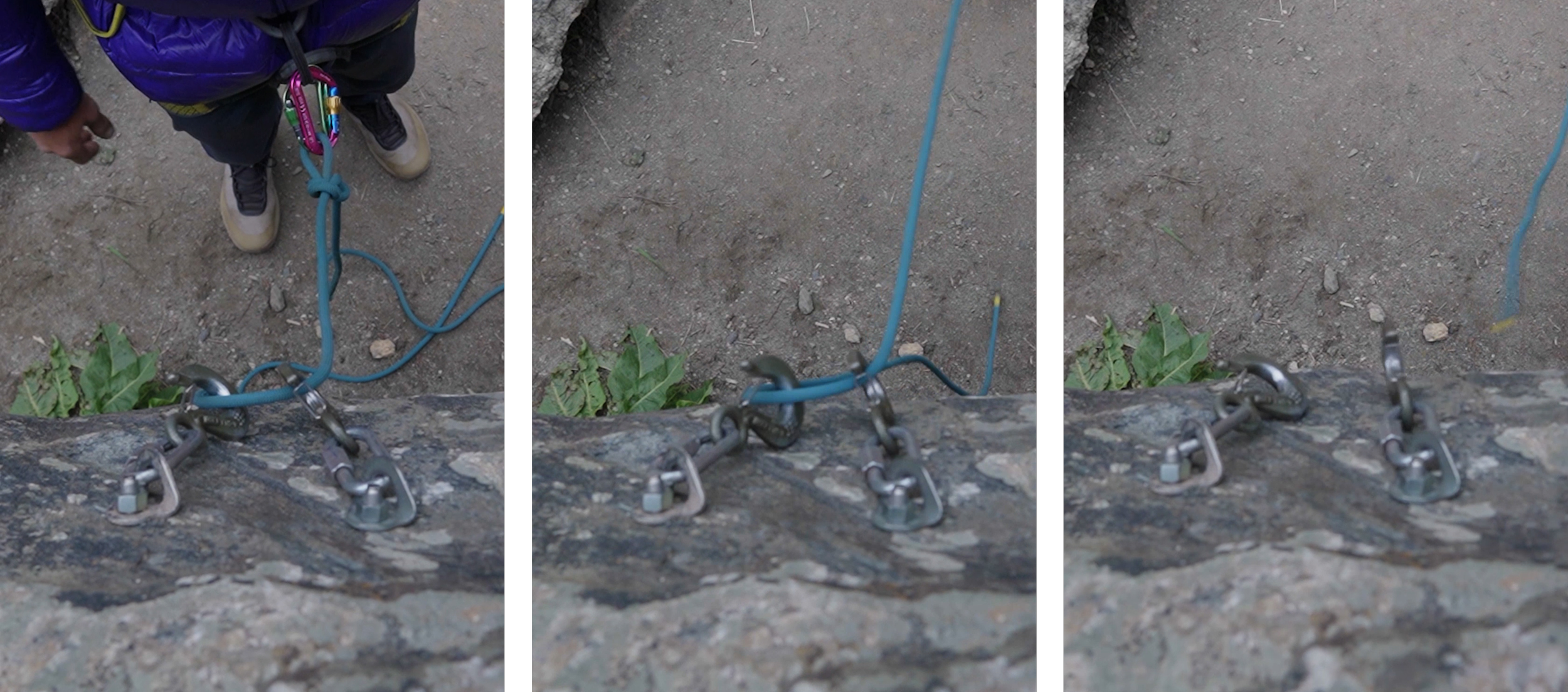
Pete: There was the anchor knot coming undone in Yosemite: The individual attempted to tie a BFK but instead tied a slipknot. And I can totally see that happening to anyone.

Another involved someone I knew—Robbi Mecus, who was a correspondent with ANAC from back East. She died in a fall [during a descent] in the Ruth Gorge, Alaska, and her partner survived despite critical injuries. That one got to me because there’s a person who really does everything right and is super aware of the hazards, yet still perishes.

I think the takeaway is that climbing is dangerous. It can be fun; it can be joyous; it can be an athletic thing where you share these moments with your friends—and it should be. But there are times when we have to remind ourselves that this is dangerous. There are things at stake.
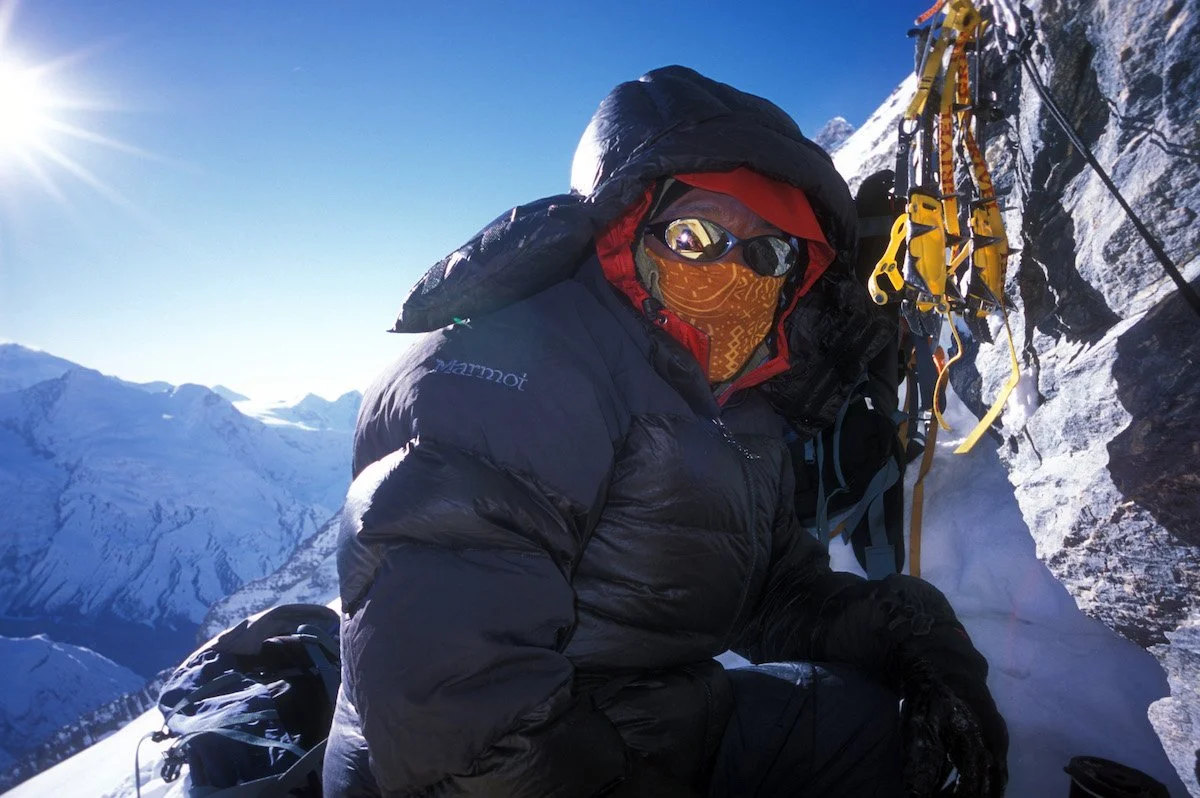
Pete Takeda on Nanda Devi, India. Photo provided by Pete Takeda Collection.

AAC: Any others?

Pete: One I found really, really interesting was a ground fall in Mission Gorge, San Diego. It’s really slick crack climbing on granite. These cracks often collect fine dust. Someone was leading a pitch and using hard aluminum Camalots—like, first-generation or second-generation ones that were 30 years old. And they were using super-unstable second-generation Metolius TCUs. This person had multiple pieces pull just by taking.

This climber is just doing their thing; nothing should go wrong. And suddenly all these pieces are blowing out. Apparently, the day after, someone suffered the same thing [on an adjacent climb].

It’s a combination of the dust and the crack, the slick rock, the hard, thin cams. You know, you might’ve done your hardest send in 1990 on this gear. [But now,] there’s no reason not to replace your gear. Because every so often something bad happens, like someone has a really worn Grigri and they partner up with someone who has one of those super-slick, ultra-skinny ropes. You know, there’s nothing wrong with this, but there’s also nothing right with it, especially when you lose control of the rope and your partner falls and hits the ground.

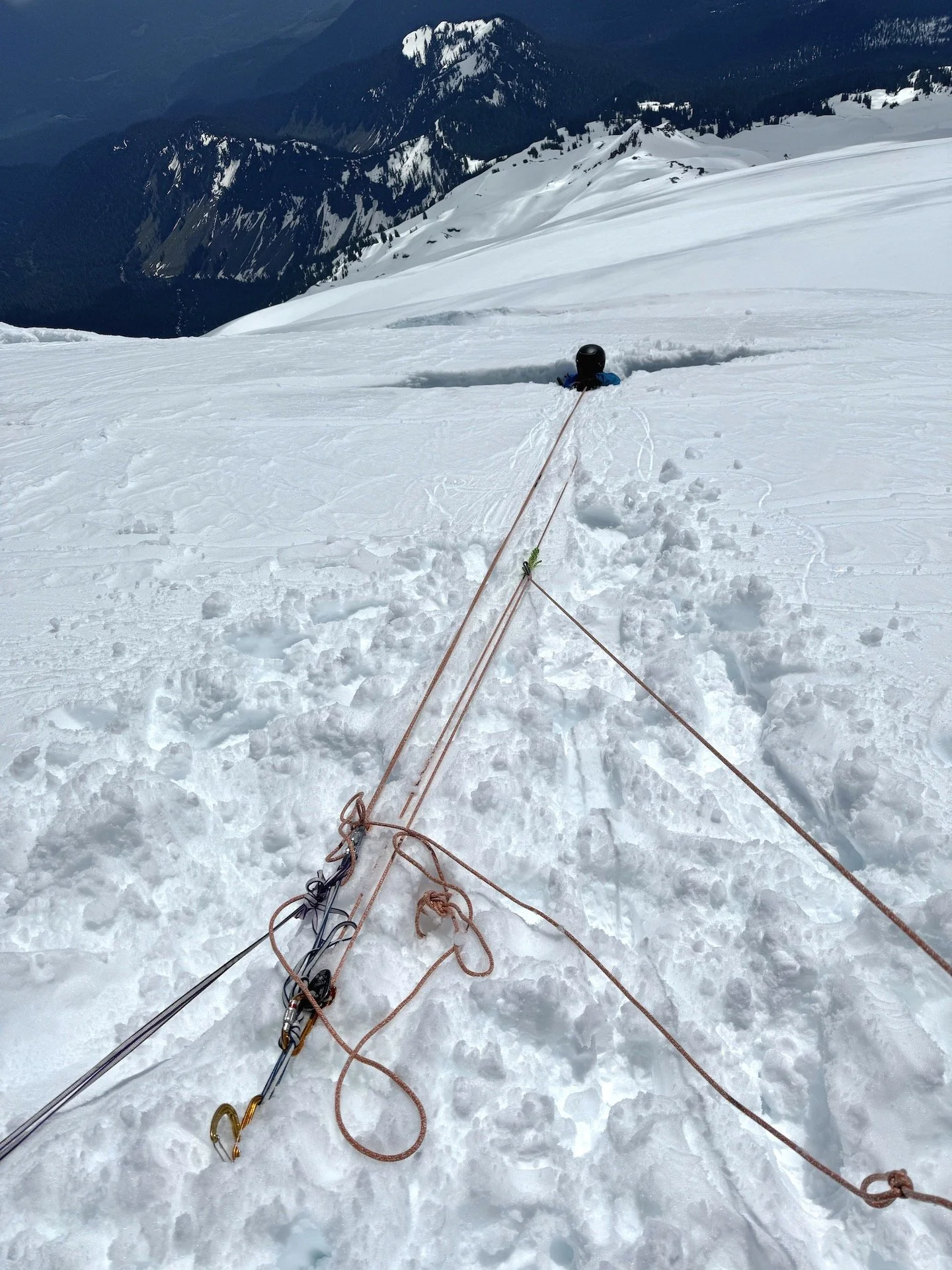
Finally, some people really pooh-poohed the reality of the knee-stuck-in-an-offwidth video we made. Sure enough, I got two accidents reported where that happened in 2025. And, for the 2026 book, and I kind of predicted this, but man, someone got stuck in an inversion offwidth. With that scenario, the clock is ticking, and you will die from hanging upside down from one knee, unable to move. The blood goes to your head; you suffocate. Stay tuned for that story in the 2026 book. [Editor’s Note: The climber survived!]

AAC: What parts of your specific climbing background inform your editorial vision?

Pete: The length and breadth of my climbing career is the single strength I have. I started as a boulderer, then we developed into top-ropers, and then we got into leading. Then we got into bolting. And then I moved to Yosemite and got into big-wall climbing—a lot of aid, speed ascents, so on. Then got into ice and mixed climbing; competed; got into pure ice; low-altitude alpinism. Then alpine rock, all that stuff, and then Himalayan alpinism and Alaskan alpinism.

So, along that path, I’ve either had the mishap, witnessed the mishap, had a close call, or nearly died in the same ways that people report. I understand the mindset. And I also understand, from having friends die or almost getting killed or being party to an accident, what it’s like being the partner involved.

I bring all that skill and experience into my tone and the way I treat people with whom I have a dialogue. I think that really informs things, because I’m really nonjudgmental. And you learn, like, Wow, I could do everything right; I could be minding my own business, and still get killed.

For longevity, we have to be taking what we know and giving it to other people without any thought of recompense. That’s the final stage in a climber’s evolution. At the same time, still burn your friends off and tick that next box. That’s all part of the game.

AAC: What have you learned about the emotional side of accidents from talking to so many accident witnesses and survivors?

Pete: Whenever there is an accident, especially a really serious one, we walk away as observers or participants with some degree of survival guilt. This is as old as time itself.

People often go straight to: How could I have prevented this? And right there is a mistake.

It was an accident. It was something that was unintentional. You don’t wake up in the morning and go: God, I really hope my climbing partner takes a big whipper today and breaks both legs. That would just make my day. I usually bring people back to that. Just think about what you were thinking the morning of the accident. That’s the truth of the intentions there. There’s always a presumption within humans that we can control things that we [can’t].

On a final note, I think the people who really walk away with a positive experience from accidents are the SAR folks who go in and do the job they’ve trained to do, or the volunteer rescue people—they get to practice their skill set and actually have a happy ending to the story when they save someone.


Sign Up for AAC Emails
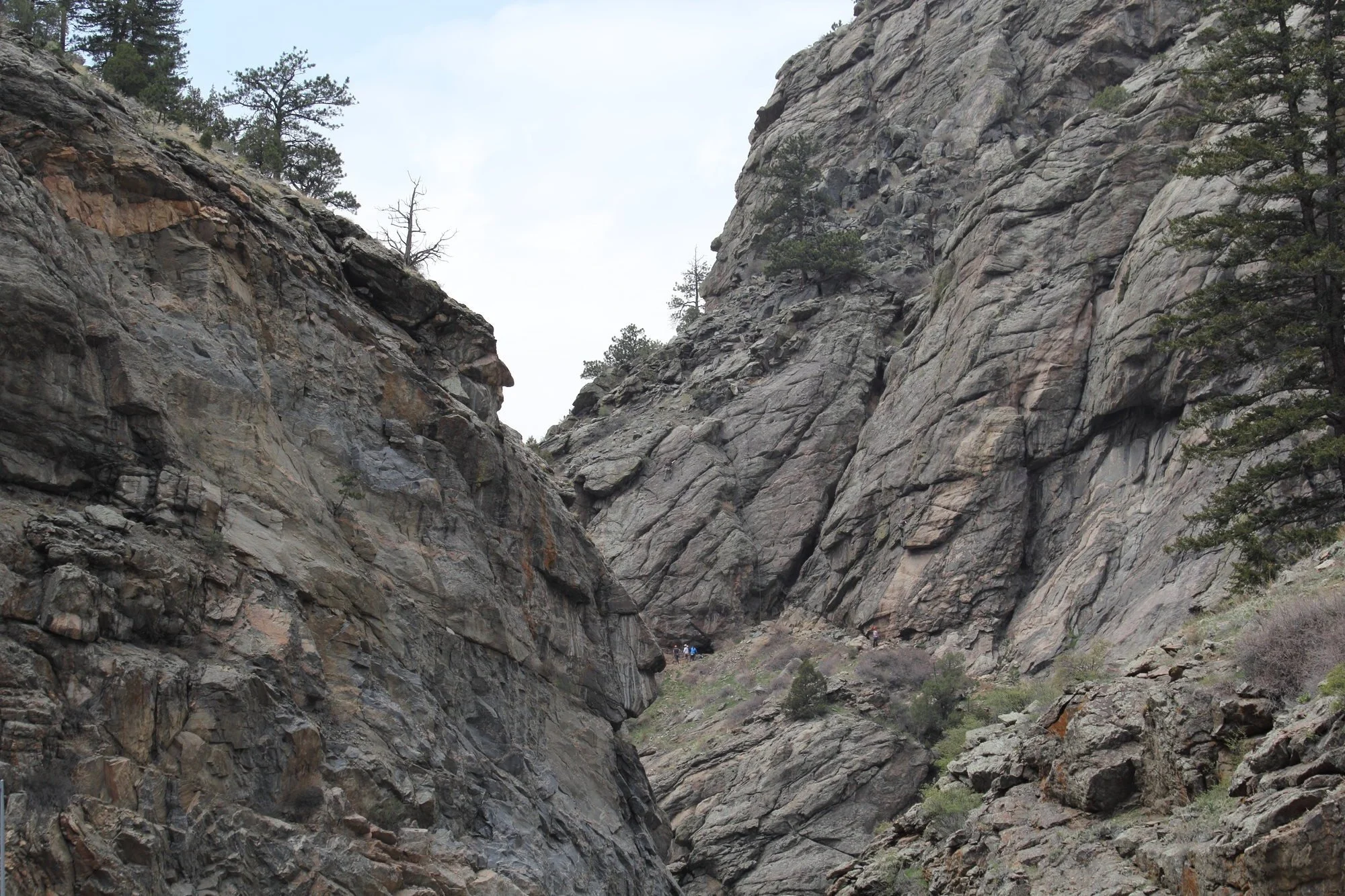

The Huayhuash Is Still Open

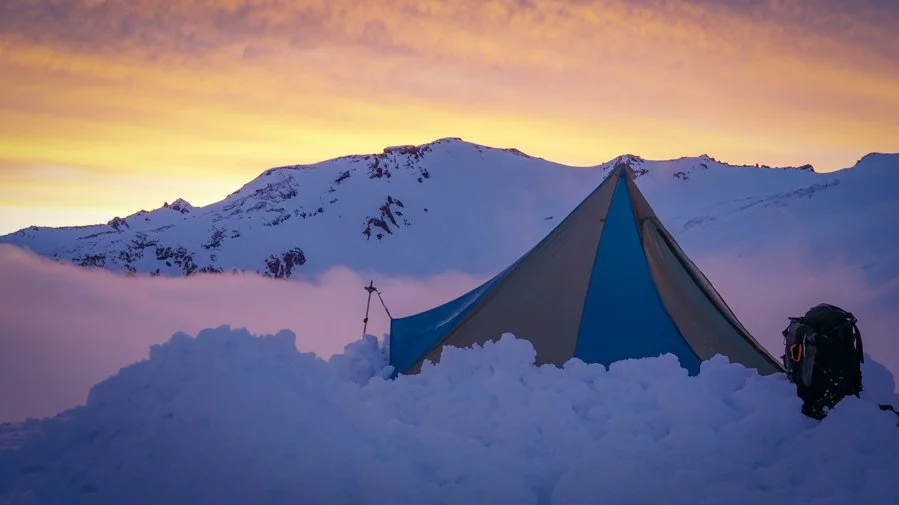
Eric Kanopkin quests to find a dry spot for his tent. Photo by AAC member Luca Raso.

A Rare Ascent of Jirishanca Chico—A Story from the Mountaineering Fellowship Fund Grant

By Luca Raso

Originally published in Guidebook XVII

The mountain’s scale, as seen through my own eyes, terrified me. Film and photographs, a 60-year-old trip report, and even the topo sketches I had stared at for hours before arriving—none of them captured the size, or the exposure, or the weight of it. Lying in its eastern valley, listening to the static hiss of rain against nylon, I couldn’t sleep. I had been catfished by my own dreams. Any confidence I had built up in the Cordillera Blanca now felt suspect. Bootpacks and snow anchors set in place by mountain guides, lively refugios and high camps, and broader terrain that was mostly walkable; these were all crutches that fed into my delusion, now taken away by just one close glimpse at Jirishanca.

On June 2, 2025, after a few hours of tossing and turning in my sleeping bag, I set off with my partner Eric Kanopkin to climb Jirishanca Chico, a 5,400-meter peak in the Cordillera Huayhuash range of Peru. The grassy hills that rolled up to Niñacocha, the meltwater of the Rondoy Glacier, were flooded with rainwater and cow manure. Our double boots squished loudly as we went up the valley, waking and startling cattle as we passed. We were indiscreet spies under the cover of midnight’s darkness, clambering across no-man’s-land toward what we assumed was our acclimatization objective.

The first time I had seen the Huayhuash was back in 2024, from the popular hilltop sport climbing crag of Hatun Machay. I was there with Maxwell Hodges, a friend who helped introduce me to the climbing life—as well as to the Cordillera Blanca. That day, we were sunning ourselves on rock, a happy respite from slogging up the Blanca’s sloping glaciers. “Why don’t we head there?” I had asked him, pointing toward the jagged, snowcapped massif of the Huayhuash.

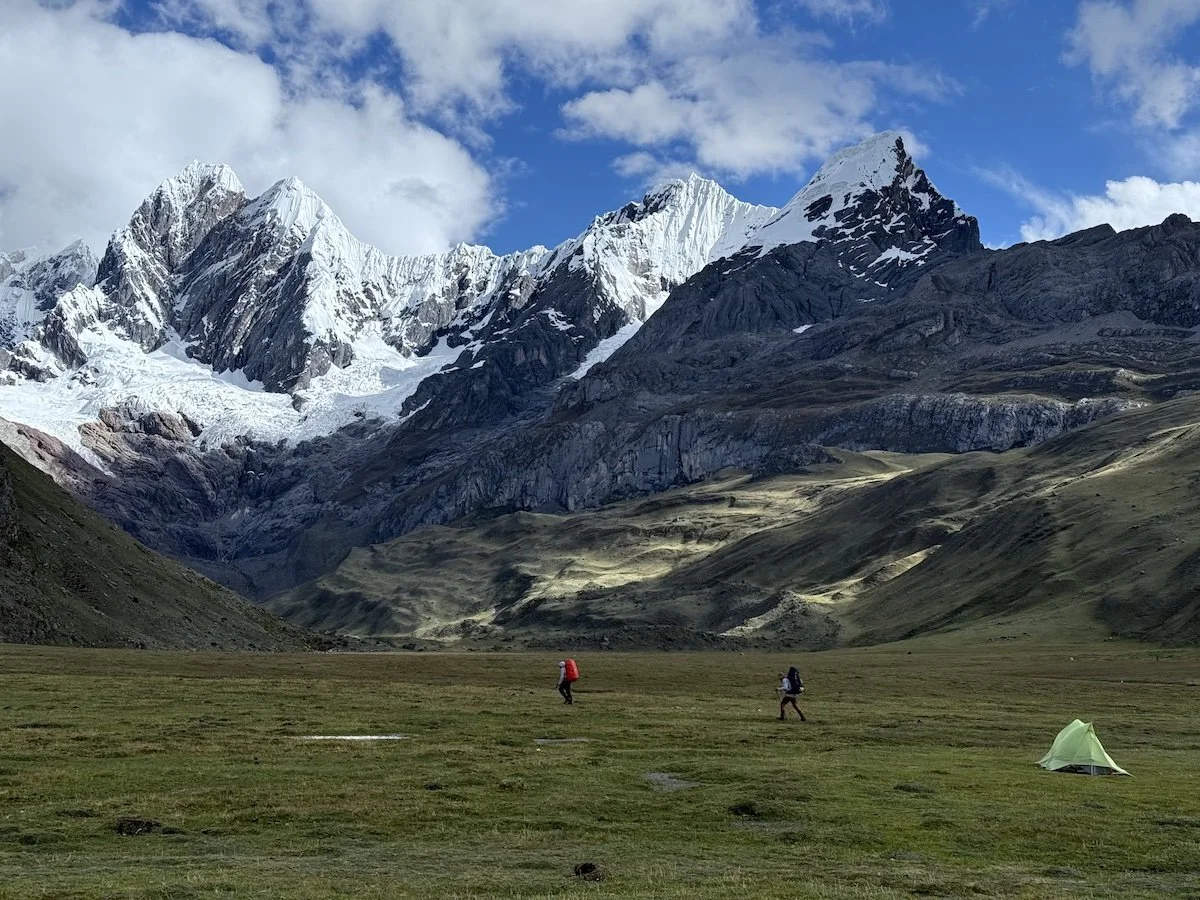
Trekking into the Mitococha Valley with views of (left to right) Jirishanca Chico, Jirishanca’s twin peaks, Rondoy, and Ninashanca. Photo by AAC member Luca Raso.

All we knew then of that place was the famous climbing accident recounted in Joe Simpson’s Touching the Void. While descending a 6,000-meter peak called Siula Grande in 1985, Simpson broke his leg and fell into a crevasse, which ultimately resulted in one of the most epic survival stories in mountaineering. Max just laughed. We weren’t ready. He was right; we could barely lead the bolted 5.10s at Hatun without our legs shaking.

Throughout a season of climbing the high peaks of the Cordillera Blanca and another year of climbing in Colorado, I could not stop thinking about the Huayhuash. Max and I climbed tourist peaks like Chopicalqui, Tocllaraju, and Pisco, and since we were always surrounded by other climbers and guides from all over the world, it was easy enough to mimic the common patterns of ascension even on our dirtbag budget. We followed the well-worn paths made by pack mules and beater taxis. Throughout our adventures, I kept my head up to admire the condors, untethered by the ground’s limits, as we were.

Luca and Eric find a mule at the Quartelhain trailhead of the Cordillera Blanca after driving through herds of cattle. Photo by AAC member Luca Raso.

The Huayhuash represented something different to me. Unlike the Blanca, it hosts no regular climbing activity; it’s harder to reach and has a higher concentration of more technical peaks. The number of climbers coming into the range each year can be counted on one hand. A significant reason for that lies in its history. The Huayhuash was closed off to climbing in the late 1980s into the ‘90s, as a result of the violent hegemony of a Maoist terrorist group called El Sendero Luminoso. Foreign climbers were turned away from the remote area for years, and the Huayhuash faded off of ticklists. Even after its reopening, the Huayhuash brought in limited climbing activity, while the Blanca, just hours to its north, expanded in popularity.

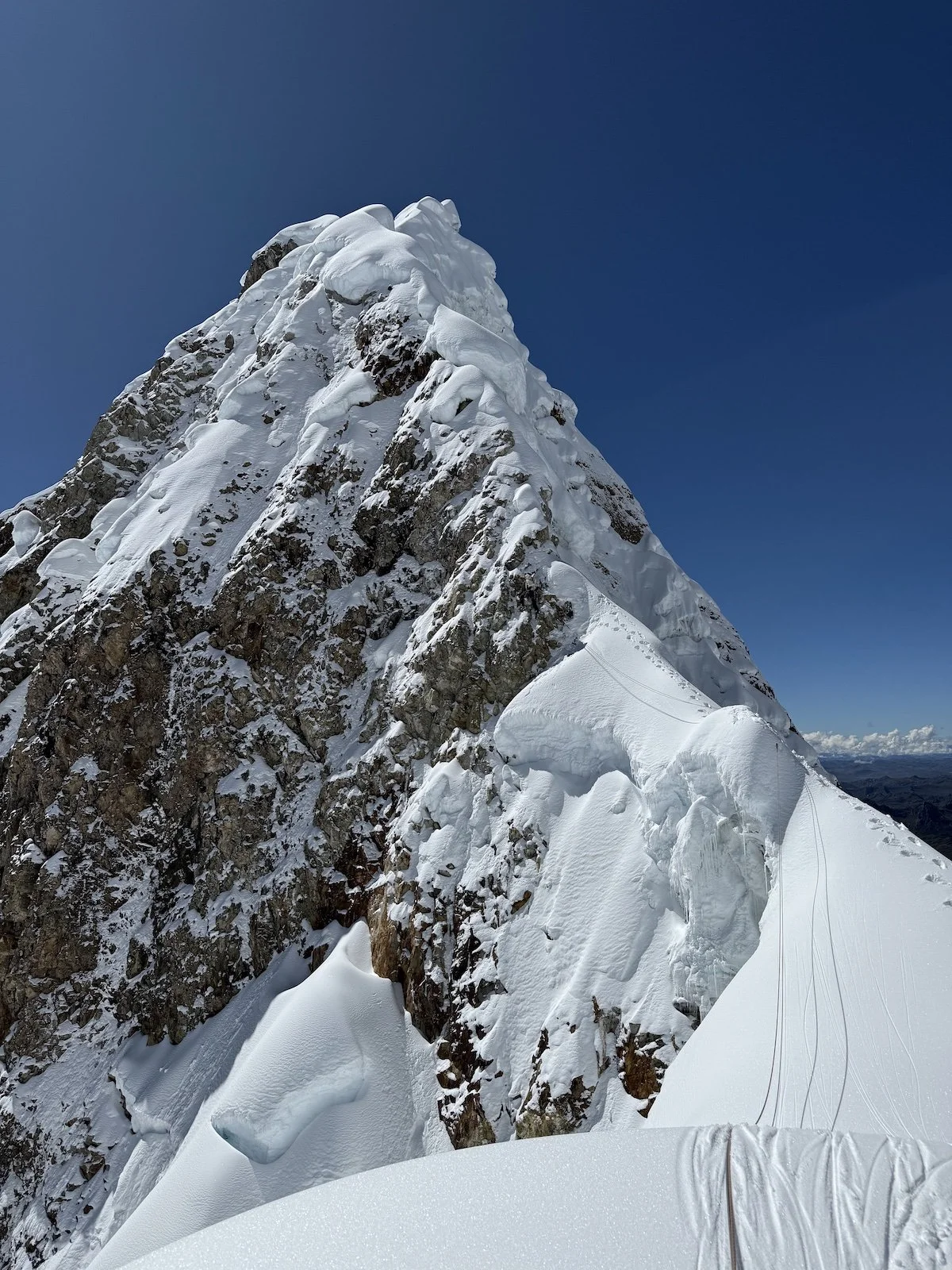
Eric Kanopkin traverses around one of the snow mushrooms on the west ridge of Jirishanca Chico before leading a pitch up an ice runnel. Photo by AAC member Luca Raso.

After leaving Peru in 2024, I was still drawn to the Huayhuash, but not just for the austere beauty of its mushroom-capped ridges and dramatic summit pinnacles. The mystique that shrouded the range, the lingering stigma among climbers, was what really captivated me. It was simply bizarre to me that two ranges, the Huayhuash and the Blanca, so close and similar in geography, could be perceived so differently by climbers. Stoked, ambitious, and just out of college, I was determined to go find out for myself.


Once the sun rose, warm colors illuminated a world of winter above us. Eric and I were finally on the Rondoy Glacier, heading toward Chico’s northeast face. To climber’s right, Jirishanca’s north ridge was a sweeping ramp of snow and ice into the golden and pink heavens. That was the ultimate route that we were preparing for on Chico, a goal that ironically seemed farther out of reach the closer we got to it. I was worried that I was already in over my head, but my fear was dissipating from the restless night before. Dwarfed by the apu, the Quechua’s mountain gods, I was momentarily comforted by the extreme beauty around me. In that light, I was inside a Gothic cathedral on a Sunday morning, soothed by the voices of the choir. It took me a while to notice the serac that loomed over our path on the face above. Anxiety returned. “Are you worried about that?” I asked Eric.

He paused to catch his breath and looked at it. “Let’s just keep moving.”

To gain the west ridge, we simul-soloed a couple of easy mixed steps and then steep snow, around 100 meters or so. Once we crested it, we could see that much of the ridge proper was a corniced knife-edge, narrow and even steeper on its southern side. Between us and the summit stood a kilometer of snow mushrooms.

At first, the ridge looked impassable. The only other two reported attempts of this exact ridgeline (besides its first ascent) declared it to be too dangerous. Still early in the morning, we decided to give it a shot. We moved back down from the ridgeline to go around the serac, eventually climbing through it via a narrow chute of ice. This was nothing in comparison to our next obstacle. Across a football field of flat ridge, a 30-meter step of snow-covered rock stood in our way. Shattered limestone choss frosted with dollops of sugar snow obscured any obvious line.

Eric Kanopkin leads the chossy mixed crux pitch on Jirishanca Chico’s west ridge. Photo by AAC member Luca Raso.

Protection was doubtful, the climbing was steep, and the snow on top was too shallow for any pickets. Demoralized, I looked to Eric.

Eric, ten years older than me, was one of my first ice climbing partners back in Colorado. The two of us have gotten in over our heads together several times—trauma-bonding over epics like the 29 hours it took us to climb Kiener’s Route on Longs Peak in the dead of winter. Married, with a steady job and a house, Eric had his sh*t together, and he was easy to trust. When I asked him to come to Peru for his first trip, his eyes lit up. Our first week and a half climbing together in Peru had its highs and lows. We went to the Ishinca Valley and easily climbed Urus Este as our first acclimatization climb, though a bad empanada resulted in some gastrointestinal difficulty. On the North Face of Ranrapalca, I had my turn. Halfway up the route, I vomited all over the ropes and soiled my new M10 pants, which I blamed mostly on altitude sickness.

Base camp in the Huayhuash had been anticlimactic. Days of rain isolated us in our separate tents, and despite the surprising numbers of trekkers and their entourages around us, a claustrophobic loneliness set in. Eric had mentioned that his wife was not happy with his decision to go on this trip without her, and he was preoccupied with the aftermath via his inReach. I spent a lot of time alone in my tent, listening to the soft patter of rain and the thundering conversation and laughter emanating from the trekkers’ tents across the valley. It was a different feeling of remoteness than I’d expected from the Huayhuash.


Luca Raso is very tired and stressed out on Jirishanca Chico’s summit mushroom. Photo by AAC member Eric Kanopkin.

“I think I can do it,” Eric said.

I looked down at our anchor, two pickets and an ice tool tied together. “Well, if that blows, I will try to jump off the other side of the ridge.”

Literally on the edge of my snow seat, I watched Eric lead the rope up and over the mixed step. At every placement of piton and Camalot, I shouted forced stoke at him. He showed stubborn confidence in every hook of his tool, standing on his frontpoints without any tremor in his legs. Occasionally, he cleaned chunks of rock into the abyss, but it never startled him. He was all in.

Once he swam up the next mushroom of sugar snow and built another picket anchor, he groaned with relief. “Hell yeah!” I yelled back. Eventually, the rope went tight, and I followed in his wake. I didn’t say anything when his gear came out with eerie ease, even as each pry of my ice tool to clean the pitons fractured more heaps of rock off the ridge.

From there, we swung leads across knife-edges and snow mushrooms for another half a kilometer to the summit. Often, it was hard to tell whether there was any mountain beneath our feet. It became clear why most climbers had thought the ridge to be too dangerous. The snow mushrooms’ physical structures seemed impossible: How could deep powder pile up so steeply without collapse? A few weeks after our ascent, Alexander Huber, Dani Arnold, and Simon Gietl bailed from Jirishanca’s east ridge, just across the saddle from our route, opting to end their route at the east summit, instead. It’s hard to say if conditions were the same, but there is a chance that we were braver (or more stupid) than the professional alpinists.

Eric let me have the final pitch. Exhausted from breaststroking my tools and kicking my feet into nothing, I had to catch my breath before belting out a loud “Whoo!” on Jirishanca Chico’s summit. From there, I finally appreciated the panorama of Siula Grande, Yerupajá, and Jirishanca around me, a momentary distraction from the stress of the past seven or so hours. Eric joined moments later, and we rejoiced in the reunion.

As we downclimbed the ridge back to the glacier, I thought about sirens. In The Odyssey, Ulysses sails his crew through treacherous waters past these alluring creatures and their infamous, transfixing siren song. While his sailors plug their ears to avoid the danger of drowning themselves for this beauty, Ulysses commands them to tie him to the mast of the ship. While most rational people would decide to cover their ears, Ulysses risked his sanity in order to experience something truly beautiful.

Perhaps Eric and I, tethered to each other, heard the Huayhuash’s siren song. On that delicate, corniced ridgeline, we experienced a new level of earthly beauty, unparalleled by any other experiences I have had in the mountains. But its fatal temptations also frightened me to my core. We were already talking about bailing on Jirishanca proper as we descended its smaller sibling. We had escaped the treacherous ridge alive, and it was hard to fathom another one on an even larger mountain at 6000 meters. We were satisfied enough with our time on Chico, a probable second known ascent of the Northeast Face. But as we left the Huayhuash and went home (where Eric patched things up with his wife), the feeling of failure crept into my mind. It felt as if we had gotten away with something, just barely escaping the lethal lure of the mountain.

With time and distance, this ascent has become a scrying glass. I had been driven by curiosity, a quiet itch to see if these seldom-climbed peaks could be a place of exploration and self-discovery for someone like me. I found the Huayhuash to be a place of alluring, dangerous beauty, but not without significant challenge. Yet my experiences there have ultimately reinforced my original curiosity with the range. As a young climber who quite frequently gets in over his head in climbing, the Huayhuash was a lesson in restraint. I came to the range with arrogant ambitions to climb Jirishanca, and its smaller sibling humbled me. While I false-started on the main objective for that trip, I am only more excited to return as a more experienced climber and rediscover these peaks with trusted partners like Eric—to hold me to the mast.


Sign Up for AAC Emails


Denali Rescue, 1979: The Untold Full Story

In this episode, we have climbing legends Jamie Logan, Jack Tackle, and Ken Currens on the podcast to retell the story of an accident and rescue on Denali from 1979. Jack Tackle and Ken Currens were climbing partners with a number of big mountains and first ascents under their belt, and in 1979, it was their first trip to the Alaska Range.

They had decided to attempt the unclimbed southeast face of Denali (also known as Mount McKinely). This face would later become known as the Isis Face. In the middle of the climb, Ken, on lead, took a 250 ft fall when snow gave way beneath him. Once the rope came taught, he was hanging in mid air over a cliff, his femur badly broken. The rescue that followed is a story for the ages.

We dive into the mechanics of the accident, what Jack Tackle had to do to get help, and how Jamie Logan and Mugs Stump—two of the most impressive alpinists of the time—were critical in helping save Ken. She and Mugs are especially known for the first ascent of the Emperor Face the year before, and though Mugs has passed, Jamie was able to fill us in on their experience of the rescue.

In this episode, these climbing legends put together, in real time, the pieces of this story (that they all remember a tad bit differently)—47 years later.


Safer Than Socks in Your Hat

George Hurley and Layton Kor on the Titan, 1962. Photo by Huntley Ingalls.

A History of Climbing Helmets and an Updated UIAA Standard

By AAC UIAA Representative Stephen Gladieux, with research support from Denis Pivot, Lionel Kiener, and Alain Maurice

Translations of Chevalier and Bonatti by Stephen Gladieux

Originally Published in Guidebook XVII


Less than a thousand feet from the summit, on the north face of the Eiger, Gaston Rébuffat hooked a finger into a piton, left behind from a previous ascent. The night before, as they bivvied, Rébuffat was surprised to find himself sleepless, with a sense of bad omens. “The stars seemed so near that you could touch them, and the Milky Way shone with sinister brightness,” he wrote in his book Starlight and Storm.

On that July day in 1952, their surroundings did prove sinister. Stuck behind several slower parties and faced with warming temperatures, Rébuffat’s team had to inch their way across the tedious traverses that guarded the summit, often taking alternate routes in order to avoid bottlenecks.

As luck would have it, Rébuffat hooked that piton at the exact moment a thunderous crack boomed from above. A massive rock came tumbling down, bursting and splitting into pieces that struck Rébuffat on the head. “But the finger hooked through the piton still held. It was very painful, and felt as if it had been sawn through.... A little blood fell from my cap and reddened the snow-flecked rock.”

Yet, with his head aching and the motivation drained out of him, Rébuffat carried on. Rumor has it that Rébuffat had stuffed his hat with socks, as was the custom at the time when climbing in areas with rockfall danger, and some credit this habit for saving his life. Well, that and the piton.

Without the padding of his rudimentary “helmet,” Rébuffat might not have become the first man to climb all six of the great north faces of the Alps.

Since then, it’s fair to say climbing helmets have undergone an evolution.


Helmets: A History

The history of head protection in climbing starts earlier than Gaston Rébuffat’s injury on the Eiger. There was a parallel evolution, but staggered, between those climbing in the mountains and those exploring underground in caves.

In 1936, the trailblazing French caver Pierre Chevalier reported, “Helmets are beginning to be considered essential in sport caving.” However, during this period, and until around 1950, climbers aboveground were still wearing wool berets as the standard headwear. In 1948, Chevalier’s Escalades Souterraines (Subterranean Climbers) was published. It was one of the seminal works in early caving.

In the early 1950s felt hats became the norm. When there was risk of rockfall, they would occasionally be stuffed with socks or newspaper. This is where Rébuffat’s story takes the stage.

Four years later, in 1956, the ninth edition of Accidents in North American Mountaineering (now Accidents in North American Climbing) already showed an increasing preference for protective headgear. In comments preceding the accident reports, the editors wrote: “Another point that should be re-emphasized is the desirability of wearing a plastic helmet to protect the head from falling rock in areas where this danger is present. This has become a standard practice for some rock climbers in the Yosemite area.”

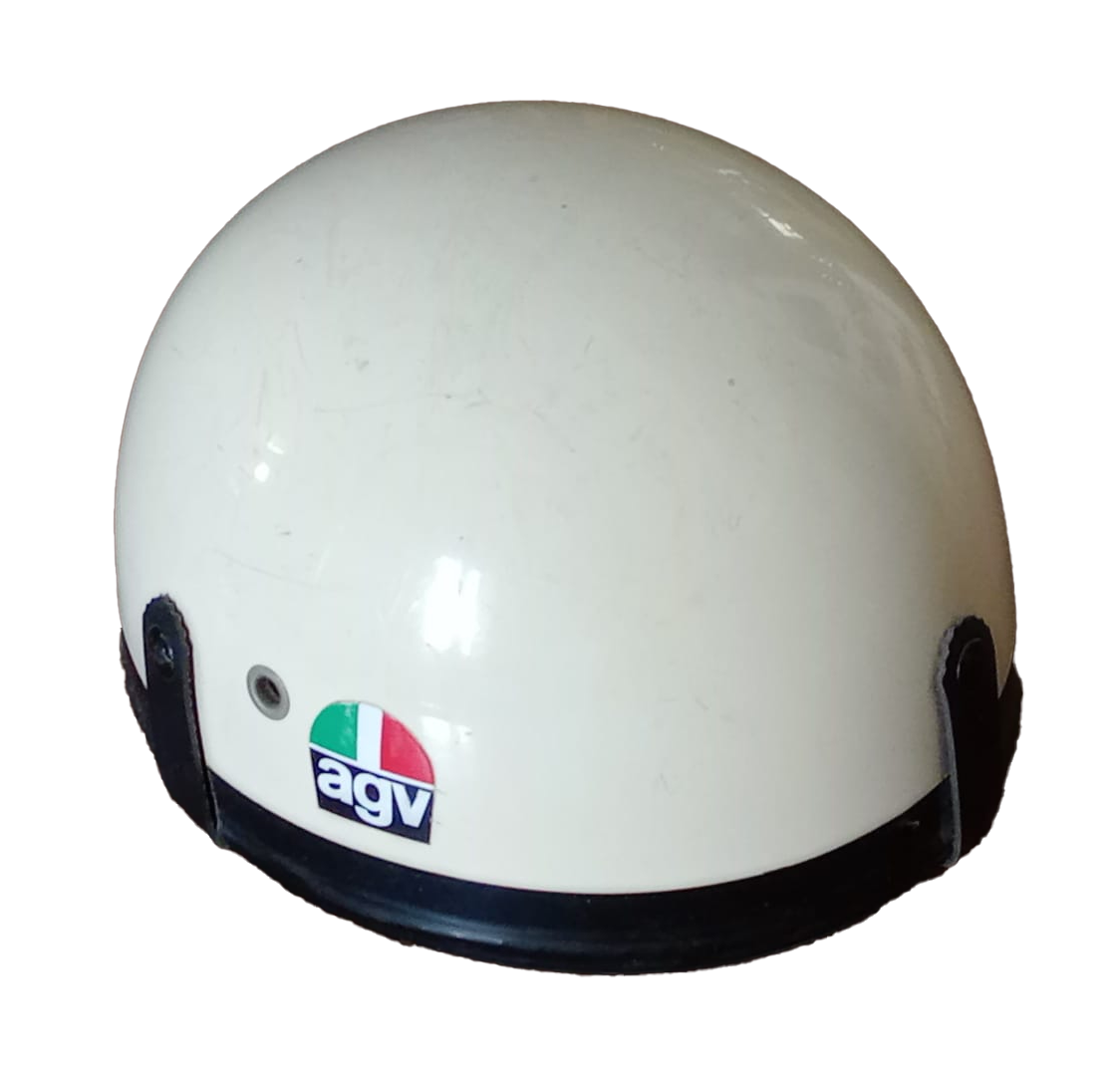
As helmets for other sports evolved, so too did climbing helmets. In 1954, Amisano Gino Valenza (AGV) produced the first fiberglass motorcycle helmet. It was used by many climbers until climbing-specific models became available.

Walter Bonatti knew helmets were critical. Describing his last ascent of the north face of the Matterhorn, done solo in winter, he wrote:

Again once more, I look to lighten my pack to move more rapidly. I toss food, two étriers, some pitons. I am tempted to get rid of my helmet as well, the glorious plastic helmet that, for four years, accompanied me on the most difficult enterprises. But after an instant of hesitation, I stay my hand and hold the helmet to my chest.

I caress its bumps as if they were wounds: each one of them corresponding to a rock, fallen off Mont Blanc, the Andes, so many other mountains. I placed it back in my pack.

It’s clear Bonatti recognized how many times the helmet had prevented injury. Despite the weight of early helmets, anyone who had their life saved by one would appreciate their value.

The new, lighter fiberglass motorcycle helmet and its growing use by serious climbers spurred the creation of helmets designed for climbers. Sporthaus Schuster was one of the earliest to come out with a model, released in 1960.

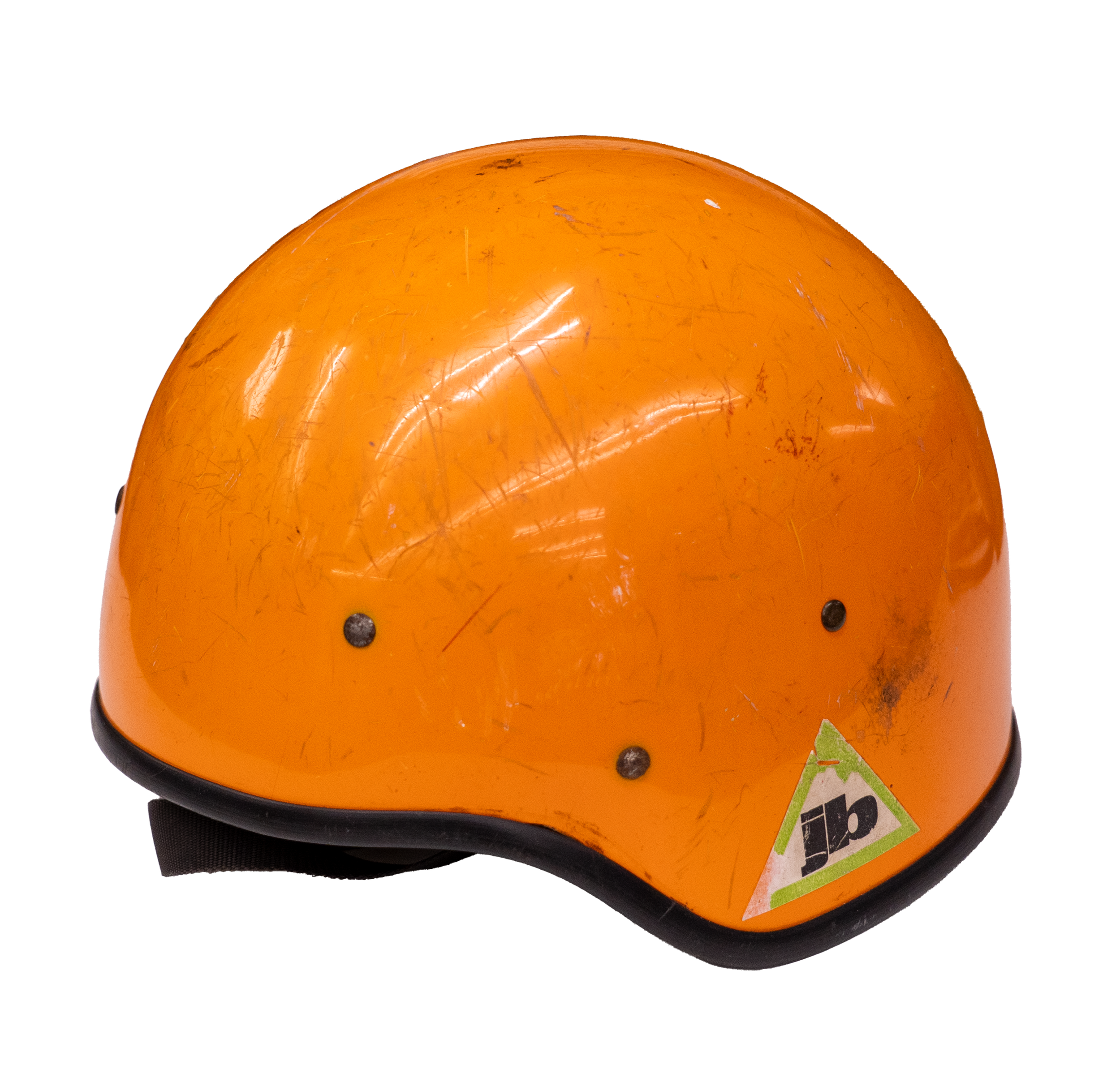
Helmets still weren’t used in a widespread way, however. They only had traction in select locations and circles of climbers. In 1966, Joe Brown developed a fiberglass helmet specifically for climbing. He only produced 50 or so of these before contracting with Mo Anthoine to make them. The Joe Brown helmet became popular with English-speaking climbers (and cavers) and was used extensively for decades.

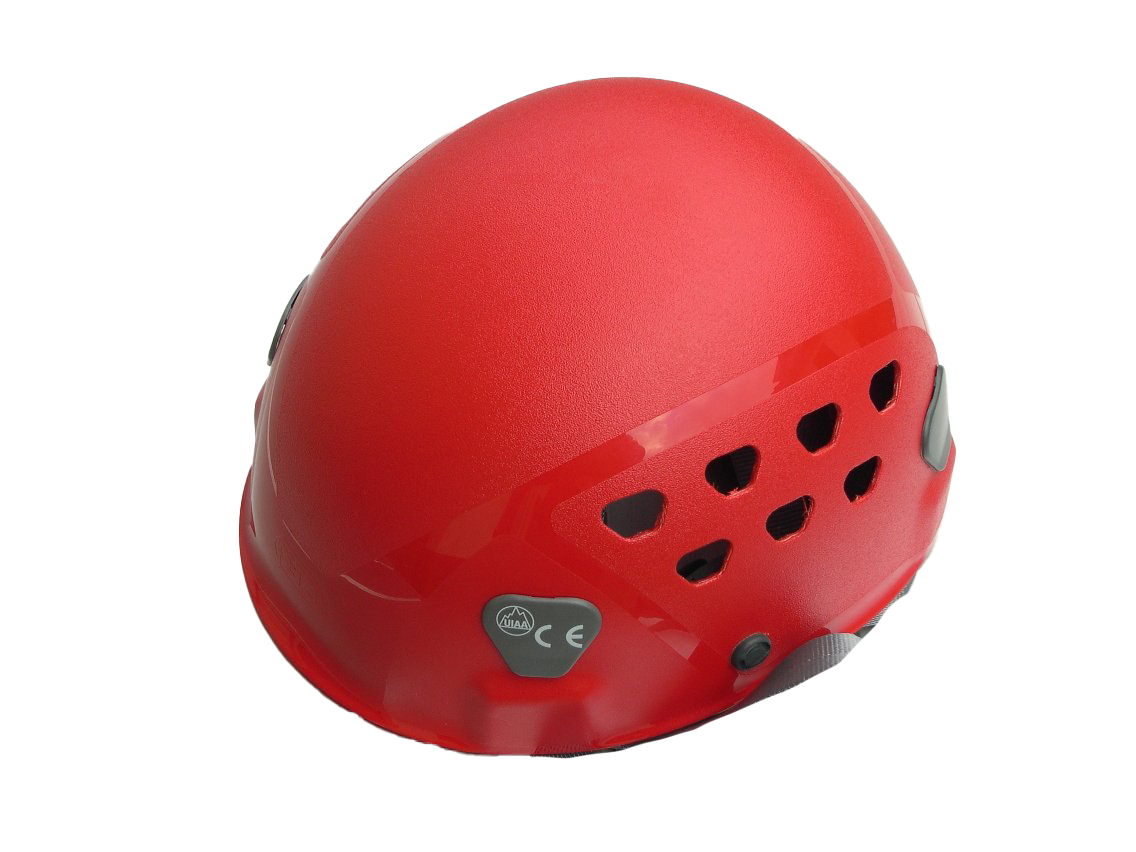
In 1980, the first climbing helmet standard was created: UIAA 106. This was later used to create the European standard EN12492 in 2000, which made it a legal requirement for helmets sold in Europe.

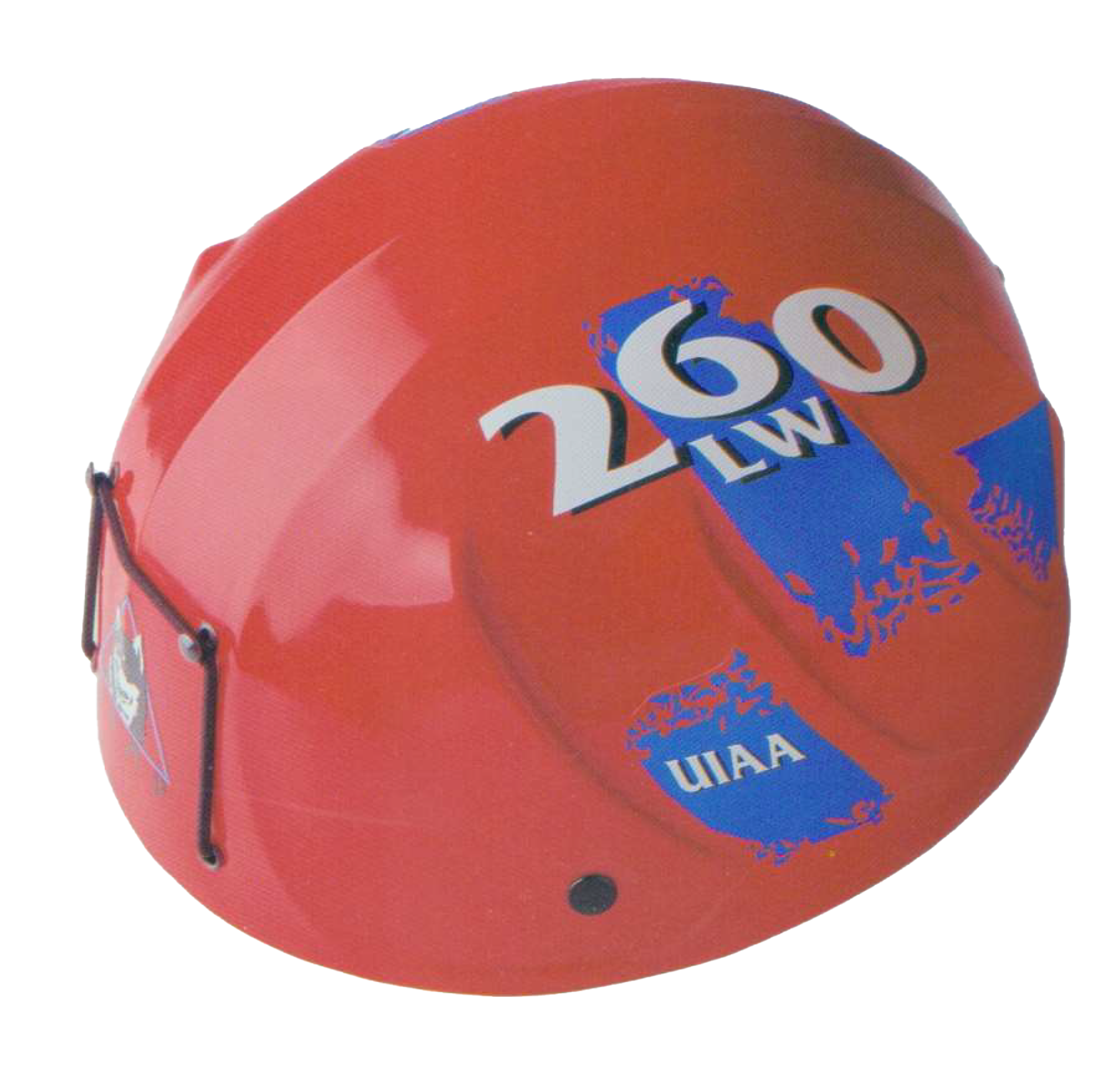
With two milestones, 1993 was a big year for helmets. C.A.M.P. launched its LW 260 helmet. It was the first shell-and-foam-style helmet and weighed only 260 grams. That same year, Petzl started selling the once-ubiquitous Ecrin Roc. This powerhouse of a helmet, which most climbers have seen or worn, was the first with easy on-head adjustability. This allowed it to be loaned, rented, or borrowed easily. Many more climbers were able to try them or even swap them on climbs.

Helmets have continued to evolve alongside climbing. With helmets like the LW 260 and Petzl’s Meteor, which came out in 1997, the excuse that a helmet was too heavy for moving fast and light was seriously challenged. Helmets were becoming more and more comfortable.

In the earliest days of climbing, rockfall was considered the primary reason to wear a helmet. Both Gaston Rébuffat and Walter Bonatti prepared for rockfall hazards—and they both likely survived because of it. So, why did the standard for helmets need to change in 2025?

Ultimately, our climbing has changed, and so has the technology available to design helmets.

In an accident from 2022, ANAC editors reported on a leader fall at Smith Rock, where the climber got their leg snagged around the rope, flipped upside down, and smacked their head. The climber was not wearing a helmet. The analysis included the takeaway that “wearing a helmet would have prevented the skull fractures and brain bleed.”

Accidents like this certainly could have happened in the 1950s, but as we began to climb steeper routes, free, at ever higher grades, significant lead falls became more frequent. A fall on steep rock at Smith Rock is not going to result in a broken ankle from hitting a ledge as much as it might result in an inverted climber hitting the side of their head on the wall.

In 2023, when a climber was lowered off the end of his rope, having tied no stopper knot and misjudged the length of the climb, the climber suffered a serious head injury. Witnesses wrote to ANAC: “While we didn’t see the fall, we understand that he fell feet-first onto a flake near the bottom. He landed, tilted backward, and impacted the back left side of his head, crushing his helmet and sustaining a horrible head injury. The total fall was about 35 feet.” Though the climber was wearing a helmet at the time of the accident, it was not certified with any sort of rim impact. The crushed helmet shows that the climber was better off than had they not been wearing one, but it raises questions about helmet designs that were never forced to consider rim or side impacts.

The injury described above is one that doesn’t require a steep, hard climb. Rappel accidents are unfortunately common. Both of these accidents highlight that when we design helmets, we should care not just about protecting from rockfall, which is typically from directly above or a slight off-angle—rim impact is important too.

Climbing has changed over the decades. Routes are steeper in both rock and ice. Climbing and skiing have blended more and more. Ski mountaineering is becoming nearly mainstream. We must be more concerned with protecting ourselves from rim impact injuries, be it from flipping on a steep climb or falling while skiing—or something else unexpected.

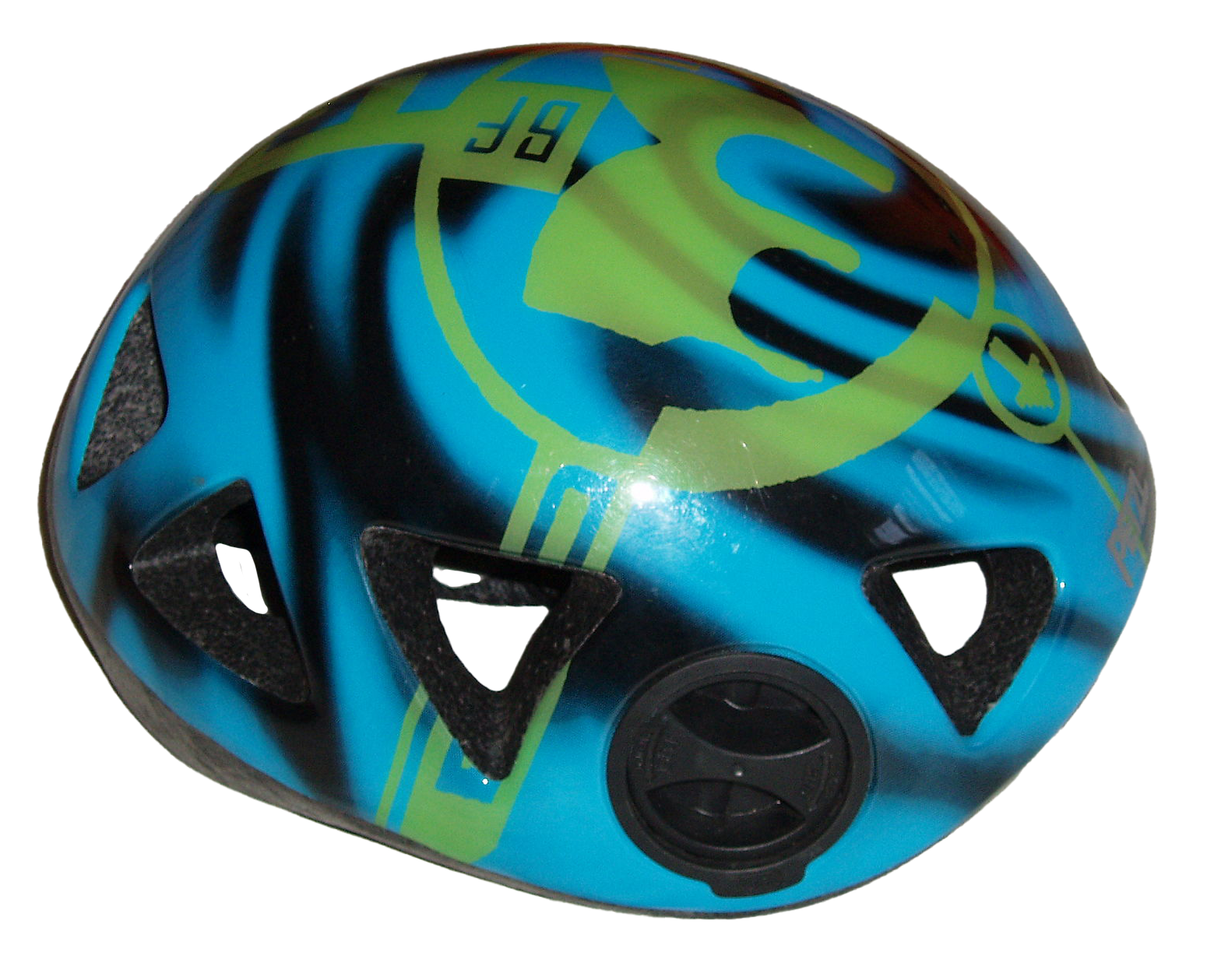
A helmet can prevent injury in many cases or reduce the severity of injury. Modern helmets are not built with a nearly indestructible shell like early fiberglass helmets. Rather, they are designed to crush during impact—that is how they absorb some of the impact forces and spread the remaining force out, therefore making the peak force lower.

Berets stuffed with newspaper/socks.

First fiberglass motorcycle helmet.

1936: Pierre Chevalier reports that helmets begin to be used in sport caving.

1940s: Bérets used by French Alpinists.

1950s:

  • Amisano Gino Valenza (AGV) makes the first fiberglass motorcycle helmet.

  • French climbers favor berets stuffed with socks or newspaper

Pre-1960: Helmets are rarely used in climbing (outside of caves).

Joe Brown’s climbing helmet.

1966: Joe Brown produces a fiberglass climbing helmet that weighs 650 grams.

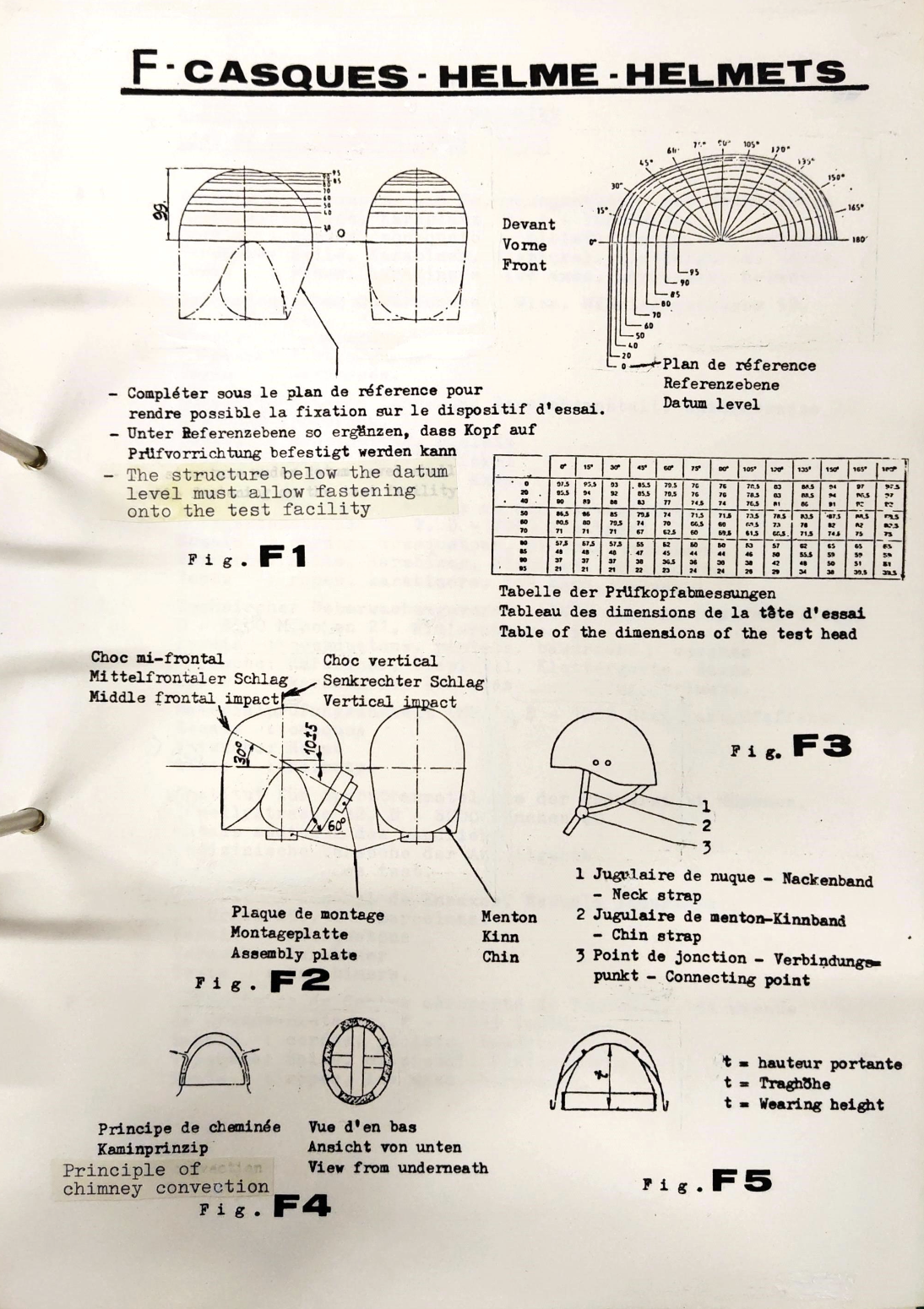
1980: The first UIAA 106 Helmet standard is published.

1993: Petzl releases its Ecrin Roc helmet. C.A.M.P. comes out with the shell-and-foam LW 260, at 260 grams.

1997: Petzl goes even lighter with the Meteor.

First UIAA 106 Helmet standard.

2000: The EN 12492 standard is published using UIAA 106.

2018: Petzl shares its PCSR-001 ski touring helmet testing standard with other manufacturers.

2025: UIAA 106 is updated with 10° rim impact.

2026: The UIAA will establish a ski mountaineering helmet standard.


Petzl Ecrin Roc helmet.

C.A.M.P. shell-and-foam.

Petzl meteor.


Modern Helmet Standards

The UIAA 106 helmet standard has now been updated since its first version in 1980. It consists of multiple requirements based on the variety of ways in which a helmet needs to protect a climber. Helmets are conditioned at different temperatures and humidities before testing—for example, they’re artificially aged with UV radiation to simulate degradation over time—all to ensure they work in the environments where we climb. The real soul of the standard can be boiled down to a few key ideas: A helmet has to prevent a sharp rock from penetrating, it has to absorb impact forces, and it has to stay on if it gets pulled or pushed up or off your head.

As more accidents like the ones described above occur, due to the increased prevalence of that kind of impact, it is the middle requirement that we need to look at in depth. What does impact absorption mean? How do we control it?

One of the most common serious closed head injuries happens as a result of a sudden impact to the head. In a coup-contrecoup injury, the head is typically moving very quickly and then is stopped by an immobile object. The brain sloshes forward and hits the inside of the skull, then rebounds and hits the other side, getting damaged in both cases. With this and other types of traumatic brain injury (TBI), the goal is to slow the acceleration (or deceleration) of the head. We do that by limiting the forces that get transmitted to the head when it is impacted.

The UIAA helmet standard allows a maximum of 8 kN of force to be transmitted to your head. Essentially, when a bigger impact (sudden) force hits the helmet, it needs to slow down that transmission to your head.

The UIAA standard limits this to 8 kN, whereas the EN standard only limits it to 10 kN—so a UIAA-certified helmet is much safer than one only certified to EN 12492.

The UIAA Safety Commission took the lead on a revised helmet standard because of the large amount of research and testing involved. We could be more nimble and get an update published much more quickly. And of course, the sooner a standard is published, the sooner the wheels can get turning on implementing it, as there is a lag time between a new or updated standard and when manufacturers are able to change designs or update testing, and finally get a new product on the market.

From 2022 to 2025, the UIAA conducted a large helmet study with nine labs and numerous manufacturers. One of the most difficult issues was standardizing the impact testing in a way that consistently worked, given the different testing apparatus at different labs and manufacturers. Also, helmets have ventilation holes in different places. Any ventilation hole means you might get unlucky with a sharp rock, but the test shouldn’t favor one ventilation hole pattern over another arbitrarily; though, if a ventilation pattern is truly better, the tests should show that. These are the shared challenges for manufacturers and the UIAA Safety Commission.

Several years of work resulted in an updated helmet standard that includes testing for impact absorption 10° above the helmet’s rim on the front, back, and sides. Helmets will be coming onto the market in 2026 that will be tested to this new standard.

Wearing a helmet is a deeply personal safety decision. Bonatti’s indecision was ultimately swayed by memories of the times his helmet saved his life. But a helmet doesn’t last forever; they break down with time, UV exposure, and small impacts, even if there is no major event. Check the manufacturer’s recommended lifespan and inspect your helmet for damage. It can be worthwhile to upgrade to a new one even if your current helmet isn’t quite to the end of its recommended life.

Now, almost 74 years after socks in his hat likely saved Rébuffat’s life, we can have confidence that a new helmet can do the same for an accident that impacts the rim.


Sign Up for AAC Emails


A Team Sport: The Psychology of Caregiving After A Climbing Accident

Part of the Climbing Grief Fund’s (CGF) mission is to expand the conversation around grief, loss, and trauma in the climbing community, and interrogate narratives that can be unhelpful to healing. In this episode, we unpack some of the unique challenges faced by caregivers after a loved one gets into a climbing accident, and explore why it can be helpful for caregivers to get mental health support too, not just those directly impacted by an accident.

In section one, we have the CGF Therapeutic Manager, Trevor Davis, on the podcast, to talk about the scope of the Climbing Grief Fund, as well as its ongoing expansion and impact. Trevor chats with Jay Louie, a therapist in the CGF Directory and a CGF committee member, about these topics, and together they frame the conversation about why CGF resources are for caregivers too.

In section two, we dive deeper with Jay, as they share some case studies to illustrate the very human experiences of caregiving after climbing accidents. They share these case studies from their professional experience as a therapist and AMGA Guide, described anonymously, with permission from their clients.

In section three, we sat down with Andrew Kirchner, an incredible supporter of the Climbing Grief Fund and a survivor of a climbing accident himself. Andrew describes his accident, and how it made him realize that the accident didn’t just happen to him, it had a dramatic impact on his loved ones as well. Andrew also elaborates on what motivated him to make the Edwards-Ginsburg fund, and thereby support the CGF’s work so generously.


Elsewhere: The Problem of Human Waste Management in the Wilderness

A Profile of AAC Member Geoff Hill

By Hannah Provost

Originally published in Guidebook XVII.

It wasn’t the first time, nor would it be the last, that Geoff Hill had chopped up frozen human waste—overflowing from a 200-liter barrel. He was a graduate student at the University of British Columbia (UBC), studying the effects of climate change in the Canadian Arctic. The university had arranged a deal with the Inuit whose land he was standing on. The students could conduct research there, but they could not leave any trace, including human waste—hence the chopping.

All around him, the Arctic gleamed in shades of dense ice, the ocean a penetrating blue. Below the tundra, in a hole, out of sight, was where the research team kept the thing no one ever talks about: a frozen bucket of human waste, a.k.a. a “sh*t barrel,” as Hill often calls it. Tucked away. Put elsewhere.

And that’s the trouble. In a wilderness like the Arctic, there is no elsewhere.


As a climber who fell in love with alpine rock, Hill has spent much time on the road driving toward his next climbing destination. He learned quickly that what he loved most was swimming through a 5.10 hand crack high on a steep, sunny wall. That lifelong thirst for high-country granite would bring him to many wild places, including Mt. Barrill in the Ruth Gorge, El Cap, the Bugaboos, and Mont Blanc’s aiguilles. An epic during an alpine climb in the Canadian Rockies in 2004 spurred him to start reading Accidents in North American Climbing, and he would continue engaging with the AAC throughout his climbing career—for the rescue benefit, community, and research grants that would, in turn, help catalyze his calling.

His passion for these alpine landscapes was boundless, but Hill’s educational path in environmental science was bringing him up against the reality of outdoor recreation’s environmental impact. He wanted to do something about it.

Hill began with driving, launching the Biodiesel Project at UBC, which added sodium hydroxide and methanol to a vat of recycled cooking oil to create an alternative to diesel. “It was fun and dangerous in the beginning,” he recalls. “The pH is crazy. Like, if it splashed in your eye, for sure it would have dissolved a hole in your eyeball.” But it worked. He would fuel up his 1993 Volkswagen Jetta with this biofuel and hit the road to Canmore, Squamish, and even Yosemite. He would later teach some Yosemite rangers how to run their own trucks on biofuel from their waste kitchen grease.

Called by the mountains, Hill toyed with becoming an ACMG Guide (the AMGA equivalent in Canada), but when he failed his exam, he realized his heart wasn’t in it and that he’d rather serve the mountain environment itself—not clients.

Funded by Canada’s Natural Sciences and Engineering Research Council (and an AAC Research Grant), Hill started ringing up the rangers and national park personnel he’d worked with during his previous studies and guide training. He wanted to study the alpine environment in a way that would produce practical results: What did they need help with?

Geoff Hill installs a urine-diverting conveyor-belt toilet system at Rocky Mountain National Park.

Again and again, the National Park Service spoke to the problem of human waste management. Tara Vessella, who runs the backcountry program in Rocky Mountain National Park, spoke of the ongoing struggle to find new land for pit toilets. As Hill recalls her saying, “I cannot find a spot in the forest to put a new pit toilet because every time I dig a hole in the ground, I find old sh*t.” The pit-toilet model, so ubiquitous in the United States, wasn’t sustainable for backcountry landscapes with such intense visitation numbers. So Hill, recalling his frozen-waste-chopping days, embarked on a PhD that would make everyone else’s “business” into his business.


Humans expel feces and urine daily—what we term “waste” when it’s not well integrated into the ecosystem, especially our poop. Yet when we look at the terms more commonly used for animal poop—dung, scat, droppings, guano—the “waste” subtext is absent, revealing a bias toward thinking that human excrement is dysfunctionally related to the natural environment. But Geoff Hill believes it doesn’t have to be that way.

The science is pretty straightforward: Human urine (and all mammal urine, for that matter) is excellent plant fertilizer. Meanwhile, human poop is food for invertebrates and microorganisms—in fact, in the process of eating mammal poop, microorganisms produce rich organic matter that makes for fertile soil.

We’ve evolved to be part of our ecosystem. As Hill puts it, “[We’re] no different than a buffalo running around, dropping a dump on the prairie.” But the problem comes at scale, and when these streams mix.

As Hill relates, “[Waste] became a problem when we moved into castles from nomad culture. It’s concentrated there; it’ll breed bacteria. People got really sick. Black plague. So, got to get it out of the castle. We [then] try putting it in buckets and sloshing it out onto the street.... More black plague. So, get it in the river. But there’s no sense in having a bucket of poo and a bucket of pee if you’re just going to put it in the river, so put it in one bucket intentionally—that’s the toilet.”

Continues Hill, “And from a human health perspective, it is one of the great inventions of all human time. Add to it flushing water and a waste water-treatment plant, so you’re not polluting the river, and you have this whole paradigm of human waste going together in a single-hole toilet and getting flushed downstream to be managed elsewhere.” This paradigm, so dominant in the Western world, doesn’t transfer well to the alpine, however, where there really is no “elsewhere” and where the single-hole toilet is in fact part of the problem.

With no plumbing and waste-removal being exceedingly expensive in such remote locations, the pit toilet—burying it and forgetting about it—has become the common solution. But when human urine and excrement are stored together, like in a pit toilet, urea—the main chemical constituent in urine—will rapidly oxidize into ammonia. And ammonia is toxic: It smells bad, and the invertebrates and worms that would normally happily eat mammal waste, catalyzing its decomposition, say no thanks.

In 2000, the EPA banned the creation of new large-capacity cesspools (which include many pit-toilet designs), “because untreated sanitary waste from cesspools can enter ground water and contaminate drinking water sources.” Between the ammonia toxicity, Vessella’s testimony about running out of land for new pit toilets, and the EPA ban, it was clear that what Hill was hearing from the rangers was rooted in very tangible problems.

At first, Hill was tempted to believe that composting toilets could be the solution. But as he researched and tested the output of various models installed in national parks, he repeatedly found grim results. Because these toilets required the introduction of dry goods like wood shavings for their “composting” process, they added volume. Moreover, they weren’t actually creating compost—with the amount of excrement added daily, the process for turning the results into safe fertilizer was too slow, plus most parks had to remove the waste anyway, instead of reintroducing it back into the ecosystem, because the composted waste didn’t meet federal safety standards for fertilizer.

Hill eventually found himself in France, looking at a conveyor-belt toilet. This model took the science seriously and did one major thing differently: The conveyor belt diverted the urine so that the combination of waste products wouldn’t create ammonia, leaving the worms and nematodes to gobble up the solids. And the design was feasible without running water—after a user does their business, urine is directed to the ground via grooves in the conveyer belt, while the inclined conveyer belt carries away the solid waste thanks to a few steps on a mechanical foot pedal. Once it’s in the storage container for solids, worms happily munch away. The example toilets Hill saw in Europe barely needed attention from their technicians, even after years of use, simply because the system was functioning properly, resulting in a significantly lower volume of end product.

He quickly licensed the use of these robust, reliable, stainless steel, urine-diverting conveyor-belt toilet seats from Emmanuel Morin, the industrial designer who designed and sold them through his company Ecodomeo, and started using them in toilets across the Americas. Hill’s business, Toilet Tech, was born.


Through Toilet Tech, Hill has outfitted over 400 remote sites, from Alaska’s Wrangell–St. Elias National Park and Preserve and Glacier Bay to Los Glaciares and Torres del Paine in Argentina and Chile, respectively. You can also find Hill’s creations at Smith Rock and Angels Landing in Zion, where desert environments also make human waste management extra tricky. In fact, Hill’s toilet technology might be the most efficient and cost-effective solution for any public-use toilet that isn’t incorporated into existing municipal sewage structures.

However, the US Forest Service, BLM, and National Park Service move slowly, and often don’t have the funds for a new system, regardless of how badly they need it or how well it works. But despite these constraints, many enterprising NPS staff have partnered with Hill to implement this new vision of waste management in the backcountry—at Mt. Rainier, Rocky Mountain, Zion, and other national parks.

Ultimately, Hill isn’t making a crapload of money on this endeavor—it’s a side quest at best. Yet Hill’s passion for eco-forward innovation and deep knowledge of composting continue to motivate his work at Toilet Tech and his salaried position as head of science at Earth Funeral, a company that specializes in an environmentally friendly alternative to burial and cremation that uses a 30-day process to transform a body into nutrient-rich soil. Hill’s love for alpine granite remains undimmed as well, and has inspired a new dream that involves figuring out how to clean up water bodies in the alpine—he envisions a world in which climbers can hike up to alpine ascents with a teacup, no filter needed.

Though most of us climbers can’t do much more than incorporate good WAG bag etiquette into our climbing ethics, it’s inspiring to know that some climbers are using their expertise to move the needle on the infrastructure that supports our outdoor recreation. Perhaps someday soon those outdated pit and composting toilets at your local area will be replaced by one with conveyor belts, all thanks to Geoff Hill.

Beyond all this, Hill’s story also helps us shift a common paradigm: What would it mean to interrogate the things that we, as a community, let disappear into the elsewhere—that we bury and don’t address? Whether it’s our excrement, the way we interact with and support (or don’t support) each other, or our relationship with fear and risk tolerance, sometimes it’s worth taking a page out of Hill’s book and uncovering the stuff put elsewhere.


Sign Up for AAC Emails

A Message from AAC Leadership + AAC Updates

Originally Published in Guidebook XVII

As we step into 2026, I want to begin with gratitude. The support you provide the American Alpine Club through your membership and donations enables us to deliver meaningful work to climbers across the country. Your commitment strengthens the AAC and ensures that we can continue to serve our members.

Climbing is built on connection: the bond between partners, the shared experience at the crag or on an expedition, and the knowledge passed from one generation to the next. This year, we are deepening our focus on uniting climbers and celebrating the culture that gives meaning to our time on rock, ice, and alpine terrain. We are building programming that strengthens members’ connections and creates more opportunities to gather, learn, and celebrate climbing. We look forward to sharing more in the coming months as we build toward 2027 and our 125th anniversary.

Across the country, our lodging facilities remain places where friendships are formed, knowledge is shared, and adventures begin. We continue to deliver critical publications and media, including The American Alpine Journal, Accidents in North American Climbing, monthly Prescription videos, the American Alpine Club Podcast and The Cutting Edge. Our core member benefits, including rescue and medical benefits, discounts, and access to our world-class library, reflect our commitment to supporting climbers wherever their journeys take them.

The AAC plays a unique role in sustaining and strengthening climbing. We maintain the record of climbing so it continues to inform and inspire climbers today. We create moments of connection where people see themselves reflected. And we remain committed to being a sustainable and adaptable organization prepared to meet the evolving needs of our members.

Inside these pages, you will see the AAC’s charge reflected: a commitment to learning, the power of member contributions, and the meaningful journeys climbers undertake around the world. In this edition of The Guidebook, you will find:

  • “Safer Than Socks in Your Hat: A History of Climbing Helmets and an Updated UIAA Standard”—a practical look at how helmet design and standards have developed, and what climbers should understand about today’s protection.

  • “The Huayhuash Is Still Open: A Rare Ascent of Jirishanca Chico”—reflections from a challenging expedition funded by the AAC’s Mountaineering Fellowship Fund Grant, offering lessons in risk, humility, and renewed inspiration.

  • “Elsewhere: The Problem of Human Waste Management in the Wilderness”—a celebration of the work of one AAC member in advancing human waste management systems in alpine environments and what it means for sustainable access.

  • “An Interview with ANAC Editor Pete Takeda”—sharing key insights from the incidents featured in this year’s Accidents in North American Climbing, to help climbers make better decisions in complex terrain.

  • “Rewind the Climb: The Steck-Salathé on Yosemite’s Sentinel Rock”—a return to an era-defining ascent in Yosemite and the unique vision of John Salathé.

Each of these contributions reflects a core part of our mission: supporting climbers, learning from experience, honoring our history, and strengthening the connections that define this community.

Thank you for being part of this effort. I am grateful for your continued support and look forward to the work ahead.

Ben Gabriel

AAC Executive Director


AAC Updates

Operations and Governance

  • The Board, with continued leadership from our President, Nina Williams, welcomed new directors Maryanna Saenko and Sean Chiasson. In addition, the Board elected a new Executive Committee:

    • Vice President: Keith Thomajan

    • Secretary: Mo Beck

    • Treasurer: Howard Lukens

  • We want to extend our sincere appreciation to outgoing board members Rob DeConto and Pavan Surapaneni for their years of dedication, guidance, and support.

  • At the Banff Mountain Film and Book Festival, we were honored to be a part of the Best Film: Climbing award, which was given to Old Man Lightning, a film sponsored by the AAC.

  • We are pleased to welcome new staff to the American Alpine Club, including VP of Philanthropy Melanie Hood and Administrative Assistant Alyssa Grizenk

Member Services

  • Congratulations to the following climbing teams for receiving Piolets d’Or in 2025. We are honored to have been a small part of these ascents, through conferring the Cutting Edge Grant to the first team listed below, and reporting each of these ascents in the AAJ.

    • August Franzen, Dane Steadman, and Cody Winckler, for the first ascent of Yashkuk Sar.

    • Aleš Česen and Tom Livingstone, for the first ascent of the west ridge of Gasherbrum III.

    • Spencer Gray, Ryan Griffiths, and Matt Zia, for the first ascent of the southwest arête of Kaqur Kangri.

  • The AAC 2026 Spring Grants Cycle will be increasing funding for the Research Grant to $9,000.

Programs

  • The AAC met with other national federation members in Kosovo for the UIAA’s annual General Assembly (GA). At the GA, AAC representative Ron Funderburke was named President of the Training Commission.

  • Due to a lapse in appropriations, the federal government shut down and halted nonessential operations. The shutdown abated efforts to engage government agencies on implementation issues associated with the EXPLORE Act, and it also impacted federal agencies, such as the National Park Service, in the execution of their duties.

  • The Climbing Grief Fund received expanded funding and will be able to fund additional awards this year.


Sign Up for AAC Emails
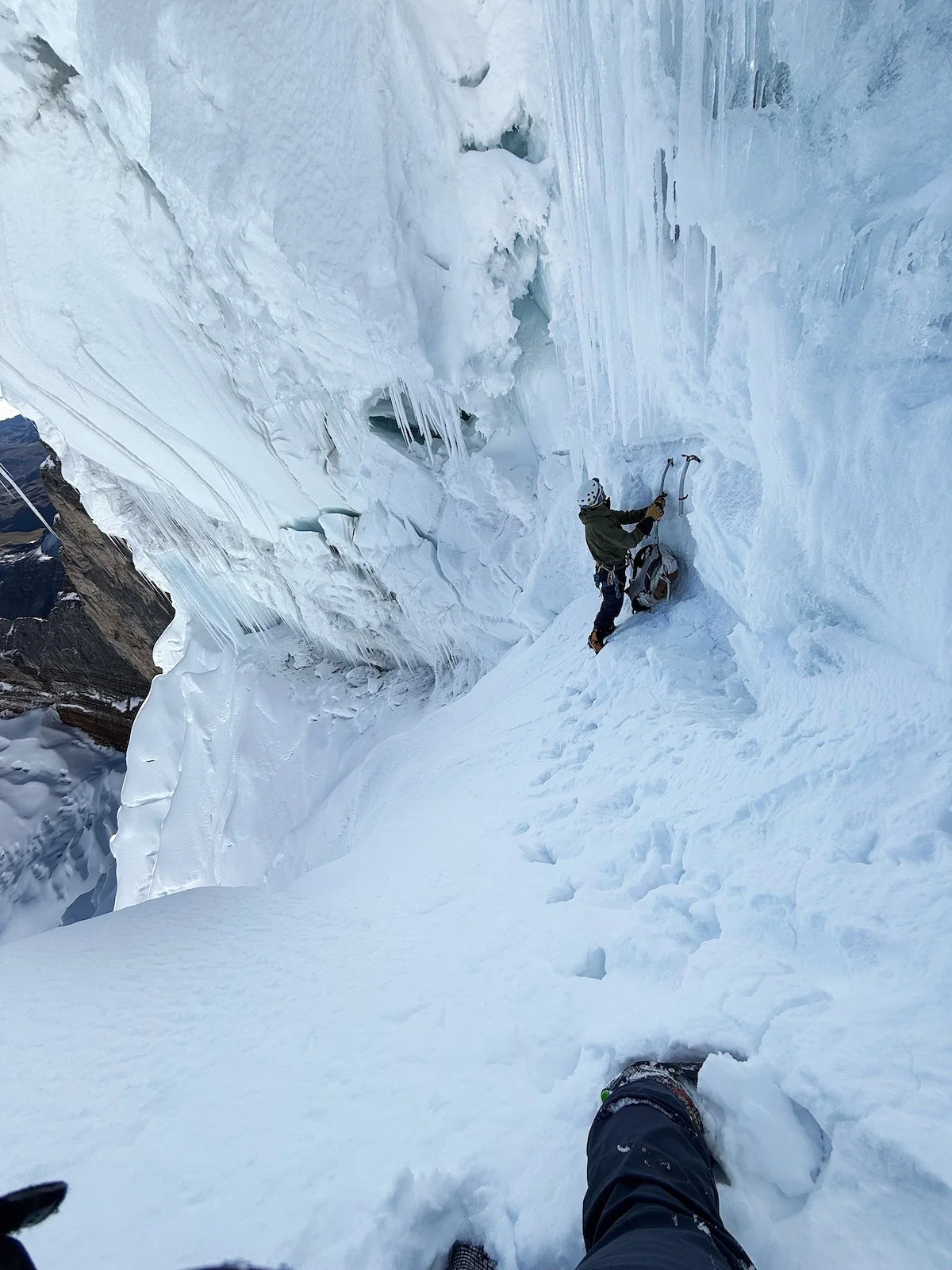
The Line—From Bozeman to the Baspa

Since 2010, climbers have been exploring the mountains, cliffs, and boulders above the village of Rakchham in northern India’s Baspa Valley, drawn by varied, high-quality climbing and relatively modest elevations in this quiet corner of the Himalaya. Last fall, two Montana-based climbers—Ryan Griffiths and Seth Timpano—spent several weeks in the area. Here’s their story.

The 800-meter northwest face of Peak 5,400m above the Rakchham Plateau. Photo by Ryan Griffiths.

Rocking the Rakchham 

In late October and early November 2025, Ryan Griffiths and I climbed new routes on two unclimbed peaks above the Baspa Valley. We were based out of the village of Rakchham at around 3,150 meters, with a small advanced camp on the Rakchham “plateau” at 4,100 meters. 

After a week of acclimatizing, we spent October 21 and 22 climbing the northwest face of Peak 5,400m. This gave quality moderate ice and mixed climbing, but was not particularly sustained, as the route was split by a small pocket glacier, which we used for a bivouac. The 800-meter ascent had difficulties up to WI4 M5. 

We next tried the east ridge of unclimbed Daboling (ca 6,050m) at the head of the valley. Starting from a high camp at around 5,400 meters, we climbed 13 pitches on mostly good granite, although at times the climbing was tedious and the terrain felt like stacked Jenga blocks. The line was classically alpine in nature, and it is difficult to assign a rock or mixed grade. 

Our high point was around 5,850 meters. Four or five more pitches would have taken us to the summit slopes, but without bivouac gear, and knowing the descent would be complex, we made a conservative call to retreat. Our descent involved a dozen rappels (exclusively on rock anchors), first down the ridge then onto the steeper south face. 

After a short rest in town, we ended the trip by climbing a 200-meter granite tower that tops out at about 5,100 meters. This is the Fourth Pillar of Ray Peak, as defined by the Austrian team that visited the area in 2019 (AAJ 2020). Ryan and I climbed the south face of this tower in five pitches, four of which were 5.9 or 5.10 and composed of perfect granite. We rappelled our route. 

Overall, we found this to be a beautiful area with impressive boulders and excellent alpine rock potential. However, the alpine ice will require very specific—perhaps rare—conditions, as the mountains are losing their perennial snow. 

Seth Timpano on the first pitch of the northwest face of Peak 5,400m. Photo by Ryan Griffiths.

Ryan Griffiths climbs a nice ice pitch to circumvent the icefall on the northwest face of Peak 5,400m. Photo by Seth Timpano.

Ryan Griffiths high on the east ridge of Daboling. The rocky pyramid on the left is Phawararang (6,349m), climbed several times via the south ridge. Photo by Seth Timpano.

Seth Timpano on the excellent second pitch on the south face of the Fourth Pillar of Ray Peak. Photo by Ryan Griffiths.

The south face of the Fourth Pillar of Ray Peak. There are three prominent dihedrals with their right walls in shadow. The 2025 route climbed splitter cracks up the sunny left wall of the rightmost corner, finishing with a long pitch up the southwest face directly to the summit. Photo by Ryan Griffiths.


Bouldering and Beyond

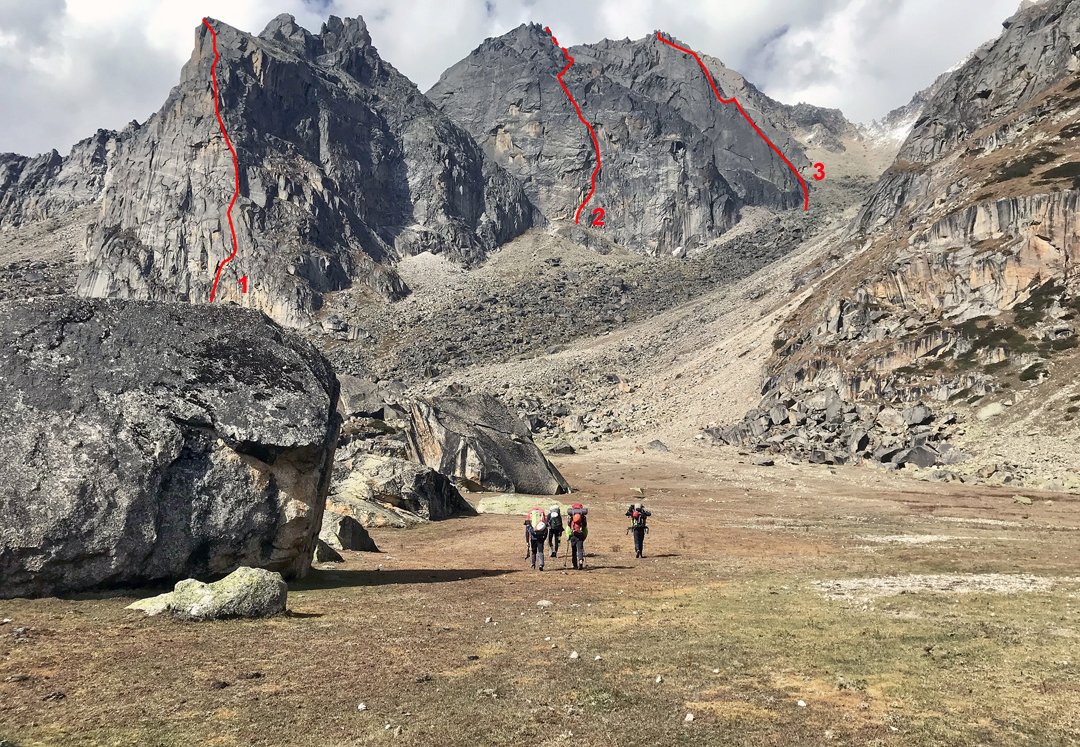
Three routes climbed in 2019, each with about 600 meters of climbing, seen from the boulder-strewn Rakchham Plateau. The reports are in AAJ 2020. Photo by Gebhard Bendler.

Modern climbing in Rakchham and the Baspa Valley has a somewhat unlikely origin story for an alpine zone: It began with bouldering. In 2010, well-known European climbers Elie Chevieux, Frederic Nicole, and Bernd Zangerl explored the Kinnaur district of Himachal Pradesh and discovered the Baspa Valley, “a veritable Shangri-La for the rock climbers,” as Chevieux wrote in AAJ 2012. Their stories about the climbing near Rakchham prompted a steady stream of visitors over the next decade. (Spanish climber Silvia Vidal was another early visitor—she soloed a 1,000-meter wall in the area in 2010.) 

No one was more infatuated with the area than Zangerl: He has traveled from his home in Austria to Rakchham more than ten times. Zangerl also is one of the driving forces behind community efforts aimed at making climbing a sustainable activity that benefits and is welcomed by local residents. He recently published the first guidebook to bouldering in the area and helped spearhead a bouldering festival this past October, along with the locally led Rakchham Mountaineering & Adventure Club. A community website, rakchham.com, is a great resource for climbers considering a visit, providing beta, information on permits that support the local community, and an offer to help alpinists avoid peaks that the local people consider sacred. 

In 2022, Five Ten produced a beautiful 20-minute video, directed by Ray Demski, showcasing Rakchham and the efforts to preserve its beauty and culture while the Baspa Valley develops as a climbing destination.


Last summer, the Women's Young Alpinist Team of the Swiss Alpine Club journeyed to East Greenland—without ever boarding a plane—and climbed six long rock routes, four of them in a fjord that had never been visited by climbers. Team leader Caro North is the main guest this episode, describing the difficulties of organizing such a complex exploratory trip. Just getting there and back involved trains, ferries, cars, and a voyage by sailboat. Even though she was the most experienced climber in this group, Caro deliberately stepped back from the decision-making, letting the younger team members plan and lead their routes—a rewarding tactic for Caro, but also one with some emotional challenges. 

Rounding out this episode, host Jim Aikman interviewed American Mike Libecki, who has done more exploratory rock climbing in southeast Greenland than anyone alive.


The Line is the monthly newsletter of the American Alpine Journal.

Sign Up for AAC Emails
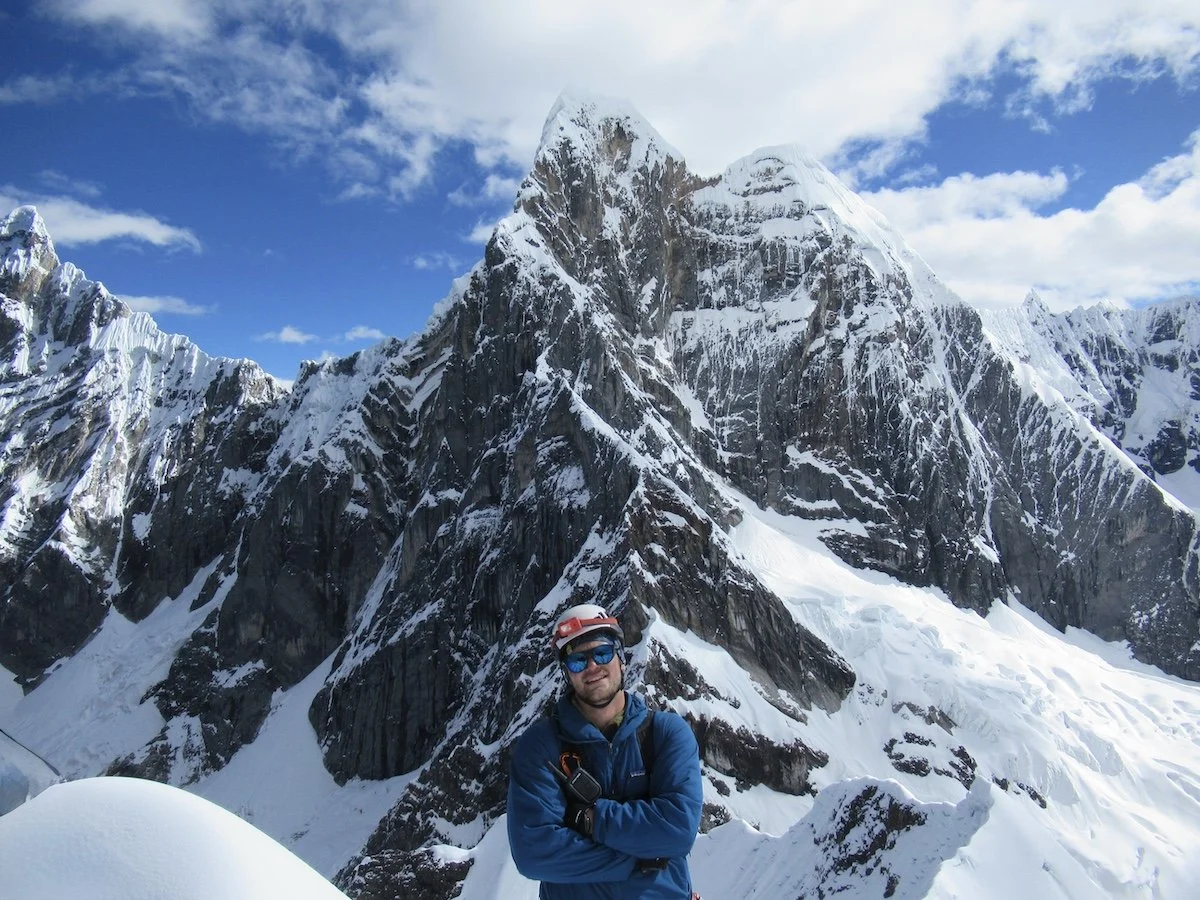
(Not So) Undercover Crusher Evan Hau: On Showing Up and Trying Hard

Evan Hau is a pro climber, but most Americans still don’t know his name. He’s the first Canadian to climb 5.15a, and swears his success comes from consistently honing his strengths (and mostly ignoring his weaknesses). In this episode, we chat about how he balances pushing his limits, with his tutoring business, and the process of climbing his first 15a, Sacrifice. We cover the magic of the Bow Valley—the epic limestone crags near Canmore, Alberta—as well as what happens when Adam Ondra comes to town to try to flash your proj. We discuss trying hard on long trips, and his send of Death of Villains last year, his second 15a. Plus, we chat about aging as a climber, with his 40th birthday just around the corner.


The Prescription—Ground Fall

It’s February, and yours truly is bouldering in sunny Hueco Tanks, Texas. I was reminded a few weeks ago that all climbing is not without risk, when a close friend fractured his ankle bouldering in the park and had to be extracted by SAR. The situation was compounded when a rescuer fell off the low-fifth-class approach and also required extraction.

This accident, like the one featured below, happened despite the fact that everyone was playing by the book. In the accident below, two apparently textbook cam placements failed when the leader applied body weight to the top cam on a lead of a slippery granite crack. More serious injury was prevented because the climbers in question had built a solid belay anchor on the ledge below, and the leader and the belayer were both wearing helmets. Still, this is a case in point that you can do everything right and still end up in the hospital. 


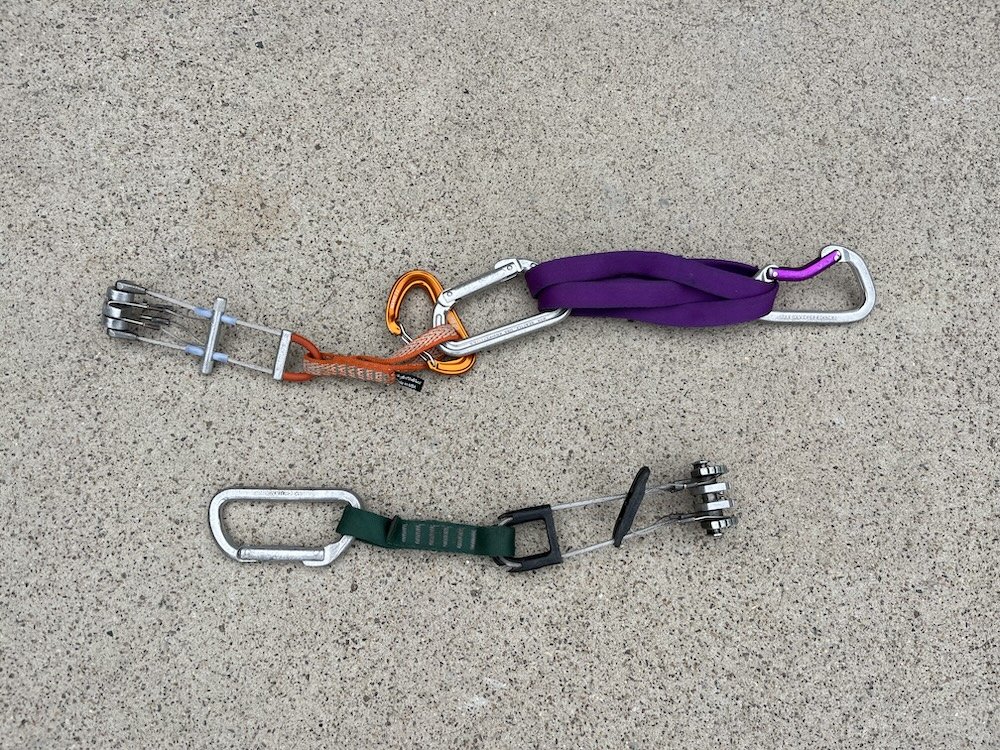
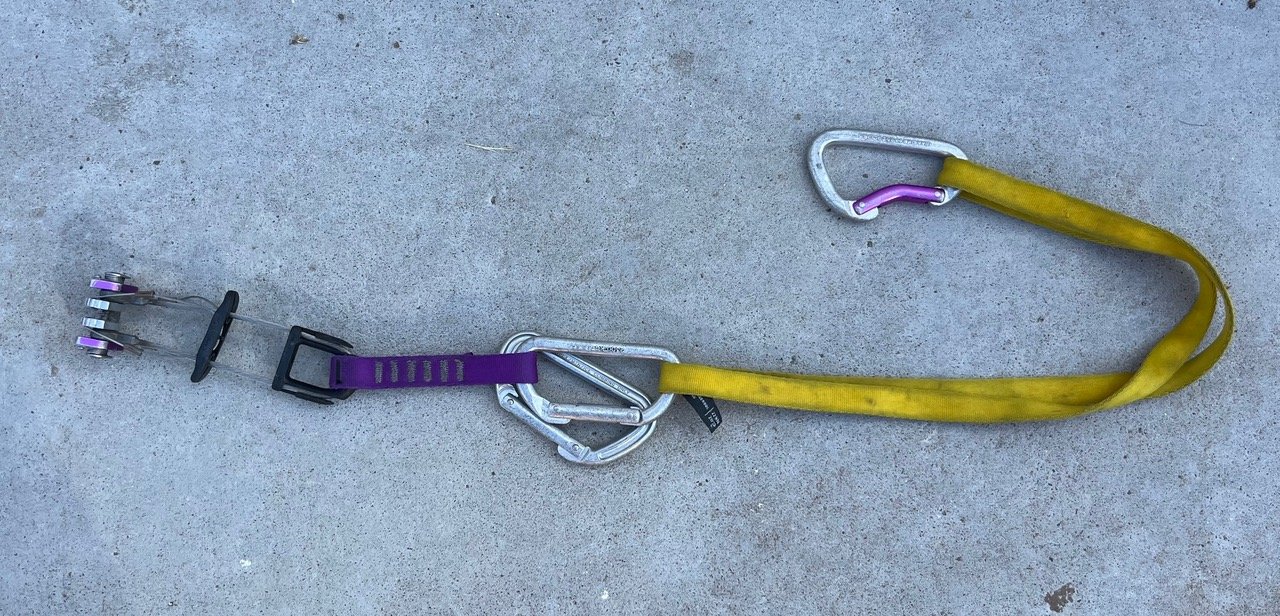
The Metolius TCU is an old version with all cam lobes an equal width. Later, the single middle lobe was widened to provide more opposing surface area. The U-stem Black Diamond Camalot Junior is from the mid-1990s. This version’s cam lobes were fabricated from very hard 7075-T6 aluminum—a material implicated in several incidents in which the cam lobes tracked out of apparently perfect placements. Both models of gear have been improved over the decades and form the backbone of many standard trad climbing racks.

Ground Fall | Multiple Pieces of Protection Pulled

California, San Diego, Mission Gorge

On May 18, 2024, at about 10:40 a.m., my climbing partner and I prepared to climb Gallwas Crack (5.9) at the Main Wall of Mission Gorge in San Diego. Another friend was with us for his first outdoor climbing session. The three of us had already warmed up.

Access involved scrambling eight feet up to a large, flat ledge, then up and over to another ledge at the base of the route. This ledge was big enough to not worry about falling off, but there was a risk of the belayer getting pulled off if the leader fell before placing any gear. We all wore helmets and were very safety focused.

The ledge was 40 feet above the trail. We built a three-piece gear anchor to secure the belayer (me), and our other friend sat untethered on the large ledge below and left. Gallwas Crack looked challenging, with slippery rock, but my climbing partner had led higher-rated climbs at similar areas, so I thought it would be possible, though perhaps at his limit. There appeared to be plentiful gear placements.

He racked up and we did thorough safety checks. He got up a short fourth-class ramp to a secure stance and put in a No. 0.5 Camalot, clipped with an alpine draw. He climbed to where his feet were level with the first cam and placed another, then climbed to where the second cam was at his waist and placed a third cam.

When the third cam was at his waist, he paused to figure out the move, then yelled, “Take! Take! Take!” I pulled in a couple of arm lengths of slack as fast as I could. The rope started becoming taut just before he fell, but it never became completely tight during the fall. I did not get pulled toward the wall as one would expect. The highest (third) piece pulled immediately, and he continued falling. The second piece also pulled as he rotated backward and began falling headfirst. The first piece caught him. I don’t remember being pulled by the rope despite the fact that he fell 30 feet total, past the ledge, and ended hanging upside down, about 30 feet above the trail.

He was not moving. Our other friend yelled, “He’s bleeding out of his right ear.” I can't recall the sequence, but someone yelled to ask if they should call 911. I asked our other friend to attend, since he had emergency medical training. I slowly lowered my partner as he was pulled over to the large ledge. As I was lowering, his body shook for a few seconds. On the flat ledge, he had a pulse and breathing was heavy. I called 911 at 10:56 a.m. and learned that someone else had already called in.

I clipped my climbing partner into the anchor so I could be freed up to help. I held his head, and he’d periodically sit up and moan, then lie back. We tried to keep him down, and he would tell us to stop touching him. A woman with emergency medical training came over and did a good job helping us all stay calm. She confirmed that my climbing partner could respond to his name, by turning his head. A helicopter arrived, lowering a paramedic with a radio and litter, who assessed his condition. The paramedic tried to place a neck brace, but my climbing partner refused it. When we got the brace on, he immediately took it off. Eventually, he was put on a litter and flown to a trauma center. It was less than an hour after he’d started the climb.

One of the pieces that pulled was a No. 3 (orange) Metolius TCU. The plastic trigger-wire guide on a green (No. 0.75) Camalot was tweaked, so this was probably the other pulled piece. I’m not sure which one pulled first. My climbing partner suffered a severe traumatic brain injury, but he made it through emergency surgery and has mostly recovered.


Video Analysis

Accidents in North American Climbing Editor Pete Takeda and IFMGA/AMGA guide Jason Antin are back at North Table Mountain in Golden, CO to analyze this accident.

They break the accident down into things that could be improved and things that were done really well. Watch the video for a visual analysis.


ANALYSIS

What went right: I was anchored, so I couldn’t get pulled off the ledge when my partner fell. He was wearing a helmet, which probably saved his life. It’s good that we had a third person there, because he was able to respond quickly and help save our friend’s life. We've been able to talk about what happened and support each other. (Source: Anonymous.)

*Editor’s Note: A climber posted on Mountain Project that, in Mission Gorge, “two separate near-fatal accidents” involving cams pulling out occurred in 2024—one on May 18 (Gallwas Crack; described here) and the other on May 19 on the adjacent Nutcracker (5.9+). He also wrote, “Be aware that cams do not hold well on this rock in hot conditions.” Perhaps the Mission Gorge’s slick rock combined with recent rain-generated dirt and silt contributed to the gear pulling. The gear itself may have played a role. Not up for conjecture is that several elements combined to produce an unpredictable accident. The fallen leader was 34 years old and had “many years” of trad experience; the cams did not suffer obvious deformation that would have indicated a high load. As the belayer stated, “They just came right out, with seemingly less than body weight. They didn’t slow the fall at all.”


Support Climbers Recovering From Accidents

The AAC’s Climbing Grief Fund exists to ensure that climbers and their loved ones are met with compassion, care, and community when they are navigating grief, loss, injury, or trauma. It’s one way we look out for one another—long after the ropes are packed away. 

When you donate to the Climbing Grief Fund through March 10, your donation is matched—GIVE TODAY!

Donors can recognize someone on our virtual dedication wall by adding a name with—Honoring, In Memory of, or In Gratitude—in the comments field on the donation page.


The Prescription is Supported By:


Sign Up for AAC Emails
Tales from Red Rock's Risk Mistress: Joanne Urioste

Joanne Urioste is a powerhouse in Red Rocks climbing history, and we had her on the podcast to share stories from her recently published memoir, “Collages of Rock & Desire.” Her book is a detailed catalogue of the climbing legacy she shares with her husband George Urioste, including the creation of iconic multi pitch climbs like Epinephrine, Levitation 29, A Dream of Wild Turkeys, and many others. The book is also a detailed account of gear innovations and changing climbing ethics through the ‘70s and 80’s—from swami belts and belay plates, to early adoption of nuts and frontpointing on ice, and adding a run-out bolt here and there to connect discontinuous cracks and make many climbs possible on Red Rocks soaring faces. In the interview, we dive into all of this, plus Joanne and George’s wild love story, managing fear on lead, and climbing as a metaphor for life.

You can find a copy of Joanne Urioste's book on Amazon.


The Prescription—The Stacked Rappel

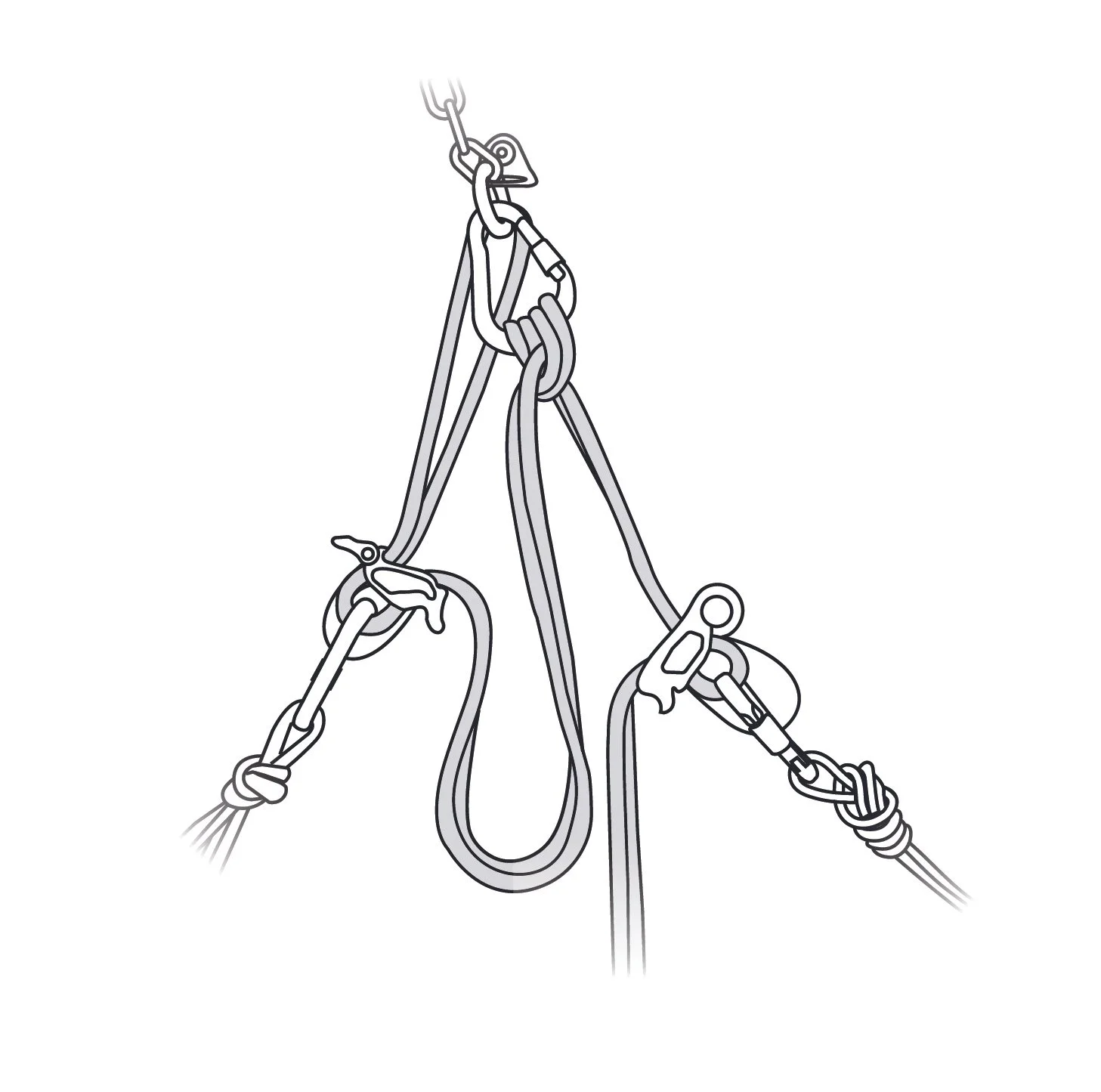
Rappelling is one of the most accident-prone facets of climbing, with improper/incomplete setup being an all-too-common cause of misadventure. In the 2025 ANAC, we featured an accident that involved a rappel fatality from a difficult ice/mixed route in the Canadian Rockies. Steep, multi-pitch winter climbing combines a challenging environment with the technical complexities of big-wall climbing. Gloved hands, copious gear, and often-cumbersome clothing can impede the usual streamlined rappel setup and safety checks. As John Godino mentioned in his 2025 ANAC Know the Ropes feature, the stacked rappel can help ameliorate these issues by promoting “More efficient rappels with reduced risk—what’s not to like?”  

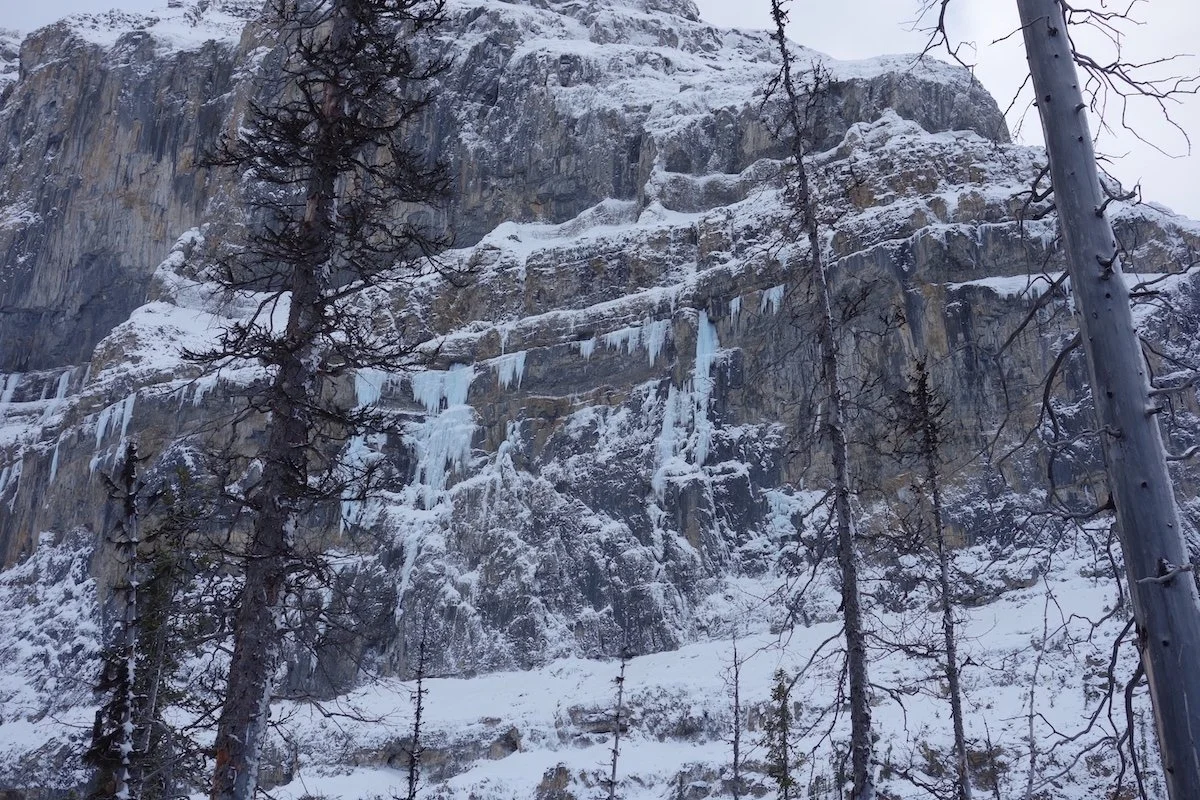
Drama Queen climbs a series of ice flows interspersed with steep mixed sections. In this photo of the Stanley Headwall, the route is roughly left of center. In winter, this 300-meter-tall crag is a crucible for hard ice and mixed climbing; in summer, it’s home to a host of difficult single- and multi-pitch rock climbs. Photo by Parks Canada.

Rappel Fatality | Possible Unsecured Knot

British Columbia, Kootenay Park and Banff National Park, Stanley Headwall

At the end of 2024, a very experienced climber named Dave Peabody (48) fell to his death while rappelling from a route on the Stanley Headwall. Alik Berg was Peabody’s partner on that day. Berg wrote to ANAC:

Dave and I had been regular climbing partners for about 12 years, with many seasons of winter, alpine, and rock climbing. On December 26, we headed to the Stanley Headwall to climb Drama Queen (170m, WI6 M7). This was a fairly routine climbing day for us. That morning, we saw teams on the neighboring climbs French Reality and Dawn of the Dead.

We topped out at dusk (around 5 p.m.) and began rappelling by headlamp. We both used an ATC-Guide on our belay loops and a prusik backup on our leg loops. The last pitch (P4) was the steepest, and we climbed on a single rope (blue) with the second rope (red) as a tag line. The pitch was short enough to be rappelled with the blue rope, while we left red fixed at the beginning of the pitch to pull ourselves back into the anchor atop P3. 

This awkward rappel was partly free hanging, and pulling back into the belay required care to not disturb a large, dripping ice dagger. Dave descended first. I soon joined him. He had already begun setting up the next rappel, threading the red rope through the anchor and joining the two ropes with a single flat overhand knot.

The P3 anchor is a pair of modern bolts with Fixe rap rings. There was enough space on the small ice ledge to not be crowded, and we busied ourselves with the routine tasks of rigging the next rappel. I pulled the blue rope, verbally confirming with Dave that the joining knot was in place before making the final tug and pulling up the tail to add a stopper knot. We tied an additional stopper knot in the red rope before tossing it off. We noted a bit of a tangle in the red rope that we’d deal with on the way down.

Dave readied himself to start the rappel. I was distracted with untangling and tossing the remaining rope from the ledge and did not directly observe his connection to the ropes. He started the rappel, moving normally. As Dave descended, my gaze at that moment was on the overhand knot joining the rope ends. I sensed something was off but couldn’t register what it was.

At this point, Dave fell. The interval between sensing something was amiss to when Dave started falling was very short, maybe one to two seconds or fewer. There was enough time to register this thought but not enough to assess, let alone react. I believe he was about five to 10 meters below the anchor when he fell—not when he first stepped off the ledge and weighted the system.

In the immediate aftermath, I became fixated on something being “off” with the knot and that being the likely point of failure. It wasn’t until reaching the ground the next morning that it became clear that the knot was not the cause of the accident.

When Dave fell, I reacted by grabbing the free-running (red) rope and squeezing hard enough to melt my gloves and burn my fingers, but not enough to slow his fall. In the darkness, I could not see him at the base, only the faint glow of his headlamp. It was about 6 p.m.

The team on French Reality had already left the area. The party on Dawn of the Dead had descended, traversed the base of the wall, and were around the corner and out of earshot. About 15 minutes after the accident, their headlamps reappeared as they looped back into view near valley bottom—about one kilometer northwest of my location. I was able to yell down, and they turned around. At 6:45 p.m., they reached the base, and we could communicate properly. It was then that they realized the severity of the situation and activated their inReach. 

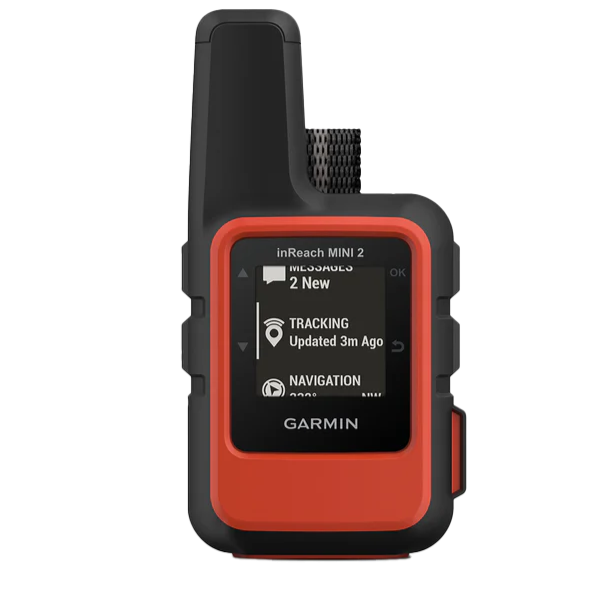
Dave and I had both carried a cell phone and an inReach. I had my cell phone but my inReach was at the base, while Dave had been carrying his on the climb. The party below had enough cell reception to make calls with Garmin dispatch and Parks Canada. 

Parks Canada later reported that I was secure on an anchor and wearing warm clothing. The rescue team decided that given the exposure and technical nature of the location, they would wait until sunrise to mount a rescue.

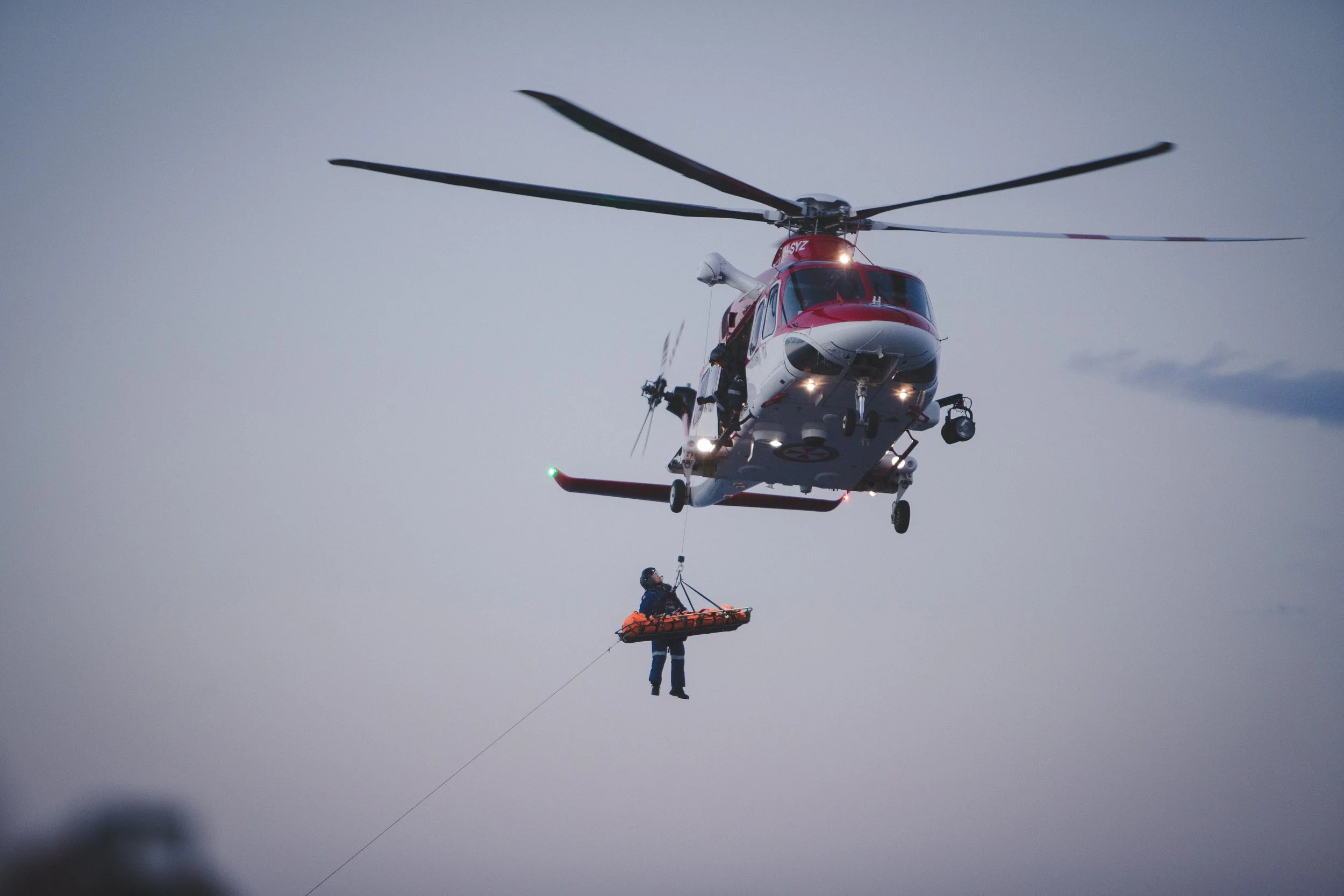
During the night, I acquired sporadic cell reception, and in the morning was able to send a few texts to the rescue team, who suggested delivering ropes to me so I could descend on my own. This was a great idea, as it eliminated the risk of doing a direct extrication from the steep wall. At 9:20 a.m., a bag containing two ropes and a radio was delivered to me by helicopter long-line. At 9:50 a.m., I was at the base of the route, where I met rescue-team members.

(Sources: Alik Berg and Parks Canada.)


Video Analysis—The Stacked Rappel

One way that rappelling accidents might be avoided is by using the stacked or pre-rigged rappel method. In this video analysis, IFMGA/AMGA guide Jason Antin walks us through the benefits of the stacked rappel.  


ANALYSIS

Dave was found with only the blue rope threaded through his device and backup. The device was five to 10 meters from the overhand knot.

The matching, triple-rated 8.7mm ropes showed no signs of damage, and the joining knot and stopper knots were intact. The stopper knots were unfortunately not photographed, so this comes from the rescuers and my own recollections. However, both parties agreed that both stopper knots were present.

It appears that Dave’s accident was caused by an improperly threaded rappel device. The simple solution to that is a basic partner or function check. Alternately, rappelling using the stacked rappel method is a solution. It is common in guiding practice and deserves broader adoption in the climbing community. (See ANAC 2025 KTR, “Crafty Rappel Techniques,” by John Godino.)   

Stacked rappel method. Image by AAC Staff Foster Denney.

Though we’ll never know exactly what happened here, these are the scenarios that I’ve come up with: 

  1. Device and prusik only loaded on blue rope. During the initial shuffle off the ledge and transition onto steeper ground, both of Dave’s hands were gripping the ropes. Once the ropes were fully weighted, Dave transitioned to a looser grip, perhaps one hand, or maybe he released both hands to deal with the tangled red rope.

  2. Same as above, except the red rope snarled the small ice daggers near the end of P3. They supported his body weight on the initial lower-angle terrain while providing similar tactile feedback to a functioning system. Once Dave was on steeper ground, his full weight caused the ice to fail or pulled the rope tangle through the constriction that had held it in place.

  3. ATC-Guide was properly threaded but prusik backup was attached to the blue rope only. When his hands came off braking, the red rope ran free. The stopper knot was not present, and the rope tail ran through the ATC. (Source: Alik Berg.)

This was a deeply impactful and traumatic event. Writing the above notes and going back to that place in detail has been really hard. But it is important to me that we get this right.

(Source: Alik Berg.)


Got a question about accidents or climbing safety?

Send it to [email protected] and hear answers from Accidents in North American Climbing editor, Pete Takeda, and the AAC team on an upcoming March episode of the AAC Podcast.


Sign Up for AAC Emails
The Line—Unclimbed Baffin

Most climbers journeying to Baffin Island in Canada head to the Weasel River Valley in Auyuittuq National Park, home to the world-famous walls of Mt. Asgard and Mt. Thor, among many others. Yet despite more than 50 years of climbing history in this area, there’s still enormous potential just outside the main valley. In April 2025, an ambitious and creative British team explored the glacier systems east of the Weasel River, finding numerous unclimbed peaks and walls.    

A striking unclimbed peak to the south of Mt. Bilbo, at the head of the Nerutusôq Glacier. Photo by Tom Harding.

Nerutusôq Glacier and Fork Beard Glacier, Seven First Ascents

Unclimbed walls about 25 kilometers from Kingnait Fjord, which is accessible by boat in summer. The photo is taken from the eastern side of the Fork Beard Glacier, looking approximately southeast. Photo by Tom Harding.

In April 2025, a four-person team made up of Leanne Dyke, James Hoyes, Ben James, and I flew into the settlement of Pangnirtung. Our hope was to use spring snow cover to ski the length of the mountains to the east of the Weasel River Valley, ascending unclimbed peaks along the way. However, on April 7, strong winds and lack of sea ice prevented us from accessing our planned snowmobile drop-off in Kingnait Fjord (the next fjord east of Pangnirtung Fjord). After this false start, we changed plans and were dropped on April 10 just below Summit Lake at the head of the Weasel River Valley.

An aerial view to the east over the Fork Bear Glacier complex, showing the 2025 team’s ascents in this area. Photo by Tom Harding.

We had hoped to ski straight up onto the Nerutusôq Glacier, to the southeast of Summit Lake’s outlet, but a lack of snow meant we spent three exhausting days portaging our sleds, food, and equipment up onto the glacier. We made camp three kilometers southwest of Mt. Bilbo (1,842m).

The team on the summit of Uppijjuaq (1,823m). Photo by Ben James.

From this camp, we made two first ascents. On April 14, we climbed the east slopes to the south ridge of a 1,823-meter peak we named Uppijjuaq. The next day, we made the first ascent of Minas Tirith (1,950m) via its three-kilometer west ridge (PD-), passing tricky steps and steeper granite cracks to an impressive summit tower.

We then skied south onto the Fork Beard Glacier, making two more first ascents, the southwest rib of Aqviq (1,860m) and the west face of Inutuaq (1,637m), as well as a failed attempt on a third peak.

Next, we headed south on the Fork Beard Glacier, hoping to find a pass at the top of the Turnweather Glacier that would connect us to the Gateway Glaciers to the south, but after two days of searching, no feasible route was found. Fortunately, this unnamed valley had never been visited by climbers, to the best of our knowledge, and we went on to make three more first ascents: the south face of Ukaliq (1,532m), west to north ridge of Uvingajuq (1,615m), and the south slopes of Atangiijuq (1,600m).

With so many of the peaks in this area of Baffin given Norse or English names, our team thought it would be nice to instead use the Inuit language to name most of the first ascents. Traditionally, the local population gives names for what the peak looks like or what they see in the local area, and we followed this method. For example, Uppijjuaq means “snowy owl,” Aqviq is “humpback whale,” and Uvingajuq means “diagonal,” after the distinctive ramp we climbed.

The team’s camp on the Fork Beard Glacier, with Inutuaq (1,637m) in the center right of the photo. They made the first ascent by traversing around the right side of the mountain and climbing the west ridge. Photo by Ben James.

To end our trip, we skied four days to exit the mountains: first to the west via the branch of the Fork Beard Glacier flowing south of Tirokwa Peak, then south along the frozen Weasel River, and finally to the sea ice in Pangnirtung Fjord. We returned to Pangnirtung village on April 30, having completed seven likely first ascents and skied around 150 kilometers. The weather was surprisingly stable, with many blue-sky days, and although temperatures at the start of the trip dropped to -30°C, it quickly warmed to a comfortable -10°C.

The eastern portions of the Nerutusoq and Fork Beard glaciers still have potential for future teams. Accessing this area in summer would be a long journey, but using the spring snow opens up the area. [This mostly British team received support from the Mount Everest Foundation; their extensive trip report can be downloaded here. They received additional support from the Arctic Club, British Mountaineering Council, Austrian Alpine Club, and the Alpine Club (U.K).]

—Tom Harding, United Kingdom


Last Call for Canada Reports—AAJ 2026

The 2026 AAJ will publish four more reports from Baffin Island, in addition to the one shared above. We plan to wrap up the Canada section of the book in early February. If you or a friend climbed a long new route anywhere in Canada in 2025, and you aren’t already in contact with an AAJ editor, we’d love to hear about it no later than January 31. Reach us at [email protected]


New Episode—The Direct Line on El Capitan

In November 2025, Sasha DiGiulian free climbed The Direct Line (a.k.a. Platinum Wall), a 39-pitch 5.13d on El Cap, in a 23-day push, including nine days trapped by a storm high on the route. For this episode, host Jim Aikman explores the history and highlights of this relatively new route (first free ascent: 2017), which is becoming known as one of El Cap’s most sustained and high-quality free climbs. Other guests include Elliot Faber, co-developer of The Direct Line and Sasha’s partner for the climb, and Alex Honnold, who also freed the route in November, with Tommy Caldwell.


Sign Up for AAC Emails

Thank You For Making Our Work Possible

Photo by AAC member Jeremiah Watt.

You did it! Thanks to the generosity of our community, the American Alpine Club is starting 2026 on a strong note.

Together, we’re protecting climbing’s future — one gift, one climb, one community at a time.


Looking Back: 2025

The American Alpine Club made a real, measurable impact on the climbing community.

  • Dispersed $87,000 in climbing and expedition grants, including securing double the funding for our Climbing Grief Fund

  • Welcomed over 19,900 climbers from around the world to our lodging facilities—all while investing in major upgrades across each location

  • Advocated for and supported the passage of the EXPLORE Act to prioritize climbing access and outdoor recreation opportunities on America’s public lands

  • Preserved the culture and knowledge of climbing through our Library and Archives, including supporting over 112 research projects

  • Reached over 6 million climbers who viewed our new Prescription Videos, and delivered copies of our world-renowned publications, Accidents in North American Climbing and the American Alpine Journal to our members—offering 90 in-depth accident reports and analysis, and 249 inspiring stories from the cutting edge of our sport

Every one of these wins reflects your belief in the power of this community and your commitment to the AAC. Your generosity is what makes the AAC not just an organization—but a movement built by climbers, for climbers.


Looking Forward: 2026

In 2026, the American Alpine Club plans to continue providing these unique benefits to the climbing community, as well as deepening the quality of our resources for climbers. This includes:

  • Providing our rescue benefit and $5,000 in medical expense coverage to our Partner, Leader, Advocate, and GRF level members.

  • Continuing to deliver world-renowned publications and media, including the American Alpine Journal, Accidents in North American Climbing, Prescription videos, and the AAC and Cutting Edge podcasts.

  • Building programming that strengthens members’ connections and creates more opportunities to gather, learn, and celebrate climbing.

  • Delivering double the amount of Climbing Grief Fund Grants to climbers who need therapeutic support in processing trauma and grief.

  • Increasing funding for the Research Grant to $9,000 during the AAC 2026 spring grants cycle.

  • Cultivating community hubs at our six lodging facilities situated near world-class climbing and outdoor recreation destinations.

  •   Expanding our Great Ranges Fellowship events and communications.


Thank you so much for your contribution to the AAC. Your gift enables us to continue delivering critical resources to climbers and fuels the evolution of this shared passion.

We’re excited to continue delivering these invaluable resources and look forward to the next chapter. 

Thank you for tying in with us.


Local Hero Dave Hume, on Bringing 5.14 to the Red in the 90s

In the 90s, Dave Hume was one of the Red River Gorge's original kid crushers. After climbing became a family hobby, Dave Hume got obsessed—and left his own mark on the sport.

Dave Hume is now based in Colorado, but loves going back to the Red as often as possible!

In this episode, we talk about what it was like being one of the original Lode Bros, bringing 5.14 to the Red with his ascent of Thanatopsis in 1996, and the one time he beat Chris Sharma in a competition.

He shares the story of how his dad and brother bolted the infamous Breakfast Burrito, one of the Red’s most classic 5.10s, and the sense of discovery of finding new crags like Drive By and Bob Marley.

Plus, we cover the early evolution of the Red from trad to sport climbing, reminisce about Miguel’s before they sold pizza, and how Dave repeated Just Do It, the U.S.’s first 14c, in an insulting few tries. Dive in to hear some fun stories from this Red River Gorge local hero.


If you believe conversations like this matter, a donation to the AAC helps us continue sharing stories, insights, and education for the entire climbing community!

The Line—Desert Towers in Saudi Arabia

Saudi Arabia is nearly ten times the size of Utah, and most of it is desert. Like Southern Utah, the terrain is riven with sandstone canyons and towers, nearly all of them unclimbed. Last January and February, a German trio did a three-week, 4,600-kilometer loop around the desert kingdom, exploring the traditional-climbing potential. So, how did their expedition turn out? It was a mixed bag.…

Gemini Tower, north of Wadi Al Disah in western Saudi Arabia. After the first ascent of the four-pitch formation, the German team was informed that climbing is not permitted in this area. Photo: Daniel Hahn Collection

Wadi Al Disah, Bajdah, Wadi Dham: 12 First Ascents

Excited and somewhat stressed, we plunged into the crazy traffic of the seven million–strong metropolis of Riyadh in our rental car. Excited because a journey into the unknown lay ahead: a search for climbs in a country that has only been open to Western tourism since mid-2019. And stressed because only five of our six pieces of luggage had arrived.

With a day to kill, Michael “Michi” Bänsch, Daniel Hahn, and I first shopped for supplies, then drove out of the metropolis toward the Edge of the World, a rocky escarpment northwest of Riyadh. The traffic was terrible; one construction site followed another. The entire country is being dug up; money seems endless. Due to the construction work, neither Edge of the World nor the stunning sandstone tower of Faisal’s Finger were accessible. But at least we spent a nice first night in the desert, giving us some relief and preparing us for the coming weeks.

The next day, January 20, our last piece of luggage arrived. We took a deep breath and set off toward Wadi Al Disah, 1,300 kilometers to the northwest, fairly near the Red Sea. Settlements were very sporadic, and the closer we got to the Hejaz Mountains, the more fascinating the landscape became. When we entered Wadi Al Disah, our jaws dropped: endless sandstone cliffs, magnificent scenery, and potential for generations of adventurers. Atir Tower, the valley’s landmark, glowed in the evening light. After finding a place to sleep and cook dinner, we went swimming—yes, swimming! A stream flows through the wadi, providing gloriously green vegetation and offering us a welcome cool-off every evening.

Seppo and Michi starting up the first pitch on Hinterhaus, a 200-meter formation in Wadi Dham. Photo: Daniel Hahn

The next morning, we headed straight to the Atir, a 350-meter tower and one of the few Saudi formations with documented routes. It was climbed by a chimney route on the east side in 2013, by a party including Donald Poe, a U.S. oil engineer and Saudi Arabia resident. In 2020, a group led by Leo Houlding from the U.K. found a new line on the west face and named it Astro Arabia (5.11). We climbed the original route (UIAA V or about 5.7), hoping to encounter rock roughly akin to the well-known Wadi Rum in Jordan, about 230 kilometers to the north. In fact, the rock turned out to be quite brittle and dirty. But what a summit!

Over the next few days, we searched for more climbable rock, which was harder than expected: There are endless formations, but upon closer inspection, many turned out to be too difficult, too fragile, or both. The fact that we did not have a drill or bolts didn’t make it any easier. But we soon made the first ascent of a beautiful tower (which had obviously been climbed by locals up to its forepeak), right at the valley entrance. We called it Burg (“Castle”) and the route Uralter Weg (“Ancient Path,” 80m, VI/5.10-).

Further into the valley, another peak tempted us, perhaps 100 meters high and with what appeared to be a climbable route. Soon after we started climbing, however, we heard strange noises from below. The SFES (Special Forces Environmental Safety) rangers had spotted us and were ordering us back down. After a lengthy but quite friendly discussion, we were surprised to learn that climbing is prohibited in the entire Wadi Al Disah. 

We detoured to a nearby canyon just to the north, Wadi Tarban (or Tourpan), where we climbed Gemini Tower (130m, 4 pitches, V+) and Porcelain Tower (scrambling plus 25m, VI), before being informed by friendly locals that climbing was not allowed there either. So, we left the Wadi Al Disah area earlier than planned and continued to Bajdah, a small town farther north, near the city of Tabuk, where we had been told climbing is officially permitted.

Michi in Al Gharameel Nature Reserve, where the climbers ascended five needles up to 20 meters high. Photo: Daniel Hahn

Here, a completely different landscape awaited us: an open plain from which countless rocks rise, some enormous massifs, some picturesque needles. It may be hard to imagine, but deciding where to start in a sea of rock is truly challenging. But we soon found some nice objectives, including a two-pitch needle that we named Stoneman, climbed by a new route called Triumph des Willens (“Willpower,” ca 100m, VII-/5.10). We also reached all five summits of a formation we named Felsenbrüder (“Brothers of Stone”), about 150 meters high, by the route Geschenk der Wüste (“Gift of the Desert,” VII-). The climbing here was challenging, with brittle overhangs that had to be overcome or bypassed, followed by easy scrambles to the summits.

Next, we visited the nearby Wadi Dham (Damh), where we fanned out, eyes upward, looking for opportunities. We chose a pagoda-like formation we called Hinterhaus. Although generally easy, it also had many small overhangs, and one even required aid: Weg des Willens (VI+ C1). Two more days here brought us the first ascent of another small tower and some beautiful hikes in an impressive landscape—simply a wonderful time.

On all of our climbs, we only used cams, nuts, and slings. No bolts were placed. We live in Dresden, near the famed sandstone towers of Elbsandsteingebirge and Adršpach (Czechia), and we are very experienced sandstone climbers. Yet, even though Saudi Arabia seems to offer endless sandstone climbing, the rock is very unpredictable, even when it looks great—sometimes a hold stays put when weighted, sometimes it pops off. With all the dust and coarse sand, the ropes got stiffer every day—all of our gear suffered as much as our nerves.

After two weeks I headed home, while Michi and Daniel stayed for another week. During this time, they visited Al Gharameel Nature Reserve and found countless sandstone needles. They climbed five towers, up to about 20 meters high and UIAA VI (5.9+/5.10-), without seeing a single trace of previous climbers.

During our travels, we met incredibly friendly people, some of whom offered us water or invited us to share tea or coffee, and shared interesting conversations, sometimes in perfect English, sometimes with gestures and Google Translate. We enjoyed a simple life, sleeping out on the sand. On some mornings, our sleeping bags sparkled with frost. We pushed or dug the car out of the sand twice. In all, we summited 13 formations, probably 12 of them first ascents.

—Stephan “Seppo” Gerber, Germany 


Sport Climbing in Saudi Arabia

In addition to the desert towers explored by this team in 2025 and the British group in 2020, a bit of early traditional climbing was reported on granite in the western part of Saudi Arabia, south of Ranyah (AAJ 1989). Of more interest to many climbers will be the sport routes developed in late 2018 at various sandstone, granite, and limestone crags—some of them quite impressive—by Read Macadam (Oman) and various European climbers, who worked with the Saudi Climbing and Hiking Federation. The federation has published PDF guides to these crags, and many of these routes have been posted at Mountain Project.

Overview of the impressive Olympic Crag, which has about 40 routes on steep granite, two and a half hours east of Jeddah, Saudi Arabia.


Astro Arabia

In early 2020, shortly after Saudi Arabia opened to tourism, British climbers Waldo Etherington and Leo Houlding visited Wadi Al Disah and climbed two large towers, leading to a film, Great Sheiks, as part of the Brit Rock series. Here’s the opening segment from the film, covering the first ascent of the 100-meter Leaning Tower of Disah—it gives a good sense of the “acquired taste” for exploring variable Saudi sandstone.


The Cutting Edge Podcast: Cerro Torre Solo in Winter

On September 7, Colin Haley reached the summit of Cerro Torre all alone—a climb that tested this Patagonia veteran perhaps more than any before. It was the first winter solo of the stunning granite needle, and the culmination of a nearly 20-year dream. Don’t miss this extraordinary episode of the Cutting Edge.


The Line is Powered By:


The Line is Supported By:


Sign Up for AAC Emails
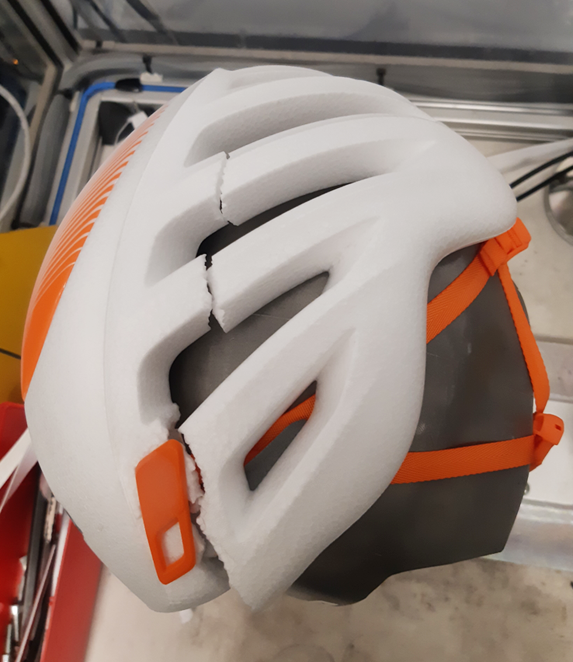
Know Before You Go—Calling for a Rescue

Originally published in Guidebook XVI

If you’re an AAC member at the Partner, Leader, Advocate, or Great Ranges Fellowship level, then you have access to the AAC’s rescue benefit. Make sure you know how to initiate a rescue—before you find yourself in that kind of situation.

Pre-Program Your Garmin inReach

We know that a lot of our members put their trust into Garmin products* as a backup for when a cell phone isn’t reliable. Here’s how to prepare your Garmin device to contact Redpoint Travel Protection in the case of an emergency away from home:

  1. Add Redpoint’s operations team as one of your emergency contacts with the email [email protected].

  2. Save your preset messages for emergency and nonemergency scenarios.

  3. Send a test message to Redpoint to confirm that you’ve successfully set them up in your device.

  4. Go to americanalpineclub.org /rescue to learn more about your rescue and medical benefit and find further details about how best to set up your Garmin device.

Other Ways to Prepare

  1. Make sure your climbing/adventure partners also have AAC memberships! If not, make sure they know that you are covered in the event of a medical emergency and how best to contact Redpoint on your behalf if you are incapacitated.

  2. Inform your family and loved ones that if the worst thing happens, you are covered for $15,000 in mortal remains transport through Redpoint.

  3. If you’re working with a guide company, inform them of your preference for using Redpoint Travel Protection in the event of a medical emergency.

*Did you know that AAC members receive 20% off Garmin products through ExpertVoice? Sign up for your account today at expertvoice.com/group/aac to start shopping with hundreds of brands.

The Prescription—Crevasse Fall

This month, we feature an accident that occurred in 2025 on Mt. Baker’s Squak Glacier, on the peak’s southern facet. On May 23, Daton Nestlebush fell into a crevasse while on a snowboard descent. His partner Manny Pacheco, travelling on skis, effected a rapid rescue. Pacheco captured a rare POV video of this successful 1:1 partner crevasse rescue and later posted it on Instagram (@pmannyy). Below, we feature this remarkable video, along with a blow-by-blow analysis by IFMGA guide Jason Antin.  

Mt. Baker’s Squak Glacier is the glacier/snowfield on the left-center of the peak. This classic ski-mountaineering route, known for its excellent corn skiing, is one of Baker’s most popular ski descents. It requires extensive glacier travel and offers thousands of feet of descent. Photo by AAC member and grant recipient Craig Muderlak.

Crevasse Rescue | Fall Into Crevasse 

Mt. Baker, Squak Glacier

On May 23 at 3 a.m., my longtime friend Daton Nestlebush (26) and I, Manny Pacheco (27), set out to ski Mt. Baker via the Squak Glacier route. I’m experienced in ski mountaineering and crevasse rescue, and I hold an AIARE 1 avalanche-training certification. Daton had limited experience in high-alpine terrain—this was his first time on a glacier attempting to summit a Cascade volcano.

Earlier, our team had thinned from four members down to two. I took the risk of glacier travel with an inexperienced partner because of my familiarity with the route. We reached the toe of the Squak Glacier at  5:15 a.m. and put on harnesses. I taught Daton how to bury a picket and fix a rope to it—the minimum self-rescue skill one needs if one falls into a crevasse and is still conscious.

We reached the top by noon (my seventh Mt. Baker summit). We then transitioned into descent mode and made our way down to the Squak Glacier, skiing 500-foot pitches while taking turns watching each other. At 1:15 p.m., at 7,950 feet, I stopped abruptly when I saw large crevasses 100 feet ahead. I radioed Daton, still above me, to traverse to skier’s right and keep a high line. He passed, and we both started a 300-foot descending traverse to bypass hazardous convex terrain.

As I followed, Daton collapsed a thin snow bridge and dropped into a crevasse. He raised his arms into a “T” shape, catching himself between the uphill and downhill crevasse lips. His snowboard tip caught an ice chunk four feet below the surface. Only his arms and head were visible.

My most pressing goal was to anchor Daton. I immediately redirected uphill and crossed another small crevasse. I stationed myself 20 feet uphill, using my pole to probe. I told Daton not to move and that I’d throw him a rope in 60 seconds. “You’re going to be okay,” I reassured him. 

He was holding himself strenuously by his arms above the crevasse, which we later estimated to be 60 feet deep. He said, “Can you make that 45 seconds?”  

Fortunately, the late-spring snow was perfect, and I made a trench and buried a picket in a deadman position, stomped it one foot deep, and backfilled the trench. I clipped the picket and tied another figure eight on a bight 20 feet from the anchor and threw it to Daton. My split-second decision to use the eight was based on urgency. Daton was able to grab the large loop—he later said this was critical to his survival. 

I knew the clock was ticking but stayed methodical. Daton grabbed the figure-eight loop with his right hand. As he let go of the uphill lip to clip, he dropped a couple feet, fully weighting the system. At the same time, I attached myself to the rope as a secondary anchor. This all felt like ten minutes but, in reality, it was probably more like 30 seconds.  

Daton Nestlebush emerging from the crevasse. Minutes prior, Nestlebush’s head was five feet below the surface after he fell ten to twelve feet into the deep pit. Photo by Manny Pacheco.

I wanted Daton to pull himself over the lip, but after his head dropped below the surface, this was no longer possible. I began setting up a haul system by burying my ice axe in a deadman, connecting it to the picket, and creating a master point. I took myself out of the system and reconnected with an extended prusik. The weight transfer lowered Daton another few inches; his head was now five feet under the surface. 

Although this stage was less time-sensitive, I was still concerned about “Harness Hang Syndrome”—suspension trauma in which the victim loses consciousness due to lack of blood circulation. I began to rig a 3:1 haul system. I threw a rope end down to Daton, and he clipped it onto his belay loop. Although I was unable to “prepare the lip” with a pole/axe underneath the loaded rope due to the probability of a secondary crevasse, I figured we could problem-solve for this once his head was above the surface. I placed a Micro Traxion on the master point and a prusik on the load line. I clipped the redirected load line onto my belay loop and told Daton to expect to be raised. After double-checking the system, I bear-crawled uphill until the prusik had to be reset. A 3:1 system with friction meant I was pulling 100 to 120 pounds. I repeated the sequence of bear crawling, resetting the prusik, and repeating.

Daton’s face was now above the surface, but progress halted as the haul rope cut into the lip. I threw him the original end of the rope to clip onto his pack. I also told him to unbuckle one of his snowboard boots and use the original fixed rope as a handline. Being able to use his feet, eliminating the pack weight, and having a handline allowed Daton to escape the crevasse.


VIDEO ANALYSIS

Manny Pacheco’s video gives us a firsthand look at a real-time crevasse rescue. In this month’s Prescription video, IFMGA/AMGA Guide Jason Antin reacts to the footage and walks through the rescue step-by-step, highlighting what went well and offering recommendations for similar situations.


ANALYSIS

Regardless of how “chill” or (seemingly) filled, an unlucky pressure point on a glacier can lead to a nightmare scenario. The snow bridge was intact; the hidden crevasse was exposed only after the bridge failed.

Fortunately, Daton was in front and I had a visual. Had he fallen into the crevasse behind me, I might not have immediately noticed. This would have dramatically delayed any rescue.

It was lucky that the less experienced person was the one who fell. Had I fallen and become unconscious, we’d likely have needed the help of other skiers nearby. It was also good that Daton caught his fall at the lip—preventing a 60-foot fall—and was able to hold on for the two minutes it took to fix the line. Had Daton been alone with no witnesses, he likely would have fallen below the surface. Snow/ice dampens any yelling.

The process and system I used were not flawless, but I had to act decisively. In practice scenarios, you have time to prep, but in reality, things happen fast. The key is to stay methodical; slow is smooth, smooth is fast.

I should have stopped Daton before he passed me, as he is much less experienced in this terrain. Had he followed me in a higher traverse line, he likely would have avoided the crevasse fall. Also, if I had looked at our position before reaching the convexity, we could have bypassed the crevasse earlier. I was too caught up having fun and skiing.

I’m now much more cognizant of communicating with my partners during glacier travel, as well as of their experience level. This report should encourage glacier recreators to acquire competence to handle worst-case scenarios. Please take crevasse-rescue courses from professionals and/or partner with knowledgeable friends and mentors. Had I not learned and annually refreshed these skills, the outcome would have been much different.

(Source: Manny Pacheco.)


The Prescription is Supported By:


Sign Up for AAC Emails
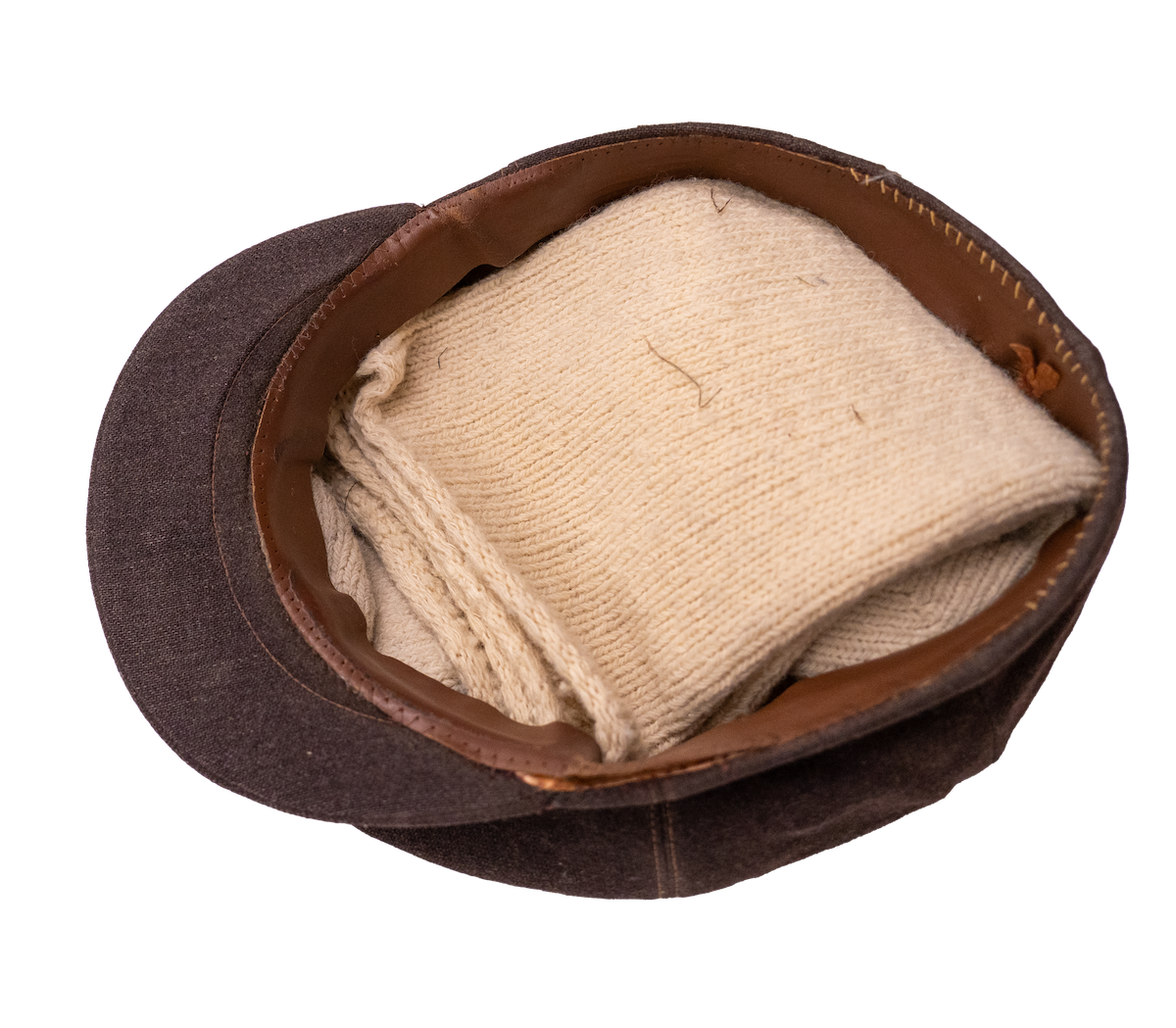

Explore Prescription Stories

A Tribute to Chuck Fleischman

PC: AAC member Jeremiah Watt

We are sad to share that beloved AAC community member Charles (Chuck) Fleischman passed away in November of 2025. Chuck was a devoted member of the AAC board of directors from 2013 to 2019, and was truly a person who lived out loud. 

Chuck was a Harvard graduate who cofounded Digene Corporation, a molecular diagnostics company. Chuck’s work with Digene, as President, CFO, and director, resulted in the first FDA-approved test to detect high-risk HPV before it caused cervical cancer. 

Photo provided by Chuck Fleischman during his BOD tenure

When he semi-retired, he threw himself into supporting other meaningful work, including his board term at the AAC. With Jackson Hole as their home, Chuck and his wife Lisa wanted to make a difference in their community. So their first step, beyond membership, was giving back to the local AAC community by supporting the introduction of solar panels on Cabin 2 at the AAC’s Grand Teton Climbers’ Ranch.  
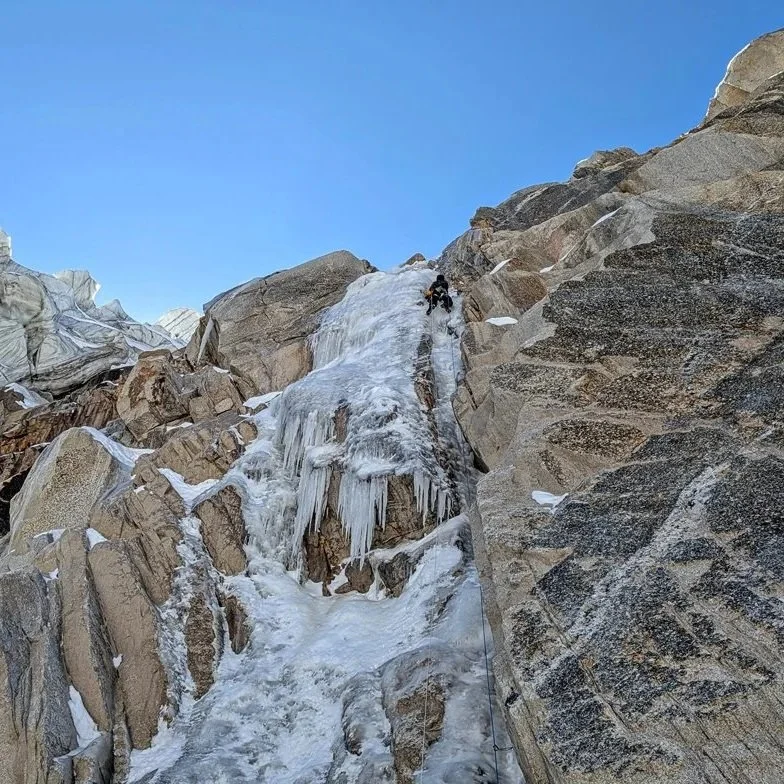
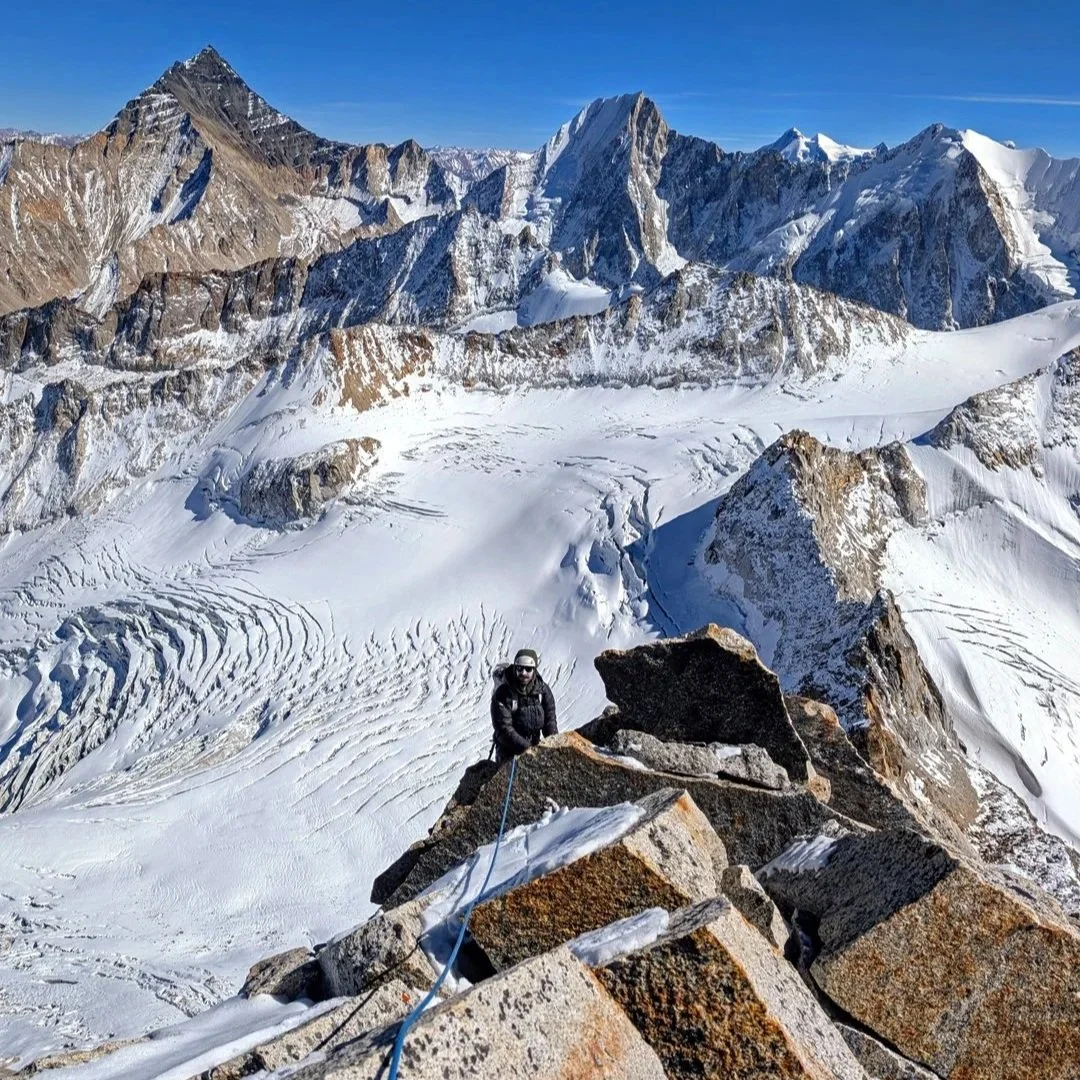
As an AAC board member, Chuck was the kind to always be outspoken and always push for greatness. He was very mission driven, always pursued excellence, and held the AAC to those same standards. Phil Powers, past AAC Executive Director, remembers his tough questions, but offered always with an upbeat demeanor, as well as a gregarious laugh.  

Chuck’s commitment to the AAC was grounded in his love of the mountains and wilderness. He would ski as many days as the weather gods would allow, including more than 80 days each season, even as he was fighting off cancer. He regularly went on big ski adventures with partners like Jimmy Chin and Kit DeLauriers. Chuck was also a river rat and a committed climber, having summited El Cap, gone on expedition to K2, and floated the Grand Canyon many times. 

Chuck lived larger than life, and his impact on the AAC will be felt for years to come. Our thoughts are with Chuck’s family as they process his passing. 


Memories From AAC Community Members:

“Chuck has been a career mentor, as well as a climbing and adventure mentor for me. He taught me how to be an effective business professional and how to take my experience on the board of the Bay Area Climbers Coalition and carry it into my role as an AAC board member. He also taught me how to look for big objectives in the mountains. Serving on the AAC board was probably the biggest summit I could have aimed for, and he inspired me to pursue fourteeners like Shasta, Whitney, and other big goals. All of it was a direct result of his mentorship.”

—Jen Bruursema, former AAC board member

“If I was going on a hike with Chuck, I knew it was going to be A) a great day, and B) there were going to be some hard questions to tackle along the way. I knew it meant he really just cared about the Club. He wasn’t going to let a day go by without pushing us forward.” 

—Phil Powers, former Executive Director of the American Alpine Club

Foremothers: The Story Behind the Four Women Who Helped Found the American Alpine Club

Annie Peck (top left)] Library of Congress; [Fanny Bullock (top middle)] AAC Library Collections; [Fay Fuller (top right)] Wiki Commons; [Josephine Peary (bottom)] Library of Congress; c AAC member Foster Denney

By Sierra McGivney, research supported by the AAC Library

Originally Published in Guidebook XVI

Fuller, Miss Fay
Peary, Mrs. Robert E.
Peck, Miss Annie S.A.M.
Workman, Mrs. Fanny Bullock, F.R.S.G.S.

Their names were written in ink, part of the list of founding members of the American Alpine Club in the AAC bylaws and register book. These four women answered Angelo Heliprins' call to establish an “Alpine Society.” The American Alpine Club was established in 1902, but would not get its name until 1905.

The founding members determined that dues were to be five dollars a year, about $186.90 in today's money. This early version of the Club was interested in projecting a reputation of mountain expertise: members had to apply for membership with a resume of mountain climbing or an explorational expedition they had participated in. Those without a sufficiently impressive resume would not be accepted as members. All the founders had lists of their ascents and exploratory expeditions underneath their names to drive the point home that this was a club of high mountain achievers.

It was no small feat that these women were invited to participate in founding an alpine club at the turn of the 20th century. After all, women weren’t allowed in the British Alpine Club until 1974, forcing women to create their own alpine or climbing clubs.

But Fay Fuller, Josephine Peary, Annie Peck, and Fanny Bullock Workman were forces to be reckoned with, each in their own way. They helped steer the American Alpine Club from its beginnings and pushed boundaries in mountain climbing and Arctic exploration, all well before the 19th Amendment, ratified in 1920, gave women the right to vote. Each year, their new accomplishments were published in the bylaws and register book under their name, and some were even invited to speak during the AAC Annual Gathering about their expeditions.

Ultimately, these four women are foremothers to American climbing and exploration. Their stories are shaped by their historical context, but the meaning of their mountain achievements is timeless.


Miss Edwina Fay Fuller was the first woman to summit Mt. Rainier in 1890. Fuller also climbed other glaciated peaks in the Cascades: Mt. Hood, Mt. Adams, Mt. Pitt (now Mt. McLoughlin, which still had a glacier until the early 20th century), and Sahale Mountain. She was described as self-reliant and dogged.

Fay Fuller’s ascent of Rainier nearly ostracized her from Tacoma society—not because she was mountaineering but because of what she wore and who she traveled with.

Her party of five, all men except for her—scandalous for the time—woke up on August 10, 1890, at half past four and began their arduous journey toward the summit. In a 1950 feature article about Fuller in Tacoma’s newspaper, The News Tribune, she said, “I was very nearly ostracized in Tacoma because of that trip—a lone woman and four men climbing a mountain, and in that immodest costume.”

Her “immodest costume,” an ankle-length bloomer suit covered with a long coatdress, was made of thick blue flannel. She also covered her face in charcoal and cream to prevent a sunburn (unfortunately, it didn’t work). Fuller was determined to reach the summit on this attempt, her second up Mt. Tahoma or Tacoma, now Mt. Rainier.

Fuller and her group climbed the Gibraltar Ledges, a Grade II Alpine Ice 1/2 with moderate snow climbing and significant rockfall hazard. Today, the most popular route on Rainier is Disappointment Cleaver, a mix of snowfields, steep switchbacks, and crevassed glaciers, but no technical climbing. Fuller and her team navigated the difficult and exposed terrain of there route with little prior experience and with gear we wouldn’t dare use today, successfully summiting Rainier.

Fay Fuller. Photo by Wiki Commons.

Len Longmire, their guide—though he had never been to the summit—recalled that one of the group members offered Fuller a hand at an especially dangerous place. “No thanks,” she replied, “I want to get up there under my own power or not at all.”

That night, under the stars, the team slept in one of many craters on the stratovolcano, listening to avalanches raging down the mountain. The team continued down safely the next morning, leaving a sardine can containing their names, a tin cup, and a flask filled with brandy as proof of their adventure.

Fuller went on to summit the mountain once more with the Mazamas in 1894.

Her ascent led to her becoming a fierce journalist. She went on to cover the Chicago and St. Louis world’s fairs, and helped found the Mazamas in 1894, the American Alpine Club in 1902, and The Mountaineers in 1906. She became the world’s first harbor mistress in Tacoma and was an actress. Expectations be damned.


Mrs. Josephine Peary attended Spencerian Business College and graduated as the class valedictorian in 1880. Fueled by her own sense of adventure, she accompanied her husband on four of his Arctic expeditions, learning how to hunt, fighting off walruses, and exploring the breathtaking beauty of Greenland. She was considered the “First Lady of the Arctic” and gave birth to her first child, Marie, about 13 degrees, or just under 900 miles, from the North Pole in 1893.

Josephine Peary. Photo by Wikimedia Commons.

“I cannot but admire her courage. She has been where no white woman has ever been, and where many a man hesitates to go,” wrote her husband, Robert Peary—who was embroiled in his own controversy in the early 1900s about whether he “discovered” the North Pole and his treatment of the Greenlandic Inuit—in the preface of Josephine’s book My Arctic Journal.

When the American Alpine Club was formed, sport and trad climbing didn’t exist, and ice climbing was extremely primitive. Exploration was nearly as important as mountaineering in defining the sport.

The American Alpine Club’s foundation was based on exploration and mountain climbing. Indeed, included in the 1902 bylaws was the following mission: “The objects of the Club shall be the scientific exploration and study of the higher mountain elevations and of the regions lying within or about the Arctic and Antarctic Circles; the cultivation of the mountain craft...”

Josephine Peary was not a climber. Her expertise was Arctic exploration, which was wholly unknown to the Western world at the time. In 1891, Peary ventured to northern Greenland with her husband and their crew on the Kite. She spent days under the midnight sun gathering yellow arctic poppies and shooting auks, gulls, and eider ducks.

On September 23, Mrs. Peary joined a small group on a smaller boat, the Mary Peary, to head up Inglefield Gulf. They searched for walruses to obtain the ivory in their tusks and meat for the coming winter. At this time, ivory was in high demand, with the United States taking in 200 tons per year by 1913. The devastating effects of the ivory trade on animal populations have made it illegal since 1989.

Robert Peary had brought a Kodak camera and asked the crew members to row until he said stop. He was so engrossed in getting his picture just right—much like a national park tourist—that he forgot to tell them to stop and ran right on top of an ice cake, nearly tipping the boat over. In the chaos, a walrus was harpooned and it dove underneath the water, dragging the boat off the ice cake and righting it.

But the damage was already done. According to Peary, 250 walruses surrounded the boat and bullets started flying. The walruses were not going down without a fight. Bullets whistled by Josephine’s ears in all directions while she reloaded guns.

“I thought it about an even chance whether I would be shot or drowned,” wrote Peary in My Arctic Journal.

This was just the beginning of their time in the Arctic, and danger was all around them, but she was excited by the uncertainty.


AAC founding member Fanny Bullock Workman standing on Silver Throne plateau, Karakoram. Public Domain Wikimedia Commons c Image recolored by AAC member Foster Denney.

Support the Library

The Henry S. Hall Jr. American Alpine Club Library houses one of the world’s finest collections of mountain-related artifacts, archives, rare books, maps, and media. A climbing bibliophile’s dream, the library contains more than 60,000 books and all the information you could ever want on mountain history, mountain culture, climbing routes, and more.

Donate to the AAC Library to support climbing archives and research!


Today, Annie Peck might be best known for wearing knickerbockers on her 1895 ascent of the Matterhorn. According to Peck’s article “A Woman’s Ascent of the Matterhorn” for McClure's Magazine, wearing knickerbockers with or without a short skirt was the norm when “high climbing.”

Annie Peck. Photo by Wikimedia Commons.

But not everyone felt this way. Both in and outside the context of mountain climbing, women could face retribution, such as arrest or fines, for wearing pants, but most of the time, they just walked away with damaged reputations or faced social exclusion for their fashion choices. However, some women were arrested for wearing pants and even jailed. Emma Snodgrass, in 1852, was arrested several times for wearing pants in Boston, and Helen Hulick spent five days in jail in 1938 for wearing slacks to a court hearing in Los Angeles.

Peck was a suffragette—whether her pants-wearing was an act of political defiance or a matter of safety, other women had been badly injured or perished while wearing skirts climbing, and she would not be one of them.

“For a woman in difficult mountaineering to waste her strength and endanger her life with a skirt is foolish in the extreme,” wrote Peck in a 1901 article for Outing Magazine titled “Practical Mountain Climbing.”

Peck was a former Latin professor at Smith College who left it all behind to climb mountains and lecture about her adventures. From 1890 to 1910, she climbed a dozen mountains in Europe and Latin America. She would lecture, save up her money, climb mountains, and then repeat the process.

Peck was on the hunt to stand on the apex of America and thought she had found it in Mt. Huascarán in Peru. In 1908, at the age of 58, she successfully summited the mountain on her sixth attempt. She was the first known person to ever stand on top of Mt. Huascarán.

With the help of fellow American Alpine Club member Herschel Parker, a physicist and mountaineer, she determined that the top of the mountain was around 23,520 feet, but she took no measurements from the summit, only the saddle. Peck’s ascent and the associated height she had achieved meant she now held an altitude record, eclipsing Fanny Bullock Workman’s previous record. The claim would start one of the biggest disputes of mountaineering history.


Fanny Bullock. Photo by Wikimedia Commons.

Fanny Bullock Workman was a fierce woman you wouldn’t want to cross. She had an impressive climbing resume, with ascents in the Alps, the Karakoram, and the Punjab Himalaya— she had one of the longer lists of ascents in the AAC’s founders section.

Deeply ambitious, Workman snatched the women’s altitude record from Annie Peck in 1906 when she climbed Pinnacle Peak in the Nun Kun massif in the Himalaya. This spurred Peck to try to take the record back with her climb of Mt. Huascarán, which she claimed to be higher than Pinnacle Peak.

People were engrossed in their feud. The media couldn’t get enough of two powerful women in the same field fighting for the top spot—or rather, the highest spot. Both women gave interviews for articles in newspapers like the Trenton Evening Times, Harrisburg Daily Independent, Detroit Free Press, and Suburbanite Economist, to name a few—defaming one another and trying to frame the story's narrative for their benefit. Whether their feud was malicious or mutually beneficial, people knew their names and accomplishments as mountaineers first, then as women.

In 1909, the American Alpine Club invited Annie Peck to speak about her ascent of Mt. Huascarán. However, the Club grew concerned when newspaper coverage and fans began to question how she ascertained the height of the mountain. Earlier on the same day of her lecture at the AAC’s annual meeting, Charles E. Fay, Vice President of the AAC, proposed an investigation into the height of Huascarán since “exaggerated reports have recently been circulated by the press...regarding the altitude of Mt. Huascarán.”

News outlets exaggerated the peak’s height to up to 26,000 feet. Peck had not brought an aneroid barometer—a sealed metal chamber that expands and contracts depending on the atmospheric pressure around it—with her on the climb to measure the altitude, nor did she take a measurement from the summit, so she couldn’t be sure about the height.

Workman wanted to end speculation and get her title back. In 1909, she spent the equivalent of half a million dollars to send surveyors to Peru to find the true height of Mt. Huascarán. The surveyors returned with triangulated heights for both the north and south peaks. They determined that the north peak was 21,812 feet (modern technology has determined it is actually 21,831 feet) and the South Peak was 22,187 feet (actually 22,205 feet). Either way, Pinnacle Peak was higher than both.

According to a 1911 New York Times article, the Academy of Sciences ruled in Workman’s favor. The year prior, in a letter sent from Henry G. Bryant, then AAC President, to Annie Peck, Bryant said the AAC sided with Workman’s assessment of the peak’s height. Workman had won back the altitude record, retaining her reign over women’s alpinism.

Caught off guard, Peck didn’t hesitate to make a quippy remark in a letter back to Bryant: “I had not been aware that her interest in my ascent of Huascarán extended so far, though I am not surprised. What fine thing it is to have plenty of money!”

But not all was lost for Peck. In 1910, the Hassan Cigarette Company featured a series of trading cards titled “World’s Greatest Explorers.” Out of 25 cards, Peck was the only woman featured. That same year, the Singer Sewing Machine Company gave away a packet of postcards featuring Peck’s travels and climbing accomplishments with every machine they sold. She still published her book about her expedition on Mt. Huascarán, but switched the title from The Apex of America to A Search for the Apex of America. She was a household name, something money can’t buy.

Still, you wouldn’t have wanted to be seated between Peck and Workman at the American Alpine Club Annual Gathering that year.


These four women helped shape the Club as we know it today. Fuller, Workman, Peck, and Peary were strong-willed, educated women in a world governed by rules and regulations of what a woman should be. Each woman stood defiant in her own way. Fuller was independent. Peary welcomed exploration. Peck believed in safety regardless of norms. Workman was dogged in all of her pursuits. They were courageous and ambitious, petty and imperfect. They were history makers. They were part of something bigger than themselves.


Sign Up for AAC Emails