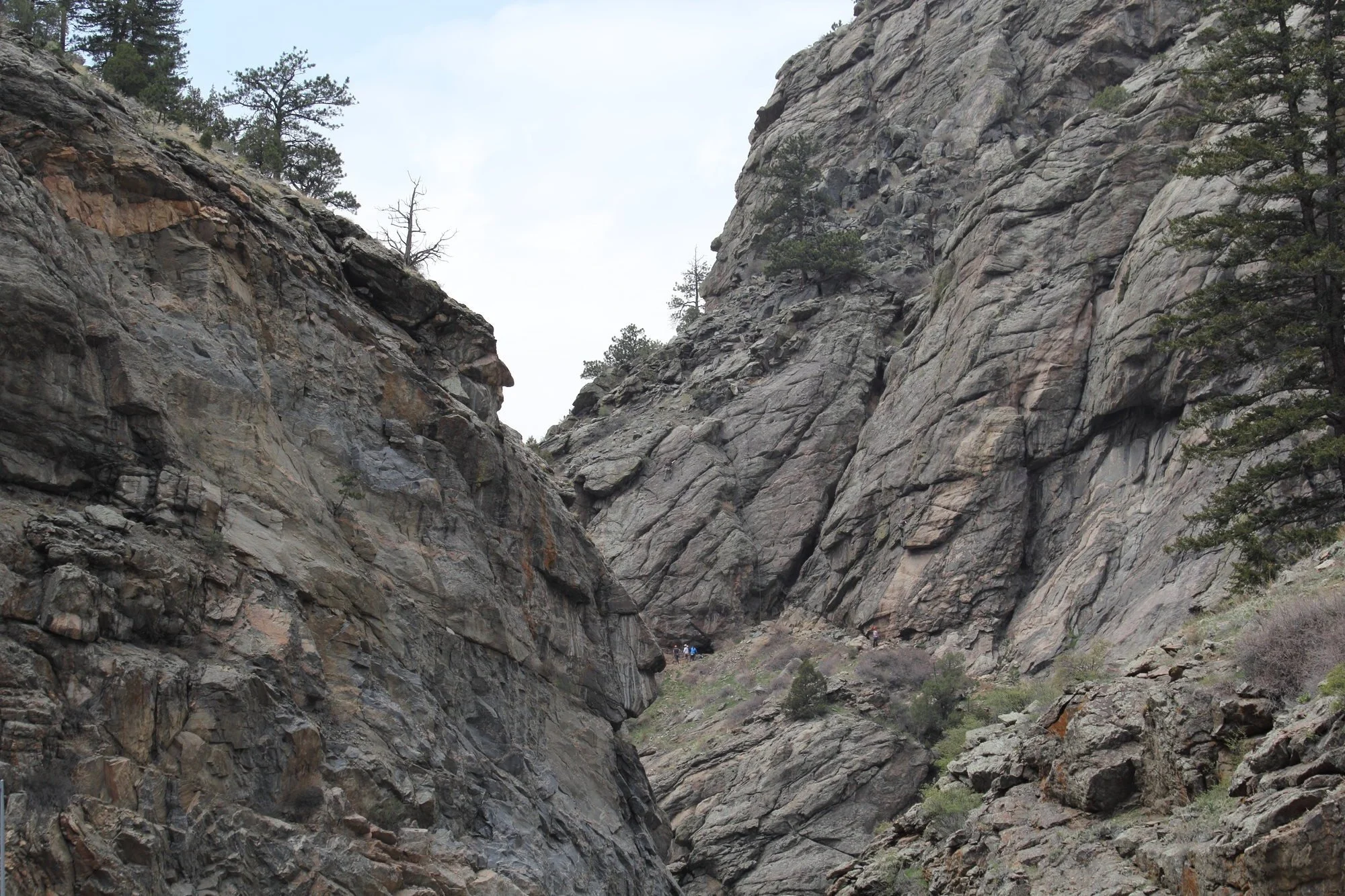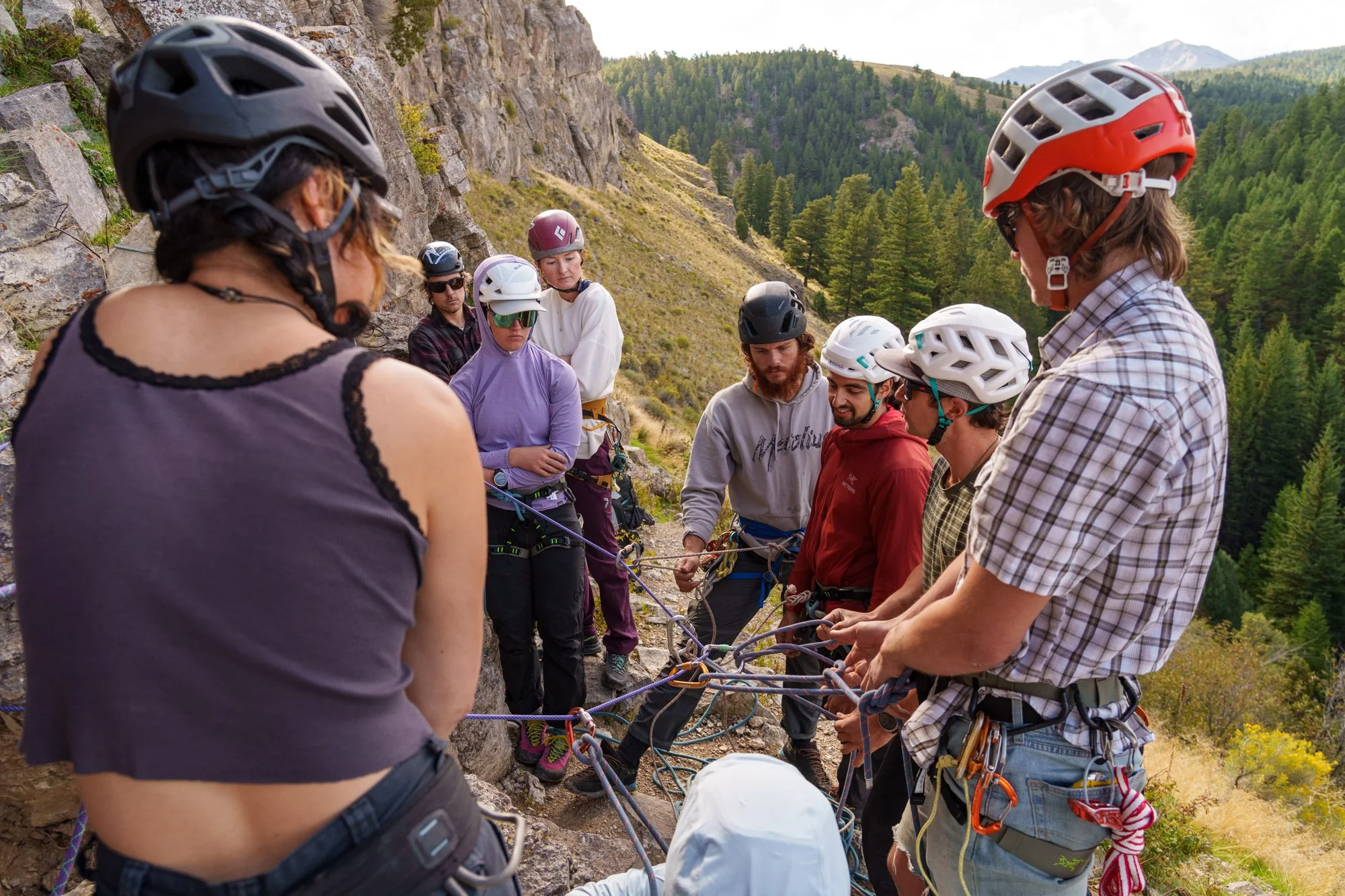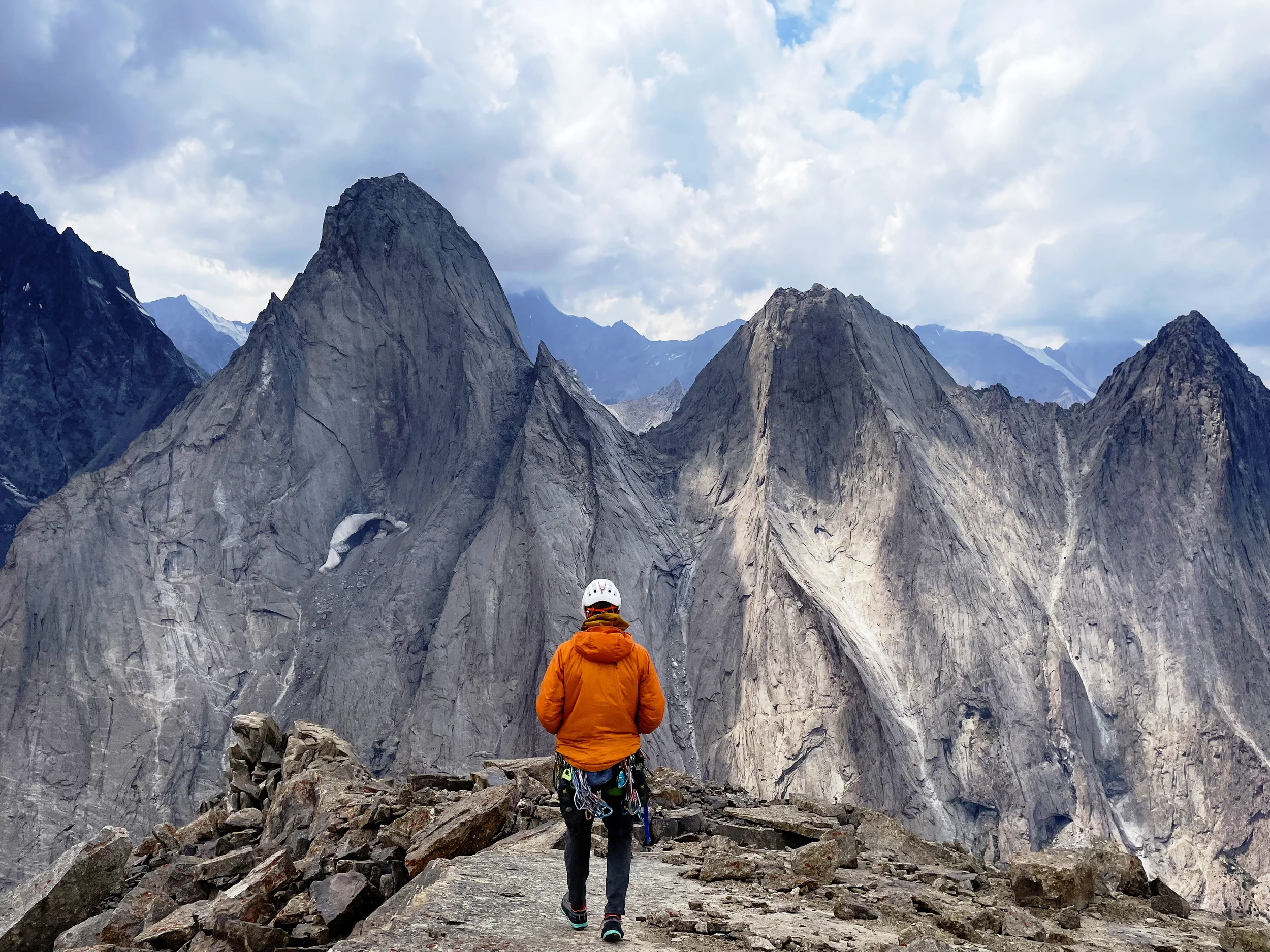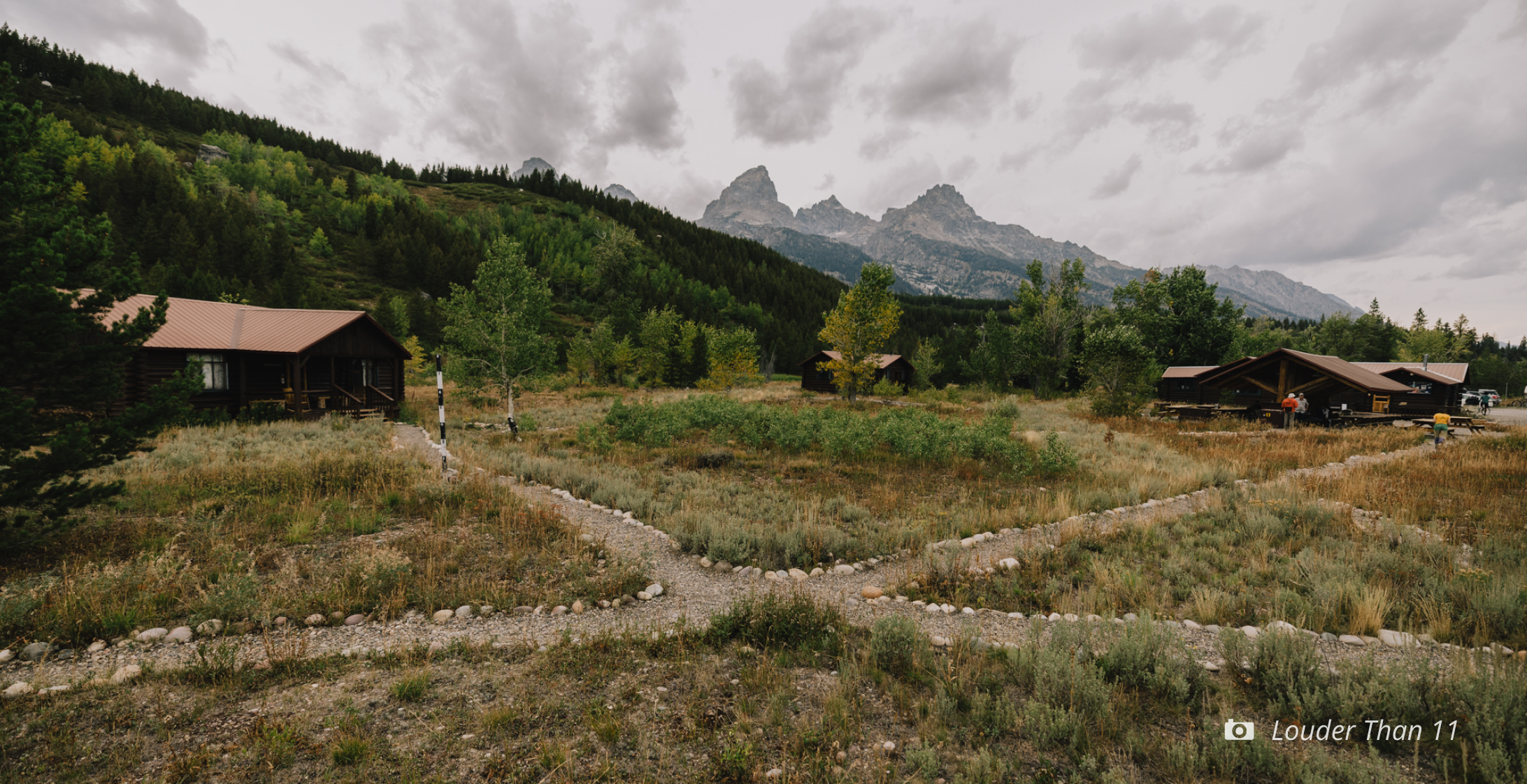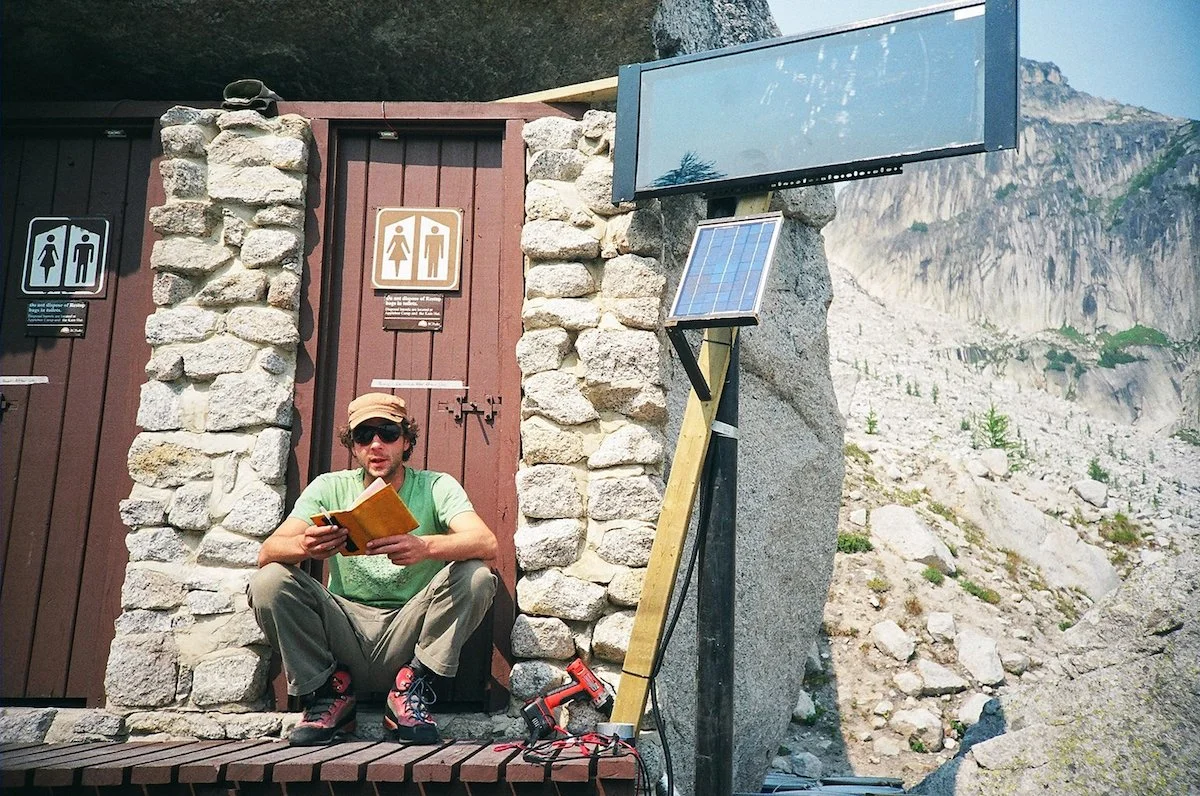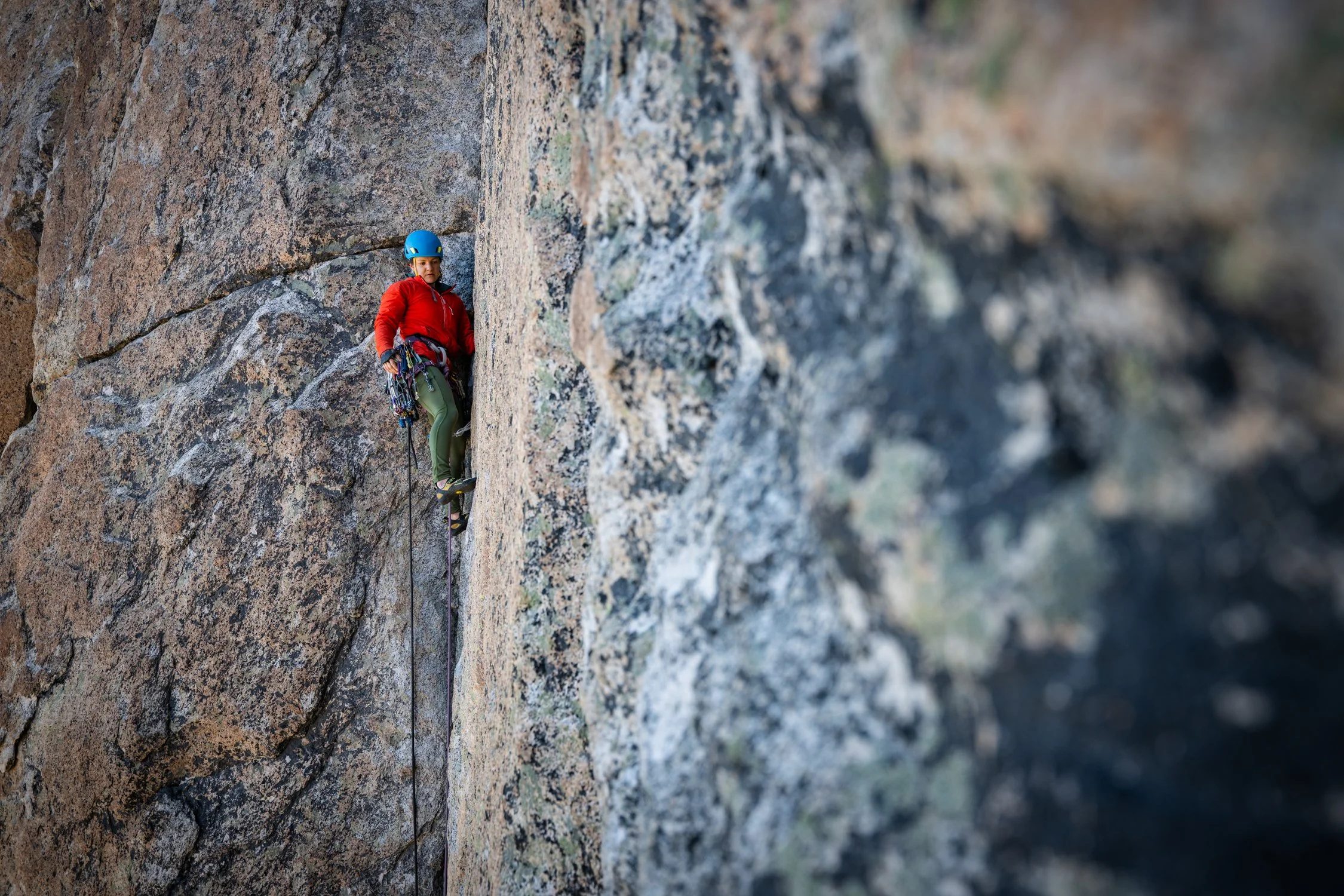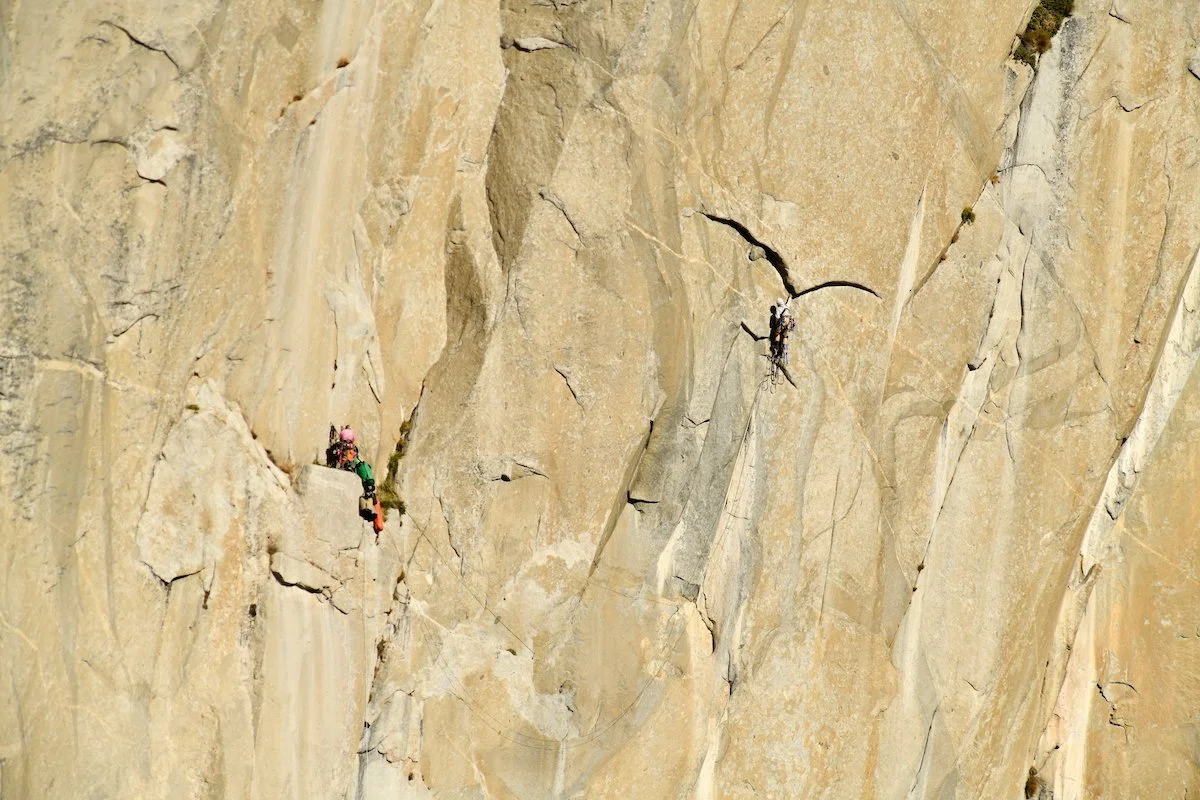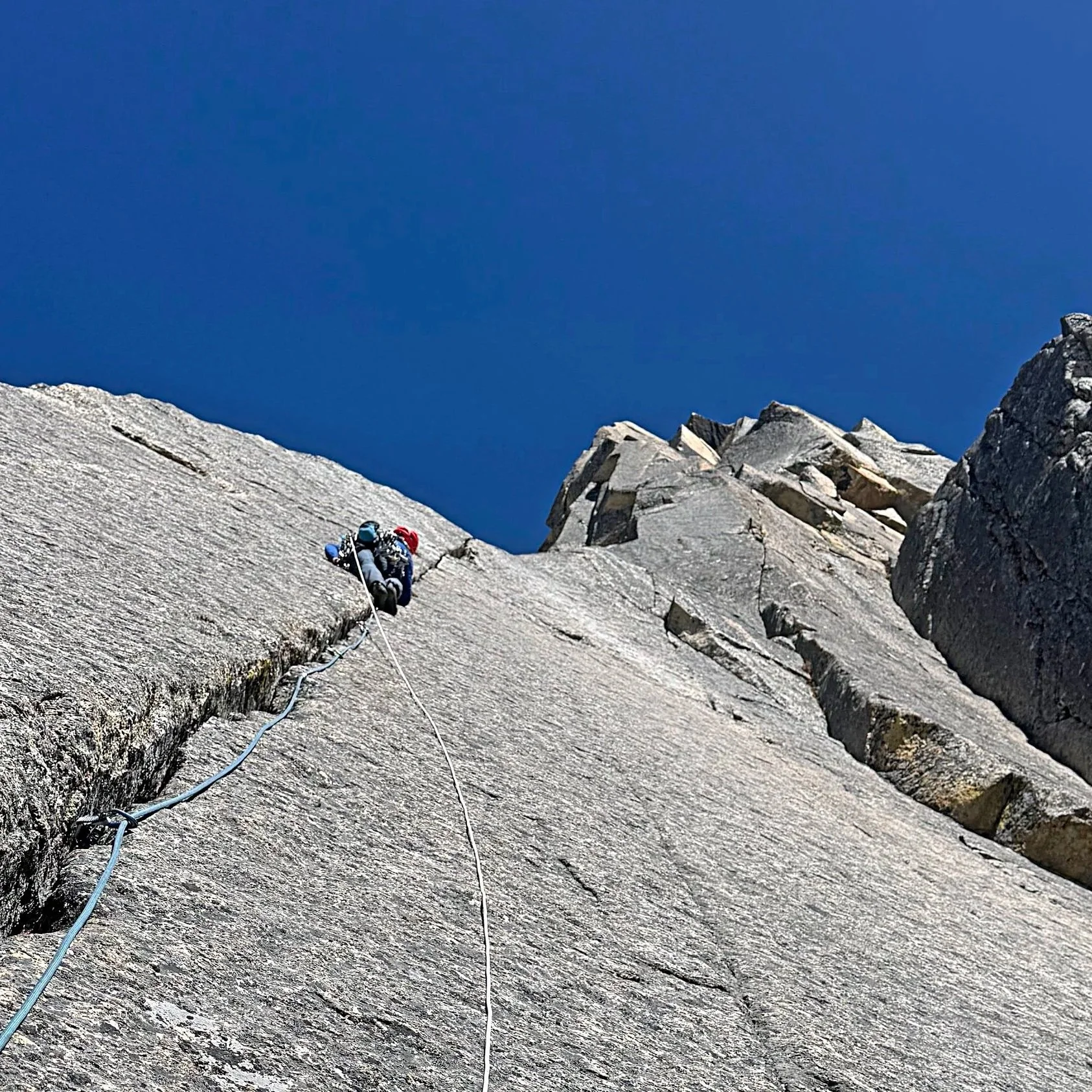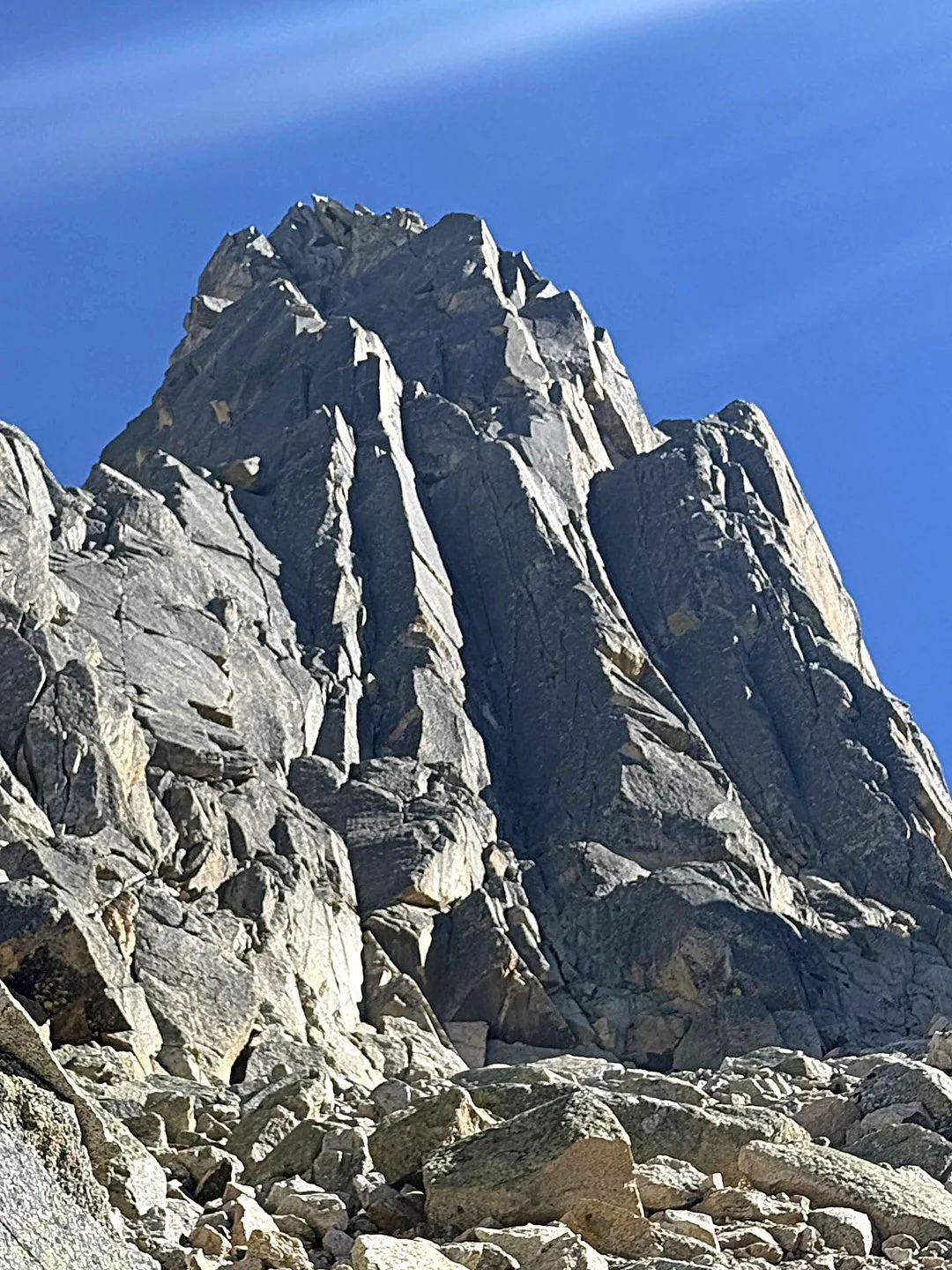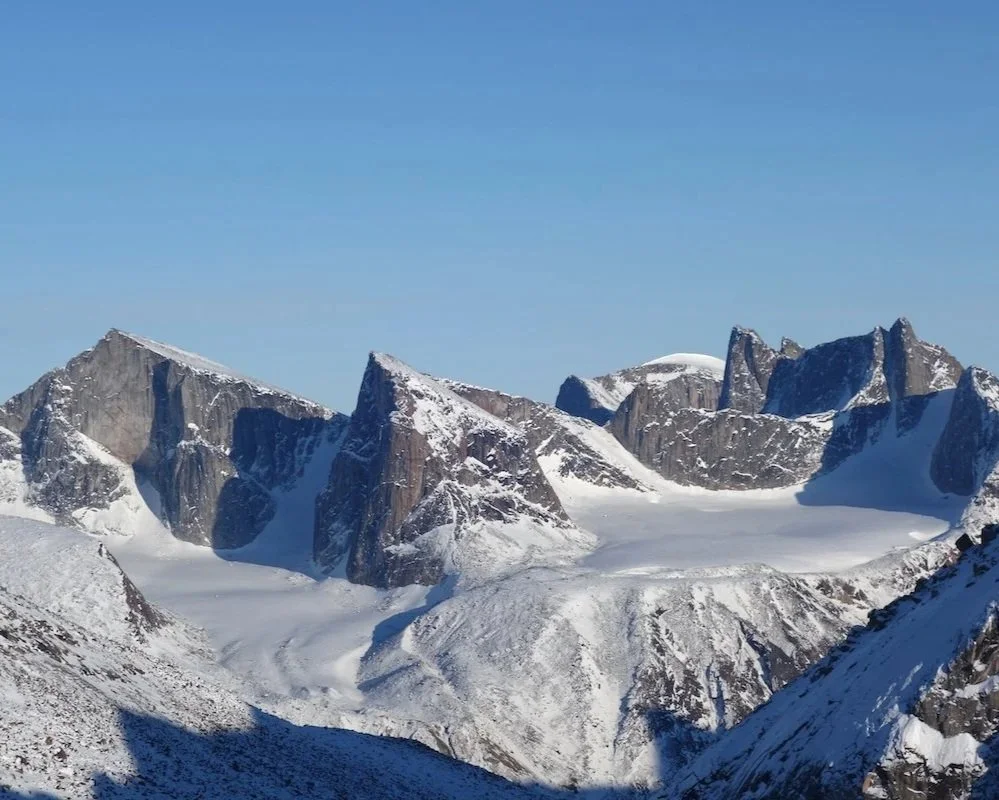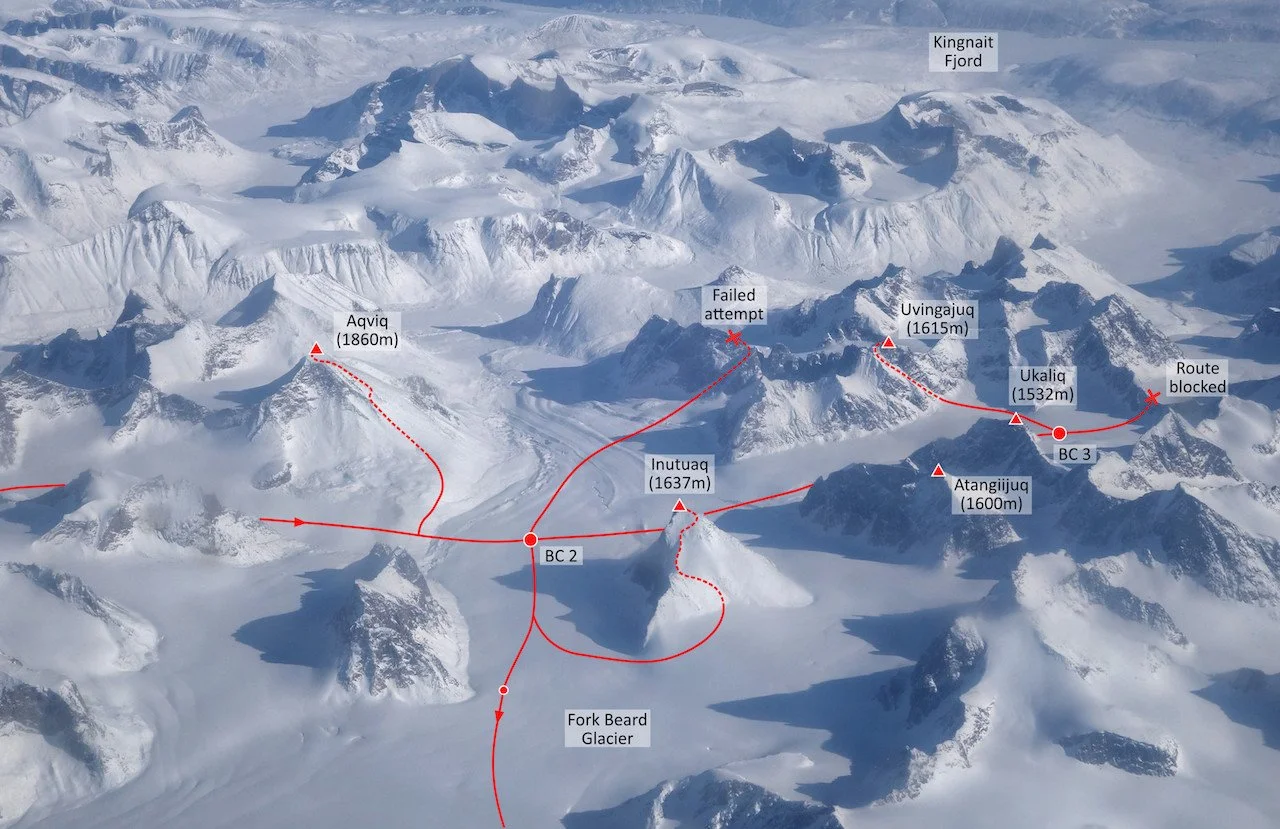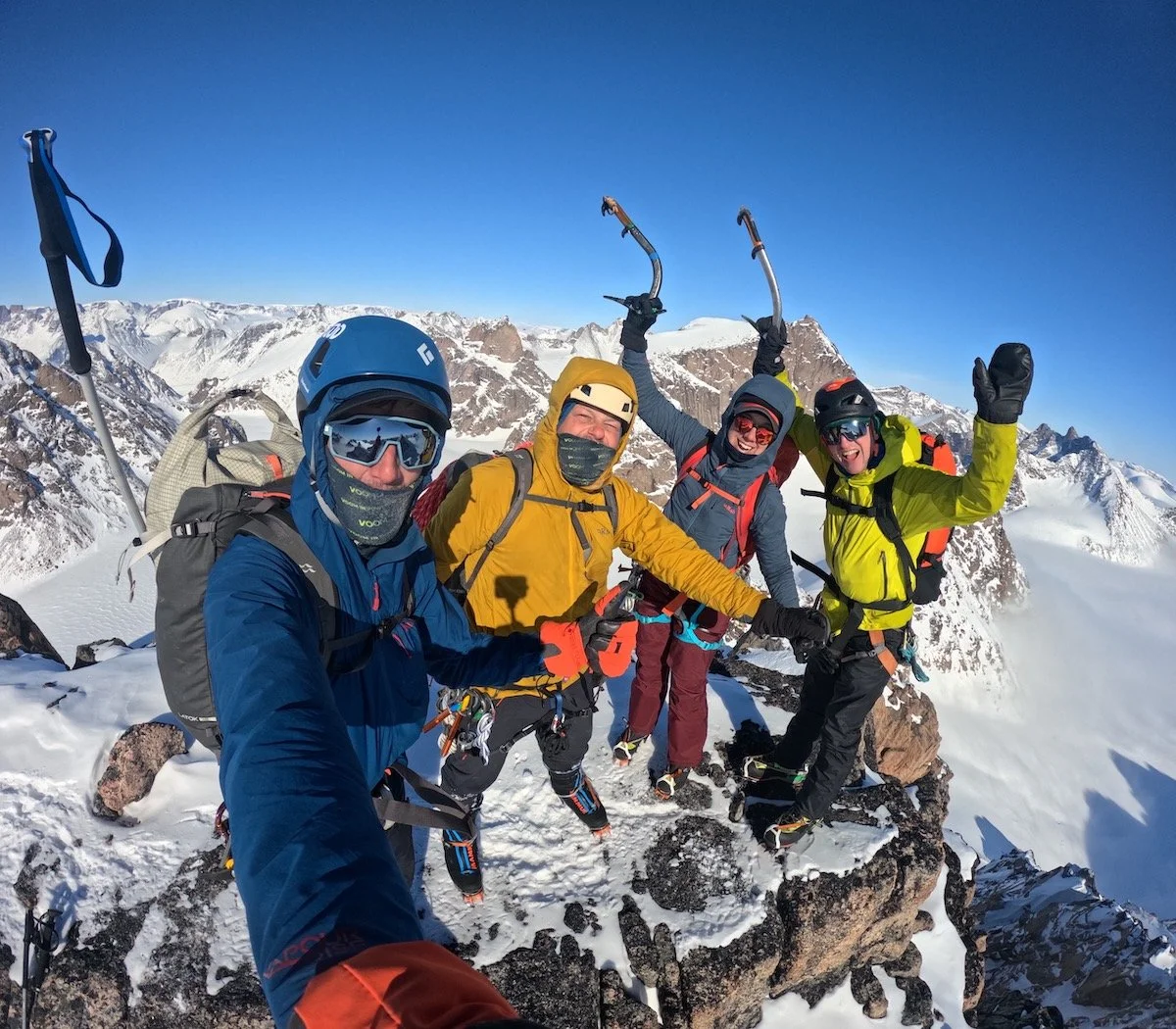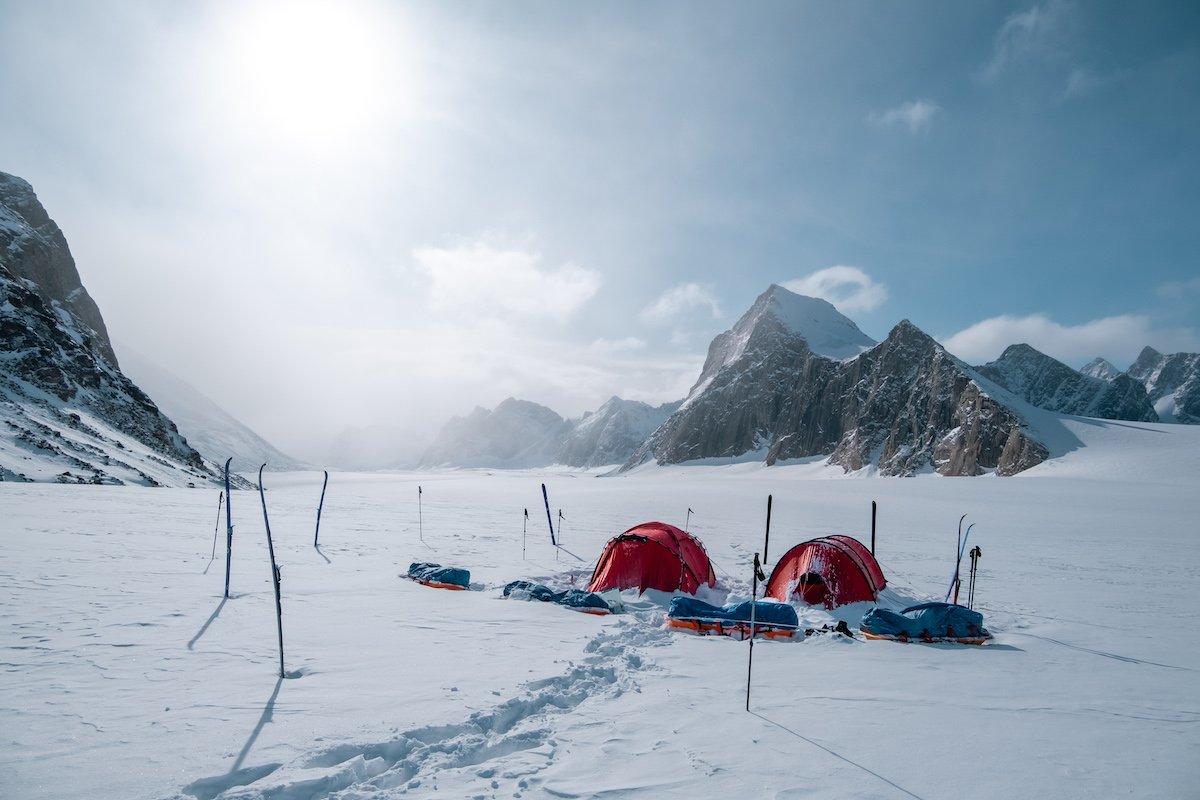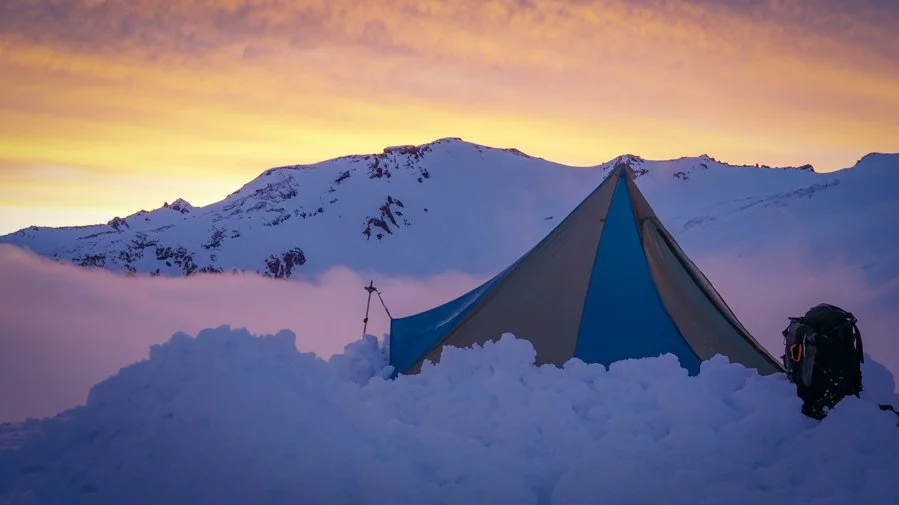
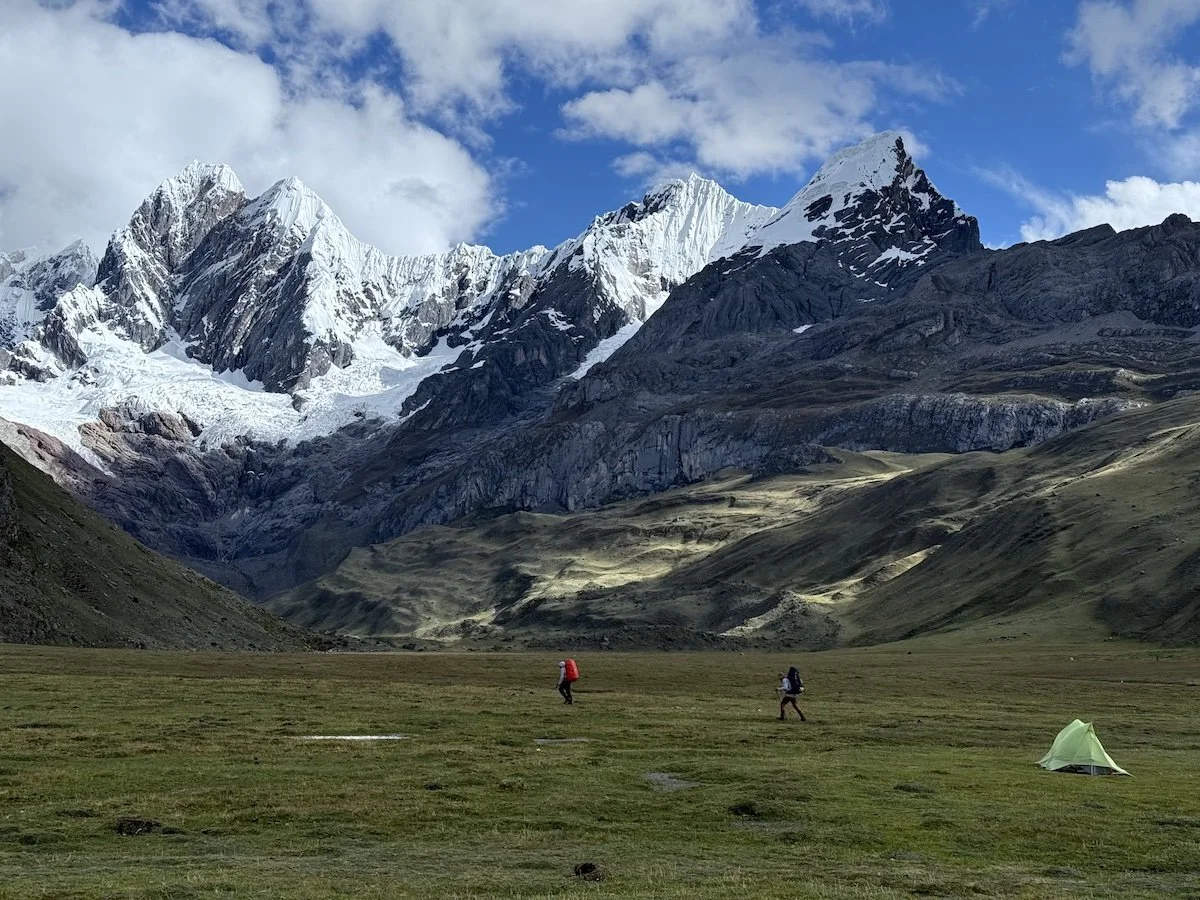
Eric Kanopkin quests to find a dry spot for his tent. Photo by AAC member Luca Raso.
A Rare Ascent of Jirishanca Chico—A Story from the Mountaineering Fellowship Fund Grant
By Luca Raso
Originally published in Guidebook XVII
The mountain’s scale, as seen through my own eyes, terrified me. Film and photographs, a 60-year-old trip report, and even the topo sketches I had stared at for hours before arriving—none of them captured the size, or the exposure, or the weight of it. Lying in its eastern valley, listening to the static hiss of rain against nylon, I couldn’t sleep. I had been catfished by my own dreams. Any confidence I had built up in the Cordillera Blanca now felt suspect. Bootpacks and snow anchors set in place by mountain guides, lively refugios and high camps, and broader terrain that was mostly walkable; these were all crutches that fed into my delusion, now taken away by just one close glimpse at Jirishanca.
On June 2, 2025, after a few hours of tossing and turning in my sleeping bag, I set off with my partner Eric Kanopkin to climb Jirishanca Chico, a 5,400-meter peak in the Cordillera Huayhuash range of Peru. The grassy hills that rolled up to Niñacocha, the meltwater of the Rondoy Glacier, were flooded with rainwater and cow manure. Our double boots squished loudly as we went up the valley, waking and startling cattle as we passed. We were indiscreet spies under the cover of midnight’s darkness, clambering across no-man’s-land toward what we assumed was our acclimatization objective.
The first time I had seen the Huayhuash was back in 2024, from the popular hilltop sport climbing crag of Hatun Machay. I was there with Maxwell Hodges, a friend who helped introduce me to the climbing life—as well as to the Cordillera Blanca. That day, we were sunning ourselves on rock, a happy respite from slogging up the Blanca’s sloping glaciers. “Why don’t we head there?” I had asked him, pointing toward the jagged, snowcapped massif of the Huayhuash.
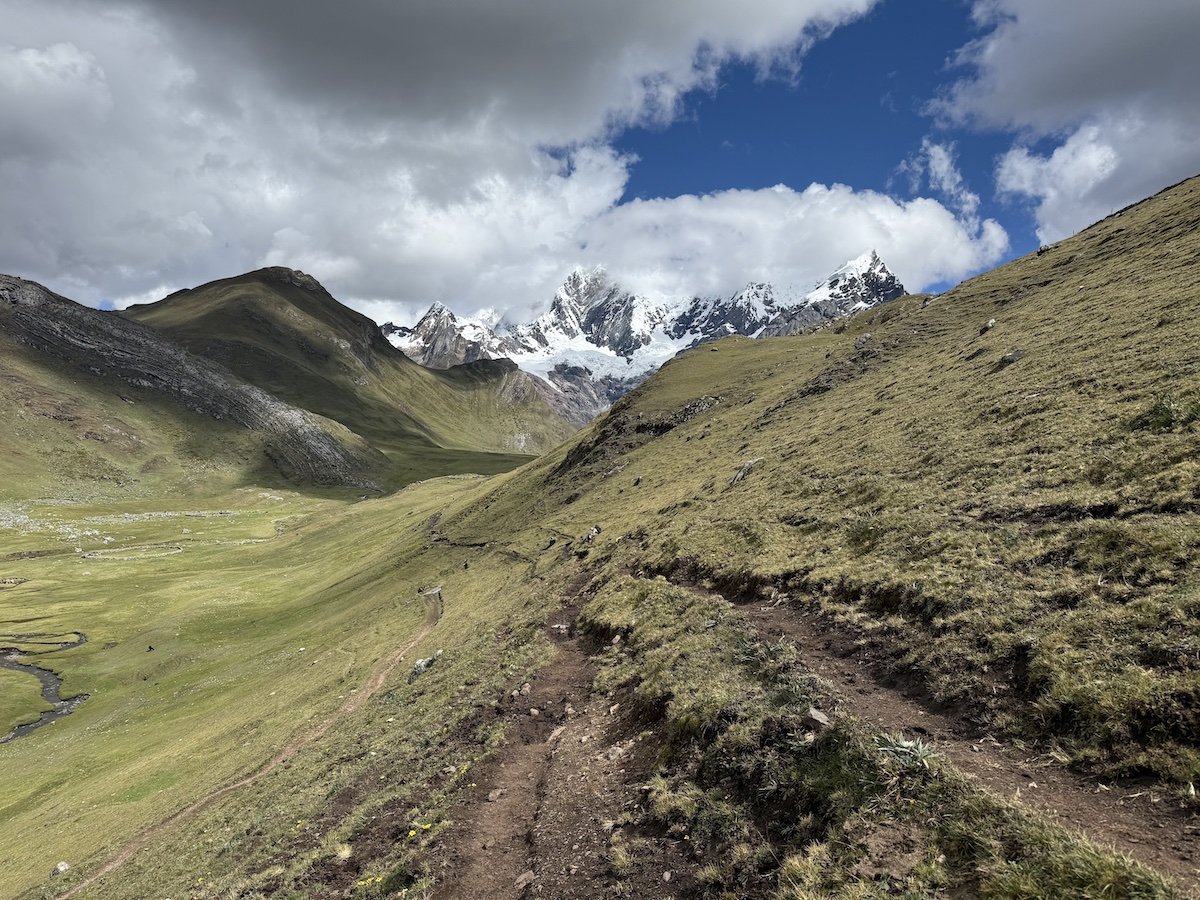
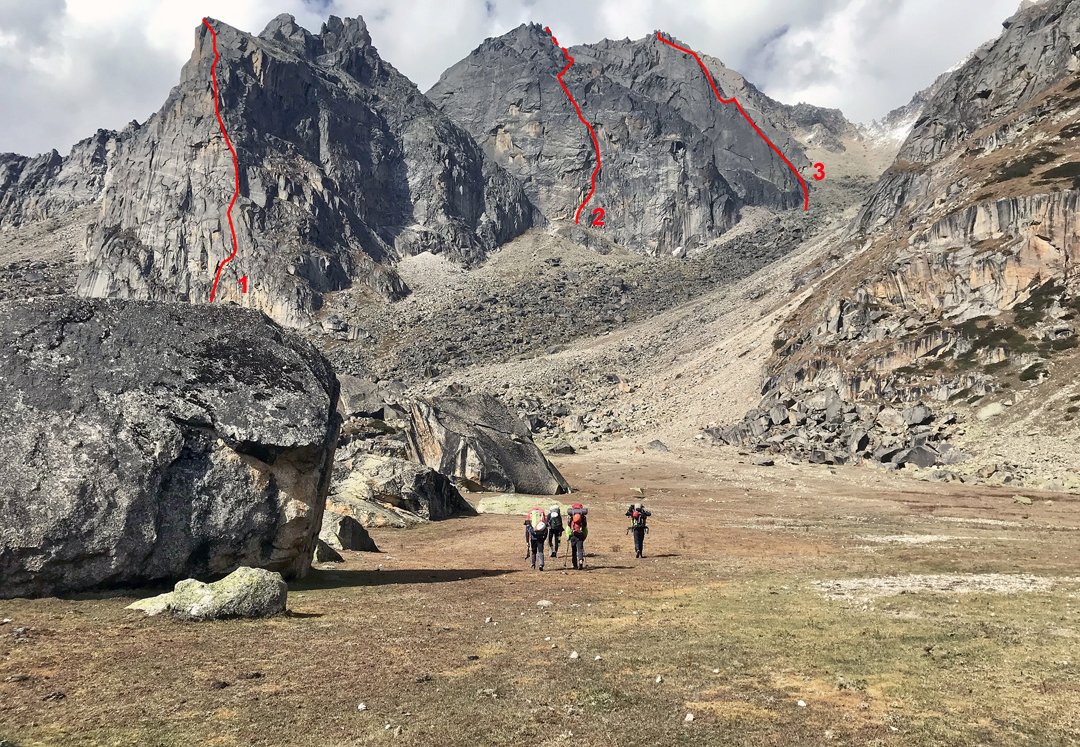
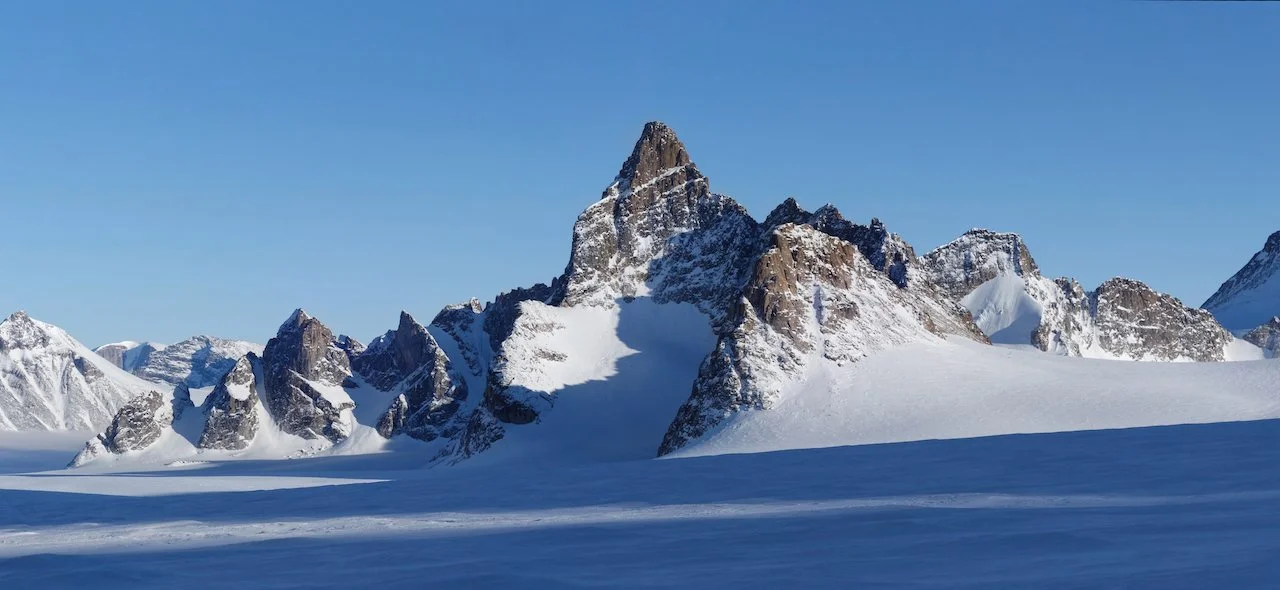
Trekking into the Mitococha Valley with views of (left to right) Jirishanca Chico, Jirishanca’s twin peaks, Rondoy, and Ninashanca. Photo by AAC member Luca Raso.
All we knew then of that place was the famous climbing accident recounted in Joe Simpson’s Touching the Void. While descending a 6,000-meter peak called Siula Grande in 1985, Simpson broke his leg and fell into a crevasse, which ultimately resulted in one of the most epic survival stories in mountaineering. Max just laughed. We weren’t ready. He was right; we could barely lead the bolted 5.10s at Hatun without our legs shaking.
Throughout a season of climbing the high peaks of the Cordillera Blanca and another year of climbing in Colorado, I could not stop thinking about the Huayhuash. Max and I climbed tourist peaks like Chopicalqui, Tocllaraju, and Pisco, and since we were always surrounded by other climbers and guides from all over the world, it was easy enough to mimic the common patterns of ascension even on our dirtbag budget. We followed the well-worn paths made by pack mules and beater taxis. Throughout our adventures, I kept my head up to admire the condors, untethered by the ground’s limits, as we were.
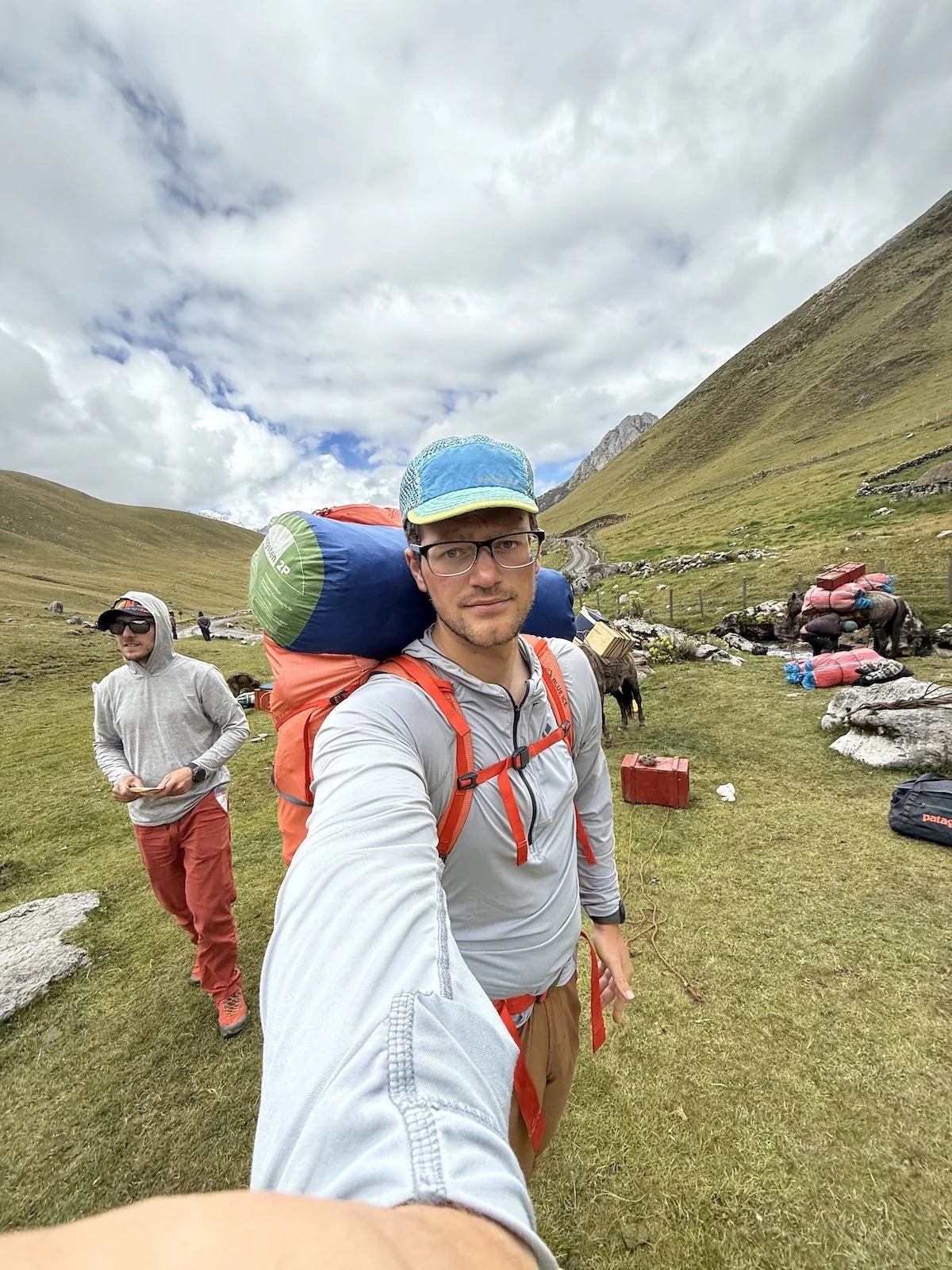
Luca and Eric find a mule at the Quartelhain trailhead of the Cordillera Blanca after driving through herds of cattle. Photo by AAC member Luca Raso.
The Huayhuash represented something different to me. Unlike the Blanca, it hosts no regular climbing activity; it’s harder to reach and has a higher concentration of more technical peaks. The number of climbers coming into the range each year can be counted on one hand. A significant reason for that lies in its history. The Huayhuash was closed off to climbing in the late 1980s into the ‘90s, as a result of the violent hegemony of a Maoist terrorist group called El Sendero Luminoso. Foreign climbers were turned away from the remote area for years, and the Huayhuash faded off of ticklists. Even after its reopening, the Huayhuash brought in limited climbing activity, while the Blanca, just hours to its north, expanded in popularity.
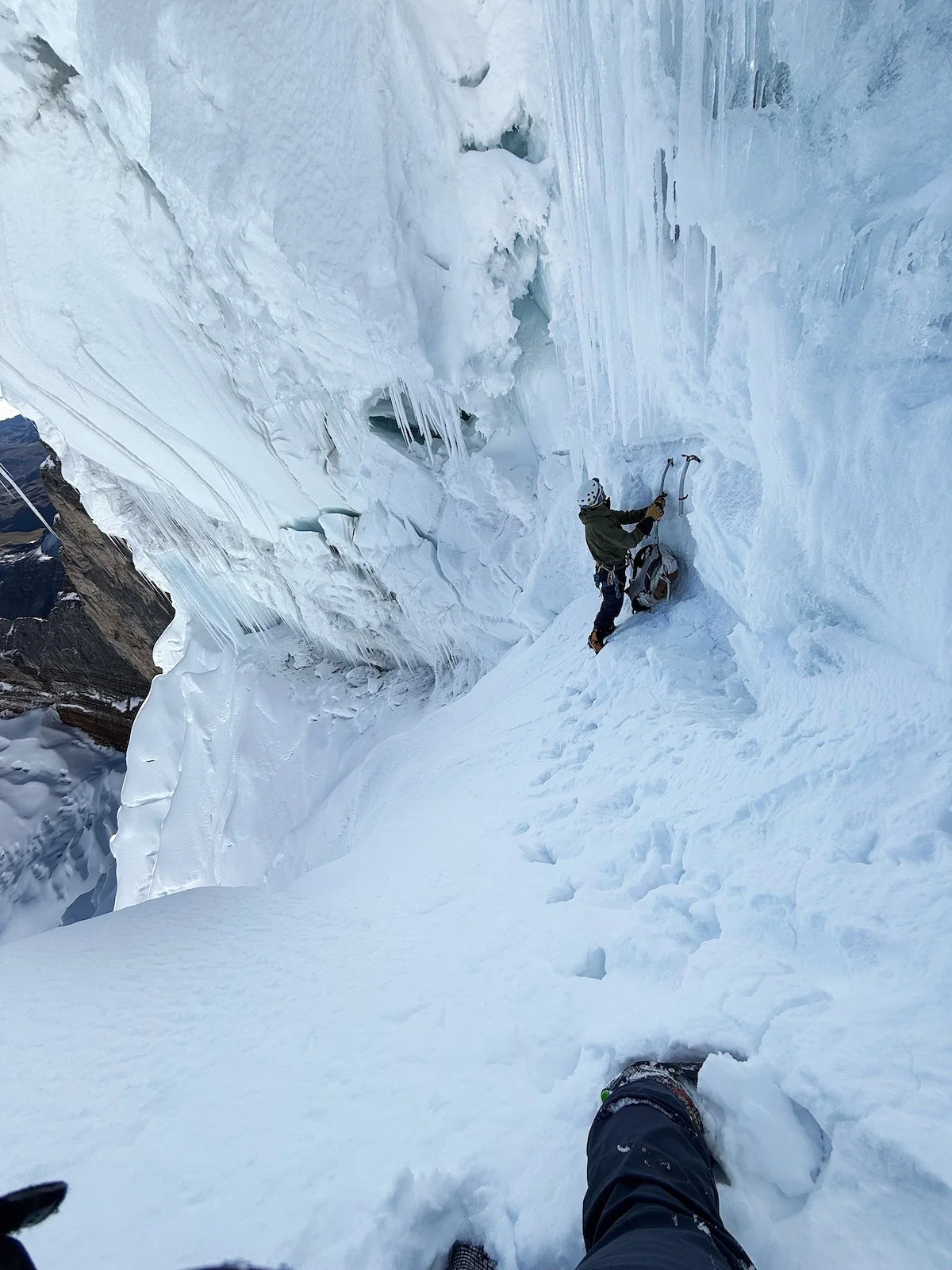
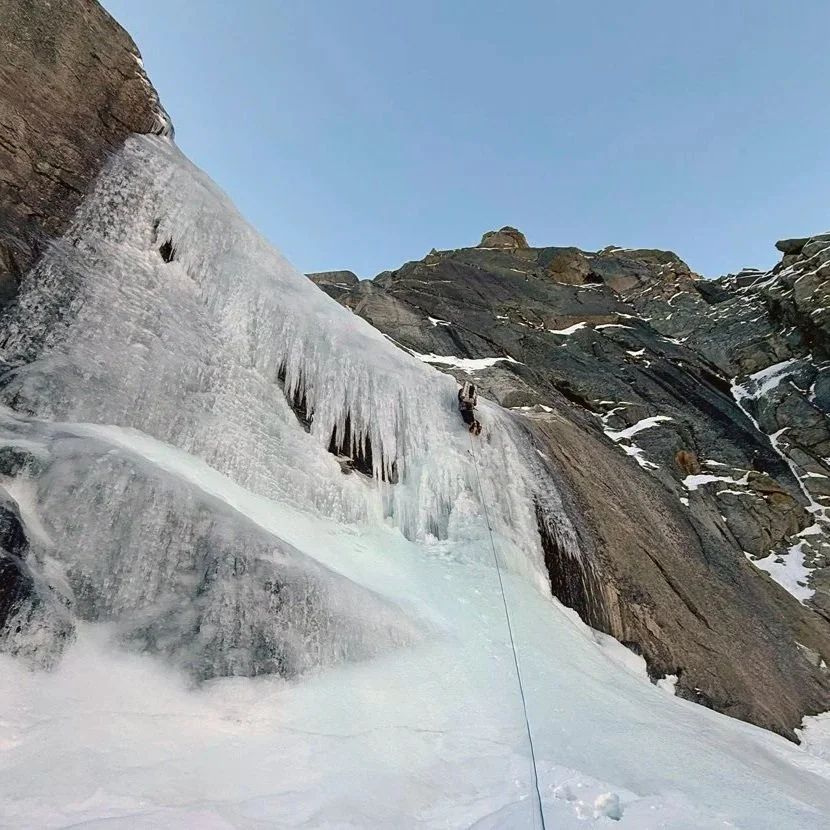
Eric Kanopkin traverses around one of the snow mushrooms on the west ridge of Jirishanca Chico before leading a pitch up an ice runnel. Photo by AAC member Luca Raso.
After leaving Peru in 2024, I was still drawn to the Huayhuash, but not just for the austere beauty of its mushroom-capped ridges and dramatic summit pinnacles. The mystique that shrouded the range, the lingering stigma among climbers, was what really captivated me. It was simply bizarre to me that two ranges, the Huayhuash and the Blanca, so close and similar in geography, could be perceived so differently by climbers. Stoked, ambitious, and just out of college, I was determined to go find out for myself.
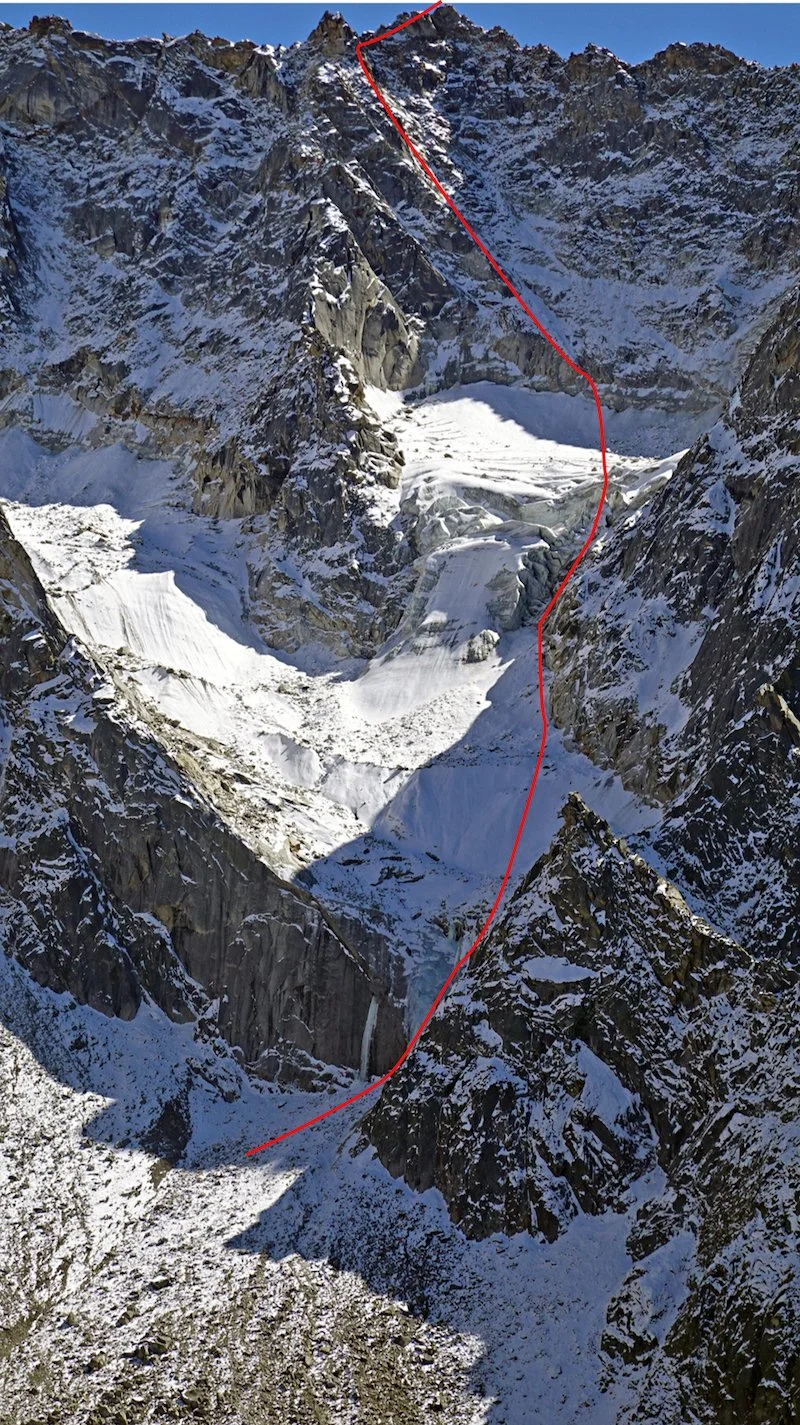
Once the sun rose, warm colors illuminated a world of winter above us. Eric and I were finally on the Rondoy Glacier, heading toward Chico’s northeast face. To climber’s right, Jirishanca’s north ridge was a sweeping ramp of snow and ice into the golden and pink heavens. That was the ultimate route that we were preparing for on Chico, a goal that ironically seemed farther out of reach the closer we got to it. I was worried that I was already in over my head, but my fear was dissipating from the restless night before. Dwarfed by the apu, the Quechua’s mountain gods, I was momentarily comforted by the extreme beauty around me. In that light, I was inside a Gothic cathedral on a Sunday morning, soothed by the voices of the choir. It took me a while to notice the serac that loomed over our path on the face above. Anxiety returned. “Are you worried about that?” I asked Eric.
He paused to catch his breath and looked at it. “Let’s just keep moving.”
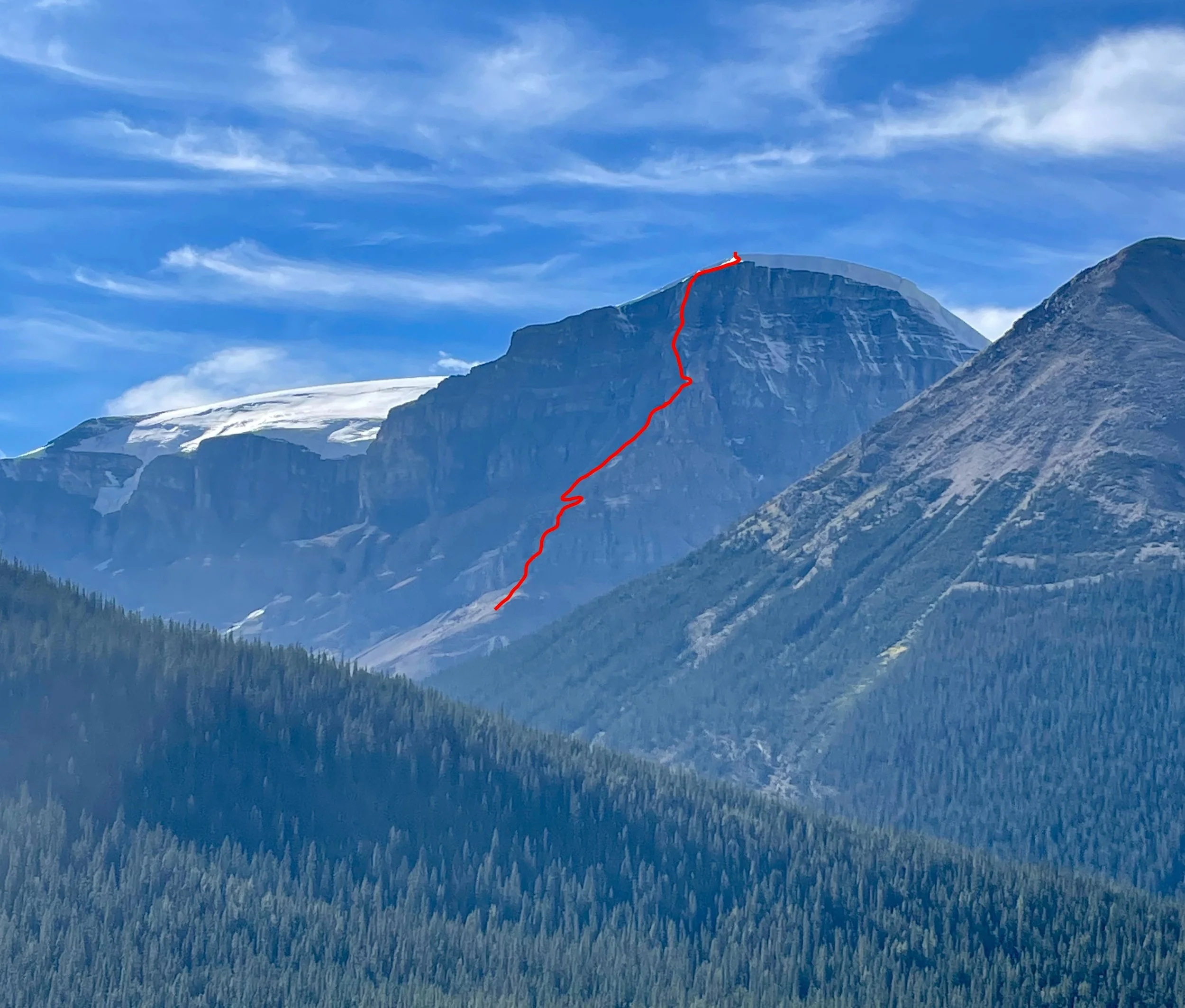
To gain the west ridge, we simul-soloed a couple of easy mixed steps and then steep snow, around 100 meters or so. Once we crested it, we could see that much of the ridge proper was a corniced knife-edge, narrow and even steeper on its southern side. Between us and the summit stood a kilometer of snow mushrooms.
At first, the ridge looked impassable. The only other two reported attempts of this exact ridgeline (besides its first ascent) declared it to be too dangerous. Still early in the morning, we decided to give it a shot. We moved back down from the ridgeline to go around the serac, eventually climbing through it via a narrow chute of ice. This was nothing in comparison to our next obstacle. Across a football field of flat ridge, a 30-meter step of snow-covered rock stood in our way. Shattered limestone choss frosted with dollops of sugar snow obscured any obvious line.
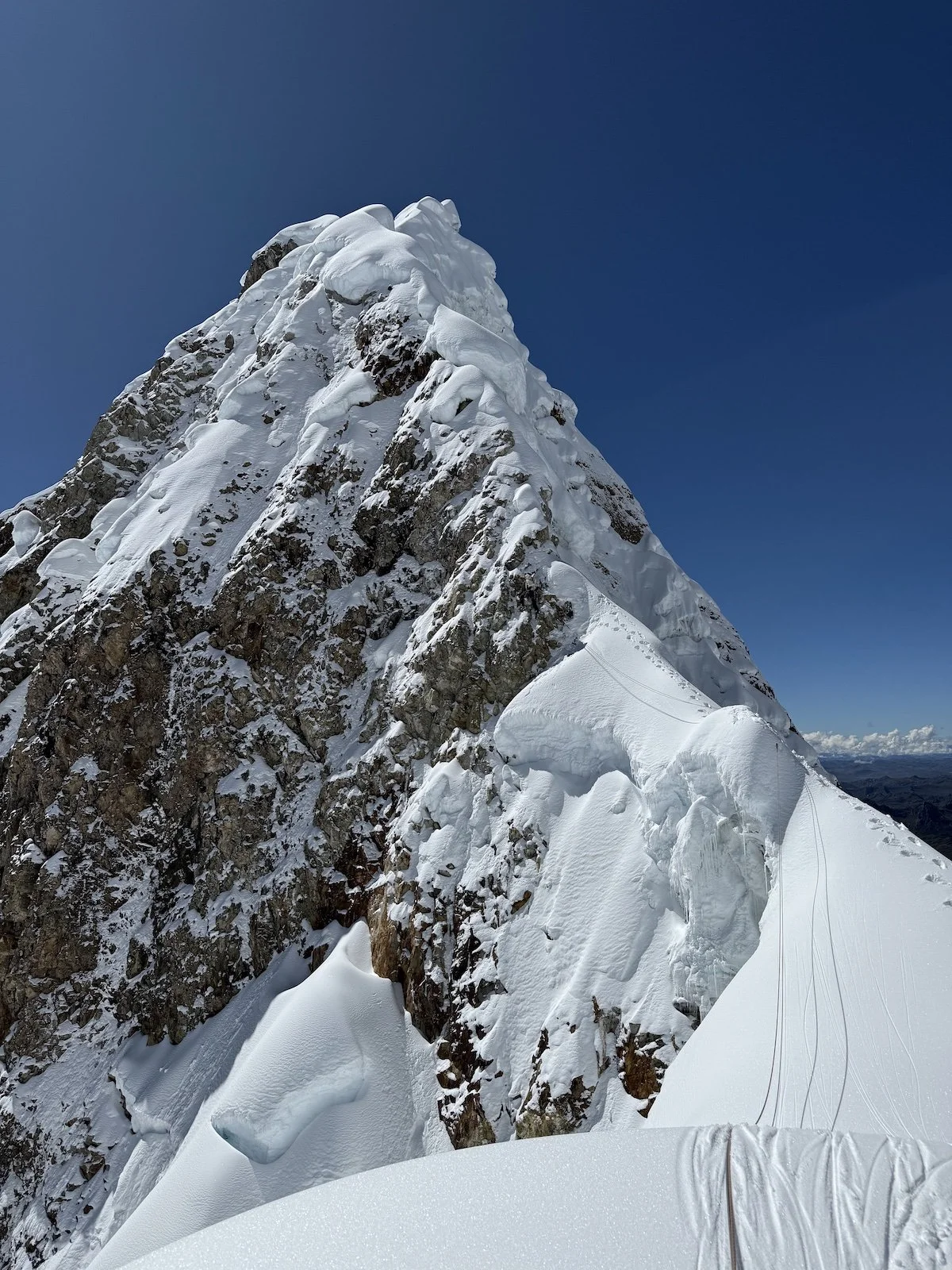
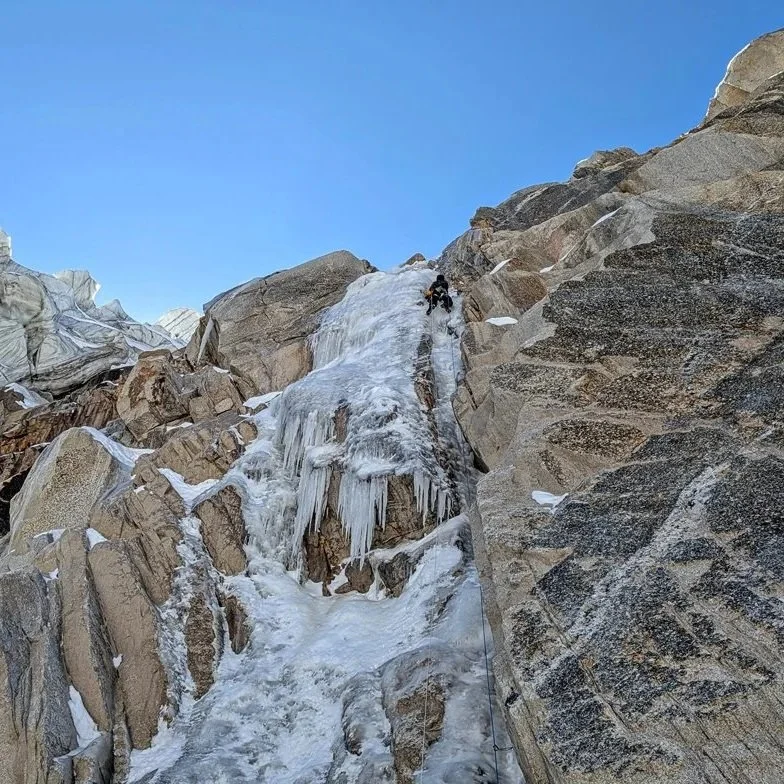
Eric Kanopkin leads the chossy mixed crux pitch on Jirishanca Chico’s west ridge. Photo by AAC member Luca Raso.
Protection was doubtful, the climbing was steep, and the snow on top was too shallow for any pickets. Demoralized, I looked to Eric.
Eric, ten years older than me, was one of my first ice climbing partners back in Colorado. The two of us have gotten in over our heads together several times—trauma-bonding over epics like the 29 hours it took us to climb Kiener’s Route on Longs Peak in the dead of winter. Married, with a steady job and a house, Eric had his sh*t together, and he was easy to trust. When I asked him to come to Peru for his first trip, his eyes lit up. Our first week and a half climbing together in Peru had its highs and lows. We went to the Ishinca Valley and easily climbed Urus Este as our first acclimatization climb, though a bad empanada resulted in some gastrointestinal difficulty. On the North Face of Ranrapalca, I had my turn. Halfway up the route, I vomited all over the ropes and soiled my new M10 pants, which I blamed mostly on altitude sickness.
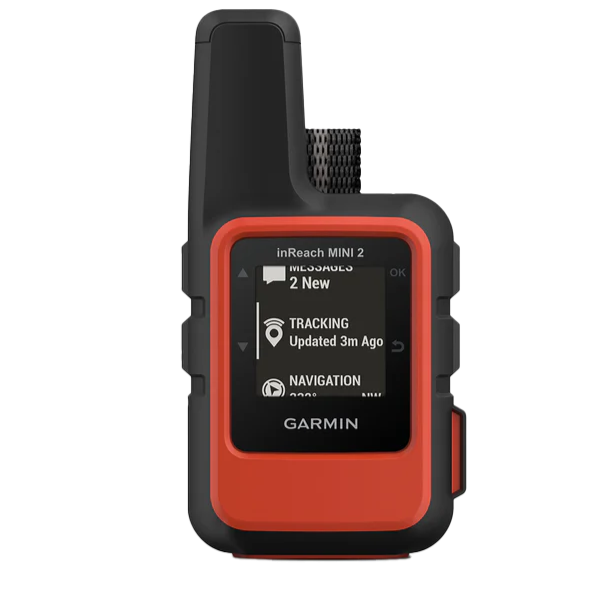
Base camp in the Huayhuash had been anticlimactic. Days of rain isolated us in our separate tents, and despite the surprising numbers of trekkers and their entourages around us, a claustrophobic loneliness set in. Eric had mentioned that his wife was not happy with his decision to go on this trip without her, and he was preoccupied with the aftermath via his inReach. I spent a lot of time alone in my tent, listening to the soft patter of rain and the thundering conversation and laughter emanating from the trekkers’ tents across the valley. It was a different feeling of remoteness than I’d expected from the Huayhuash.
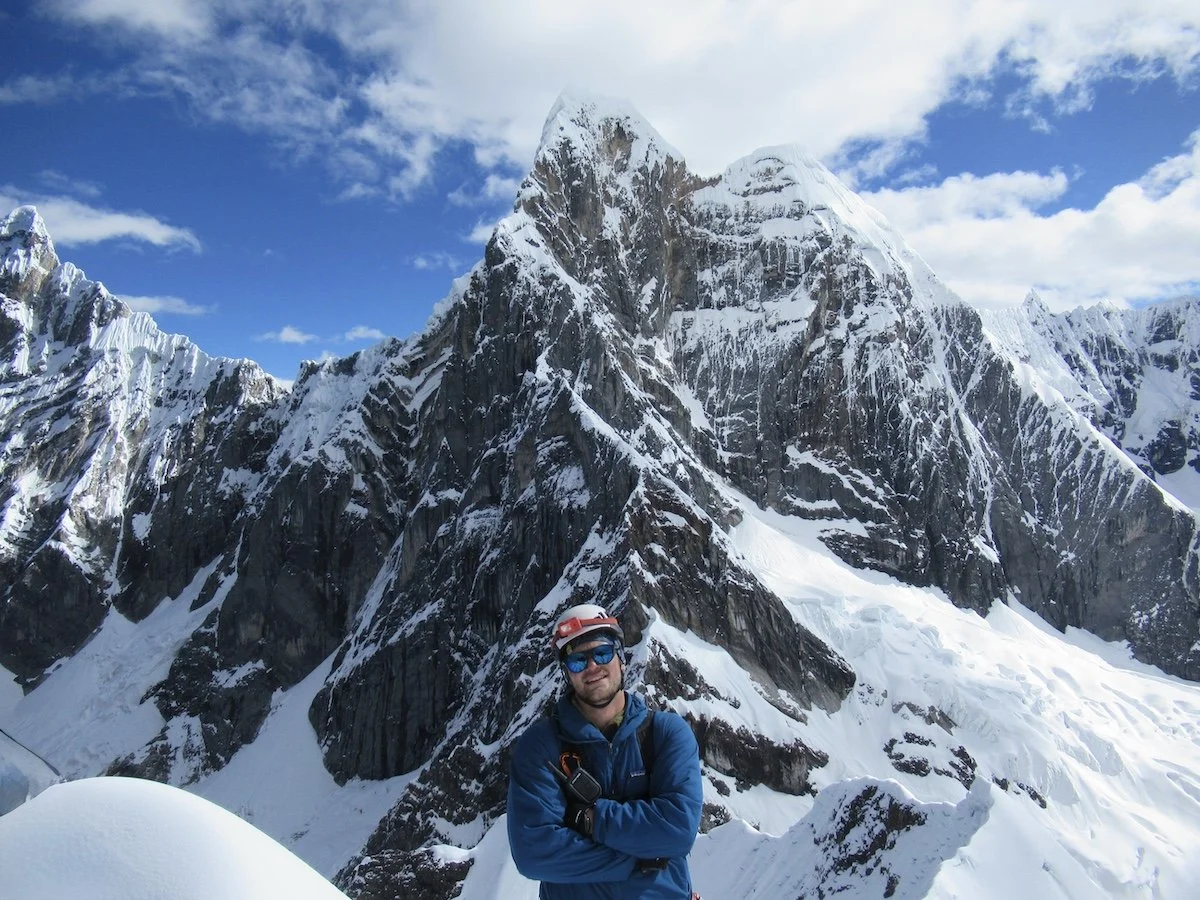
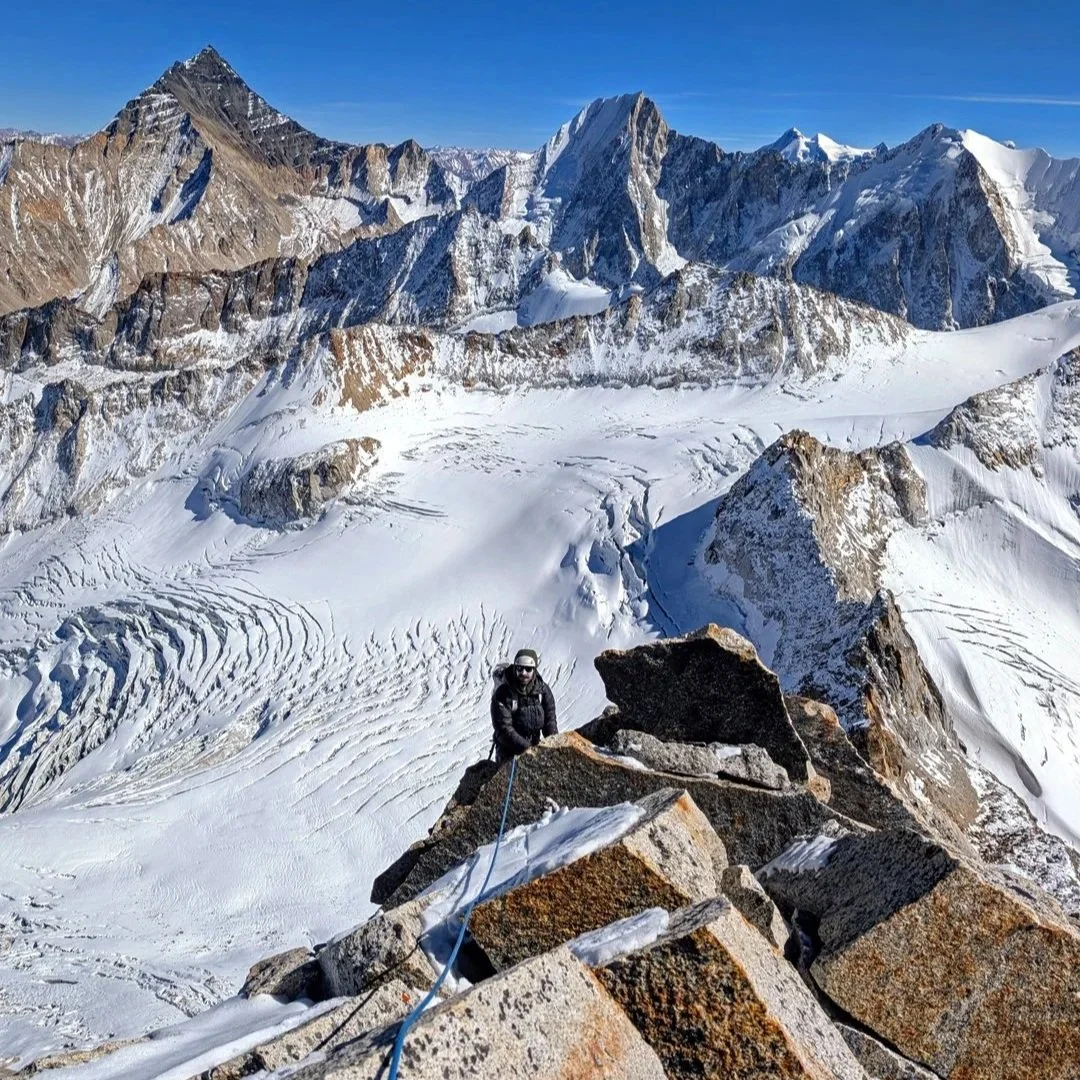
Luca Raso is very tired and stressed out on Jirishanca Chico’s summit mushroom. Photo by AAC member Eric Kanopkin.
“I think I can do it,” Eric said.
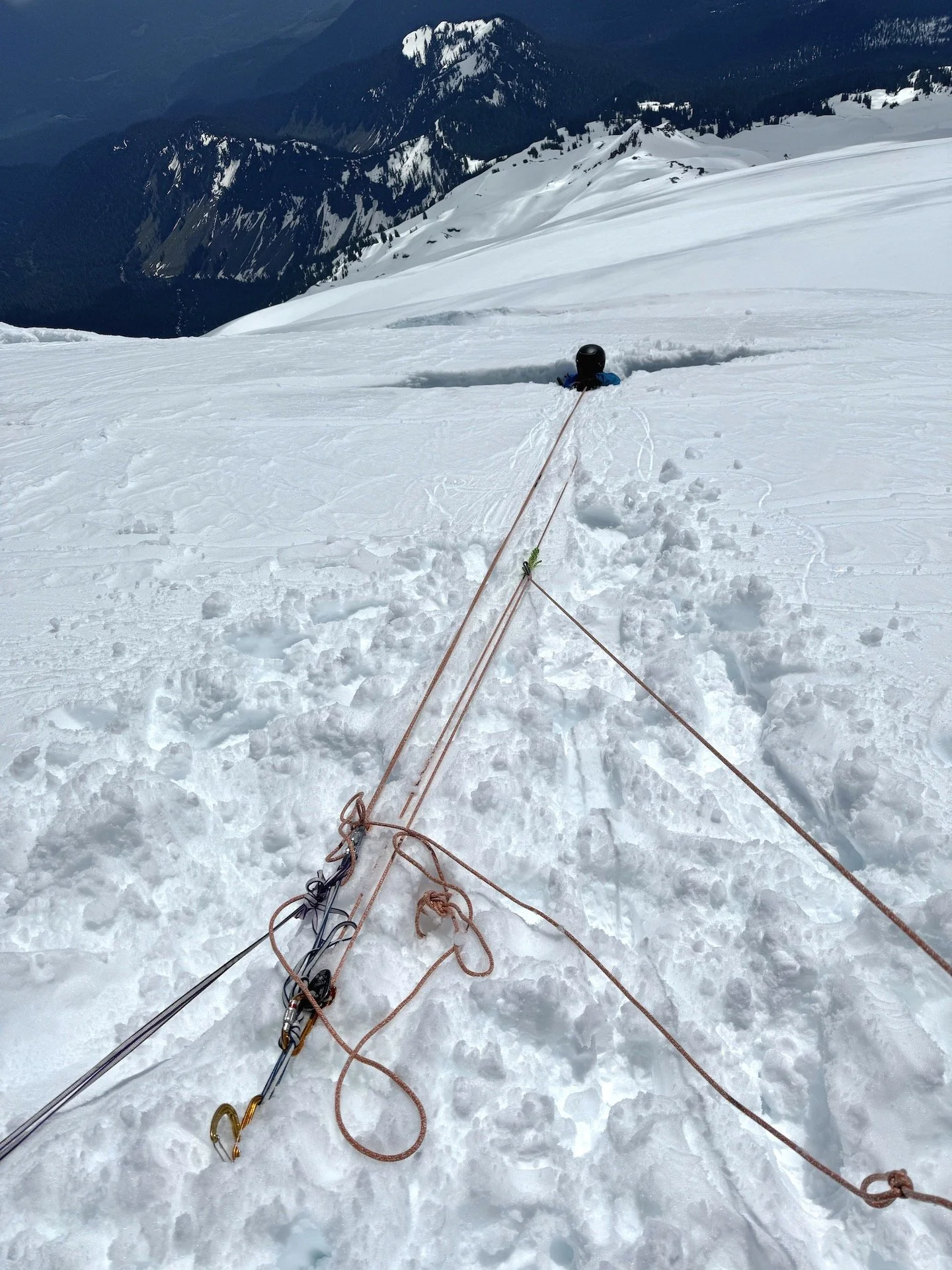
I looked down at our anchor, two pickets and an ice tool tied together. “Well, if that blows, I will try to jump off the other side of the ridge.”
Literally on the edge of my snow seat, I watched Eric lead the rope up and over the mixed step. At every placement of piton and Camalot, I shouted forced stoke at him. He showed stubborn confidence in every hook of his tool, standing on his frontpoints without any tremor in his legs. Occasionally, he cleaned chunks of rock into the abyss, but it never startled him. He was all in.
Once he swam up the next mushroom of sugar snow and built another picket anchor, he groaned with relief. “Hell yeah!” I yelled back. Eventually, the rope went tight, and I followed in his wake. I didn’t say anything when his gear came out with eerie ease, even as each pry of my ice tool to clean the pitons fractured more heaps of rock off the ridge.
From there, we swung leads across knife-edges and snow mushrooms for another half a kilometer to the summit. Often, it was hard to tell whether there was any mountain beneath our feet. It became clear why most climbers had thought the ridge to be too dangerous. The snow mushrooms’ physical structures seemed impossible: How could deep powder pile up so steeply without collapse? A few weeks after our ascent, Alexander Huber, Dani Arnold, and Simon Gietl bailed from Jirishanca’s east ridge, just across the saddle from our route, opting to end their route at the east summit, instead. It’s hard to say if conditions were the same, but there is a chance that we were braver (or more stupid) than the professional alpinists.
Eric let me have the final pitch. Exhausted from breaststroking my tools and kicking my feet into nothing, I had to catch my breath before belting out a loud “Whoo!” on Jirishanca Chico’s summit. From there, I finally appreciated the panorama of Siula Grande, Yerupajá, and Jirishanca around me, a momentary distraction from the stress of the past seven or so hours. Eric joined moments later, and we rejoiced in the reunion.
As we downclimbed the ridge back to the glacier, I thought about sirens. In The Odyssey, Ulysses sails his crew through treacherous waters past these alluring creatures and their infamous, transfixing siren song. While his sailors plug their ears to avoid the danger of drowning themselves for this beauty, Ulysses commands them to tie him to the mast of the ship. While most rational people would decide to cover their ears, Ulysses risked his sanity in order to experience something truly beautiful.
Perhaps Eric and I, tethered to each other, heard the Huayhuash’s siren song. On that delicate, corniced ridgeline, we experienced a new level of earthly beauty, unparalleled by any other experiences I have had in the mountains. But its fatal temptations also frightened me to my core. We were already talking about bailing on Jirishanca proper as we descended its smaller sibling. We had escaped the treacherous ridge alive, and it was hard to fathom another one on an even larger mountain at 6000 meters. We were satisfied enough with our time on Chico, a probable second known ascent of the Northeast Face. But as we left the Huayhuash and went home (where Eric patched things up with his wife), the feeling of failure crept into my mind. It felt as if we had gotten away with something, just barely escaping the lethal lure of the mountain.
With time and distance, this ascent has become a scrying glass. I had been driven by curiosity, a quiet itch to see if these seldom-climbed peaks could be a place of exploration and self-discovery for someone like me. I found the Huayhuash to be a place of alluring, dangerous beauty, but not without significant challenge. Yet my experiences there have ultimately reinforced my original curiosity with the range. As a young climber who quite frequently gets in over his head in climbing, the Huayhuash was a lesson in restraint. I came to the range with arrogant ambitions to climb Jirishanca, and its smaller sibling humbled me. While I false-started on the main objective for that trip, I am only more excited to return as a more experienced climber and rediscover these peaks with trusted partners like Eric—to hold me to the mast.
Sign Up for AAC Emails