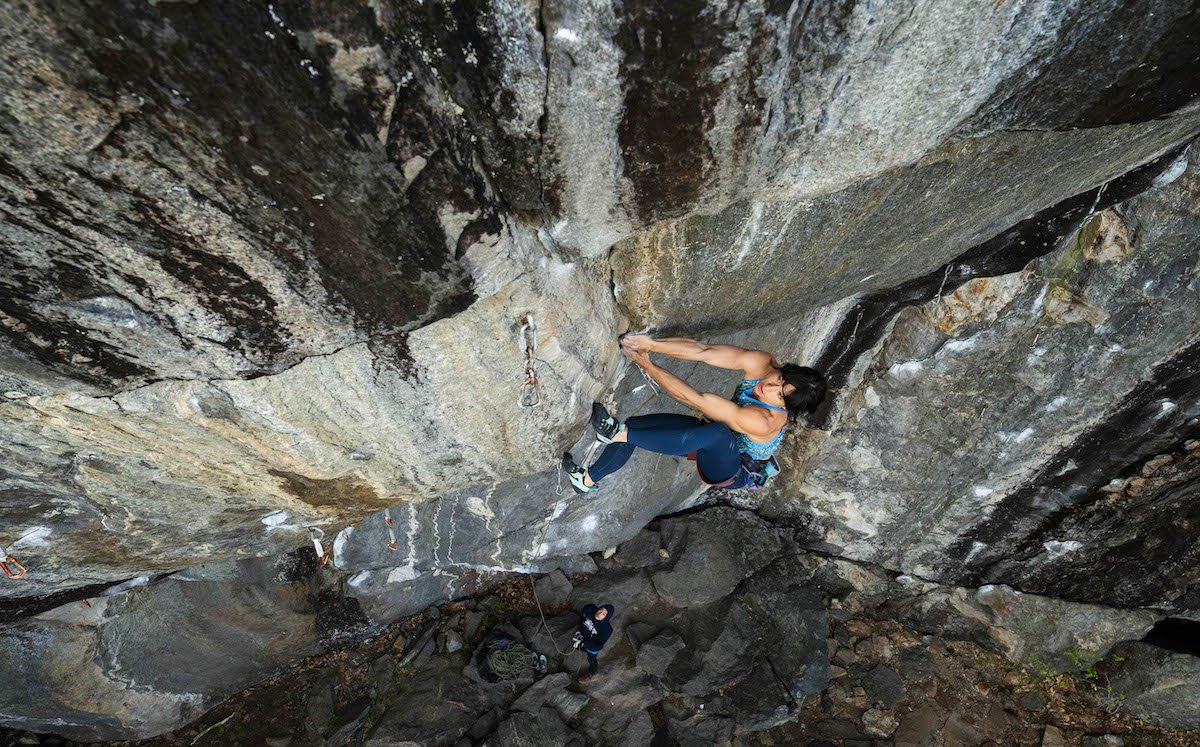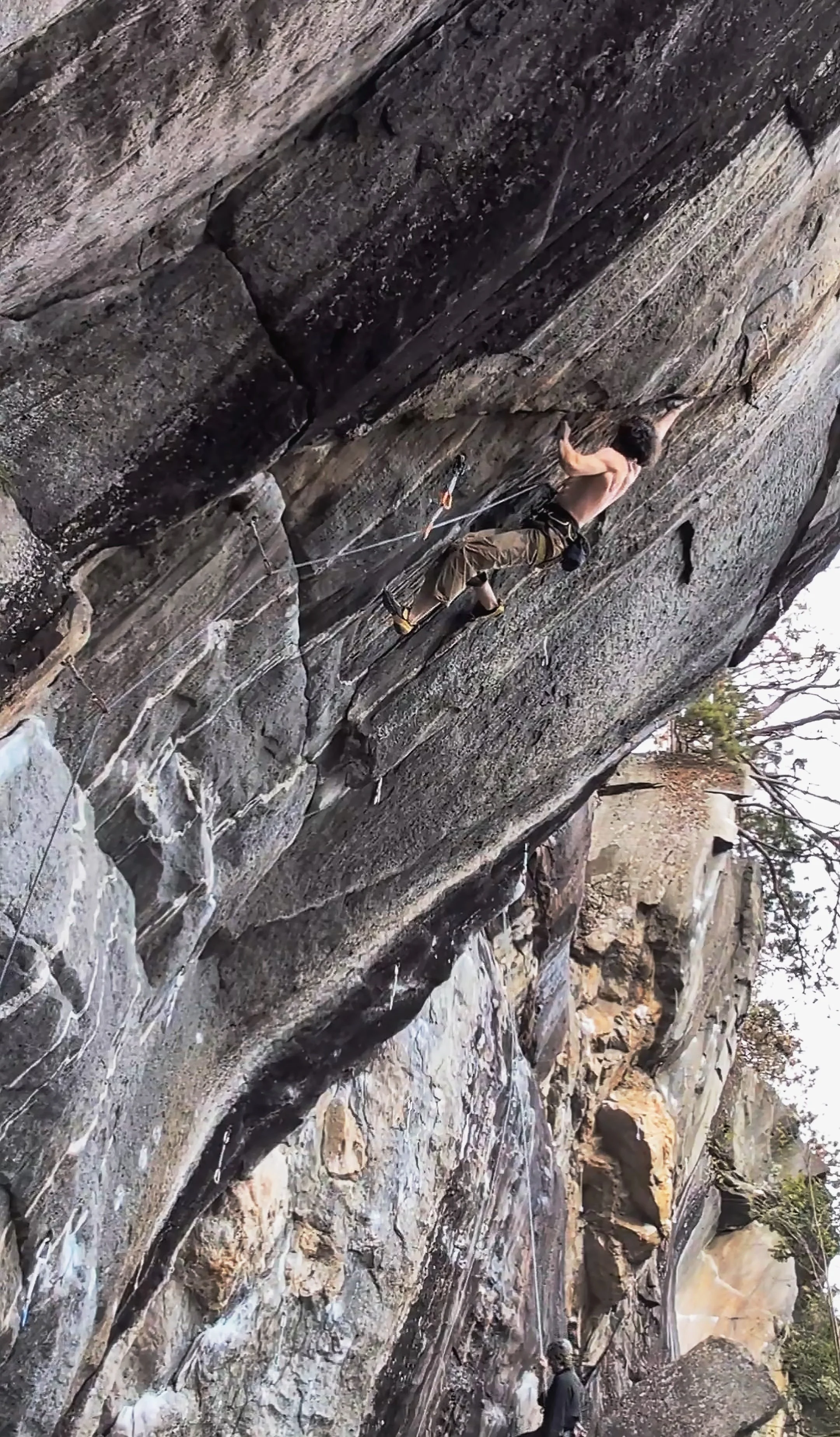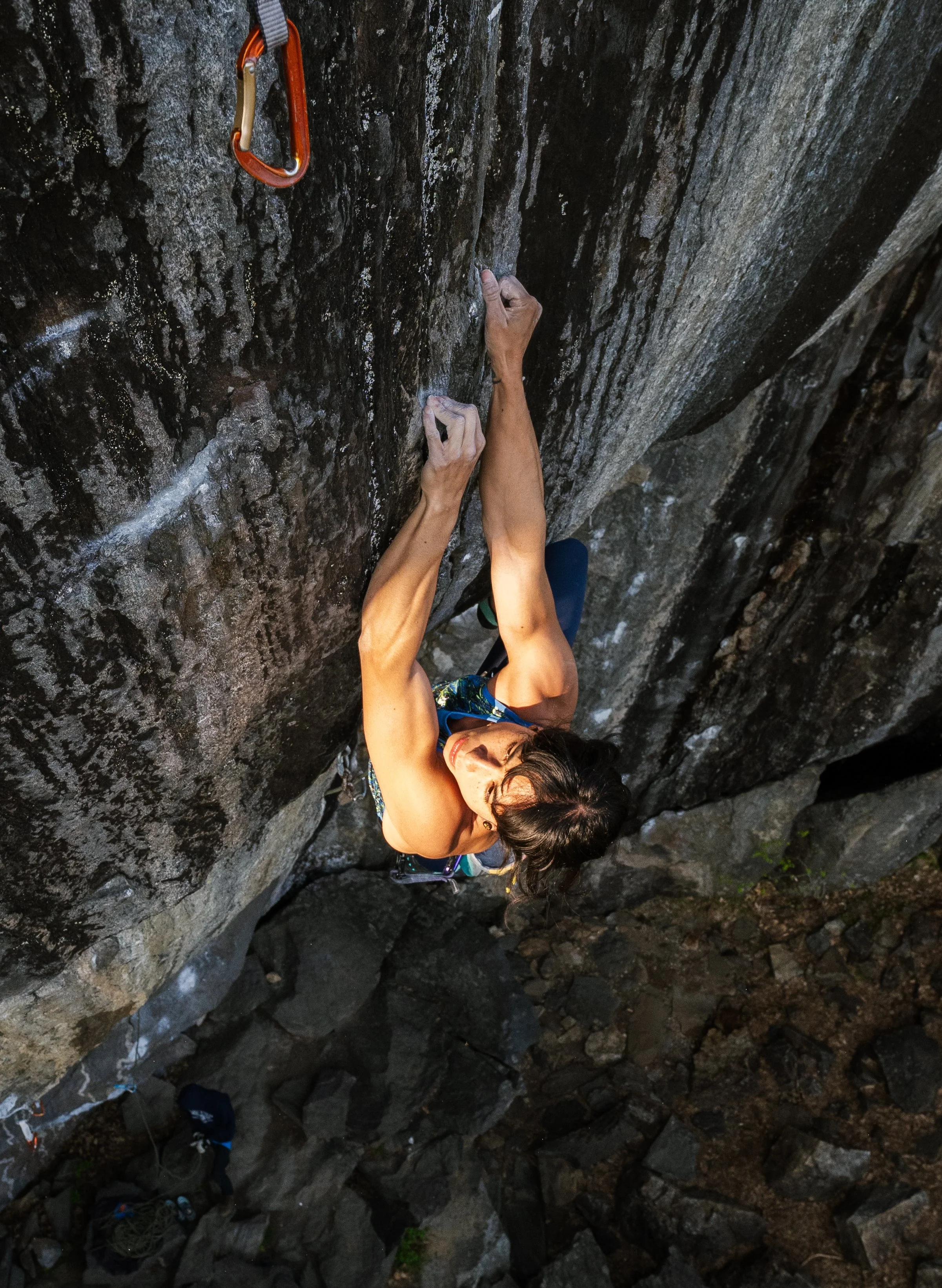
The Prescription—Fall from Ram's Horn Anchor

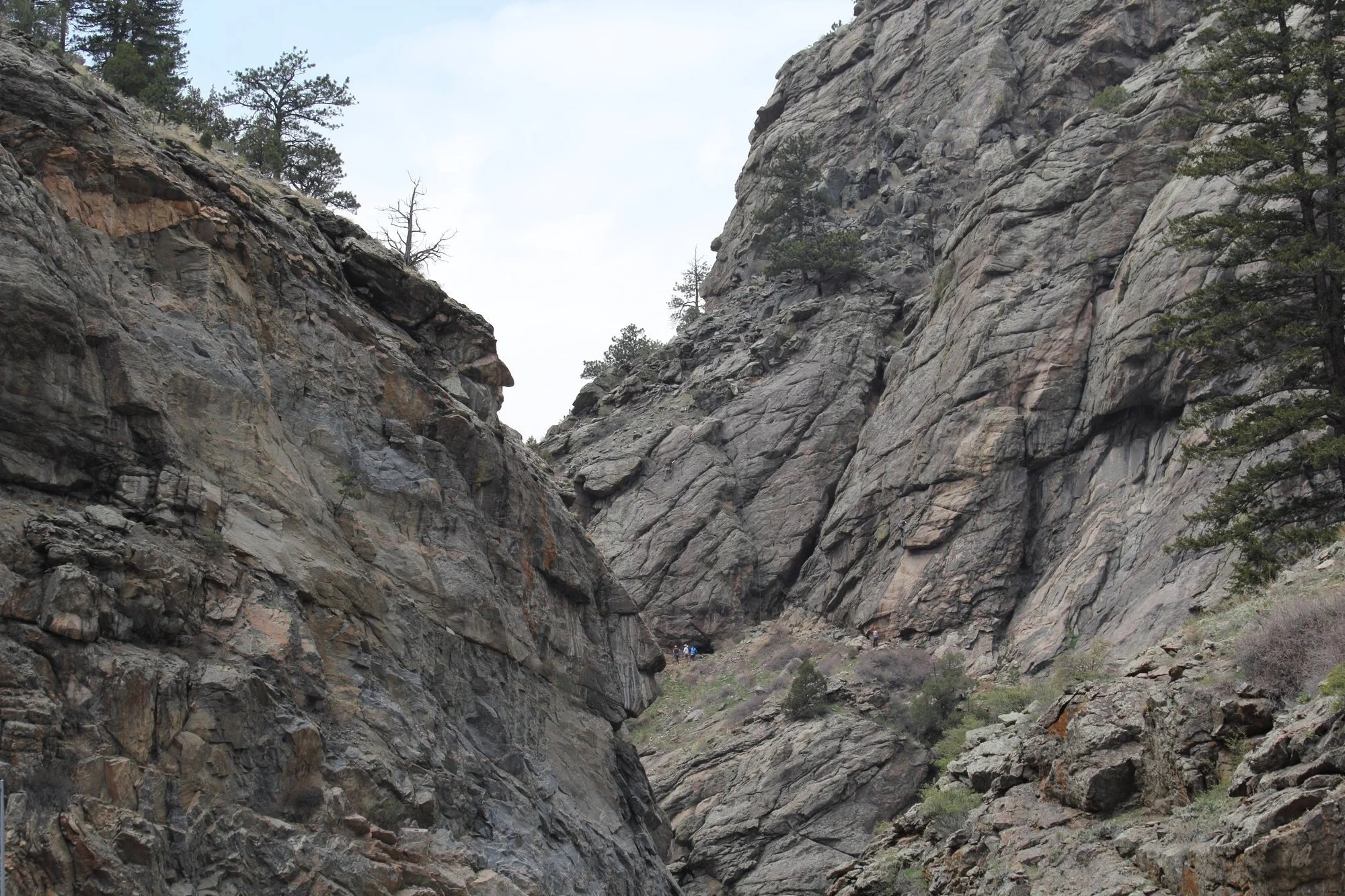
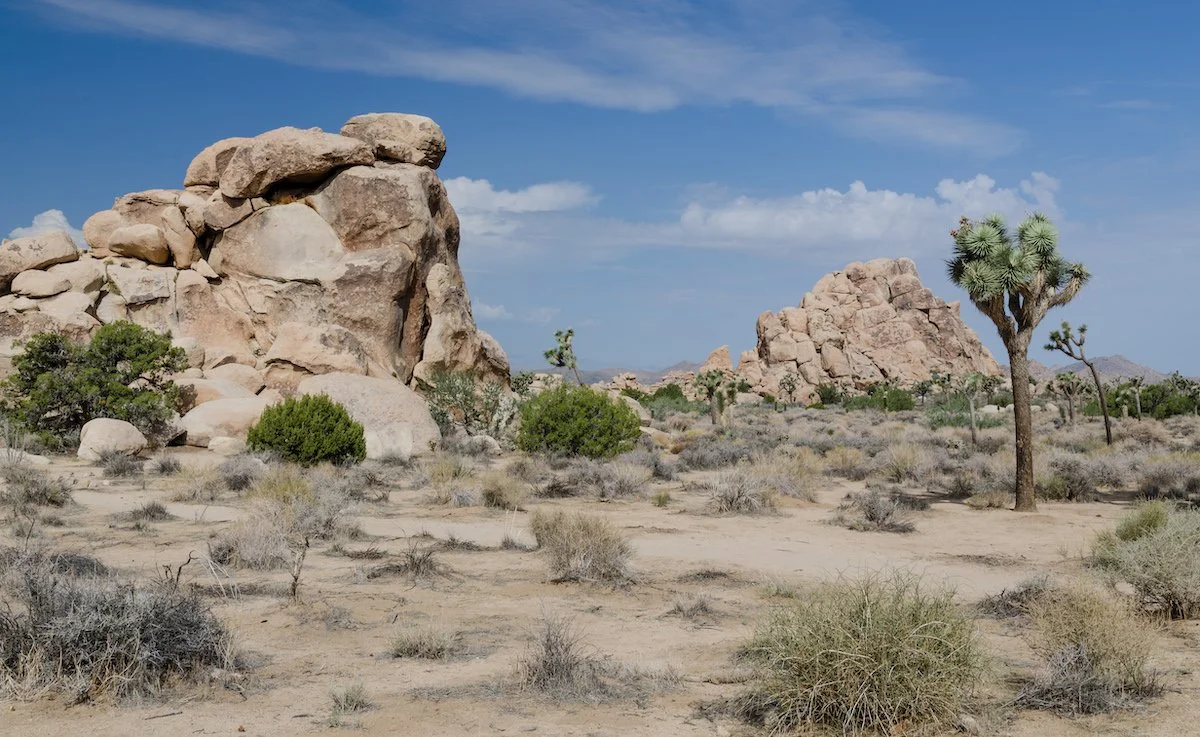
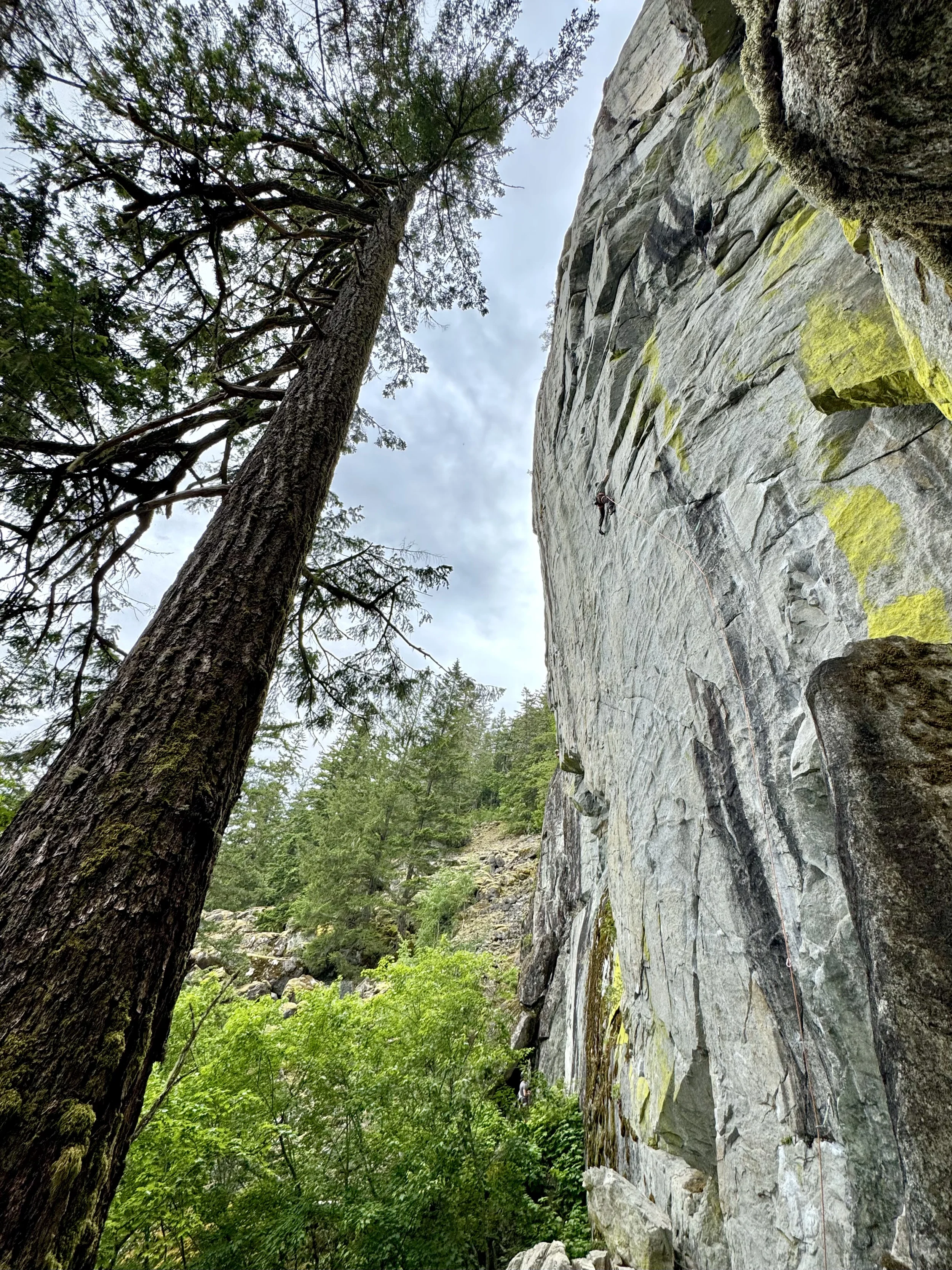
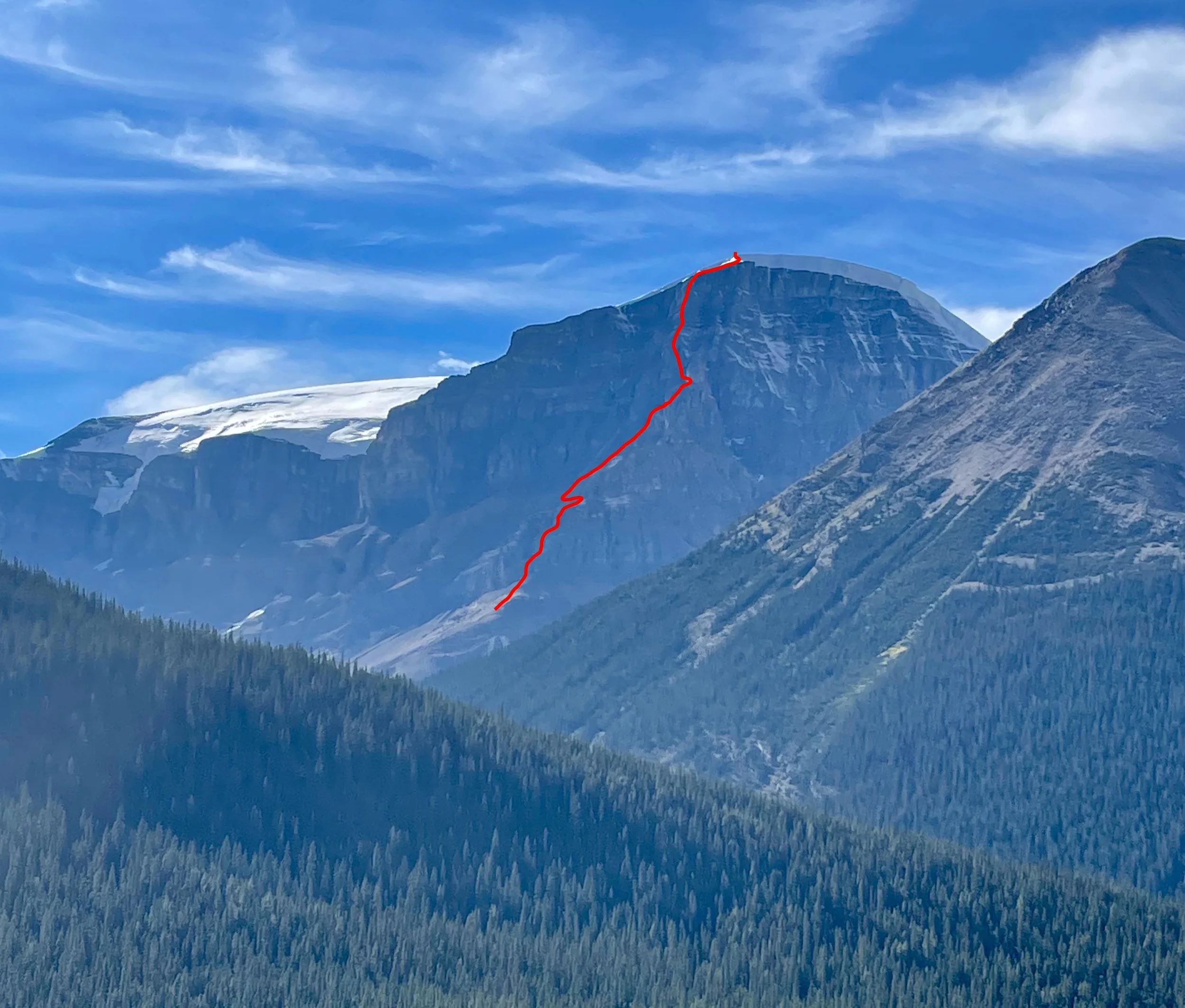
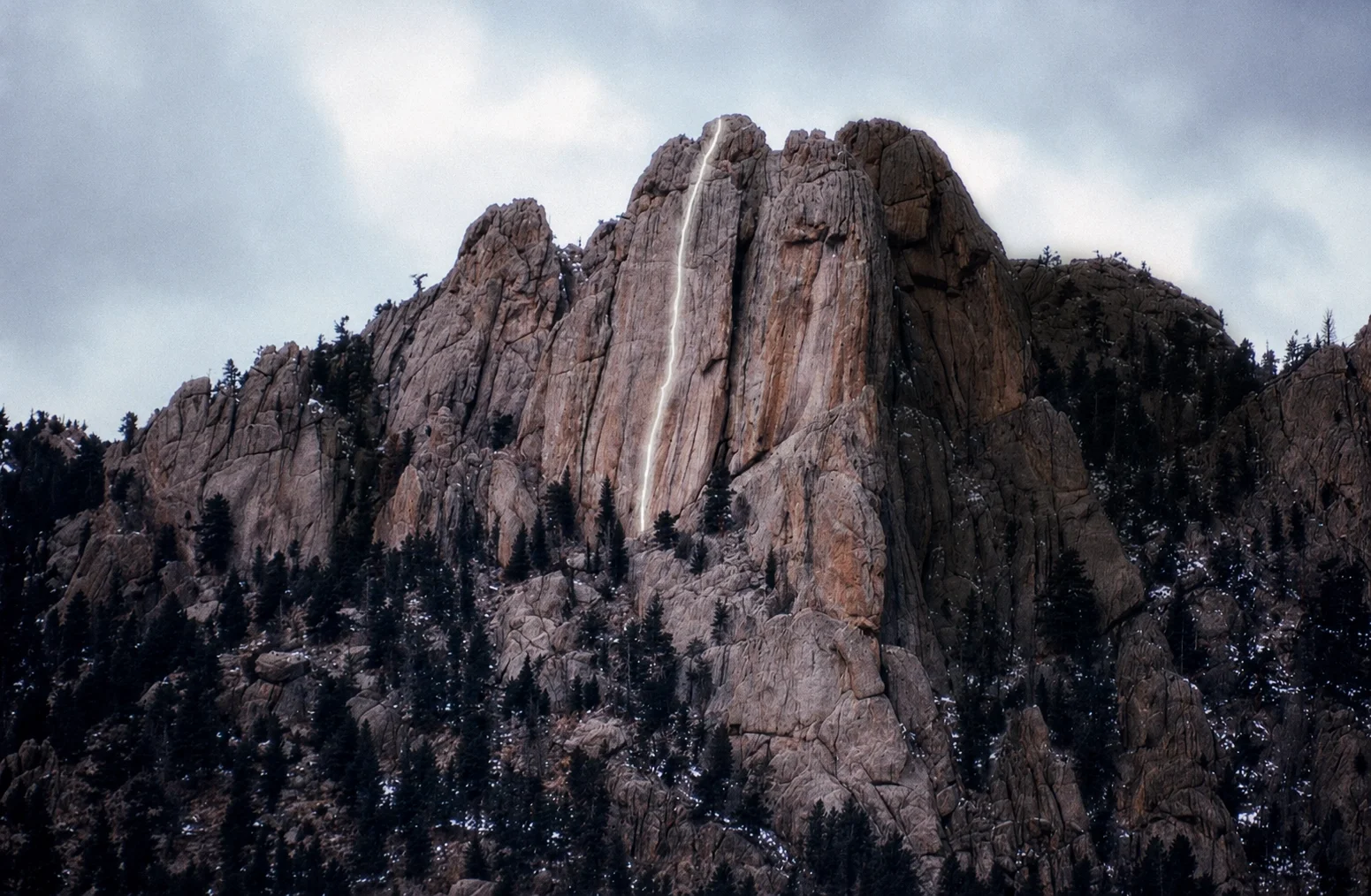
View of Mt. Diablo, Walnut Creek, CA. Photo provided by Wikimedia Commons.

It’s August, and in a few weeks our goals will probably shift out of the alpine as cooler temps bring relief to what has felt like a global heatwave. For many of us, milder conditions mean sport climbing. Whether revisiting a project or getting some pitches in, safety should always be at the forefront. 

Fall from Anchor | Rope Detached from Open Anchor

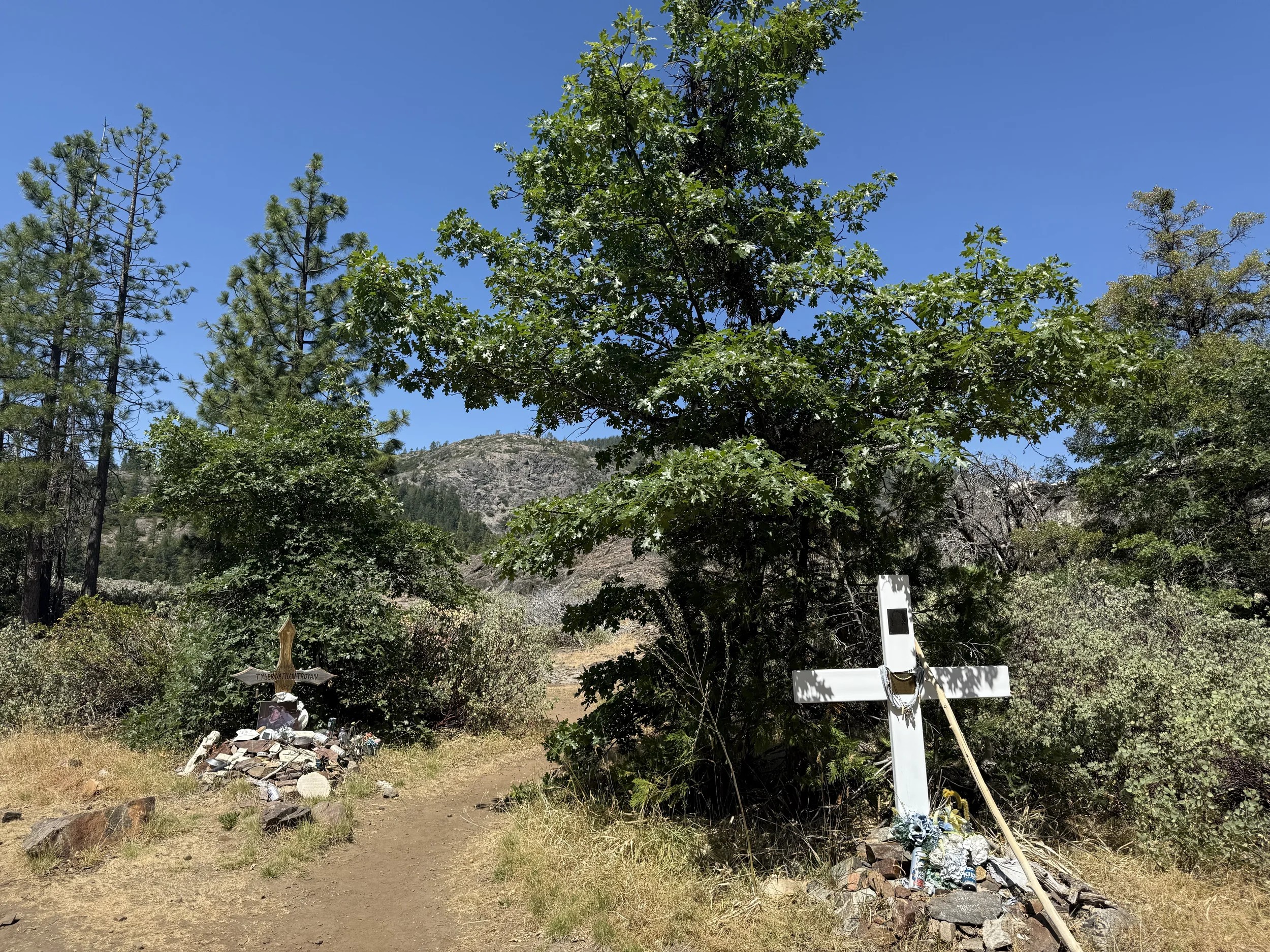
Bay Area, Mount Diablo State Park

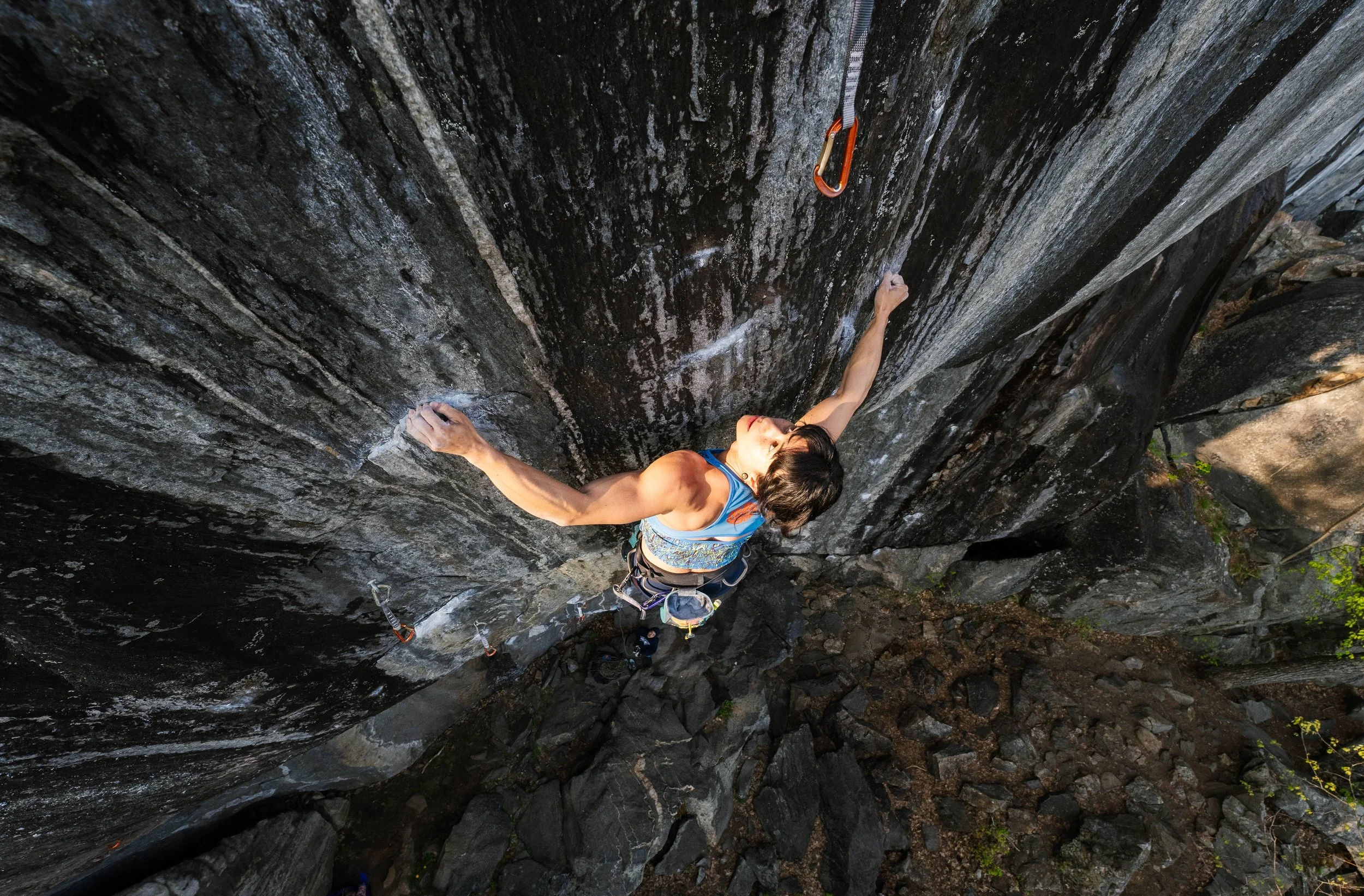
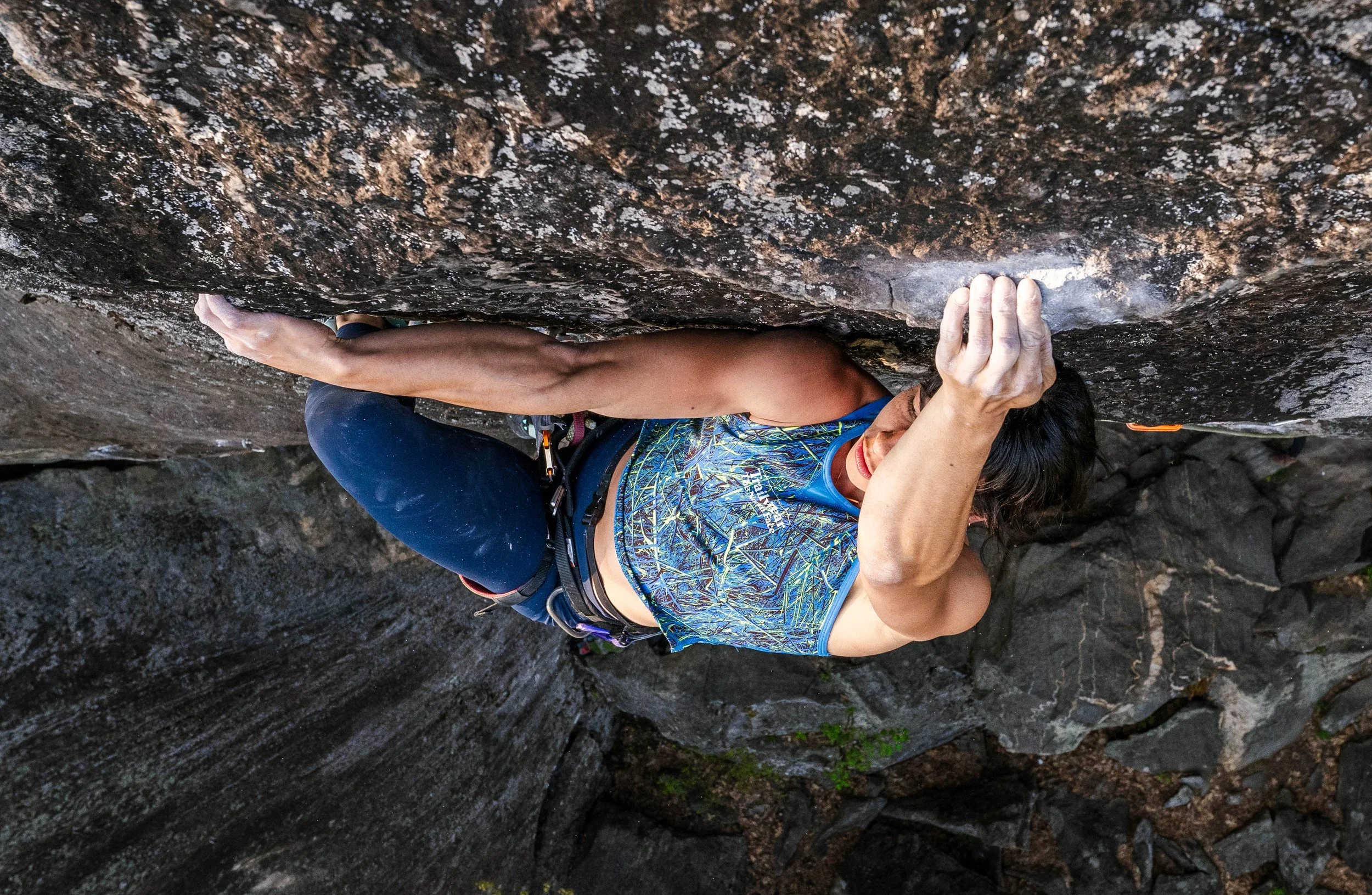
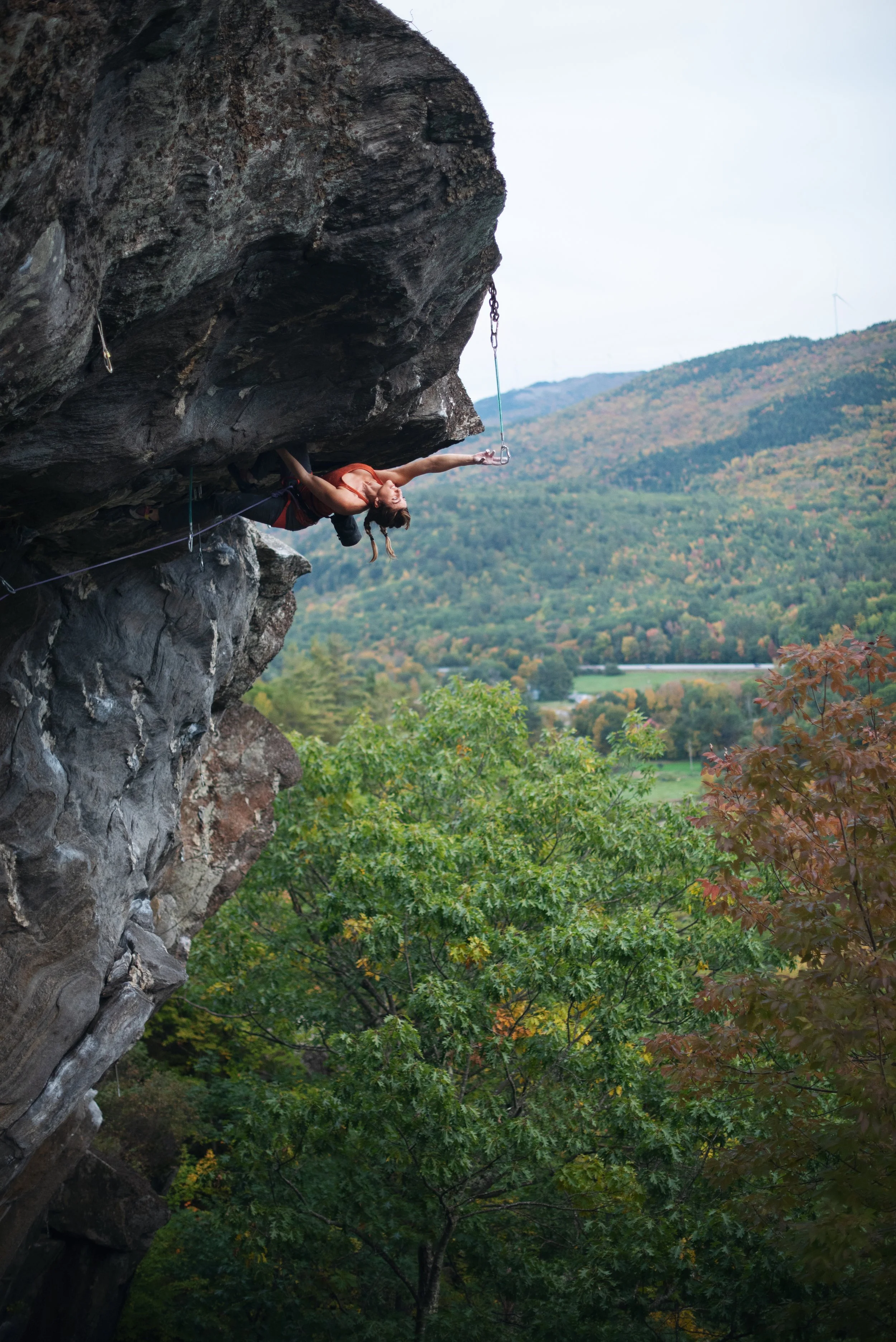
Safe as it seems, sport climbing demands lowering—a technique that has replaced rappelling as the leading cause of roped climbing accidents. Lowering is almost always entirely equipment dependent. It also involves critical technical steps high above the ground, and almost every fall from the anchor is a ground fall. This month, we look at an accident featured in the 2025 ANAC in which a climber fell while cleaning a toprope anchor at Mt. Diablo, California. She reported the following: 
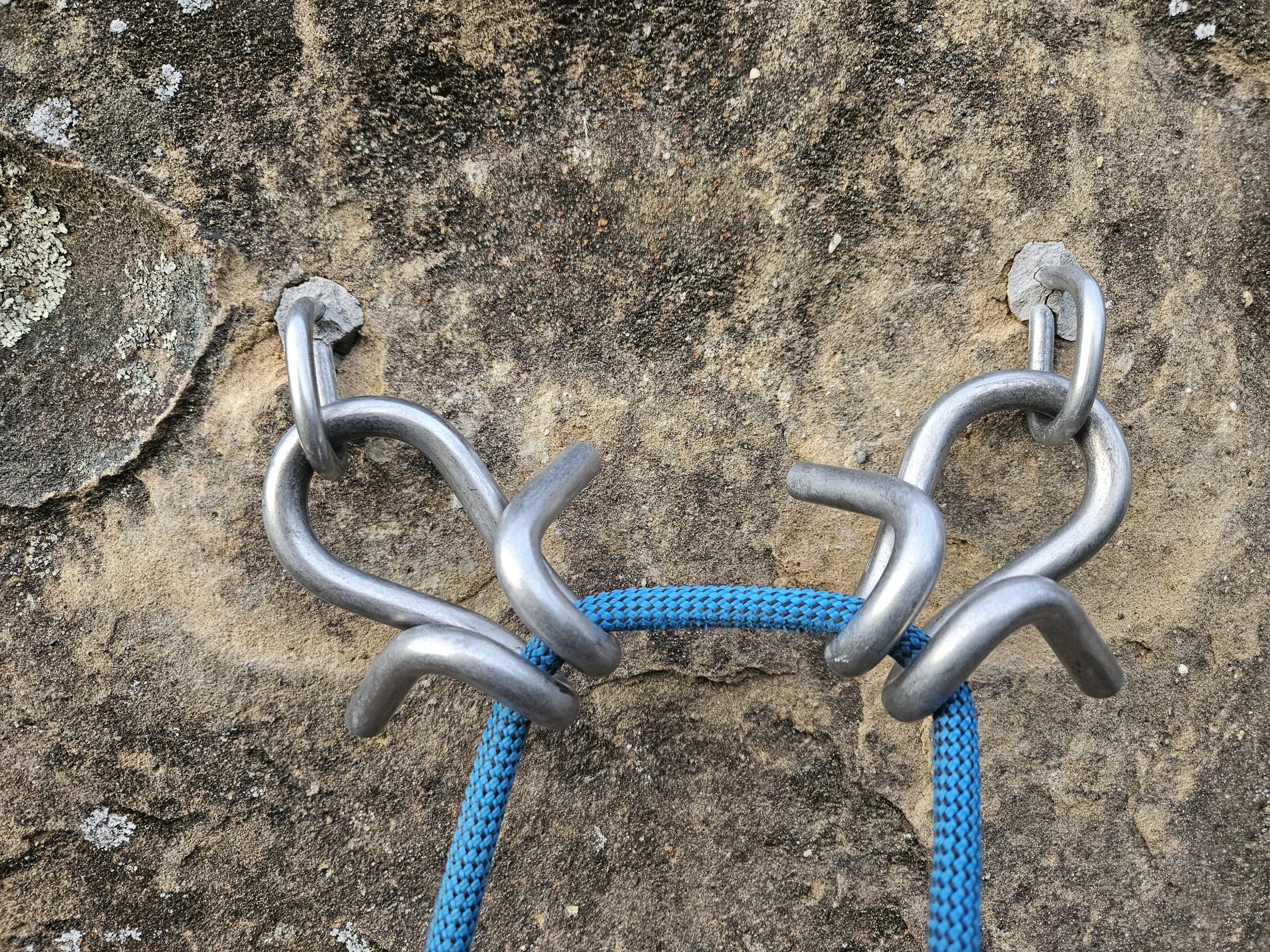
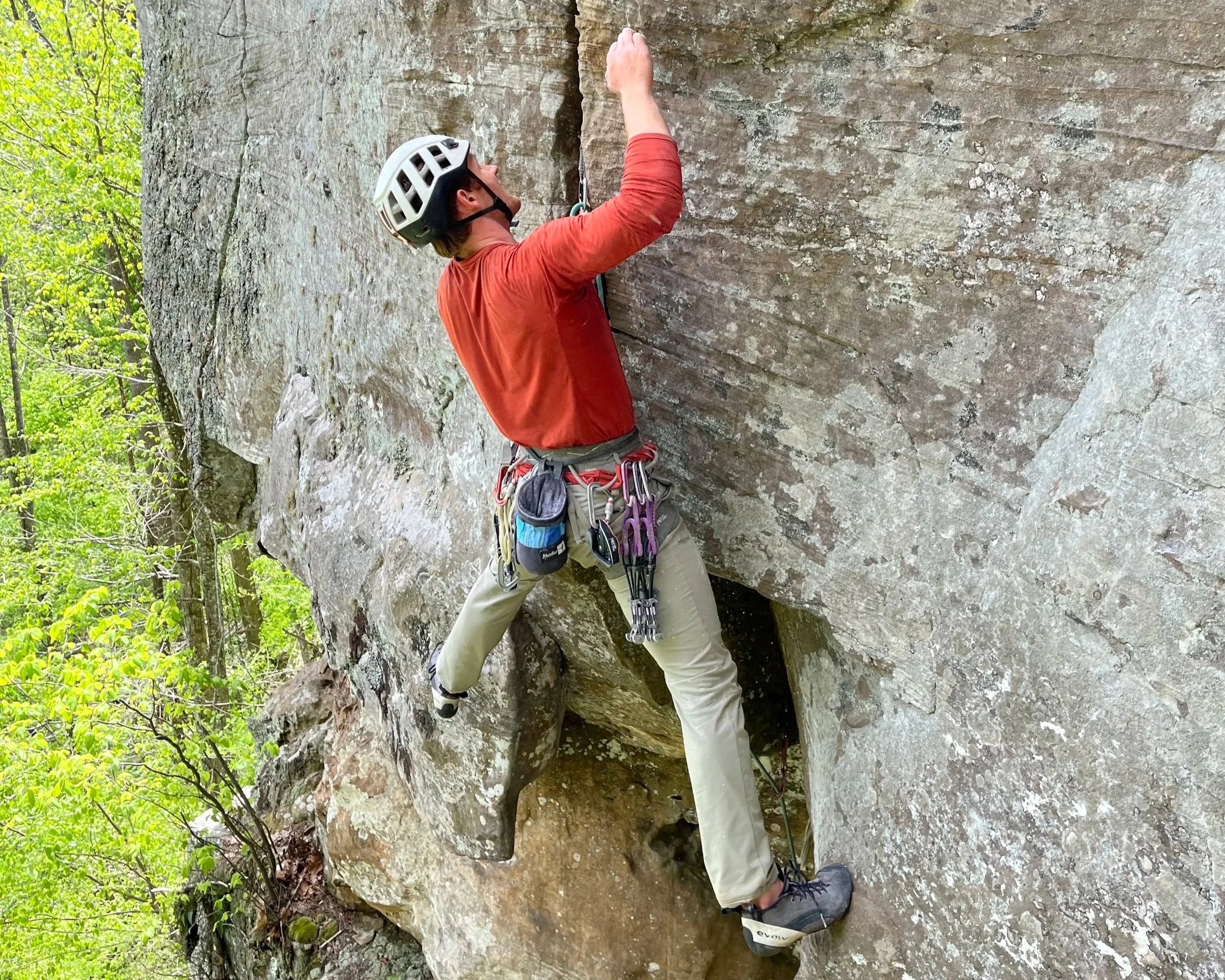
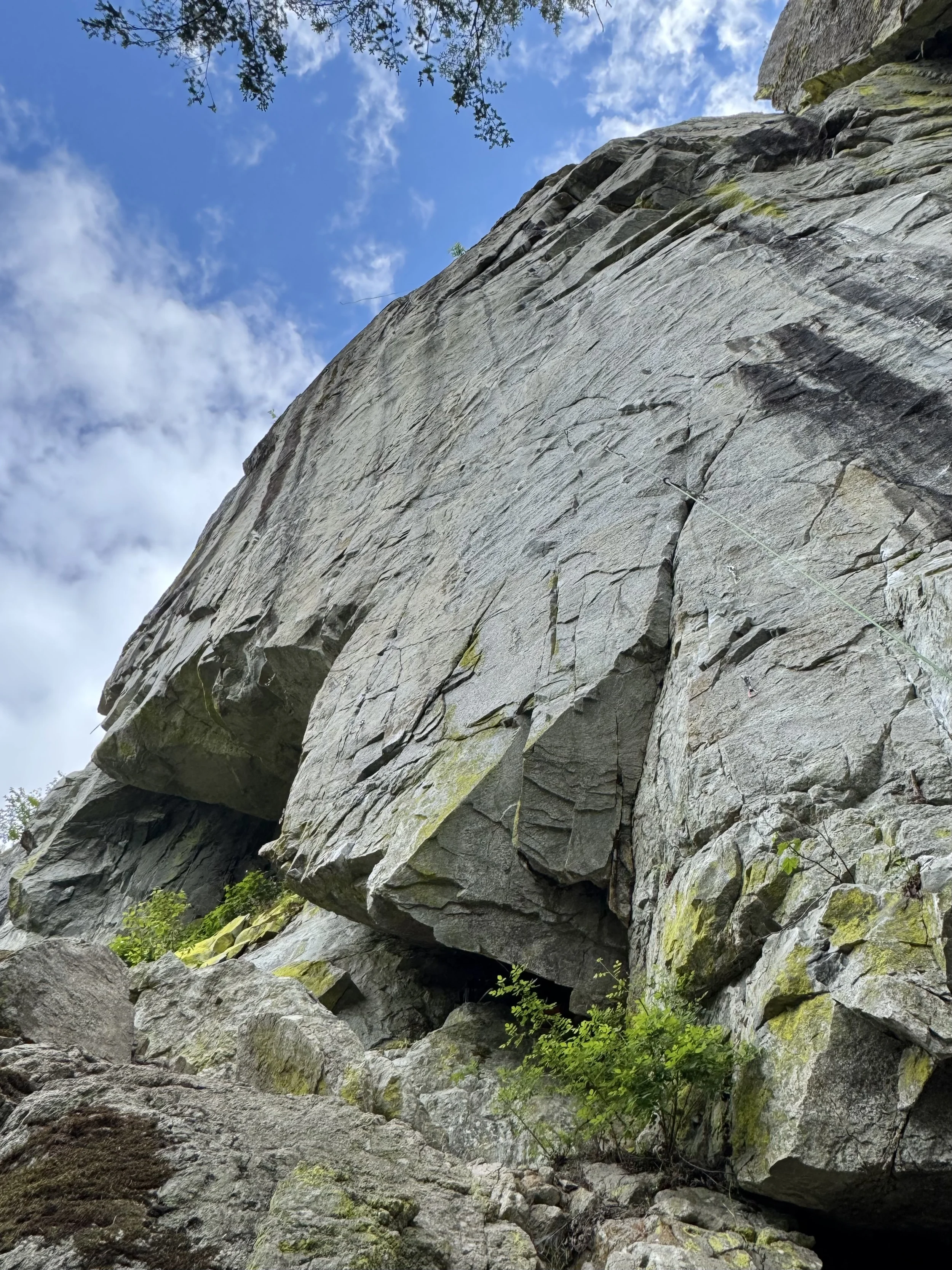
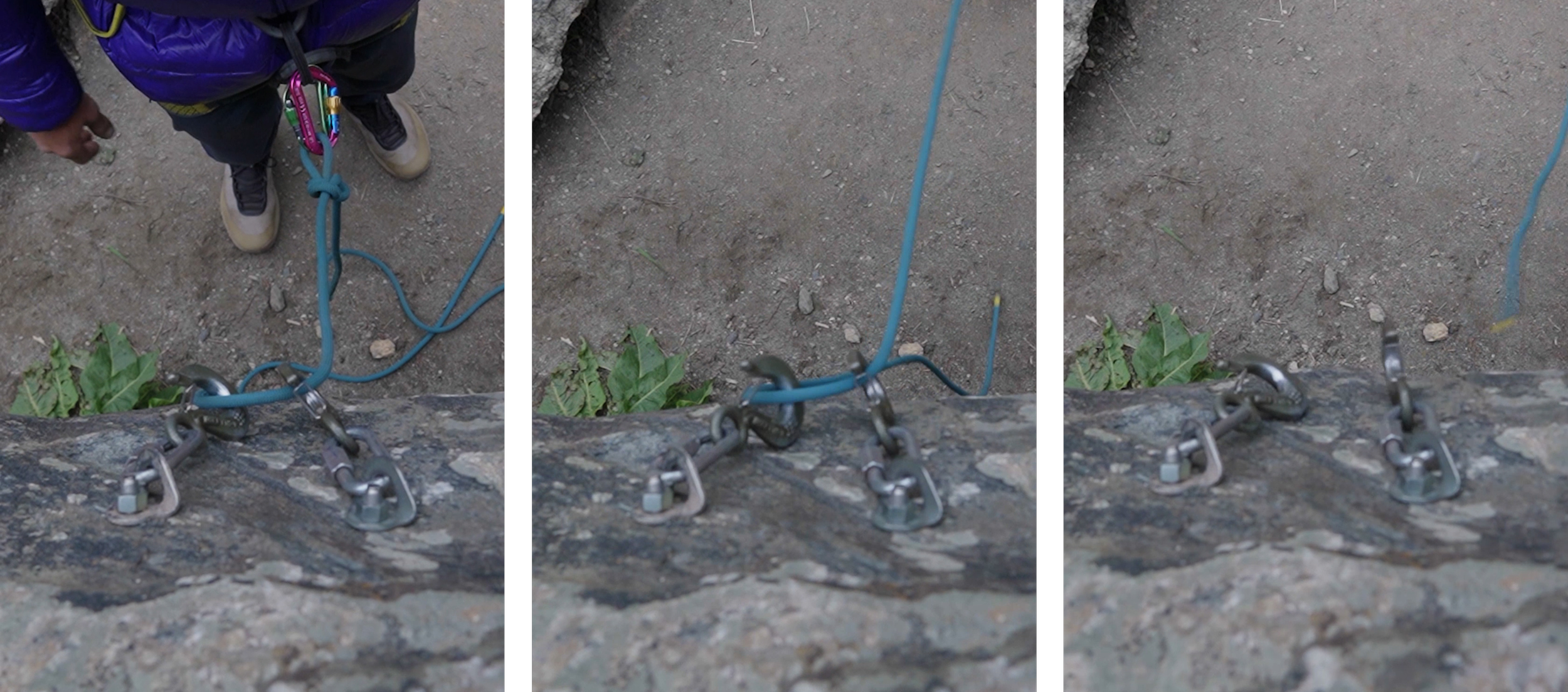
This ram’s horn anchor on a 30-foot 5.10 called Two for One in Mount Diablo State Park, California, was involved in a near-fatal accident on October 26, 2024. Photo provided by Sean Burke/Kim Harris.

“I was toproping a 5.10a called Two for One (left variation). I reached the anchor to clean the quickdraws. I secured myself with a PAS. I hadn’t seen this type of hardware before, and it was a type that wasn’t fully enclosed—as in the case of a mussy hook. The adjoining link wasn't big enough for me to thread the rope through, so I put my rope across the hardware, stood up to unclip my PAS, sat on the rope, and fell. I have no memory of the fall. I blacked out and woke up in a hospital operating room. 


”I broke my left ulna, two ribs on my right ribcage, part of a vertebra, my sacrum, and the ball joint on top of the femur. My helmet broke, and there was a small gash on the left side of my head. I also hit my left butt cheek, because the nerve endings have no feeling in that area. I had one surgery to cut off part of the fractured vertebra and to drain a hematoma. I was hospitalized for four days.”


Analysis

My climbing friends and I determined that it was a ram’s horn that I encountered at the anchor. I hadn’t wiggled the rope underneath the (curled) part of the horns that would’ve prevented the rope from slipping out. Either that or, when I unclipped my PAS, the rope came out. I fell 30 feet and rolled a further 10+ feet downhill, along with the rope. It happened quickly, and K (my friend) didn’t see what happened because when I was at the anchor, my body blocked her view. K ran to get cell reception and called 911. Apparently, I was able to answer questions, but today I have no recollection of what I said. (Source: Jenna Chan, Bay Area Climbers Coalition, and the Editors.)


Editor’s note: The ram’s horn is ultimately an open system fixture. While there’s an advantage in having fewer necessary steps to lowering (including untying and retying), ram’s horns suffer from the possibility of unthreading. Two fatalities occurred in Austria—Peilstein (2022) and Martinswand (ca. 2020)—in which the climber’s rope became detached from ram’s horns while rappelling. Confusion can exist on how to use any unfamiliar fixed hardware. This accident illustrates the peril when the anchor hardware’s design attempts to balance convenience and safety. That said, no anchor is foolproof, and no design can negate human error.


Video—Ram’s Horn Accident Analysis

Here’s what we THINK happened in this 2024 accident in Mount Diablo State Park:

A climber was cleaning an anchor that incorporated a set of ram’s horns, something she’d never seen before. Carabiners might have been blocking the fixture because, in her recollection, the links weren’t big enough to thread her rope through. She put the rope ACROSS the hardware, stood up, unclipped her PAS, sat on the rope, and fell.

Lowering hardware is either closed (rings, quicklinks, chains) or open (ram’s horns, mussy hooks, and—if they haven’t been updated—unwelded cold shuts from the 1990s). Ram’s horns are cheap, easy to install, and fast to use—thread the rope through, no need to untie and retie, and then lower. But as enclosed as they look, ram’s horns are open anchors. In rare cases—standing above the anchor or threading the rope incorrectly—the rope can come out of the ram’s horns.

Video—Using a Ram’s Horn

Most climbing involves lowering, so much so that lowering has replaced rappelling as the probable leading cause of roped climbing accidents. 

This month, we cover an accident in which a climber was cleaning a ram’s horn anchor and threaded the rope incorrectly, which unfortunately led to a ground fall. Fortunately, the climber survived the fall. 

It may seem simple, but when using a ram’s horn anchor, thread the rope through EVERY available horn. Always weight your system before lowering, and when using open anchors, be a pro and keep it low. 


Video Credits: Pete Takeda @pete_takeda, Editor of Accidents in North American Climbing; IFMGA/AMGA Guide Jason Antin @jasonantin; Producers: Shane Johnson and Sierra McGivney @sierra_mcgivney; Videographer: Foster Denney @fosterdoodle_; Editor: Sierra McGivney @sierra_mcgivney


Get Outside Safely—Rescue Coverage

Whether you’re questing off on the twentieth pitch, or checking a landing zone for a boulder, having the AAC’s rescue benefit is a critical step for safety in climbing–ensuring you can find your flow a little more easily knowing we have your back in the case of a medical emergency.

Join the AAC today at the Partner level or higher, and back up your protection with up to $7,500 in rescue benefit and $5,000 in medical-expense coverage. 


The Prescription is Supported By:


Sign Up for AAC Emails

New Ways of Thinking Through Climbing Accidents

This year, the AAC’s Accidents Editor Pete Takeda received a 30% increase in climbing related accident reports. In this, our annual Climbing Accident Trends episode, we look at the patterns of climbing accidents that happened in 2025, and discuss what these patterns reveal, and what all climbers can learn from them.

From the human factors that influence accidents across disciplines—and the emerging prevalence of top-rope soloing accidents; the under-appreciated danger of getting your knee stuck in an inversion offwidth; the hidden dangers of a stick clip—to the continued high incidence of lowering accidents, we dive into some of the biggest trends and most poignant examples of accidents to learn from in this year's book, Accidents in North American Climbing 2026.


Meet the 2026 American Alpine Club Awardees

The American Alpine Club is proud to announce the recipients of its 2026 awards, recognizing outstanding achievements in conservation, climbing and mountaineering, mountain literature, and dedication to the Club. Awardees will be recognized at the American Alpine Club's Annual Gala on October 24 in Golden, Colorado.

President's Gold Medal: Lynn Hill

Honorary Membership (posthumously): Daryl Miller

The Pinnacle Award: Jimmie Dunn

The Angelo Heilprin Citation: Scott Richards

David R. Brower Conservation Award: Alison Criscitiello

H. Adams Carter Literary Award: Geoff Powter

David A. Sowles Memorial Award: Black Canyon Rescue Team

Robert Hicks Bates Award: Dane Steadman

Keep reading to learn more about each awardee.


President's Gold Medal: Lynn Hill

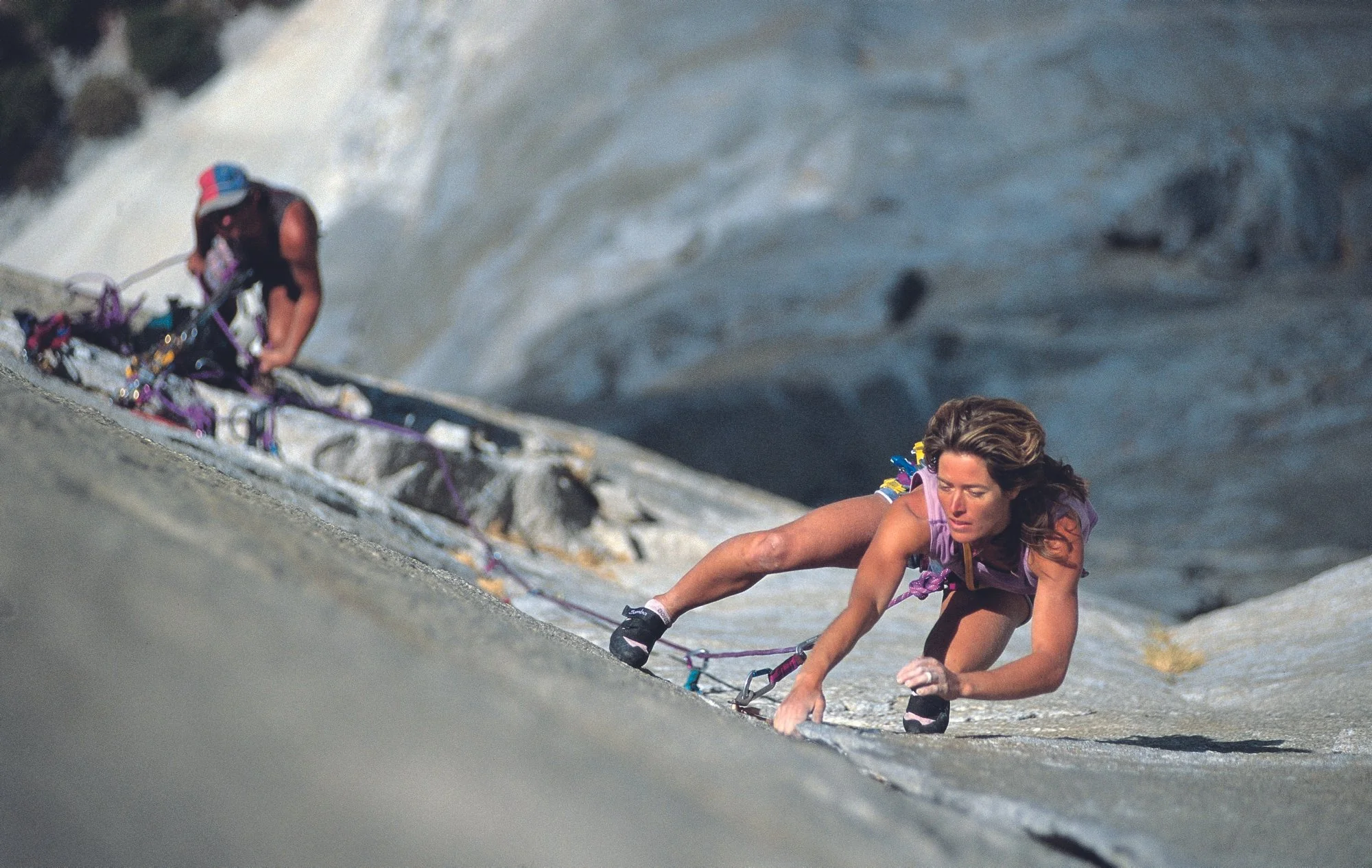
Image by Heinz Zak.

FOR EXTRAORDINARY ACCOMPLISHMENTS IN THE CLIMBING WORLD

Lynn Hill has spent more than 50 years climbing at the highest levels of the sport, expanding its culture and redefining its limits across the world. Most famously, Hill completed the first free ascent of The Nose in 1993, followed by an all-free ascent of The Nose in one day in 1994—a feat to this day only Hill and Tommy Caldwell have completed.

Throughout her career, Hill repeatedly redefined what was possible in climbing. In 1979 she became the first woman to climb a route rated 5.12d, and in 1991, she became the first woman to climb 5.14. In 1992, Hill became the first woman to onsight 5.13b, and by 1995, she made two first free ascents of 5.12 walls in Kyrgyzstan. In 1999, Hill led an all-women's team to the first ascent of Bravo Les Filles (5.12c/AO or 5.13d) in Madagascar.

In Nina Williams' final year as Board President, she will award Hill the President's Gold Medal, an honor given only seven times since the AAC's founding, recognizing Hill's contributions to climbing.


Honorary Membership: Daryl Miller (posthumously)

Daryl Miller. Image courtesy of Charlie Sassara.

FOR LASTING AND SIGNIFICANT IMPACT ON CLIMBING

Honorary Membership is one of the highest awards the AAC offers. As remembered by longtime friend and fellow alpinist Charlie Sassara, the AAC posthumously recognizes Daryl Miller for his lifetime commitment and passion for adventure, outdoor education, mountain rescue, and climbing in all its forms.

“Daryl was deeply committed to the ethos: ‘Go, but bring back a story.’ Along his journey Daryl touched the hearts of climbers, adventurers, and vagabonds across generations with his keen interest in their plans and adventures.

Daryl became a United States Marine in 1961, served during the Cuban Missile Crisis, and completed two tours in Vietnam. He left the military in 1972 and moved to Montana, working in ranching and as a bullfighter—the guy who steps between an angry bull and a downed cowboy.

In 1991 Daryl joined the National Park Service at Denali National Park as a mountaineering ranger. He eventually led the South District office and oversaw the entire mountain program, but what set him apart was his compassion. Though Daryl often said that “your emergency may not be my emergency,” his actions told a different story. When grieving families arrived at Denali searching for answers about a lost loved one, he stayed with them through it, often at considerable cost to himself.

Daryl was also key to the integration of the NPS Mountaineering Ranger Program with the U.S. Air Force 210th Rescue Squadron (PJs) and was later recognized with the International Alpine Solidarity Award by the guides of Pinzolo, Italy. Daryl’s ‘rescue highlight reel’ includes the rescue of Malcolm Daly from the South Face of Thunder Mountain and the 210th Rescue Squadron’s long line rescue of Jack Tackle from the North Face of Mt. Augusta in 2002.

Fundamentally, Daryl believed that a life well lived should be packed with powerful experiences—the type of experiences that require taking risks that challenge and change you as a person. What really set Daryl apart was his enthusiasm for ‘your’ adventure. Those who stepped into his circle will remember a man who inspired, encouraged, and challenged the people around him, and who very often changed the course of their lives.”


Pinnacle Award: Jimmie Dunn

Jimmie Dunn on Zonked Out. Image by Albert Dow.

FOR OUTSTANDING MOUNTAINEERING AND CLIMBING ACHIEVEMENTS

Jimmie Dunn’s nearly sixty-year career includes impressive ascents that have paved the way for climbers across the world. In 1972, Dunn completed the first ascent of Cosmos on El Capitan—the first new route on the wall completed solo. In 1976, Dunn and Earl Wiggins made the first free ascent of The Cruise in the Black Canyon of the Gunnison after a six-hour effort. Other significant climbs include the third ascent of Standing Rock, the first ascent of Castleton Tower's west face, and the fifth ascent of North Six Shooter, all during a one-week trip in 1971 with Billy Westbay and Stuart Green.

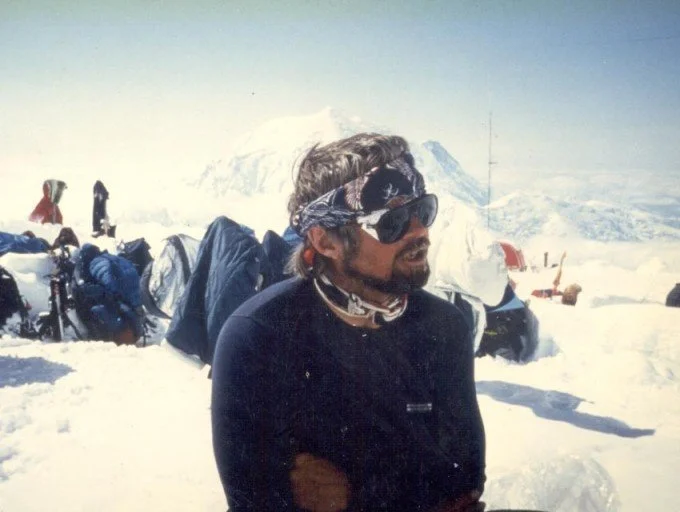
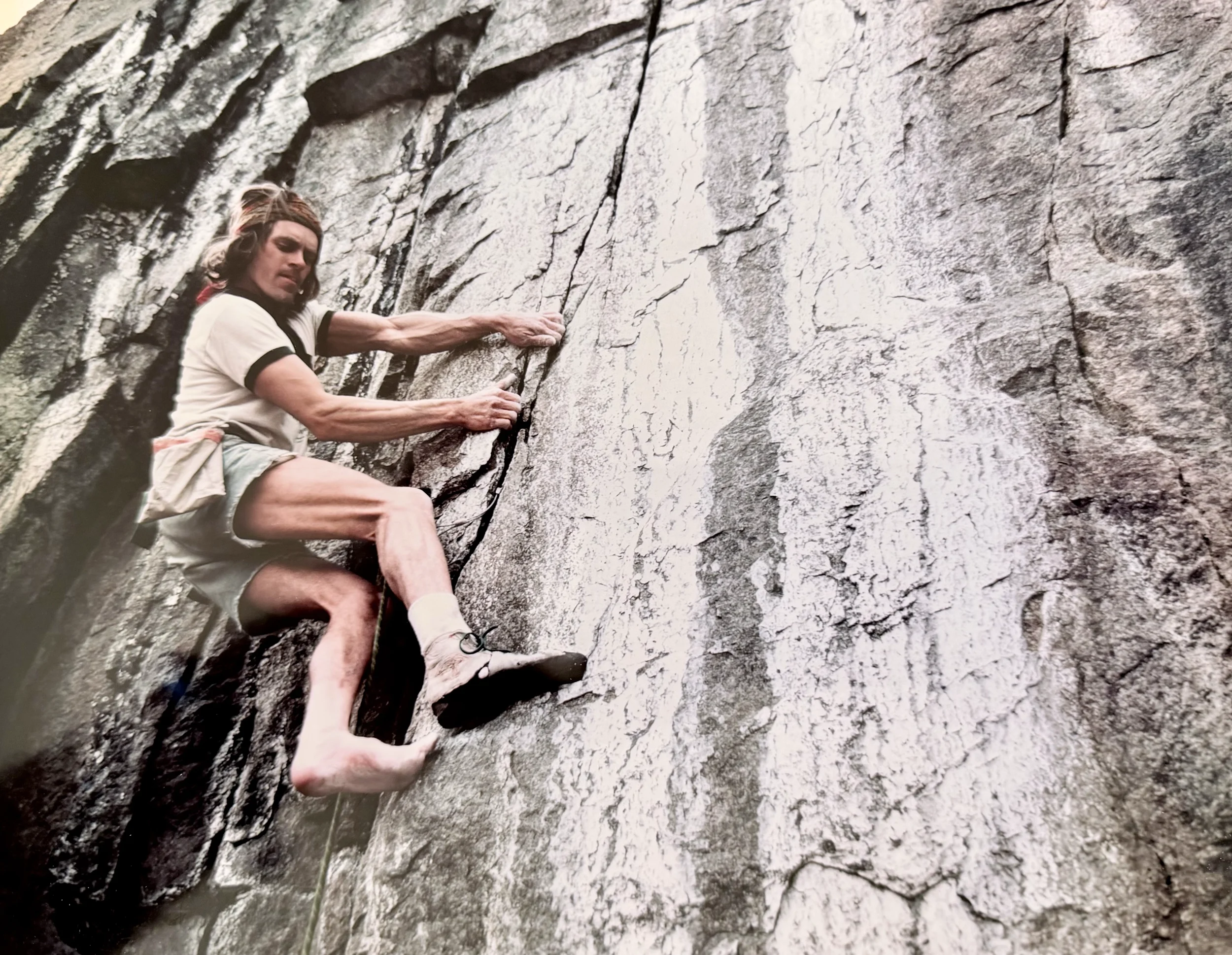
Dunn recounts his extensive climbing career, anchored by vivid memories of fellow mountaineers and adventure, “I remember Bob Palais, as a young climber, bringing me homemade brownies from Boston to North Conway, New Hampshire, every weekend all summer in the early 1970s. In 1976, leading Black Magic barefoot on Cathedral Ledge, with Ajax Greene and Ed Webster following barefoot—we were inspired by 'Hot' Henry Barber's tales of climbing in Dresden, Germany. In 1978, I clearly remember Albert Dow yelling up to me for a photograph on Zonked Out, Woodchuck Ledge, a desperate crack I rated 5.10+++. I was wearing only one climbing shoe and had a bloody bandage around my throbbing butt cheek from a giant beaver’s bite. It’s now rated 5.12b.”

Today, Dunn spends his time supporting his son, CharlieJoe (CJ), in his climbing pursuits, working on his partner Hellen's wild environmental art projects, EARTHflows, at Sky Soul Studio, and putting together a book to celebrate the incredible climbs and climbers he has known, hoping to publish A Rope and Rack, the Shirt on Your Back: Life and Friends of Jimmie Dunn, Climber, within the next year. Dunn shares, “The climbs are cool, but what really matters is the people you meet along the way.”


Angelo Heilprin Citation: Scott Richards

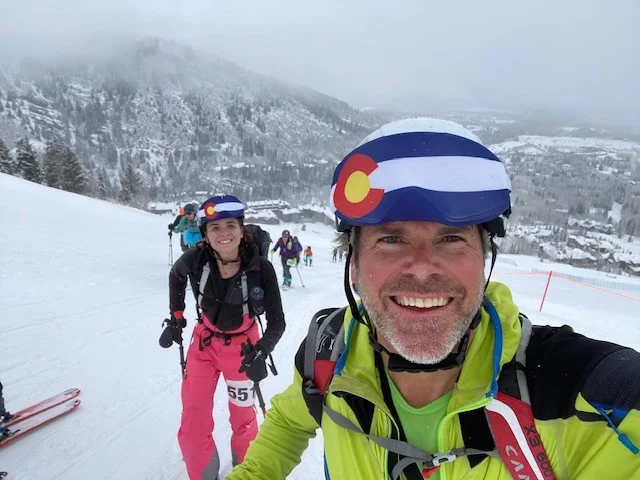
Scott Richards taking on the Power of Four skimo race with his daughter. Image by Scott Richards.

FOR EXEMPLARY SERVICE TO THE CLUB 

The Angelo Heilprin Citation honors AAC members for their long-term dedication to the Club, expressing their passion for climbing, community, and giving back through everyday involvement. Scott Richards is this year’s awardee, honored for his work in maintaining and strengthening the AAC.

Richards grew up in Evergreen, Colorado, and studied at Fort Lewis College before completing graduate work at Colorado State University and a professional certificate at the CU Leeds School of Business. In his twenties, he worked as a mountain guide and outdoor educator around the world, later teaching geography, art, and reading at a Colorado public middle school and then serving as a teacher and principal at the American International School in Gabon, Central Africa. He and his wife returned to the United States when she was pregnant with their second child, and Richards began a career as a financial advisor at Northwestern Mutual. 

Richards has been an AAC member for 23 years and serves on both the AAC Development Committee and the Host Committee for the Annual Gala, drawing on his dual background as a financial advisor and former NOLS instructor. He also sits on the board of Locally Haiti, working to improve health, education, and agriculture in the country. Richards’ reach extends into international climbing and ski mountaineering circles; in April, he and two teammates from Louisville completed the 2026 edition of Switzerland's Patrouille des Glaciers ski mountaineering race in 16 hours. When he's not serving the Club, Richards can be found skiing, running ultras, or bird watching.


David R. Brower Conservation Award: Alison Criscitiello

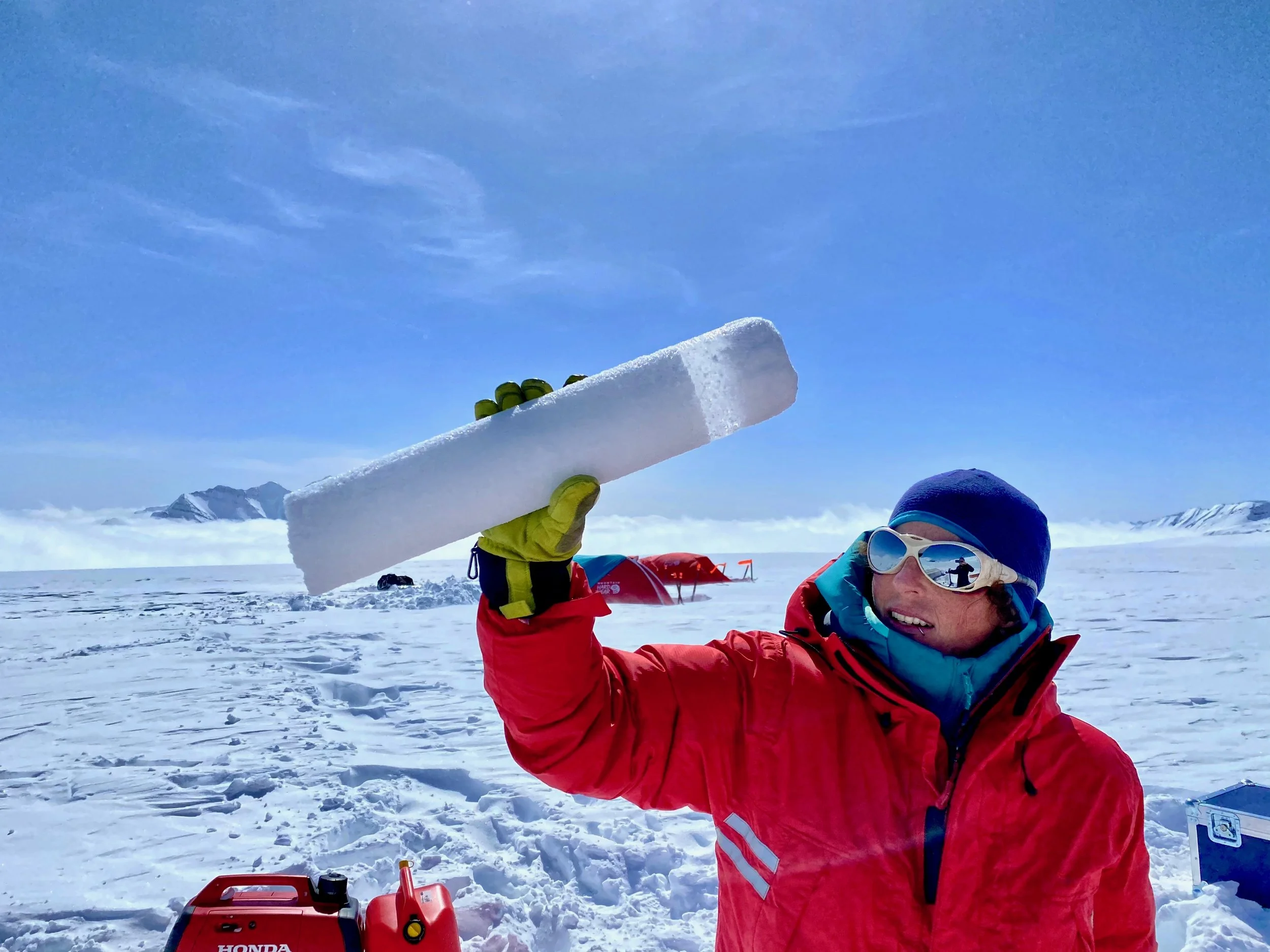
A melt layer in a section of ice core drilled from Snow Dome, Columbia Icefield, BC. Image by Rebecca Haspel.

FOR LEADERSHIP AND COMMITMENT TO CONSERVATION AND THE PRESERVATION OF MOUNTAIN REGIONS WORLDWIDE

Dr. Alison Criscitiello is a world-renowned ice core scientist and high-altitude mountaineer who explores the history of climate and environmental pollutants in polar and high-alpine regions using ice core chemistry. Criscitiello’s work has taken her to ice caps around the world including Antarctica, Greenland, and the Canadian high Arctic, as well as the summit of Canada’s highest peak, Mt. Logan where she drilled an ice core in 2022. Alongside her scientific research, she is an exceptional storyteller whose work has appeared in film projects, television, and print—including her article “Contraindications,” which won a Banff Mountain Book Competition award in 2018. 

Her accolades are extensive: Criscitiello was elected to the Royal Canadian Geographic Society's College of Fellows, is a Fellow International with The Explorers Club, and was awarded a Queen Elizabeth II's Platinum Jubilee Medal for her significant contributions to Arctic climate research. She has also received three American Alpine Club climbing awards, the Alpine Club of Canada's John Lauchlan Award, and the Mugs Stump Award.

In conjunction with her research, Criscitiello is committed to making science more accessible to young women. As a co-founder of the Girls* on Ice Canada program, she hopes to merge science, art, and adventure to inspire leadership, curiosity, and confidence in the next generation of leaders. Her work has motivated a community of young women to pursue their interests in science and dive into their passions in the outdoors.


H. Adams Carter Literary Award: Geoff Powter

Image by Geoff Powter.

FOR EXCELLENCE IN CLIMBING LITERATURE

Geoff Powter is a climber, writer, and editor, long based in the Canadian Rockies. He is a veteran of 13 Himalayan expeditions, and has been writing about climbing and other risk sports for decades. Geoff was the editor of the Canadian Alpine Journal for 13 years and was the host of the Voices of Adventure interview series at the Banff Mountain Book Festival for 27 years, showcasing his depth of storytelling across media. 

Geoff’s magazine writing has earned him nine National Magazine Awards, and his three books (Strange and Dangerous Dreams, Inner Ranges, and Survival is not Assured: The Life of Climber Jim Donini) have won two National Outdoor Book Awards, a Jury Prize and Best Climbing Book Award at the Banff Mountain Book Festival, and a shortlist for the Boardman-Tasker Award.


David A. Sowles Memorial Award: Black Canyon Rescue Team

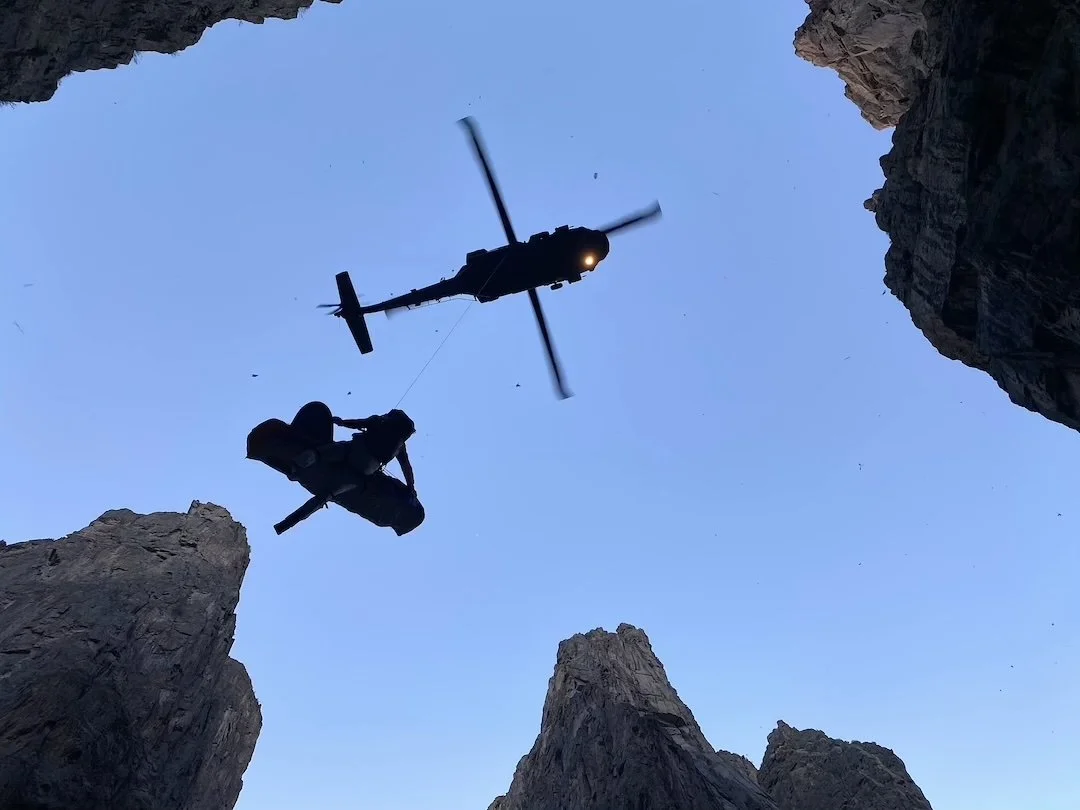
An Army Black Hawk helicopter lifts the severely injured Becca Steinbrecher out of the Black Canyon on September 11, 2023. Image by Vic Zeilman.

FOR UNSELFISH DEVOTION TO IMPERILED CLIMBERS

The David A. Sowles Memorial Award, powered by Rocky Talkie, recognizes the Black Canyon Rescue Team for their response to a September 2023 climbing accident in the Black Canyon of the Gunnison, where a climber suffered a serious leader fall on Great White Wall and remained unconscious for nearly 11 hours before evacuation.

Twenty-eight rescue personnel took part in the response, most of them volunteers with the Black Canyon SAR team, alongside Black Canyon district and park rangers and Army National Guard personnel. The climber’s partner, Skyeler Congdon, secured her at the anchor before rappelling the route and running out to call for help. NPS ranger Philippe Wheelock led the climbing team that descended into the canyon and reached the climber, alongside SAR volunteer and former NPS climbing ranger Vic Zeilman. Ranger Tom Schaefer directed operations from the rim, while district rangers Ryan Rees and Ryan Thrush oversaw incident command. The Army National Guard's High-Altitude Aviation Training Site provided the helicopter that carried out the final evacuation.

Read the full incident account and analysis in the American Alpine Club’s publications.


Robert Hicks Bates Award: Dane Steadman

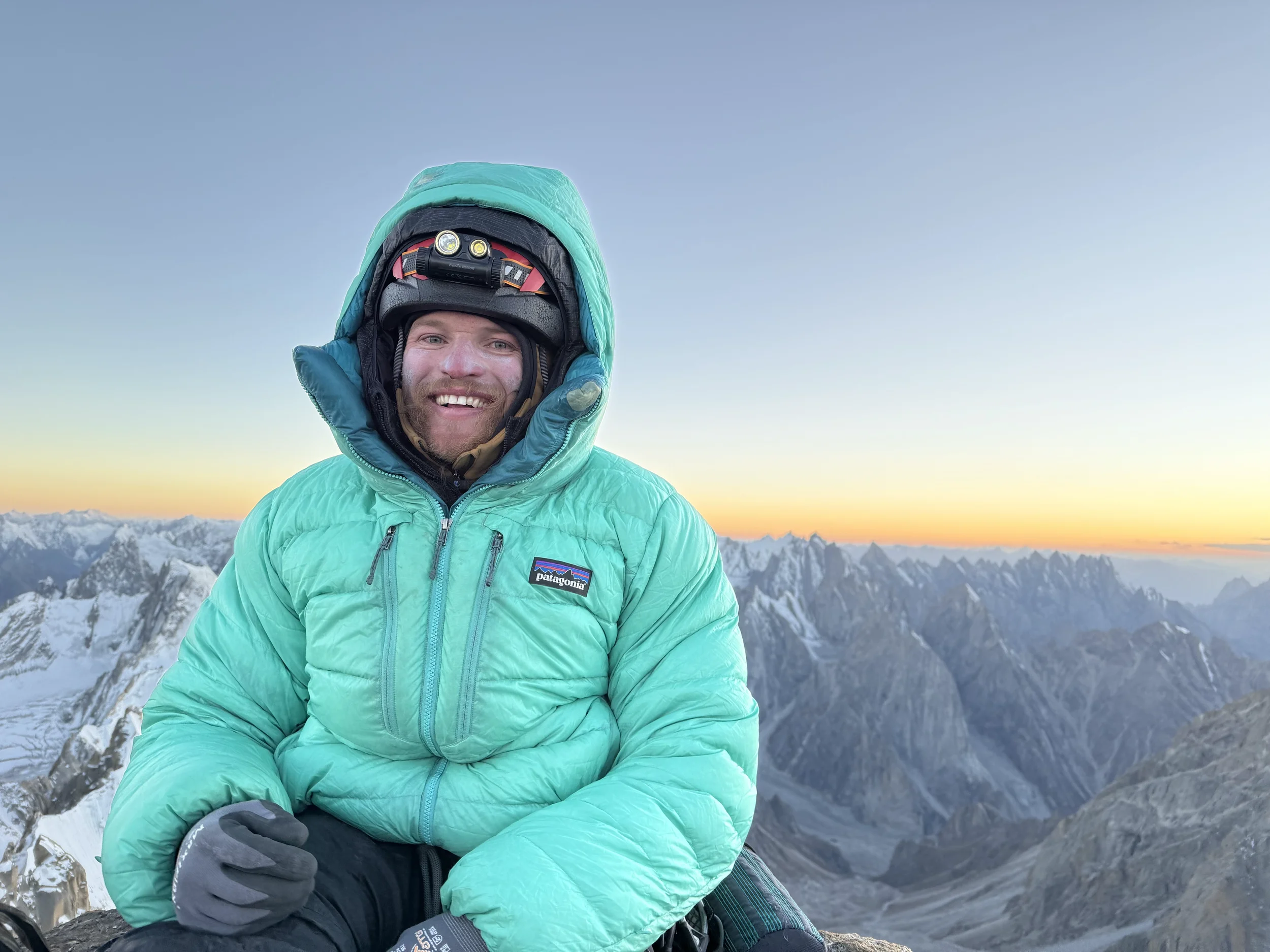
Dane Steadman on the summit of a previously unclimbed 6,000m tower, later named Sangar Tower, in the Pakistani Karakoram, in 2025. Image by Blake Berghoff.

FOR OUTSTANDING ACCOMPLISHMENT BY A YOUNG CLIMBER

The 2026 Robert Hicks Bates Award, powered by La Sportiva, honors Dane Steadman. Steadman is a mountaineer in all senses of the word. At only 28 years old, he’s already made his mark with his 2024 first ascent of Tiger Lily Buttress on Yashkuk Sar I and countless other alpine pursuits which span from ascents in his own backyard like Barely Legal to expeditions in the Alaska Range, Karakoram, Himalaya, and Tian Shan.

Steadman describes his start in alpinism as “an inexplicable draw toward high, cold mountains,” which brought him from the heat of the Arizona desert to the cool landscape of Cody, Wyoming where he resides today as a Patagonia ambassador and climbing guide. Steadman spends his free time developing new rock and mixed climbing routes around the Greater Yellowstone Ecosystem. 

Steadman is a recipient of the 2025 Piolet d’Or and the American Alpine Club’s 2026 Cutting Edge Grant which will fund his next expedition to Pakistan, where he will attempt the north buttress of Gharkun.

The Robert Hicks Bates Award is sponsored by:


American Alpine Club award winners will be honored with bespoke, sustainable, custom-made awards by metal artist Lisa Issenberg. Lisa is the owner and founder of the Ridgway, Colorado studio, Kiitellä, named after a Finnish word meaning to "thank, applaud, or praise." Lisa has been providing custom awards for the American Alpine Club since 2013. Kiitellä's process includes a mix of both handcraft and industrial techniques. To learn more, visit kiitella.com


Join us on October 24 in Golden, Colorado, as we celebrate these remarkable individuals and the many ways they have shaped climbing. The Annual Gala brings together climbers from across the country for an evening of recognition, connection, and community.


The Line—First Female Ascent of Spirit Quest (5.14d), Squamish

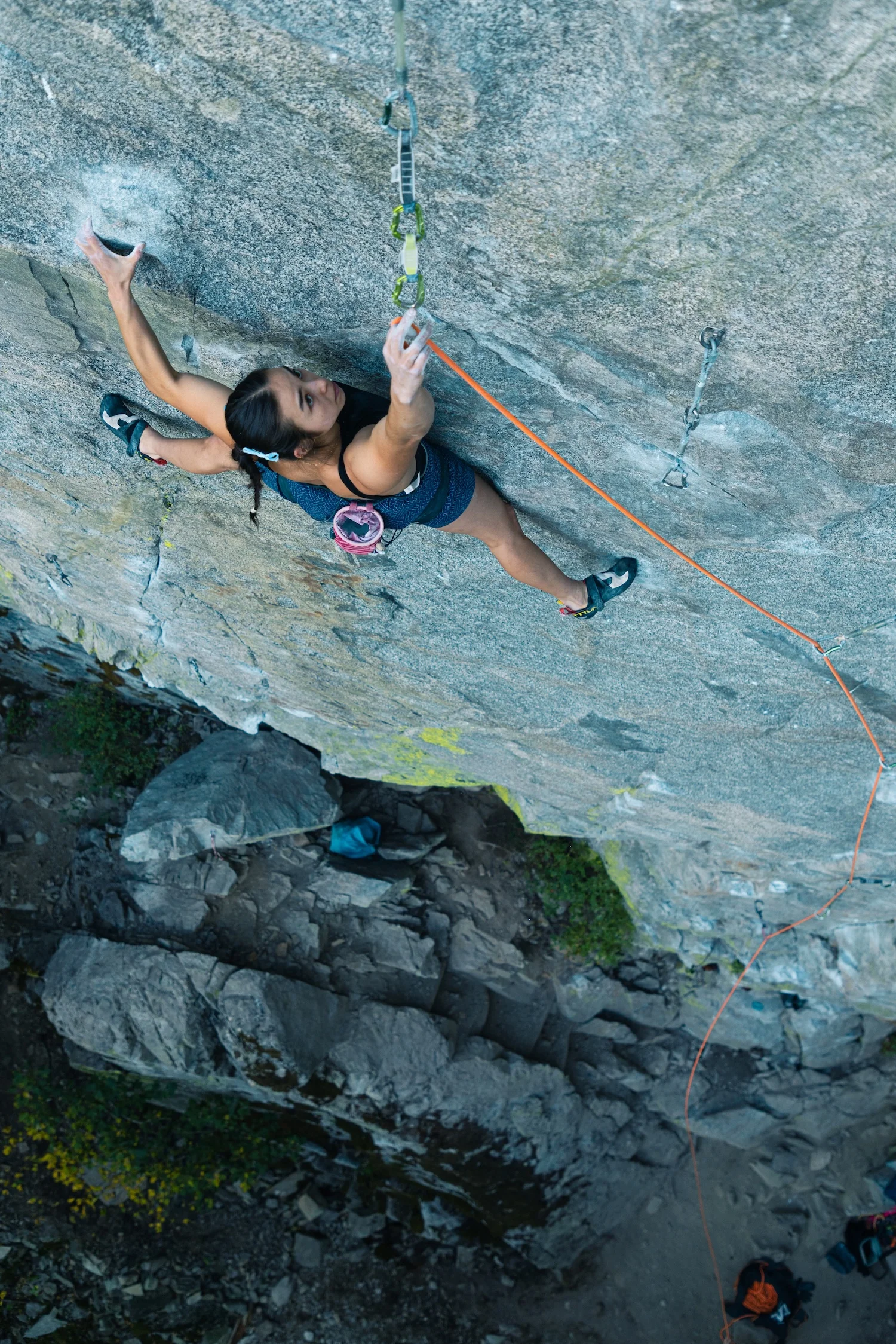
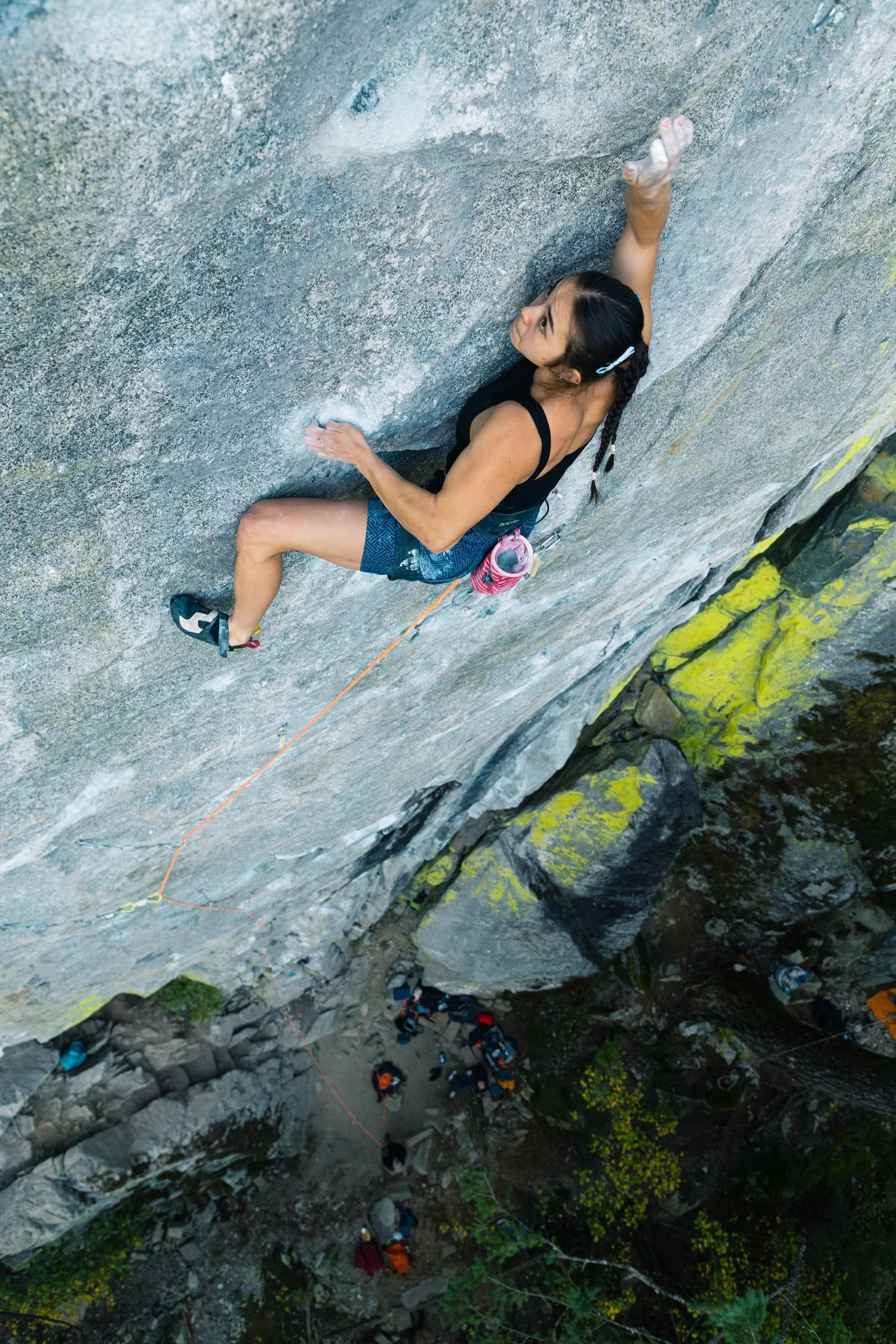
Quinn Mason eyeing down the seventh draw early on in the hard climbing of Spirit Quest (5.14d), Paradise Wall, Squamish, British Columbia. Mason made the route’s first female ascent on October 9, 2025. Photo: Don Mason

Paradise Wall is one of the many gems at Squamish, British Columbia, a granite mega-destination known for its breadth: everything from classic moderates, to cutting-edge single-pitch trad like Drifter’s Escape (proposed 5.15a: FFA: Connor Herson, 2025) and Cobra Crack (5.14b; FFA: Sonnie Trotter, 2006), to endless bouldering, to technical sport. The wild traverse of Dreamcatcher (5.14d) on the Cacodemon Boulder, freed by Chris Sharma in 2005, might be Squamish’s most iconic hard sport climb. But the 5.14d face climb Spirit Quest (2021: FFA by Mike Foley) at Paradise Wall has garnered recent attention, too.

Spirit Quest offers a direct start to Tom Wright’s 2015 classic Spirit of the West (5.14a). “Interestingly. [Spirit of the West] was the first route I ever bolted. And in all of the 35 meters, only one small piece of rock broke off during cleaning. I was thinking, Man, putting up routes is a piece of cake!” says Wright. “It’s an immaculate piece of stone, and I think it’s important to point out that all the routes on that wall are fully natural, including Spirit Quest and Midnight Way—which I think is rare at that level.” (Midnight Way is a 5.15a that breaks left off Spirit Quest, put up by Connor Herson in 2024.)

In autumn 2025, Quinn Mason (@quinn.midori), who contributed both the story below as well as imagery of Hamish McArthur’s bouldering tear through Colorado in 2025 to the inaugural American Climbing Journal, made the route’s first female ascent. The redpoint process, though initially intimidating, ended up being meditative and joyful—a chance for Mason to connect with a beautiful climb in a serene setting amidst friends. May your summer (and fall) projects give you such meaning as well!

—Matt Samet, Editor, American Climbing Journal


First Female Ascent of Spirit Quest (5.14d)

Dan Beland on the classic Spirit of the West (5.14a), Paradise Wall; Spirit Quest takes a direct start to this line, upping the difficulty significantly. Photo: Sonnie Trotter

Spirit Quest (9a/5.14d) snakes up the middle of the sheer, breathtaking Paradise Wall in Paradise Valley, Squamish, BC. The first routes went up on this crag in 2015, making it a relatively new addition to Squamish sport climbing. Paradise Wall is stacked with stellar, all-natural climbing, with about one route per grade from 8a+/5.13c to 9a+/5.15a.

Squamish local Tom Wright bolted Spirit Quest as a direct start to Spirit of the West, a classic 30-meter 5.14a he freed in autumn 2015. After Wright opened up Spirit Quest to the community, it saw its first ascent in 2021 by the talented Mike Foley. Until then, Dreamcatcher had been Squamish’s premier hard sport climb. While Dreamcatcher famously demands bouldery, gymnastic climbing, Spirit Quest stands in contrast, asking for head-to-toe tension and technique combined with powerful closed-hand crimping for 30–40 consecutive moves through its cruxy middle section, with an equal number or more of foot sequences.

I climbed Spirit Quest on October 9, 2025, making its first female ascent after 14 days of effort.

An overview of Paradise Wall, Paradise Valley, Squamish, B.C. Spirit Quest (5.14d) makes its way right up the middle of the wall. Photo: Sonnie Trotter

When I first walked up to Paradise Wall in summer 2023, I was blown away by its aura—in particular by Spirit Quest, the obvious king line following crisp, crystalline fractures up the slightly overhanging, monolithic panel. I waited awhile to try the climb—I didn’t know if I was ready and feared what my first attempt might unveil. What became more apparent during the process, however, is that if you perpetually wait to “feel” ready, that feeling might never come. It became a balance of embracing uncertainty and allowing for doubt while simultaneously fostering the deep belief that I could and would complete the route.     

I fell in love with Spirit Quest’s intricate, dancelike sequences, in which the hand and foot movements played against each other in perfect harmony. The route tempts you with the opportunity to crimp with all of your might, but with over 35 meters of climbing, it also insists you learn to relax into tenuous positions and find harmony with the rock. 

Tackling one of the most infamous moves on Paradise Wall—and the culprit of many a large fall. The move revolves around a left-hand sidepull undercling, settling into an uncomfortable box, and creeping across to a right-hand slimper you could seemingly spend all day readjusting on. Photo: Don Mason

There’s a move shortly after the seventh quickdraw that required me to lock a right-hand edge to my shoulder and pull over an unlikely-feeling left foot to reach a left-hand undercling at full extension. From there, walking my feet through and then bringing the undercling to my waist was one of the most challenging sequences—it not only required the most physicality but was also a barrier to reaching the more sustained climbing above, where I knew the real battle would begin. Two weeks prior to sending, I linked from the fifth quickdraw to the chains, climbing all the difficult sections. This encounter left me grappling with the contrived nature of climbing, and I lost patience and respect for the projecting process. In the following two weeks, I spent time sitting with my thoughts, eventually gaining the equilibrium needed to clip the chain. 

That day, wind moved through the trees of Paradise Valley, a welcome occurrence both for me and the community of climbers who’d spent many a summer morning here. Spirit Quest was my first true project, requiring at least 10 more days of effort than anything I’d done before. Those additional days represented many hours of rehearsing moves in my head, stressing over weather, trusting what was in my hands, and making peace with what wasn’t. I am grateful to have shared the experience of working the route and eventually sending it with so many familiar faces present.

—Quinn Mason

Ascent Info: First female ascent of Spirit Quest (35 meters, 5.14d), Paradise Wall, Squamish, British Columbia; Quinn Mason, October 9, 2025.


Want More Bouldering and Sport Climbing? Get the American Climbing Journal

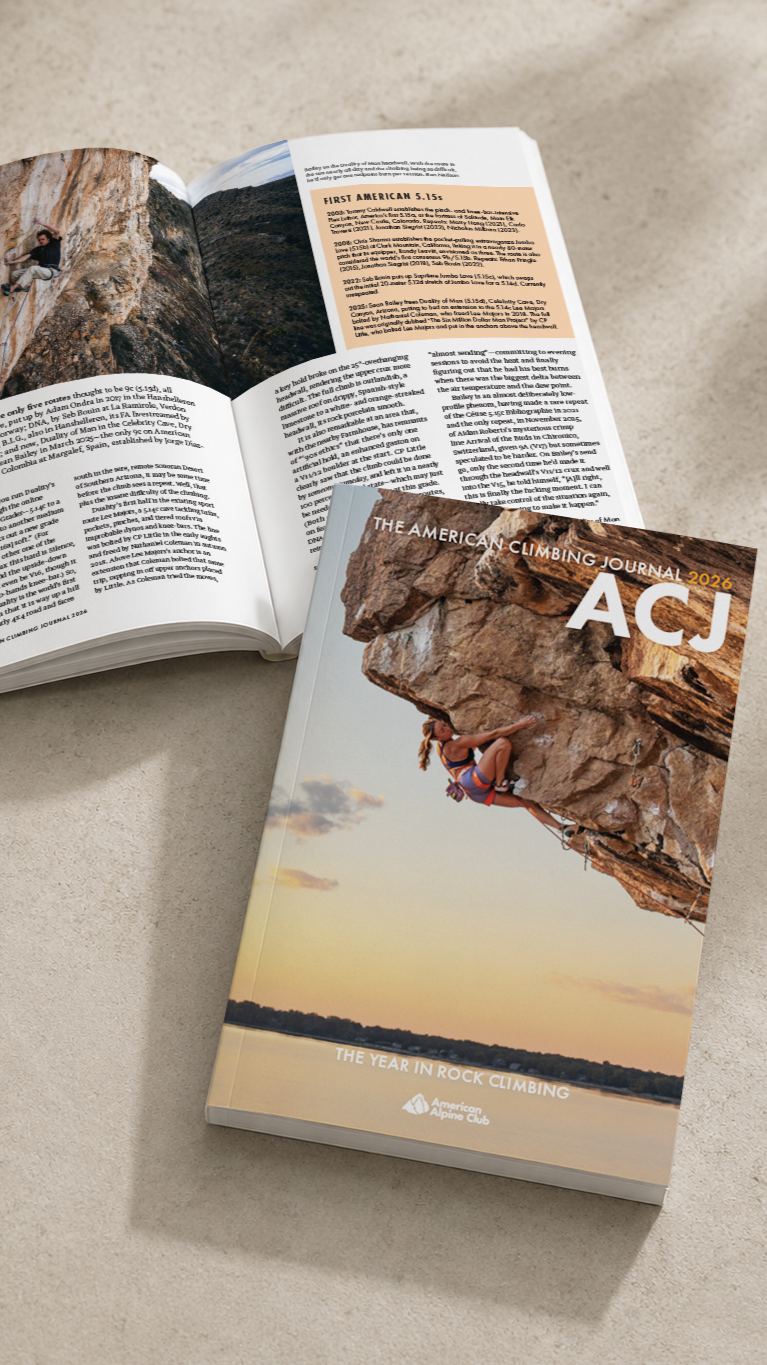
Want more thoughtful, deeply researched writing on the cutting edge of North American and international rock climbing in your mailbox? Then join the American Alpine Club at the Partner or higher level, and opt in to receive the inaugural, 224-page 2026 American Climbing Journal! With stories like Adam Ondra flashing Lexicon (E11), Katie Lamb sending The Dark Side (V16), Connor Herson’s crazy pogo on the first 5.15a trad line—ever—plus other features from or about Sasha DiGiulian, Noah Wheeler, Jonathan Siegrist, Sungsu Lee, Hamish McArthur, Mary Eden, Seb Berthe, Chris Deuto, and so many others, the 2026 ACJ offers the world’s best climbing stories about the world’s hardest and most interesting rock climbs. 


New Cutting Edge Podcast: Le Bombé Bleu

On February 11, Erwan Legrand—son of the legendary French climber François Legrand—took down one of the longest-standing open sport projects in the world: Le Bombé Bleu (5.15b) at Buoux, France. Bolted in 1991 by Marc Le Menestrel, the 100-foot route features a notoriously difficult precision dyno on its blue-streaked bulge, followed by ferocious tugging on tiny pockets. Famously, Le Menestrel had opened the route as long as it was left in its natural state, a vision—35 years ago—of what climbing might someday become. Join host Jim Aikman as he talks with Legrand about his remarkable barefoot redpoint, as well as chats with UK icon Ben Moon—one of the route’s early suitors—and American Climbing Journal Editor Matt Samet.


Sign Up for AAC Emails

The Prescription—Fall From Anchor

It’s July, and we’re in high summer, with long days out in the vertical enjoying the season. Recently, we had a request via Instagram to visually demonstrate the mechanics behind a fatal lowering accident that took place in 2024 and was documented in the 2025 Accidents in North American Climbing.

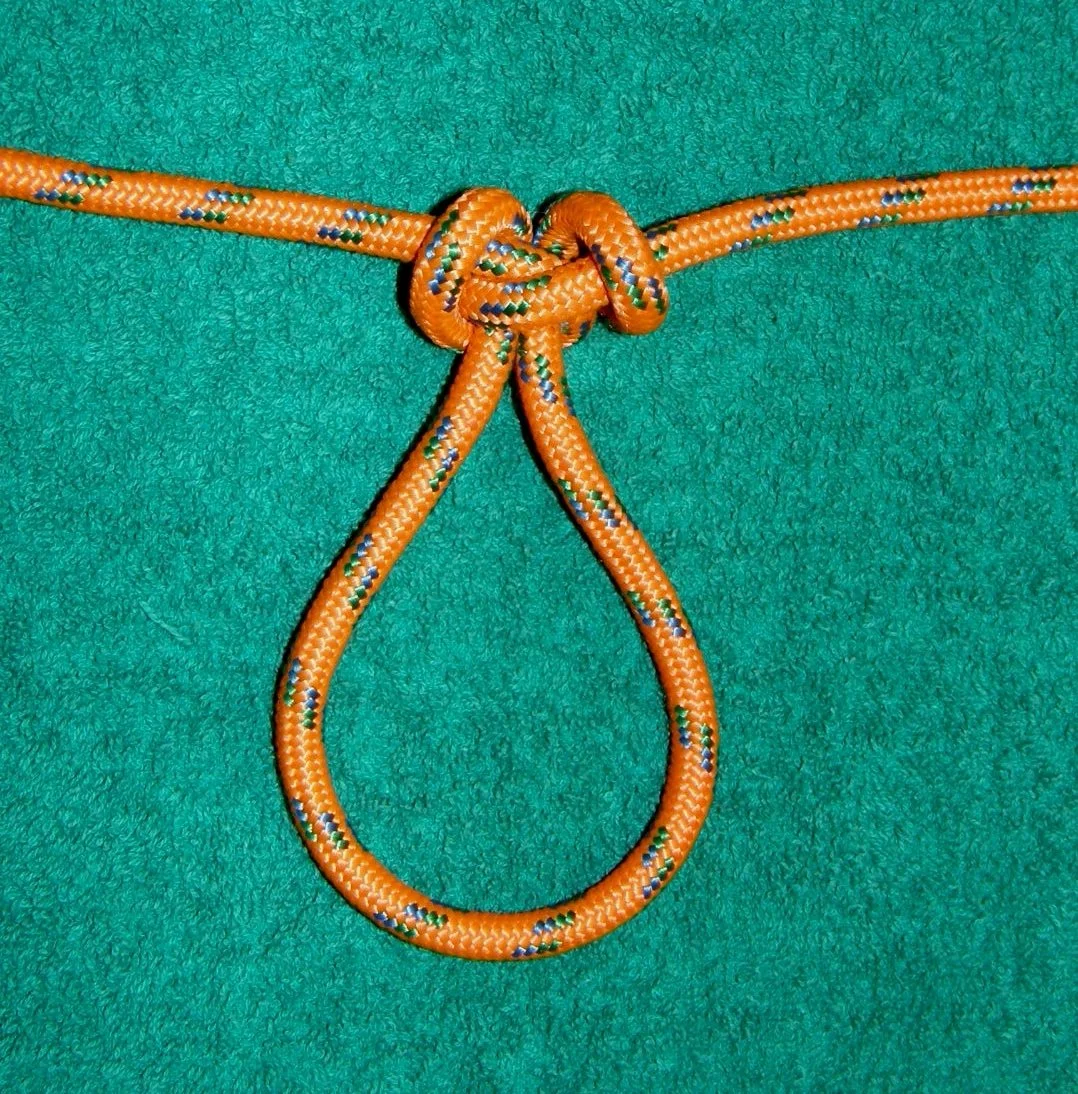
Details came to us through a third-party report sent via our online report form. The correspondent did not want to be identified, but they provided the location, date, name of fallen climber, name of belayer, cause of accident, and other details. As they summarized: “Inexperienced climber (Claire Amiel) may have been cleaning an anchor which was beyond her skill level (and) tied in with a non-traditional knot [identified as an alpine butterfly], which became confusing when clipping mussy hooks.”

The published report and analysis appear below. The lessons here are to stick with simple tools and techniques, and practice skills—like cleaning and lowering—while still on the ground. If you’re the expert in the group, take extra-good care of your partner/s. They are looking to you for guidance and safety.

Jason Antin demonstrating one misstep from this month’s accident. See the full breakdown in July’s video analysis.

Fall From Anchor | Unfamiliar Knot

Queen Creek, The Pond

On January 30, Claire Amiel (34) fell while cleaning an anchor on a sport route at The Pond area in Queen Creek, Arizona. The fall resulted in her death.

According to a source who wishes to remain anonymous, Amiel was the less experienced of two climbers in her group. The anonymous source wrote ANAC: “Claire fell from the top of a route while cleaning the anchor. It's rumored she was tied into an alpine butterfly knot. After clipping the mussy hooks, she weighted the wrong side of the butterfly knot.”

The alpine butterfly is useful for glacier travel, but is not a standard rock-climbing knot. StromBer | Wikimedia


Video Analysis

Pete Takeda and Jason Antin are back to explain an accident involving cleaning a top-rope anchor with mussy hooks. The catch? The climber was using an alpine butterfly tied to the middle of a full-length rope and clipped into the anchors with the wrong side of the rope. Tragically, the fall was fatal. This climber was less experienced than their partner and trusted that this was best practice in climbing. 

When it comes to cleaning anchors, keep it simple, check your systems, and practice a lot before taking it 100 feet off the ground

Video Credits: Pete Takeda, Editor of Accidents in North American Climbing; IFMGA/AMGA Guide Jason Antin; Producers: Shane Johnson and Sierra McGivney; Videographer: Foster Denney; Editor: Sierra McGivney; Location: Accessibility Crag, Clear Creek Canyon, CO


Analysis

For most rock climbing, the choice of an alpine butterfly is unusual. John Godino at Alpinesavvy.com wrote ANAC, “The butterfly is generally not a standard beginner climbing knot. It is almost always used for glacier travel to tie in the middle climber to the middle of a rope. Rock climbers almost always tie into the end of the rope, especially when top-roping in a sport area.”

Had Amiel been using a mid-rope alpine butterfly knot, it would have created two lengths of slack rope extending from both ends of the knot. Though both sides would have appeared nearly identical, only one would have been belayed. Amiel may have top-roped up to the anchor, clipped the unbelayed strand into the mussy hooks, and then fallen to the ground. 

In general, climbers of limited experience or those transitioning from the gym to the outdoors are especially vulnerable when cleaning anchors. The use of unusual or unfamiliar knots, gear, or systems in critical situations like lowering/cleaning is very dangerous. 

Godino adds, “I would love to see ground-level anchor stations near beginner areas or on the approach trail. This would provide beginner climbers a place to practice clipping and cleaning, before they get on the rock.” (Sources: Anonymous, John Godino, and the Editors.)

Editor’s Note: We published this report in 2025. A good point has been made that any knot—like a figure 8 on a bight—might lead to the same result if used as a mid-rope tie-in/clip-in point. The butterfly knot is less a culprit than the location where it was tied.)


The Prescription is Supported By:


Sign Up for AAC Emails

All About Bolts: From Federal Policy, to a Day of Local Rebolting with Ryan Kuehn

This episode is all about bolts. From the nitty gritty of yanking a bad bolt out of the rock at your local sport crag, to the big-picture policies that govern the practice of bolting, rebolting and other fixed anchors on America’s federal public lands.

For the main part of this episode, we talk about the under-appreciated art of bolt replacement with Ryan Kuehn, one of the leads for the Anchor Replacement Program at the Boulder Climbing Community (BCC), an integral local climbing org for the Front Range of Colorado.

We also start the episode with insights from the AAC’s Director of Government Affairs, Byron Harvison, who shares an update on the proposed implementation guidance of the EXPLORE ACT and PARC Act—the historic laws that preserved fixed anchors as appropriate in Wilderness Areas. Bryon explains how the proposed implementation policy, just released and open to public comment, will impact how climbers and LCO’s will place and maintain bolts and other fixed anchors on federal public lands moving forward.

Dive in to get the full picture: from federal policy to a day of local rebolting.

[Correction: We would like to offer clarification on the statement at 15:29 which states that a MRA will be utilized by the BLM for routes which fail the casual use standard.  To be clear, the MRA is to be used when the BLM proposes to prohibit climbing in an area.  The proposed guidance states that a yet-to-be-determined process will be utilized to evaluate those routes that exceed the draft casual use standard.]


Tickets on Sale for American Alpine Club’s 2026 Annual Gala

Registration is now open for the American Alpine Club's 2026 Annual Gala, taking place October 24 at the historic Buffalo Rose in downtown Golden, Colorado, just steps away from the Club’s library and headquarters.


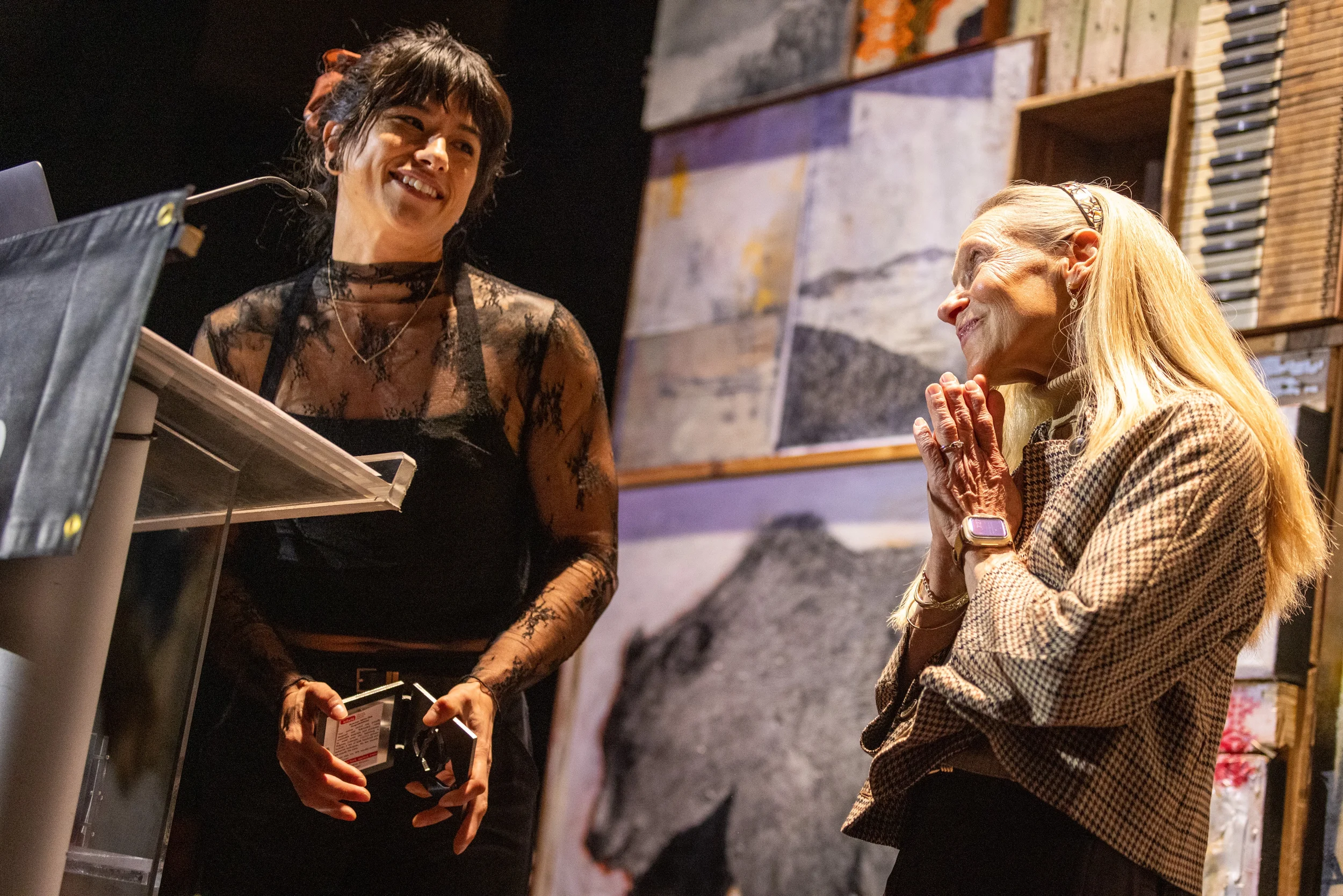
Nina Williams presenting at the 2025 AAC Gala. Image by Jim Aikman

The American Alpine Club’s Annual Gala brings the climbing community together for an evening of celebration, recognition, and connection. This year's Gala will be anchored by the presentation of eight American Alpine Club Awards, recognizing outstanding achievements in conservation, climbing and mountaineering, mountain literature, and dedication to the Club.

“The Gala is a reminder that climbing is rooted in community, in the places that bring us together, and in the relationships we build along the way,” said Nina Williams, Board President. “I'm looking forward to connecting with old friends, meeting new ones, and celebrating the importance of putting people first. The Gala is a chance to celebrate where we are today while honoring the legacies that have shaped our community and the places we care about.”

With all the excitement and celebration expected from an AAC Gala — including opening receptions, auctions, and exclusive connection points for VIPs — this year’s Gala will celebrate the impact of 2025, and look forward to the Club’s 125th anniversary. All AAC members are invited to an annual membership meeting Saturday morning for continued mingling, connection, and inspiration.


Purchase tickets by visiting americanalpineclub.org/gala, and dust off your cowboy boots. This event is western themed, in the spirit of the historic venue and locale.


More Than Mescalito

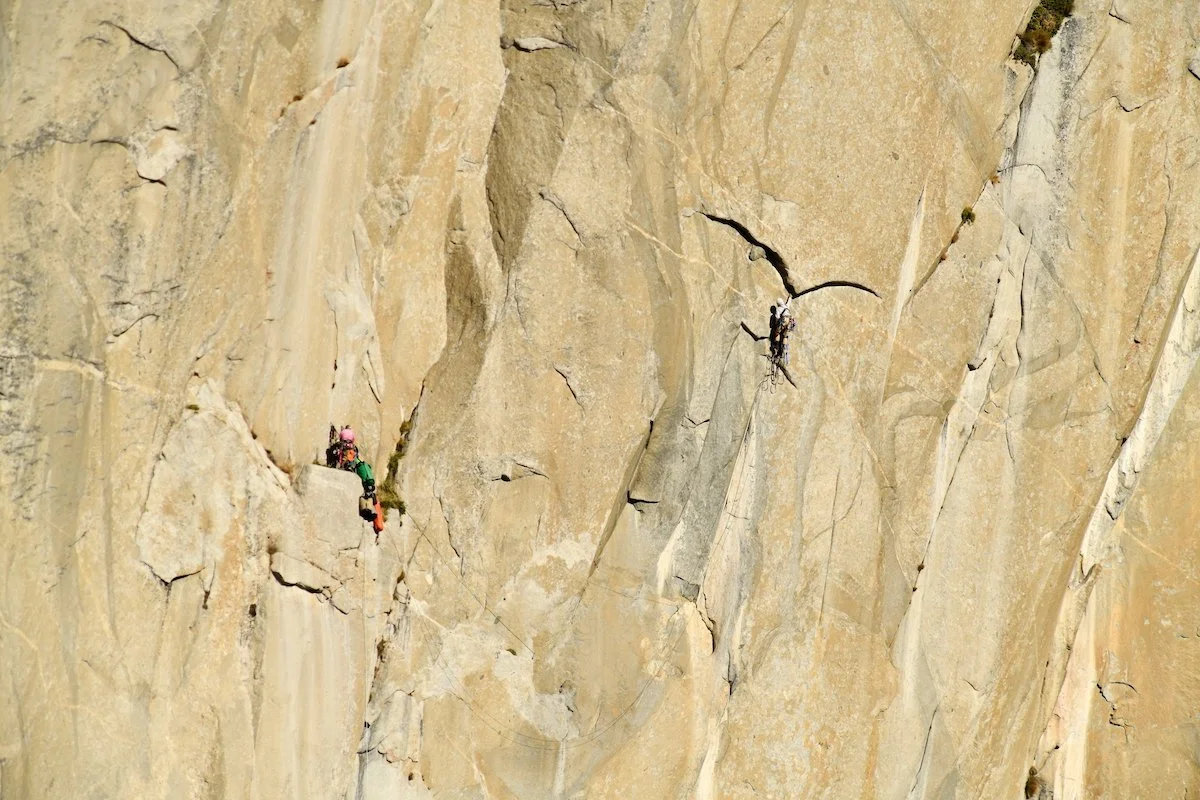
Mark Hudon belaying Ben VanderStouw on The Seagull, pitch six of Mescalito, El Capitan. Photo by Tom Evans.

A Story From The Live Your Dream Grant by Ben VanderStouw

Originally Published in Guidebook XVIII.

I was shivering in the darkness as I led up pitch two that day in Zion. My friend Will and I were climbing our first big aid route, Touchstone Wall. I moved upward in flared pockets and old piton scars—slowly. We had both underestimated the chill cast by the December shade. By pitch four, we were in the sunlight—not because we climbed into it but because dawn caught up to us.

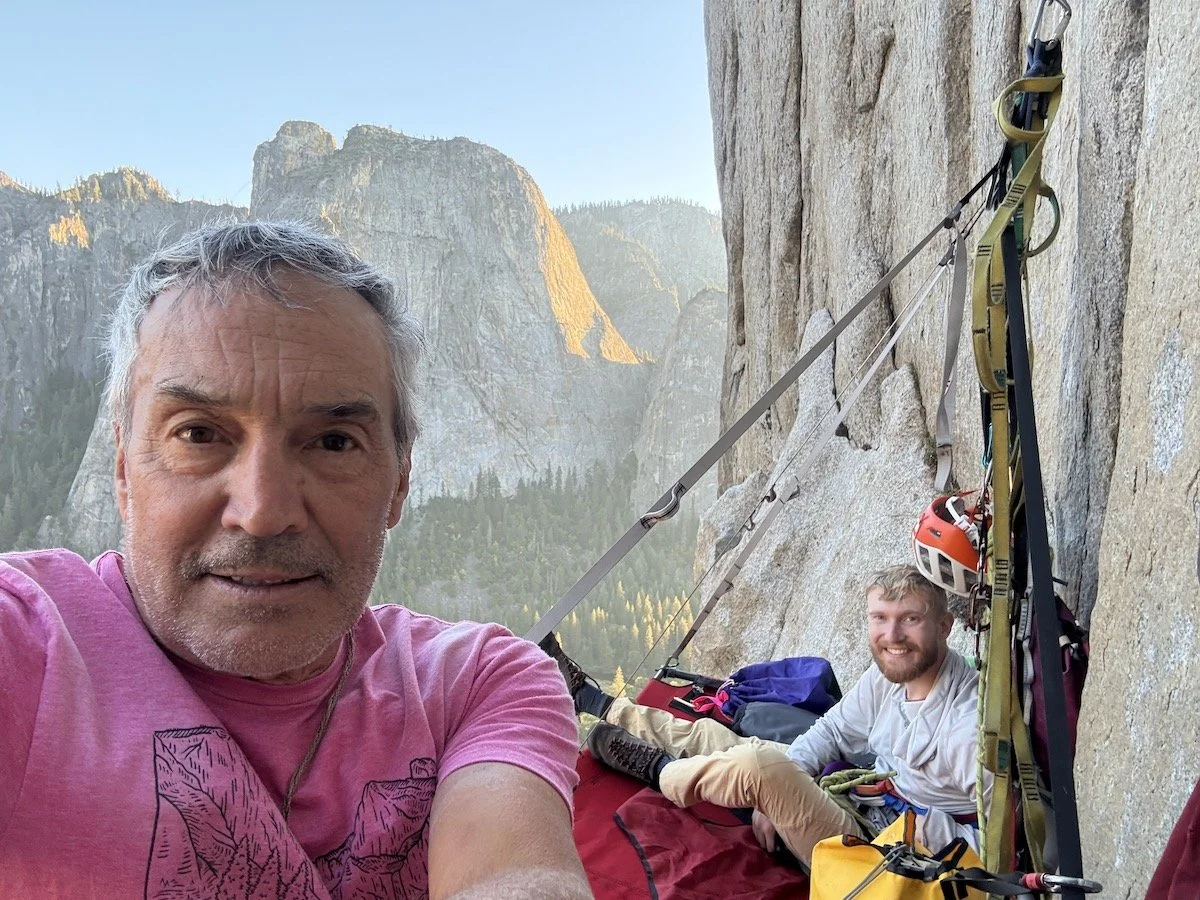
Mark and Ben on the first bivy of Mescalito. Photo by AAC member Mark Hudon.

The day before, I was on a phone call with Mark Hudon, who coached me through the systems we would be using that day. Mark had become my long-distance mentor during the pandemic, calling and emailing when I had big-wall questions. Will and I made it up and down in a day thanks to his advice, but I had a lot more to learn.

In the fall of 2021, I attempted Lurking Fear on El Capitan, where I bailed after popping off a series of hook moves. I blamed my busted knuckles when it was really my nerves. The following year, in the fall of 2022, I drove all the way from Maine to Yosemite to try the Nose. We bailed because of a forecasted storm that never came. I was crushed, and the drive back underscored the immense distance between me and my goal.

Up until that point, I wanted the feather in my cap of having climbed El Capitan. I wasn’t ready for what it demanded, nor was I seeking the experience itself. I continued to learn from Mark, but thought I might never get up the mountain.

Two years later, I called Mark and told him I felt ready. I no longer wanted to check a box; I wanted the experience of climbing a multi-day route with all its frustrations, discomfort, and pain. Though I still lived a long way from Yosemite Valley, and many places traditionally used to prepare for its polished walls, I knew if I had the right partner and opportunity, I could do it.

Mark suggested we climb Mescalito, a 26-pitch aid route that was longer and more challenging than any I had attempted before. It would require multiple nights sleeping in a portaledge and push my aid climbing abilities. It would force me to confront the discomfort that had sent me down twice before.

“You’re going to be a gumby at the bottom and an expert by the time we get to the top,” Mark told me.

At 69, Mark has been climbing El Cap for 51 years. He consistently climbs at least one challenging El Capitan route a year. With Max Jones, Mark had previously climbed the fifth ascent of Mescalito in the fall of 1977, using pitons and chocks.

“I have three El Cap routes left in me,” he told me. “I would love to do one of them with you.”

I kept training, practicing systems, and checking off the gear list, but Mark and I both felt like we were getting an ulcer over the climb. Even with the AAC funding secured, we didn’t know if the October 2025 government shut-down would close the park. I had no choice but to prepare the best I could, hoping our trip wouldn’t be canceled. Less than a week before my flight, we got the good news we needed. After a full day of cross-country travel, I made it to El Cap Meadow.

Two whole days were dedicated to moving our equipment to the base of the wall. We managed to climb up three pitches and hauled our gear to this high point. This allowed us to start higher on our summit push, with the luxury of sleeping on the ground as we prepared. Twenty-three pitches lay ahead of us still. I was already exhausted from hiking seven days of water and equipment up to the base.

To combat the fatigue, Mark suggested that we treat the first day on the wall as a “rest day,” climbing only two pitches instead of four. Leaving the ground for the final time, we jugged our fixed lines, started climbing, and set up camp at the top of pitch five.

I did not expect the unease I felt that first night. I have been up on big features in the dark before, but this was my first night on a proper portaledge. Relaxing and resting had always been something I would do after getting off the wall. A sea of white granite was illuminated by the bright, silvery full moon. I covered my head with my sleeping bag, out of the moon-light, and tried to sleep.

After a leisurely breakfast and coffee, we prepared for the next day’s pitches. The forecast showed great weather. I nursed my cramping legs with electrolyte mix and as many calories as I could choke down. It wasn’t much, but I started racking up.

Mark pushed me hard, insisting that I get the haulbags up to the anchor before he cleaned the gear from the pitch. I never beat him, but it forced me to move quickly and get the systems set up in time. The haulbags had to come off the anchor cleanly so they could move upward without tangling the system. Worse yet, we had brought so much water that I could barely move the bags. I needed to use a 2:1 pulley system to squat over and over again to slowly drag our provisions upward.

“I’m climbing this route with you, I’m not taking you up it,” Mark had told me before we had even started planning the route.

This was important to me, too. I wanted to haul and lead my fair share. Being able to climb and learn with Mark was an incredible opportunity, but it couldn’t be an excuse to slack off.

The first nine pitches of the route angled up and to the right, meaning a retreat after this point would be difficult. We could not rappel straight down, and with such heavy bags, we were committed to the top. As we sat on our portaledge on the top of pitch nine on the second night, we saw cold temperatures and precipitation materialize in the forecast.

The storm was expected to last several days. We now needed a strict quota of four pitches per day to make it up before it hit. We could last a few nights of bad weather, but the extended forecast showed dangerous temperatures and could force us to stay on the wall for too long.

We woke up at 5:30 each morning, forced down breakfast, skipped coffee, and started upward yet again. I knew I was not as efficient as my partner, and there was no time to waste. We ended at twilight, set up the portaledge, and tried to rest.

The biggest variable in getting down safely was the speed with which I could integrate Mark’s lessons into my climbing. Each day, I had to lead at least one difficult pitch, with insecure fixed gear, long sections of standing on hooks, mixed aid and free climbing, and tenuous pitches like the famous Seagull and Molar traverses.

On day four, darkness came before we were able to stop climbing. The sun had set, and I still had a section of 5.7 climbing ahead of me before we could sleep on the Bismarck Ledge. I climbed by headlamp, without climbing shoes or chalk, up the thin seams and blocky ledges. Fear and cold gripped me as I went upward, unable to see where the pitch ended. As I pulled over the edge, I was confronted with a sight that filled me with both frustration and amusement. Plastic containers holding at least ten gallons of water lined the ledge. We had struggled hard against the weight of the water in our own bags for days. Now we had enough to fill a kiddie pool.

The Bismarck looked like a sanctuary on the topo. It was the one real ledge on the route, a place where a storm could be endured rather than survived. It was narrower and more slanted than I’d imagined. Before we started, many said it was their favorite ledge on El Cap. In the cold and dark, I saw it differently. I wrestled the bags up the rocky buttress until they rested beside the treasure trove of water bottles.

I iced my aching hands on the cool rock. The summit stopped being the goal. It was only a step toward getting down in one piece.

Day five on the wall was taxing. Mark fell trying to free climb the offwidth section of pitch 19, The Bismarck. It was a beautiful crack in an orange corner that gradually widened until it could fit a ten-inch piece, which we did not have. There were no features to use aside from the crack itself, so he called down instructions for me to fashion a contraption made of tape, the portaledge fly spreader bar, and our big blue offset nut.

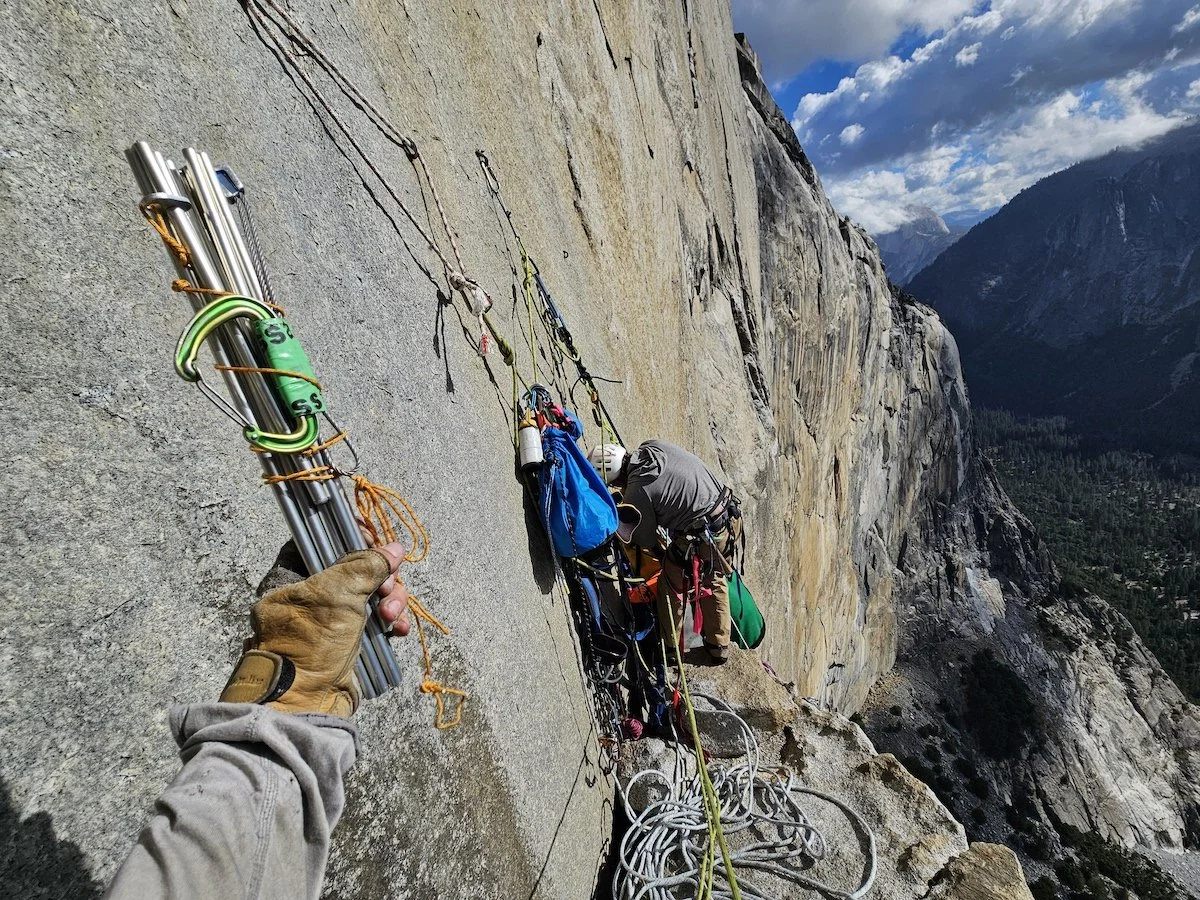
The “ten-foot-long blue offset” Mark used to get to the top of The Bismarck. Photo by AAC member Ben VanderStouw.

After fashioning the device, I sent it up, and Mark used it to place a nut in a seam 20 feet above his head. Mark jugged hand over hand to the nut placement and used it to reach the top. I was relieved when he built his anchor, but when I arrived at the belay, my stomach churned. It had looked decent from below, but any outward pull could have ripped it instantly.

My next pitch was hardly an improvement. It took me hours to find a way through the aptly named Circuitous Pitch. Looking at the topo made it more confusing—there were three different roundabout ways to get to the next anchor, either with big swings and lower-outs, or a 30-foot unprotected ledge traverse. I took the pendulum into another crack system and aided off a horribly tipped-out cam, wishing badly that I hadn’t used so much gear earlier in the pitch.

“Get as high as you can on each piece!” Mark shouted.

On Mark’s next pitch, he had to aid off a huge chunk of rock that shifted under his weight. It threatened to cut the rope and would certainly kill someone who went up this route and pulled on it without looking. After using it to move upward, Mark sent the microwave-sized block down the face. The sound of the impact was delayed a few seconds after we saw it hit the talus below.

According to the itinerary we fretted over, we needed to climb four pitches that day. We had only climbed three. My next pitch looked hollow and delicate, and we were both fried. The sun slid along the wall until it was no longer visible. We both knew this meant we had 20 minutes until darkness.

It was the most reasonable choice to set up the portaledge there and climb an additional pitch the next day. Our last night on the wall felt strangely jovial. We knew we would finish tomorrow, but we needed to climb our biggest day on the wall to do so.

Three separate nights, I saw a shooting star streak across the sky, and each time I wished for the same thing—getting back to the valley floor safely.

Starting off on day six, I moved past hollow flakes that sounded like bongos when tapped. Get on the piece, bounce-test it, highstep, place your next piece. Get on the piece, highstep... I got into the groove and let out a sigh of relief once I was through the notoriously rotten rock of the Gray Bands.

I called down to Mark: “If I can figure out how to wall climb, what can’t I do?”

He seemed pleased, as if I had finally figured out something he had been trying to show me for years.

The rest of the day involved long pitches. We were done being up there. It took a horrendously long time to lead the pitches I needed to link, but we climbed through some of the most beautiful, golden granite on the mountain. We knew even if it took till dark, we were going to beat the storm.

After a very long last day, we managed to creep over the edge of the mountain. On the very last haul, the bags were stuck, and we had little leverage moving them on the slab. Mark and I both had to put an ascender on the rope and pull with all our might to get the bags to move a few inches. We rappelled down to fix them twice. Finally, after hours of hauling, we had the bags at the top of the cliff.

“We haven’t climbed El Cap yet,” Mark told me sternly. “We’re tired, and are still in a dangerous position. We can’t get complacent.”

He was right—we were on top of the cliff, but we and our bags were on a ledge with a slab between us and the very top. I hip-belayed Mark up and across the slab to set a handline on a tree above. We clipped into this handline and dragged our heavy loads upward by headlamp.

“NOW we have climbed El Cap,” Mark told me, exasperated.

I looked at his face in the light of my headlamp and noticed a change in him. We had each lost ten pounds on the route, and our faces looked hollow. We hugged on the summit, and I found myself feeling so grateful for all of Mark’s lessons. We found some flat ground in the darkness, set up our bivvies, and drifted off to sleep looking at the Milky Way.

The morning brought rain and snow, soaking our sleeping bags before the East Ledges descent, a series of slick slabs and fixed lines. Three porters hiked up before sunrise to help us bring our bags down before the big storm hit. It felt surreal to move so fast after inching along the wall all week.

For days afterward, I awoke thinking I was still in a portaledge. The relief of solid ground came slowly each time. Our hands were too battered to make fists. The days blurred as we tried to recall the last week.

Later, Mark told me, “I could have skipped climbing Mescalito. I don’t need another El Cap tick. The true reward is the positive impact it will have on your life.”

Before leaving the Valley, we stopped in the meadow. Another party bound for Mescalito was arranging their gear and food on a large tarp. They asked about our rack, and I shared what worked for us. We wished them well.

I traced our line up the wall one last time, watching the upper pitches disappear into the clouds.


Sign Up for AAC Emails

Sasha DiGiulian: Slinging Cacti, 8b Big Walls, and Recognizing Your Spot in Climbing History

Sasha DiGiulian has done major ascents on big walls from Madagascar to Brazil to El Cap. She has told the story of these ascents in the American Alpine Journal—and now in the all new American Climbing Journal. With this unique perspective as a contributor to these journals of record, we asked her to weigh in on her history with the AAJ and ACJ, and why documenting climbing’s evolution matters.


We touch on her recent ascent of Platinum Wall, a long 5.13d/8b El Cap climb, (full story on the Cutting Edge Podcast), dive into the overgrown, run-out, cactus-filled pitches of Bravo Les Filles (8b) in Madagascar, discuss what "significant" means in climbing these days, and the art of recognizing your place in climbing history.


Inspired by Sasha’s bold, run-out questing on Bravo Les Filles?


Join the Club or renew at any membership level in June, or donate $30 or more, and you can get our limited edition June tee—just use promo code QUEST. One day left!


The Line—Idaho’s Forgotten Granite Spires

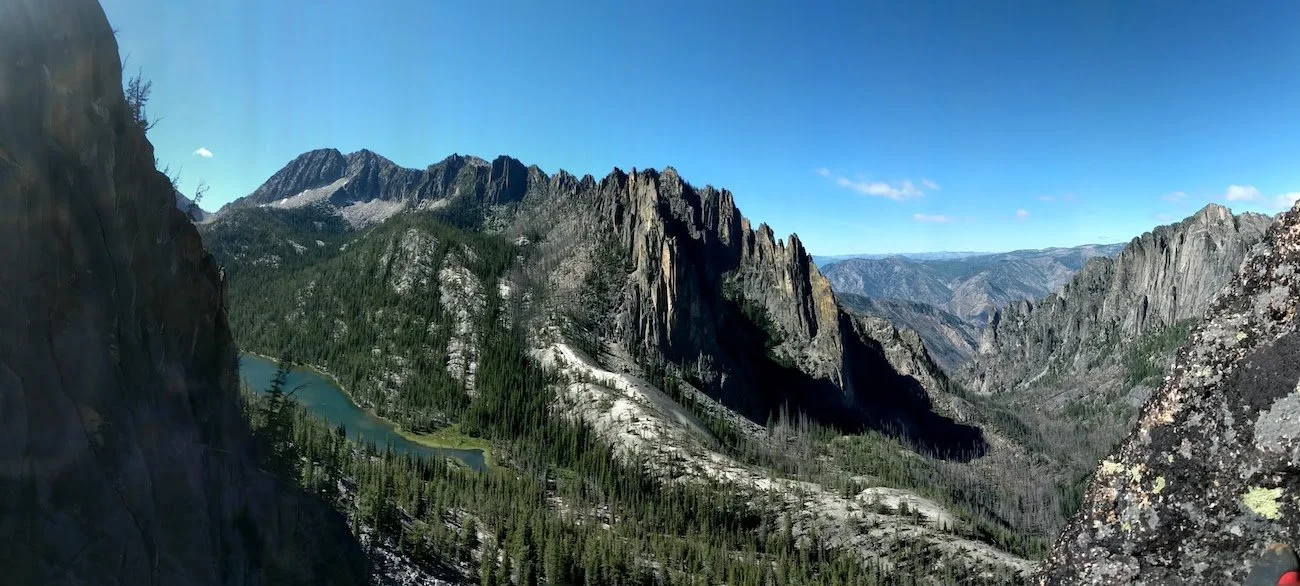
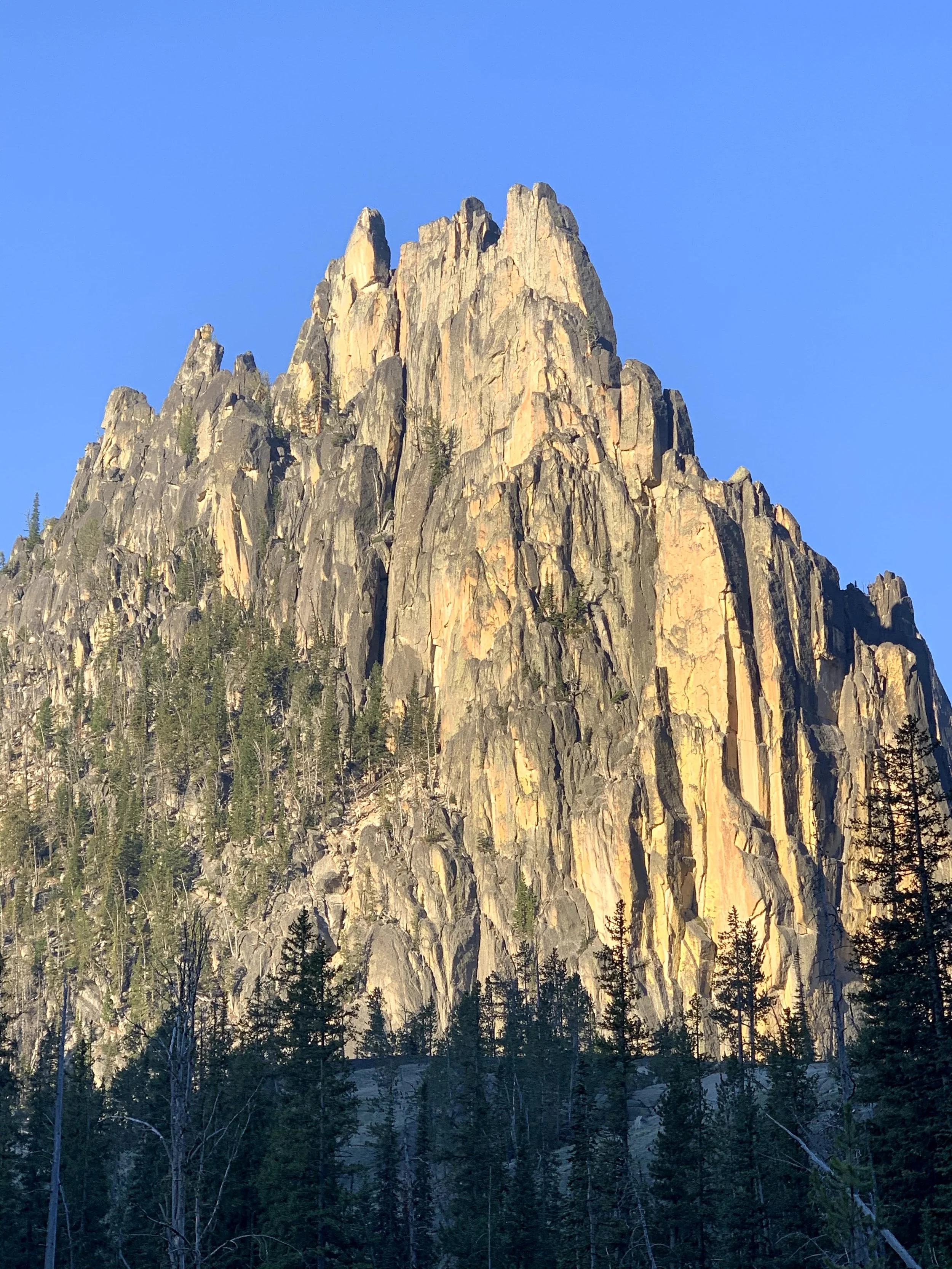
The Bighorn Crags above Ship Island Creek in the Salmon River Mountains are a cluster of towering granite spires that would be crawling with climbers if they were a little closer to the road—or even if they were close to any significant population of climbers. In 1955, climbers—including K2 legend Pete Schoening—briefly explored the area, and a short, alluring description of the cliffs is included in Idaho: A Climbing Guide. But the first reported ascents by modern rock climbers weren’t until 2020, when a team of six made the 13.5-mile trek to the west side of Ship Island Lake and climbed 40 new pitches—with six Grade III and two Grade IV routes—in less than a week. It’s likely few climbers have been there since. Maybe Jim Pace’s story and photos in AAJ 2026 will convince a few more people to brave the steep barrier to entry. The summer is still young, so we’re sharing an abridged version of Jim’s story here.

Panoramic view of the crags above both sides of Ship Island Creek, which drains Ship Island Lake at left and flows down to the Middle Fork Salmon River. Photo: Cody Goldberg

The Litner Group: Many First Ascents

For decades, Idaho climbers have imagined what it would be like to climb in the area of the Bighorn Crags surrounding Ship Island Creek, which flows steeply out of Ship Island Lake and down to the Middle Fork Salmon River. The climbs, tantalizingly hard to reach, would ascend long and steep arêtes, faces, and cracks toward summits that didn’t have names, had never been touched by climbers (unless the Sheepeater/Shoshone peoples liked steep rock climbing), and might be made of solid Idaho Batholith granite (but more likely Idaho choss).

In his excellent Idaho: A Climbing Guide, Tom Lopez writes enticingly of the area: “Of interest to rock climbers is a tangled collection of spires, faces, and cliffs at the west end of Ship Island Lake called the Litner Group. Because it is more than 10 miles from the nearest trailhead, little climbing activity has taken place in the Litner Group but, rest assured, the area has high potential for serious rock climbers.” Tom mentions a Litner Peak, but which one is that? No one is sure. The only recorded climbing our group could unearth was detailed in a 1955 expedition report by Lincoln Hales in the Seattle Mountaineers’ annual journal. Hales and Pete Schoening made the first ascent of the “main peak”—presumably the Litner Peak that Tom mentions.

Intrigued, Max Bechdel, Ian Cavanaugh, Cody Goldberg, Brady Johnston, Carolyn Pace, and I made the long trek into the Litner Group in late August 2020, with pack string support, to see what we would find.

From the trailhead—itself three hours from the small town of Challis—we hiked 12 miles and crossed two passes through the Frank Church–River of No Return Wilderness to reach Ship Island Lake. We then bushwhacked another 1.5 miles to the west end of the lake and made camp.

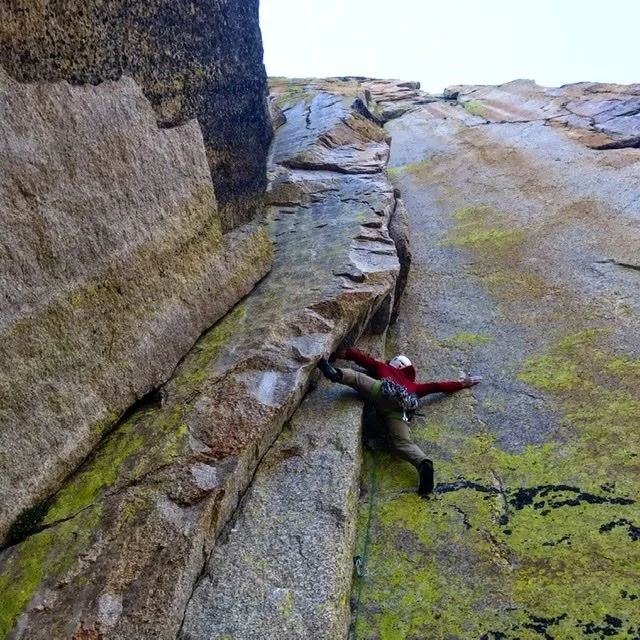
On our first climbing day, we aimed for the obvious face on a twin-spired formation we named the Rabbit Ears, right above camp. Brady and I made the first ascent of Pace Setter (850’, 7 pitches, III 5.9), while 30 meters to our left, Max and Ian opened the Jeff Halligan Memorial Route (850’, 7 pitches, III 5.10), in honor of our horse-packing guide. Both were exceptionally high quality and promised more good things to come.

That same day, Cody and Carolyn established Launch Over It (700’, 5 pitches, III 5.10+), on a formation we called the BFR (Big Fancy? Rocket) after Elon Musk’s Mars ambitions. The BFR lies halfway up the magnificent Mission to Mars massif, just northwest of the Rabbit Ears. The top two pitches of their climb have it all: great cracks, yawning exposure, breathtaking views. 

A rainy day allowed us to explore down the canyon. Jaw-dropping views to the Biggie Smalls Wall (dead vertical, 300 meters) made all of us realize just how extensive the climbing here could be. But looks are deceiving: The splitter hand jam in the spotting scope, we learned, often turned out to be a splitter offwidth, the offwidth turned out to be a chimney, and so on. Scaling took practice.

Lighthouse Tower on Wolf’s Fang Ridge: The five-pitch Idahome (5.11a) ascends near the center of the formation. Photo by Jim Pace.

After a cold night that brought snow above camp, Brady, Ian, and Max traversed the lake-outlet slabs to explore a complex tower at the northwest end of the already-named Wolf’s Fang Ridge and completed the first climb to the top: Idahome (925’, 5 pitches, IV 5.11a).

Brady Johnson stemming on Siren’s Song, a 5.12 variation to the three-pitch Mermaid’s Tale (5.11b), on the Bookshelf. Photo: Ian Cavanaugh | Idahoclimbingguide.com.

Meanwhile, Cody and Carolyn established Geoffrey Chosser (650’, 5 pitches, IV 5.10+) on the Bookshelf, a soaring formation with half a dozen or so summits. Over the next two days, the group put up three more climbs on this face. The first two—Mermaid’s Tail (3 pitches, III 5.11b) and a direct variation called Siren’s Song (III 5.12)—were highlights of the trip. 

In all, with just four climbing days, our group climbed six Grade III and two Grade IV routes—with a couple of other shorter routes—on mostly great granite. Most of those pitches were 50 to 65 meters and ranged from 5.6 to 5.12. We summited on just three routes, but all the other lines could be continued to their respective summits to create Grade IV or Grade V climbs. —Jim Pace

Pace’s full story will be in AAJ 2026, coming this fall, and an extended version will be published at the AAJ website, along with photos and topos of many climbs. In the meantime, climbers can see his earlier article, on which this story was based, at Idahoclimbingguide.com. 


Have You Climbed At Ship Island Creek? Submit a story to the AAJ.

Many Idaho climbers are taciturn and even secretive about their routes, and it’s certainly possible that more climbs have been completed in the Litner Group but never published. If you’ve explored climbs in this area and you’re interested in sharing info, the AAJ would love to help. Contact us at [email protected].


New Cutting Edge Podcast: 24 Hours on the Central Tower of Paine

The east face of the Central Tower in Chile's Torres del Paine is one of the great walls of the world. Recently, Belgian Siebe Vanhee and American Tommy Caldwell completed the third free ascent of the South African Route in remarkable style. On their third attempt, the two climbers raced up the 1,200-meter 5.12 route in exactly 24 hours—in an area where most big-wall ascents take weeks. Host Jim Aikman interviewed both climbers, as well as American Ben Ditto, who was on the first free ascent of the South African Route back in 2009. It's an episode about risk, the ups and downs of multiple efforts on a serious objective, and a partnership that perfectly balances the strengths of two amazing climbers.


Sign Up for AAC Emails

Belaytionship Therapy: Tools for Better Climbing Relationships
What can you do if you and your romantic partner constantly bicker at the crag? How do you speak up if your climbing partner has a totally different risk tolerance than you, and you keep getting in way over your head on climbs because of that mismatch? What if one of your climbing partners dropped you, and you can’t quite trust them again? How do you move forward if you’ve witnessed an accident, and nobody seems to be understanding how the trauma continues to live in your mind and body?

We sit down with Dr. Jennifer Dragonette, a Licensed Psychologist, trauma specialist,  and Certified Single Pitch Instructor who is a clinical provider for the AAC’s Climbing Grief Fund Directory, to explore these questions through case studies of belaytionships you might find familiar. 

Dr. Dragonette leverages her expertise in couples therapy and DBT to illustrate where communication and therapeutic tools can help build stronger climbing partnerships and solve friction. If you’ve ever found yourself in need of a little belaytionship therapy, this episode is the place to start! 


Imprints Left on Summits

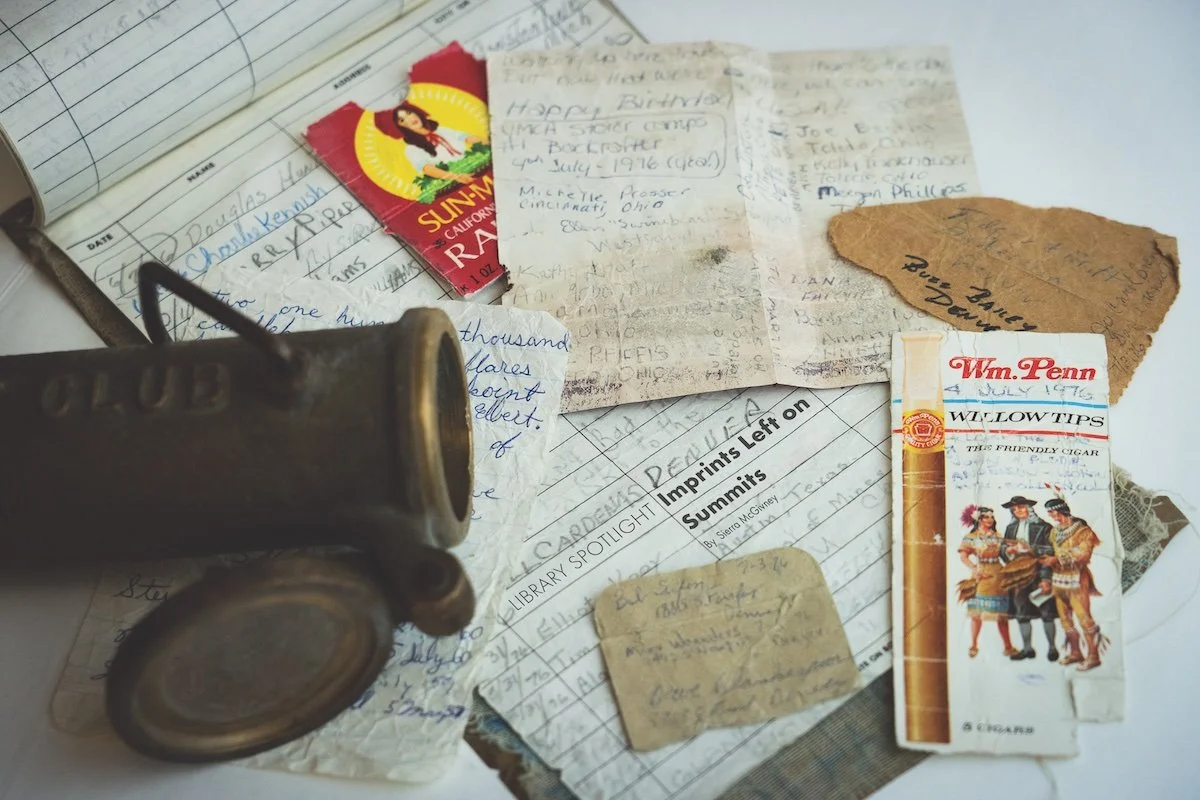
All images and scans were created with help from the AAC Library. Image by AAC member Foster Denney.

Library Spotlight written by Sierra McGivney

Originally published in Guidebook XVIII.

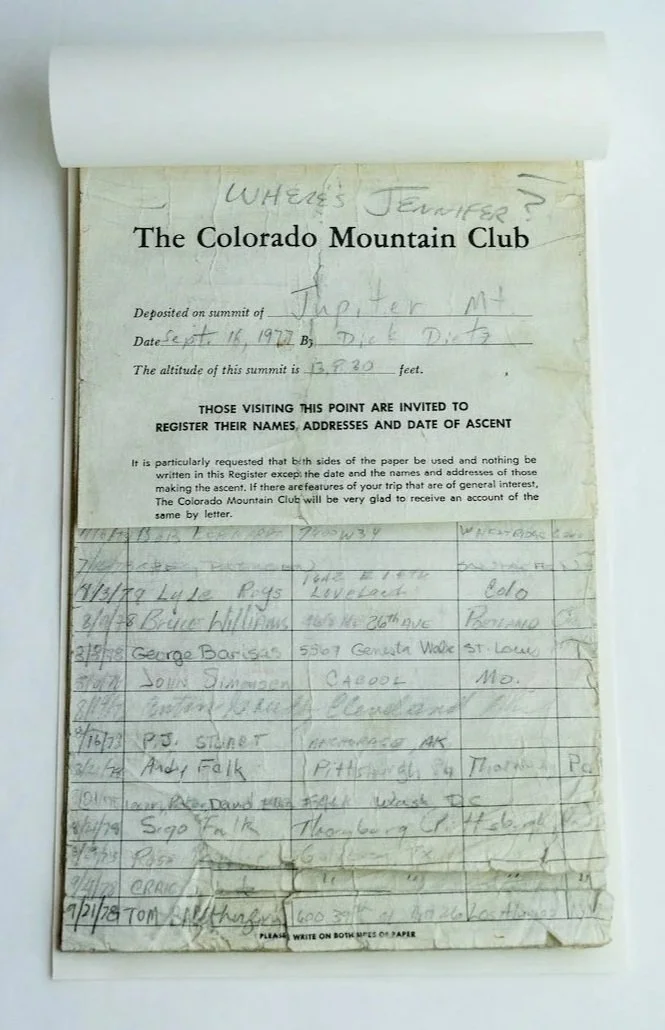
The need to leave our mark on the world is very human. It’s no surprise that when climbing mountains became popular, people started leaving fingerprints here and there in the form of summit registers. After 100 years of the practice, with untold pages of names, addresses, jokes, environmental activism, and weather and wildlife updates, summit registers have become a vibrant record of how humans interact with the mountains.

One historical register from Johnny Bull Mountain (12,026’) in the San Juans of Colorado is a small notebook. Flipping through, you’ll find two self-described “disgruntled employees” warning of the United States Forest Service plan to build a road and drill in the area. You’ll also see a kid named Will grow up, first signing his name at age three in 1988, and then again at ages six and seven. When the paper summit registers were full or nonexistent, hikers would take to writing on anything they had around. According to a Trail and Timberline article from 1989, people have used student IDs, driver’s licenses, a birth certificate, and a Monopoly “Get Out of Jail Free” card. In the James Peak (13,272’) summit register, you can find a Massachusetts car registration and a tuition receipt from Colorado State University, both from 1959.

It is believed that Mt. Powell (13,586’) had the first summit register in Colorado. This 13er is the highest peak in the Gore Range, known for steep terrain with class 2 climbing. On September 26, 1868, John Wesley Powell and Ned E. Farrell summited the mountain and placed a note inside a tin can at the summit. In 1913, during the third ascent of Mt. Powell, Percy Hagerman found the can with two previous ascents recorded, one from the Powell party. His party recorded their ascent on a chocolate bar wrapper and placed it in the tin can. In August 1935, a Colorado Mountain Club (CMC) outing group climbed Mt. Powell, recovered the tin summit register, and gave it to History Colorado, where it currently resides.

The CMC began placing summit registers on Colorado peaks during the 1910s and 1920s. These registers were later used to track usage and determine which mountains needed designated trails, especially after the formation of the Colorado Fourteeners Initiative in 1994. They would archive the registers and then allow people to conduct research or locate their signatures.

Today, the American Alpine Club Library collects, archives, and houses the CMC summit registers, the majority from Colorado—13ers and 14ers, of course, but also from mountains below 13,000’ that are rarely climbed. In addition, the AAC collects a handful of registers from mountains in Wyoming, and has the old Shiprock or “Tsé Bit’a’í” (Rock with Wings) register, from before climbing was banned there—the rock formation is sacred to the Navajo Nation. Once the AAC receives the registers from the CMC or others, they flatten them and sort them into the correct folder for the mountain. If you climbed a peak in Colorado and signed a summit register before 2015, there is a good chance the AAC Library has it.

Photo by AAC member Foster Denney.

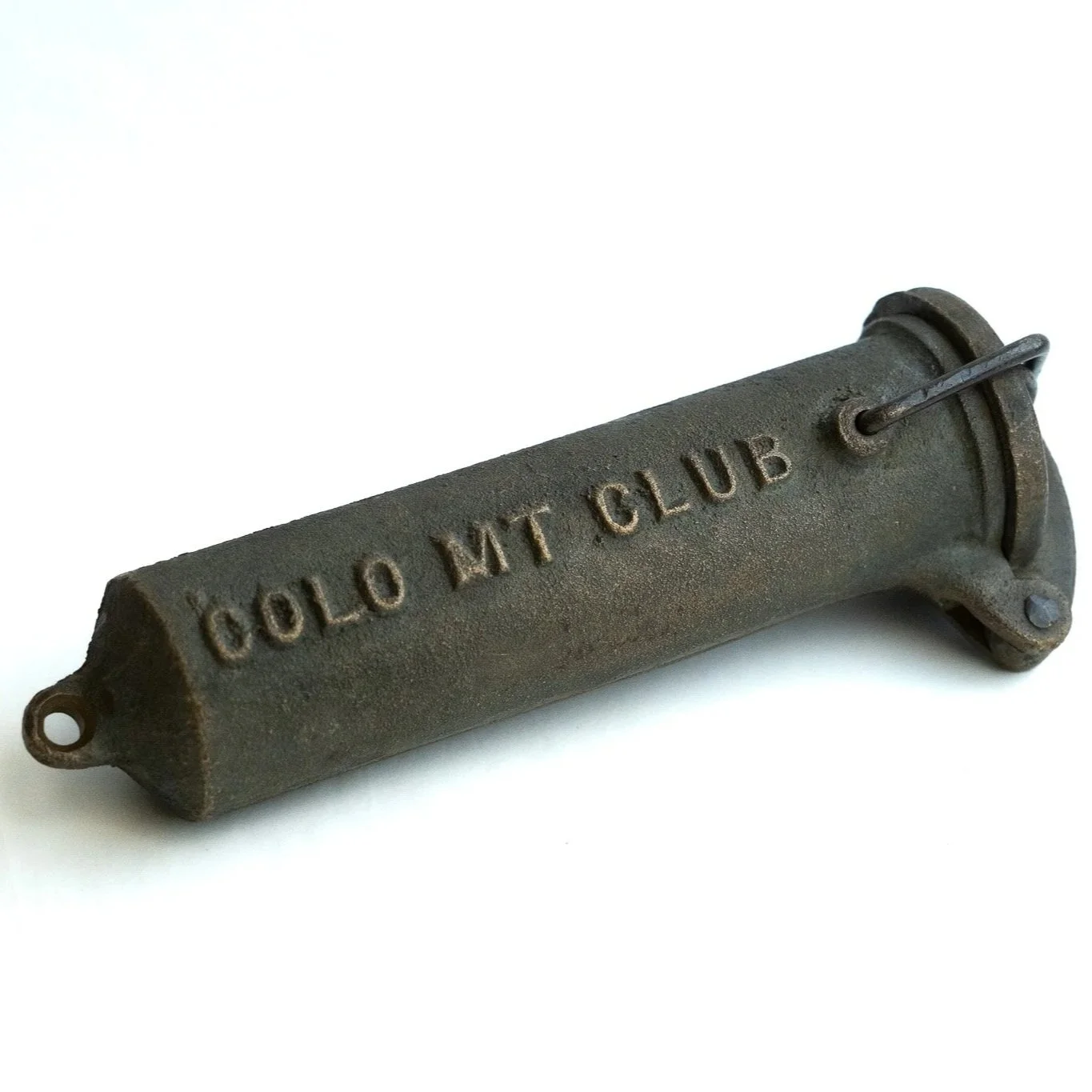
Originally the summit register canisters were made of brass. Today, most register canisters are PVC pipes, but a few are glass jars, food cans or tins, or plastic bags. Spencer Swanger, the first person to climb all 100 of the highest peaks in Colorado, used a pneumatic bank tube. If the canister is closed correctly and undamaged, the register holds up well. Unfortunately, water damage and mold are common, making some registers hard to read.

Most summit registers have not been replaced since the 2010s. With stricter Leave No Trace protocols, it fell out of favor to keep registers on the tops of mountains, but legend has it that on lesser-climbed peaks in Colorado, there are still summit registers. You’ll have to climb them to find out.

Sometimes the summit registers go missing or turn up in unexpected places. The elements sometimes take the registers, and occasionally, curious hikers trying to make a little money do, too. A brass summit register was put up for sale in Grand Junction for $400 in 2020. Katie Sauter, the American Alpine Club Library Director, was notified by a volunteer that it was on eBay. She reached out to the seller, asking if he would donate it to the Library since it was technically CMC property and was needed for archival purposes. The brass summit registers were worth $20 to $25 in the 1920s, and, with inflation, they are worth about $400 in today’s money. Whether the seller knew that or not, he was aiming to get his money’s worth from the register. The seller donated the brass tube containing the register to the Library, and it turned out to be from Culebra Peak, which now has restricted access, making the summit register even more sought-after.

Photo by AAC staff Foster Denney.

That isn’t the strangest retrieval of a summit register Sauter has seen. Jim Detterline, also known as “Mr. Longs Peak,” logged 428 ascents of Longs Peak (14,259’) and was often the person who retrieved the summit registers. Detterline was a Rocky Mountain National Park (RMNP) climbing ranger who started out his National Park Service career at Dinosaur National Monument in 1982. In 1984, he transferred to RMNP and was very determined to climb Longs Peak. By 1985, at 29, he had five failed attempts under his belt. Weather, specifically lightning, had been a problem for Detterline.

In the foreword for Longs Peak: The Story of Colorado’s Favorite Fourteener by Dougald MacDonald (also the editor of the AAJ), Detterline describes his first attempt of the Diamond in July 1979: “As the clouds darkened and increased in mass, I started to feel like one very small microorganism clinging to one very large piece of the universe. Eventually the clouds split open, and 30 million-volt bolts of lightning poured down on us with the cold rain. We retreated.... Standing soaking wet, tired, and cold at the base of Longs Peak, however, I realized I had fallen in love with the rocky mistress.”
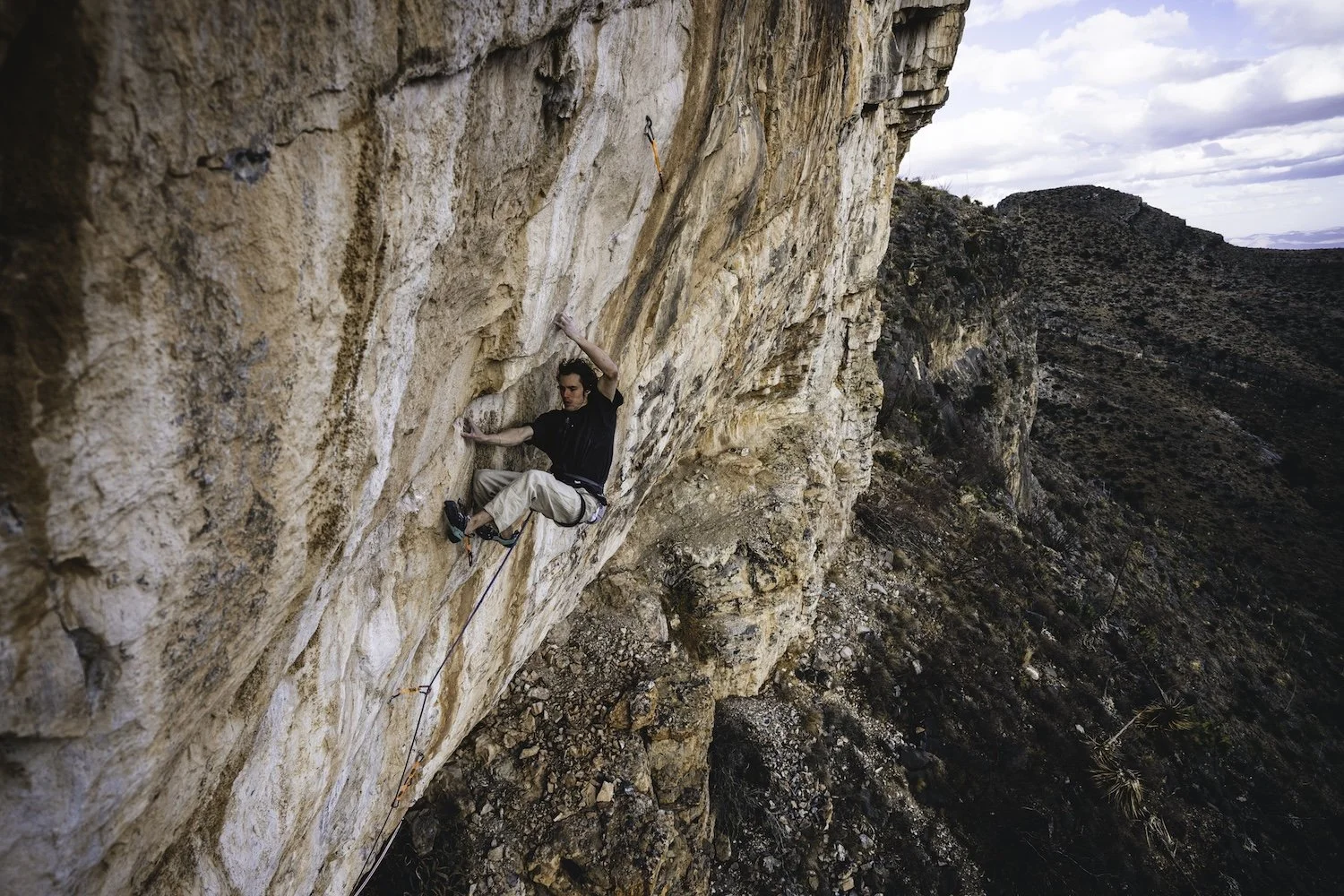
Longs Peak circa 2003. Photo from the Detterline Collection courtesy of the AAC Library.

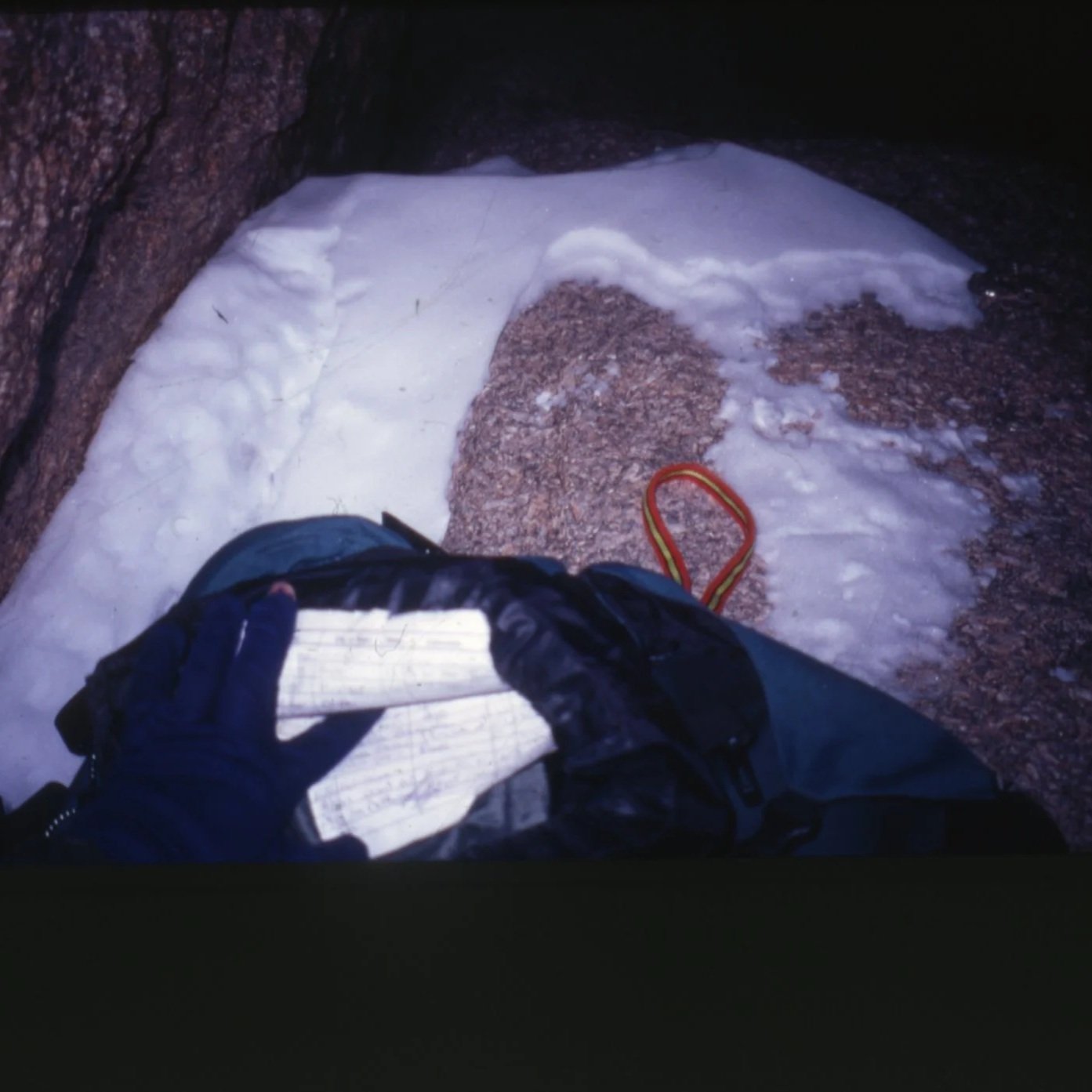
POV of Jim Detterline atop Longs Peak with a summit register. Photo from the Detterline Collection courtesy of the AAC Library.

Each name logged in a summit register is a hint at a personal adventure. Ultimately, Detterline was right to be cautious of the lightning around Longs Peak. In 1985, he and Duane Kitzis set out to climb the Casual Route (5.10a) on the Diamond. Detterline was leading pitch six, 40 feet up, and was still unable to find his first piece of protection. Suddenly, thunder rang out, and a sheet of rain showered down. A basketball-sized ball of St. Elmo’s fire at the top of the crack system began sizzling toward him. According to his unpublished memoir, “The ball came quickly to my position, hovered in front of my face, and exploded with a loud ‘boom’ and a flash of bright light.”

Detterline held strong; however, he had been totally blinded by the lightning strike. Kitzis helped guide Detterline down to the ledge, talking him through each foot and hand move as he downclimbed. They waited about an hour until Detterline’s sight returned; by then it was late, and the rock was wet. With no choice but to bivy, they began climbing at first light the next morning. This was just the beginning of Detterline’s time on Longs Peak, and just one story folded into the pages of the summit registers archived in the AAC Library.

Sauter remembers one Saturday morning at the American Alpine Club Library in the dead of winter. When the door flung open and snow swirled in, Detterline appeared, clad in a snowsuit. He handed her the Longs Peak summit register and walked back out, taking the snow with him. At least, that’s what Sauter says it felt like. The AAC Library is located in the building’s basement, with the door usually propped open, but when Sauter looks back on that day, it feels like Detterline had stepped off Longs Peak’s blustery summit and into the Library.

Longs Peak isn’t the only mountain with intense weather. Mt. Bierstadt (14,066’) is one of the more forgiving 14ers and one of the most popular, given its location near Denver. The weather, especially the snow, is still just as intense. In a summit register entry from February 15, 1976, a hiker describes the weather as “snowing, windy, vis[iblility] 500 feet.” The next entry with an illegible date has the opposite problem: “Too F@%*ing bad there wasn’t snow to ski to the summit.”

The weather turns fast in the mountains, and the summer months don’t always bring warm weather. An August 10, 1976, entry for Bierstadt reads, “...despite the snow. F@%* Colorado weather!” Another entry from August 18, 1976: “Holy sh*t it’s cold.”

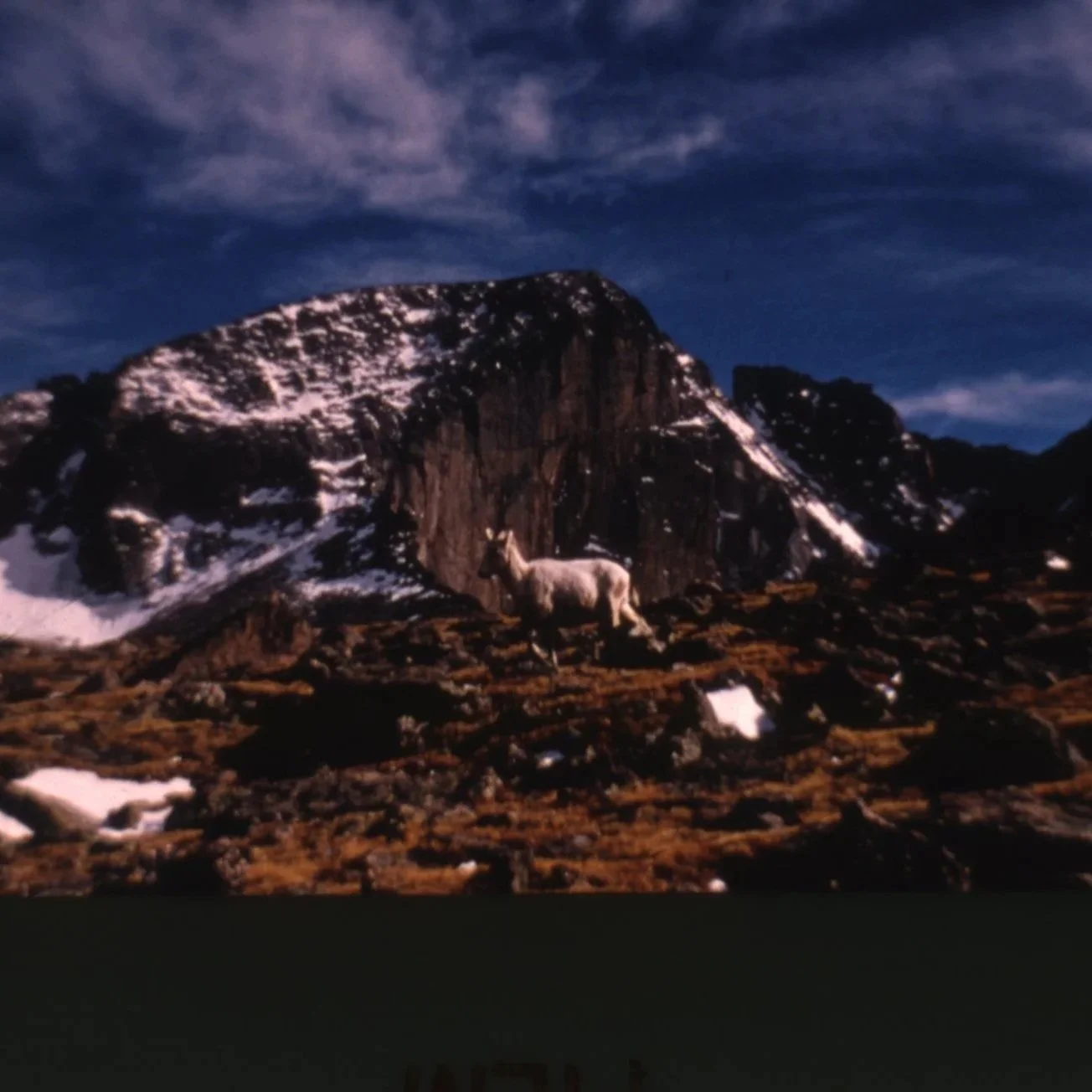
Mt. Blue Sky (14,268’), formerly Mt. Evans, is another 14er near Denver that is popular. The summit registers of Mt. Blue Sky don’t have many entries about the weather; instead, they focus on mountain goats. This doesn’t come as a surprise; the mountain is known for these troublesome, salt-licking creatures. Notes from the register from 2011 show considerable goat activity, with entries like: “Hi goats,” “Baby goats,” “Gorgeous Goats!” and “Goats = Awesome Views = wow.” Unfortunately, the abundant presence of mountain goats reflected in these historical summit registers is now precarious—in a 2025 population estimate by Colorado Parks and Wildlife, the goat population on Mt. Blue Sky was around 70, a far cry from the 2024 estimate of 125. An unknown disease has struck the goats, causing large fluctuations in population. It is suspected that human waste is the source. Hopefully the health of the mountain goat population can be addressed, or else these summit register logs will be strictly history, rather than a vibrant reference to a shared experience across time.

Digging through summit registers and archives in the American Alpine Club Library can transport you into the past, onto windblown summits, or next to shaggy-furred mountain goats. In the AAC Archives, history steps out of the books and into the room with you. The names scribbled onto worn paper on mountaintops miles away hold untold stories waiting to be discovered.


Sign Up for AAC Emails

An Interview with American Climbing Journal Editor

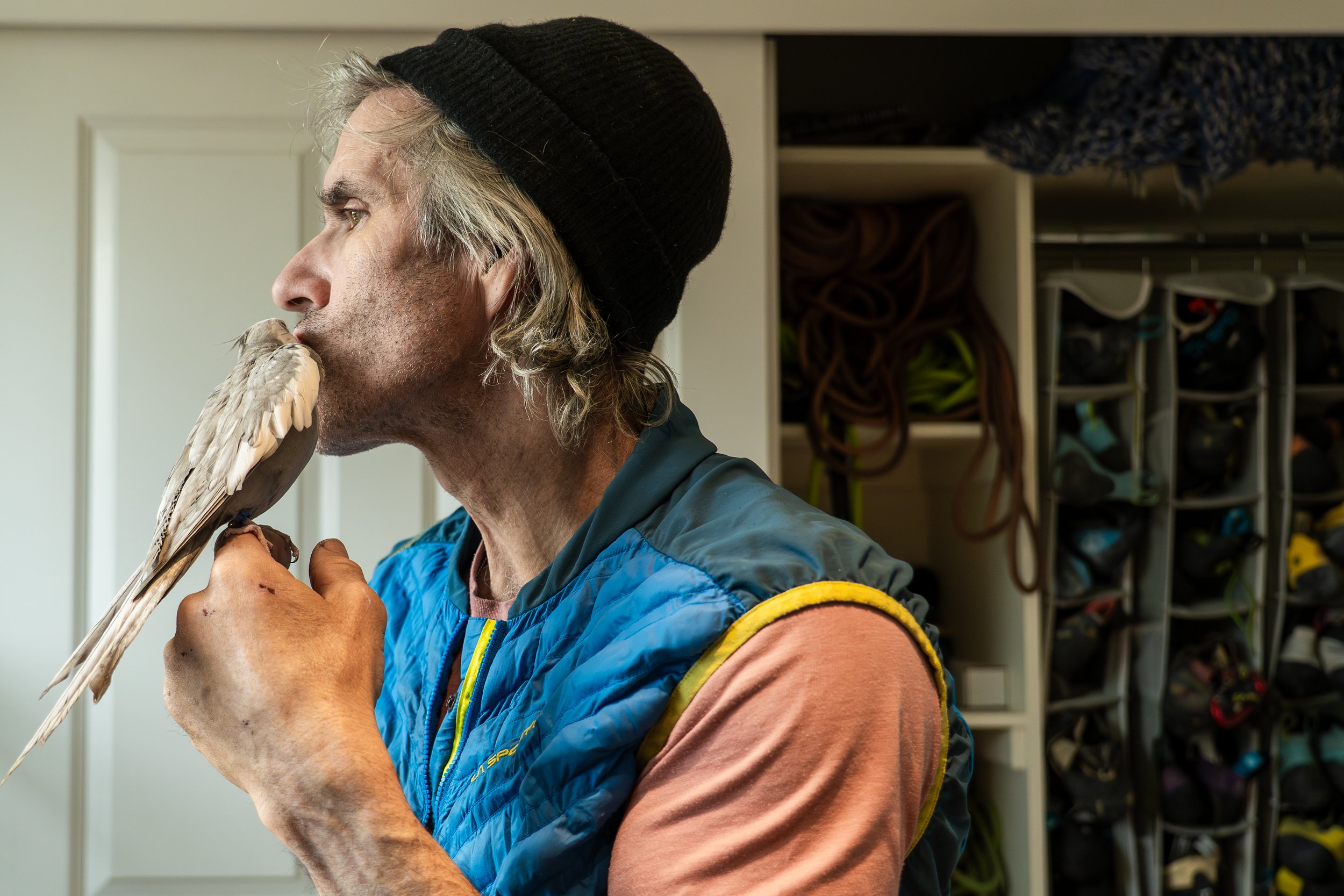
American Climbing Journal editor Matt Samet showing love to his cockatiel, Gandalf. Photo by AAC staff Foster Denney

By Hannah Provost

Originally published in Guidebook XVIII.

The American Climbing Journal (ACJ) is a new publication of the AAC. Building on the 97-year history of The American Alpine Journal, the ACJ will be the journal of record for the most significant rock climbs each year, covering sport climbing, single-pitch trad, bouldering, and shorter multipitch climbs in sport style, as well as performance-oriented achievements such as outdoor speed climbing and link-ups. AAC members can expect to receive the very first edition of the ACJ in the fall of 2026.

Editor’s Note: The following discussion includes a lot of sidebars, as Matt Samet managed his cockatiel, Gandalf, who was flying around Samet’s home office and making a ruckus as we chatted. Sidebars to Gandalf are noted in parentheses.

Matt Samet: [Referencing the cockatiel on his hand] He’s been flinging fruit pellets at me all day. He’s such a f#@ker. Gandalf?

Hannah Provost: Is that just a plea for attention?

MS: Well, he likes to sort through and get the seeds he wants, but some of it’s just, yeah, being a bird—being a brat. Look at that: Are you a brat? Yes, you are.

HP: Haha. Well, let’s get started. Why is there a need for something like The American Climbing Journal [ACJ]—why should it exist if we have the internet? I.e., what’s the argument for your relevance, Matt?

MS: I think it’s important to have a journal of record for rock climbing, just as it’s been important to have a journal of record for alpinism, like we’ve had with The American Alpine Journal [AAJ] for 97 years now. Rock climbing in the last 40 years has become just as relevant as alpinism, I think. For years, the magazines functioned in that capacity with news departments, features, articles about areas, and profiles on climbs. The magazines were the keepers of that record. Before the internet, they were the only way you could find out what had been done.

(Hi, Gandalf. You are a pretty birdie. You’re a very pretty birdie. He’s ridiculous, isn’t he?)

So, with Drifter’s Escape, the 5.15a traditional climb that Connor Herson freed in Squamish, Connor did something that’s very trendy these days, where he waited to post about it online—some kind of punk-rock marketing, I suppose. But how deep can any Instagram post ever go?

My goal with the ACJ would be to get Connor to write a first-person story and to help fill in the details, which he and a Squamish local and climbing historian, Nat Bailey, did an incredible job of. That way, it’s preserved forever in journal form. And then we have a searchable archive like we have with [the] AAJ, and you can be like, Hey, when was Drifter’s Escape done? and get detailed answers about the facts, but also a first-person description of the experience. It’s also important to have these facts, not because names, grades, and dates matter so much, but because there is a continuum and a living history that’s still evolving, and in very unique and unpredictable ways.

It’s important to have as much documentation as you can for old, geeky history nerds like me, but also for people new to the sport.

(Gandalf, are you a pretty birdie or are you just a pain in the ass? You are a pretty birdie.)

HP: Definitely pretty birdie. Haha. Okay, well, how is the ACJ structured, and in what ways is it similar to or different from the AAJ?

MS: We have our primary features, which aren’t necessarily just the most important things that happened in 2025—they’re also the ones that lend themselves to the best storytelling.

So, for example, there’ll be [Adam] Ondra’s flash of Lexicon, the world’s first flash of an E11—basically a 5.14 death route. Seb Berthe doing the fourth ascent of the Dawn Wall— he took a boat over here twice to get it done, because he’s committed to green travel. Sasha DiGiulian and her first female ascent of the Platinum Wall, a 39-pitch 5.13d on El Cap.

Hamish McArthur, with his astonishing V17 repeats. Connor Herson, as I mentioned, doing Drifter’s Escape, perhaps the first-ever 5.15a trad pitch. Katie Lamb talking about being the first woman to do a V16 “twice,” and what that meant.

Then we get into the gallery section, with photos of [climbs] that are stunning and/or difficult across the world and country, with longer captions that offer deeper storytelling from the people who did the climbs. We’ll also have images of new areas (and newly protected old areas) that have opened (or reopened) up because of successful pushes by local climbing organizations and the Access Fund—places like The Venue at the Red, Farley Ledges in Massachusetts, and Howard Knob in North Carolina.

And then we have a section that’s new in the sense that you wouldn’t necessarily see it in the AAJ: Crag Profiles, which are basically what they sound like. This edition, we have the Ships Prow in Rocky Mountain National Park, and then Cheat Canyon, West Virginia, which is this crazy bouldering, soloing, highballing, off-the-radar gritstone area.

Then we have our American Rock section, which features regional reports on climbs significant to their area. And then World Rock, which is the international version. One idea with some of these American Rock and World Rock reports is that we also want to clue people into areas they might not have heard about—kind of like the Climbs & Expeditions section in the AAJ.

(Stop eating a $10 bill, you f#@ker.)

HP: One of my favorite things about working with Dougald [MacDonald, editor of the AAJ] and Pete [Takeda, editor of Accidents in North American Climbing] is that they’re both big personalities. You are also a big personality, and of course, so is your bird Gandalf...

MS: He’s a bigger personality than me—look at this. Now he wants scritches, or he’s going to bite me.

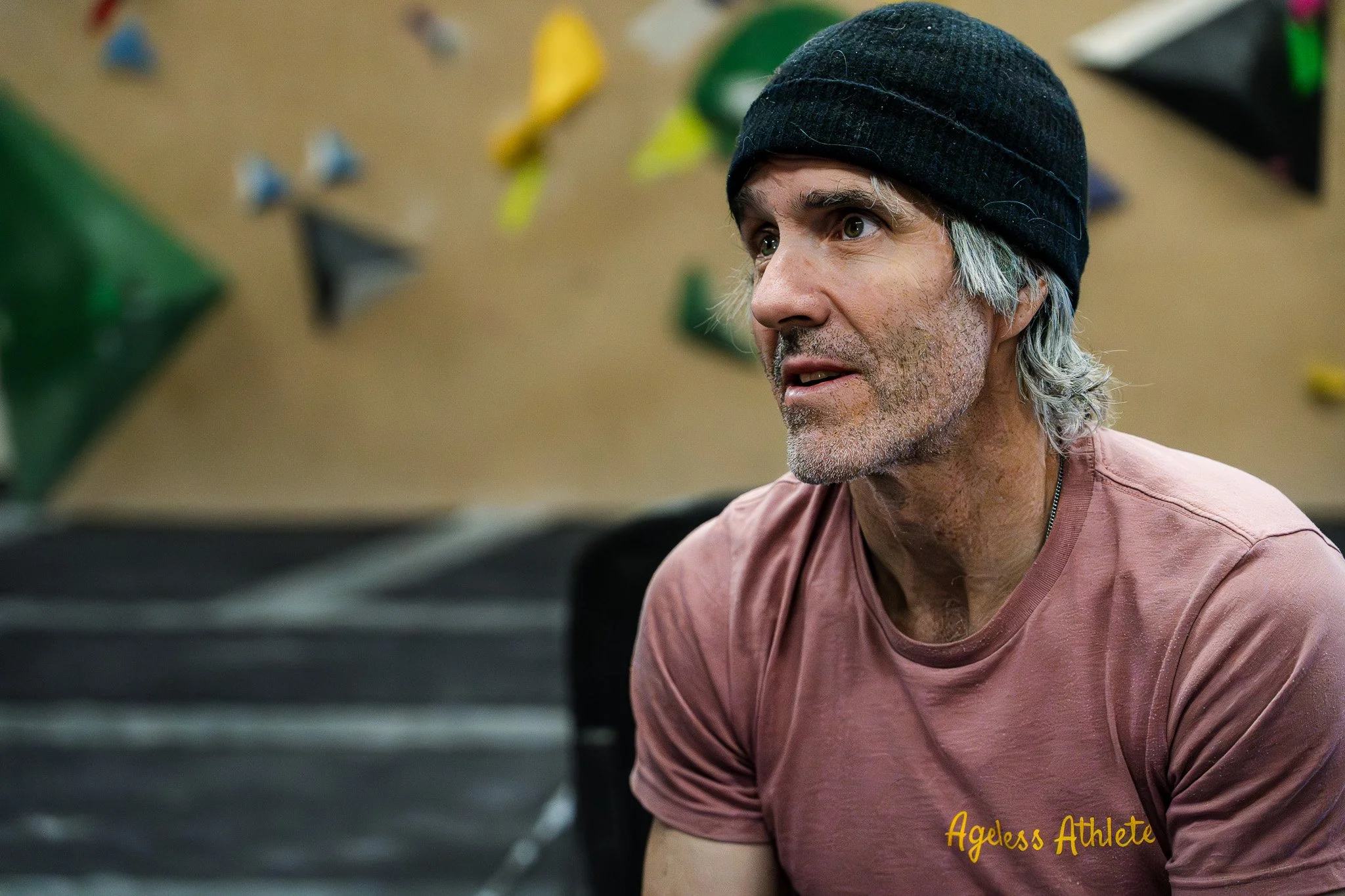
Matt Samet examining a boulder at his local gym. Photo by AAC staff Foster Denney.

HP: So what’s your background in editing, and what parts of your professional and climbing background are you bringing to the ACJ?

MS: I’ve been climbing since age 15. I’m 54 now, so we’re coming up on four decades of climbing. Primarily rock climbing, a little bit of alpine rock here and there. I’ve always been into performance rock climbing; at one point, like, in my teenage years and into my 20s, I was a sponsored climber.

In 2002, I started working at Climbing Magazine after getting my BA in journalism and then a master’s in English/creative writing. I’ve been involved nonstop in editing or writing about climbing since then. So, 24 years of editorial experience, working as a desk editor at Climbing, at Rock & Ice, at Alpinist. I have twice been the editor-in-chief at Climbing, though it wasn’t quite as, umm, glorious as it sounds, because at times I had no staff other than myself. Like 100-hour weeks—I wouldn’t care to do that again.

And I’ve been involved with the AAJ as a freelancer since 2022. I’ve edited a lot of outdoor books and memoirs, too—through Mountaineers Books, Di Angelo Publications, Patagonia, things like that.

HP: Do you ever get bored with climbing stories?

MS: I don’t. I did get bored of climbing stories when I was at the magazines, and the frequency was 10 to 12 issues a year, and my workload was insane. Now, with the longer timeline to put a journal together, I get to spend more time with the stories.

For me, the coolest part is helping climbers/ writers find their voice and their story. When someone’s done a cool climb, but they haven’t quite figured out how to translate that to the page so that other people can experience it with them, it’s a really cool thing to be that conduit or bridge.

When you get into the details of climbing, it becomes this really fascinating thing, because it’s an experiential sport. Being at your limit is a universal experience, right? No matter what the grade or the climb is, we all have to dig deep in the same way in order to succeed at our physical or mental limit. When you’re able to take a climb that’s also at the very cutting edge and translate that climber’s experience into something rooted in details, and that feels universal, it makes for really cool storytelling.

Have you seen the video of Adam Ondra doing Lexicon? It’s insane. He talks [in his article for the ACJ] about the two minutes before he got on the wall, being scared. Here’s the world’s best climber admitting he was scared. That’s such a beautiful thing, because we all get scared. It’s this profound and very real and very human moment we can translate into our own experience. As a dedicated and passionate climber myself, I can see myself and my love of the sport in all these stories.

HP: In the course of sharing your answers to the previous questions, you gave us some sneak peeks of some stories. But can you tell us in detail about a story that really surprised you?

MS: There’s this Korean boulderer, Sungsu Lee, who’s extremely strong. In May 2025, he repeated Burden of Dreams, the world’s first V17, in Finland. But on the successful ascent from the ground, he pulled on, cocked, and maybe bounced off the pads, but maybe not. It’s hard to tell, because he had a baggy T-shirt on. Then he got to the top, and everyone’s like, “Yay!” And he has his celebratory beer.

But you could see something in his eyes where he’s like, Eh, I don’t know if I did it or not. So he went back and repeated it. We have an interview with him that a friend of his, Brian Kim, helped translate, getting into the mindset of why Sungsu went back to do it again. The second time, he did it with his shirt off, which I thought was funny.

To me, this all showed the sense of absurdity but also the seriousness with which we interpret climbing. I mean, someone who’s not a climber, if you tried to explain to them why this guy’s T-shirt and maybe butt bouncing off these foam landing mats below this tiny rock mattered, they’d be like, “Wait, what?”

But to a climber, to the diehards who are our Club members and readers, it’s everything.

Style is everything.

HP: You’ve been an obsessed climber for decades. Is there a climb that still haunts you?

MS: Okay, there’s one I haven’t done that I bolted that I’ve been trying now for three years. It’s up in Skunk Canyon in the Flatirons here above Boulder, Colorado, where I live. It’s 21 bolts long, and my friend Brandon and I bolted it in the fall of 2022. I did the first half of it that season. And I didn’t expect the second half to be that much harder, so I thought, I’ll come back next season and finish it off.

I’ve probably been up there 100 days since then, just trying to do the second half by itself.

Last fall, I almost did it—the second pitch. It’s essentially like V10 into a difficult clip, straight into a V9, on a 35° overhanging panel on small, awkward holds. I had my hand on the jug at the end of the hardest part. And all I needed to do was bring my feet up and bring my other hand in. And I just couldn’t—my elbows were in the sky.

I was very excited to train for it this winter, but then my right pinky finger got infected, as did the tendon. I haven’t been able to train, but I hope to be able to train in the summer and go back in the fall. I mean, at age 54, I don’t know if I can, but I know that it’s now or never. I’d like to do this route because I think it would mark the culmination of everything I’ve worked toward in four decades of climbing. And also to show that as you age, you can still push yourself.

The first half is called The Alpha. The second half is called The Omega. Together, they are The Alpha and The Omega.

HP: What’s an example of a unique challenge that you had to deal with when compiling the ACJ?

MS: The biggest challenge was coming in, and there was no ACJ, no template. We’ve had to develop it from scratch, which initially was very intimidating. We didn’t even quite know what this was—and we needed to get it done by spring 2026. But obviously, you, me, Dougald, and Shane [Johnson, the Vice President of Media at the AAC] put our heads together on it. I’m very grateful for all the help that you guys have given me. And I think the ACJ is going to keep evolving, too. I’m excited to see how people respond once the Journal is out in the world.


Sign Up for AAC Emails

Small Hauntings

AAC Board President Nina Williams on China Beach (5.14b). Photo by AAC member Jordi Llauradó i Vilà.

A Look at Rumney’s Aura Climbs

By Hannah Provost

Originally Published in Guidebook XVIII.

For many of us, each climb we undertake is a private sparring session. Because such battles can be painful, frustrating, or even sometimes break us, you’d think we’d engage only reluctantly. But it seems that we climbers, more than anything, are easily disposed to spiritual possession.

Each haunting (a.k.a. “project”) is temporary, lasting a few weeks or months, maybe even years. Once we do send—the most occult of rituals—the hungry ghost, now fed, simply vanishes.

But some climbs collectively haunt. They manifest a certain presence, even in the minds of those who have no interest in pulling on the first holds: La Rambla, Burden of Dreams, Pure Imagination, Free Rider, iconic routes we see and hear so much about that they spark the collective imagination.

One zone that’s remarkably stacked with such routes is the featured schist of Rattlesnake Mountain in Rumney, New Hampshire. The short cliffs of Rumney lend themselves to distinct features and stout boulders, creating climbs with unmistakable character. This is, therefore, one of those crags where it’s only natural to ask: Which ghosts haunt the rocks?


Jaws II 5.15a

Jaws II lures its victims with one important ingredient: the temptation of the impossible. After Dave Graham climbed Jaws at 5.14b in 1998, several holds broke, and the line eluded repeats for nearly a decade. In 2007, the New Hampshire–based crusher Vasya Vorotnikov and his friend Zeb Engberg found that they had been cruising through the harder established climbs at Rumney, and were looking for new levels of challenge, some way to get pumped that mirrored the roped climbing they were allowed to do on the junior-competition circuit. Back then, it was thought that bouldering was still too dangerous for developing youngsters—ironic, because Jaws II would turn out to be roped bouldering, with a V12/13 to a V10 packed into its 50 feet of height.

After the usual process, Vorotnikov sent the rig in 2007, renaming it Jaws II (“Broken Jaws” was a contender as well) and proposing 5.15a—making it the second 5.15 in the United States, after Flex Luthor. The next 10 years saw a flurry of ascents, as boulderers flocked to the short, steep walls of Waimea. During those years, the climbing media kept a careful log of Jaws II repeats.

Paul Robinson, who snagged the fifth ascent in 2013, remembers the unique crux on the initial boulder, which he considered V13: “You had to grab this really high right hand and then get your feet in this weird drop-knee position and stab back over your head into an undercling.” But, Robinson continues, “The move was super learnable. I remember trying it in the beginning and just being like, Whoa, this move feels impossible.” After the undercling, there was also a jump-kick move, or a pogo, that you often don’t find outdoors.

For Robinson, the route’s difficulty and aesthetics—the sea-foam lines in the schist, the cresting wave of Waimea Wall—help explain why it looms so large at Rumney. But above all is the fact that Jaws II and its Waimea neighbors, like China Beach, are perfectly separated by blankness. Unlike many crags where you can grid-bolt or move a few feet off the bolt line to climb a variant sequence, these lines have a firmness to them. With Jaws, “it’s like the rock chose the bolt line,” Robinson says.

Nineteen years later, Vorotnikov thinks that Jaws II still haunts because it’s a testpiece and has history—not because it’s a classic or a king line. In contrast to Robinson, he thinks it’s actually not that pretty. “I don’t think of anything hard as ultraclassic, to be honest. Because [they’re] too weird,” he says, going on to describe some of the tweakier, unpleasant holds on Jaws II’s bottom boulder.

Still, says Vorotnikov, “You can definitely have a five -star experience on something that’s not five stars at all. You can have your own mini-adventure at your local crags.” Yet to some extent, why Jaws II retains so much aura is a mystery to Vorotnikov. But that’s the power of sheer difficulty—it tends to create its own gravitational field.


AAC Board President Nina Williams breaks the beta on the top crux of China Beach, to suit her short frame. Photos by AAC member Jordi Llauradó i Vilà.

China Beach 5.14b

“I have not sent this route; however, I have spent a disproportionate amount of time falling off this route...” opens Jay Knower, describing the 5.14b China Beach on Mountain Project, before opining, “China Beach is the ultimate sport climb and is the standard against which all other sport climbs should be judged.”

Just one route over from Jaws II, China Beach might have even more name recognition. Heck, there’s even an entire podcast dedicated to understanding why so many people are haunted—in the best way—by this climb.

Rajiv Ayyangar, a co-host of Climbing China Beach: A Podcast Series About One Route with Michael Penn, says China Beach has come to represent many things to different climbers—it has been a gateway to harder climbing, a capstone to a climbing career, and a conduit for personal transformation.

After interviewing so many people about their obsession, Ayyangar is starting to formulate an idea of the origin of the route’s aura, starting with the breakdown of the climbing, and with a nod to the impeccable rock quality and friction: “The fact that it’s continuous, the fact that every move is interesting and iconic, the fact that it’s two different styles. You’ve got this bottom section that’s almost trad-like and insecure, and then this top section that’s big moves on hero crimps. And it punishes tall climbers at the bottom and short climbers up top. There’s an equivalence to it.”

The projecting process for China Beach almost always becomes a discrete epoch—due, in part, to how unexpectedly long it often takes. Ayyangar is convinced this is because of the continuity of the climb, the intricacy of the different styles. China Beach asks climbers to go deep into microbeta and tactics. It’s a climb that asks you to linger.

Nina Williams, the AAC’s Board President, did the first female ascent of China Beach in 2023—doing a wild rose move in the upper crux from a non-hold that other climbers had never even tried to use. For Williams, the route has standout attributes that compound with each burn. She says, “Visually, [it’s] an obvious line with a striking position in the center of the wall. White zigzag streaks and cracks naturally draw the eye. Physically, it has a little bit of everything: crimps, sidepulls, underclings, slopers, smeary feet. Intricate sequences that require both strength and endurance (versus the typical ‘boulderer’s route’ style of Rumney).” But other factors, like New England’s wet, cold, fickle weather and the list of climbing legends associated with the route—New Englanders Dave Graham (FA), Joe Kinder, and Vasya Vorotnikov, as well as prominent visiting climbers like Jonathan Siegrist and Alex Megos—have also shaped cultural opinion, enhancing its aura.

Another thing that Williams and Ayyangar kept coming back to was their personal experiences on China Beach—their own dance with the rock. Says Williams, “I ultimately think the climber is what gives a climb ‘aura’; the climber’s journey and process add to the overall narrative of a route and inspire other people to add to the lore.”


Design by Foster Denney.

Predator 5.13b

The cover of the Rumney guidebook. The logo for the Rumney Climbers’ Association. A glimpse through the trees when you stand next to the dumpsters at the AAC Rumney Campground. Predator is everywhere— stalking you, ready to possess your body and swallow your soul.

Predator is a 5.13b at Orange Crush—and the most iconic climb at Rumney. This 45° over-hanging prow is impossible to ignore. The hill and trail that follow the rising cliff at Orange Crush mean that climbers on the approach have an eye-level view of anyone on the route, with the stunning valley dropping away to create an epic horizon. Climbing Predator, whether you’re sending or falling, is a performance. Emma Kowal, who sent in 2023, says the position, the hero moves, and the continuity of the difficulty “allow you to access a pretty magical state of self.”

Predator is, beyond its obvious aesthetics, also a climb you earn—as Kowal says, climbing it requires “at least one shenanigan.” You have to climb a pitch to get to the Predator belay ledge—either climbing one of two 5.11s or aiding on bolts. If you want to give multiple attempts, there is a friendly tree you must land on, so that your belayer can throw you a loop of rope and pull you back in. And if you’re planning to top out, either on the send go or while projecting, it might just be easiest to unclip the anchors and jump—or do a victory-whip backflip. Regardless, it’s advised that you back-clean or skip the final bolt too, so that you can make it to the tree.

Fortunately, the movement itself is very approachable. A power-endurance test-piece, the line doesn’t have a sequence harder than V5, according to Kowal. Off the belay ledge, you begin with awkward 5.11 face climbing, with holds facing the wrong direction and weird, sometimes-wet stemming. This quickly turns into jug-bashing until you’re at a ledge. On the ledge, as Claire Stolz, who sent Predator in 2025, describes, “You’re sitting there, you’re listening to everyone else on their project [around you], you’re listening to people gossip at the top of Orange Crush, hearing about somebody’s date...you can see the big arc of the Baker River. And then the wind turbines are turning.” Meanwhile, the permadraws sway in the breeze above you, building anticipation—you’re about to go to war with Predator.

The next 20-odd moves begin with big swings and flowy jugs. There’s the matchbox crimp you use for the hardest move, and then a strenuous, scummy knee-bar that some use to cop a rest before Predator’s most iconic move—a dyno or large deadpoint. But it doesn’t end there, because then you’re squeezing the “pinch of despair,” quickly followed by the “pinch of hope,” as Kowal has dubbed them. The mantel that guards the chains isn’t so bad if you have the reach—and can find the hidden crimp.

For Stolz, Predator has “five-star climbing in a five-star position.” The climb is approach- able because there are no terribly hard, stopper moves, and the permas are bolted closely, so it is easy to pull on draws to work the climb. Kowal reflects that Predator is also compelling because it’s so public as to almost be performance art: “There’s something extremely exhibitionistic about climbing Predator. You’re creating this unbelievable silhouette for everybody who’s up there; you’re doing these big dramatic moves and taking these big dramatic falls and screaming a lot.” And the fact that Predator is a 5.13 “makes it a climb that people find aspirational and see as a goal,” perhaps for their first of the grade, says Stolz.

It helps, Kowal says, that “Rumney has a very rich beta-sharing culture. Climbs are quite cryptic and beta-intensive. So beta gets passed down through the generations.” When you get on Predator, you are enmeshed in that culture, in an oral tradition that helps you go deep into Rumney’s history.

Kowal and Stolz both consider Predator to be an ultraclassic—if you can climb the grade, it’s not to be missed. Kowal argues it might even be a king line—there is a majesty to it. Kowal put in 30 attempts before sending it as her first 5.13. She took notes after every attempt and reread them before each go. She built a replica of the final moves on the Kilter Board. On the send, she wore her friend Max Lenail’s La Sportiva Otakis—his last pair of climbing shoes before he died in an accident a few years prior. They were stiff enough to make the knee-bar comfier, reconnecting her to him via the rock and the fact that he, too, had once sent Predator.


AAC member François Lebeau

A Personal Haunting

For Vorotnikov, it’s entertaining to discuss the finer points of what makes something a testpiece vs. an ultraclassic vs. a king line—all of the different nuances of what gives a climb aura. His take is that Waimea, a 5.10d down the wall from Jaws II, is far more an ultraclassic than Jaws II—simply because nearly everyone who climbs at Waimea will climb it. It’s a little spooky, it’s the crag warm-up, and it’s the wall’s namesake, as well as simply Type 1 fun. But we won’t commit to anything—the endless debating over routes is too fun.

Even as the climbs discussed above prevail in Rumney lore, there are plenty of other Rumney climbs with their own history and charisma. There is a special power in being able to step into the legacy, shared beta and inspiration, and communal knowledge of Jaws, China Beach, Predator, Technosurfing, Flesh for Lulu, Black Mamba, Millenium Falcon, and Lonesome Dove. But there is also something exciting about striking out on your own and getting inspired by something a little unusual, ugly, tweaky, or underappreciated.

As Williams shares about finding the joy in— or even being haunted by—anti-classics, “There’s less of a chance to bond over shared knowledge. That being said, going back to the climber giving a climb aura, I started telling people to climb on Bishop’s best V9 lowball, America’s Fit Homeless. Is it actually Bishop’s best lowball? Probably (definitely) not, but it’s fun building hype and getting people to try obscurities.”


Sign Up for AAC Emails

Speed Climbing Returns to the 2026 GoPro Mountain Games

When the world’s fastest speed climbers launched off the starting strip at the 2025 GoPro Mountain Games, flying up the 15-meter wall in mere seconds, the reaction was immediate, electric, and unmistakable: Vail had a new obsession.

This year, speed climbing is back for year two at the 2026 GoPro Mountain Games June 4-7. After last year, the Vail Valley Foundation knew they had to bring this back in full force. The discipline is returning with everything that made it a sensation last summer, plus a deeper, more expansive program, with opportunities for everyone to get involved.

The centerpiece of the speed climbing program is once again the YETI North American Cup Series Vail – Speed. This is not a grassroots local comp. The NACS is a pipeline to the World Cup and the Olympics, and many of the athletes competing in Vail are the same names chasing medals on the world stage. 

Two athletes. Side by side. Racing head-to-head up identical routes. The fastest five seconds in sports — right here in the Colorado mountains. 

With speed climbing confirmed for the Los Angeles 2028 Olympic Games, the athletes competing at the NACS in Vail this June are some of the very athletes with LA28 in their sights. Watching these competitors race isn’t just watching sport — it’s watching the future of the Olympic climbing program unfold in real time. 

“We’re excited to bring the North American Cup back to the GoPro Mountain Games and to once again showcase Boulder and Speed climbing in such an iconic setting,” said Marc Norman, President & CEO of USA Climbing.” After such a successful debut of Speed last year, we look forward to giving athletes and fans another full weekend of intense climbing competition!” 

The GoPro Mountain Games are free to the public to attend, but it’s not too late to register to compete!


Emiko Takeuchi Returns to Vail Fresh Off Big Win

Photo by Dan Gajda/USA Climbing.

This teen climber is literally soaring up the ranks. Growing up in Atlanta, GA, Emiko Takeuchi explored several activities as a child. She tried soccer and ballet. She wasn’t bad, but found them boring. Then she tried climbing at a friend’s climbing gym birthday party. She was hooked.

Now at age 17, Takeuchi is a World Cup-level climber who recently landed her inaugural North American Cup victory. She can’t wait to return to climbing walls in Vail at this year’s GoPro Mountain Games.

Takeuchi has competed in the Youth World Championships and has two World Cup competitions under her belt. She excels at all disciplines but has made her most prominent statement in speed. At the season opening North American Cup speed event this April in Bridgeport, Penn., Takeuchi shot up the wall like Spiderwoman and walked away with the gold medal.

She made quarter finals last year at the Mountain Games’ first-ever North American Cup speed climbing competition, and she will compete once again this June in the YETI North American Cup Series Vail – Speed as well as in the North American Cup Series Vail Boulder competition, presented by CELSIUS.


Sign Up for AAC Emails

The Line—Old School Adventure in the Alaska Range

Serious adventures in the Alaska Range aren’t just about high-end alpinism. In May 2025, AAC member Roo Streba and frequent ski partner Shawn Jordan pulled off a nine-day traverse of the range involving skiing, trekking, and packrafting—and likely the first ski descent of a 7,000-foot line. There wasn’t room in the upcoming 2026 American Alpine Journal for more than a brief mention of this adventure, so we’re sharing the full story here. 

Slogging up Mt. Crosson at the start of the nine-day traverse. Begguya (Mt. Hunter) is prominent in the back, above Kahiltna Base Camp. Photo: Roo Streba Collection

Journey Through the Denali Wilderness

Shawn Jordan and I are Tahoe-based skiers who have adventured together throughout the Sierra. The climbing and expedition history of the Alaska Range have interested both of us for much of our lives. During a visit to the north side of the range in 2023, we conceptualized a trip that would marry aspects of old-school expedition-style mountaineering with modern, lightweight gear and skiing techniques, and that we could pull off in the limited time our lives and work allowed. We flew up to Anchorage in May 2025.

After an anxious few days of trip delays in Talkeetna, Shawn and I landed at Kahiltna Base Camp on May 13 and immediately set off across the glacier to start our ascent of the southeast ridge of Mt. Crosson, the 12,800-foot peak’s normal route. The snow conditions were reasonable, but with our heavy packs the going was a slog.

On the second night, we camped below the summit of Crosson in a cold windstorm and discussed our plan. Multiple forecasts seemed to agree—for once—and they showed a poor trend in the weather. With satellite imagery showing our chosen river of egress in the midst of a later-than-normal break-up, we concluded we would not have the time to complete Plan A: traversing to the Sultana Ridge and up Mt. Foraker, with a descent by skiing the north face and packrafting to Lake Minchumina via the Foraker River.

So, we switched to Plan B: climb over the three peaks of the Crosson group, ski down to the northwest to reach the Foraker Glacier, then ski and packraft to the bush village of Lake Minchumina. The full journey would be just under 100 miles.

Pausing on the Crosson ridgeline after an icy section of the ski traverse. Photo: Roo Streba Collection

The next day, we woke to excellent weather, summited Crosson, and continued west over Peak 12,472’ (the peak that marks the start of Foraker’s Sultana Ridge) and Point 11,910’. Although summiting a peak is generally very exciting, three summits did not triple our excitement, and by the third we were very much ready for our final transition.

The skiing on the descent varied as much as skiing can. Windswept ice gave way to awkward turns in an upside-down snowpack. The steepness changed dramatically, and at one pinch point in the ridge we rappelled over some suspicious snow.

Despite less-than-glamorous skiing, the views couldn’t have been better: Foraker’s great north face to our left, the back side of Kahiltna Dome to our right, and the north side of the Alaska Range giving way to endless tundra before us. Clouds moved in and out, but somehow we managed to keep good visibility. In the gloaming, we navigated the final seracs on the ridge and made it to a pass between the Foraker and Straightaway glaciers, where we spent our third night. Park rangers later told us this was the first ski descent of the northwest ridge of the Crosson group.

Day four was a dream: We skied the remaining 2,000 feet down to the main Foraker Glacier on a spring snowpack capped with a few inches of powder, easily the best skiing of the trip. (The full descent from Point 11,910’ had been nearly 7,000 vertical feet.) For the rest of that day, we skinned and then walked to exit the Foraker Glacier, appreciating the incredible mountains surrounding us. We passed massive skiable lines on unnamed peaks that would be legendary and coveted in the Lower 48. Signs of life—an occasional bear print, a small plant, and, finally, birds—slowly started to appear as we navigated the moraine. 

The line of the ski descent off the northwest side of the Mt. Crosson group, seen from the Foraker Glacier. Photo: Roo Streba Collection

The next few days provided endless opportunities for character building. The pleasant and efficient travel of the glacier and high tundra gave way to thicker and thicker vegetation, until we found ourselves in all-out brawls with alder thickets. The alders won many of these battles, pulling skis off our packs, testing (and breaking) our patience, and severely hampering our progress, yet we persevered, and on the third afternoon of the descent, we finally found a comfortable location to launch our packrafts.

We are skiers a thousand times more than we are packrafters, and, acknowledging this weakness, we had discussed in depth our safety measures, communications, and strategy. We pushed into the fast-moving and turbid glacial river, readying ourselves for epic rafting. Ten yards down the river, my boat scraped bottom and halted. I freed myself, only to notice Shawn stuck ten yards below me. Confused, we continued down, repeatedly getting stuck and unstuck. Finally, with exasperation, we climbed out of rafts and discovered that we were able to walk across the entire river without going more than knee deep.

The following two days were wet. We found ourselves in a cycle of rafting until we hit bottom, walking our boats down the river until it was deep enough to raft again, and repeating. Despite the toil, we made good time and deeply enjoyed our surroundings. Caribou walked past our camp, birds flocked in droves, and planes rarely flew overhead.

Shawn enjoying some easy skiing off the Foraker Glacier near the end of day four of the traverse. Photo: Roo Streba

We finally reached the confluence of the Foraker River with the White River. In normal years, this confluence is of little consequence, as the White River becomes a trickle by summer. This year, due to the late thaw, the river was running at several times the flow of the Foraker, and the next several miles went by in a flash. By dinnertime, we were beyond satisfied with our progress and entirely exhausted. That night, we found enough dry sticks to make a fire and, for the first time in days, went to sleep dry.

The river flowed hard for several more miles, but as the gradient decreased, it sprawled and slowed. Prior to the trip, we had been advised that the Foraker River no longer terminates in Lake Minchumina, and only a branch still reached it. Soon we noticed the river was rising—not the water in the river, but the riverbed itself, which was now notably higher than the surrounding land. In certain sections, parts of the massive river had broken through and were spilling into the muskeg swamp. (We later learned that glacial rivers carry so much silt that, as the river’s gradient and power decrease, the silt builds up until the river eventually breaches its banks.) As we finally neared the branch allegedly heading for Lake Minchumina, the river simply terminated in mud flats. 

Shawn by the upper Foraker River, with Mt. Crosson and its neighbors in the distance. Photo: Roo Streba

We paddled to a sandbar, pulled out our backpacks, and started walking along the dried-up riverbed. In the late-twilight glow, we reminisced on the trip so far—how lucky and grateful we were to see such a wild and remote part of Alaska, to follow the high alpine into the muskeg swamps, to maintain our health and have relatively few hiccups along the way. At one point, a juvenile grizzly false-charged us, and upon realizing we weren’t giving ground, awkwardly sauntered into the brush. At another point that same evening, we both simultaneously fell into quicksand. That night, as we finally went to sleep, we could hear sled dogs howling in the distance.

In the morning, we transitioned for the last time to our packrafts and set off down an inlet of Lake Minchumina (elevation 630 feet). After nine days alone, we were giddy at the prospect of meeting other people. After a few turns, we were greeted by a beautiful house surrounded by well-maintained grass, horses, and a dog team. We had arrived at the home of the Collins twins, Julie and Miki, two women who had spent their entire lives in the bush. They made a living by trapping and had recently started writing books and articles chronicling their adventures. They gave us a tour around their homestead and treated us to a fantastic home-cooked meal.

Roo relaxing on a mellow section of the Foraker River. Photo: Shawn Jordan

The Collins twins live across the lake from the town and airstrip. When we casually mentioned our plans to hitch a ride with the postal plane the following morning, the twins both laughed. The late ice-off meant crossing the lake might be a several-day endeavor, depending on which way the winds blew the remaining lake ice. Alarmed at the prospect of missing our plane, we cut lunch short and hurried off.

We prepared ourselves for a final massive push through the night, but at some point the winds shifted and, somewhat biblically, opened a passage between the ice floes. We thanked our lucky stars and cruised across glassy water to a delicious meal of moose stew and pumpkin pie in Lake Minchumina. We met most of the 12 year-round residents and were told we were the third group to raft the river and the first to come from the mountains. We were also told that many members of the previous groups had decided to make Lake Minchumina their home, and we certainly understood why.

The following day, we hitched a ride on the postal plane from Lake Minchumina to Fairbanks, retracing part of our nine-day, 98-mile traverse. With a bird’s-eye view, we could watch the river meander back toward those incredible mountains. The north side of the Alaska Range is wild, rugged, and alluring. It requires a lot of effort to get there, and even more to get out. For those who persist, an excess of adventure and infinite splendor are guaranteed.

—Roo Streba


Get the First Edition of the American Climbing Journal

Part of the AAC's mission is to provide climbers with resources that enhance climbing knowledge and inspiration. Our world-renowned American Alpine Journal and The Line newsletter are critical pieces of delivering on that mission. For 97 years, we’ve documented the cutting edge of alpine climbing in the AAJ, and it’s been high time the AAC has done the same for bouldering and sport climbing. The ACJ also covers single-pitch trad climbing, performance big-wall ascents, profiles on new areas, and major local ascents from across the world.

If you’re an AAC Partner level or above, you’ll receive the ACJ with your normal publications preferences. Not a member?

Join the Club by July 1 to ensure you get this year’s copy!


The AAC Podcast—Introducing the American Climbing Journal, with Editor Matt Samet

Matt Samet is a climbing lifer, and as a writer and editor in the climbing industry for 25+ years, he’s left his mark on climbing media. The AAC hired him to create our newest publication, the American Climbing Journal, a journal of record for the most significant rock climbs each year.

In the latest episode of the AAC Podcast, we sit down with Matt to chat about the behind-the-scenes secrets of creating this new book, why it matters to have a “yearbook” of climbing when we have the internet, and other nerding out about hard rock climbing. Listen to the episode to learn more about the ACJ! 


Cutting Edge Podcast—Two New Episodes!

Since the last edition of The Line, two new episodes of the Cutting Edge podcast have launched, covering stories from the high peaks of the Himalaya to the boulders of Yosemite Valley. First, French super-alpinist Benjamin Védrines sat still for a minute to share the story of one of last fall’s alpine highlights: the first ascent of the north face of 7,468-meter Jannu East in Nepal. Then, in the first Cutting Edge podcast for the new American Climbing Journal, Cutting Edge host Jim Aikman interviewed Katie Lamb about becoming the first woman to boulder V16.


Climber Behavior and Attitudes: A Look at the Data

What percent of climbers THINK they always observe safety practices….vs. actually do? What are the unique risks for indoor climbers? Are climbers even interested in training, and is the training equipment climbers use reflective of what the climbing media loves to yap about? Has who climbers are—the demographic make-up of climbing—changed much in the last 7 years? Do indoor climbers even want to climb outside? What are the most popular disciplines of the sport, indoors and outdoors?


Some answers will surprise you…


AAC partnered with the Climbing Wall Association to help get their 2026 survey out to as many climbers as possible to collect data about climbers who use climbing gyms—their behaviors and interests. In this episode, we sat down with Garnet Moore, Executive Director of the Climbing Wall Association, and chatted about the survey, the report that came out of it, and some of the biggest takeaways from the data. Each nugget we discuss poses the question: what assumptions do we all make about the climbing community, that we should reconsider?